Sierra Bright Dot Fly Fishing Report 03-26-2026

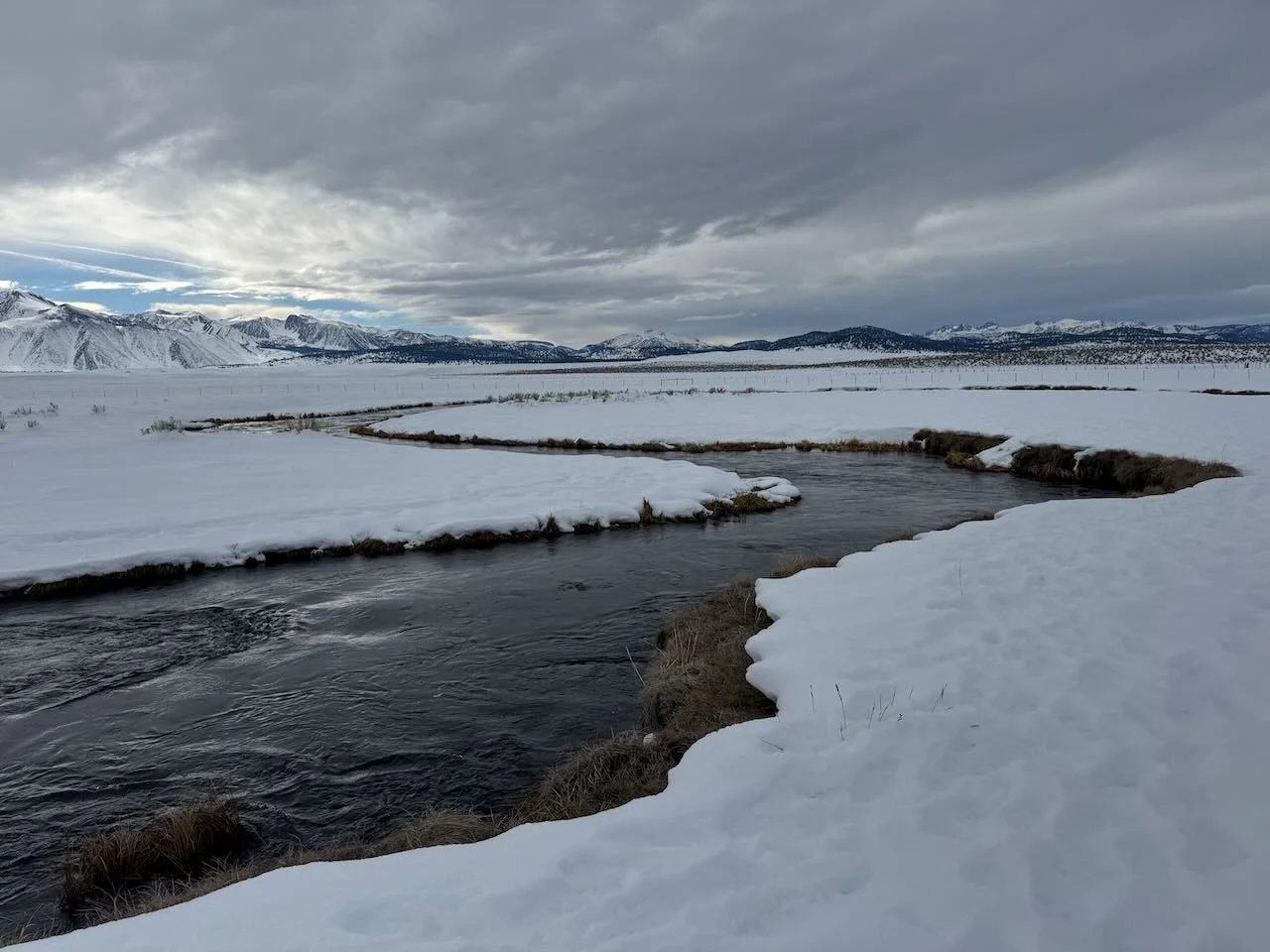
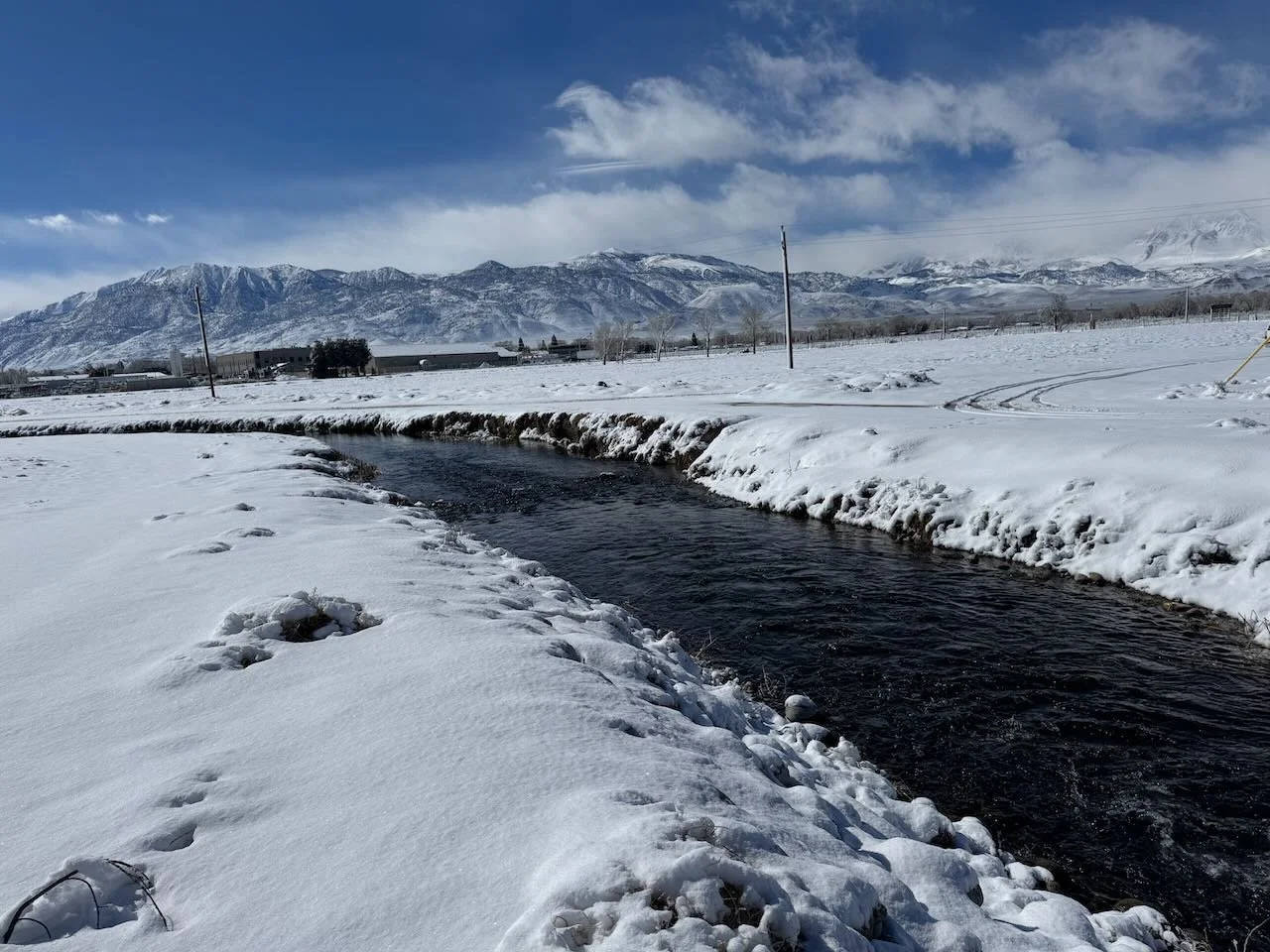
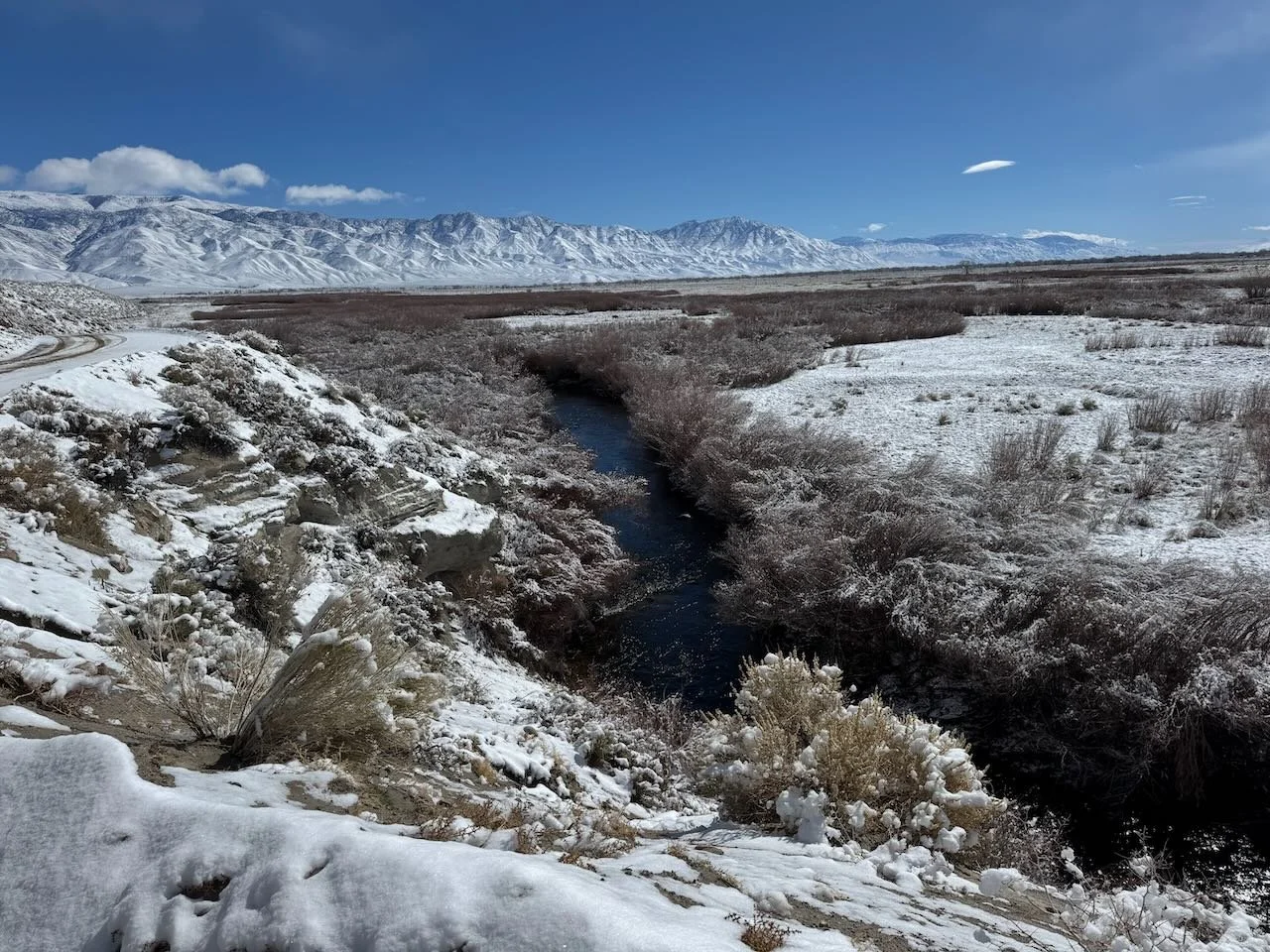
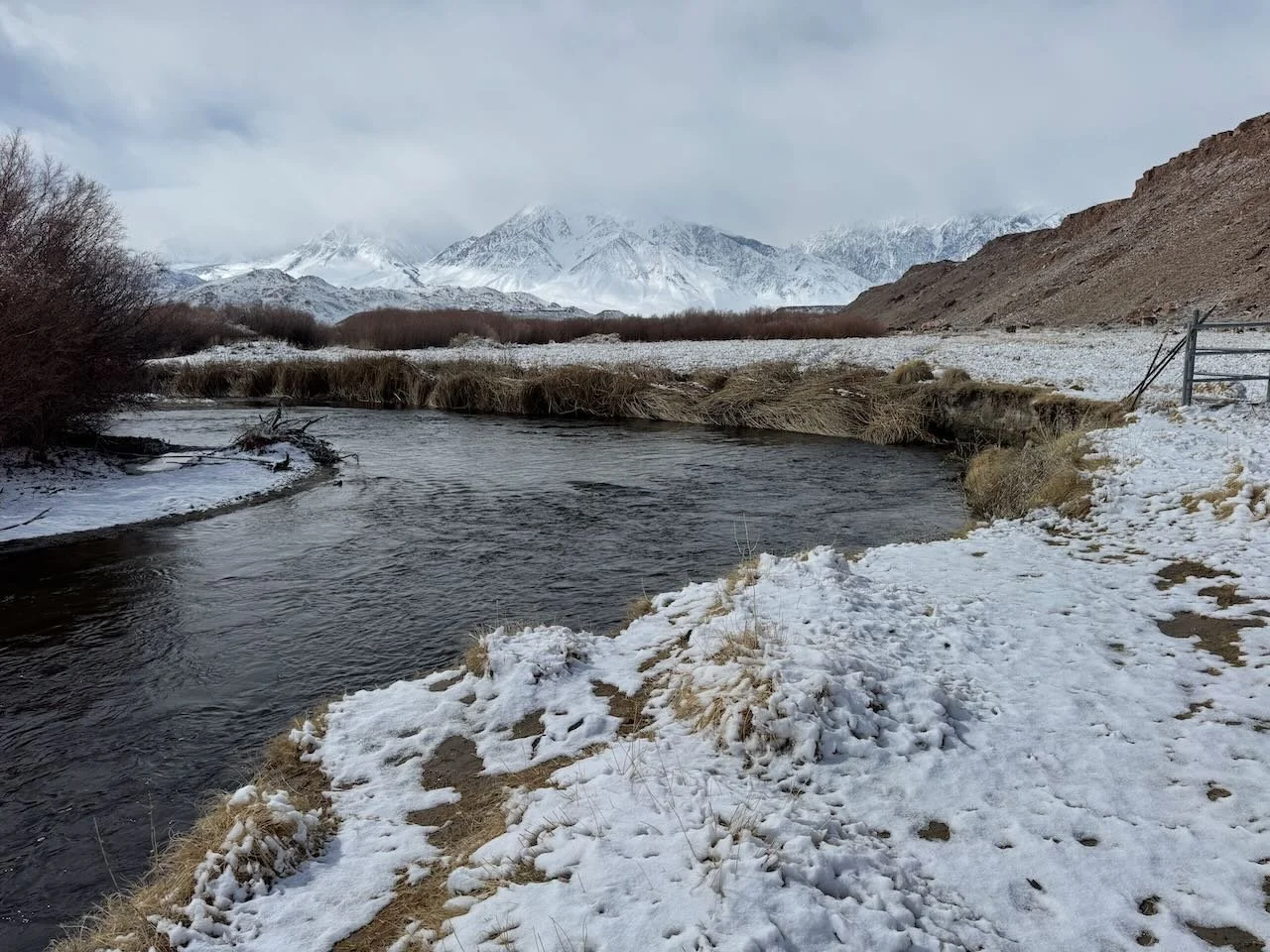
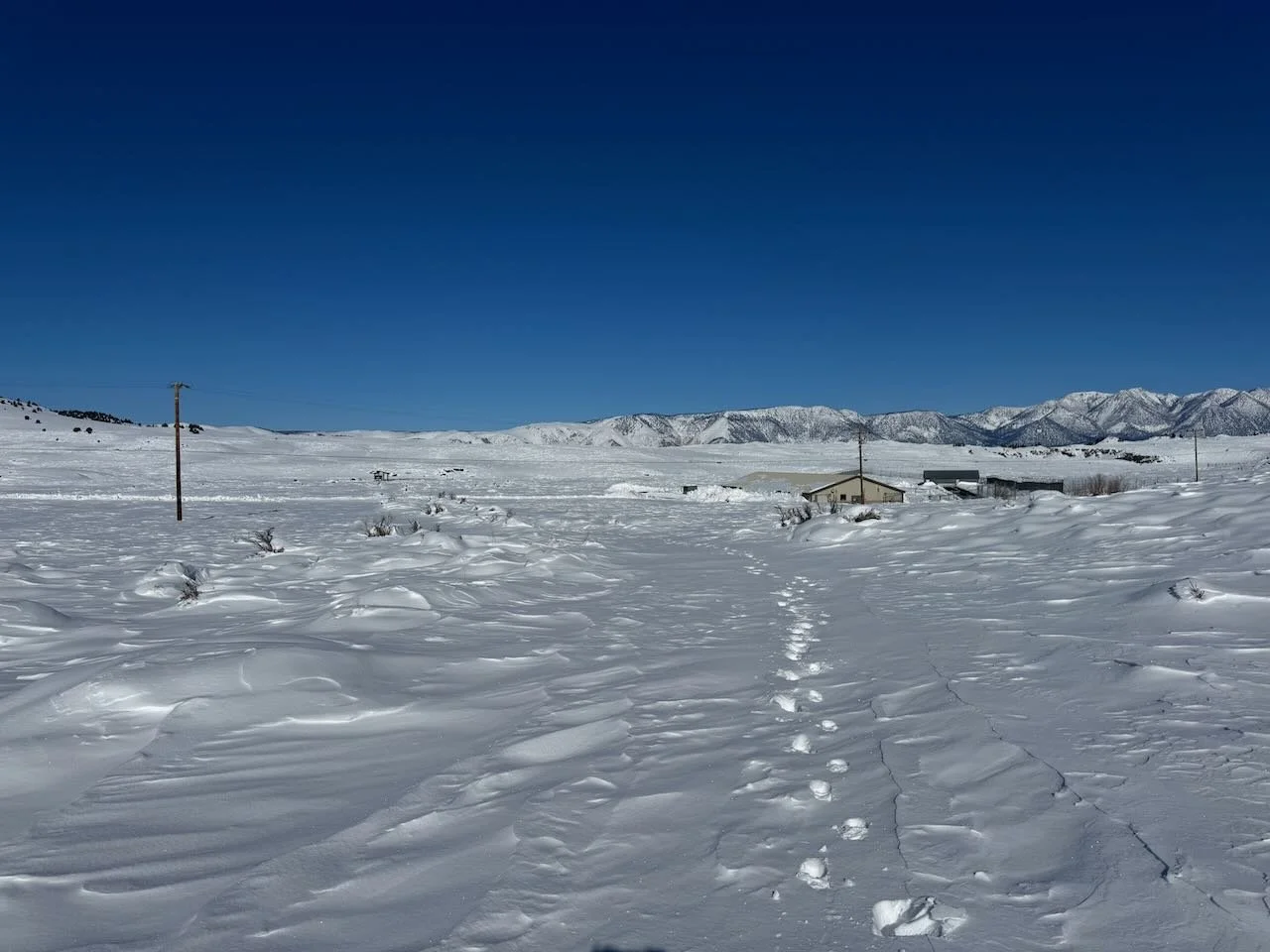
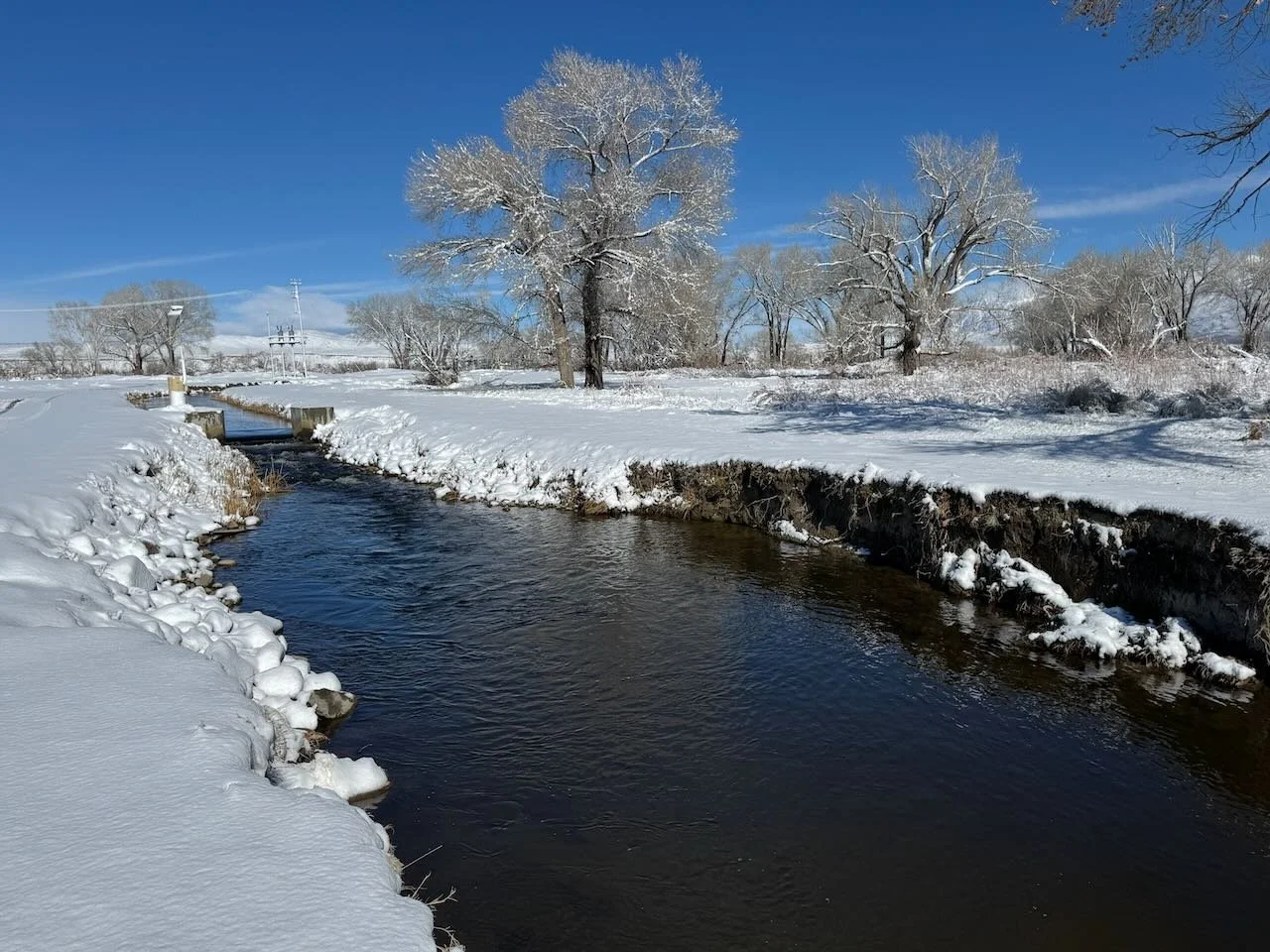
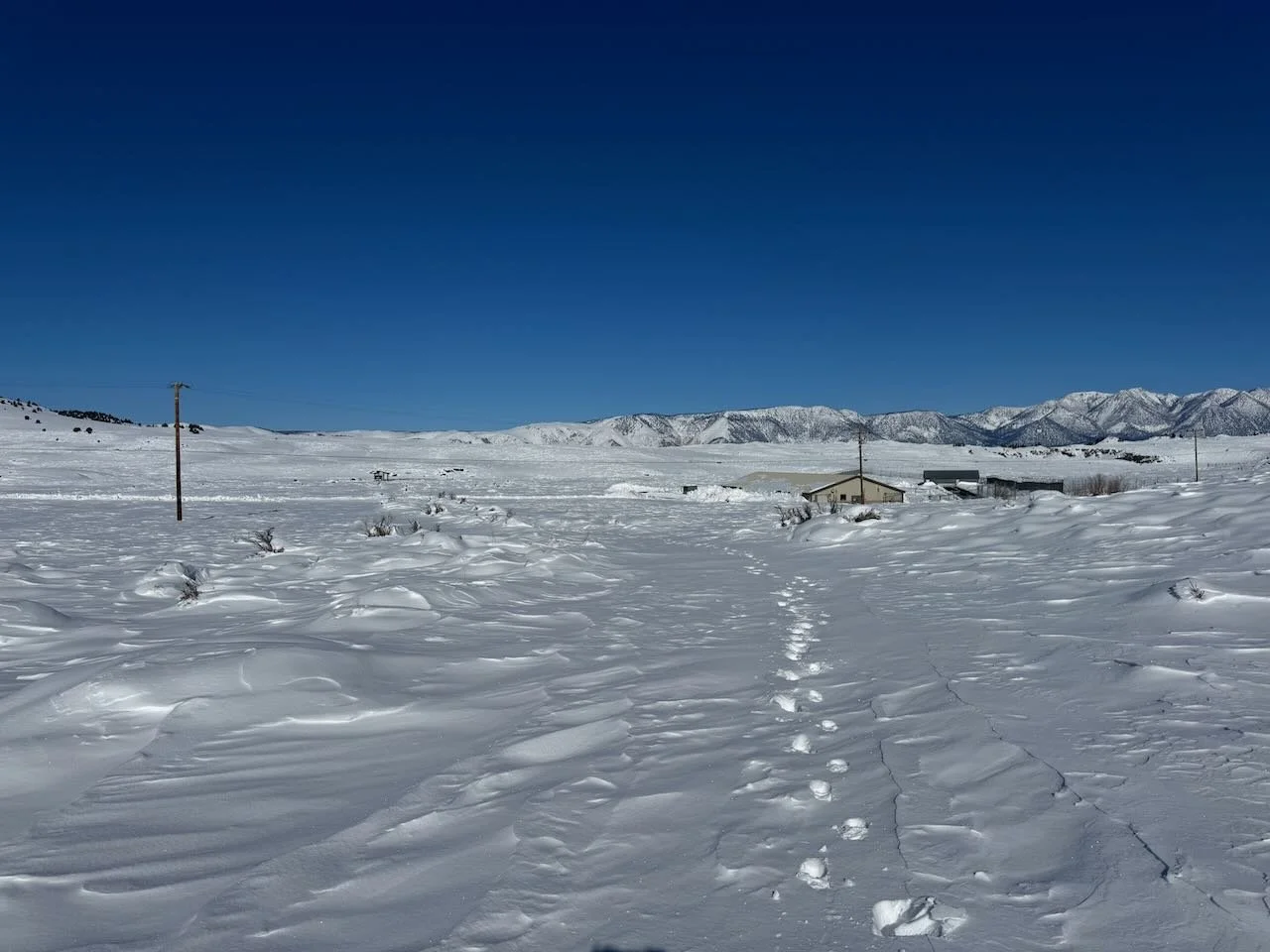
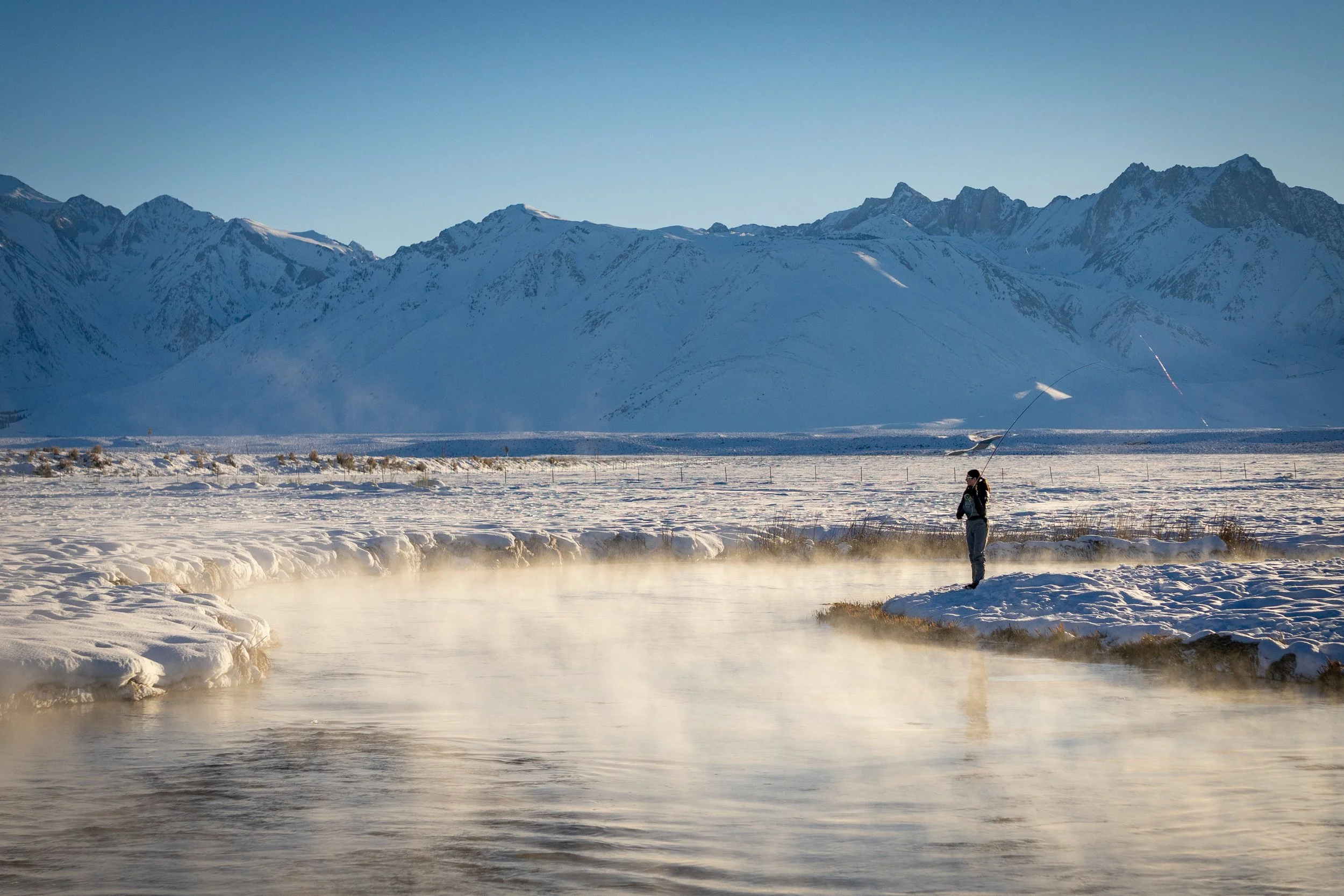
The heat wave continues. With Lower Owens River flows over 300 CFS the lower Owens River is done until the flows lower probably sometime in October. Snow is melting and dirt roads are drying out at about the 7,000 foot level. Hatches and nymphs of midges, mayflies and the occasional caddis are creating the food source for the trout in the waters of the Eastern Sierra. Summer like weather is making it pleasant to be fishing the waters in the Eastern Sierra particularly above 5,000 feet.
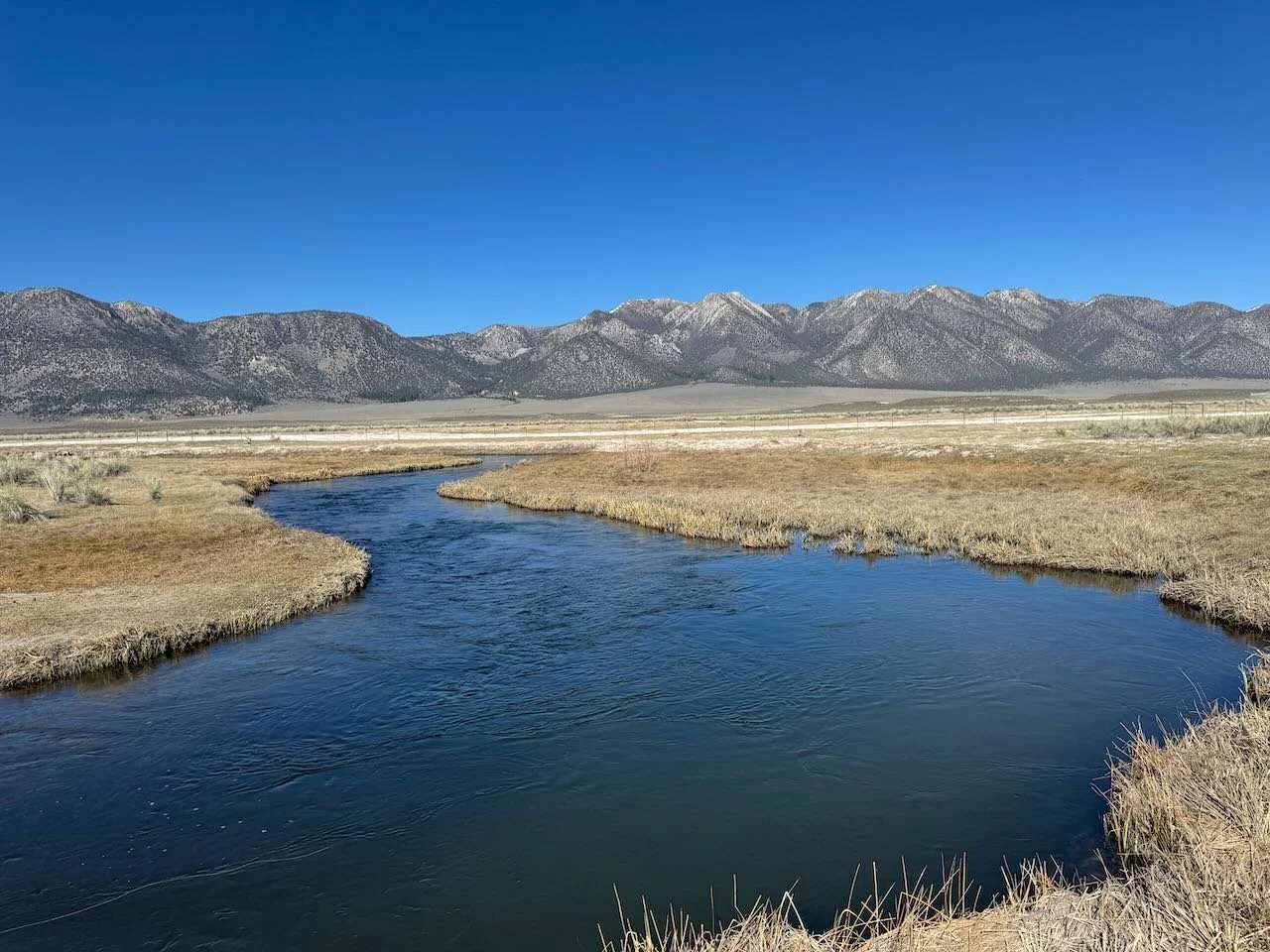
Long Valley waters are drying out with this summer like weather that the Eastern Sierra has had for several weeks and the fish are feeding on nymphs and dries.

Lower Owens River

Wild Trout Section:

Winter fly fishing on the lower Owens River is over for this winter season. Flows are above the 300 CFS level which makes wading the lower Owens River unsafe. The river can be fished at levels over 300 CFS, but it’s tough fishing due to very little bank fly fishing opportunities. Normally the winter season ends late April to very early May when DWP needs to make room in Crowley Lake for the snow runoff. With the warm weather snow up to the 7,000 foot level and slightly beyond has melted and filled up Crowley Lake. Expect flows to increase to 500 CFS or more and stay there throughout the summer months
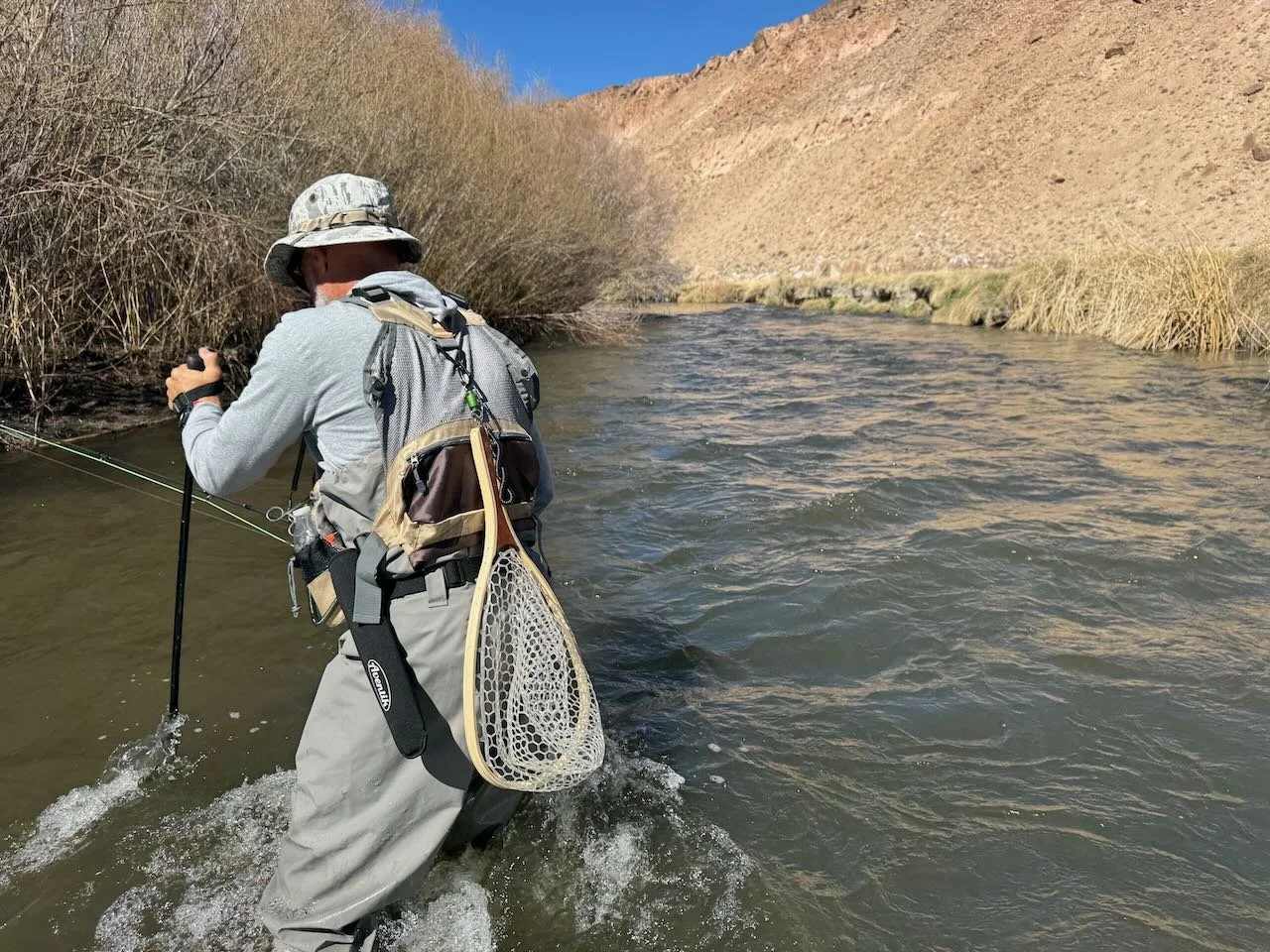
At 185 CFS the lower Owens River was tough to wade and fish and now that it’s over 300 CFS, its done until the flows come down sometime this fall.

Hot Creek

Interpretive Site:

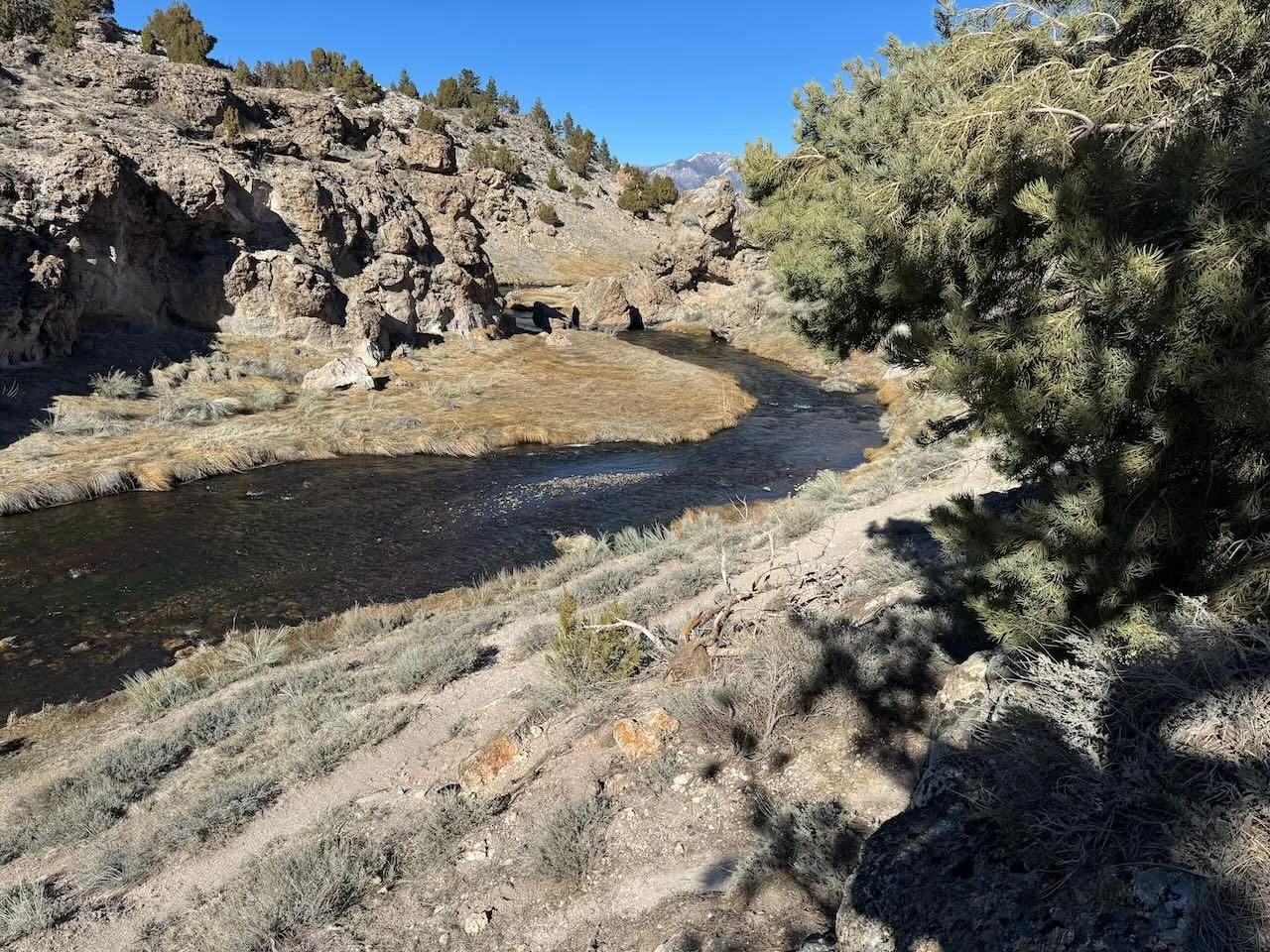
Easy access to Hot Creek makes fly fishing the creek open to fly fishers now that winters blanket of snow is gone. Look for hatches of mayflies and midges. Early morning is when you will see the midges on the water. For the midges on the surface use size 20 Griffiths gnats, size 20 CDC midges and size 20 midge emergers. For the mayflies use size 20 blue wing olive parachutes, size 20 olive sparkle duns and size 20 Adams parachutes. Key to success is using nine to 12 foot leaders tapered to 5X and 6X and presenting the flies with a drag free drift.
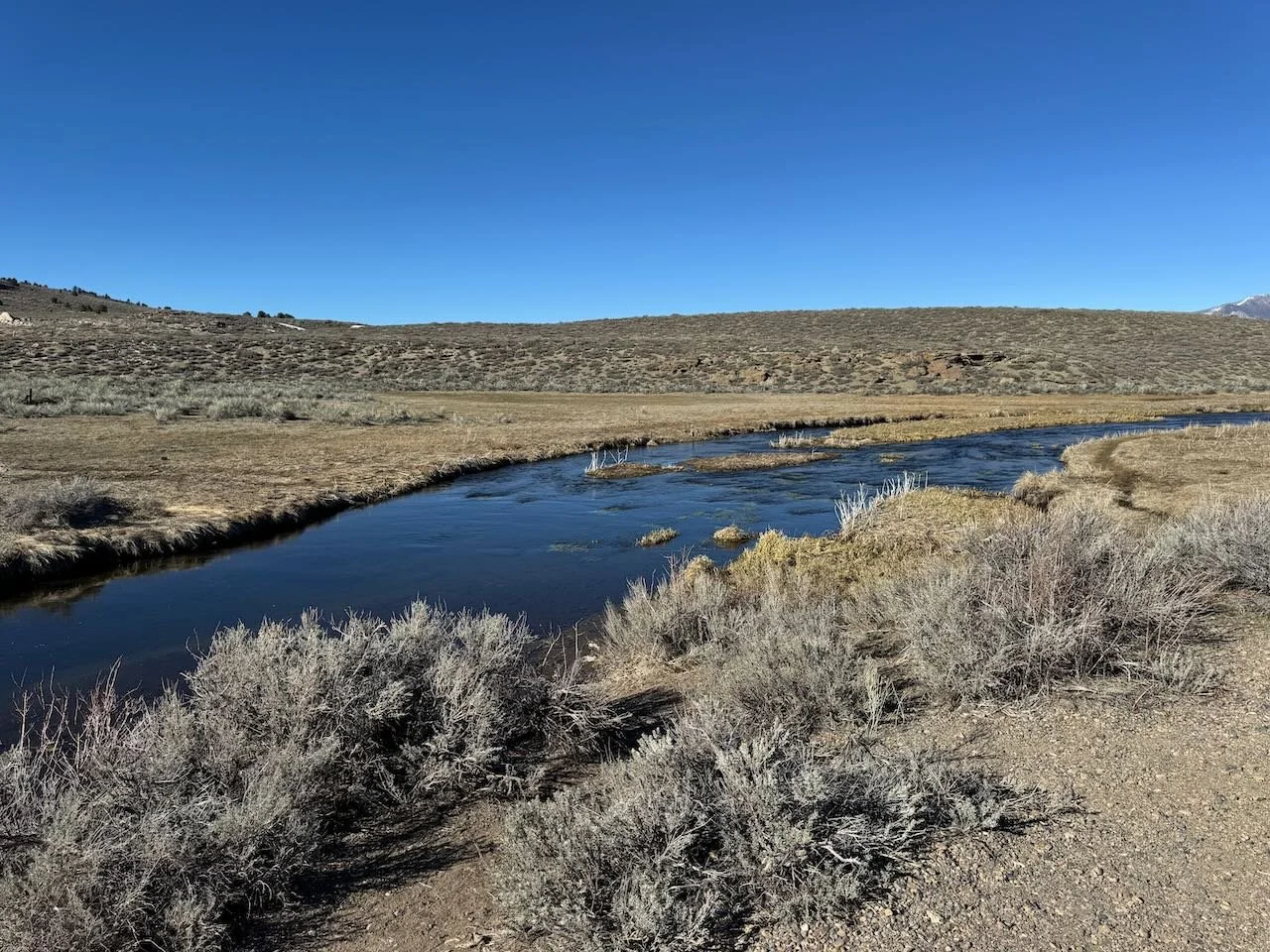
Fly fishers in the Interpretive site of Hot Creek are having luck fishing dry flies on the surface for the trout feeding on hatching mayflies and midges.

Hot Creek

Canyon Section:

Nymphing in the canyon is at its best this time of year as the weed beds are at their smallest level. Working the open areas and in and around the weed beds with a dry and dropper rig or a Euro rig will produce the wild rainbow and brown trout that inhabit the Canyon Section of Hot Creek. Use size 18 olive quilldigons, size 18 bead head flash back pheasant tail nymphs, size 18 Frenchie’s, size 18 green/gold brassies, size 18 soft hackle brassies, size 18 olive quill RS2 and  size 18 thread midges in tiger and zebra coloration
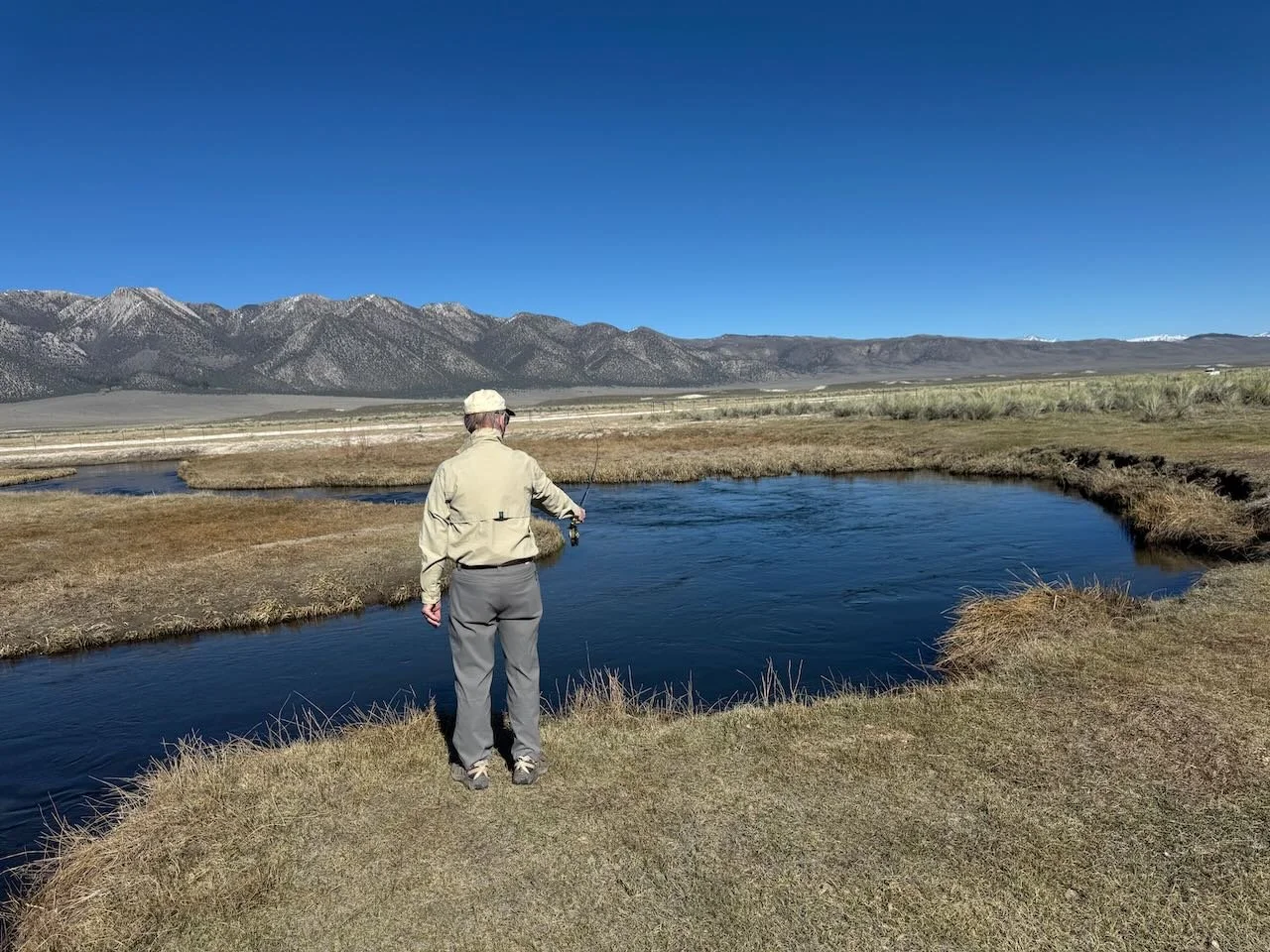
Working the deep holes, deep runs and cut banks where the trophy rainbow trout are feeding and resting with nymphs is producing the trophy trout.

Upper Owens River

Above Benton Crossing Bridge:

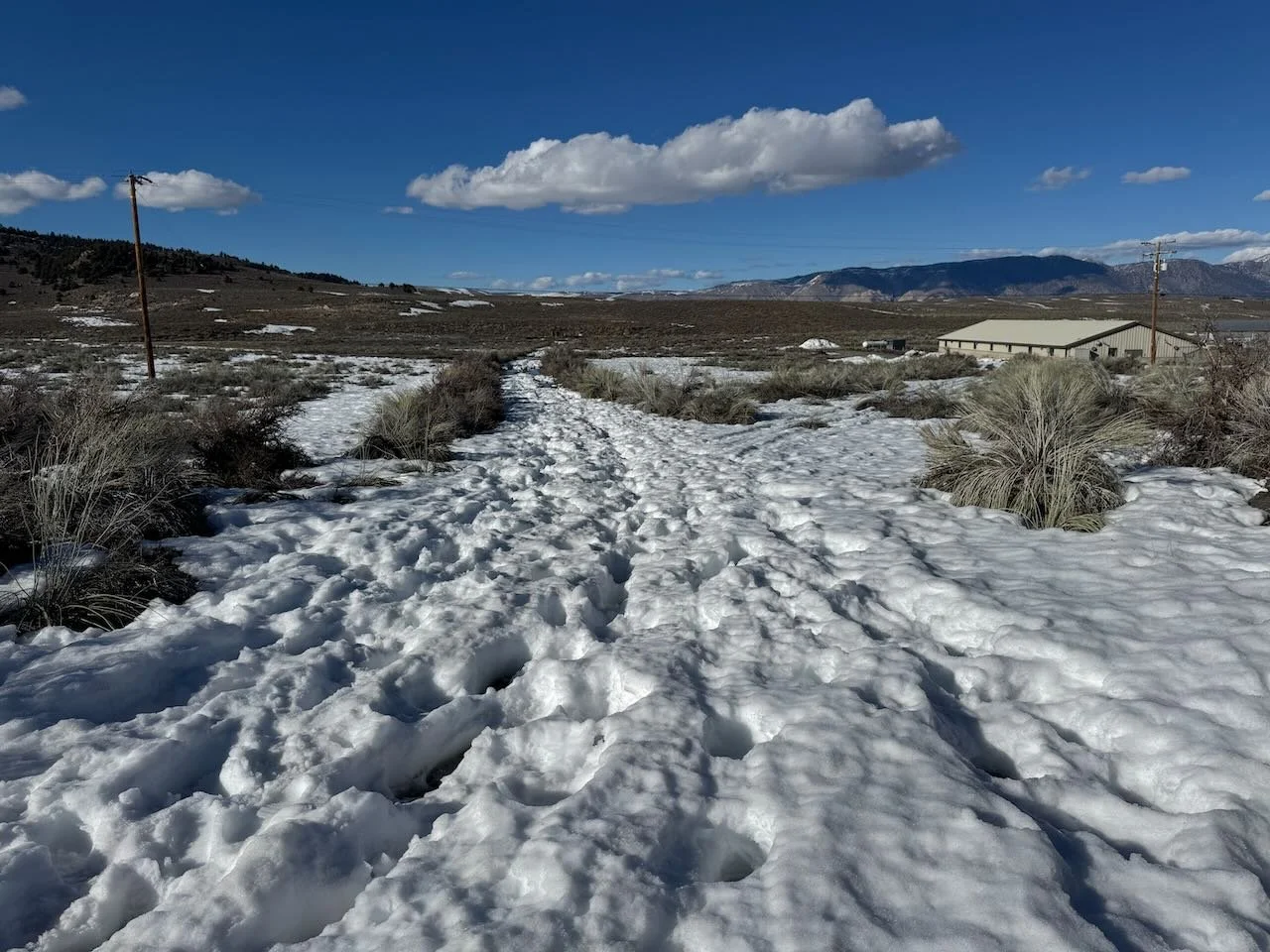
The snow is gone and so is most of the mud. There are a few mud puddles on the spur roads leading out to the river. Drive with caution when dealing with mud and mud puddles. There are still trophy rainbows in the river willing to take nymphs, eggs, worms and mop flies. The trophy trout holding in the deep runs, deep holes and cut banks are resting and feeding. Work your nymphs through these waters thoroughly. Nymph under an indicator or with a Euro rig with size 12 stoner nymphs, size 12 green/gold Prince nymphs, size 12 Richard’s variation of a gold ribbed hare’s ears, size 14 copper John’s, size 14 tungsten tacos, size 10 mop flies and size 12 squirmy wormies.
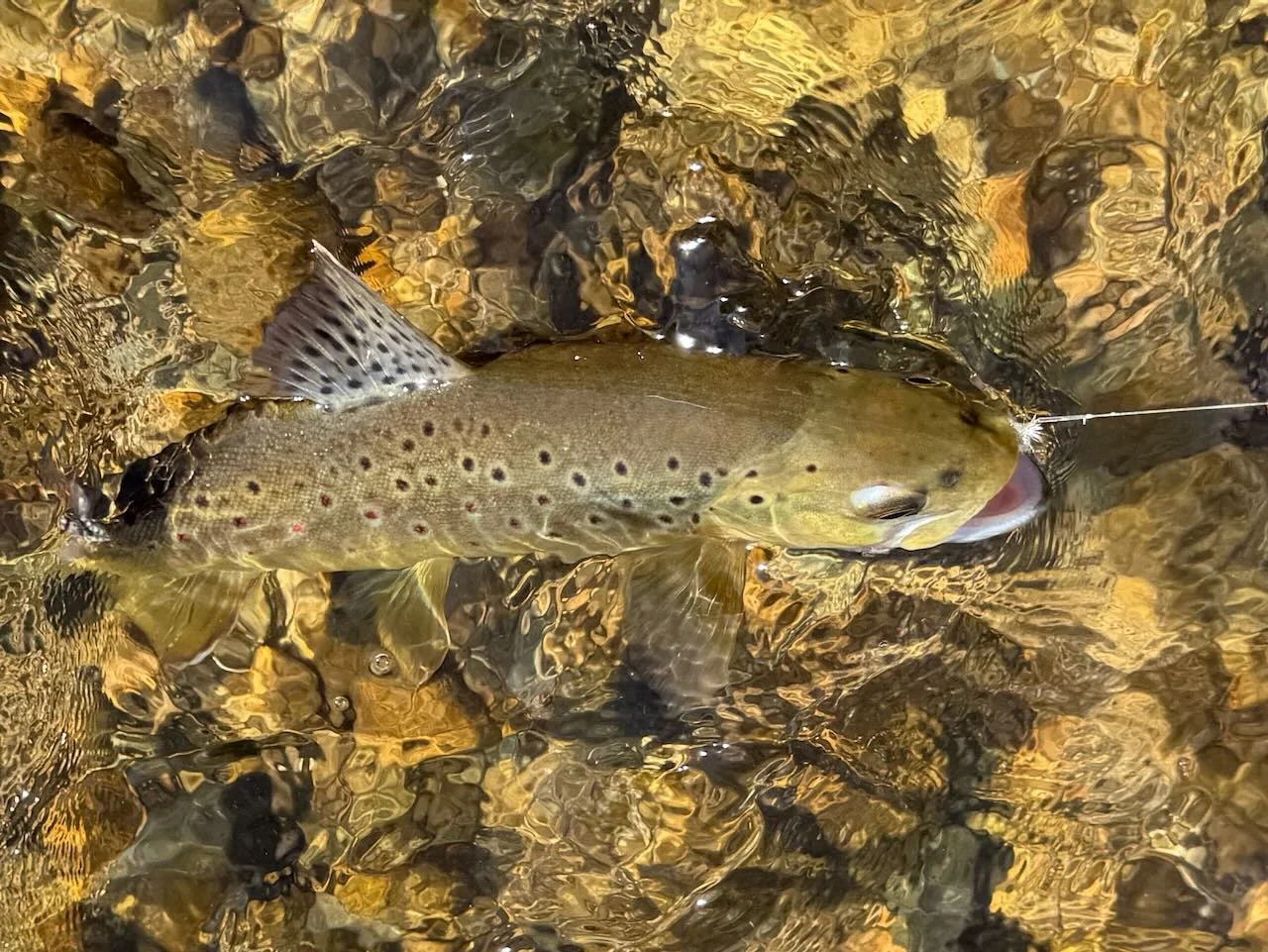
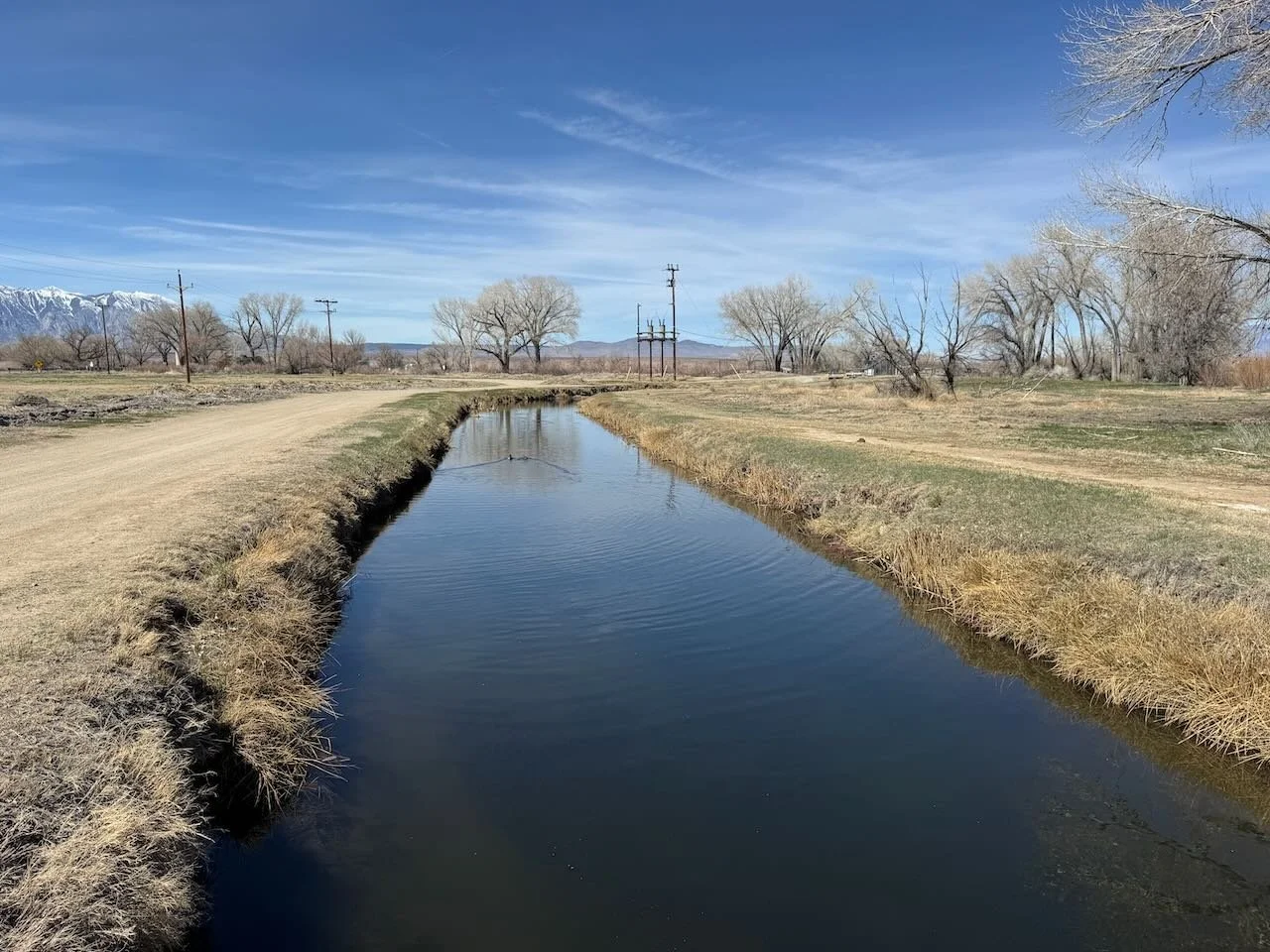
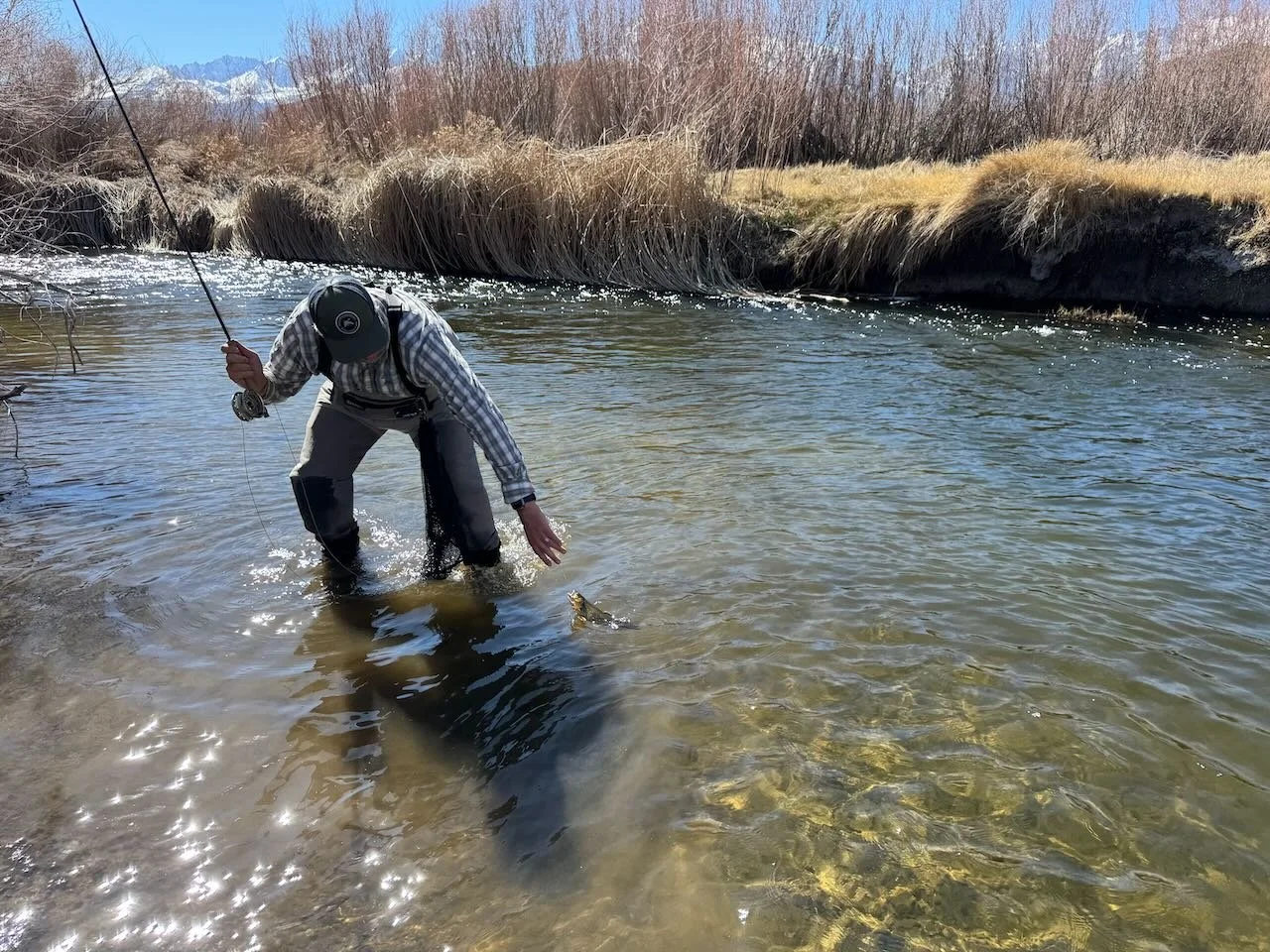
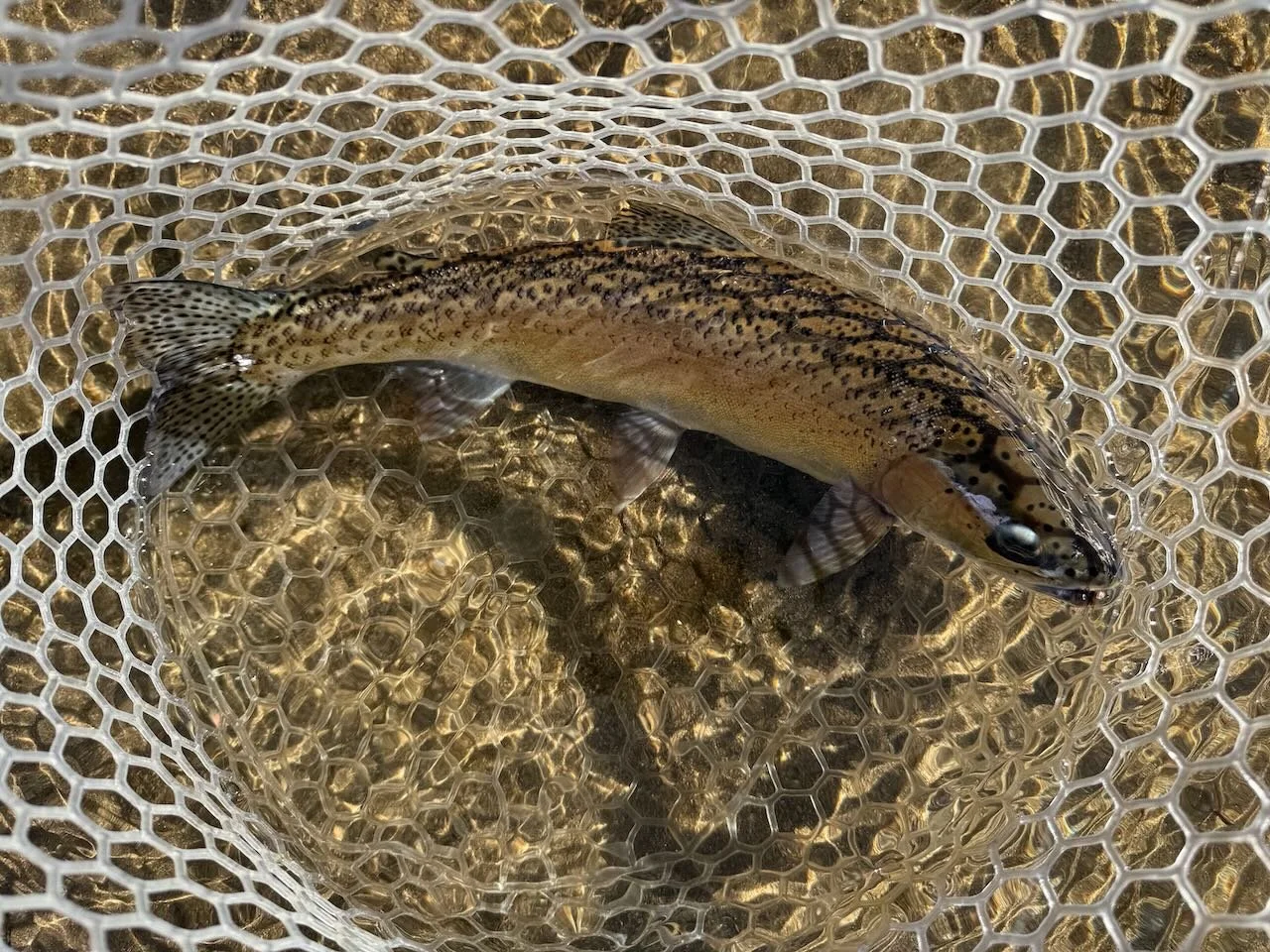
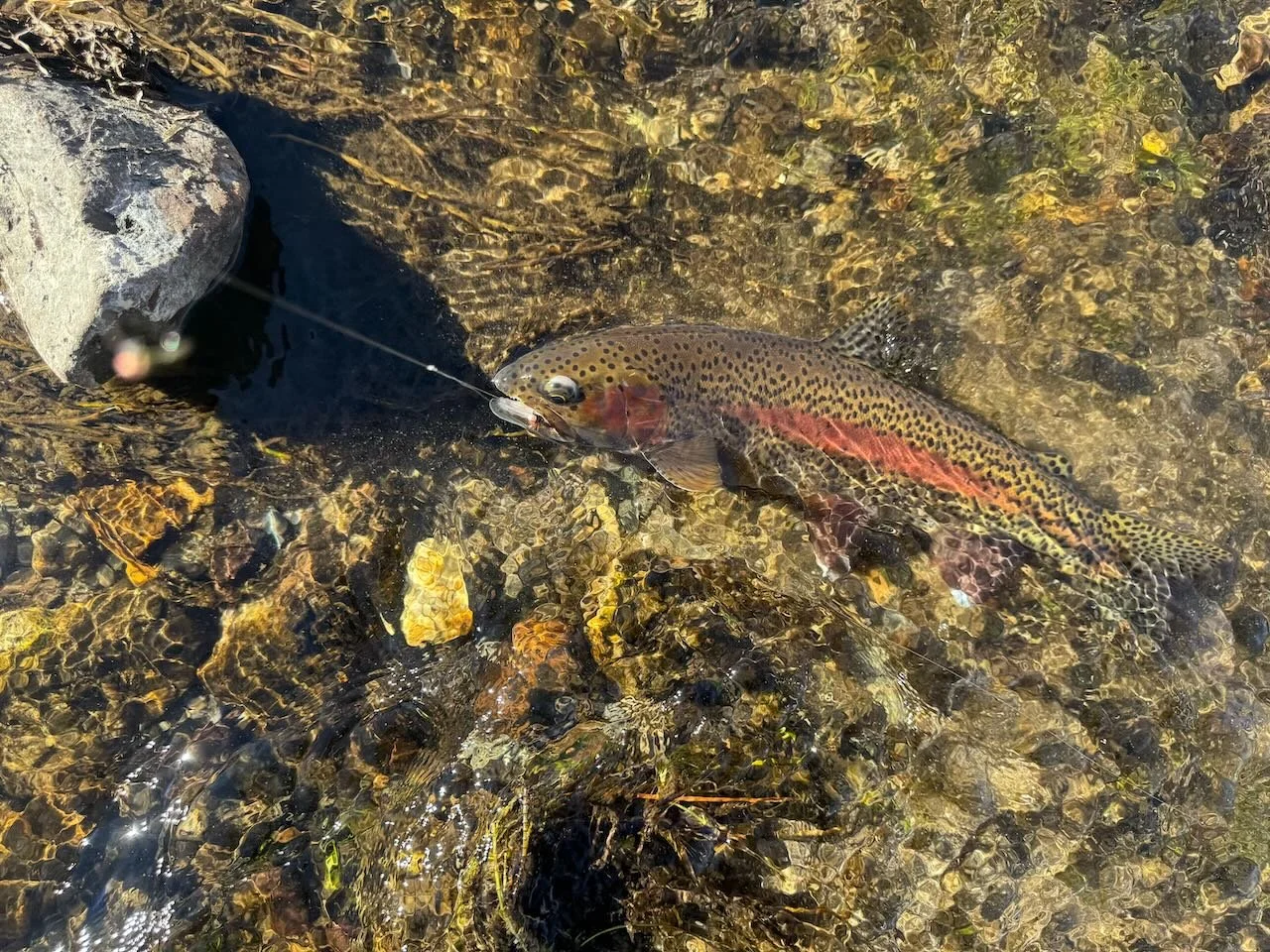
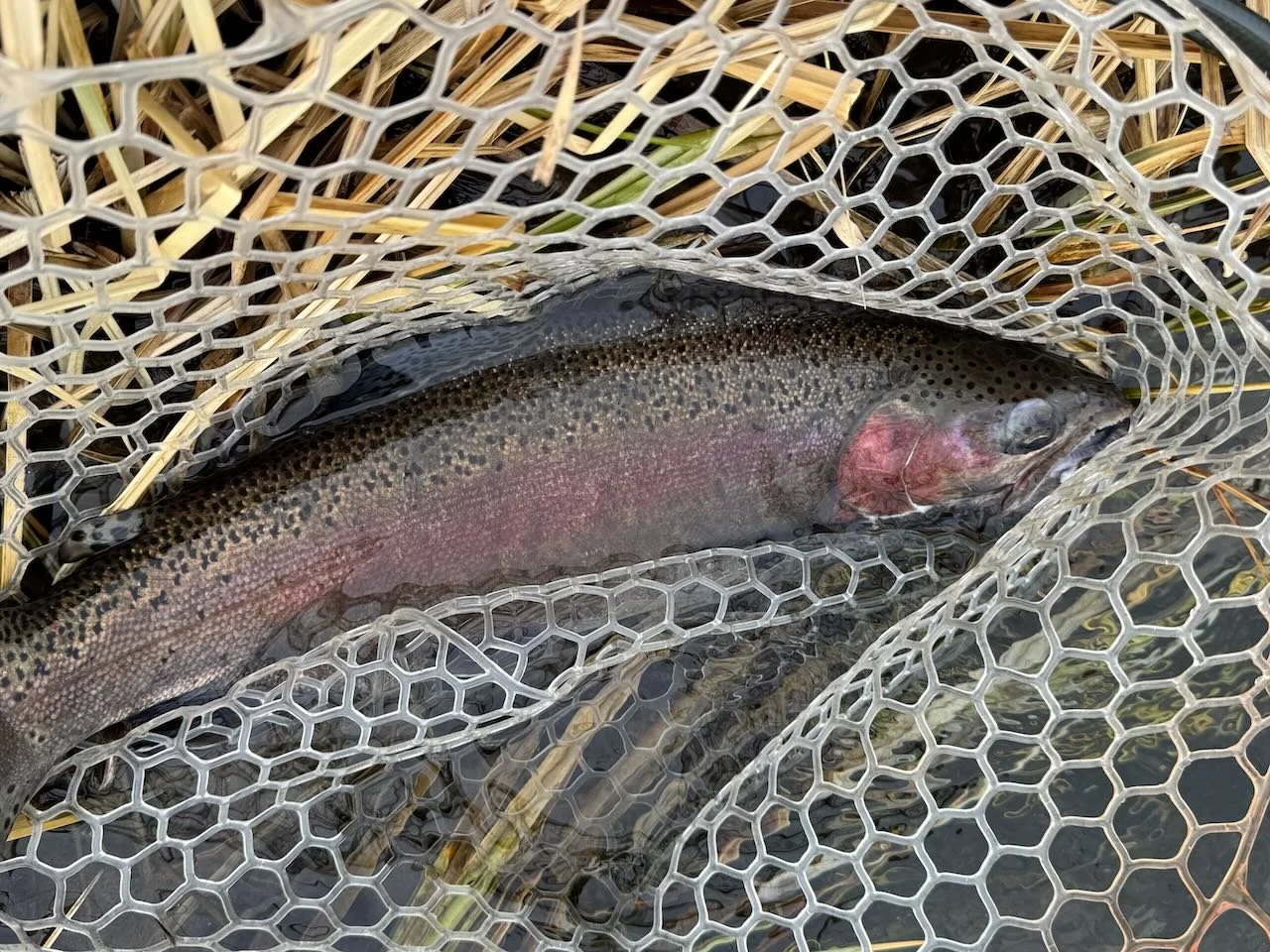
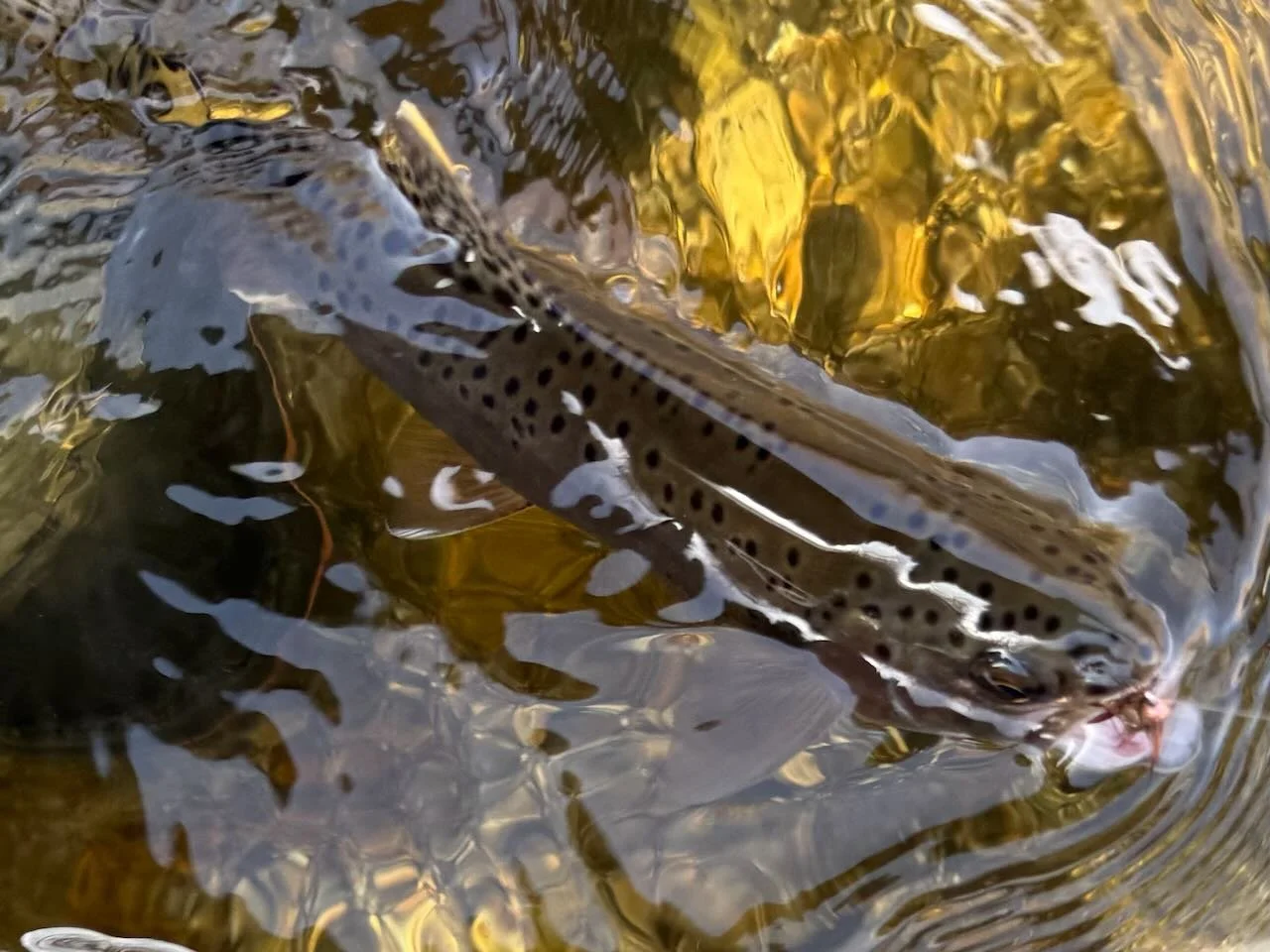
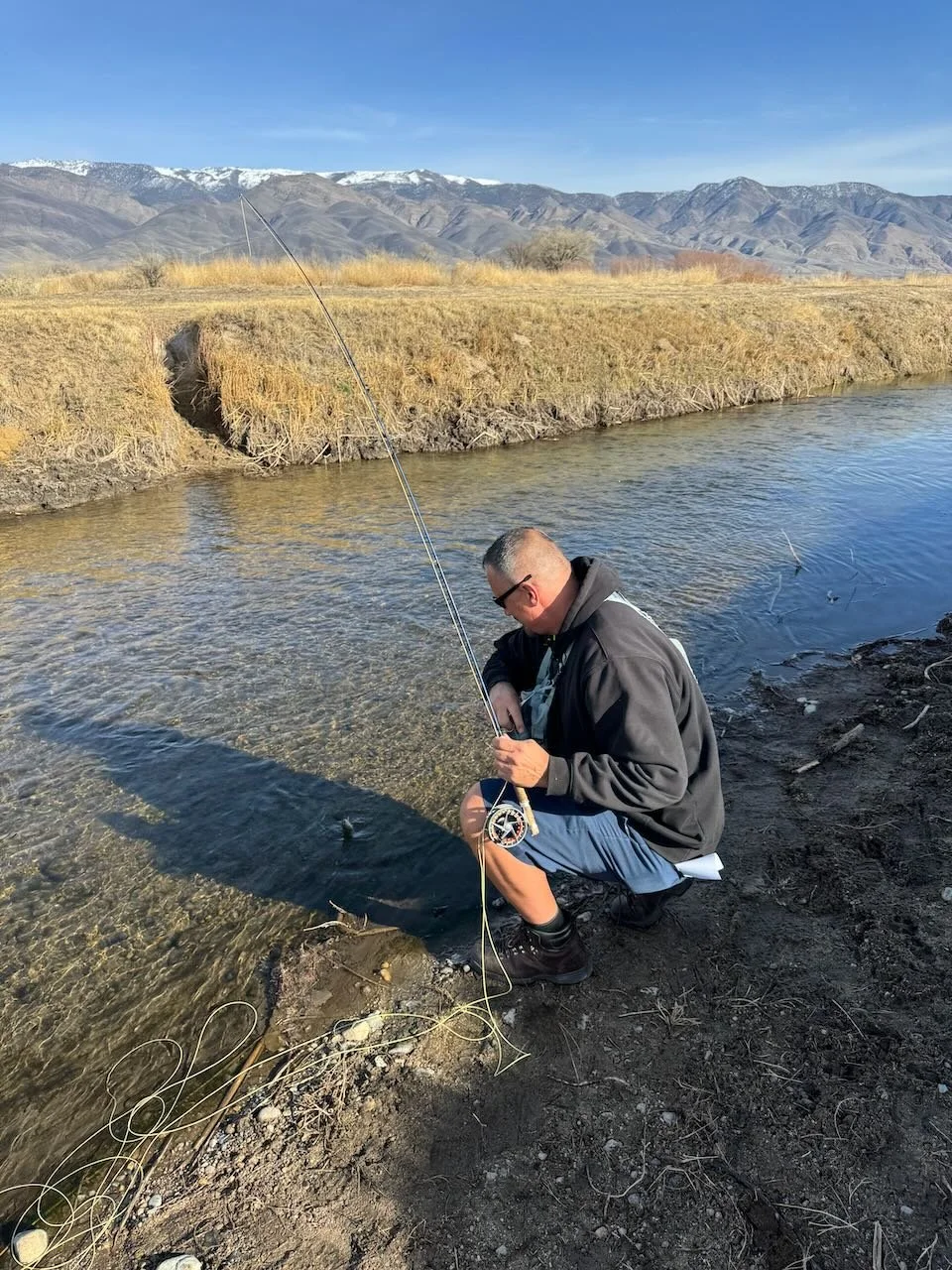
A wild brown trout from Bishop Creek Canal that took a size 18 blue wing olive parachute off the surface on a warm Owens Valley afternoon.

Bishop Creek Canal

Behind Bishop Veterinary Hospital:

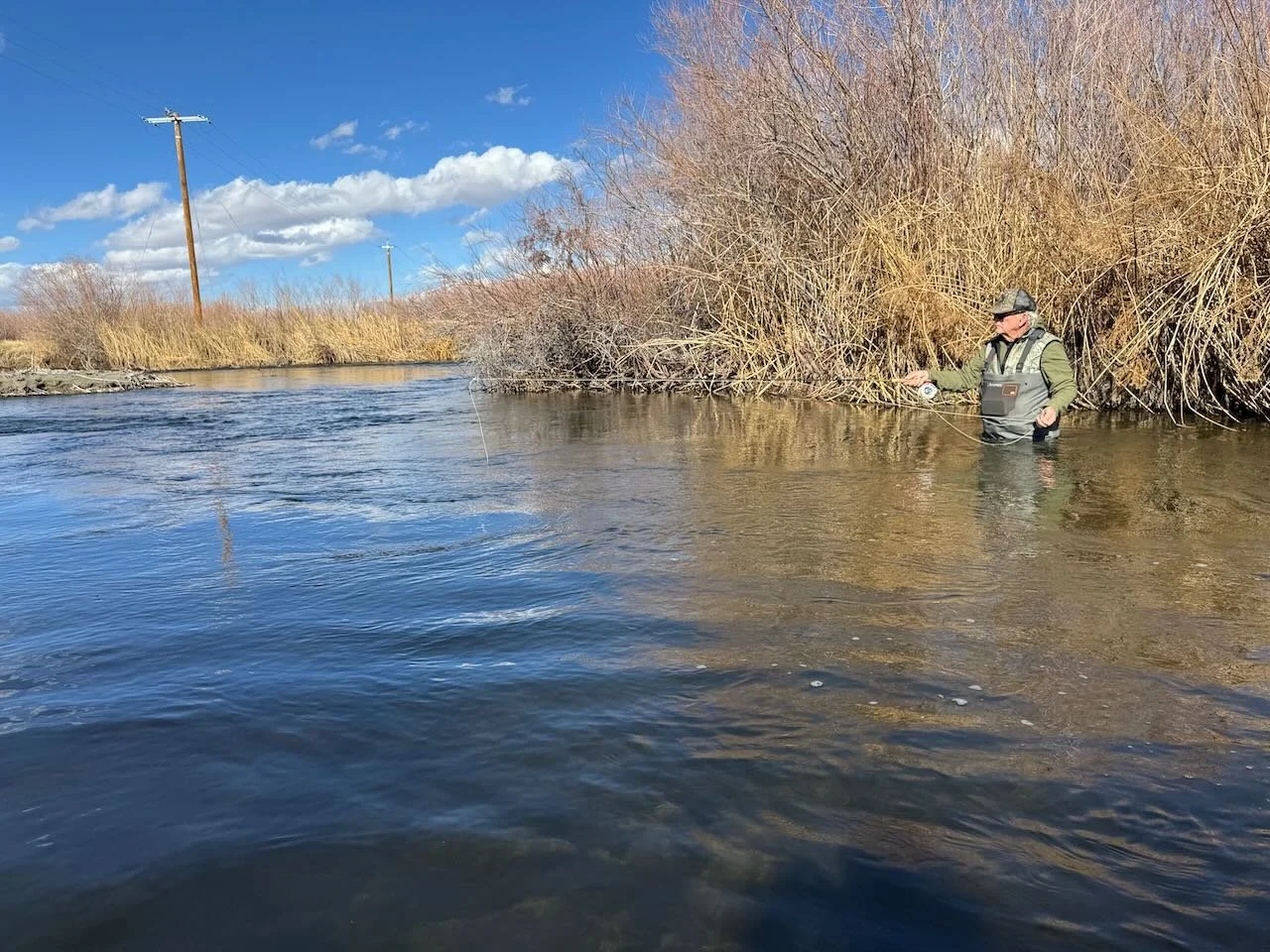
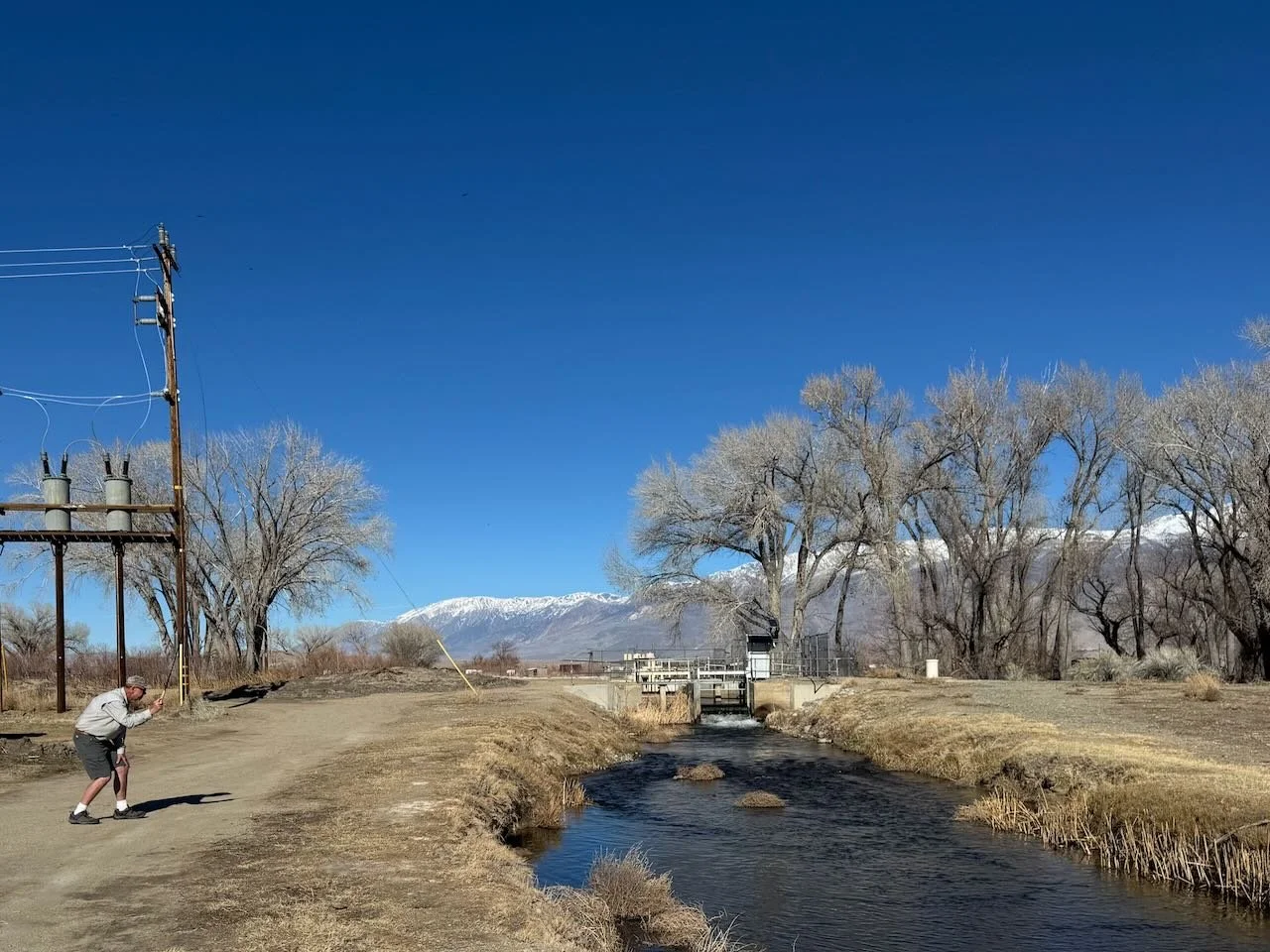
Middle of the day is almost too warm to be fly fishing on Bishop Creek Canal. Mid-day hatches of blue wing olives have the trout coming to the surface. It’s fun to find consistently feeding trout and target them with size 18 blue wing olive parachutes, size 18 olive sparkle duns and size 18 Adams parachutes. Nymphing the faster runs with size 18 olive quilldigons, size 18 bead head flash back pheasant tail nymphs, size 18 Frenchie’s and size 18 olive quill RS2’s on the substrate will produce the trout feeding on nymphs.
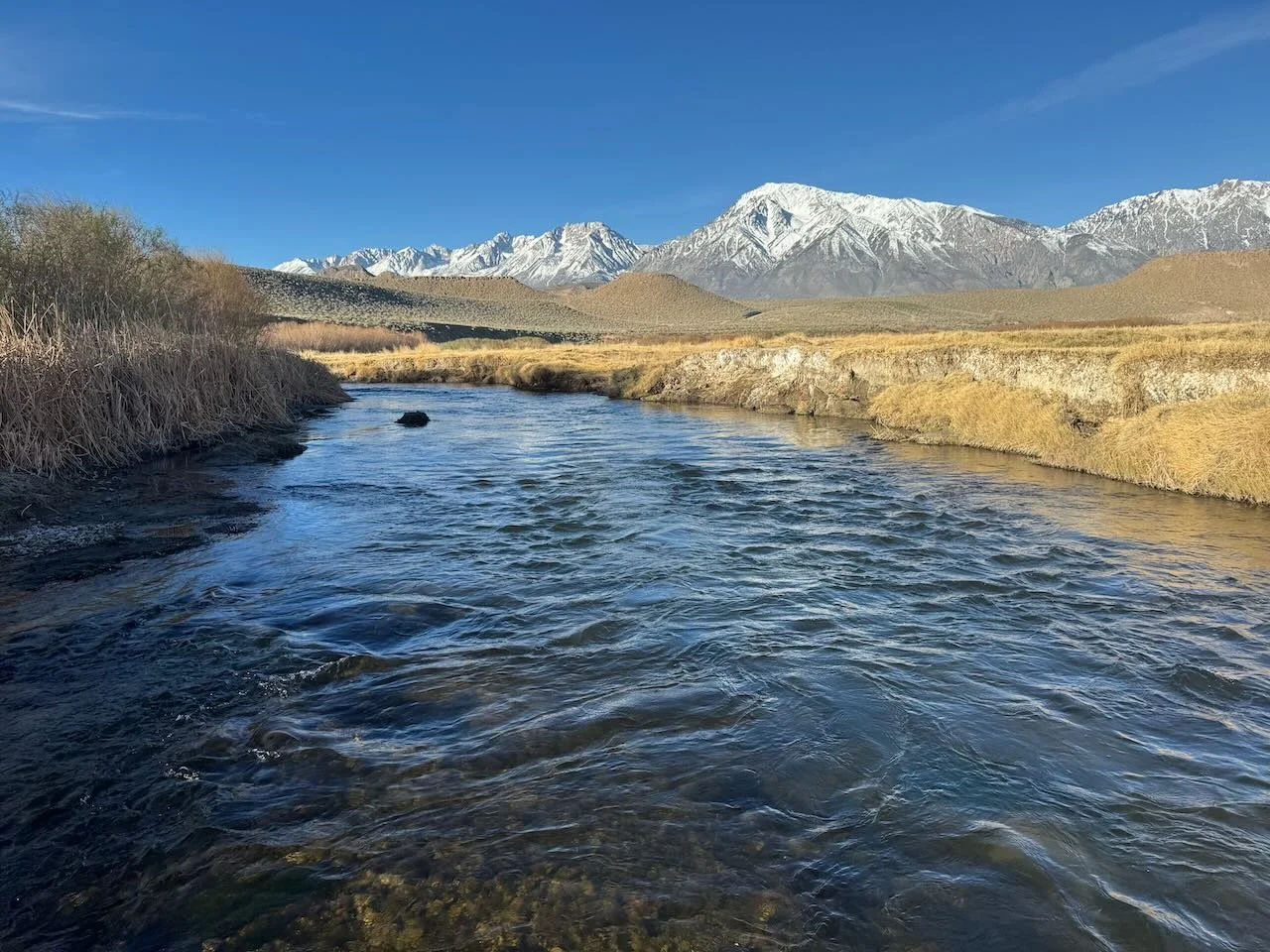
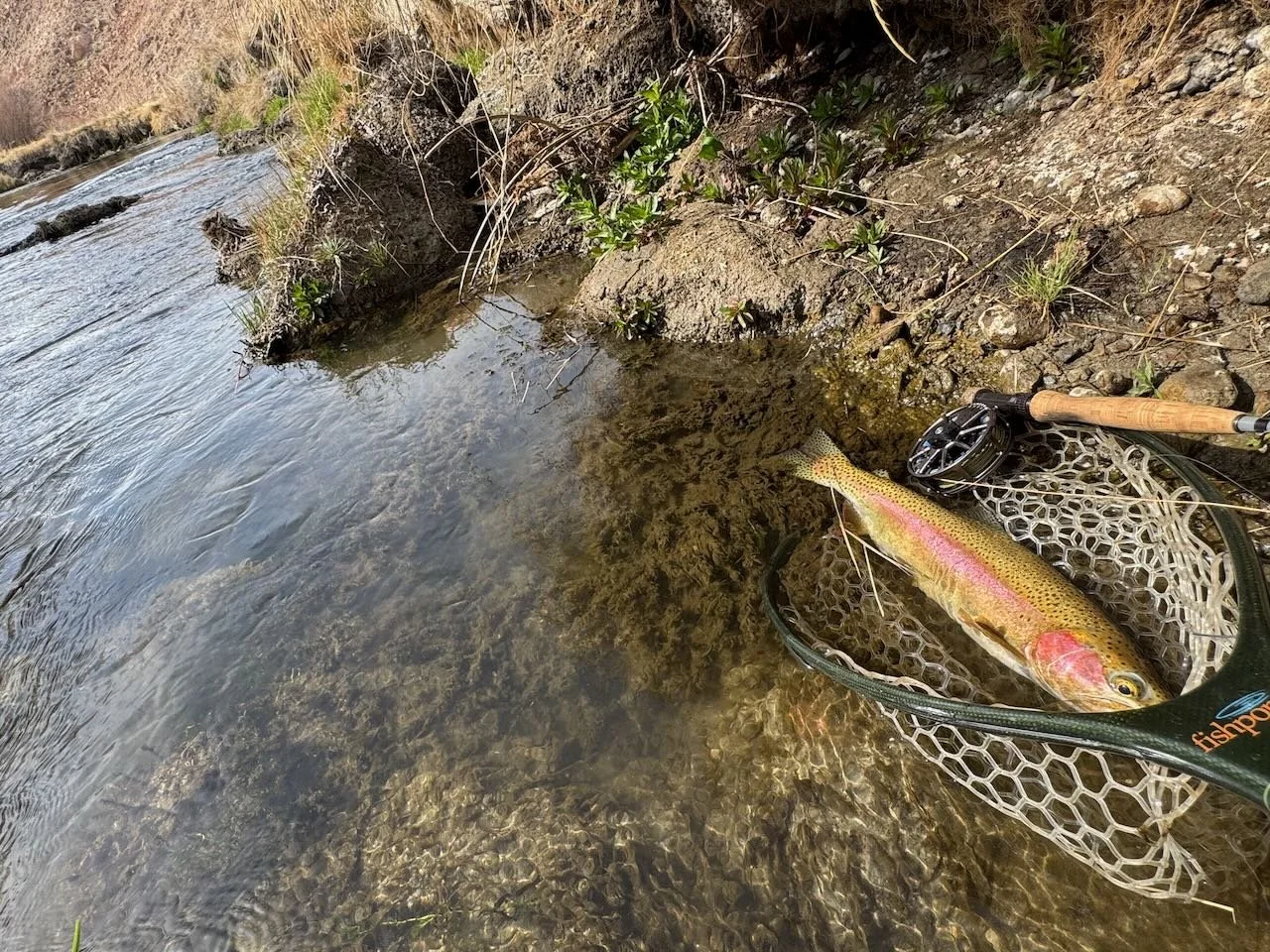
Sierra Bright Dot Fly Fishing Report 03-19-2026

The heat has come to the Eastern Sierra in mid-March. Hi 80’s in the Owens Valley this week. Who turned up the thermostat to 90 degrees? Snow is melting and filling up some waters. Caddis, mayflies and midges are hatching and the trout are feeding on them. Bass pre-spawn has started in the Owens Valley ponds. Hi elevation dirt roads are drying out. Still use caution if you see the snow.

Flows in the lower Owens River are going up to 185 CFS by the weekend and expect flows to increase the following week to over 300 CFS.

 Lower Owens River

Wild Trout Section:

Lower Owens River flows update: As of Thursday March 19th, 2026 the flows in the lower Owens River below Pleasant Valley Reservoir are running at 185 CFS. The water is definitely dirty with the increased flows picking up mud and lots of debris including willows, tulles and tumble weeds. Expect flows in the lower Owens River to crest over 300 CFS by mid to late next week. It’s unsafe to wade in the lower Owens River when the flows are over 300 CFS. Check the water flows for the lower Owens River on Sierra Bright Dot Webpage at https://www.sierrabrightdot.com/water-flows-owens-river-east-walker-river.


DWP has started to take water out of Crowley Lake to make room for this year’s snow melt and ship it to reservoirs south of Crowley Lake. The lower Owens River will be up to 185 CFS by the weekend and expect it to go up higher next week. Nymphing will continue to produce trout as they acclimate to the rising water. Over 300 CFS is the level of unsafe wading conditions for the lower Owens River. Euro nymphing and indicator nymphing will be the most effective methods of fooling the wild trout of the lower Owens River. If you see consistently rising trout definitely switch to a dry fly. On the surface use size 18 blue wing olive parachutes, size 18 olive sparkle duns and size 18 Adams parachute. On the substrate use size 18 bead head flash back pheasant tail nymphs, size 18 olive quilldigons, size 18 Frenchie’s, size 16 rainbow warriors, size 16 Duracell nymphs, size 14 olive burlap caddis, size 16 olive quill RS2 and size 16 Butano nymphs. Key to success in the rising water will be to have enough weight in the flies or on the tippet in the form of split shot to keep the nymphs on the substrate. Plan on fishing with a size BB split shot or more.

Nymphing is producing wild brown and rainbow trout to 17 inches in the wild trout section of the lower Owens River.

Hot Creek

Interpretive Site:

Continued warm weather has melted the snow and fly fishers can drive right up to the Interpretive site with no problems. Mid-morning is the time to be on the water for the midge and mayfly hatches. Casting up stream with a drag free drift using size 20 blue wing olive parachutes, size 20 olive sparkle duns, size 20 Adams parachutes, size 20 CDC midges and size 20 Griffiths gnats is fooling the wild trout of the Interpretive site of Hot Creek on the surface.

The snow is gone from Hot Creek Canyon and fly fishers can drive to the parking lots that allow fly fishers to access the Canyon Section of Hot Creek.

Hot Creek

Canyon Section:

Easy vehicle access makes it easy for fly fishers to access the parking areas accessing the Canyon Section of Hot Creek. Mid-day hatches of blue wing olive mayflies are bringing the trout to the surface. Fish with a size 20 blue wing olive parachute, size 20 olive sparkle dun and size 20 Adams parachute with a drag free drift and be ready to set the hook when the trout take your flies. Before and after the hatches nymphing with a dry and dropper rig or Euro rig is fooling the substrate feeding trout. Fish with size 18 olive quilldigons, size 18 bead head flash back pheasant tail nymphs, size 18 Frenchie’s, size 12 stoner nymphs and size 12 green/gold prince nymphs on the substrate to fool the trout feeding on nymphs.
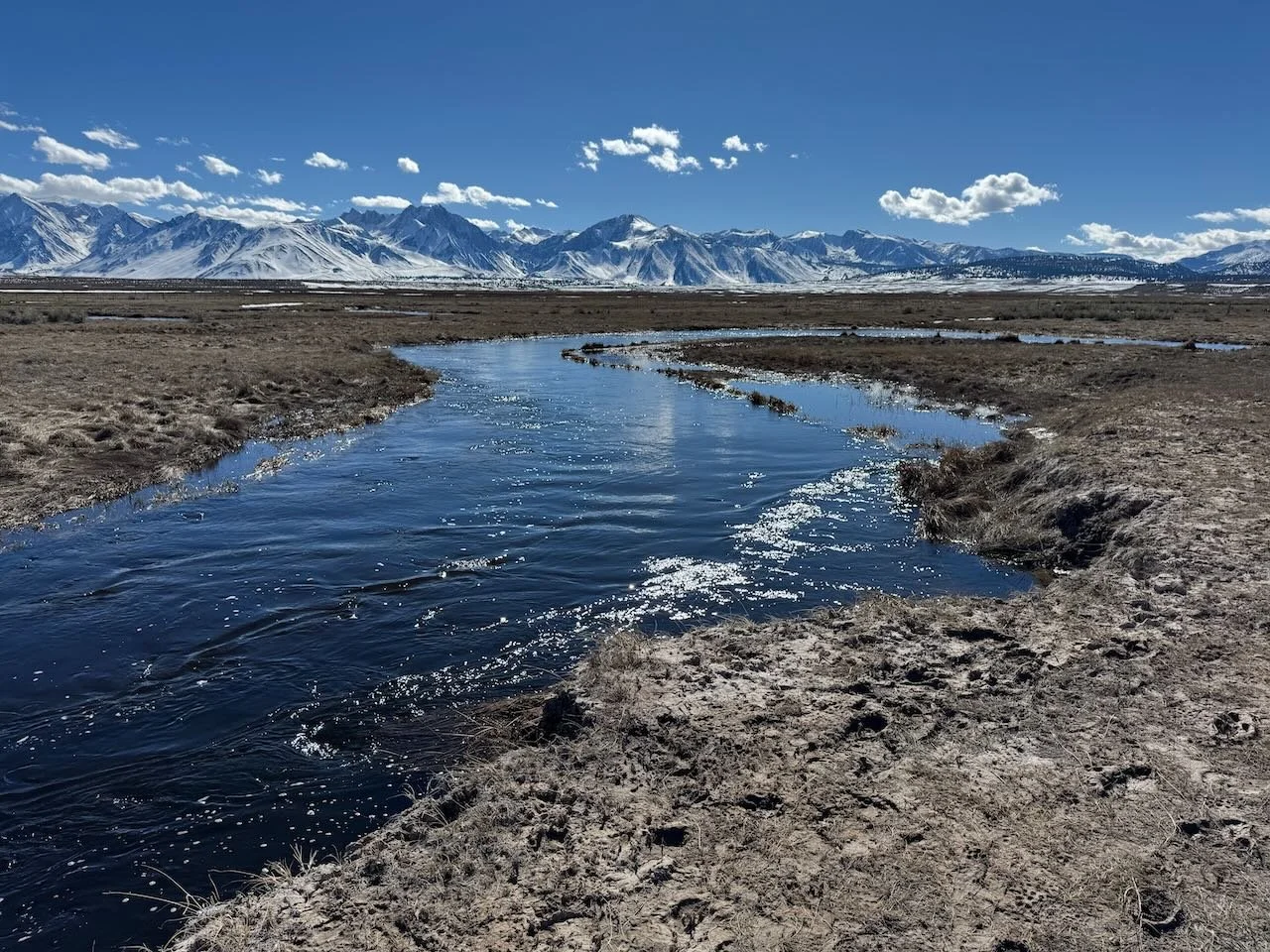
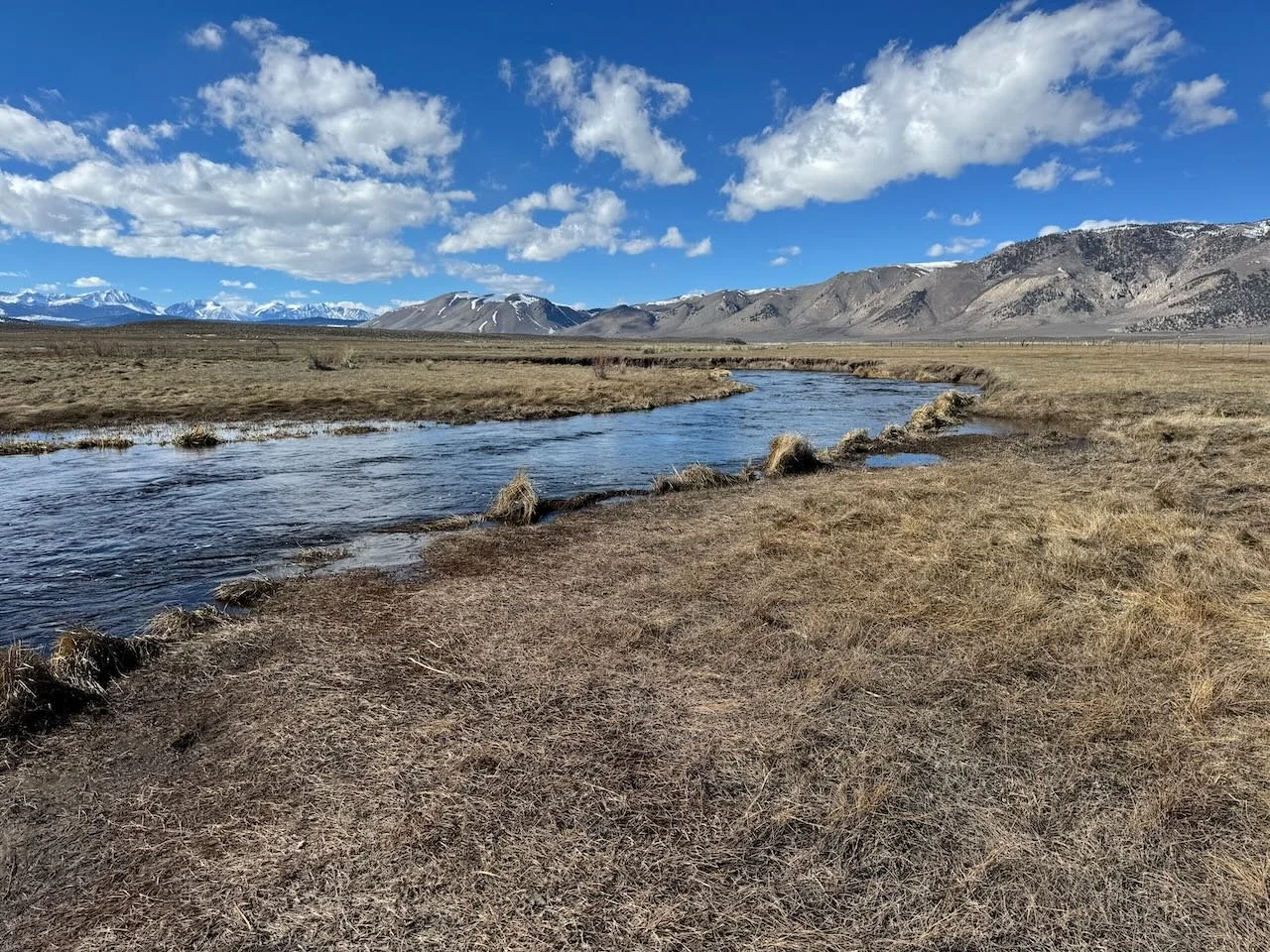
The snow on the meadows of the upper Owens River are gone and the trophy trout are still in the river and taking nymphs fished on the substrate under an indicator or with a Euro rig.

Upper Owens River

Above Benton Crossing Bridge:

The heat is drying out the meadows and dirt roads along the upper Owens River upstream of Benton Crossing Bridge. Working nymphs, eggs, mop flies and worm patterns in the deep holes, deep runs and cut banks where the trophy trout are resting and feeding is producing wild rainbow trout from 16 to 24 inches. Thoroughly work you flies before moving upstream to cover new water. Key to success is being able to thoroughly cover the water with your nymphs bouncing them off the substrate. Fish with size 12 stoner nymphs, size 12 green/gold Prince nymphs, size 12 Richards gold ribbed hare’s ear variation, size 14 copper John’s, size 14 tungsten tacos, size 10 mop flies and size 12 squirmy wormies.

Mid-day temperatures are in the high 80’s middle of the day on Bishop Creek Canal and the trout are taking blue wing olive mayflies hatching middle of the day.

 Bishop Creek Canal

Behind Bishop Veterinary Hospital:

As the water goes up in the lower Owens River look for the water in Bishop Creek Canal to rise. It will not rise as significantly as the lower Owens River is rising. If you can handle the mid-80’s heat that the Owens Valley is experiencing you will find rainbows and browns rising to emerging blue wing olive parachutes. Fish with size 18 blue wing olive parachutes, size 18 olive sparkle duns, size 18 Adams parachutes and size 18 pheasant tail paranymphs. On the substrate under an indicator, dry fly or with a Euro rig fish with size 18 olive quilldigons, size 18 bead head flash back pheasant tail nymphs, size 18 Frenchie’s, size 16 hot spot pheasant tail nymphs and size 16 olive quill RS2’s. Key to success is not spooking the trout in the clear water, getting a drag free drift and using the proper amount of weight in the flies or as added split shot to the tipper to bounce the nymphs off of the substrate.

Sierra Bright Dot Fly Fishing Report 03-12-2026

March is the start of spring in the Eastern Sierra. April and May are quite often cold and windy. Right now days are warm and shorts are coming out of the closet. With the warmer weather is coming hatches of mayflies, caddis flies and midges mid-day to early afternoon. Dirt roads are muddy from the melting snow and drying out with the heat. March is the time to come up and fly fish in the Eastern Sierra.

Snow in the mountains and warm sunny days in the Owens Valley makes March the perfect time to be fly fishing in the Eastern Sierra.

Lower Owens River

Wild Trout Section:

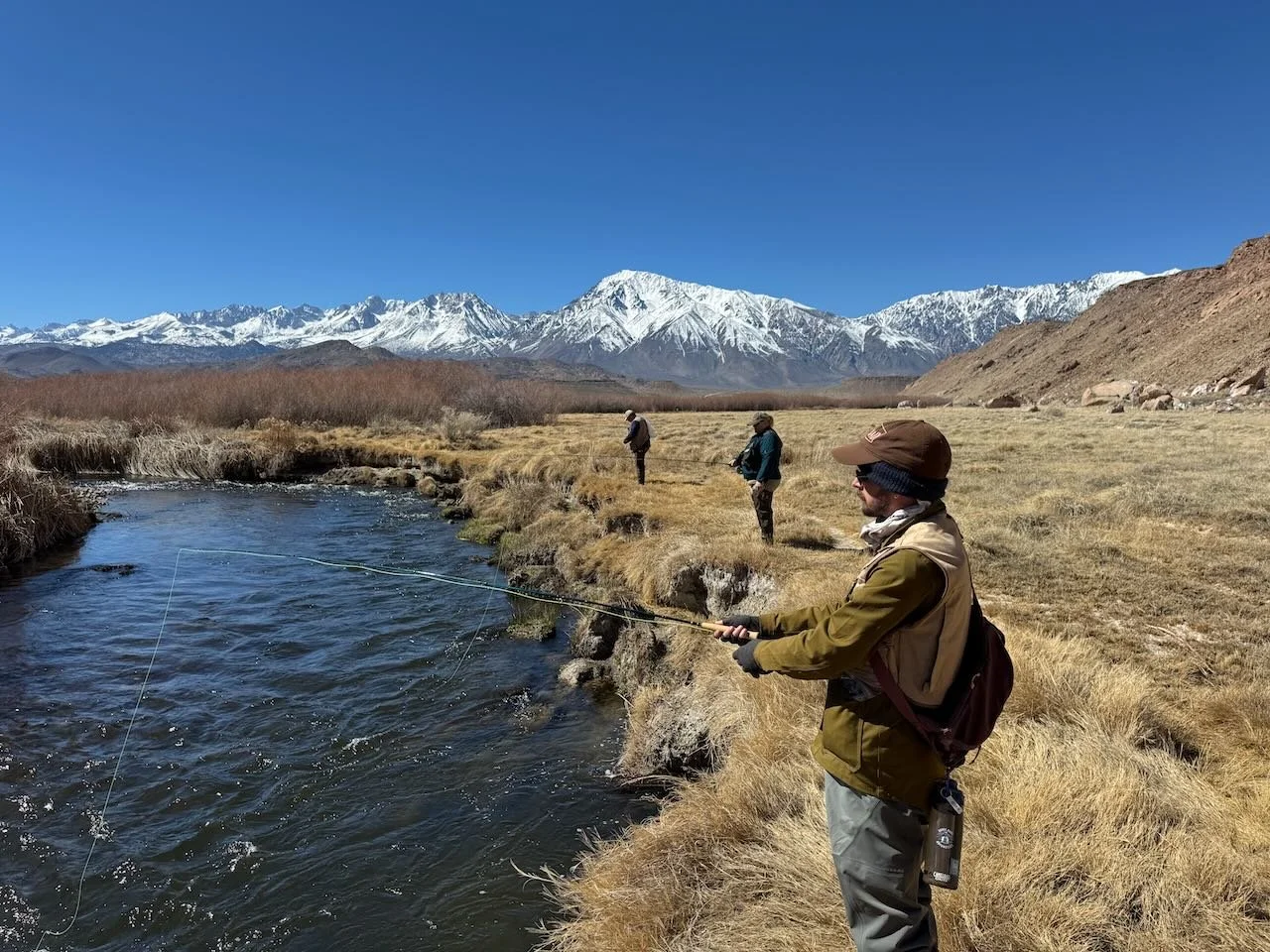
March is the time for fly fishers to invade the lower Owens River. This past weekend saw the Sierra Pacific Fly Fishers bring 30 new fly fishers to the lower Owens River for their annual Introduction to Fly Fishing Graduation Outing. The students had a great time and many of them landed trout on dry flies and nymphs. Adding to the numbers of fly fishers on the river was the Long Beach Fly Fishing Club. Where you could find water to fish the trout were feeding on caddis and blue wing olive mayflies. On the substrate the trout were taking size 18 Frenchie’s, size 18 soft hackle pheasant tail nymphs, size 16 hot spot pheasant tail nymphs, size 18 bead head flash back pheasant tail nymphs, size 18 olive quilldigons, size 16 gold ribbed hare’s ear, size 18 La Fontaine’s caddis emergers, size 16 Duracell’s and size 16 Butano nymphs. On the surface the trout are feeding on size 18 elk hair caddis, size 18 E/C caddis, size 18 foam caddis, size 18 X-Caddis, size 18 olive sparkle duns, size 18 Adams parachutes and size 18 blue wing olive parachutes.
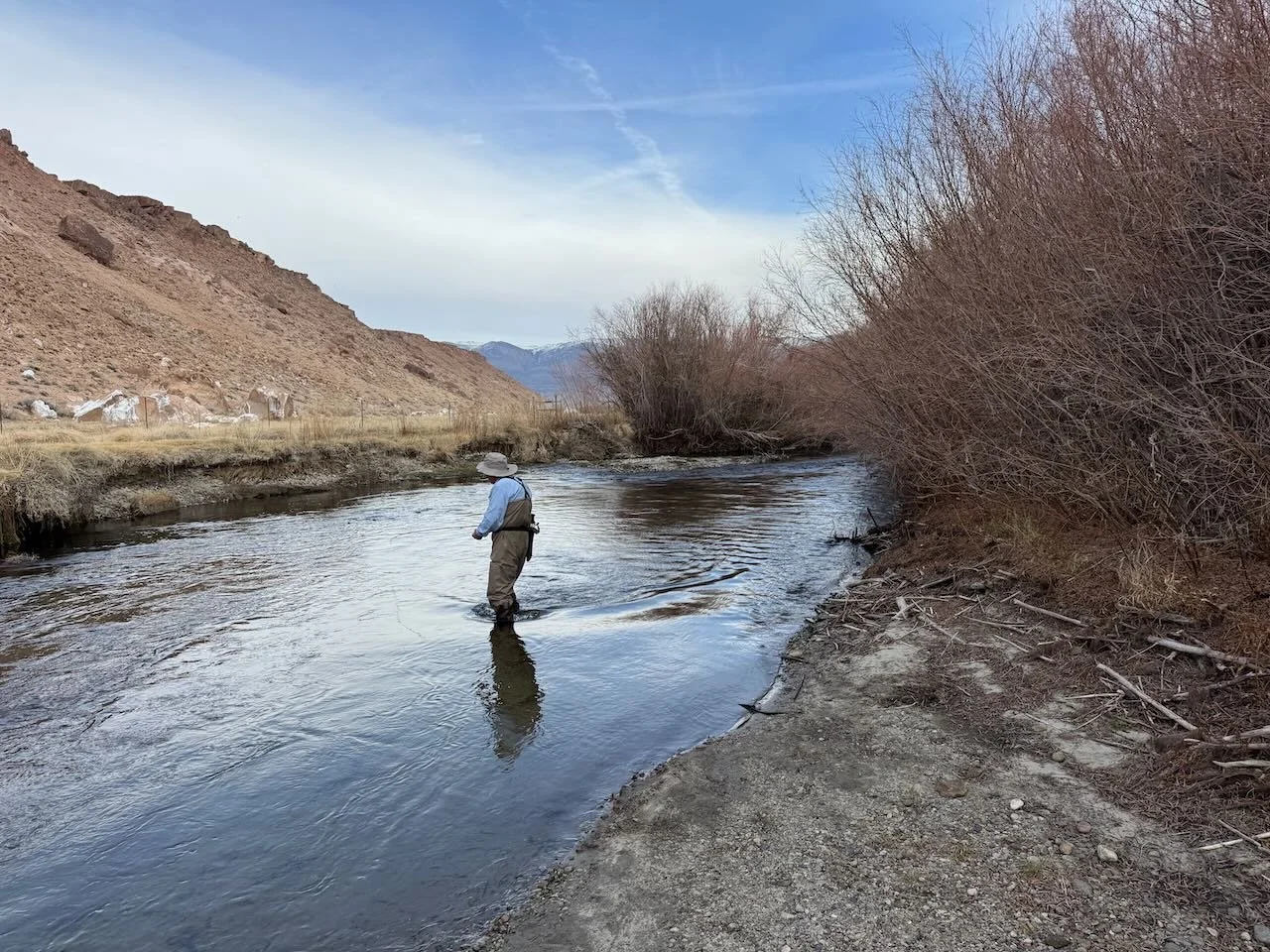
Fishing in the lower Owens River with nymphs and dries is producing wild rainbows and brown trout to 16 inches.

Hot Creek

Interpretive Site:

With a week’s worth of sunshine and warmth the road into Hot Creek Interpretive Site is drivable. Mid-morning hatches of midges and mayflies are bringing the trout to the surface. Fish with size 20 blue wing olive parachutes, size 20 olive sparkle duns, size 20 Adams parachutes, size 20 Griffith’s gnats and size 20 CDC midges. Key to success is to cast to rising trout and time the drift of your fly to coincide with the rhythm of the feeding trout.

A week ago the road into the canyon section of hot Creek was questionable to drive and now with the heat you can drive out to the parking areas accessing the canyon of Hot Creek.


Hot Creek

Canyon Section:

Quickly the snow is disappearing and the road to the canyon section of Hot Creek is now drivable. This is the time of year when the weed beds are at their smallest and it’s possible to fish nymphs in the canyon section. Fishing in the open water sections and the holes next to the weed beds is where you will find the trout feeding on midge and mayfly nymphs. Fish with a dry and dropper or a Euro nymph rig with size 18 olive quilldigons, size 18 bead head flash back pheasant tail nymphs, size 18 Frenchie’s, size 16 hot spot pheasant tail nymphs, size 18 soft hackle pheasant tail nymphs, size 20 green/gold brassie, size 20 soft hackle brassie and size 20 thread midges in tiger and zebra coloration to fool the wild trout.
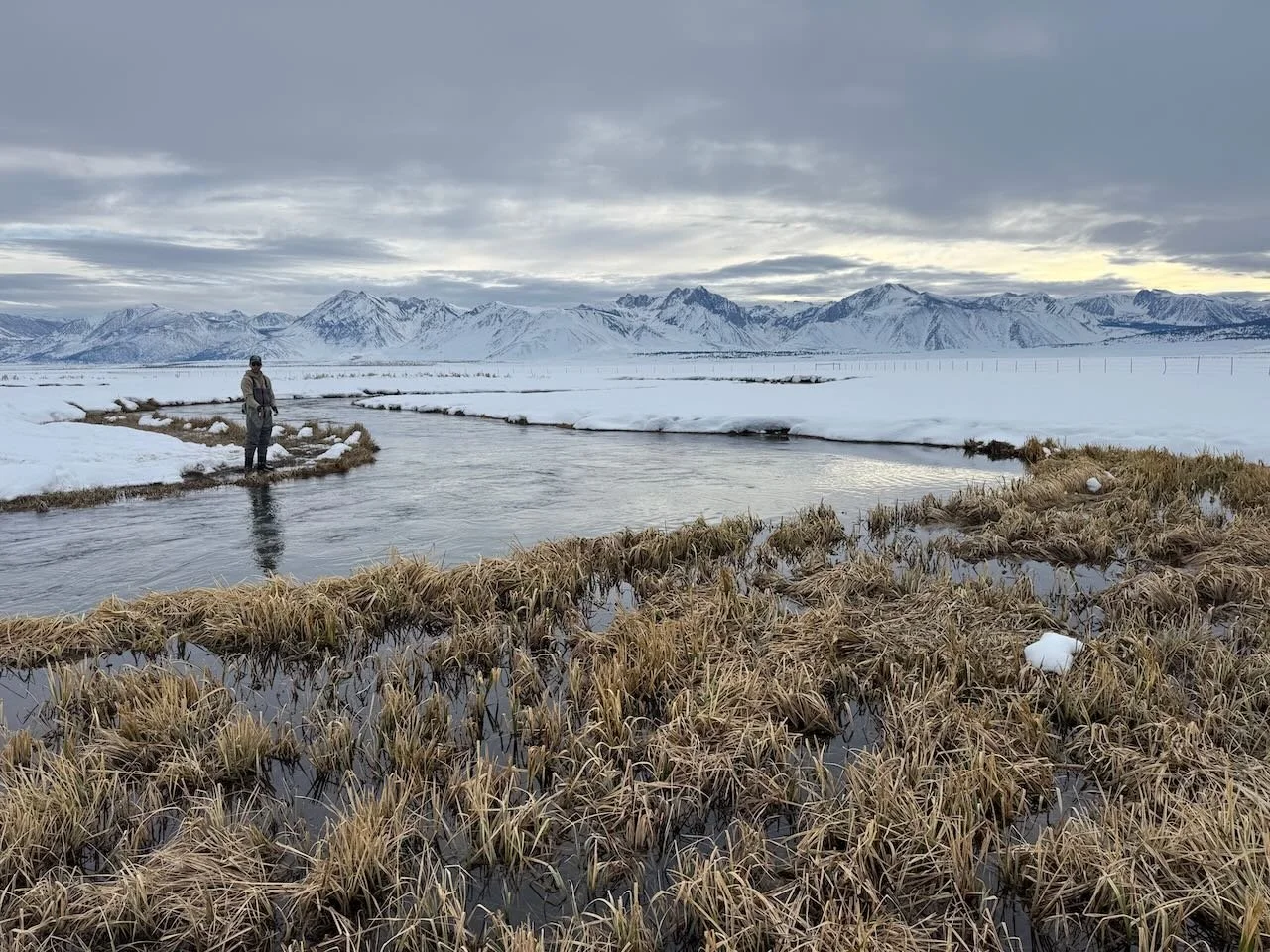
And just like that the snow on the upper Owens River is gone and trophy trout are still taking nymphs.
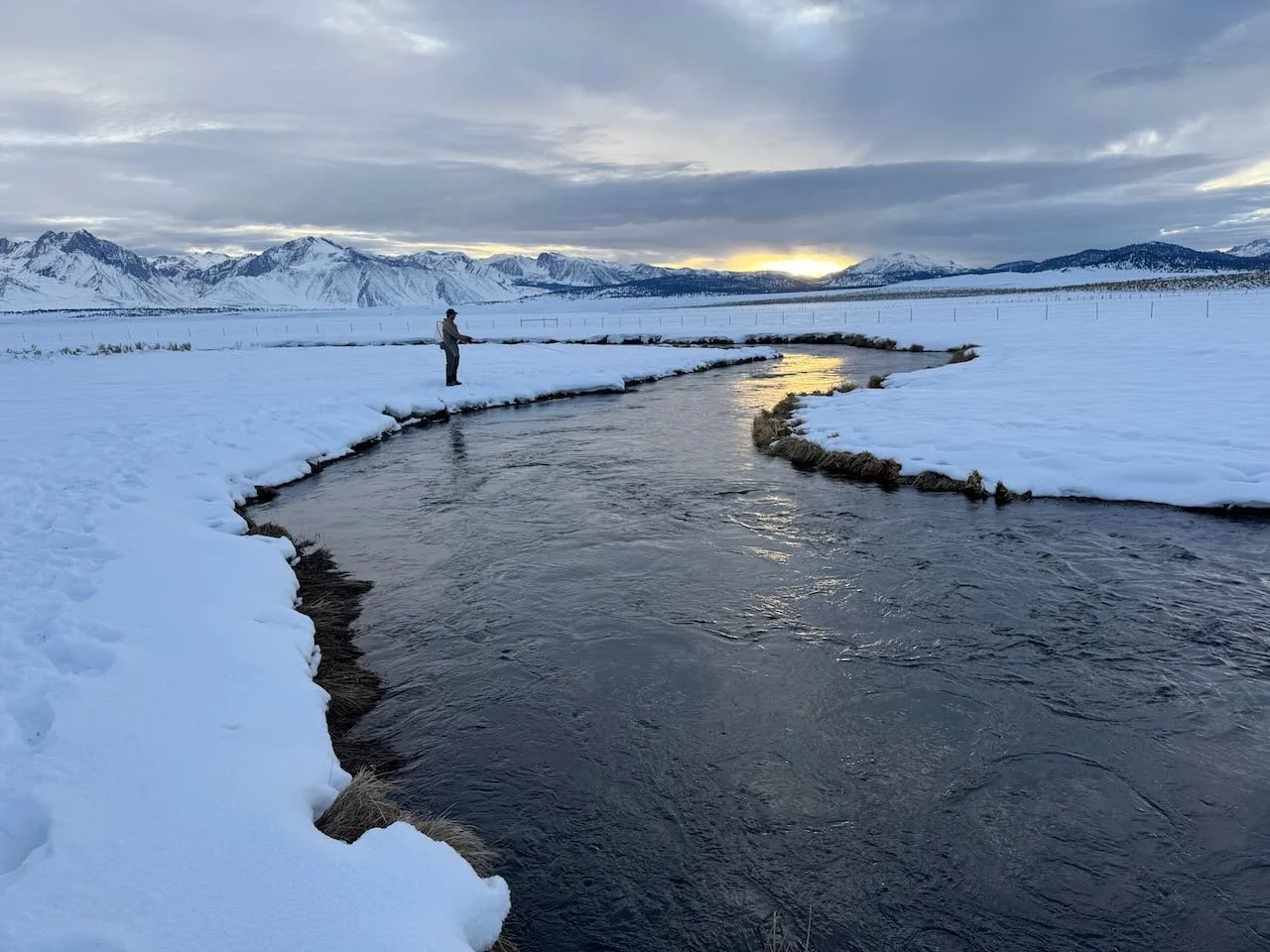
Upper Owens River

Above Benton Crossing Bridge:

The warm weather is drying out the dirt roads up river of Benton Crossing Bridge. Mud is no fun to get stuck in, so drive with caution. Trophy rainbow trout are still in the river and are resting and feeding in the deep holes, deep runs and cut banks. Using the right amount of weight and getting the flies down on the substrate and thoroughly covering the water is what will produce trophy trout. Fish with size 12 stoner nymphs, size 14 copper John’s, size 12 green/gold wire Prince nymphs, size 12 Richard’s version of a gold ribbed hare’s ear, size 12 squirmy wormies and size 14 tungsten tacos to fool the trophy rainbow trout.

Mid-day hatches of blue wing olive mayflies have the trout feeding on the surface.

Bishop Creek Canal

Behind Bishop Veterinary Hospital:

It’s been T-shirt and shorts weather in the Owens Valley during the day. Blue wing olive mayflies are hatching mid-day and the wild rainbows and brown trout are coming to the surface for the hatching blue wing olive mayfly duns. Fish with a size 18 blue wing olive parachute, size 18 olive sparkle dun and size 18 Adams parachute. Key to success is targeting specific rising trout. Getting a drag free drift is what will produce the takes from the surface feeding trout.

Sierra Bright Dot Fly Fishing Report 03-05-2026

And just like that the sun came out, the weather warmed up and a lot of snow melted in just a few days. The ice on Crowley Lake is mostly broken up and the snow line is approaching the 8,000 foot level. Dirt roads in the Long Valley area are full of snow melt and are very muddy. Drive this area with caution. Know your limitations. I choose to walk out to the river and not get my truck stuck or tear up the dirt roads. Caddis, mayflies, midges and stoneflies are the insects the trout are feeding on, on the surface and on the substrate. Owens Valley is warming up nicely and offering T-shirt weather fly fishing middle of the day.

Two weeks ago and there was plenty of snow in the Eastern Sierra and now with the warming weather the snow is quickly melting and the dirt roads are muddy.

Lower Owens River

Wild Trout Section:

Caddis and blue wing olive hatches are bring the trout to the surface mid-day. Trout are consistently rising to the emerging insect from 11:00 A.M. to 1:00 P.M. each day. Be aware that these times may fluctuate. Blue wing olive mayflies are hatching and fly fishers should use size 18 blue wing olive parachutes, size 18 Adams parachutes, size 18 olive sparkle duns on the surface and size 18 olive quilldigons, size 18 bead head flash back pheasant tail nymphs, size 16 hot spot pheasant tail nymphs, size 18 soft hackle pheasant tail nymphs and size 18 Frenchie’s on the substrate. Caddis hatches are more prolific on the lower sections of the wild trout section of the wild trout section of the lower Owens River and are slowly working their way up stream. Use size 18 elk hair caddis, size 18 X-caddis, size 18 foam caddis and size 18 E/C caddis on the surface and size 18 gold ribbed hare’s ears, size 18 La Fontaine’s caddis emerger, size 16 Butano nymph and size 18 Duracell nymphs on the substrate and in the water column. Swimming nymphs and emergers to the surface in a caddis hatch will provide action for fly fishers using a Leisenring lift. Winter skwala stoneflies are still providing trout with energy when they feed on the nymphs and adults. For the nymphs fish with a size 12 stoner nymph, size 14 copper John’s and size 14 Pat’s rubber legs on the substrate and fish with size 12 yellow/olive stimulators and size 14 yellow/olive bodied Chernobyl ants. There are a few wet mud spots on Chalk Bluff Road.

Wading upstream and casting your flies into the riffle directly above the pool is where you will find the wild trout feeding on the hatching mayflies and caddisflies..

Hot Creek

Interpretive Site:

The snow is soft and easy to walk through to the Interpretive Site, but is still too deep to drive into the parking area at the Interpretive Site. Fly fishers walking into the Interpretive Site will be welcomed with hatching mayflies and midges late morning into early afternoon. Fish on the surface with size 20 blue wing olive parachutes, size 20 Adams parachutes, size 20 olive sparkle duns, size 20 Griffith’s gnats and size 20 CDC midges. Targeting specific rising trout is a fun way to fish through the hatch. Sometimes it will take multiple drifts to time the rise of the trout with the drift of the fly. On the substrate fish with a size 18 olive quilldigon, size 18 bead head flash back pheasant tail nymph, size 18 Frenchie’s and size 20 thread midges in tiger and zebra coloration.

Walking into the Interpretive Site is through snow deeper than a vehicle can drive, but shallow enough for easy walking through the footsteps left by other fly fishers.

Hot Creek

Canyon Section:

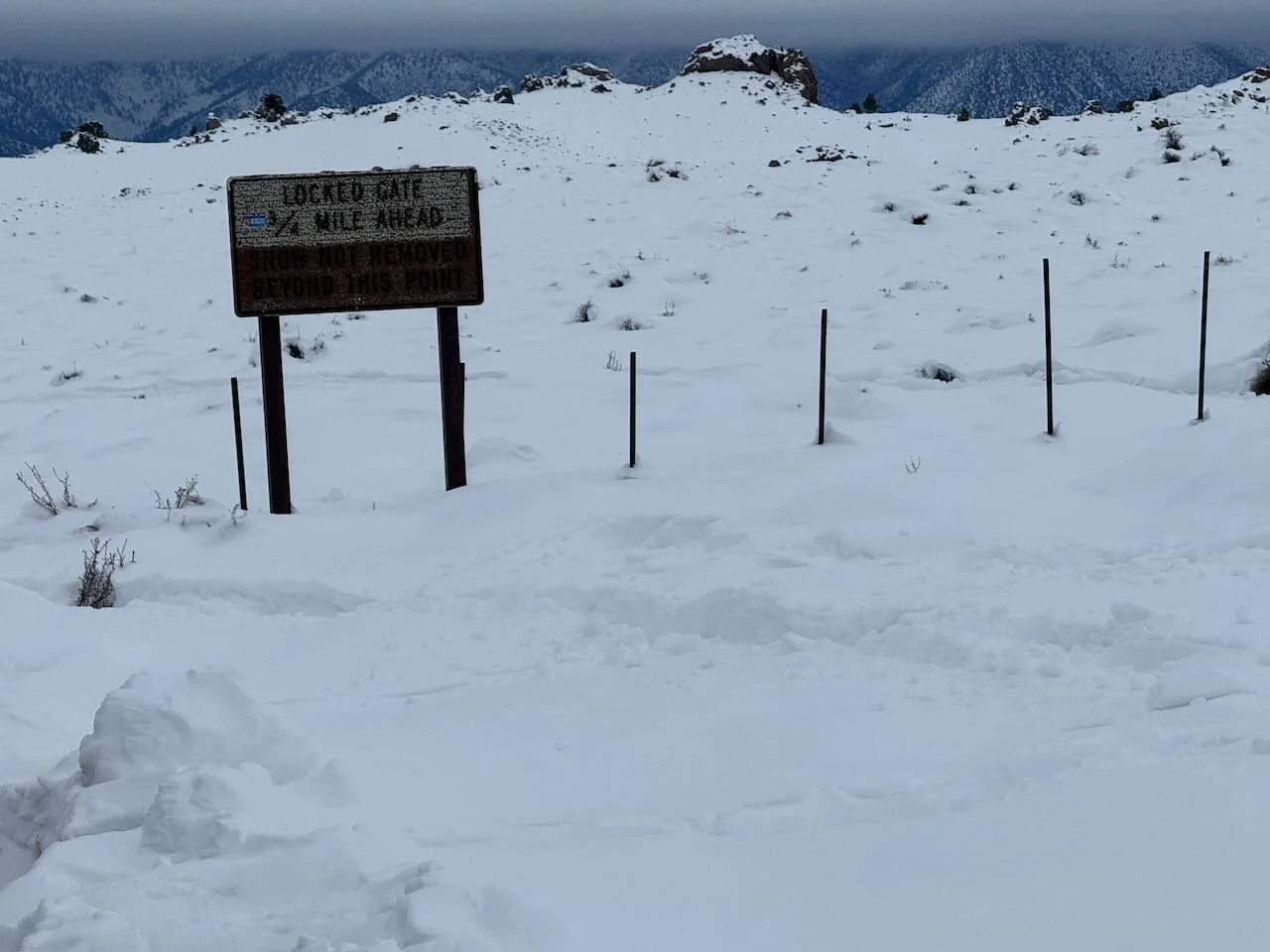
There is a road closed sign on Hot Creek Hatchery Road where the winter closure is. There is a set of tire tracks out to the canyon, but I was not willing to drive out and possibly getting stuck. The snow is soft and not very deep so the walk out to the parking areas to access the canyon is pretty easy. For fly fishers fishing in the canyon, now is the easiest time to be nymphing with the weed beds at their lowest growth point of the year. It will not be long before the weed beds start growing again and making it tougher to fish nymphs. A dry and dropper is a great way to nymph in the canyon. Use a size 16 Adams parachute for the dry fly and fish with size 18 olive quilldigons, size 18 bead head flash back pheasant tail nymphs, size 18 Frenchie’s, size 18 soft hackle pheasant tail nymphs, size 20 green/gold brassies and size 20 thread midges in zebra and tiger coloration.
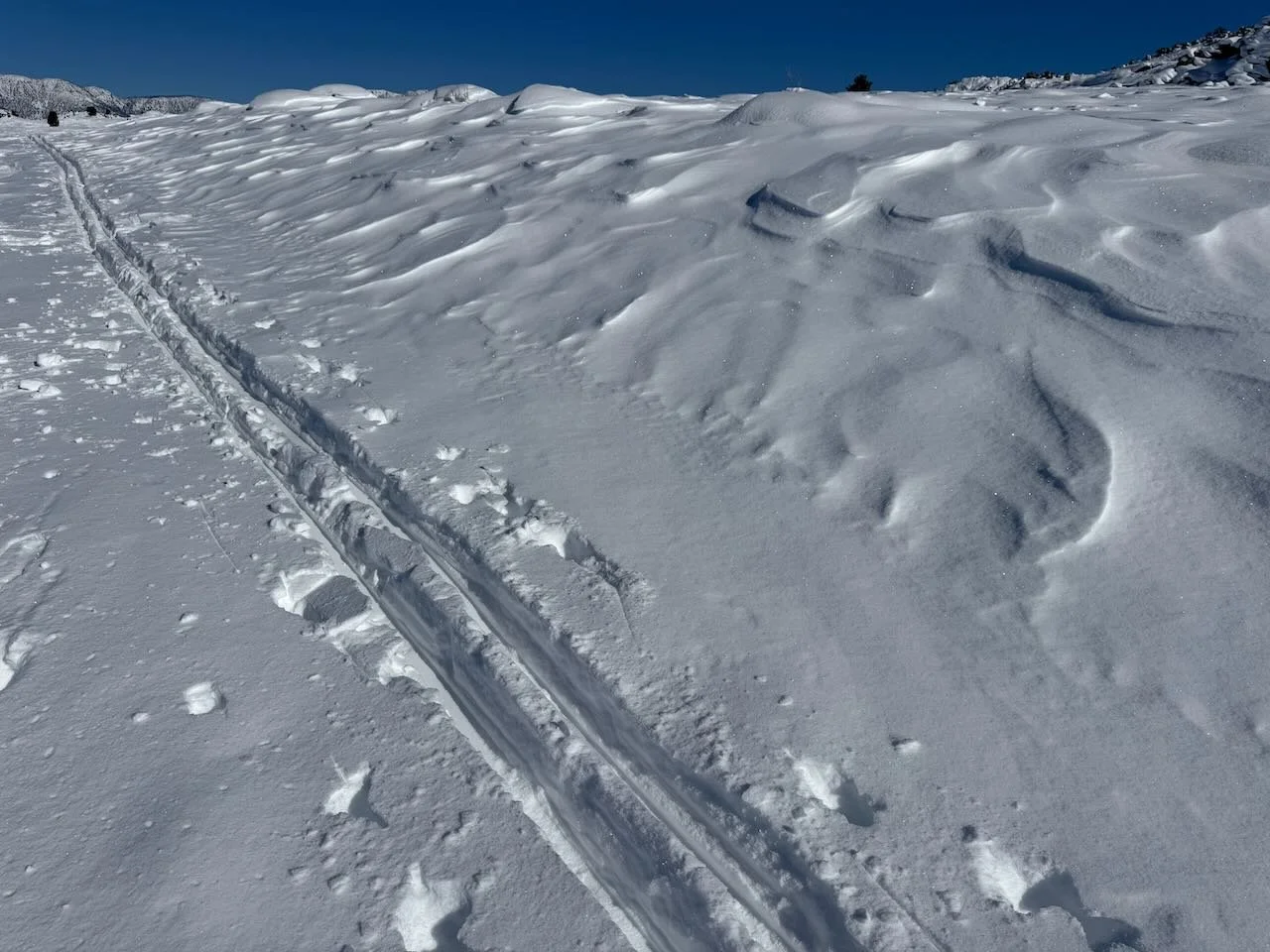
Fly fishers willing to walk into the upper Owens River are being treated to trophy rainbow trout.

Upper Owens River

Above Benton Crossing Bridge:

I’m old enough that I don’t want to deal with getting my truck unstuck. So there is lots of muddy roads on the upper Owens River to get a truck stuck in. My recommendation is to park on the main dirt road and walk in. It’s a 20 minute walk out to the river from the main dirt road. Working nymphs in the deep holes, deep runs and cut banks where the trophy trout are resting and feeding will produce the trophy trout. Nymph on a Euro rig or under an  indicator with size 12 stoner nymphs, size 12 green/gold Prince nymphs, size 12 Richard’s version of a gold ribbed hare’s ear, size 14 copper John’s, size 14 tungsten taco’s, size 12 squirmy wormies and size 10 mop flies. Key to success is to thoroughly cover the water your nymphing before moving onto another fish holding looking spot. Be sure to set the hook on the slightest of movement in the indicator or in the sighter.

It took a week for the snow to disappear, but the fly fishing on Bishop Creek Canal continues to be good with nymphs and dries.

Bishop Creek Canal

Behind Bishop Veterinary Hospital:

It took about a week for the snow to melt and now it’s all gone. Flows are at their lowest of the year. Nymphing and dry fly fishing is producing wild brown trout. For nymphs fish with size 18 bead head flash back pheasant tail nymphs, size 18 olive quilldigons, size 12 stoner nymphs, size 18 green/gold brassies and size 18 thread midges in zebra and tiger coloration.


The trout are feeding on the surface and on the substrate. Middle of the day fish with size 18 Adams parachutes, size 18 blue wing olive parachutes and size 18 olive sparkle duns to fool the trout feeding on the hatching blue wing olive mayflies on the canals surface. On the substrate fish with size 18 tiger midges, size 18 zebra midges, size 18 green/gold brassie emergers, size 18 olive quilldigons, size 18 bead head flash back pheasant tail nymphs and size 18 Frenchie’s.

Sierra Bright Dot Fly Fishing Report 02-25-2026

Time to figure out what is available for easy access and what will take time for the snow to melt before drivable access. Snow shoes, skis and snowmobiles are needed to access Long Valley waters. The sun is out, the fish are rising and it’s time to get up and fly fish the Eastern Sierra. Blue wing olive mayflies are hatching and the fish are feeding on the surface and the substrate. Winter Skwala stoneflies are active and the trout are feeding on them. Dirt roads in the Owens Valley have mudpuddles, but are drivable and should be dried out by the weekend. Overcast days are days to be on the water fly fishing with blue wing olive mayflies at noon.

It looks like winter time in the Eastern Sierra and the trout are feeding on blue wing olive mayflies and skwala stoneflies and it’s time to fly fish the waters of the Eastern Sierra.

Lower Owens River

Wild Trout Section:

March is the season for dry fly fishing with blue wing olive mayflies and winter skwala stoneflies on the lower Owens River in the wild trout section. Mid-Day hatches, noon to 1:00 P.M., of blue wing olive mayflies are bringing the trout to the surface if you’re in the right section of the river. Look for consistent rising trout and use a size 18 blue wing olive parachute, size 18 Adams parachute and size 18 sparkle dun. Fish these dries upstream and up and across to rising trout on a monofilament 5X tippet. In the mid-afternoon use size 12 and 14 yellow-olive stimulators to imitate the skwala stoneflies. Nymphing on a Euro rig and under an indicator rig with size 12 stoner nymphs, size 14 copper John’s, size 18 bead head flash back pheasant tail nymphs, size 18 olive quilldigons, size 18 Frenchie’s, size 18 French nymphs, size 18 JuJu baetis and thread midges in size 18 in olive, tiger and zebra coloration are fooling the trout feeding on the substrate. Key to success is having the proper amount of weight in your flies or as split shot on your tippet. Roads are drivable and should be dried out by the weekend if the warming trend continues.

Finding the right riffle pool around noon is where to be fly fishing with adult blue wing olive mayflies patterns like a blue wing olive parachute to consistently rising rainbow and brown trout.

Hot Creek

Interpretive Site:

It’s going to take snowshoes or skis to get into the Interpretive Site of Hot Creek. It will take some time for others to make a trail walkable with just waders and wading boots. For the fly fishers willing to put in the effort there will be rising trout to midges and blue wing olive mayflies. Size 20 Adams parachutes, size 20 blue wing olive parachutes, size 20 sparkle duns, size 20 CDC midges, size 20 quill emerger midges and size 20 Griffiths gnats are fooling the surface feeding trout. On the substrate fish with size 18 olive quilldigons, size 18 bead head flash back pheasant tail nymphs and size 20 thread midges in tiger and zebra coloration.

Nymphing with midge patterns and blue wing olive patterns are producing wild rainbow trout from Hot Creek.

Hot Creek

Canyon Section:

For now it’s going to take lots of energy to access the Canyon Section of Hot Creek. Fly fishers need to use skis or snowshoes starting from the winter road closure to the parking areas and trails leading into the canyon. Getting into the canyon with all this snow will be tricky. The midges are hatching before the mid-day blue wing olive  mayfly hatch. Nymphing with size 18 bead head flash back pheasant tail nymphs, size 18 olive quilldigons, size 18 olive French nymphs, size 18 Frenchie’s, size 20 green/gold brassies, size 20 soft hackle brassies and size 20 thread midges in zebra and tiger coloration are fooling the substrate feeding trout. On the surface if the trout are feeding consistently use size 20 sparkle duns, size 20 blue wing olive parachutes, size 20 Adams parachutes, size 20 midge emergers, size 20 CDC midges and size 20 Griffiths gnats to fool the surface feeding trout.

Access to the upper Owens River is now hindered by the new snow fall on the banks of the river.

Upper Owens River

Above Benton Crossing Bridge:

For now fly fishers will have to park at Benton Crossing Bridge and ski, snowshoe, walk or ride a snowmobile upstream to find the trophy trout. The trophy rainbow trout are still in the Owens River system and are feeding on nymphs, egg patterns, worm patterns and mop flies. Nymph with size 12 stoner nymphs, size 12 copper John’s, size 12 green/gold Prince nymphs, size 12 Richard’s variation of a gold ribbed hare’s ear, size 14 peach tungsten tacos, size 12 San Juan worms, size 12 squirmy wormies and size 12 mop flies. Look for the deep holes, deep runs and cutbanks where the trout are resting and feeding. The farther upstream fly fishers get they will find better water to fly fish for the trophy rainbow trout.

Last week’s snow has lasted longer than expected. This week’s warmer temperatures have melted the snow and the trout are feeding on hatching blue wing olive mayflies in the early afternoon.

Bishop Creek Canal

Behind Bishop Veterinary Hospital:

The trout are feeding on the surface and on the substrate. Middle of the day fish with size 18 Adams parachutes, size 18 blue wing olive parachutes and size 18 olive sparkle duns to fool the trout feeding on the hatching blue wing olive mayflies on the canals surface. On the substrate fish with size 18 tiger midges, size 18 zebra midges, size 18 green/gold brassie emergers, size 18 olive quilldigons, size 18 bead head flash back pheasant tail nymphs and size 18 Frenchie’s.

Sierra Bright Dot Fly Fishing Report 02-19-2026

The Eastern Sierra is getting much needed precipitation in the form of snow and rain. The Owens Valley got several inches of snow. Upper elevation waters will need to be evaluated for access once this series of storms have come and gone and we will know how much snow is left on the ground. My guess is that it will take snow shoes, skis or snow mobiles to access the waters in the Long Valley area. It will take a few days for the puddles of water to dry up on the dirt roads leading out to the waters in the Owens Valley. The overcast weather has helped out the blue wing olive hatch as it intensifies during overcast weather. Stoneflies, mayflies and midges are feeding the trout on the substrate and on the surface.

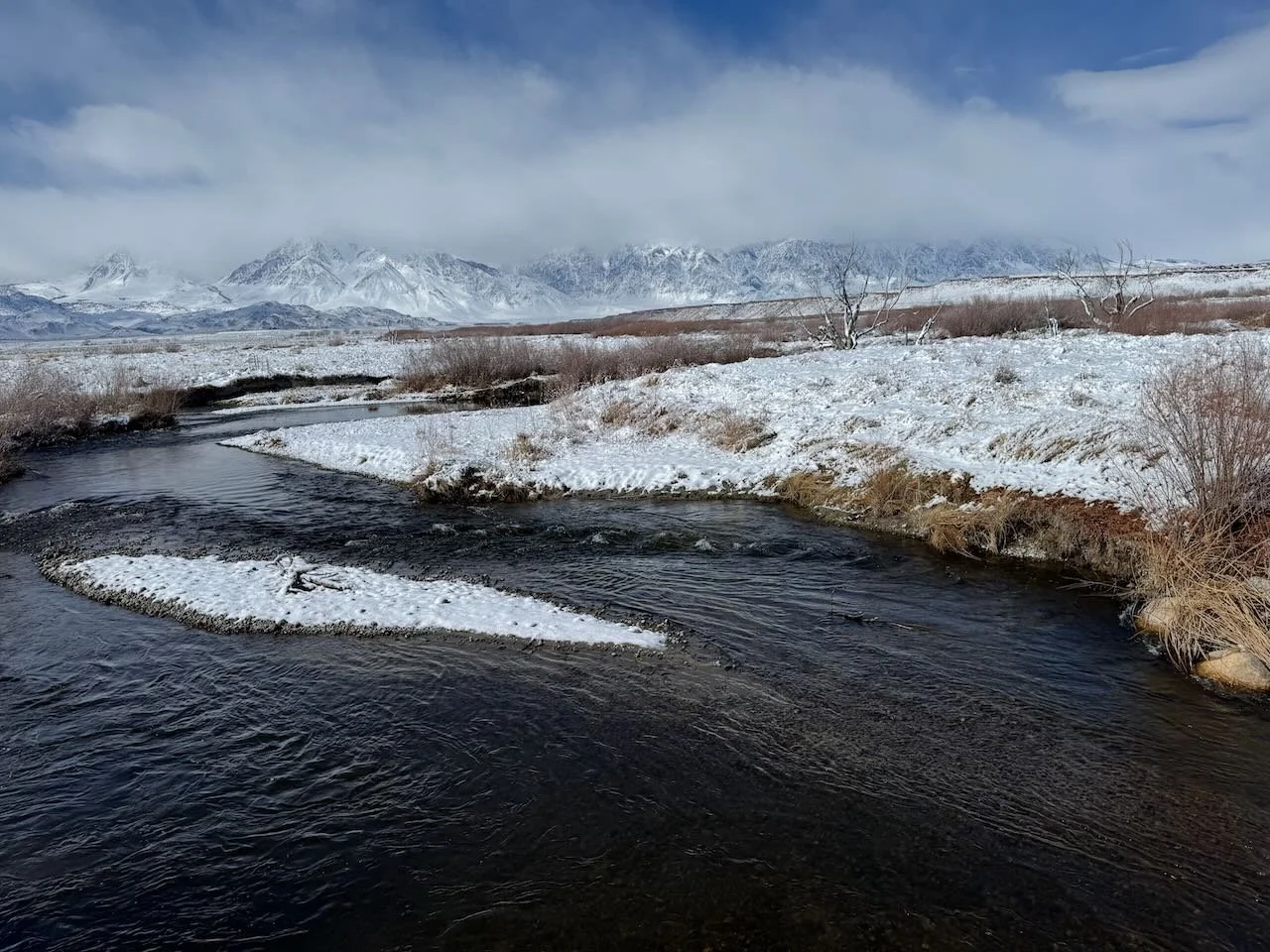
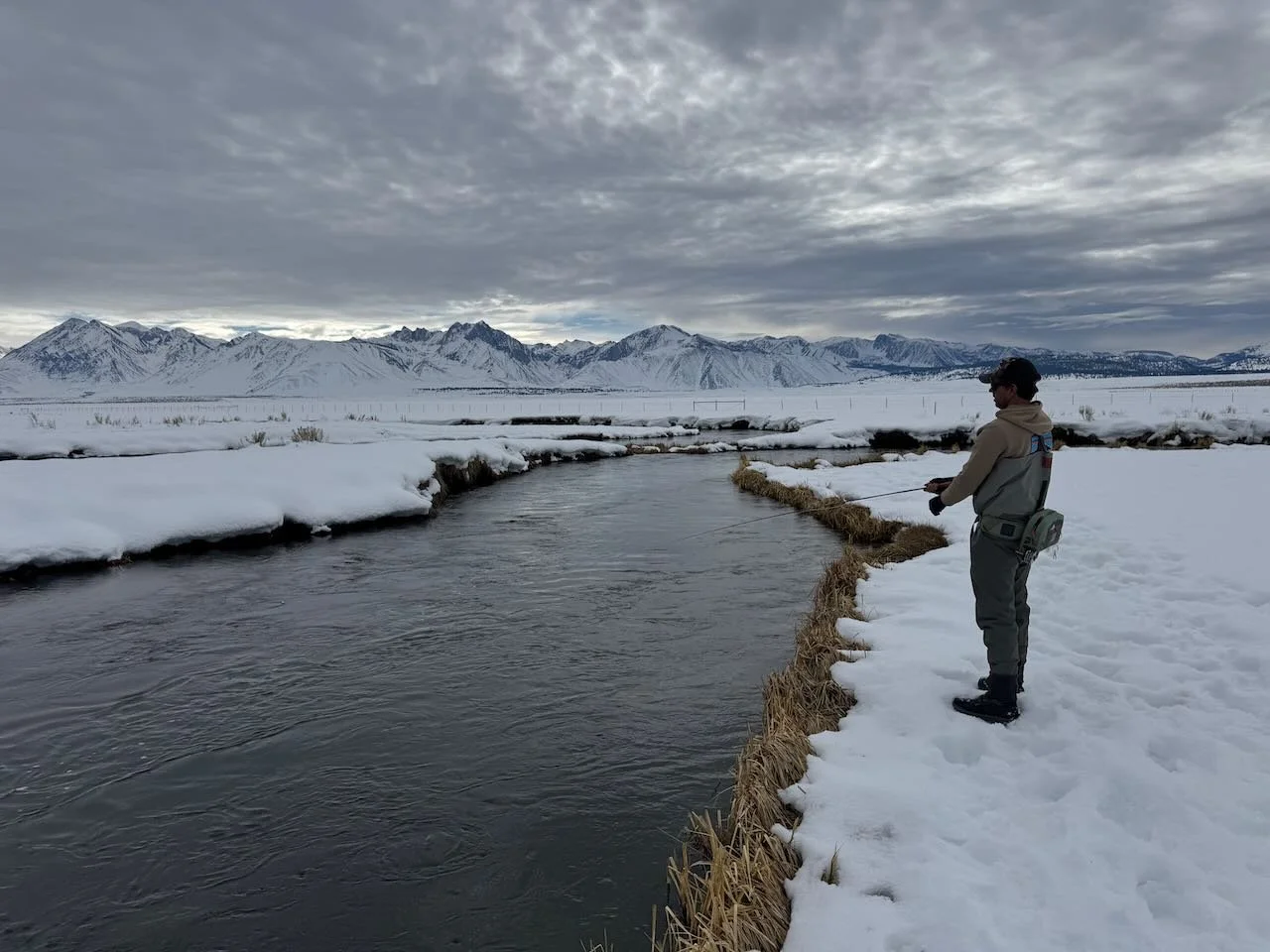
The Owens Valley got snow and the lower Owens River is dressed in a blanket of snow.

Lower Owens River

Wild Trout Section:

With the approaching storm fly fishers took advantage of the blue wing olive hatch by fly fishing with dry flies on the surface. Use a size 18 blue wing olive parachute, size 18 Adams parachute and size 18 olive sparkle dun to imitate the hatching blue wing olive mayflies. Nymphing continues to be the most productive method of fly fishing the lower Owens River. Whether using an indicator rig or Euro nymphing rig the trout are feeding on mayflies, stoneflies and midges on the substrate. Use size 18 olive quilldigons, size 18 bead head flash back pheasant tail nymphs, size 18 brown French nymphs, size 18 Frenchie’s, size 18 JuJu baetis, size 12 stoner nymphs and size 18 thread midges in olive, zebra and tiger colorations. If you were here when it snowed on the river your got a rare treat of fly fishing the lower Owens River in the snow or with snow on the banks.

Snow on the ground, snow in the mountains and trout rising to blue wing olive mayflies make for a perfect day on the lower Owens River.

Hot Creek

Interpretive Site:

Access will be determined after the storms drop their snow on the banks of the creek. Plan on using snow shoes or skis to access the Interpretive Site after the storms. Fishing is primarily on the surface with size 20 Adams parachutes, size 20 blue wing olive parachutes, size 20 sparkle duns, size 20 CDC midges, size 20 quill emerger midges and size 20 Griffiths gnats. When the trout are not feeding on the surface fish with size 18 olive quilldigons, size 18 bead head flash back pheasant tail nymphs and size 20 thread midges in tiger and zebra coloration.

Who will make first tracks into Hot Creek Interpretive site after this last set of storms?

Hot Creek

Canyon Section:

Access to the canyon sections will be limited by the fresh snow. Only the hardiest of fly fishers will be putting in the effort to access the waters of Hot Creek Canyon. For those few willing to put in the effort they will be rewarded by solitude and fish feeding on dries and nymphs. Nymphing is easiest this time of year as the weed beds are at their least. Nymphing with size 18 bead head flash back pheasant tail nymphs, size 18 olive quilldigons, size 18 olive French nymphs, size 18 Frenchie’s, size 20 green/gold brassies, size 20 soft hackle brassies and size 20 thread midges in zebra and tiger coloration. Mid-morning to early afternoon is when the blue wing olive mayflies are hatching. The midges are hatching before the mayflies. Fish with size 20 sparkle duns, size 20 blue wing olive parachutes, size 20 Adams parachutes, size 20 midge emergers, size 20 CDC midges and size 20 Griffiths gnats.
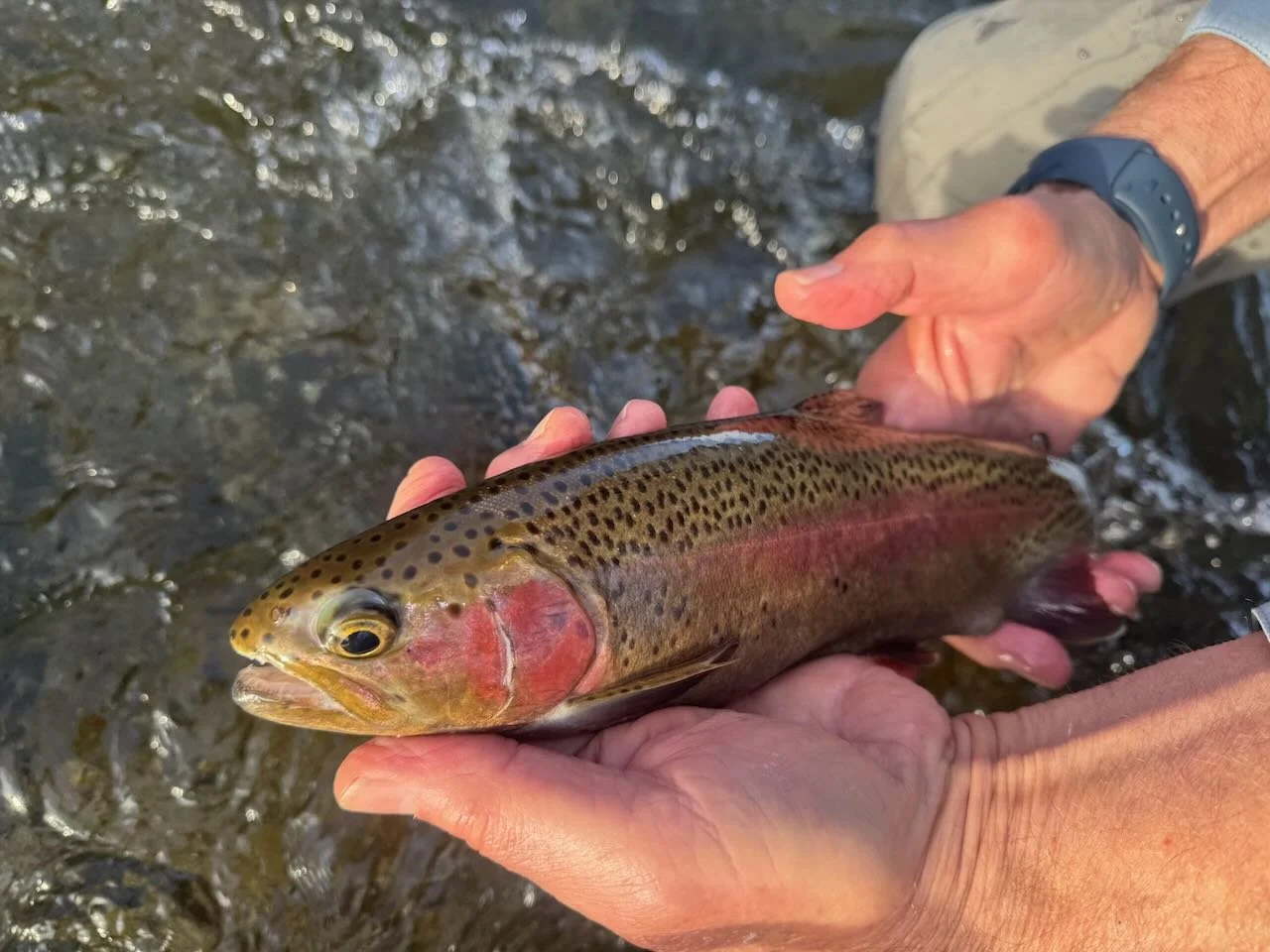
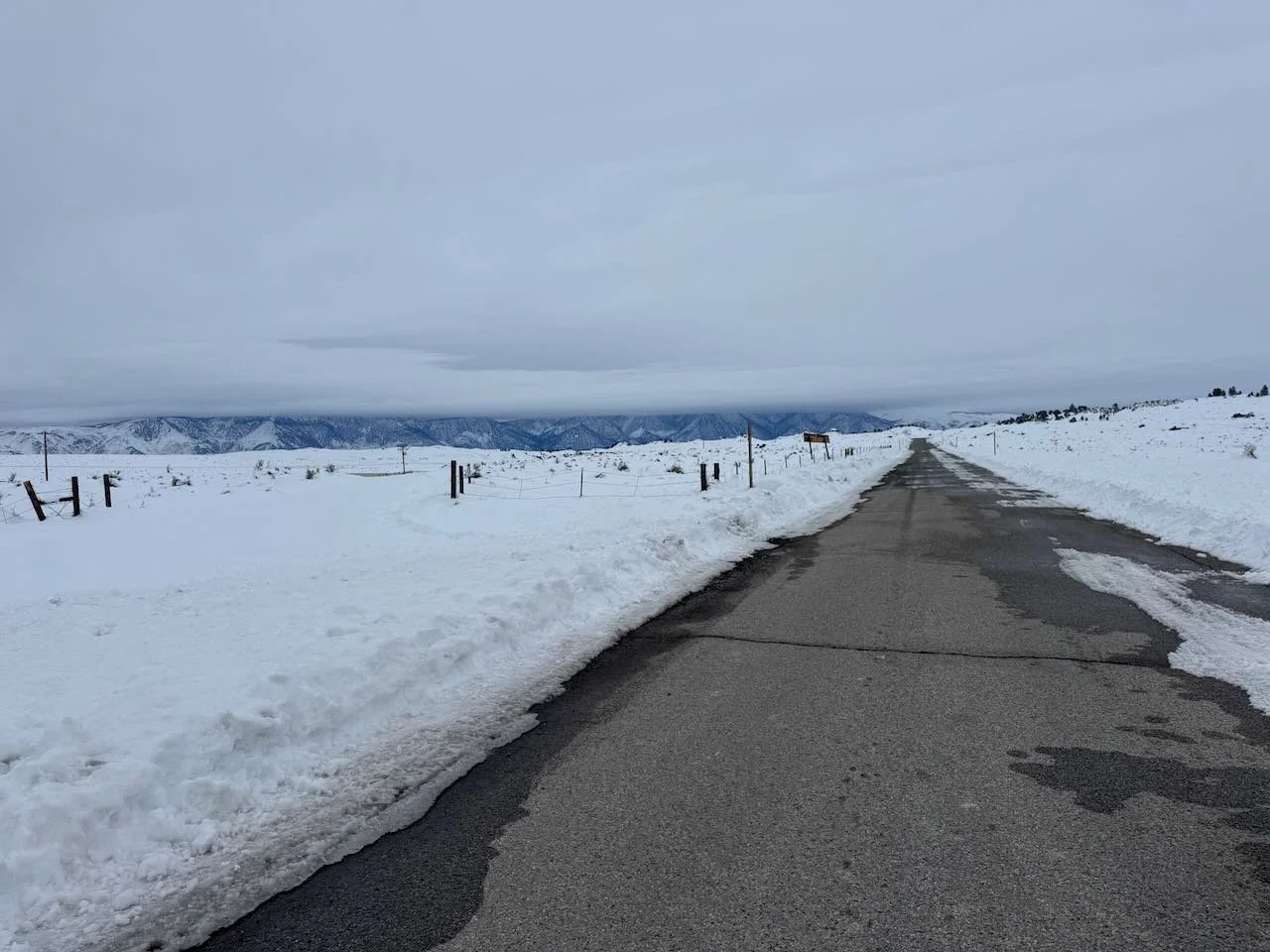
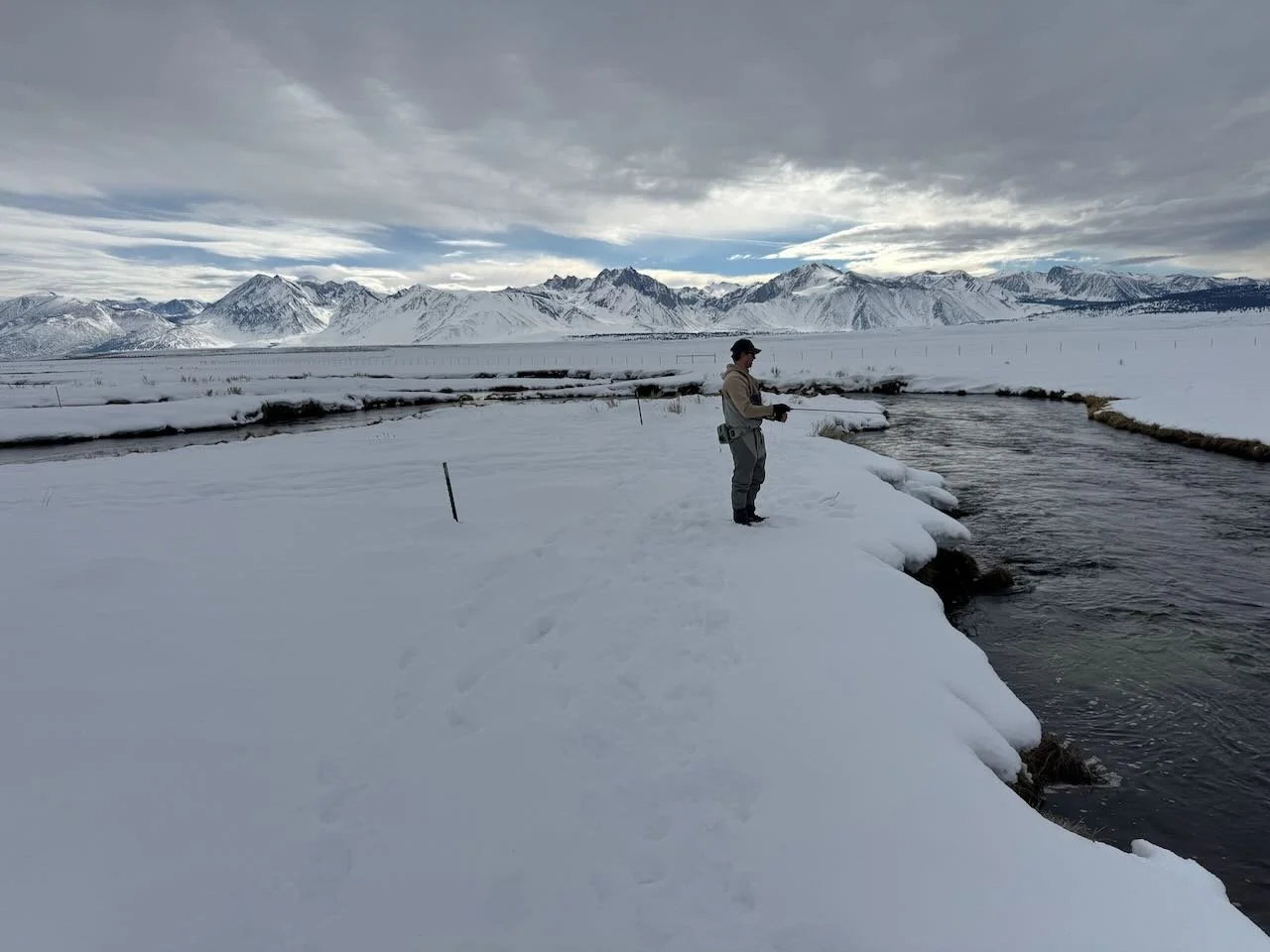
Despite access issues from the storm the few fly fishers braving the conditions are finding trophy rainbow trout willing to take nymphs, egg patterns, worm patterns and mop flies.

Upper Owens River

Above Benton Crossing Bridge:

With the new snow fly fishers will no longer be driving up the dirt roads above Benton Crossing Bridge. After the storms it will be time to reassess access to the upper Owens River. Trophy rainbow trout continue to offer fly fishers good fly fishing. Parking at Benton Crossing Bridge and walking upstream fly fishers should be fishing the deep holes, deep runs, and cut banks with size 12 stoner nymphs, size 12 green/gold Prince nymphs, size 12 Richard’s variation of a gold ribbed hare’s ear, size 14 peach tungsten tacos, size 12 San Juan worms, size 12 squirmy wormies and size 12 mop flies.

Bishop Creek Canal covered in a layer of snow while the trout were taking size 18 blue wing olive parachutes and size 18 olive quilldigons.

Bishop Creek Canal

Behind Bishop Veterinary Hospital:

Dry fly fishing middle of the day has been good using blue wing olive dry fly imitations. Use size 18 blue wing olive parachutes, size 18 Adams parachutes and size 18 olive sparkle duns. Nymphing with size 18 olive quilldigons, size 18 bead head flash back pheasant tail nymphs, size 18 Frenchie’s, size 20 olive, tiger and zebra thread midges is producing wild brown and rainbow trout.

Sierra Bright Dot Fly Fishing Report 02-12-2024

The warm trend has broken and there is precipitation in the forecast with a chance of snow in the Owens Valley. The Eastern Sierra can use precipitation in the form of rain and snow if we hope to have creeks and streams flowing at good levels this summer. Caddis and mayflies hatches are increasing in intensity and starting to bring the trout to the surface consistently. Winter Skwala stoneflies are starting to show up in the Eastern Sierra. Midges are a consistent trout food throughout the winter months.

A warm day, hatching mayflies and wading upriver is a perfect winter fly fishing day in the Owens Valley.

Lower Owens River

Wild Trout Section:

The wild rainbow and brown trout of the lower Owens River are feeding on mayflies, midges and stoneflies on the substrate. Size 18 olive quilldigon, size 18 bead head flash back pheasant tail nymphs, size 18 olive zebra and tiger colored thread midges and size 12 stoneflies are fooling the trout feeding on the substrate. On the surface the trout are feeding on size 18 blue wing olive parachutes, size 18 Adams parachutes, size 18 CDC midges and size 18 Griffith’s gnats. Caddis hatches are right around the coroner and the trout are starting to feed on caddis nymphs, pupae and adults.

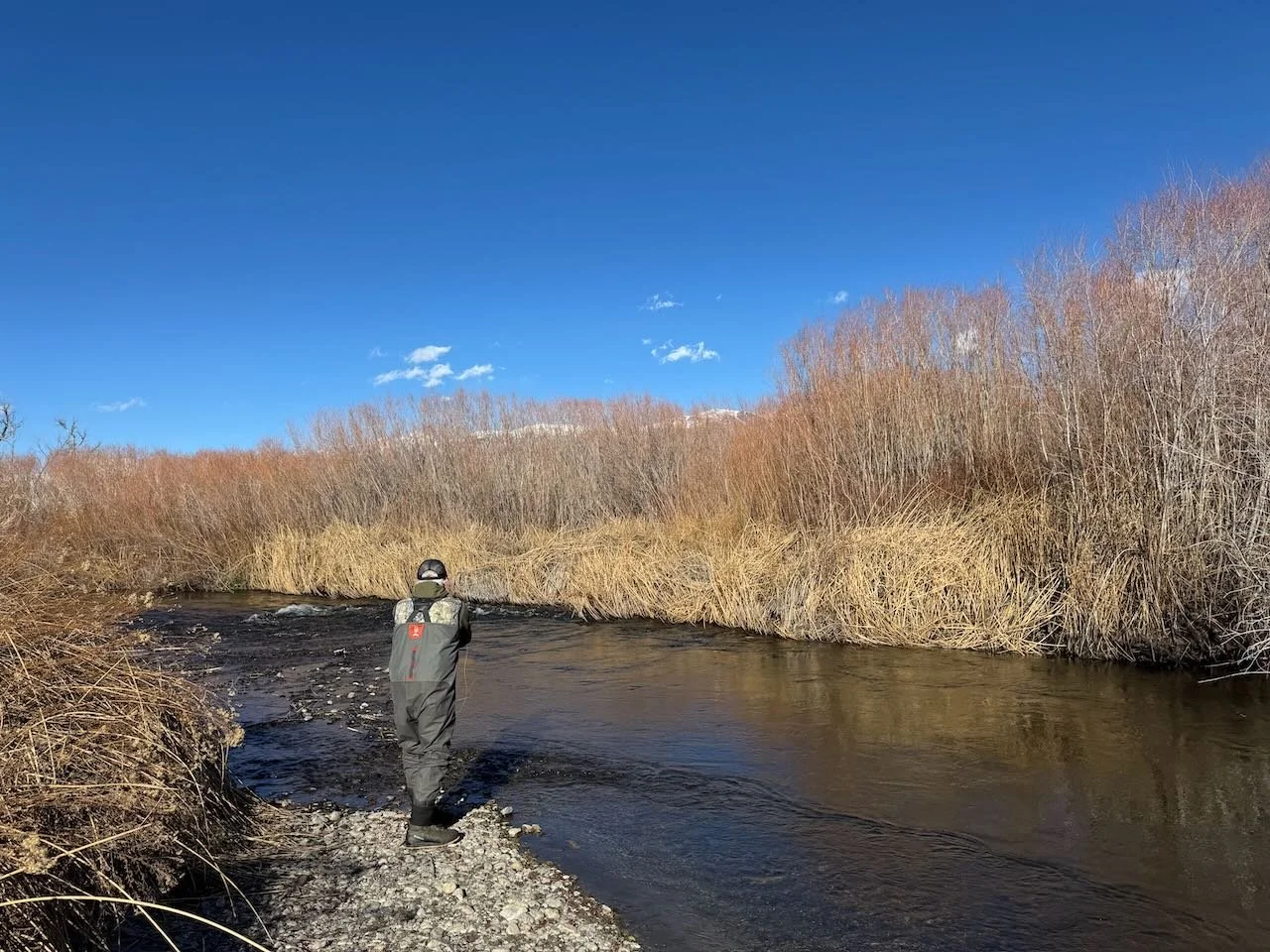
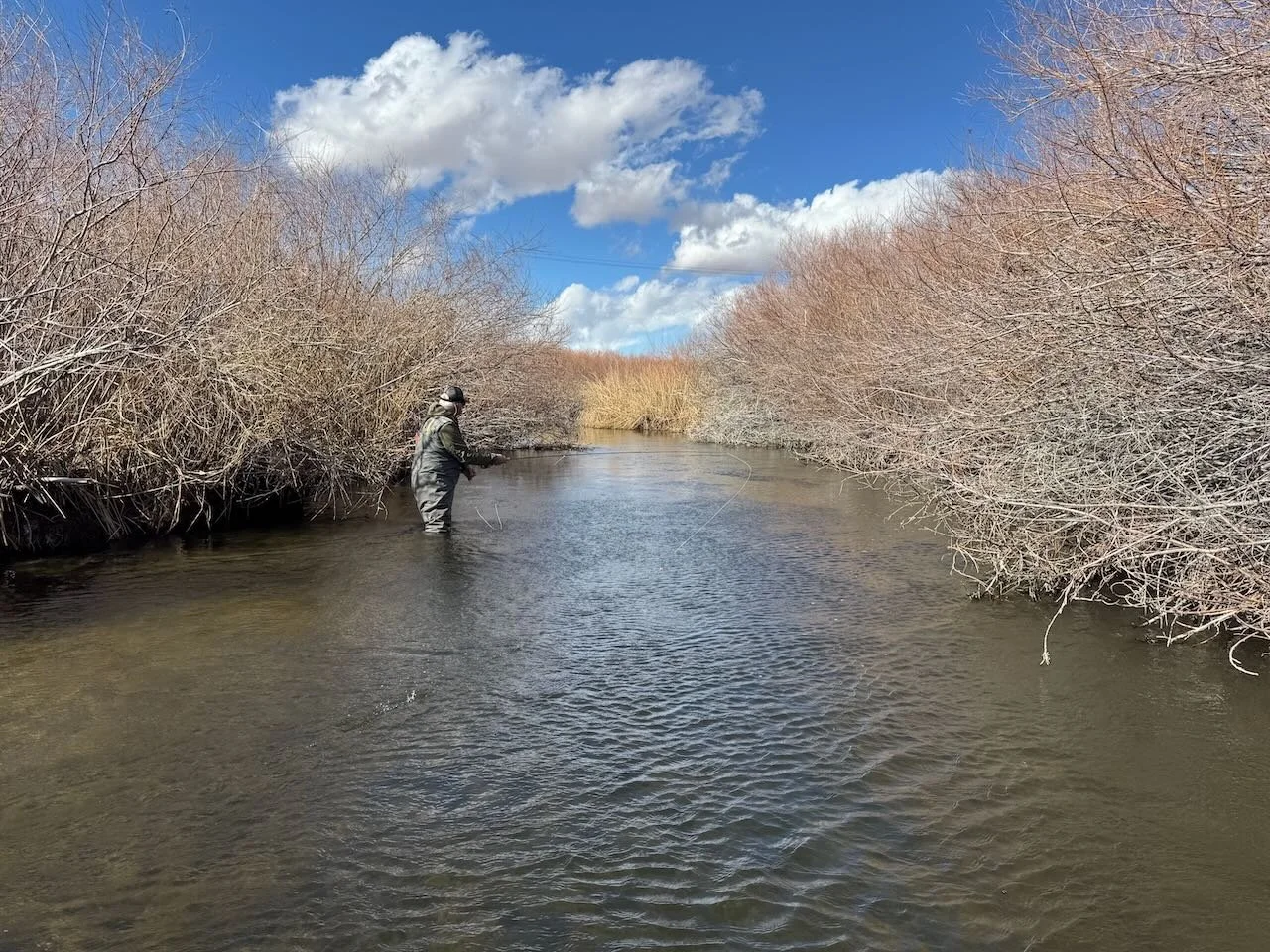
Wading up the Owens River with willows and tulles on both sides is how to fish with nymphs and dry flies in the winter time when the flows allows fly fishers to explore the lower Owens River.

Hot Creek

Interpretive Site:

What was will not be what will be on the creek. The warm weather and fly fishers walking out to the creek have developed trails that make it easier to access the Interpretive Site. With the approaching storms time will tell how much snow ends up on the ground and how that will affect creek. The fly fishing is good on the surface and on the substrate. On the surface fish with size 20 Adams parachutes, size 20 blue wing olive parachutes, size 20 CDC midges, size 20 midge emergers and size 20 Griffiths gnats. On the substrate use size 18 bead head flash back pheasant tail nymphs, size 18 olive quilldigons and size 20 tiger and zebra coloration thread midge patterns. Next week will show how much snow this area has gotten and how to access the creek.

Fly fishers looking to access Hot Creek Canyon will find the road inaccessible beyond the winter closure at the end of the paved Hot Creek Hatchery Road.

Hot Creek

Canyon Section:

This area requires the most effort to access it. Access starts at the end of the paved road where there is no plowing. There has been enough snow on the road to keep vehicles from driving out to the canyon parking areas. With the expected snow this area will continue to be accessible by walking, snowshoes, skis or walking in. Fly fishers will find solitude in the canyon section and trout feeding on nymphs and dries. Working nymphs in the slots between the weed beds, the riffles and the holes are where you can find trout willing to take your flies. Use size 18 olive quilldigons, size 18 bead head flash back pheasant tail nymphs, size 18 Frenchie’s, size 18 bead head baetis, size 20 green/gold brassies, size 20 soft hackle brassies and size 20 thread midges in tiger and zebra coloration.

For now the upper Owens River is accessible on foot for those who do not have four wheel drive vehicles with clearance.

Upper Owens River

Above Benton Crossing Bridge:

Snow has been melting and fly fishers have had to contend with some muddy patches driving out to the river. To be safe a lot of fly fishers have been parking at Benton Crossing Bridge and walking up river. Time will tell as to how much snow falls on the roads leading out to the upper Owens River and how accessible the area will be. It may be time for skis, snowshoes or snowmobiles to access the river. We will know when the snow is on the ground and we are counting it in feet or in inches. There are still good numbers of trophy rainbow trout in the deep holes, deep runs and cut banks taking nymphs, eggs and worm patterns. Fish with size 12 stoner nymphs, size 12 green/gold Prince nymphs, size 12 Richards variation of a gold ribbed hare’s ear, size 14 tungsten tacos, size 12 squirmy wormies, size 18 olive quilldigons and size 18 bead head flash back pheasant tail nymphs. Key to success is have the right amount of weight on the tippet as split shot or in the flies so the flies bounce on the substrate.

Working Bishop Creek Canal with dry flies and nymphs is producing wild rainbows and brown trout from six inches to 12 inches.

Bishop Creek Canal

Behind Bishop Veterinary Hospital:

Mid-day hatches of mayflies and midges are feeding the trout on the substrate and on the surface. Nymphing with an indicator or with a Euro rig bouncing nymphs on the substrate will produce wild rainbows and browns to 12 inches. Fish with size 18 bead head flash back pheasant tail nymphs, size 18 olive quilldigons, size 20 thread midges in olive, tiger and zebra coloration on the substrate with enough weight in the flies or on the tippet in the form of split shots. On the surface fish with size 18 Adams parachutes, size 18 blue wing olive parachutes, size 20 midge emergers and size 20 CDC midges.

Sierra Bright Dot Fly Fishing Report 02-05-2026

The first half of February is caring on the above normal temperatures and no precipitation that January brought to the Eastern Sierra. Looks like things might change the second half of February. As more sunlight per day slowly heats up the Eastern Sierra hatches of mayflies, stoneflies and caddis will be feeding the trout of the Eastern Sierra. Nymphing will continue to produce lots of trout. Hatches will intensify and bring trout to the surface. Snow is melting with the heat and we definitely need moisture in the form of snow and rain to get through the summer.

Rainbows and brown trout are feeding on mayflies, stoneflies and caddis as we move through the month of February.

Lower Owens River

Wild Trout Section:

This Saturday February 7, 2025 is the Trout Rodeo. Most of the participants will be fly fishing and spin fishing on the Owens River. It’s time to get off the beaten path and find the secluded spots others pass up. Find spots at each parking area on the river that most fly fishers pass by. Cast to those spots that are hard to reach asking you to snag and loose your flies. There are fish in these sports that most fly fishers pass by. With the warmer weather and the sun being out longer the mayfly hatch mid-day is intensifying to the point that more fish are feeding on the surface. On the surface fish with size 18 Adams parachutes, size 18 blue wing olive parachutes, size 18 olive sparkle duns, size 20 parachute midge emergers, size 20 CDC midges and size 20 Griffiths gnats. Nymphing continues to be the most productive method of fly fishing the river. Wade upstream concentrating on pools below riffles and deep runs. In these areas fish with size 16 Duracell’s, size 16 Frenchie’s, size 14 copper John’s, size 12 stoner nymphs, size 18 bead head flash back pheasant tail nymphs, size 18 olive quilldigons, size 18 brassies, size 18 green/gold wire brassies, size 18 thread midges in olive, zebra and tiger coloration.

Nymphing with a Euro rig or an indicator rig is producing wild rainbow and brown trout from six to 12 inches.

Hot Creek

Interpretive Site:

Time and warmth has more fly fishers accessing the creek and forming a path to walk out to the interpretive site. With the warmer weather and lengthening sunshine each day look for blue wing olive mayflies to hatch late morning to early afternoon. Fish with size 20 Adams parachutes, size 20 blue wing olive parachutes and size 20 sparkle duns. For the midge hatch fish with size 20 CDC midges, size 20 midge emergers and size 20 Griffiths gnats.

Looks like time to get the skis ready to hit Hot Creek as the storm door maybe opening.

Hot Creek

Canyon Section:

Solitude and wild trout are waiting for fly fishers willing to put in the effort to walk into the canyon sections of Hot Creek. Fly fishers will be rewarded with nymphing and dry fly fishing. Nymphing with a dry and dropper or Euro nymphing rig will produce the wild trout that are feeding in the riffles, holes and in the small lanes between the weed beds. Use size 20 tiger midges, size 20 zebra midges, size 20 soft hackle brassies, size 20 green/gold brassies, size 18 bead head baetis, size 18 Frenchie’s, size 18 olive quilldigons and size 18 bead head flash back pheasant tail nymphs to fool wild rainbows and brown trout to 14 inches. On the surface when the trout are consistently rising use a size 20 Adams parachute and a size 20 blue wing olive parachute.

Upper Owens River offers good fly fishing for trophy rainbow trout for fly fishers willing to work the banks and walk through the snow on the banks of the upper Owens River.

Upper Owens River

Above Benton Crossing Bridge:

Snow is melting but fly fishers need four wheel drive vehicles with clearance to access the spur roads off the main dirt road. Parking at Benton Crossing Bridge and walking upstream is safer than getting stuck. Trophy rainbow trout can be found throughout the river in the deep holes, deep runs and cutbanks. Nymphing with enough weight in the flies or split shot on the tippet is necessary to get the flies bouncing on the substrate where the trout are feeding. Use size 12 stoner nymphs, size 12 green/gold wire Prince nymphs, size 12 Richard’s gold ribbed hare’s ear variation, size 14 tungsten tacos in pink and peach, size 14 glow bugs and size 10 mop flies in chartreuse, orange and cream to catch the trophy rainbow trout.

Nymphs and dries are producing six to 12 inch wild brown and rainbow trout in Bishop Creek Canal.

Bishop Creek Canal

Behind Bishop Veterinary Hospital:

Middle of the day there is a mayfly and midge hatch which the trout are coming to the surface to feed on the emerging insects. Use a size 20 CDC midge, size 20 midge emerger, size 20 Adams parachutes, size 20 blue wing olive parachutes and size 20 sparkle duns to fool the surface feeding trout. Nymphing continues to be the most productive fly fishing method in the canal. Use an indicator rig or a Euro nymph rig to present your flies to the trout feeding on the substrate and in the water column. Fish with size 18 olive quilldigons, size 18 Frenchie’s, size 16 rainbow warriors, size 12 stoner nymphs and thread midges in olive, zebra and tiger coloration.

Sierra Bright Dot Fly Fishing Report 01-29-2025

Another week of above normal temperatures to end January in the Eastern Sierra and no moisture on the horizon. If it’s not going to rain or snow at least it’s nice weather to be on the streams. Midges, stone flies and mayflies are the insects the trout are feeding on. Most of the fishing is with nymphs, but if you’re on the right water at the right time you will have some dry fly activity. Upper elevation snow is holding up as temperatures are hanging around 32 degrees. When heading out to fish be sure you are prepared for the conditions you are fly fishing in.

High elevation waters have snow and are offering good fly fishing and pretty winter scenery.

Lower Owens River

Wild Trout Section:

Finally seeing the effects of fly fishing pressure as fishing last week slowed down a little bit. Still catching fish, but not the wide open bite that it was last week. Nymphing with an indicator or a Euro rod has been the most effective method of fly fishing the river. Key to success is having the right amount of weight in your flies or as split shot on your tippet. With flows hovering around 100 CFS it is easy to wade the river right now except for those holes that are deeper than you are tall. Use size 12 stoner nymphs, size 14 copper John’s, size 18 thread midges in olive, zebra and tiger coloration, size 18 brassies, size 18 green/gold brassies, size 16 Frenchie’s, size 16 Duracell’s, size 18 olive quilldigons and size 18 bead head flash back pheasant tail nymphs to fool the wild rainbows and browns. Surface activity is not consistent and you need to be on the right hole to find consistently feeding trout mid-day. If you’re in the right hole when the fish come to the surface fish with a size 18 Adams parachute, size 18 blue wing olive parachute, size 18 olive sparkle dun, size 20 CDC caddis and size 20 Griffith’s gnat. With the short window of opportunity it’s hard to rerig the rod from nymphs to dries. If you have a second rod bring it with you rigged to take advantage of the mid-day blue wing olive hatch.

The lower Owens River has a few fish bigger than the eight to 12 inch trout that most anglers are catching.

Hot Creek

Interpretive Site:

Fly fishers accessing the Interpretive Site have to park on Hot Creek Hatchery Road and walk in over the snow which is two to three feet deep. Skis or snowshoes make it easier to access Hot Creek. You will have the water to yourself or share it with one or two fly fishers. The trout are taking nymphs and dries. Midges and mayflies are the insects the trout are keying in on. Use size 20 Adams parachutes, size 20 blue wing olive parachutes, size 20 olive sparkle duns, size 20 CDC midges and size 20 Griffiths gnats when the trout are feeding on the emerging insects. Nymphing with size 18 olive quilldigons, size 18 bead head flash back pheasant tail nymphs, size 20 green/gold brassies, size 20 soft hackle brassies, size 20 thread midges in zebra and tiger coloration is fooling the trout when there is no hatch.

Fly fishers wanting to access Hot Creek Interpretive site need to park on Hot Creek Hatchery Road and walk in over the snow to Hot Creek.

Hot Creek

Canyon Section:

Fly fishers wanting to access Hot Creek Canyon need to park on Hot Creek Hatchery Road at the winter closure area and walk in over the snow. Enough people have walked in to form a descent packed trail through the snow. It’s a good walk in from the parking area to the three parking lot access points into the Canyon Section of Hot Creek. For fly fishers willing to put in the effort to access Hot Creek Canyon you will be rewarded with solitude and wild trout that have not been pressured. Fish nymphs in the sections with the least amount of weeds. The weed beds are at their lowest, but they still snag nymphs that are fished in and around the weed beds. Fish with size 18 olive quilldigons, size 18 bead head flash back pheasant tail nymphs, size 18 Frenchie’s, size 18 bead head baetis, size 20 tiger midges, size 20 zebra midges, size 20 soft hackle brassies and size 20 green/gold brassies to fool wild brown and rainbow trout from eight to 14 inches. Carry a few size 20 blue wing olive imitations if there is a hatch.

Success on the upper Owens River in winter requires fly fishers to cover lots of snow covered river banks in search of the trophy rainbow trout that will take nymphs in the deep holes, deep runs and cut banks.

Upper Owens River

Above Benton Crossing Bridge:

There is vehicle access from Benton Bridge upstream on the dirt roads. If you wander above Benton Crossing Bridge area in your vehicle you better have a high clearance four wheel drive vehicle. A lot of fly fishers are parking at the first pull out above Benton Crossing Bridge and are walking up stream to fly fish. There are trophy rainbow trout throughout the upper Owens River system. Look for the fish in the deep holes, deep runs and cut banks. Nymphing with size 12  stoner nymphs, size 12 green/gold Prince nymphs, size 12 Richards gold ribbed hare’s ear variation, size 14 copper John’s, size 18 olive quilldigons and size 18 bead head flash back pheasant tail nymphs will fool the trophy rainbow trout in the river right now. A lot of fly fishers like to fish with attractor type flies like mop flies, squirmy wormies and egg patterns. On certain days these flies produce the trophy trout.

It has been warm enough middle of the day to fish dry flies and wear shorts when fly fishing Bishop Creek Canal.

Bishop Creek Canal

Behind Bishop Veterinary Hospital:

Owens Valley temperatures middle of the day have been very pleasant with a few anglers wearing shorts when fly fishing the canal. Mid-day fly fish the surface with size 20 Adams parachutes, size 20 blue wing olive parachutes, size 20 midge emergers and size 20 Griffiths gnats to fool the surface feeding trout. Before and after the hatch fish with size 18 bead head flash back pheasant tail nymphs, size 18 olive quilldigons, size 18 Frenchie’s, size 20 thread midges in olive, zebra and tiger coloration. Fly fishers are catching wild and hold over stocked rainbows from six to 12 inches.

Sierra bright Dot Fly fishing Report 01-22-2026

Warm weather has made it nice to be on the water in the Eastern Sierra. Mornings and evenings are cool to cold, but middle of the day has been very pleasant. Insects have been most active middle of the day and trout have been feeding on mayflies, stoneflies and midges on the substrate and on the surface. Day time temperatures have not been warm enough for a significant snow melt at upper elevation waters. When visiting upper elevation waters be prepared with the right equipment to get you out of the snow if you get stuck and supplies to allow you to spend the night if you’re stuck.

Warm days and snow in the mountains makes the Eastern Sierra the perfect place for a winter fly fishing outing.

Lower Owens River

Wild Trout Section:

Active insects, middle of the day warmth and trout taking nymphs and dries make fly fishing the lower Owens River perfect right now. You have to be on the right hole middle of the day to find enough rising trout to the blue wing olive mayfly hatch to fish with dry flies. Rerigging from a nymph to a dry fly quite often takes up more time than the blue wing olive hatch is on the water. Carrying two rods is a problem, but makes it easy to switch from nymphs to dries and back to nymph fishing. Size 18 sparkle duns, size 18 blue wing olive parachutes and size 18 Adams parachutes are fooling the mid-day rises of rainbows and browns to the hatching blue wing olive mayflies. Nymph fishing has been the most productive way of fly fishing the river right now. Under an indicator use size 18 bead head flash back pheasant tail nymphs, size 18 olive quilldigons, size 16 Duracell’s, size 16 Frenchie’s, size 12 and 14 stoner nymphs, size 18 green/gold brassies, size 18 brassies and size 18 midges in olive, zebra and tiger colorations. With a Euro rig use a three fly rig of a size 18 olive quilldigon, size 12 stoner nymphs and a size 18 Frenchie.

Nymphing with a size 18 bead head flash back pheasant tail nymph six feet under an indicator produced several wild rainbow and brown trout for Dylan Simchowite of Laguna Beach for his first nymphing outing on the lower Owens River.

Hot Creek

Interpretive Site:

Snow is still limiting access to Hot Creek Interpretive site. Snow shoes will make the hike in over the snow easier. For those willing to put in the effort to access the Interpretive Site will be rewarded with hatches of blue wing olive mayflies and midges. Fishing mid-day will find the insects most active. Fish with size 20 sparkle duns, size 20 Adams parachutes, size 20 blue wing olive parachutes, size 20 CDC midges and size 20 Griffith’s gnats. A drag free drift and a good hook set is needed to hook the surface feeding wild trout of Hot Creek. Fishing a dry and dry rig makes it easier for most fly fisher to detect a hit from the trout taking size 20 and smaller dry flies. For the large fly in a dry and dry rig use a size 16 Adams parachute, size 14 stimulator and  size 12 Chernobyl ants

Walking in over the snow can be done, but using snow shoes will make it an easier hike in to access the Interpretive site of Hot Creek.

Hot Creek

Canyon Section:

It takes a lot of effort right not for fly fishers to access the Canyon Section of Hot Creek. To access the canyon park at the winter closure. Be sure not to park in front of Hot Creek Ranch. The trail into the canyon has 12 to 36 inches of snow. For the few fly fishers willing to walk into the canyon they will find few if any fly fishers fishing. The wild rainbows and browns are feeding and will take nymphs and dries. Fish the surface in the canyon if there are lots of trout rising otherwise nymphing is the most productive method. Fish in the open areas as much as you can which are the riffles and deep holes. The weed beds are at their smallest, but still make it hard to nymph in them. Use size 18 green/gold brassies, size 18 brassies, size 18 zebra midges, size 18 tiger midges, size 18 Croston’s bead head baetis, size 18 Frenchie’s, size 18 bead head flash back pheasant tail nymphs and size 18 olive quilldigons.

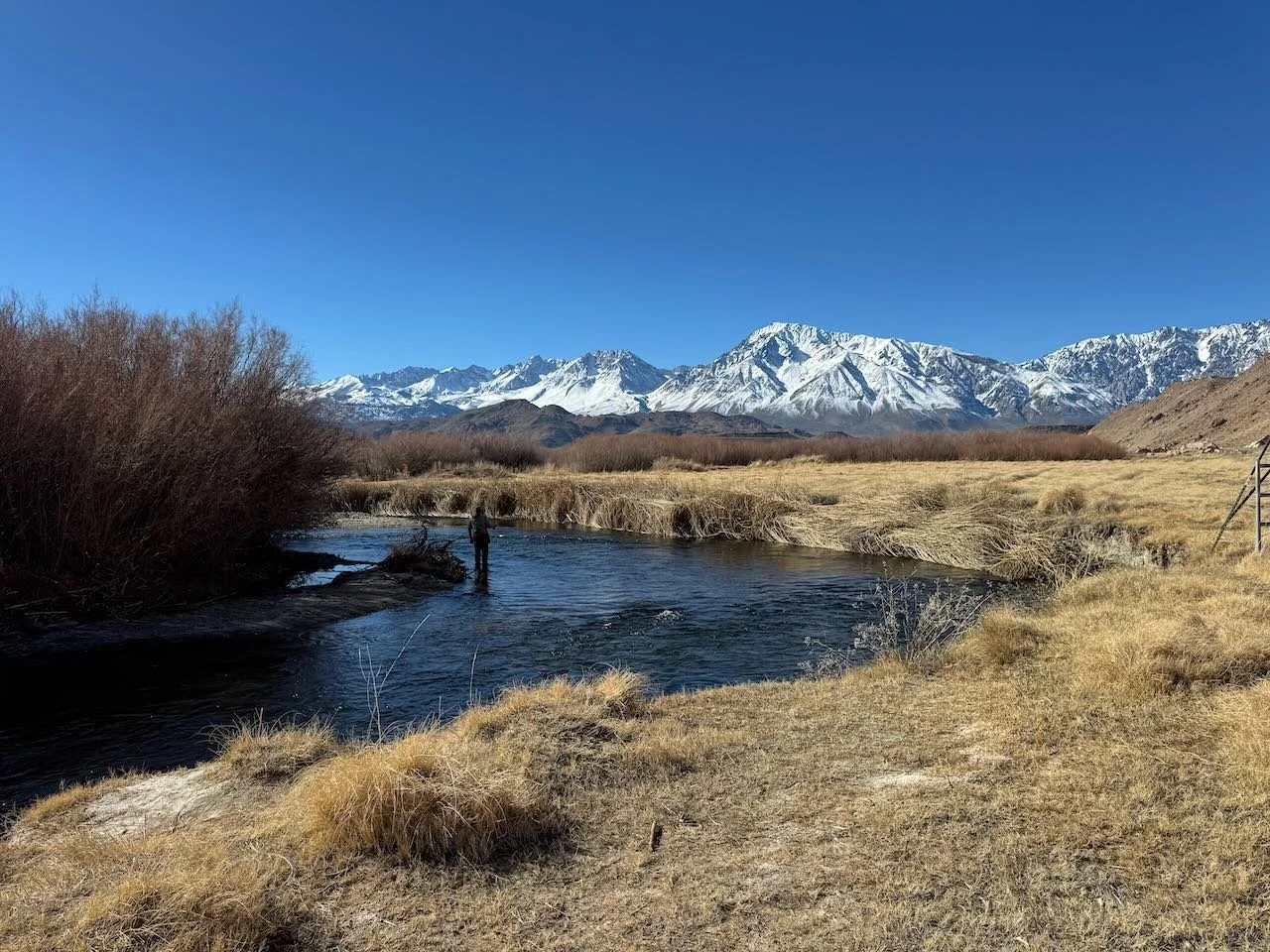
Early mornings and late afternoons are cold on the upper Owens River which is producing trophy rainbow trout for fly fishers fishing nymphs in the deep holes, deep runs and cutbanks. Photo by Kim Espinosa @visistmammoth

 Upper Owens River

Above Benton Crossing Bridge:

Caution is needed to drive the dirt roads accessing the upper Owens River above Benton Crossing Bridge. The roads are drivable, but it is easy to get stuck. There are trophy rainbow trout in the system in the deep holes, deep runs and cutbanks. Fish with size 12 stoner nymphs, size 12 green/gold Prince nymphs, size 12 Richard’s gold ribbed hare’s ear variation, size 18 olive quilldigons and size 16 hot spot pheasant tail nymphs. In order to land trophy trout the fly fisher needs to know how to fight trophy trout. On the initial hook up just keep the rod tip up and line taught. If the fish comes to you bring in line. If the fish swims away from you let fly line out through your fingers until the line is on reel. Try to keep the fish in front of you with no more than 20 feet of fly line, leader and tippet from the rod to the fish. When the fish moves up or down the stream follow it keeping tension in the line. Turn the rod sideway if you need to keep the fish from running under the bank. When the fish has tired slide it towards you to land it. Trophy trout take a lot of skill and luck to land.

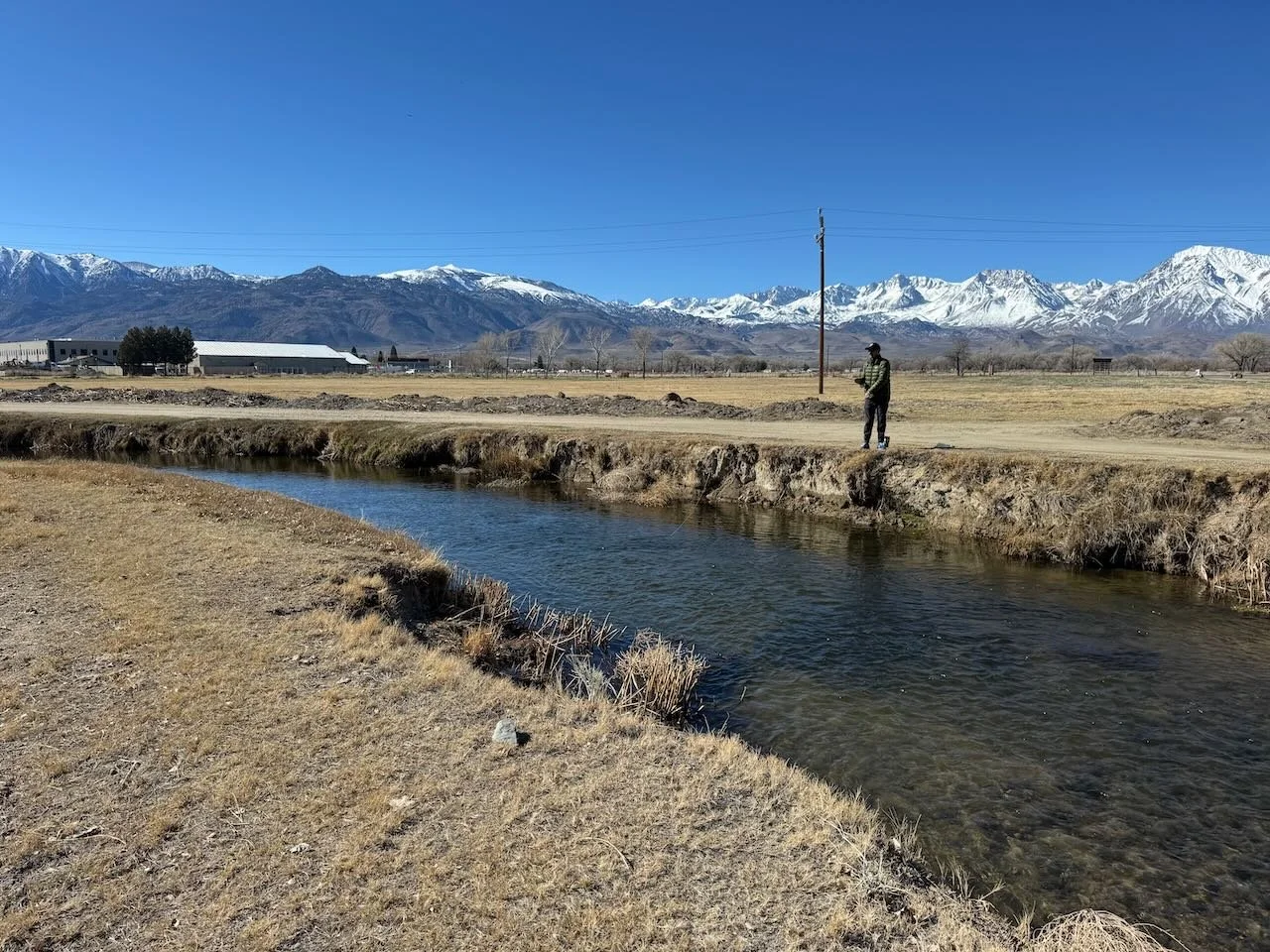
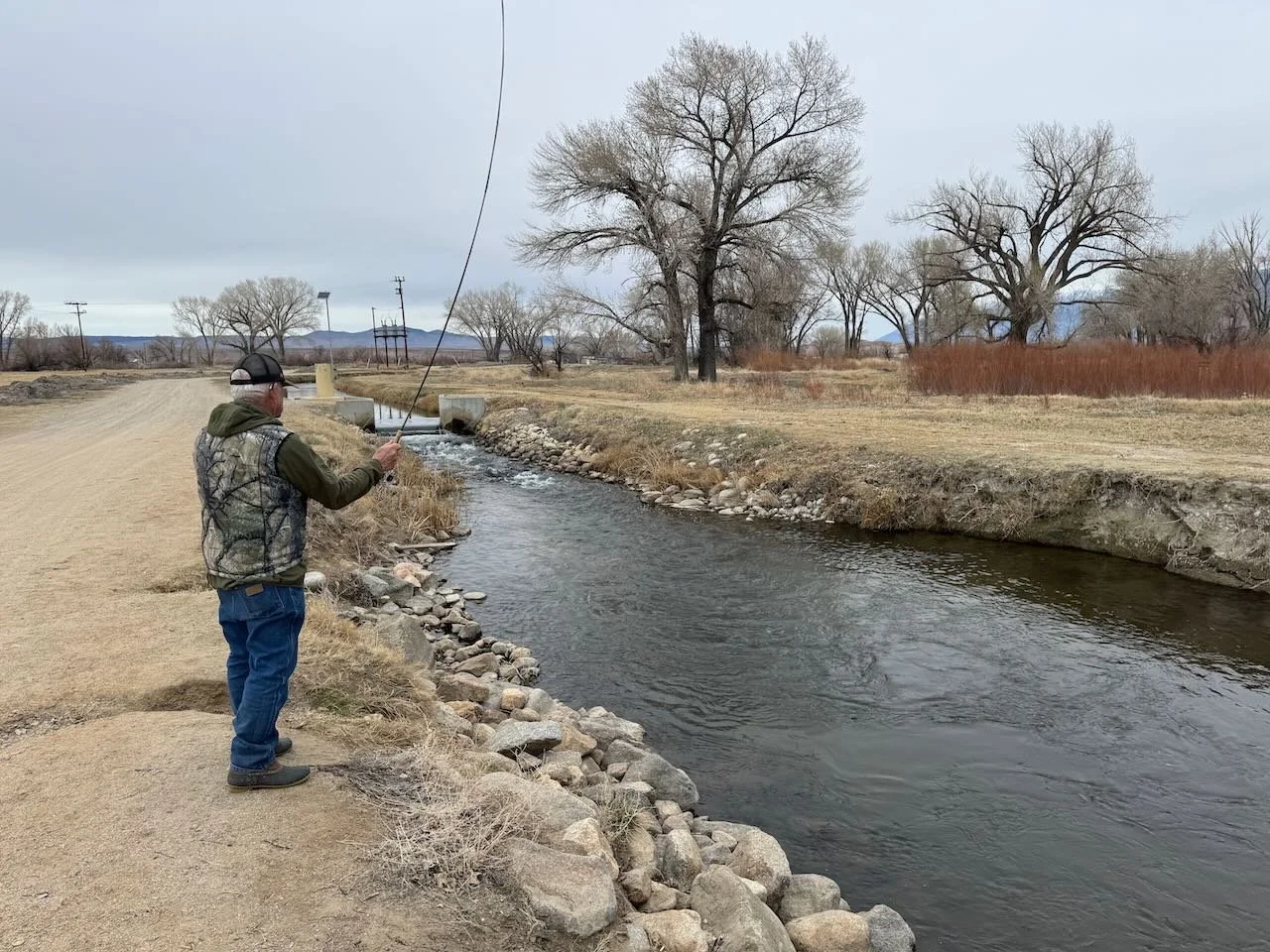
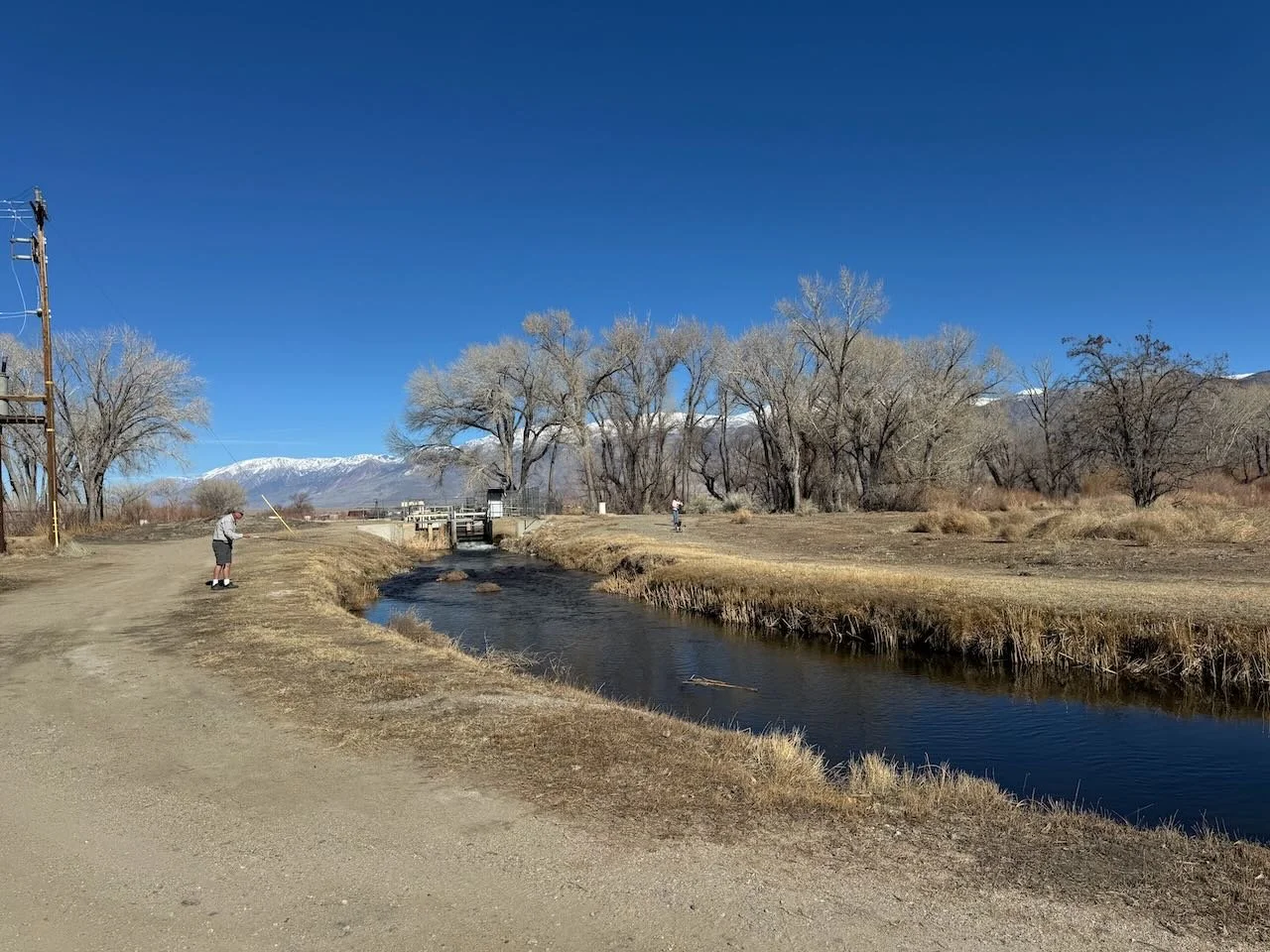
Fishing with a Tenkara rod on Bishop Creek Canal require the fly fisher to sneak up on the spooky trout that are feeding on emerging mayflies and midges.

 Bishop Creek Canal

Behind Bishop Veterinary Hospital:

Mid-days have been warm on the canal. Trout have been coming to the surface to feed on emerging mayflies and midges. On the surface fish with size 20 Adams parachutes, size 20 blue wing olive parachutes, size 20 sparkle duns, size 20 Kling Hammers, size 20 foam midge emerger and size 20 CDC midges. Nymphing continues to produce wild rainbows and browns to 12 inches. Use size 18 bead head flash back pheasant tail nymph, size 18 olive quilldigons, size 20 olive midge emergers, size 20 tiger midges and size 20 zebra midges. The trout are spooky and fly fishers need to use stealth when approach the trout of Bishop Creek Canal.