
The heat has come to the Eastern Sierra in mid-March. Hi 80’s in the Owens Valley this week. Who turned up the thermostat to 90 degrees? Snow is melting and filling up some waters. Caddis, mayflies and midges are hatching and the trout are feeding on them. Bass pre-spawn has started in the Owens Valley ponds. Hi elevation dirt roads are drying out. Still use caution if you see the snow.
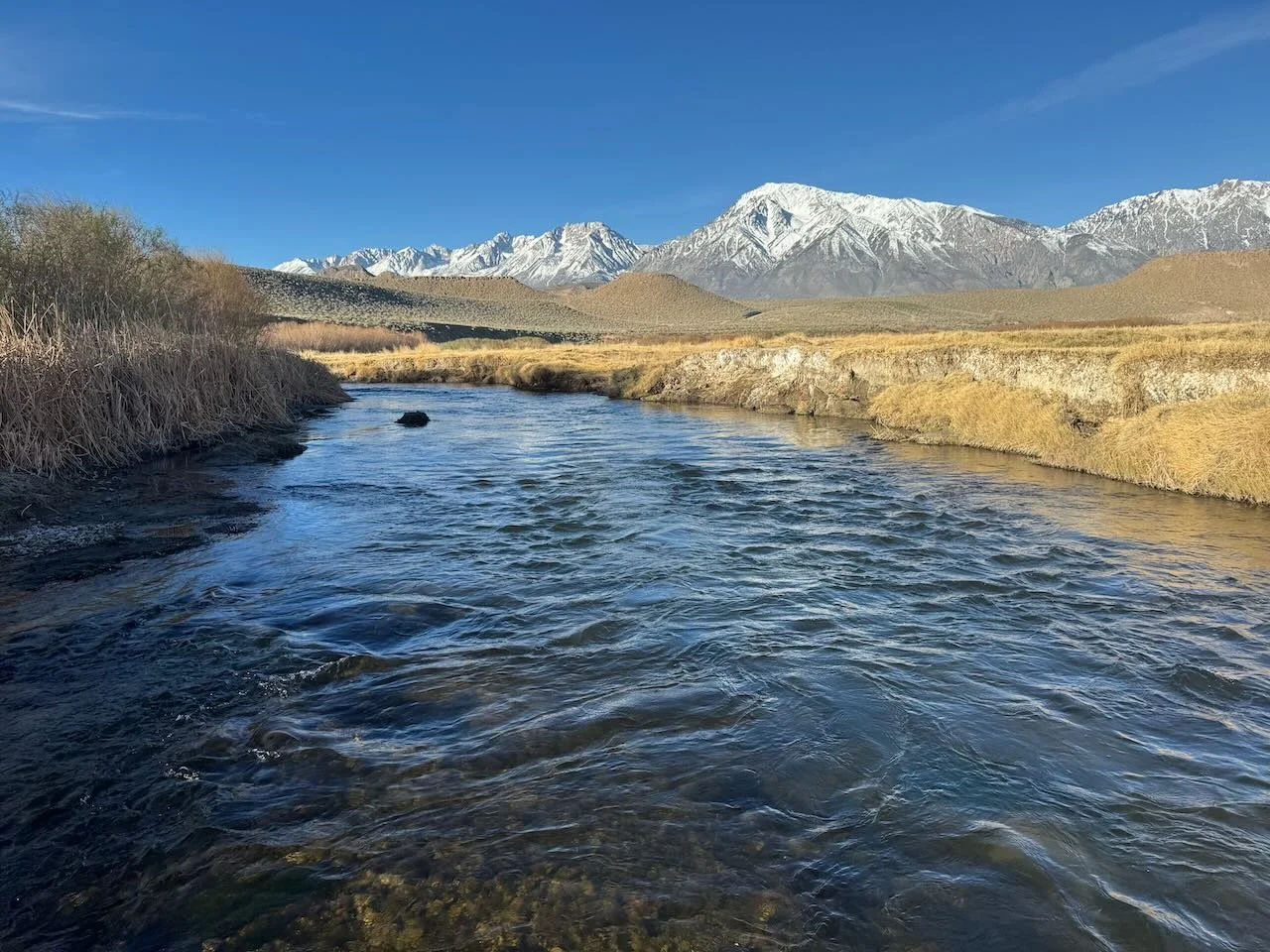
Flows in the lower Owens River are going up to 185 CFS by the weekend and expect flows to increase the following week to over 300 CFS.
Lower Owens River
Wild Trout Section:
Lower Owens River flows update: As of Thursday March 19th, 2026 the flows in the lower Owens River below Pleasant Valley Reservoir are running at 185 CFS. The water is definitely dirty with the increased flows picking up mud and lots of debris including willows, tulles and tumble weeds. Expect flows in the lower Owens River to crest over 300 CFS by mid to late next week. It’s unsafe to wade in the lower Owens River when the flows are over 300 CFS. Check the water flows for the lower Owens River on Sierra Bright Dot Webpage at https://www.sierrabrightdot.com/water-flows-owens-river-east-walker-river.
DWP has started to take water out of Crowley Lake to make room for this year’s snow melt and ship it to reservoirs south of Crowley Lake. The lower Owens River will be up to 185 CFS by the weekend and expect it to go up higher next week. Nymphing will continue to produce trout as they acclimate to the rising water. Over 300 CFS is the level of unsafe wading conditions for the lower Owens River. Euro nymphing and indicator nymphing will be the most effective methods of fooling the wild trout of the lower Owens River. If you see consistently rising trout definitely switch to a dry fly. On the surface use size 18 blue wing olive parachutes, size 18 olive sparkle duns and size 18 Adams parachute. On the substrate use size 18 bead head flash back pheasant tail nymphs, size 18 olive quilldigons, size 18 Frenchie’s, size 16 rainbow warriors, size 16 Duracell nymphs, size 14 olive burlap caddis, size 16 olive quill RS2 and size 16 Butano nymphs. Key to success in the rising water will be to have enough weight in the flies or on the tippet in the form of split shot to keep the nymphs on the substrate. Plan on fishing with a size BB split shot or more.
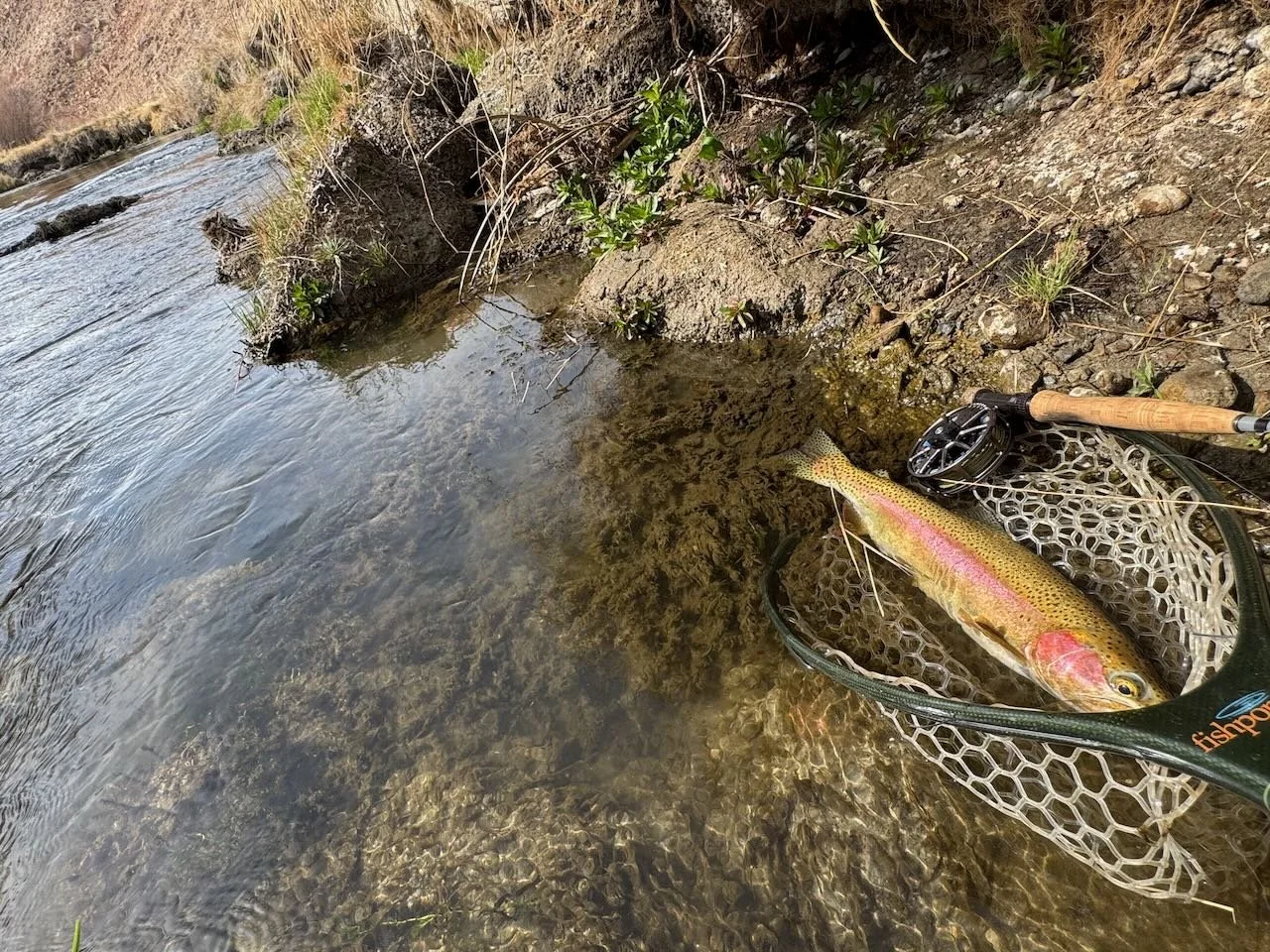
Nymphing is producing wild brown and rainbow trout to 17 inches in the wild trout section of the lower Owens River.
Hot Creek
Interpretive Site:
Continued warm weather has melted the snow and fly fishers can drive right up to the Interpretive site with no problems. Mid-morning is the time to be on the water for the midge and mayfly hatches. Casting up stream with a drag free drift using size 20 blue wing olive parachutes, size 20 olive sparkle duns, size 20 Adams parachutes, size 20 CDC midges and size 20 Griffiths gnats is fooling the wild trout of the Interpretive site of Hot Creek on the surface.
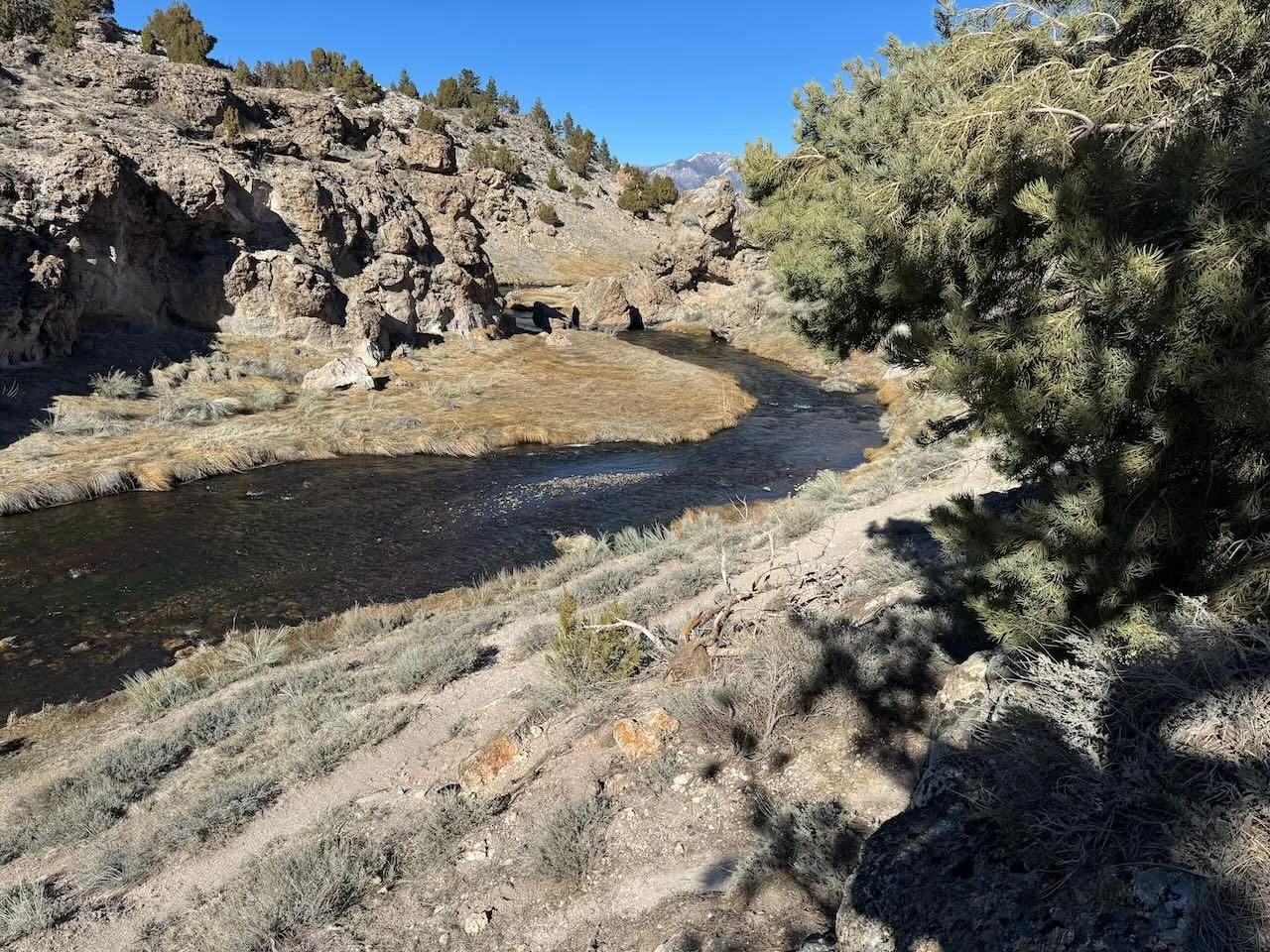
The snow is gone from Hot Creek Canyon and fly fishers can drive to the parking lots that allow fly fishers to access the Canyon Section of Hot Creek.
Hot Creek
Canyon Section:
Easy vehicle access makes it easy for fly fishers to access the parking areas accessing the Canyon Section of Hot Creek. Mid-day hatches of blue wing olive mayflies are bringing the trout to the surface. Fish with a size 20 blue wing olive parachute, size 20 olive sparkle dun and size 20 Adams parachute with a drag free drift and be ready to set the hook when the trout take your flies. Before and after the hatches nymphing with a dry and dropper rig or Euro rig is fooling the substrate feeding trout. Fish with size 18 olive quilldigons, size 18 bead head flash back pheasant tail nymphs, size 18 Frenchie’s, size 12 stoner nymphs and size 12 green/gold prince nymphs on the substrate to fool the trout feeding on nymphs.
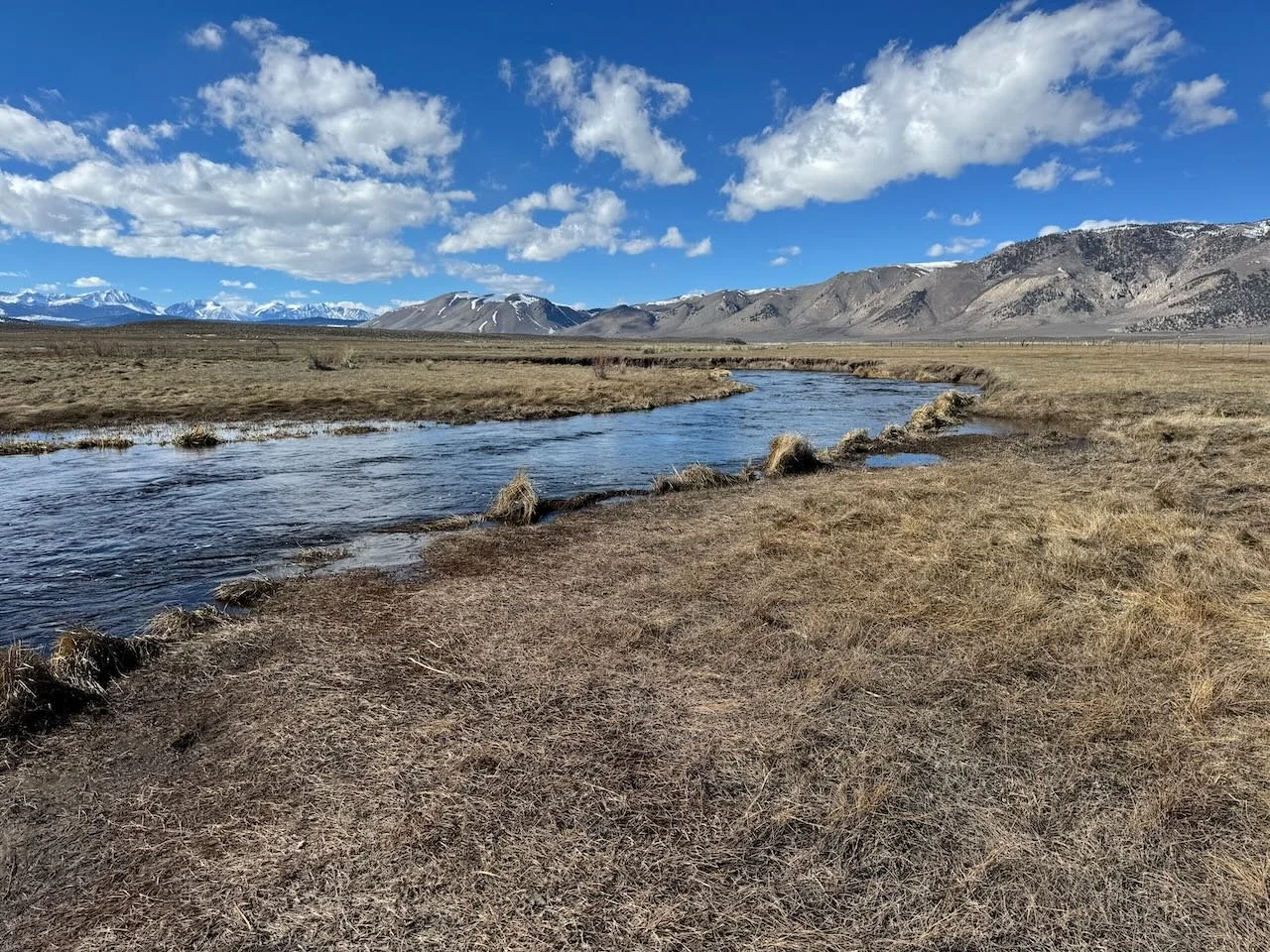
The snow on the meadows of the upper Owens River are gone and the trophy trout are still in the river and taking nymphs fished on the substrate under an indicator or with a Euro rig.
Upper Owens River
Above Benton Crossing Bridge:
The heat is drying out the meadows and dirt roads along the upper Owens River upstream of Benton Crossing Bridge. Working nymphs, eggs, mop flies and worm patterns in the deep holes, deep runs and cut banks where the trophy trout are resting and feeding is producing wild rainbow trout from 16 to 24 inches. Thoroughly work you flies before moving upstream to cover new water. Key to success is being able to thoroughly cover the water with your nymphs bouncing them off the substrate. Fish with size 12 stoner nymphs, size 12 green/gold Prince nymphs, size 12 Richards gold ribbed hare’s ear variation, size 14 copper John’s, size 14 tungsten tacos, size 10 mop flies and size 12 squirmy wormies.
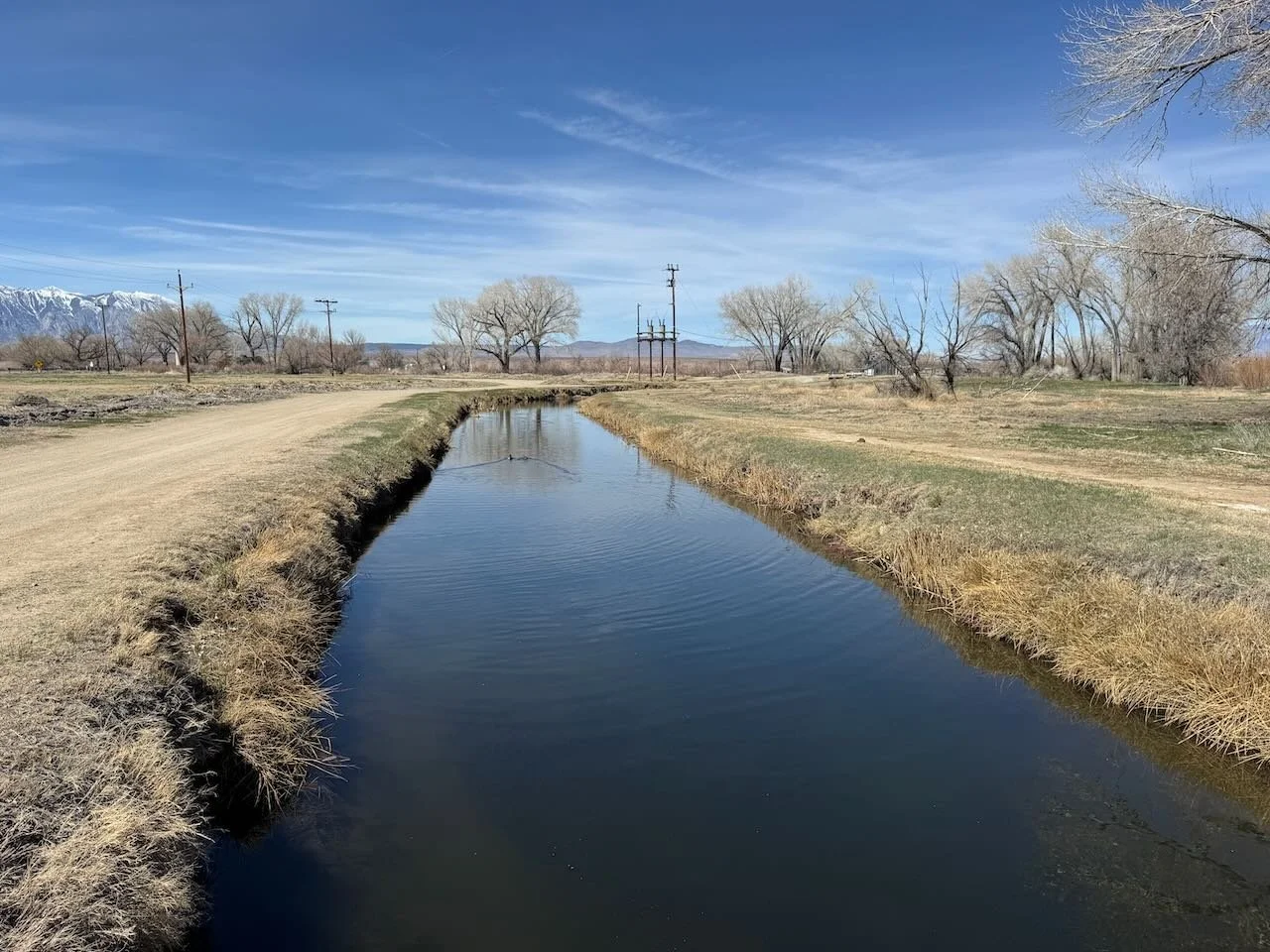
Mid-day temperatures are in the high 80’s middle of the day on Bishop Creek Canal and the trout are taking blue wing olive mayflies hatching middle of the day.
Bishop Creek Canal
Behind Bishop Veterinary Hospital:
As the water goes up in the lower Owens River look for the water in Bishop Creek Canal to rise. It will not rise as significantly as the lower Owens River is rising. If you can handle the mid-80’s heat that the Owens Valley is experiencing you will find rainbows and browns rising to emerging blue wing olive parachutes. Fish with size 18 blue wing olive parachutes, size 18 olive sparkle duns, size 18 Adams parachutes and size 18 pheasant tail paranymphs. On the substrate under an indicator, dry fly or with a Euro rig fish with size 18 olive quilldigons, size 18 bead head flash back pheasant tail nymphs, size 18 Frenchie’s, size 16 hot spot pheasant tail nymphs and size 16 olive quill RS2’s. Key to success is not spooking the trout in the clear water, getting a drag free drift and using the proper amount of weight in the flies or as added split shot to the tipper to bounce the nymphs off of the substrate.