
Another week of above normal temperatures to end January in the Eastern Sierra and no moisture on the horizon. If it’s not going to rain or snow at least it’s nice weather to be on the streams. Midges, stone flies and mayflies are the insects the trout are feeding on. Most of the fishing is with nymphs, but if you’re on the right water at the right time you will have some dry fly activity. Upper elevation snow is holding up as temperatures are hanging around 32 degrees. When heading out to fish be sure you are prepared for the conditions you are fly fishing in.
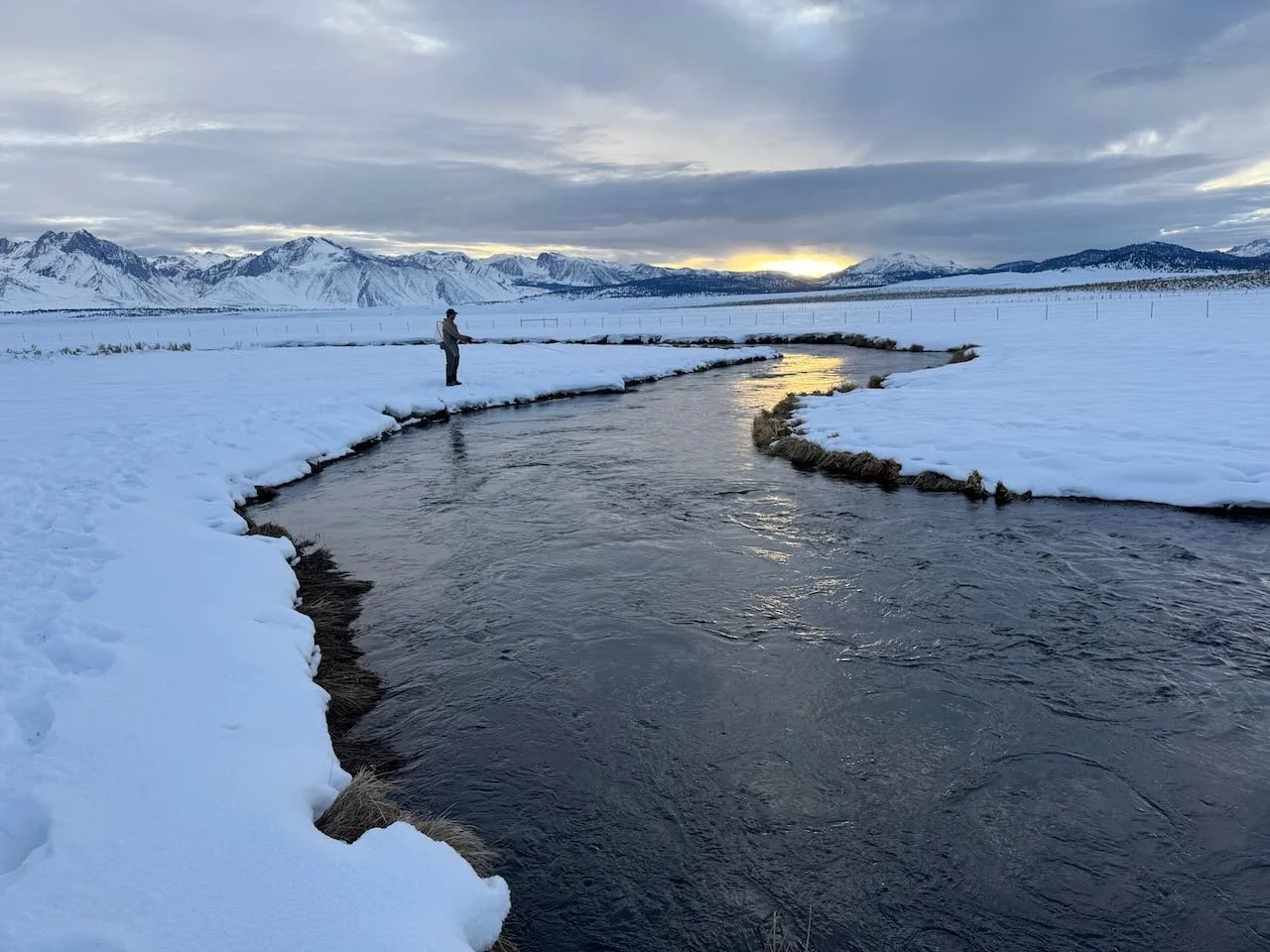
High elevation waters have snow and are offering good fly fishing and pretty winter scenery.
Lower Owens River
Wild Trout Section:
Finally seeing the effects of fly fishing pressure as fishing last week slowed down a little bit. Still catching fish, but not the wide open bite that it was last week. Nymphing with an indicator or a Euro rod has been the most effective method of fly fishing the river. Key to success is having the right amount of weight in your flies or as split shot on your tippet. With flows hovering around 100 CFS it is easy to wade the river right now except for those holes that are deeper than you are tall. Use size 12 stoner nymphs, size 14 copper John’s, size 18 thread midges in olive, zebra and tiger coloration, size 18 brassies, size 18 green/gold brassies, size 16 Frenchie’s, size 16 Duracell’s, size 18 olive quilldigons and size 18 bead head flash back pheasant tail nymphs to fool the wild rainbows and browns. Surface activity is not consistent and you need to be on the right hole to find consistently feeding trout mid-day. If you’re in the right hole when the fish come to the surface fish with a size 18 Adams parachute, size 18 blue wing olive parachute, size 18 olive sparkle dun, size 20 CDC caddis and size 20 Griffith’s gnat. With the short window of opportunity it’s hard to rerig the rod from nymphs to dries. If you have a second rod bring it with you rigged to take advantage of the mid-day blue wing olive hatch.
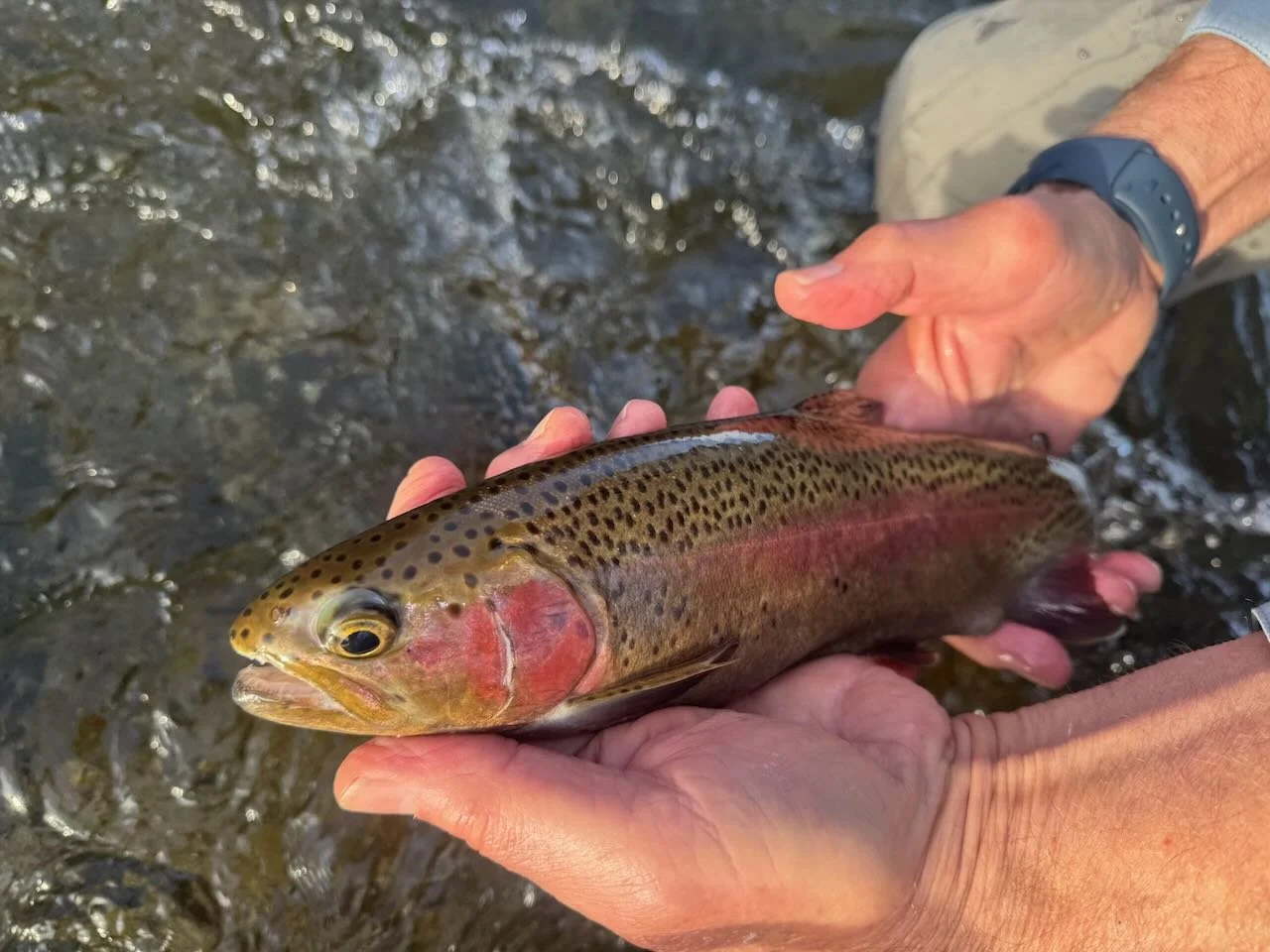
The lower Owens River has a few fish bigger than the eight to 12 inch trout that most anglers are catching.
Hot Creek
Interpretive Site:
Fly fishers accessing the Interpretive Site have to park on Hot Creek Hatchery Road and walk in over the snow which is two to three feet deep. Skis or snowshoes make it easier to access Hot Creek. You will have the water to yourself or share it with one or two fly fishers. The trout are taking nymphs and dries. Midges and mayflies are the insects the trout are keying in on. Use size 20 Adams parachutes, size 20 blue wing olive parachutes, size 20 olive sparkle duns, size 20 CDC midges and size 20 Griffiths gnats when the trout are feeding on the emerging insects. Nymphing with size 18 olive quilldigons, size 18 bead head flash back pheasant tail nymphs, size 20 green/gold brassies, size 20 soft hackle brassies, size 20 thread midges in zebra and tiger coloration is fooling the trout when there is no hatch.
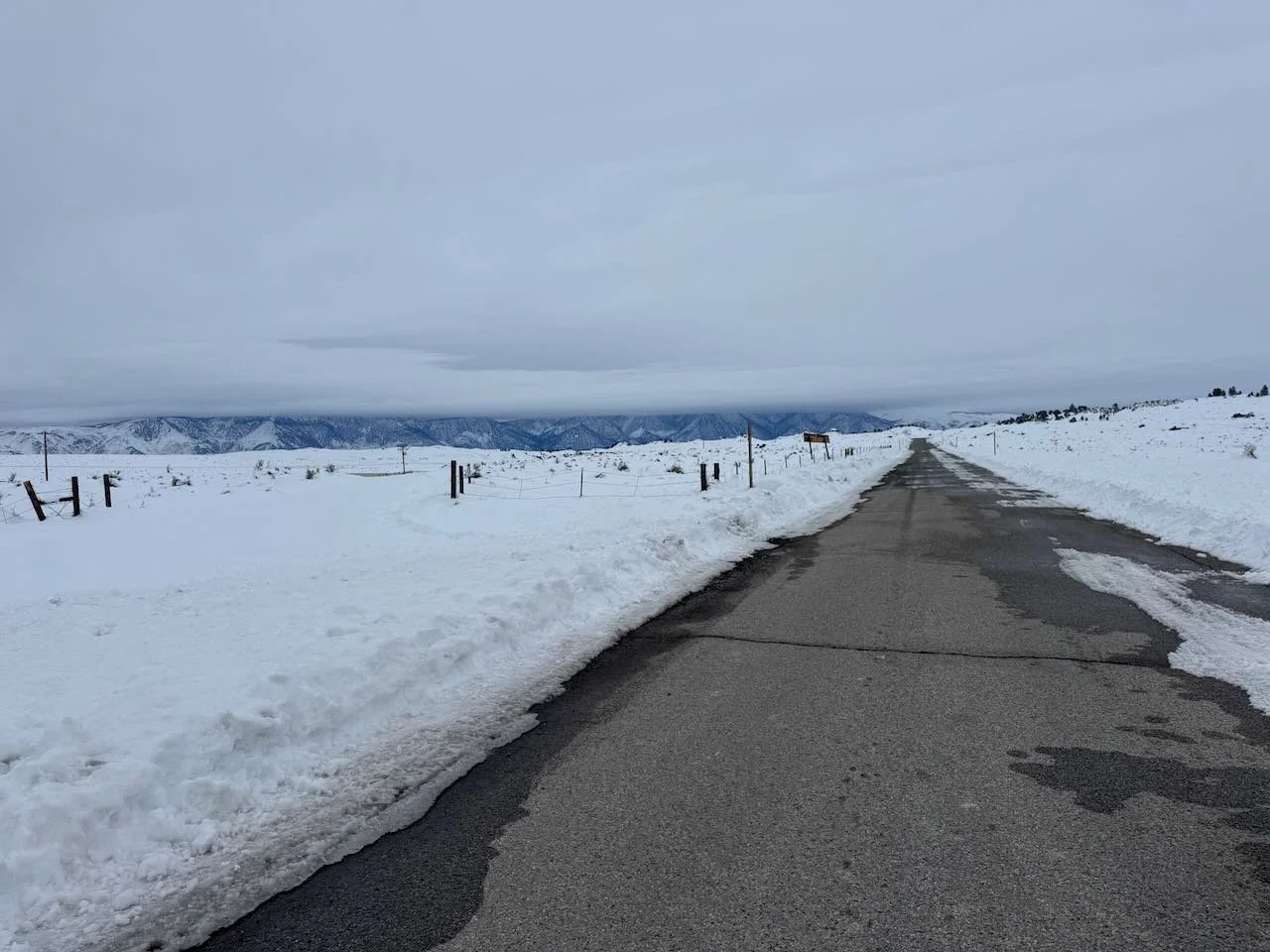
Fly fishers wanting to access Hot Creek Interpretive site need to park on Hot Creek Hatchery Road and walk in over the snow to Hot Creek.
Hot Creek
Canyon Section:
Fly fishers wanting to access Hot Creek Canyon need to park on Hot Creek Hatchery Road at the winter closure area and walk in over the snow. Enough people have walked in to form a descent packed trail through the snow. It’s a good walk in from the parking area to the three parking lot access points into the Canyon Section of Hot Creek. For fly fishers willing to put in the effort to access Hot Creek Canyon you will be rewarded with solitude and wild trout that have not been pressured. Fish nymphs in the sections with the least amount of weeds. The weed beds are at their lowest, but they still snag nymphs that are fished in and around the weed beds. Fish with size 18 olive quilldigons, size 18 bead head flash back pheasant tail nymphs, size 18 Frenchie’s, size 18 bead head baetis, size 20 tiger midges, size 20 zebra midges, size 20 soft hackle brassies and size 20 green/gold brassies to fool wild brown and rainbow trout from eight to 14 inches. Carry a few size 20 blue wing olive imitations if there is a hatch.
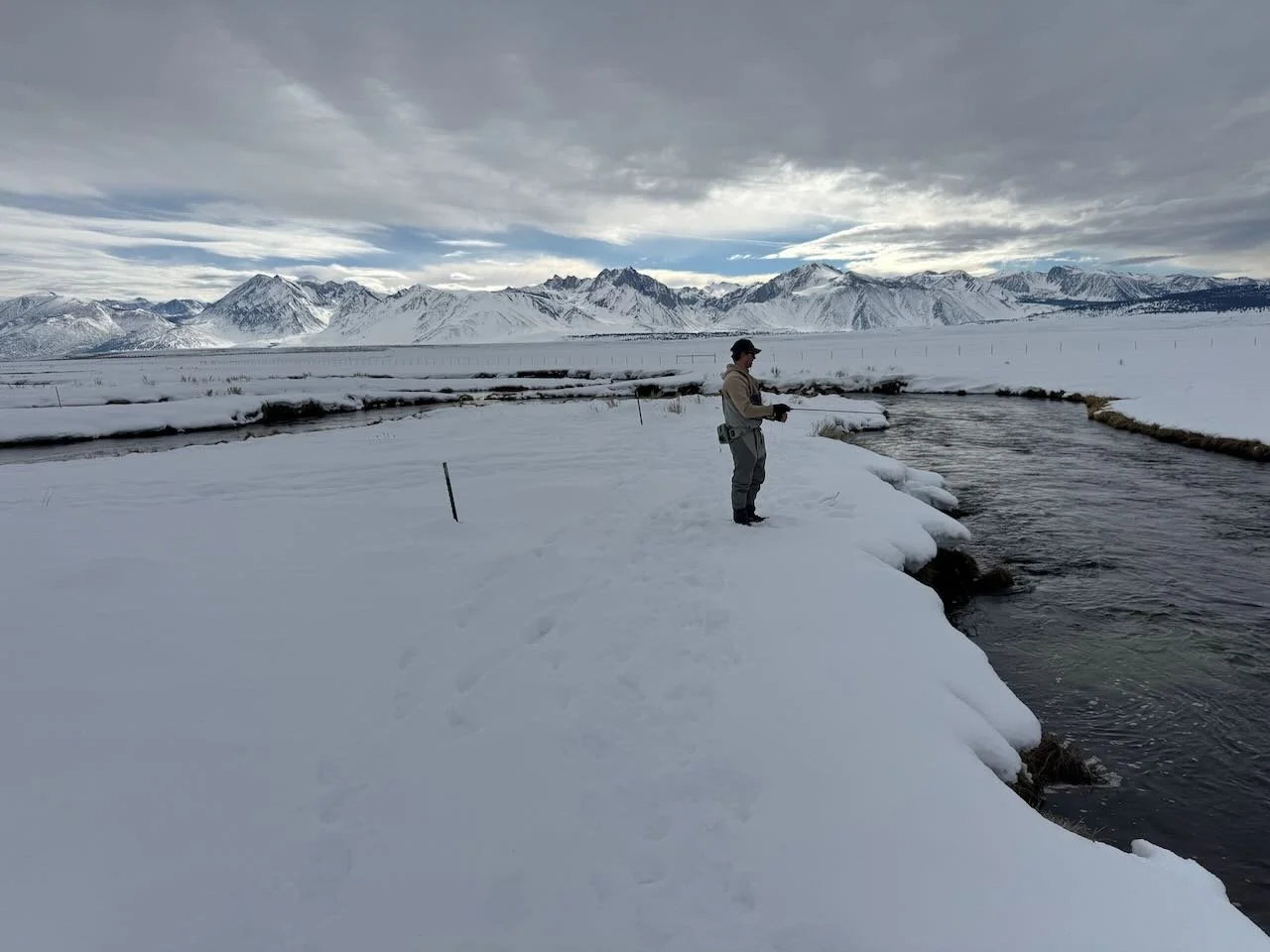
Success on the upper Owens River in winter requires fly fishers to cover lots of snow covered river banks in search of the trophy rainbow trout that will take nymphs in the deep holes, deep runs and cut banks.
Upper Owens River
Above Benton Crossing Bridge:
There is vehicle access from Benton Bridge upstream on the dirt roads. If you wander above Benton Crossing Bridge area in your vehicle you better have a high clearance four wheel drive vehicle. A lot of fly fishers are parking at the first pull out above Benton Crossing Bridge and are walking up stream to fly fish. There are trophy rainbow trout throughout the upper Owens River system. Look for the fish in the deep holes, deep runs and cut banks. Nymphing with size 12 stoner nymphs, size 12 green/gold Prince nymphs, size 12 Richards gold ribbed hare’s ear variation, size 14 copper John’s, size 18 olive quilldigons and size 18 bead head flash back pheasant tail nymphs will fool the trophy rainbow trout in the river right now. A lot of fly fishers like to fish with attractor type flies like mop flies, squirmy wormies and egg patterns. On certain days these flies produce the trophy trout.
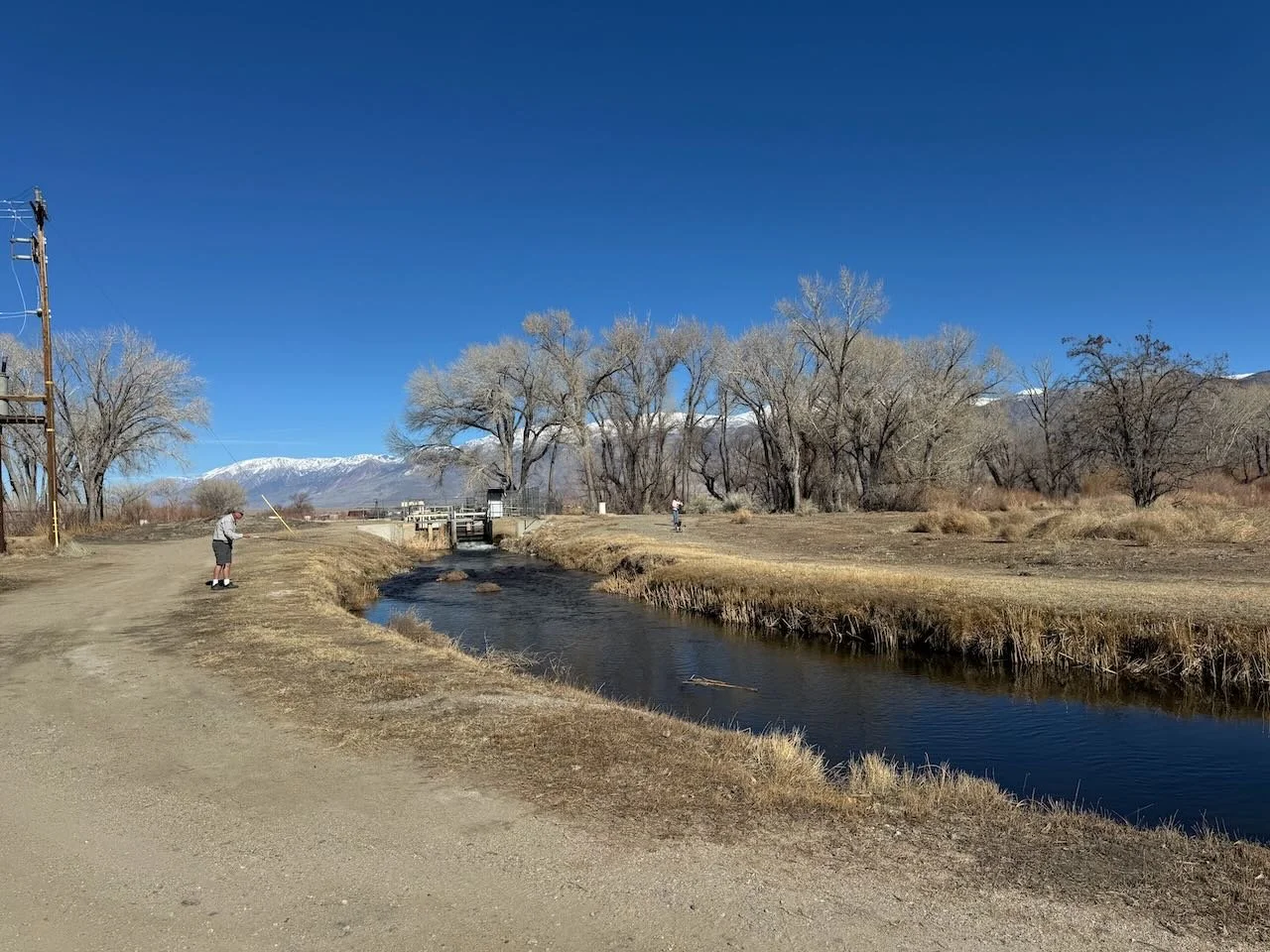
It has been warm enough middle of the day to fish dry flies and wear shorts when fly fishing Bishop Creek Canal.
Bishop Creek Canal
Behind Bishop Veterinary Hospital:
Owens Valley temperatures middle of the day have been very pleasant with a few anglers wearing shorts when fly fishing the canal. Mid-day fly fish the surface with size 20 Adams parachutes, size 20 blue wing olive parachutes, size 20 midge emergers and size 20 Griffiths gnats to fool the surface feeding trout. Before and after the hatch fish with size 18 bead head flash back pheasant tail nymphs, size 18 olive quilldigons, size 18 Frenchie’s, size 20 thread midges in olive, zebra and tiger coloration. Fly fishers are catching wild and hold over stocked rainbows from six to 12 inches.