
Time to figure out what is available for easy access and what will take time for the snow to melt before drivable access. Snow shoes, skis and snowmobiles are needed to access Long Valley waters. The sun is out, the fish are rising and it’s time to get up and fly fish the Eastern Sierra. Blue wing olive mayflies are hatching and the fish are feeding on the surface and the substrate. Winter Skwala stoneflies are active and the trout are feeding on them. Dirt roads in the Owens Valley have mudpuddles, but are drivable and should be dried out by the weekend. Overcast days are days to be on the water fly fishing with blue wing olive mayflies at noon.
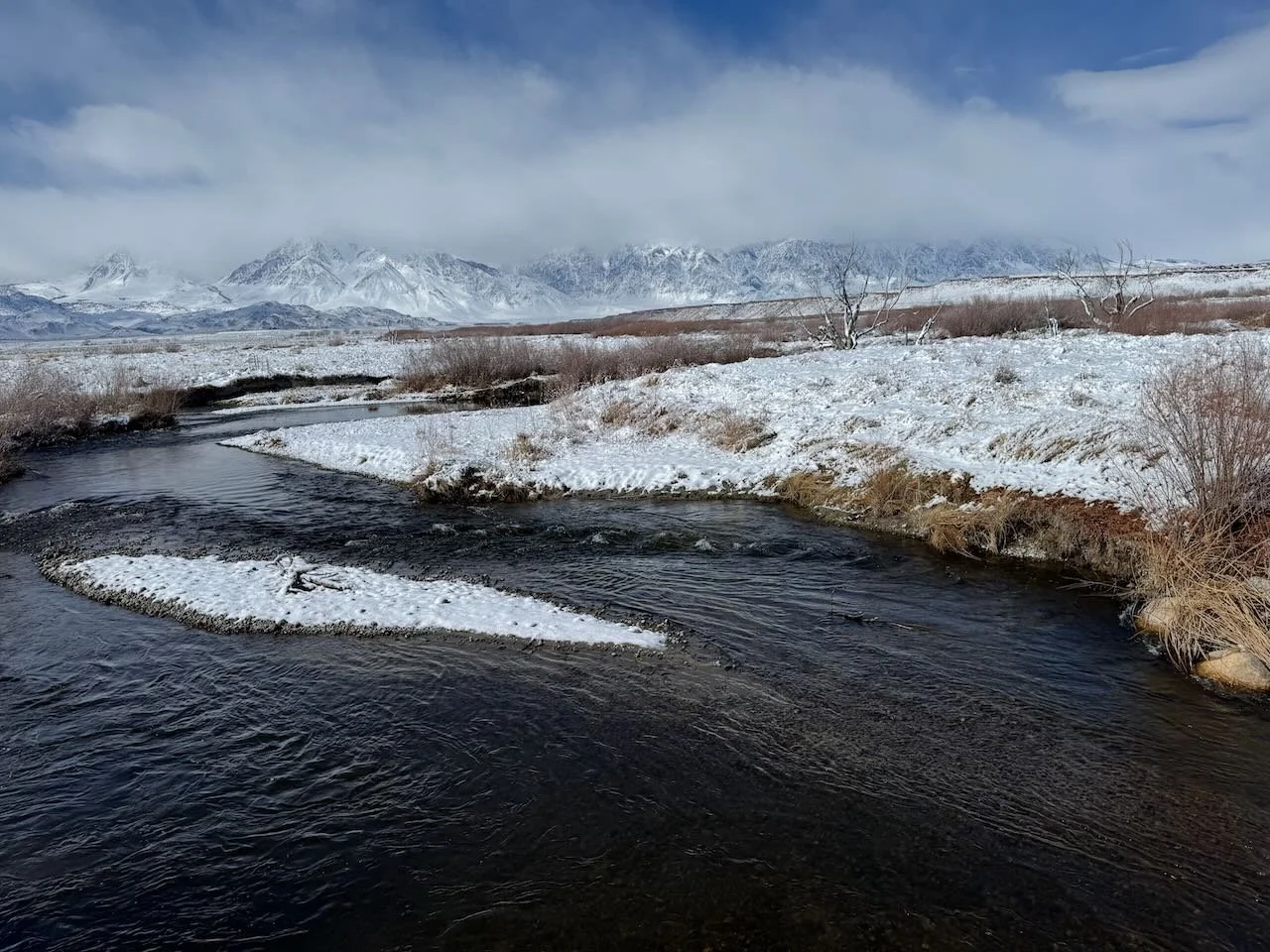
It looks like winter time in the Eastern Sierra and the trout are feeding on blue wing olive mayflies and skwala stoneflies and it’s time to fly fish the waters of the Eastern Sierra.
Lower Owens River
Wild Trout Section:
March is the season for dry fly fishing with blue wing olive mayflies and winter skwala stoneflies on the lower Owens River in the wild trout section. Mid-Day hatches, noon to 1:00 P.M., of blue wing olive mayflies are bringing the trout to the surface if you’re in the right section of the river. Look for consistent rising trout and use a size 18 blue wing olive parachute, size 18 Adams parachute and size 18 sparkle dun. Fish these dries upstream and up and across to rising trout on a monofilament 5X tippet. In the mid-afternoon use size 12 and 14 yellow-olive stimulators to imitate the skwala stoneflies. Nymphing on a Euro rig and under an indicator rig with size 12 stoner nymphs, size 14 copper John’s, size 18 bead head flash back pheasant tail nymphs, size 18 olive quilldigons, size 18 Frenchie’s, size 18 French nymphs, size 18 JuJu baetis and thread midges in size 18 in olive, tiger and zebra coloration are fooling the trout feeding on the substrate. Key to success is having the proper amount of weight in your flies or as split shot on your tippet. Roads are drivable and should be dried out by the weekend if the warming trend continues.
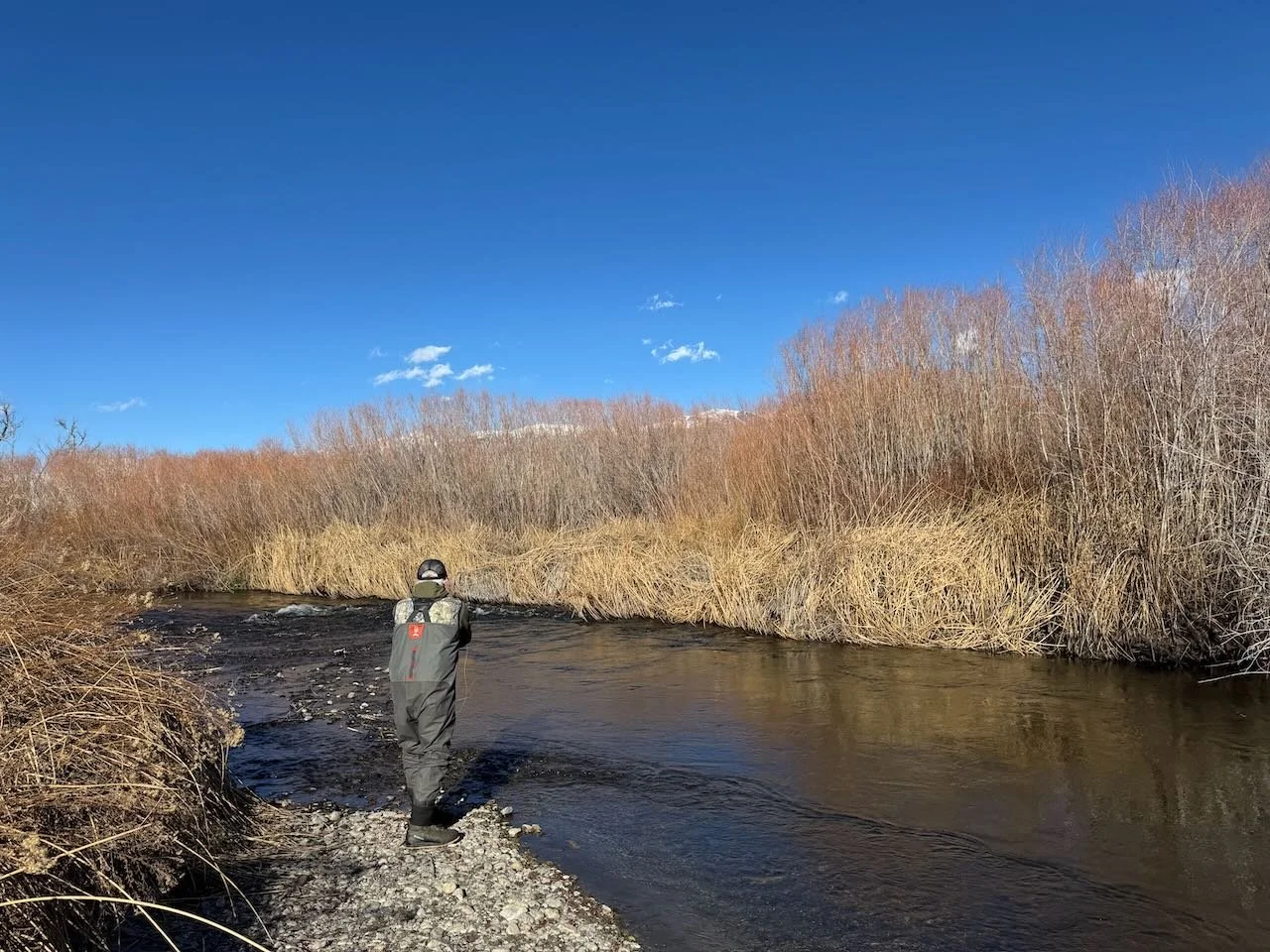
Finding the right riffle pool around noon is where to be fly fishing with adult blue wing olive mayflies patterns like a blue wing olive parachute to consistently rising rainbow and brown trout.
Hot Creek
Interpretive Site:
It’s going to take snowshoes or skis to get into the Interpretive Site of Hot Creek. It will take some time for others to make a trail walkable with just waders and wading boots. For the fly fishers willing to put in the effort there will be rising trout to midges and blue wing olive mayflies. Size 20 Adams parachutes, size 20 blue wing olive parachutes, size 20 sparkle duns, size 20 CDC midges, size 20 quill emerger midges and size 20 Griffiths gnats are fooling the surface feeding trout. On the substrate fish with size 18 olive quilldigons, size 18 bead head flash back pheasant tail nymphs and size 20 thread midges in tiger and zebra coloration.
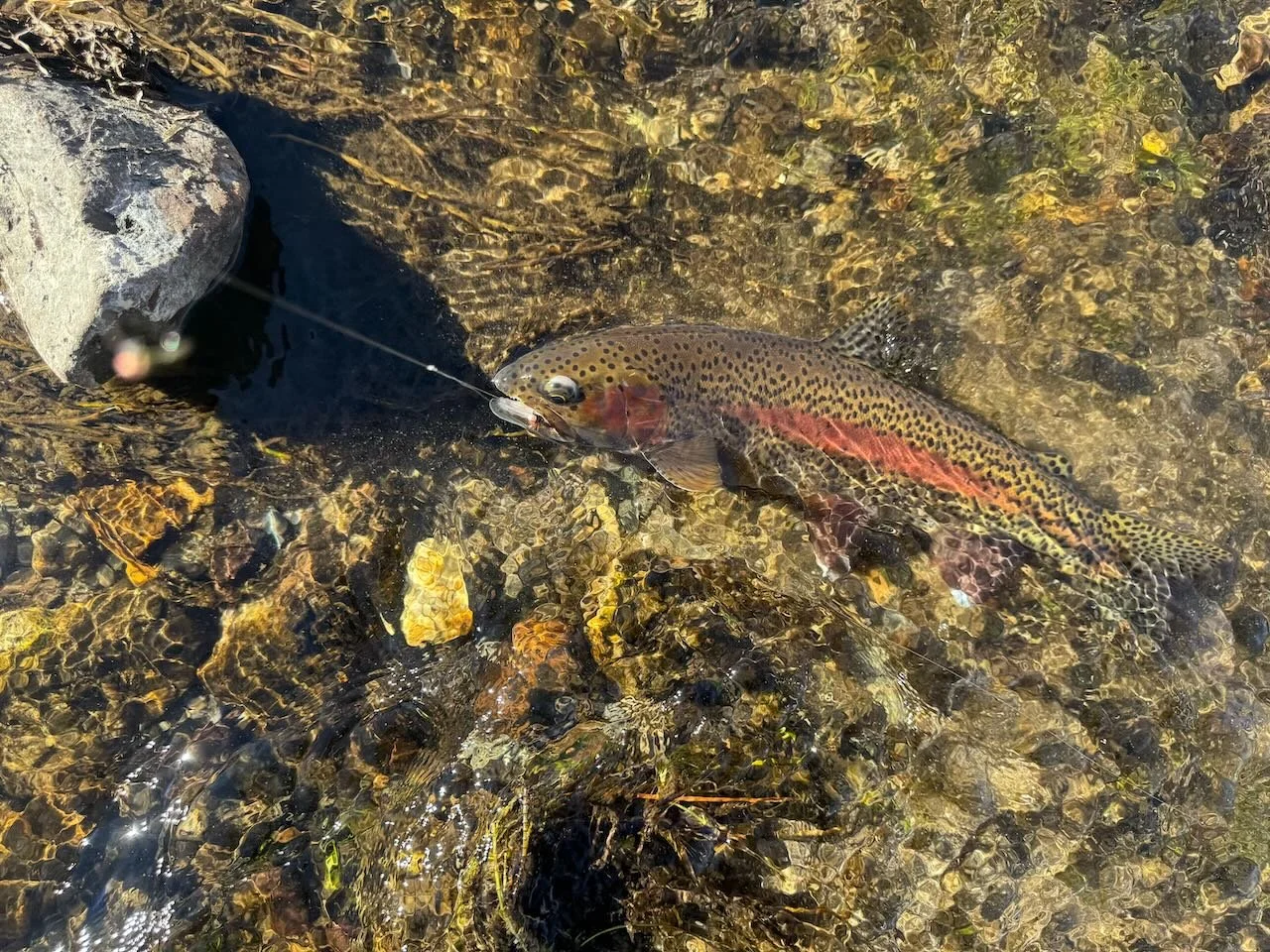
Nymphing with midge patterns and blue wing olive patterns are producing wild rainbow trout from Hot Creek.
Hot Creek
Canyon Section:
For now it’s going to take lots of energy to access the Canyon Section of Hot Creek. Fly fishers need to use skis or snowshoes starting from the winter road closure to the parking areas and trails leading into the canyon. Getting into the canyon with all this snow will be tricky. The midges are hatching before the mid-day blue wing olive mayfly hatch. Nymphing with size 18 bead head flash back pheasant tail nymphs, size 18 olive quilldigons, size 18 olive French nymphs, size 18 Frenchie’s, size 20 green/gold brassies, size 20 soft hackle brassies and size 20 thread midges in zebra and tiger coloration are fooling the substrate feeding trout. On the surface if the trout are feeding consistently use size 20 sparkle duns, size 20 blue wing olive parachutes, size 20 Adams parachutes, size 20 midge emergers, size 20 CDC midges and size 20 Griffiths gnats to fool the surface feeding trout.
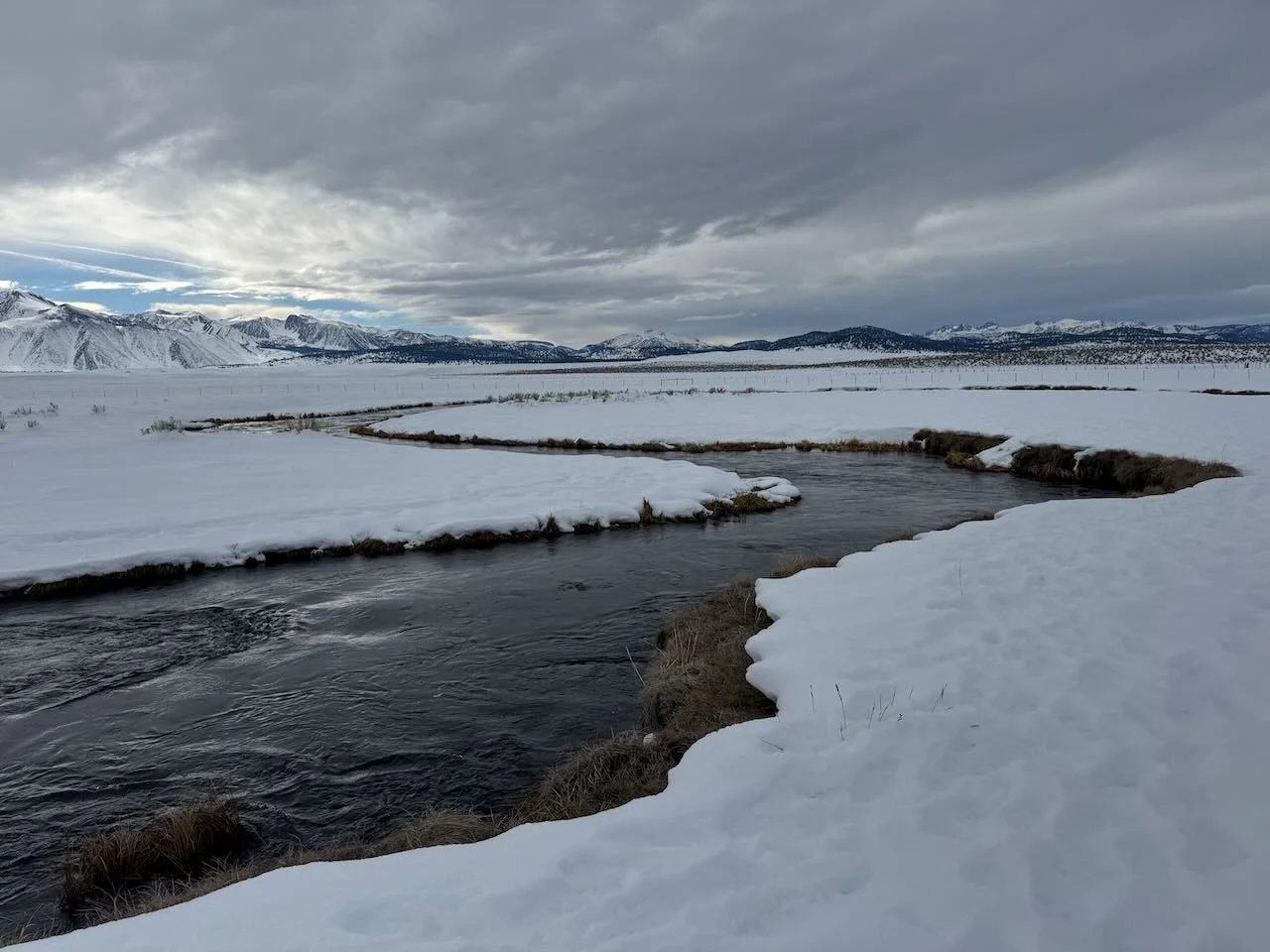
Access to the upper Owens River is now hindered by the new snow fall on the banks of the river.
Upper Owens River
Above Benton Crossing Bridge:
For now fly fishers will have to park at Benton Crossing Bridge and ski, snowshoe, walk or ride a snowmobile upstream to find the trophy trout. The trophy rainbow trout are still in the Owens River system and are feeding on nymphs, egg patterns, worm patterns and mop flies. Nymph with size 12 stoner nymphs, size 12 copper John’s, size 12 green/gold Prince nymphs, size 12 Richard’s variation of a gold ribbed hare’s ear, size 14 peach tungsten tacos, size 12 San Juan worms, size 12 squirmy wormies and size 12 mop flies. Look for the deep holes, deep runs and cutbanks where the trout are resting and feeding. The farther upstream fly fishers get they will find better water to fly fish for the trophy rainbow trout.
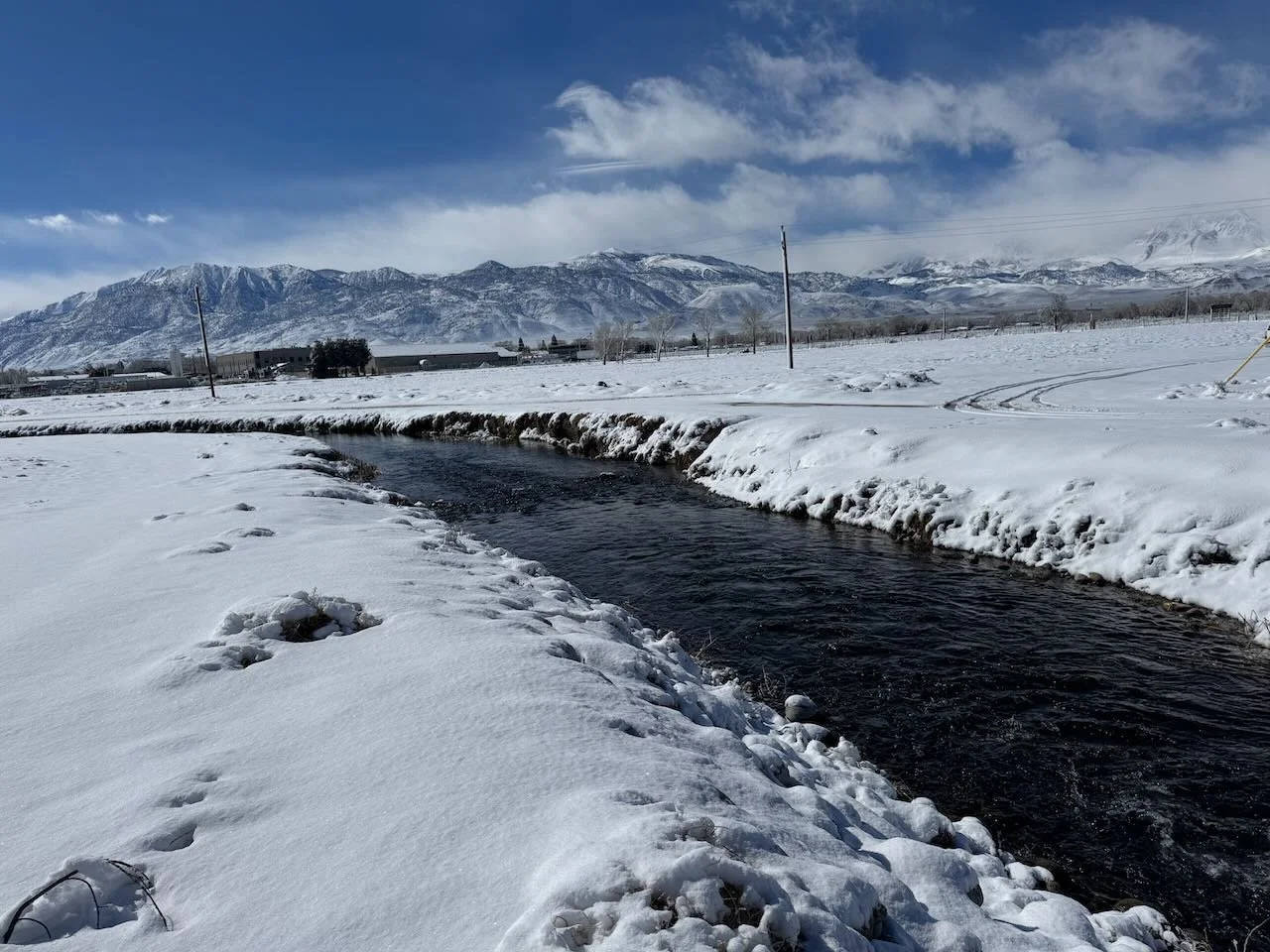
Last week’s snow has lasted longer than expected. This week’s warmer temperatures have melted the snow and the trout are feeding on hatching blue wing olive mayflies in the early afternoon.
Bishop Creek Canal
Behind Bishop Veterinary Hospital:
The trout are feeding on the surface and on the substrate. Middle of the day fish with size 18 Adams parachutes, size 18 blue wing olive parachutes and size 18 olive sparkle duns to fool the trout feeding on the hatching blue wing olive mayflies on the canals surface. On the substrate fish with size 18 tiger midges, size 18 zebra midges, size 18 green/gold brassie emergers, size 18 olive quilldigons, size 18 bead head flash back pheasant tail nymphs and size 18 Frenchie’s.