
The Eastern Sierra is getting much needed precipitation in the form of snow and rain. The Owens Valley got several inches of snow. Upper elevation waters will need to be evaluated for access once this series of storms have come and gone and we will know how much snow is left on the ground. My guess is that it will take snow shoes, skis or snow mobiles to access the waters in the Long Valley area. It will take a few days for the puddles of water to dry up on the dirt roads leading out to the waters in the Owens Valley. The overcast weather has helped out the blue wing olive hatch as it intensifies during overcast weather. Stoneflies, mayflies and midges are feeding the trout on the substrate and on the surface.
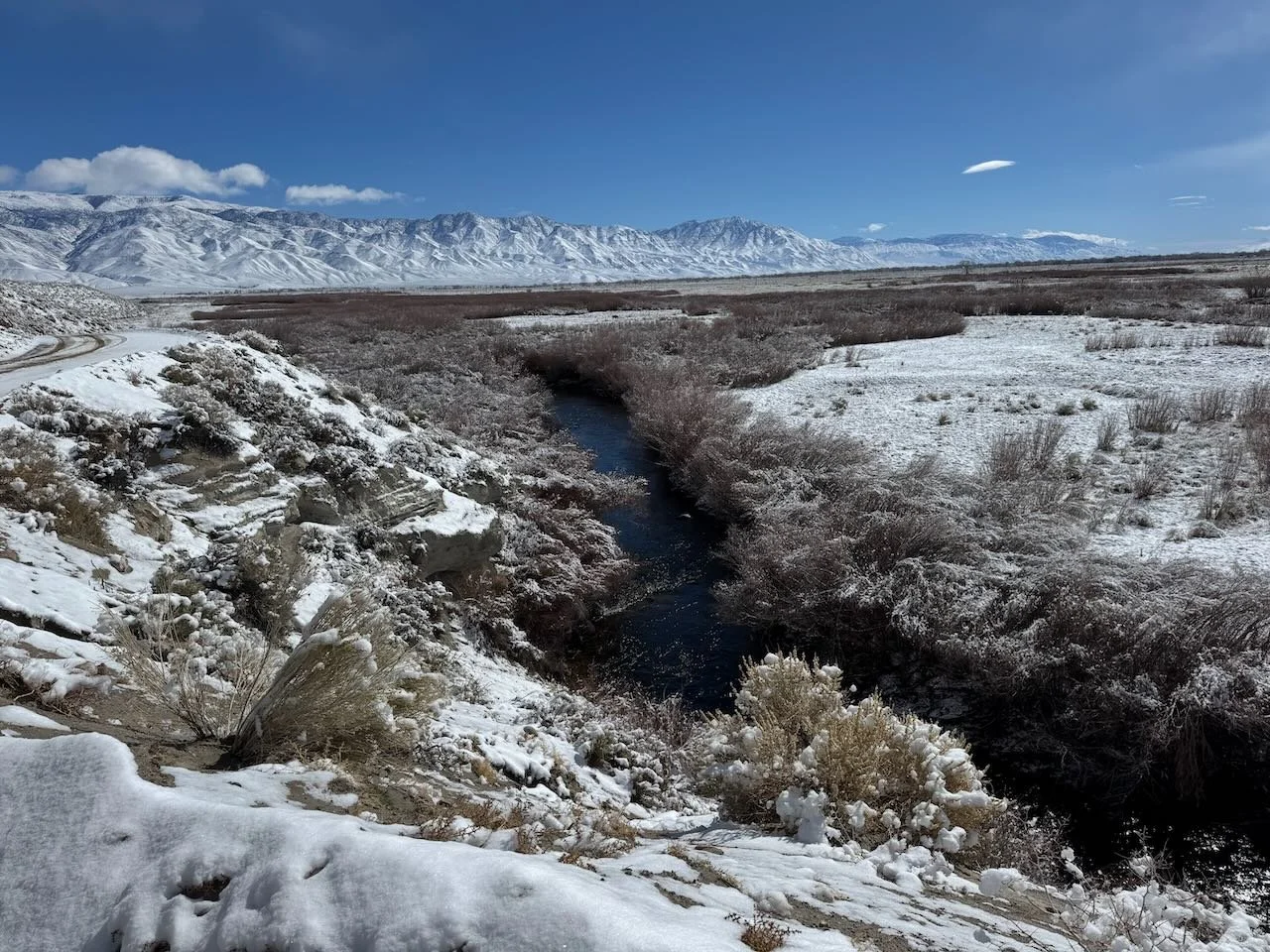
The Owens Valley got snow and the lower Owens River is dressed in a blanket of snow.
Lower Owens River
Wild Trout Section:
With the approaching storm fly fishers took advantage of the blue wing olive hatch by fly fishing with dry flies on the surface. Use a size 18 blue wing olive parachute, size 18 Adams parachute and size 18 olive sparkle dun to imitate the hatching blue wing olive mayflies. Nymphing continues to be the most productive method of fly fishing the lower Owens River. Whether using an indicator rig or Euro nymphing rig the trout are feeding on mayflies, stoneflies and midges on the substrate. Use size 18 olive quilldigons, size 18 bead head flash back pheasant tail nymphs, size 18 brown French nymphs, size 18 Frenchie’s, size 18 JuJu baetis, size 12 stoner nymphs and size 18 thread midges in olive, zebra and tiger colorations. If you were here when it snowed on the river your got a rare treat of fly fishing the lower Owens River in the snow or with snow on the banks.
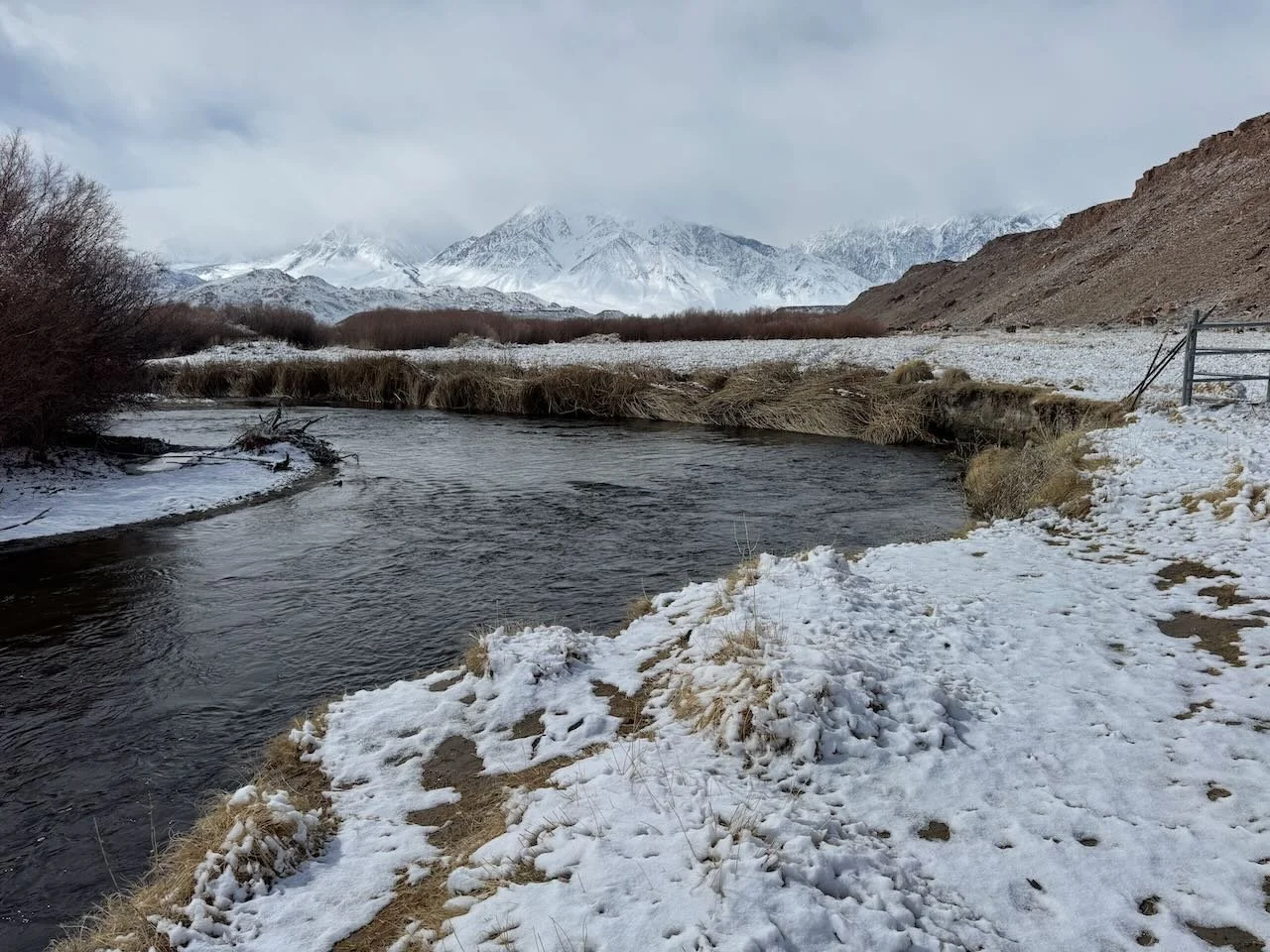
Snow on the ground, snow in the mountains and trout rising to blue wing olive mayflies make for a perfect day on the lower Owens River.
Hot Creek
Interpretive Site:
Access will be determined after the storms drop their snow on the banks of the creek. Plan on using snow shoes or skis to access the Interpretive Site after the storms. Fishing is primarily on the surface with size 20 Adams parachutes, size 20 blue wing olive parachutes, size 20 sparkle duns, size 20 CDC midges, size 20 quill emerger midges and size 20 Griffiths gnats. When the trout are not feeding on the surface fish with size 18 olive quilldigons, size 18 bead head flash back pheasant tail nymphs and size 20 thread midges in tiger and zebra coloration.
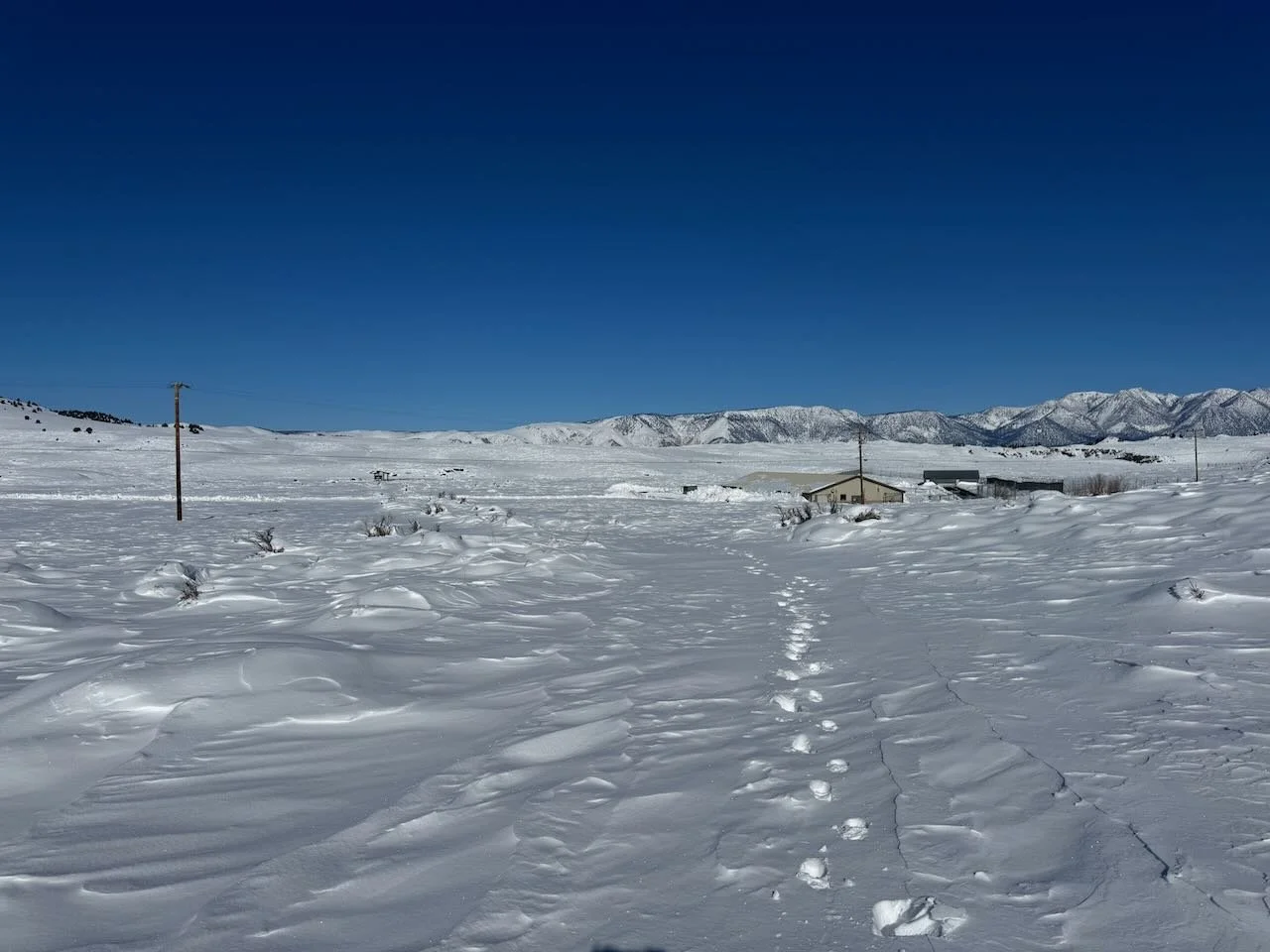
Who will make first tracks into Hot Creek Interpretive site after this last set of storms?
Hot Creek
Canyon Section:
Access to the canyon sections will be limited by the fresh snow. Only the hardiest of fly fishers will be putting in the effort to access the waters of Hot Creek Canyon. For those few willing to put in the effort they will be rewarded by solitude and fish feeding on dries and nymphs. Nymphing is easiest this time of year as the weed beds are at their least. Nymphing with size 18 bead head flash back pheasant tail nymphs, size 18 olive quilldigons, size 18 olive French nymphs, size 18 Frenchie’s, size 20 green/gold brassies, size 20 soft hackle brassies and size 20 thread midges in zebra and tiger coloration. Mid-morning to early afternoon is when the blue wing olive mayflies are hatching. The midges are hatching before the mayflies. Fish with size 20 sparkle duns, size 20 blue wing olive parachutes, size 20 Adams parachutes, size 20 midge emergers, size 20 CDC midges and size 20 Griffiths gnats.
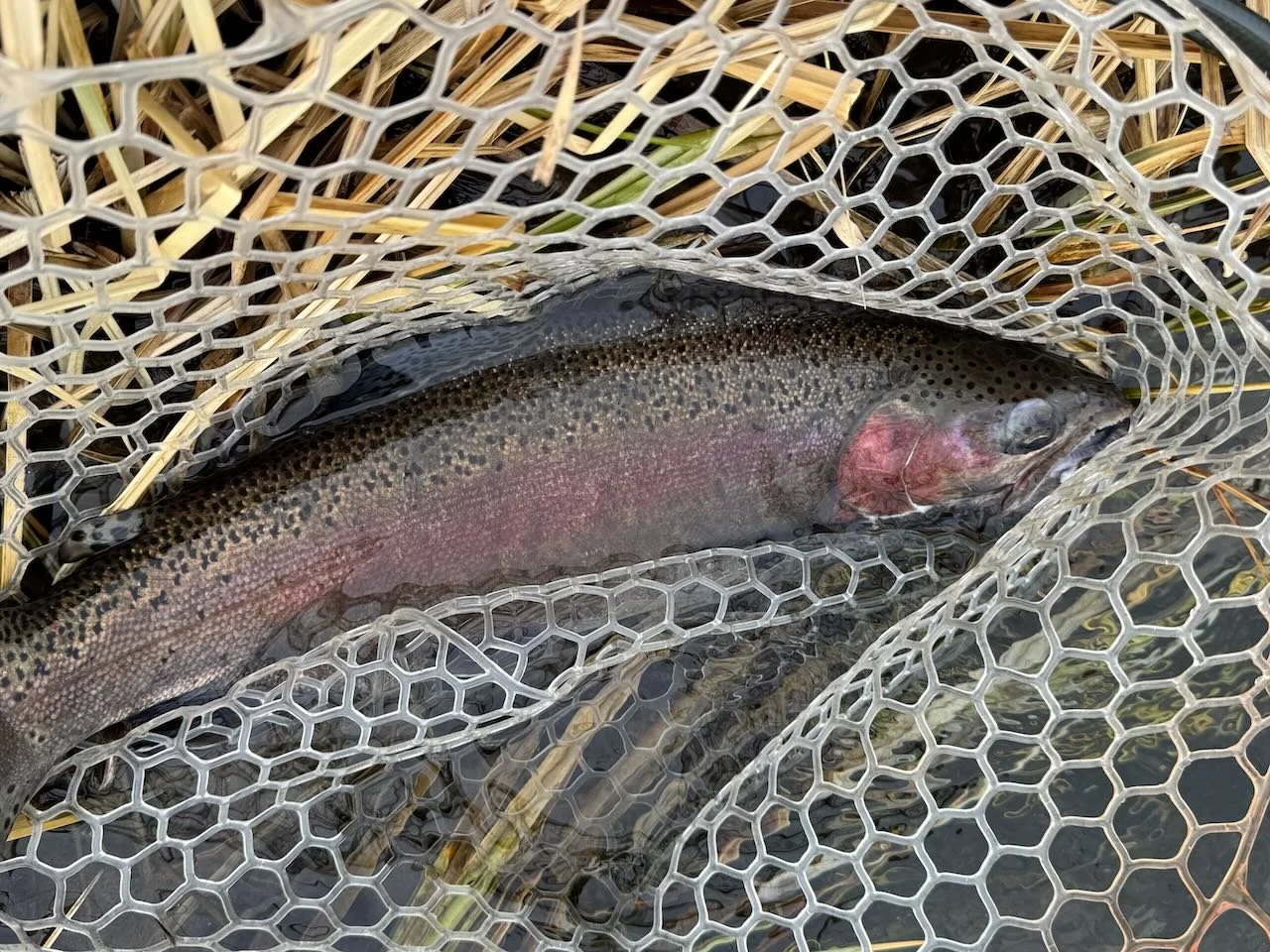
Despite access issues from the storm the few fly fishers braving the conditions are finding trophy rainbow trout willing to take nymphs, egg patterns, worm patterns and mop flies.
Upper Owens River
Above Benton Crossing Bridge:
With the new snow fly fishers will no longer be driving up the dirt roads above Benton Crossing Bridge. After the storms it will be time to reassess access to the upper Owens River. Trophy rainbow trout continue to offer fly fishers good fly fishing. Parking at Benton Crossing Bridge and walking upstream fly fishers should be fishing the deep holes, deep runs, and cut banks with size 12 stoner nymphs, size 12 green/gold Prince nymphs, size 12 Richard’s variation of a gold ribbed hare’s ear, size 14 peach tungsten tacos, size 12 San Juan worms, size 12 squirmy wormies and size 12 mop flies.
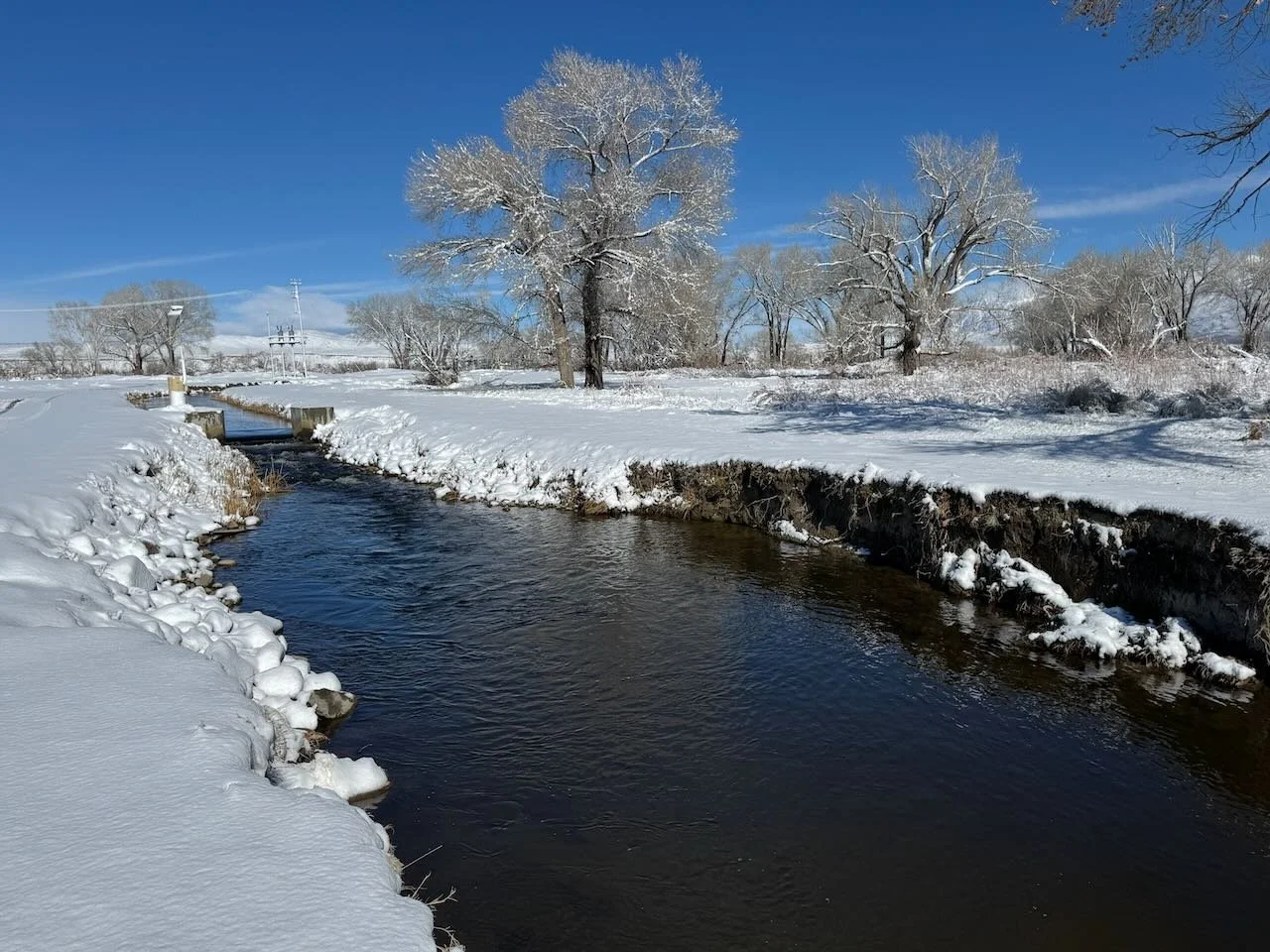
Bishop Creek Canal covered in a layer of snow while the trout were taking size 18 blue wing olive parachutes and size 18 olive quilldigons.
Bishop Creek Canal
Behind Bishop Veterinary Hospital:
Dry fly fishing middle of the day has been good using blue wing olive dry fly imitations. Use size 18 blue wing olive parachutes, size 18 Adams parachutes and size 18 olive sparkle duns. Nymphing with size 18 olive quilldigons, size 18 bead head flash back pheasant tail nymphs, size 18 Frenchie’s, size 20 olive, tiger and zebra thread midges is producing wild brown and rainbow trout.