
Warm weather has made it nice to be on the water in the Eastern Sierra. Mornings and evenings are cool to cold, but middle of the day has been very pleasant. Insects have been most active middle of the day and trout have been feeding on mayflies, stoneflies and midges on the substrate and on the surface. Day time temperatures have not been warm enough for a significant snow melt at upper elevation waters. When visiting upper elevation waters be prepared with the right equipment to get you out of the snow if you get stuck and supplies to allow you to spend the night if you’re stuck.
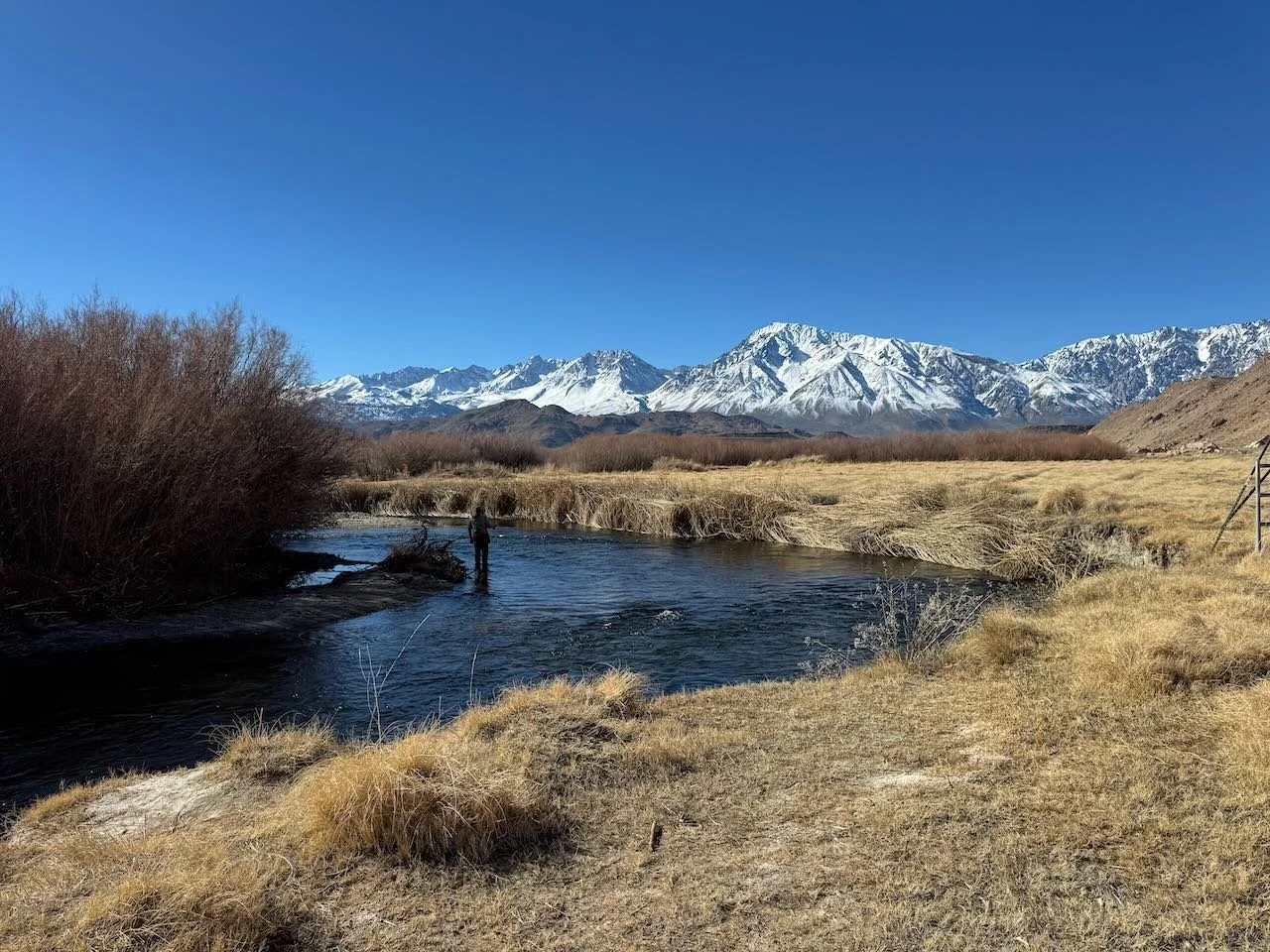
Warm days and snow in the mountains makes the Eastern Sierra the perfect place for a winter fly fishing outing.
Lower Owens River
Wild Trout Section:
Active insects, middle of the day warmth and trout taking nymphs and dries make fly fishing the lower Owens River perfect right now. You have to be on the right hole middle of the day to find enough rising trout to the blue wing olive mayfly hatch to fish with dry flies. Rerigging from a nymph to a dry fly quite often takes up more time than the blue wing olive hatch is on the water. Carrying two rods is a problem, but makes it easy to switch from nymphs to dries and back to nymph fishing. Size 18 sparkle duns, size 18 blue wing olive parachutes and size 18 Adams parachutes are fooling the mid-day rises of rainbows and browns to the hatching blue wing olive mayflies. Nymph fishing has been the most productive way of fly fishing the river right now. Under an indicator use size 18 bead head flash back pheasant tail nymphs, size 18 olive quilldigons, size 16 Duracell’s, size 16 Frenchie’s, size 12 and 14 stoner nymphs, size 18 green/gold brassies, size 18 brassies and size 18 midges in olive, zebra and tiger colorations. With a Euro rig use a three fly rig of a size 18 olive quilldigon, size 12 stoner nymphs and a size 18 Frenchie.
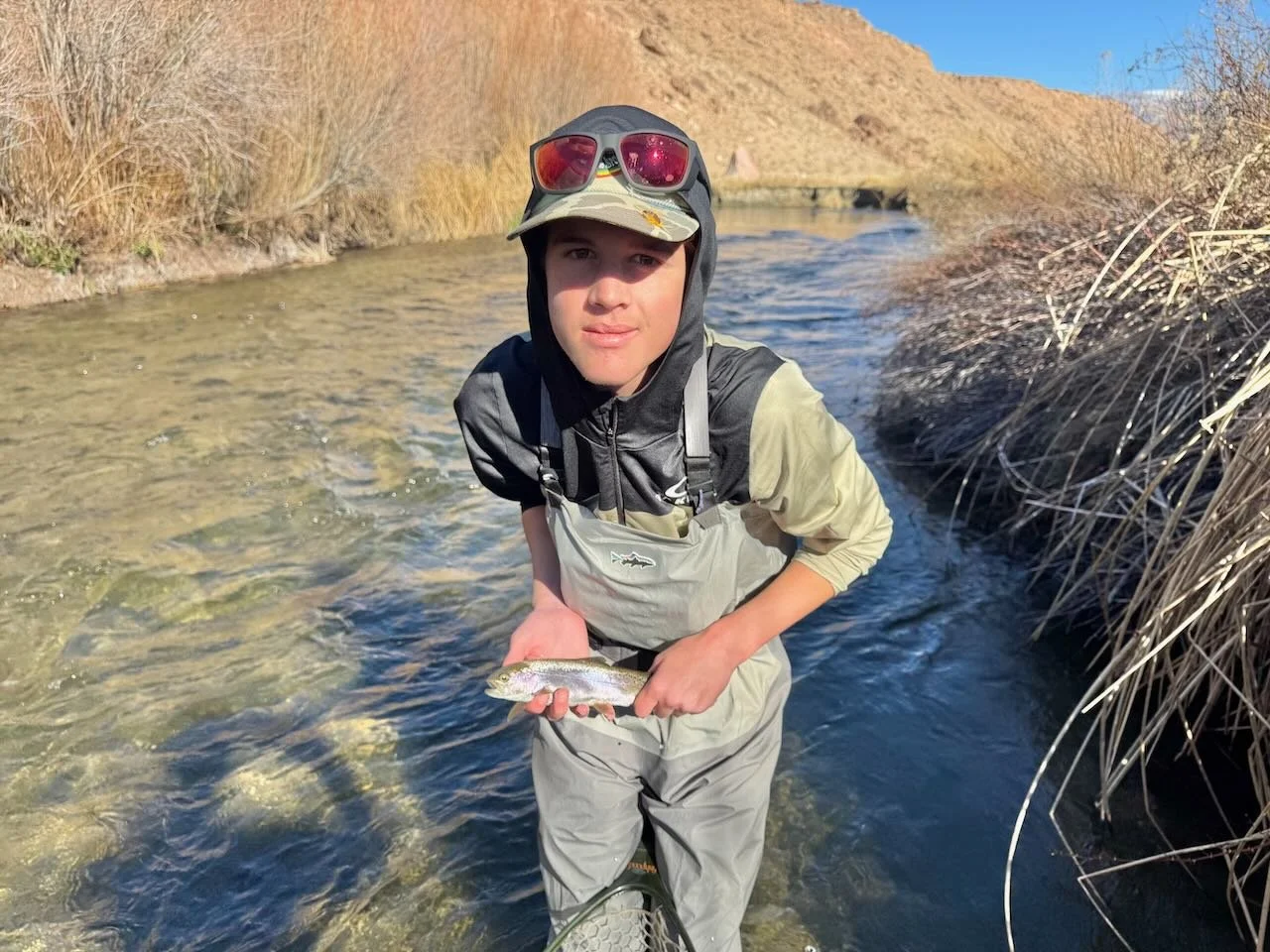
Nymphing with a size 18 bead head flash back pheasant tail nymph six feet under an indicator produced several wild rainbow and brown trout for Dylan Simchowite of Laguna Beach for his first nymphing outing on the lower Owens River.
Hot Creek
Interpretive Site:
Snow is still limiting access to Hot Creek Interpretive site. Snow shoes will make the hike in over the snow easier. For those willing to put in the effort to access the Interpretive Site will be rewarded with hatches of blue wing olive mayflies and midges. Fishing mid-day will find the insects most active. Fish with size 20 sparkle duns, size 20 Adams parachutes, size 20 blue wing olive parachutes, size 20 CDC midges and size 20 Griffith’s gnats. A drag free drift and a good hook set is needed to hook the surface feeding wild trout of Hot Creek. Fishing a dry and dry rig makes it easier for most fly fisher to detect a hit from the trout taking size 20 and smaller dry flies. For the large fly in a dry and dry rig use a size 16 Adams parachute, size 14 stimulator and size 12 Chernobyl ants
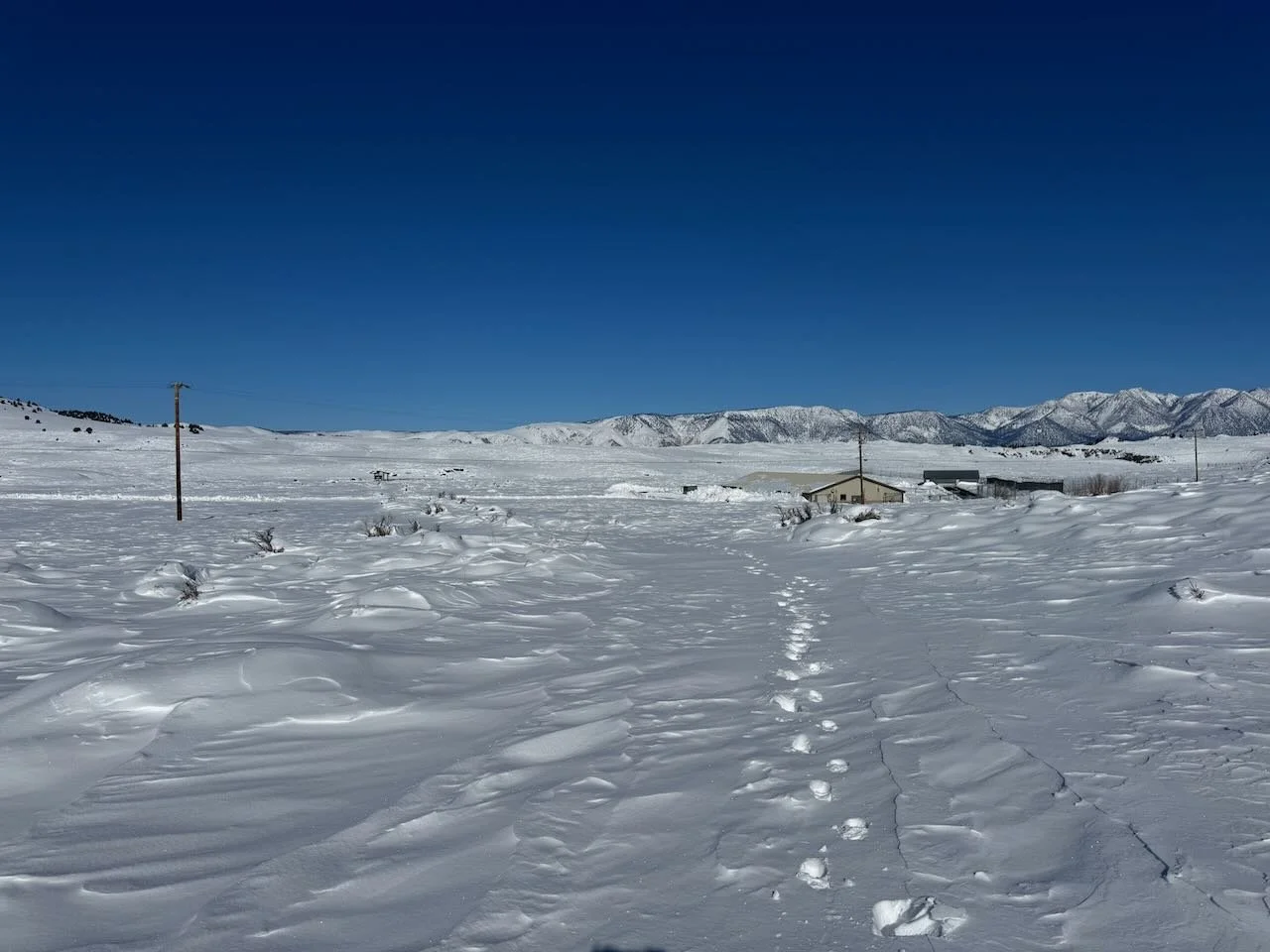
Walking in over the snow can be done, but using snow shoes will make it an easier hike in to access the Interpretive site of Hot Creek.
Hot Creek
Canyon Section:
It takes a lot of effort right not for fly fishers to access the Canyon Section of Hot Creek. To access the canyon park at the winter closure. Be sure not to park in front of Hot Creek Ranch. The trail into the canyon has 12 to 36 inches of snow. For the few fly fishers willing to walk into the canyon they will find few if any fly fishers fishing. The wild rainbows and browns are feeding and will take nymphs and dries. Fish the surface in the canyon if there are lots of trout rising otherwise nymphing is the most productive method. Fish in the open areas as much as you can which are the riffles and deep holes. The weed beds are at their smallest, but still make it hard to nymph in them. Use size 18 green/gold brassies, size 18 brassies, size 18 zebra midges, size 18 tiger midges, size 18 Croston’s bead head baetis, size 18 Frenchie’s, size 18 bead head flash back pheasant tail nymphs and size 18 olive quilldigons.
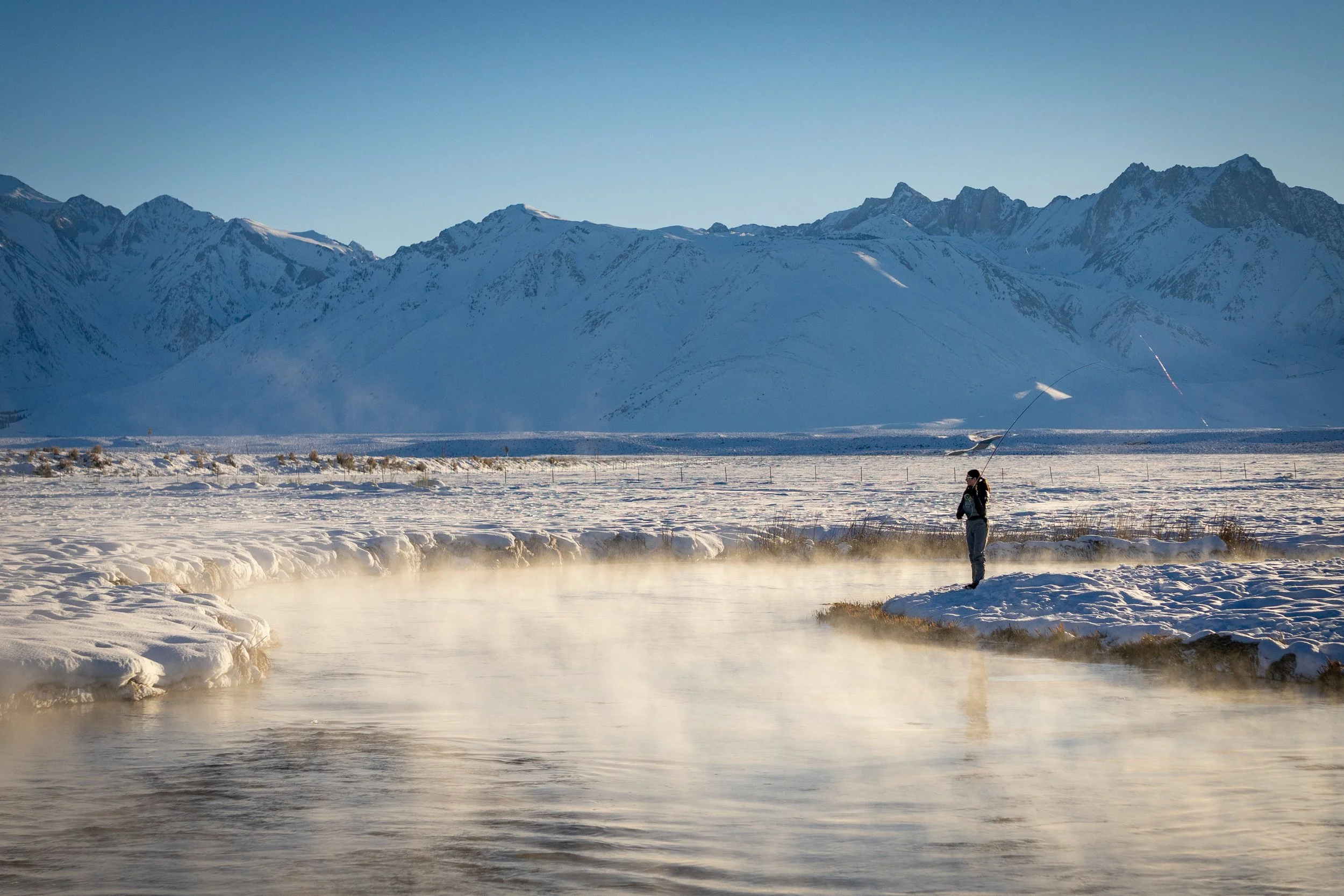
Early mornings and late afternoons are cold on the upper Owens River which is producing trophy rainbow trout for fly fishers fishing nymphs in the deep holes, deep runs and cutbanks. Photo by Kim Espinosa @visistmammoth
Upper Owens River
Above Benton Crossing Bridge:
Caution is needed to drive the dirt roads accessing the upper Owens River above Benton Crossing Bridge. The roads are drivable, but it is easy to get stuck. There are trophy rainbow trout in the system in the deep holes, deep runs and cutbanks. Fish with size 12 stoner nymphs, size 12 green/gold Prince nymphs, size 12 Richard’s gold ribbed hare’s ear variation, size 18 olive quilldigons and size 16 hot spot pheasant tail nymphs. In order to land trophy trout the fly fisher needs to know how to fight trophy trout. On the initial hook up just keep the rod tip up and line taught. If the fish comes to you bring in line. If the fish swims away from you let fly line out through your fingers until the line is on reel. Try to keep the fish in front of you with no more than 20 feet of fly line, leader and tippet from the rod to the fish. When the fish moves up or down the stream follow it keeping tension in the line. Turn the rod sideway if you need to keep the fish from running under the bank. When the fish has tired slide it towards you to land it. Trophy trout take a lot of skill and luck to land.
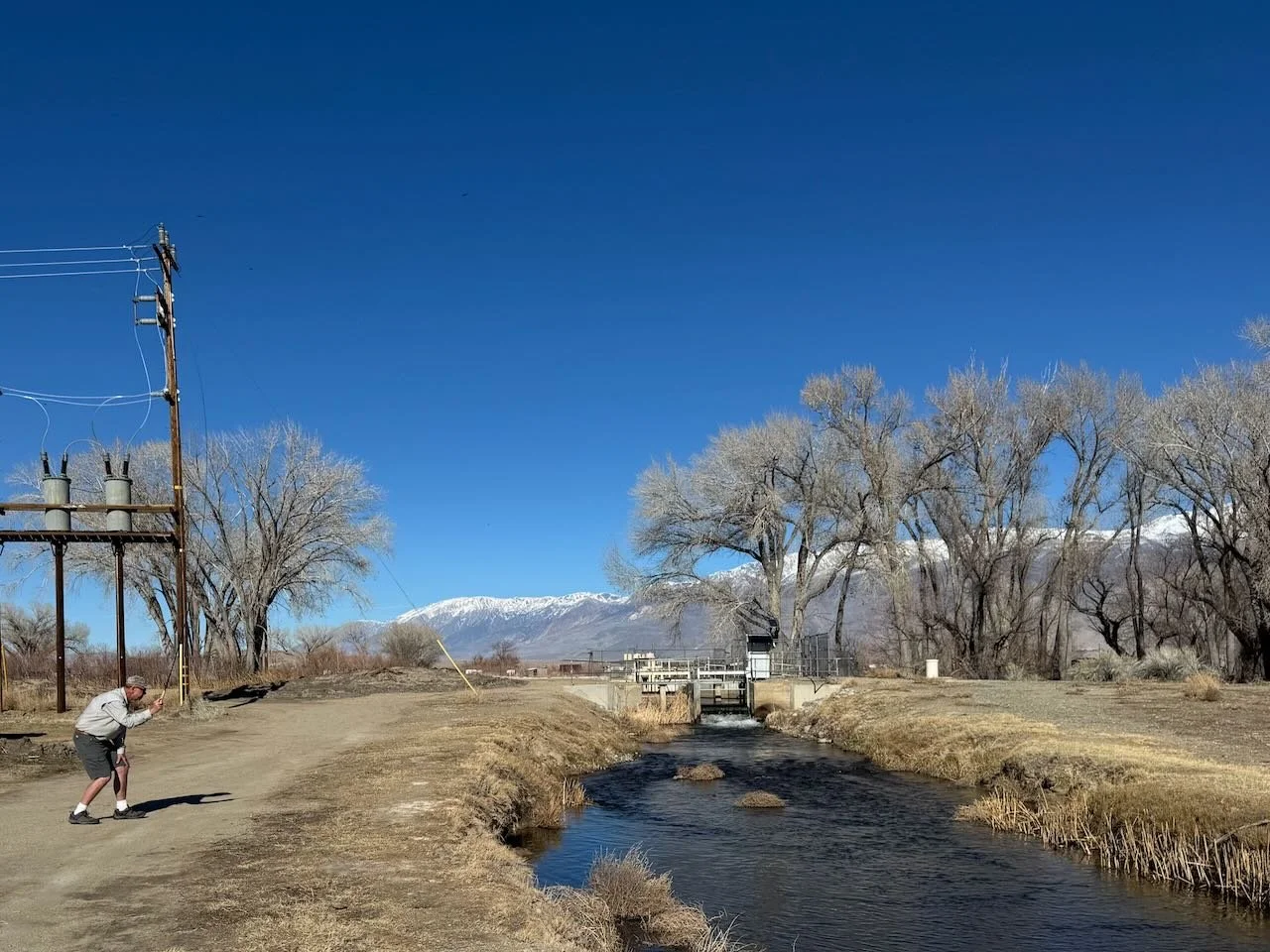
Fishing with a Tenkara rod on Bishop Creek Canal require the fly fisher to sneak up on the spooky trout that are feeding on emerging mayflies and midges.
Bishop Creek Canal
Behind Bishop Veterinary Hospital:
Mid-days have been warm on the canal. Trout have been coming to the surface to feed on emerging mayflies and midges. On the surface fish with size 20 Adams parachutes, size 20 blue wing olive parachutes, size 20 sparkle duns, size 20 Kling Hammers, size 20 foam midge emerger and size 20 CDC midges. Nymphing continues to produce wild rainbows and browns to 12 inches. Use size 18 bead head flash back pheasant tail nymph, size 18 olive quilldigons, size 20 olive midge emergers, size 20 tiger midges and size 20 zebra midges. The trout are spooky and fly fishers need to use stealth when approach the trout of Bishop Creek Canal.