
And just like that the sun came out, the weather warmed up and a lot of snow melted in just a few days. The ice on Crowley Lake is mostly broken up and the snow line is approaching the 8,000 foot level. Dirt roads in the Long Valley area are full of snow melt and are very muddy. Drive this area with caution. Know your limitations. I choose to walk out to the river and not get my truck stuck or tear up the dirt roads. Caddis, mayflies, midges and stoneflies are the insects the trout are feeding on, on the surface and on the substrate. Owens Valley is warming up nicely and offering T-shirt weather fly fishing middle of the day.
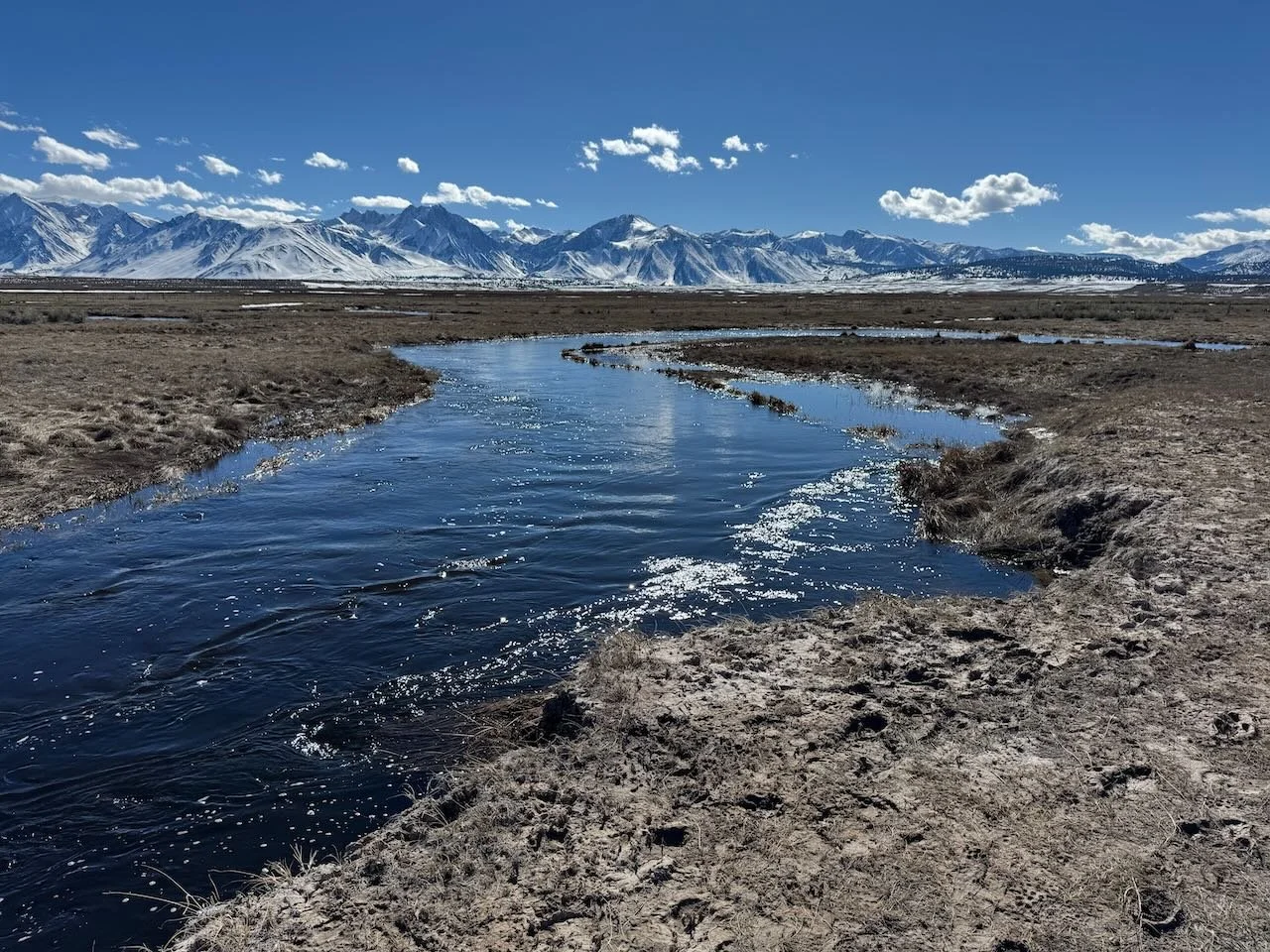
Two weeks ago and there was plenty of snow in the Eastern Sierra and now with the warming weather the snow is quickly melting and the dirt roads are muddy.
Lower Owens River
Wild Trout Section:
Caddis and blue wing olive hatches are bring the trout to the surface mid-day. Trout are consistently rising to the emerging insect from 11:00 A.M. to 1:00 P.M. each day. Be aware that these times may fluctuate. Blue wing olive mayflies are hatching and fly fishers should use size 18 blue wing olive parachutes, size 18 Adams parachutes, size 18 olive sparkle duns on the surface and size 18 olive quilldigons, size 18 bead head flash back pheasant tail nymphs, size 16 hot spot pheasant tail nymphs, size 18 soft hackle pheasant tail nymphs and size 18 Frenchie’s on the substrate. Caddis hatches are more prolific on the lower sections of the wild trout section of the wild trout section of the lower Owens River and are slowly working their way up stream. Use size 18 elk hair caddis, size 18 X-caddis, size 18 foam caddis and size 18 E/C caddis on the surface and size 18 gold ribbed hare’s ears, size 18 La Fontaine’s caddis emerger, size 16 Butano nymph and size 18 Duracell nymphs on the substrate and in the water column. Swimming nymphs and emergers to the surface in a caddis hatch will provide action for fly fishers using a Leisenring lift. Winter skwala stoneflies are still providing trout with energy when they feed on the nymphs and adults. For the nymphs fish with a size 12 stoner nymph, size 14 copper John’s and size 14 Pat’s rubber legs on the substrate and fish with size 12 yellow/olive stimulators and size 14 yellow/olive bodied Chernobyl ants. There are a few wet mud spots on Chalk Bluff Road.
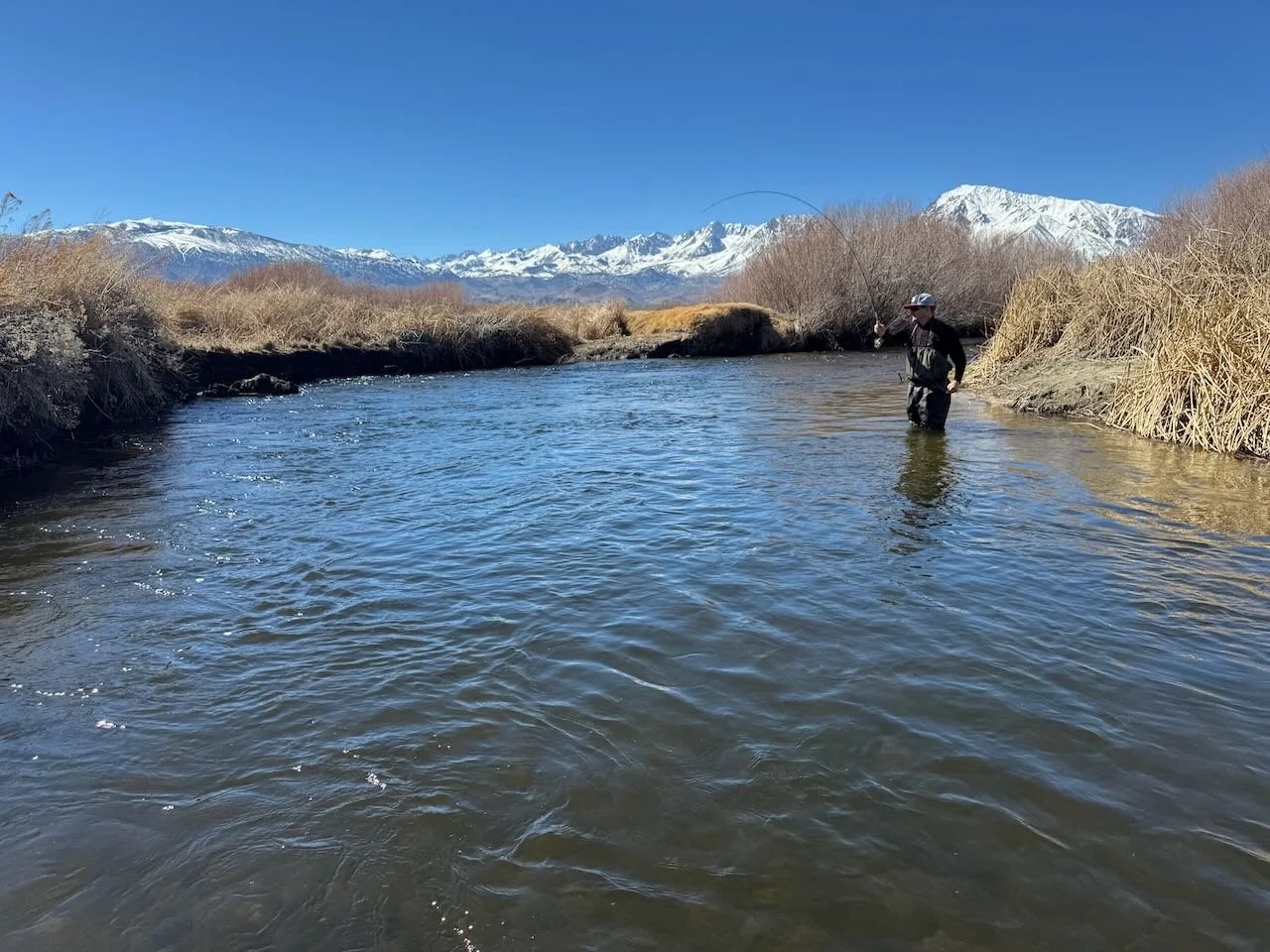
Wading upstream and casting your flies into the riffle directly above the pool is where you will find the wild trout feeding on the hatching mayflies and caddisflies..
Hot Creek
Interpretive Site:
The snow is soft and easy to walk through to the Interpretive Site, but is still too deep to drive into the parking area at the Interpretive Site. Fly fishers walking into the Interpretive Site will be welcomed with hatching mayflies and midges late morning into early afternoon. Fish on the surface with size 20 blue wing olive parachutes, size 20 Adams parachutes, size 20 olive sparkle duns, size 20 Griffith’s gnats and size 20 CDC midges. Targeting specific rising trout is a fun way to fish through the hatch. Sometimes it will take multiple drifts to time the rise of the trout with the drift of the fly. On the substrate fish with a size 18 olive quilldigon, size 18 bead head flash back pheasant tail nymph, size 18 Frenchie’s and size 20 thread midges in tiger and zebra coloration.
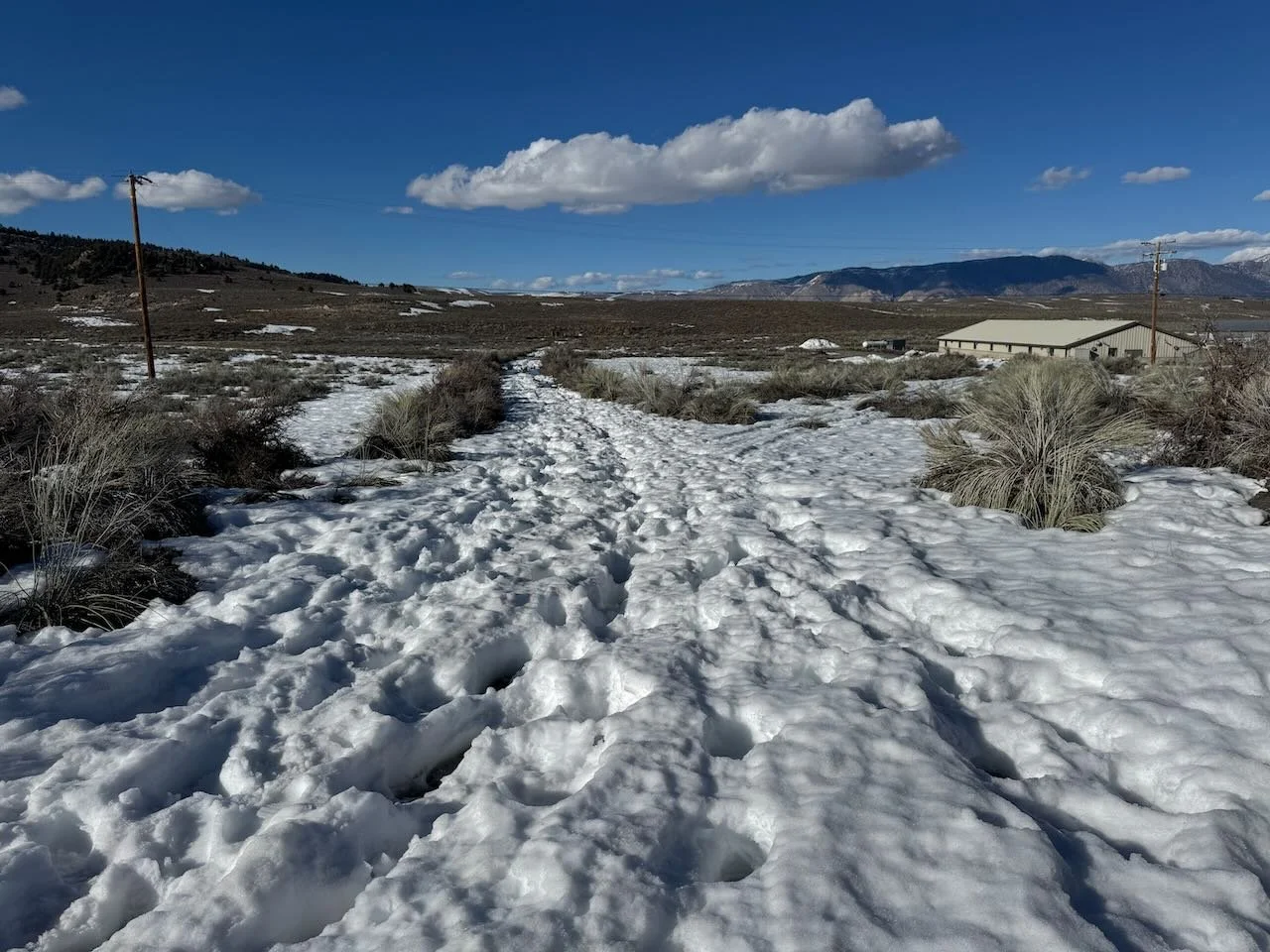
Walking into the Interpretive Site is through snow deeper than a vehicle can drive, but shallow enough for easy walking through the footsteps left by other fly fishers.
Hot Creek
Canyon Section:
There is a road closed sign on Hot Creek Hatchery Road where the winter closure is. There is a set of tire tracks out to the canyon, but I was not willing to drive out and possibly getting stuck. The snow is soft and not very deep so the walk out to the parking areas to access the canyon is pretty easy. For fly fishers fishing in the canyon, now is the easiest time to be nymphing with the weed beds at their lowest growth point of the year. It will not be long before the weed beds start growing again and making it tougher to fish nymphs. A dry and dropper is a great way to nymph in the canyon. Use a size 16 Adams parachute for the dry fly and fish with size 18 olive quilldigons, size 18 bead head flash back pheasant tail nymphs, size 18 Frenchie’s, size 18 soft hackle pheasant tail nymphs, size 20 green/gold brassies and size 20 thread midges in zebra and tiger coloration.
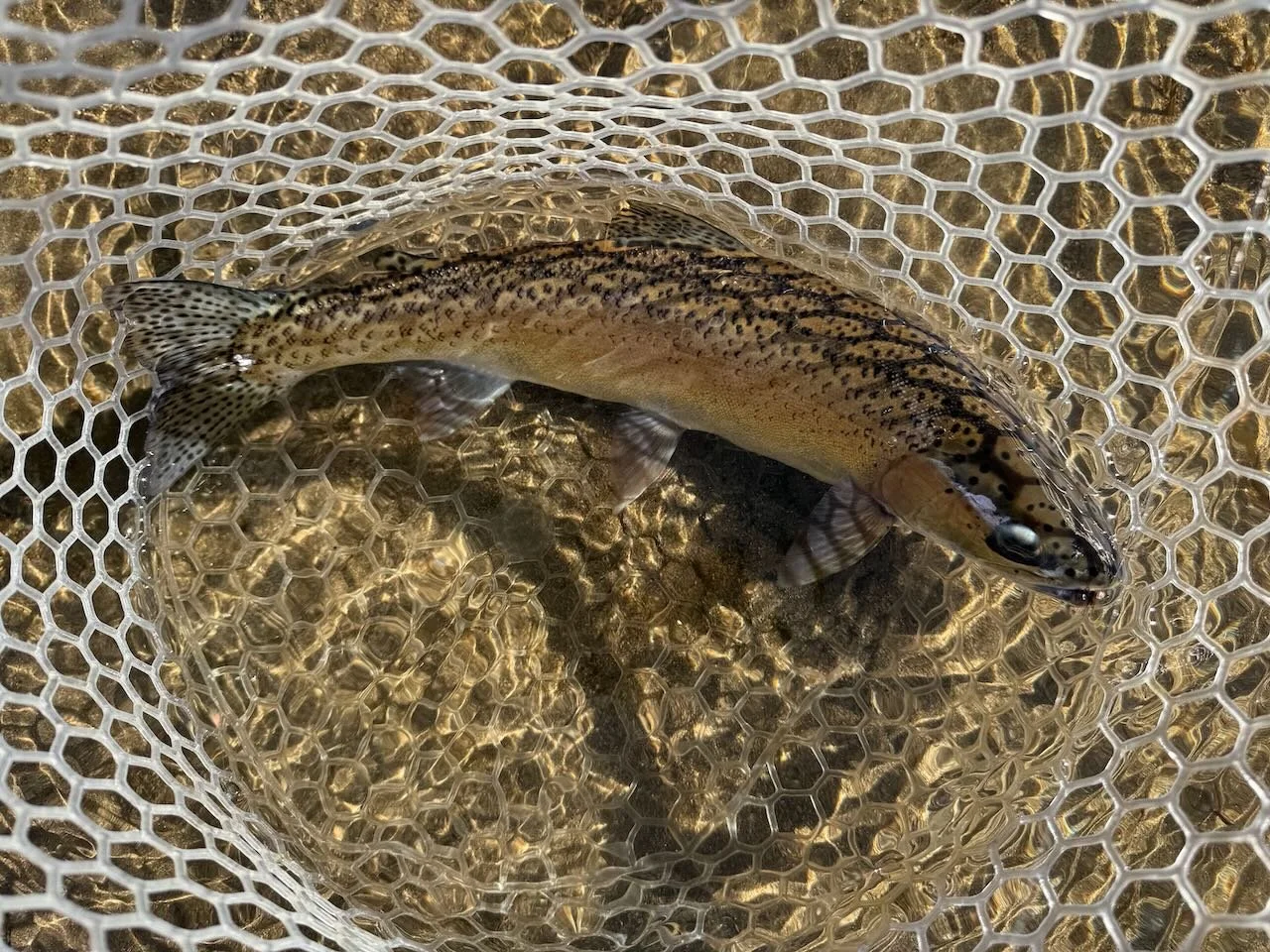
Fly fishers willing to walk into the upper Owens River are being treated to trophy rainbow trout.
Upper Owens River
Above Benton Crossing Bridge:
I’m old enough that I don’t want to deal with getting my truck unstuck. So there is lots of muddy roads on the upper Owens River to get a truck stuck in. My recommendation is to park on the main dirt road and walk in. It’s a 20 minute walk out to the river from the main dirt road. Working nymphs in the deep holes, deep runs and cut banks where the trophy trout are resting and feeding will produce the trophy trout. Nymph on a Euro rig or under an indicator with size 12 stoner nymphs, size 12 green/gold Prince nymphs, size 12 Richard’s version of a gold ribbed hare’s ear, size 14 copper John’s, size 14 tungsten taco’s, size 12 squirmy wormies and size 10 mop flies. Key to success is to thoroughly cover the water your nymphing before moving onto another fish holding looking spot. Be sure to set the hook on the slightest of movement in the indicator or in the sighter.
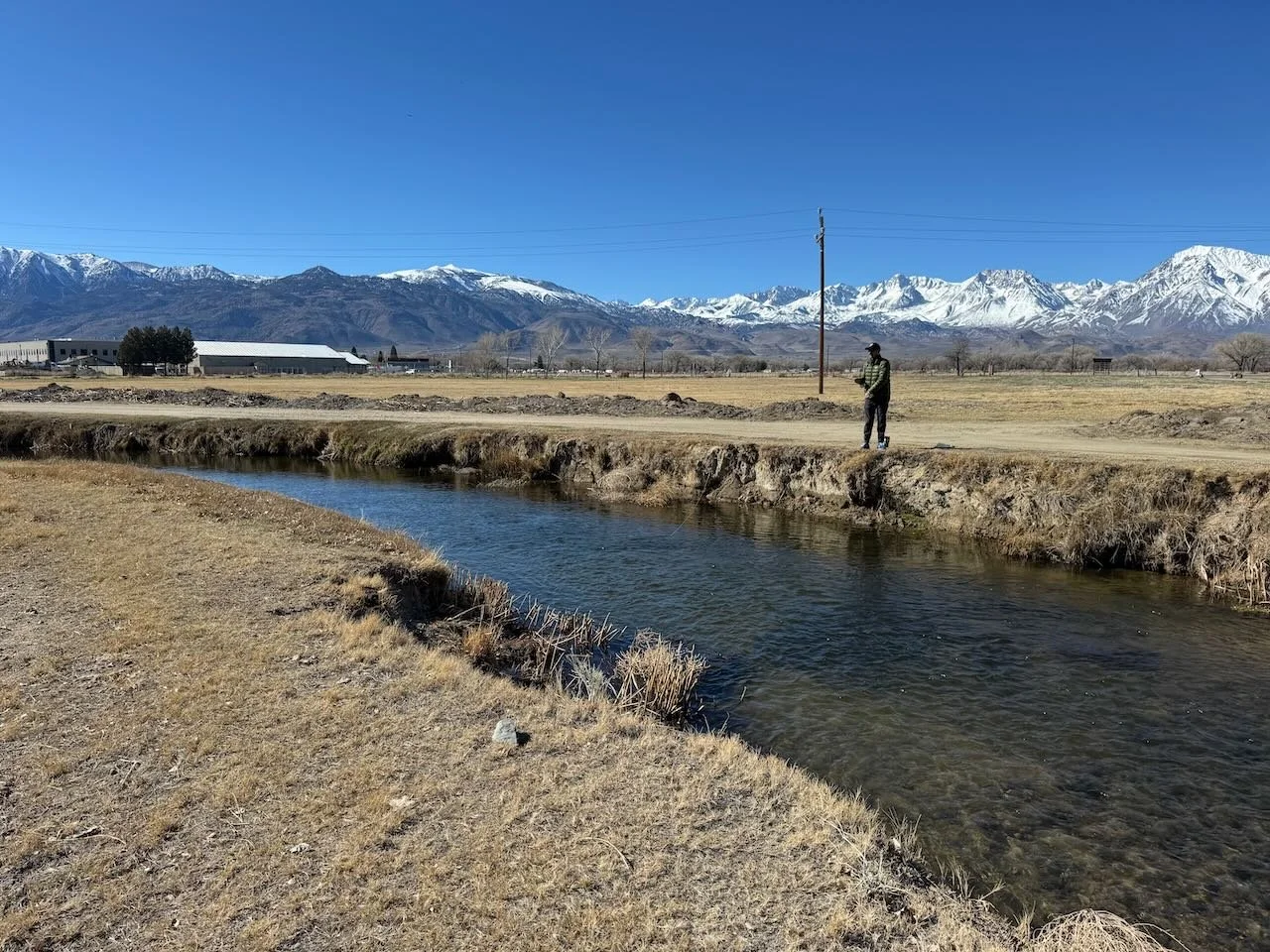
It took a week for the snow to disappear, but the fly fishing on Bishop Creek Canal continues to be good with nymphs and dries.
Bishop Creek Canal
Behind Bishop Veterinary Hospital:
It took about a week for the snow to melt and now it’s all gone. Flows are at their lowest of the year. Nymphing and dry fly fishing is producing wild brown trout. For nymphs fish with size 18 bead head flash back pheasant tail nymphs, size 18 olive quilldigons, size 12 stoner nymphs, size 18 green/gold brassies and size 18 thread midges in zebra and tiger coloration.
The trout are feeding on the surface and on the substrate. Middle of the day fish with size 18 Adams parachutes, size 18 blue wing olive parachutes and size 18 olive sparkle duns to fool the trout feeding on the hatching blue wing olive mayflies on the canals surface. On the substrate fish with size 18 tiger midges, size 18 zebra midges, size 18 green/gold brassie emergers, size 18 olive quilldigons, size 18 bead head flash back pheasant tail nymphs and size 18 Frenchie’s.