
The warm trend has broken and there is precipitation in the forecast with a chance of snow in the Owens Valley. The Eastern Sierra can use precipitation in the form of rain and snow if we hope to have creeks and streams flowing at good levels this summer. Caddis and mayflies hatches are increasing in intensity and starting to bring the trout to the surface consistently. Winter Skwala stoneflies are starting to show up in the Eastern Sierra. Midges are a consistent trout food throughout the winter months.
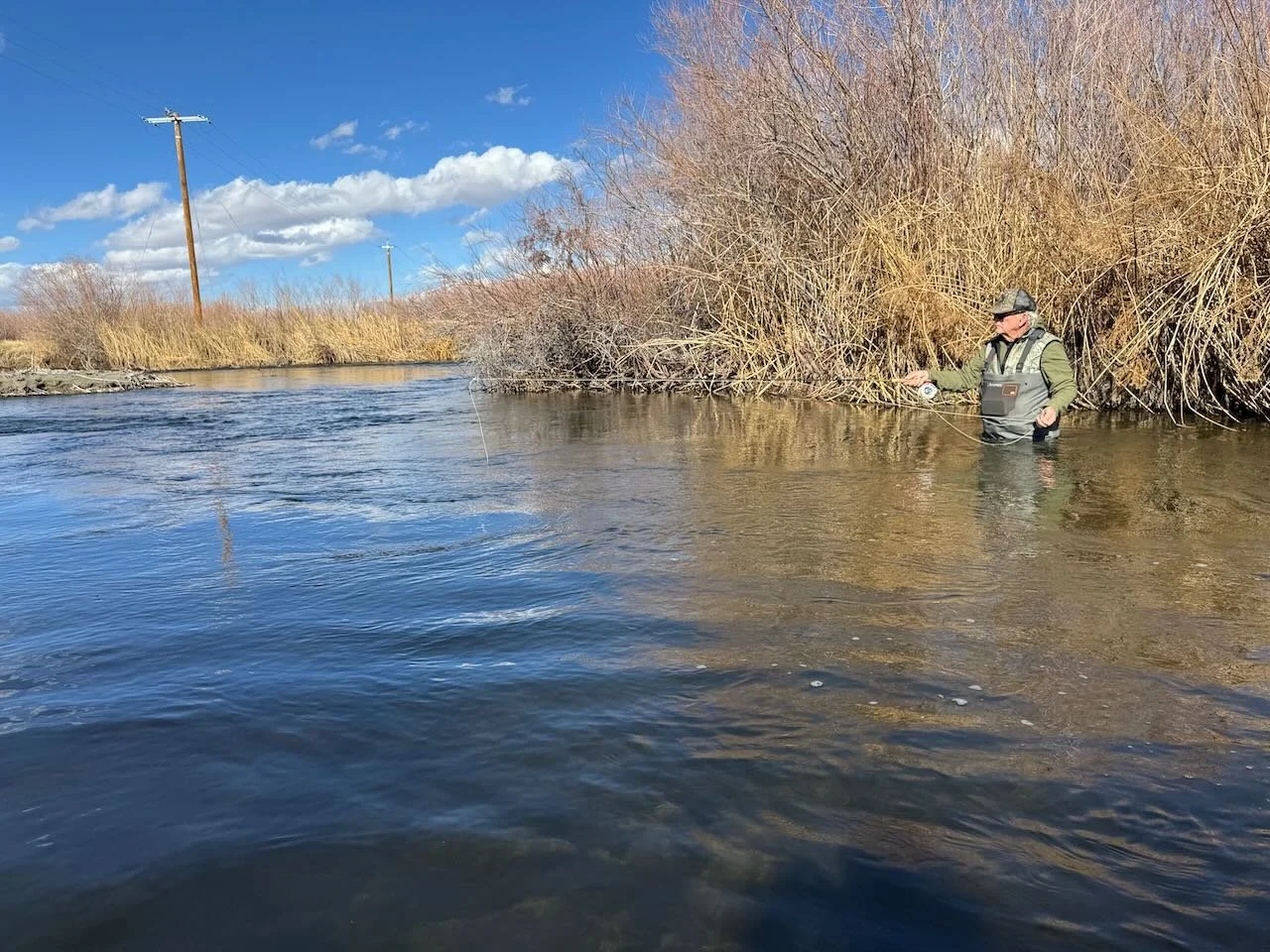
A warm day, hatching mayflies and wading upriver is a perfect winter fly fishing day in the Owens Valley.
Lower Owens River
Wild Trout Section:
The wild rainbow and brown trout of the lower Owens River are feeding on mayflies, midges and stoneflies on the substrate. Size 18 olive quilldigon, size 18 bead head flash back pheasant tail nymphs, size 18 olive zebra and tiger colored thread midges and size 12 stoneflies are fooling the trout feeding on the substrate. On the surface the trout are feeding on size 18 blue wing olive parachutes, size 18 Adams parachutes, size 18 CDC midges and size 18 Griffith’s gnats. Caddis hatches are right around the coroner and the trout are starting to feed on caddis nymphs, pupae and adults.
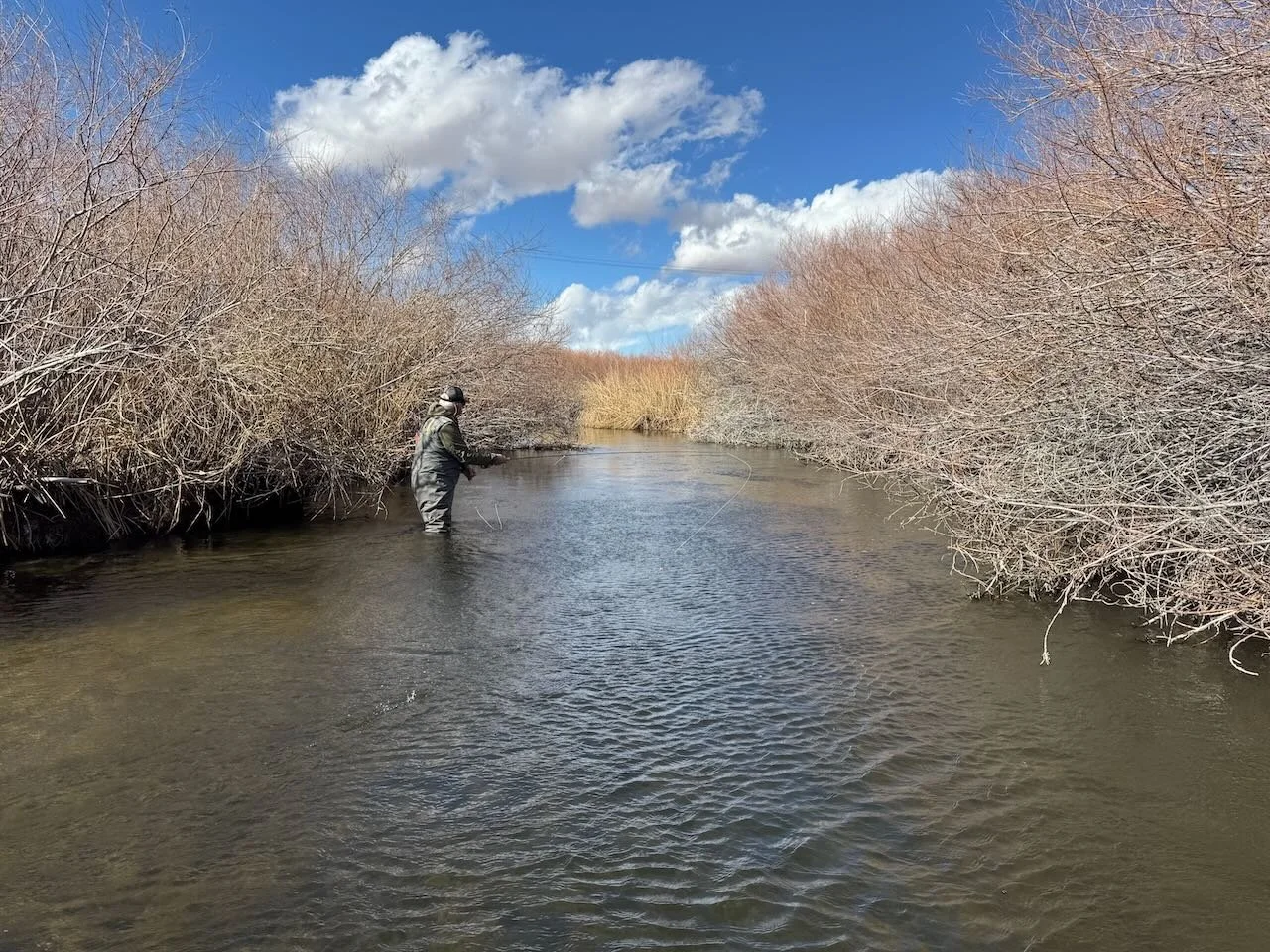
Wading up the Owens River with willows and tulles on both sides is how to fish with nymphs and dry flies in the winter time when the flows allows fly fishers to explore the lower Owens River.
Hot Creek
Interpretive Site:
What was will not be what will be on the creek. The warm weather and fly fishers walking out to the creek have developed trails that make it easier to access the Interpretive Site. With the approaching storms time will tell how much snow ends up on the ground and how that will affect creek. The fly fishing is good on the surface and on the substrate. On the surface fish with size 20 Adams parachutes, size 20 blue wing olive parachutes, size 20 CDC midges, size 20 midge emergers and size 20 Griffiths gnats. On the substrate use size 18 bead head flash back pheasant tail nymphs, size 18 olive quilldigons and size 20 tiger and zebra coloration thread midge patterns. Next week will show how much snow this area has gotten and how to access the creek.
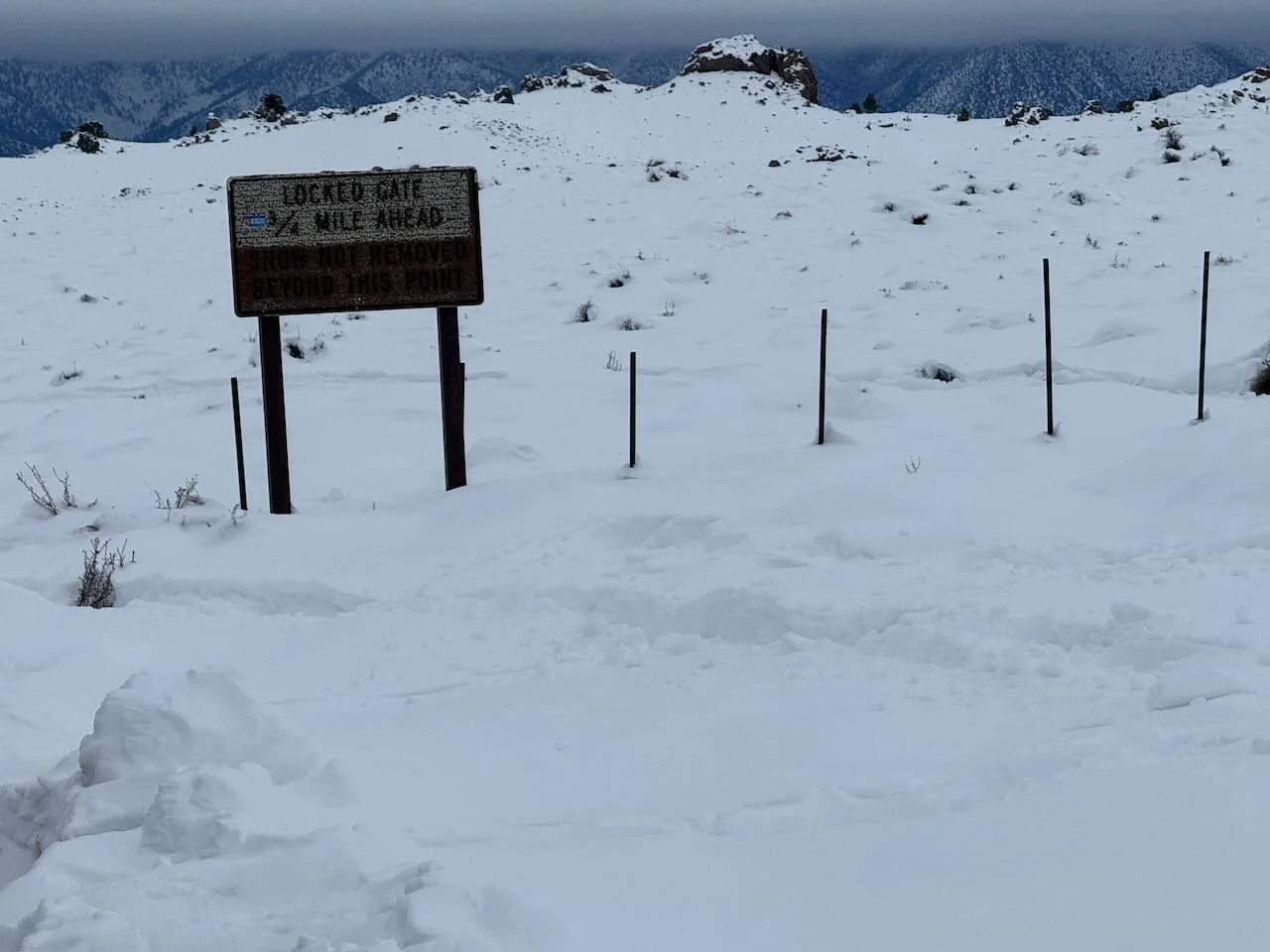
Fly fishers looking to access Hot Creek Canyon will find the road inaccessible beyond the winter closure at the end of the paved Hot Creek Hatchery Road.
Hot Creek
Canyon Section:
This area requires the most effort to access it. Access starts at the end of the paved road where there is no plowing. There has been enough snow on the road to keep vehicles from driving out to the canyon parking areas. With the expected snow this area will continue to be accessible by walking, snowshoes, skis or walking in. Fly fishers will find solitude in the canyon section and trout feeding on nymphs and dries. Working nymphs in the slots between the weed beds, the riffles and the holes are where you can find trout willing to take your flies. Use size 18 olive quilldigons, size 18 bead head flash back pheasant tail nymphs, size 18 Frenchie’s, size 18 bead head baetis, size 20 green/gold brassies, size 20 soft hackle brassies and size 20 thread midges in tiger and zebra coloration.
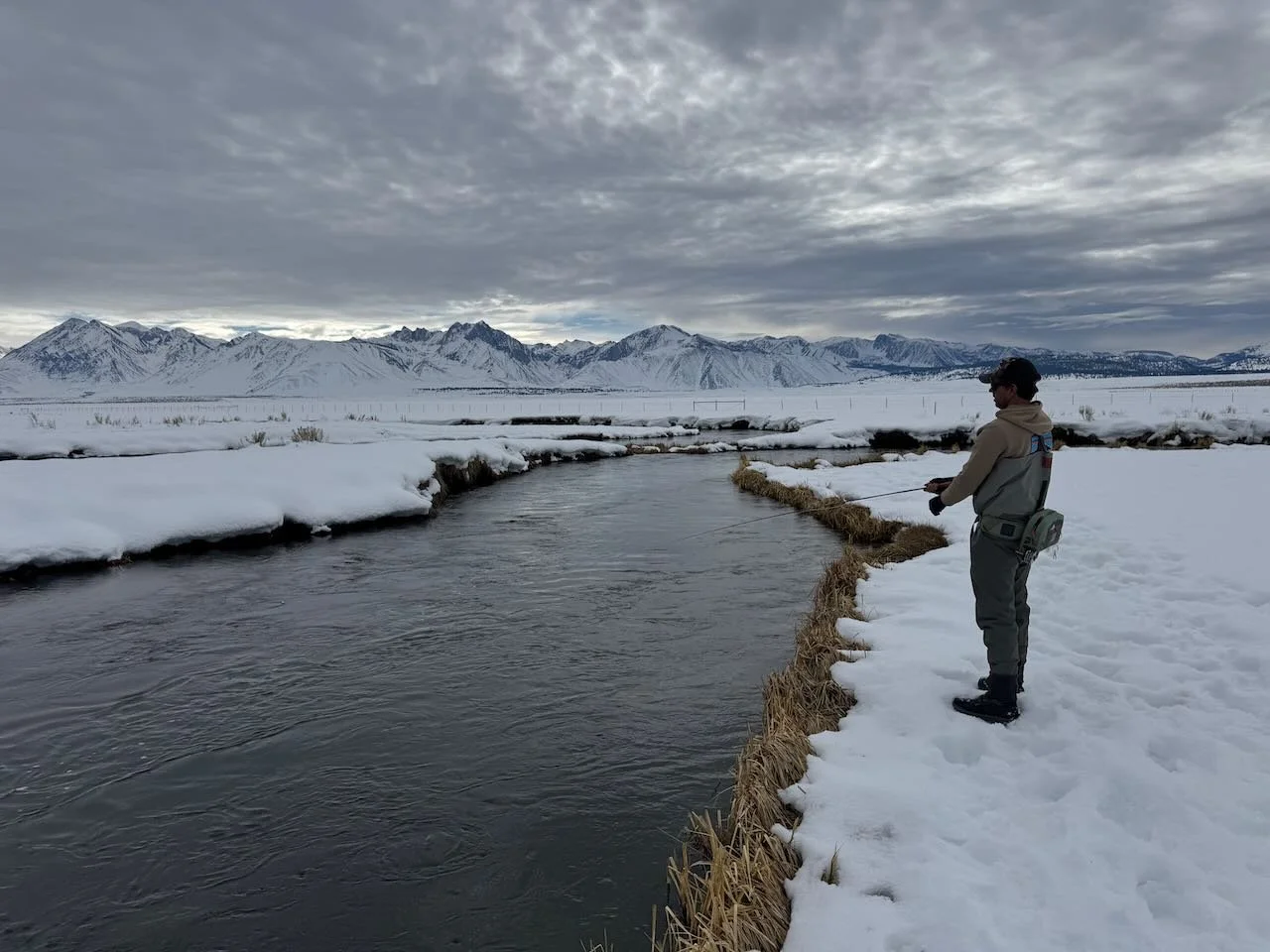
For now the upper Owens River is accessible on foot for those who do not have four wheel drive vehicles with clearance.
Upper Owens River
Above Benton Crossing Bridge:
Snow has been melting and fly fishers have had to contend with some muddy patches driving out to the river. To be safe a lot of fly fishers have been parking at Benton Crossing Bridge and walking up river. Time will tell as to how much snow falls on the roads leading out to the upper Owens River and how accessible the area will be. It may be time for skis, snowshoes or snowmobiles to access the river. We will know when the snow is on the ground and we are counting it in feet or in inches. There are still good numbers of trophy rainbow trout in the deep holes, deep runs and cut banks taking nymphs, eggs and worm patterns. Fish with size 12 stoner nymphs, size 12 green/gold Prince nymphs, size 12 Richards variation of a gold ribbed hare’s ear, size 14 tungsten tacos, size 12 squirmy wormies, size 18 olive quilldigons and size 18 bead head flash back pheasant tail nymphs. Key to success is have the right amount of weight on the tippet as split shot or in the flies so the flies bounce on the substrate.
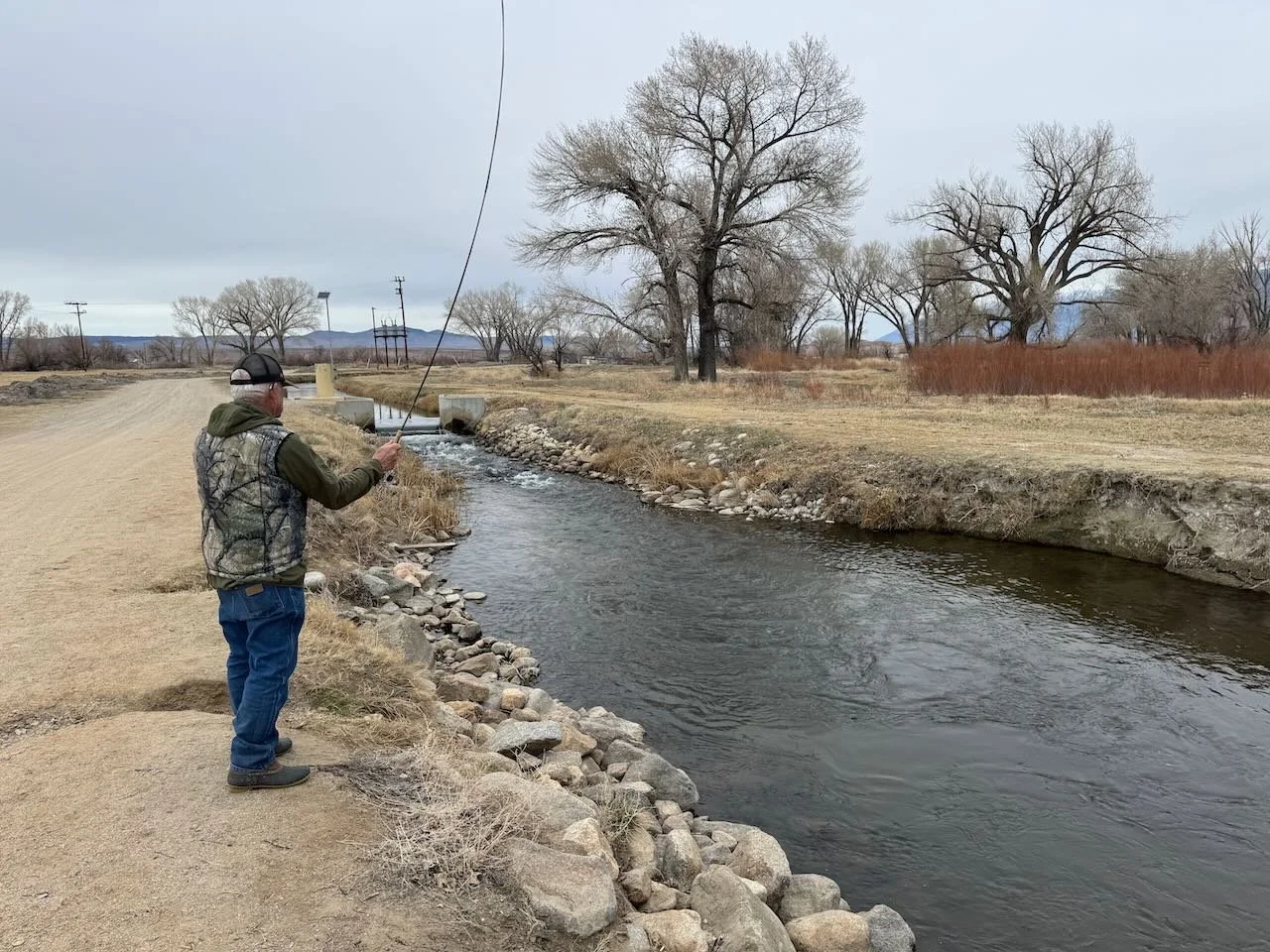
Working Bishop Creek Canal with dry flies and nymphs is producing wild rainbows and brown trout from six inches to 12 inches.
Bishop Creek Canal
Behind Bishop Veterinary Hospital:
Mid-day hatches of mayflies and midges are feeding the trout on the substrate and on the surface. Nymphing with an indicator or with a Euro rig bouncing nymphs on the substrate will produce wild rainbows and browns to 12 inches. Fish with size 18 bead head flash back pheasant tail nymphs, size 18 olive quilldigons, size 20 thread midges in olive, tiger and zebra coloration on the substrate with enough weight in the flies or on the tippet in the form of split shots. On the surface fish with size 18 Adams parachutes, size 18 blue wing olive parachutes, size 20 midge emergers and size 20 CDC midges.