
The heat wave continues. With Lower Owens River flows over 300 CFS the lower Owens River is done until the flows lower probably sometime in October. Snow is melting and dirt roads are drying out at about the 7,000 foot level. Hatches and nymphs of midges, mayflies and the occasional caddis are creating the food source for the trout in the waters of the Eastern Sierra. Summer like weather is making it pleasant to be fishing the waters in the Eastern Sierra particularly above 5,000 feet.
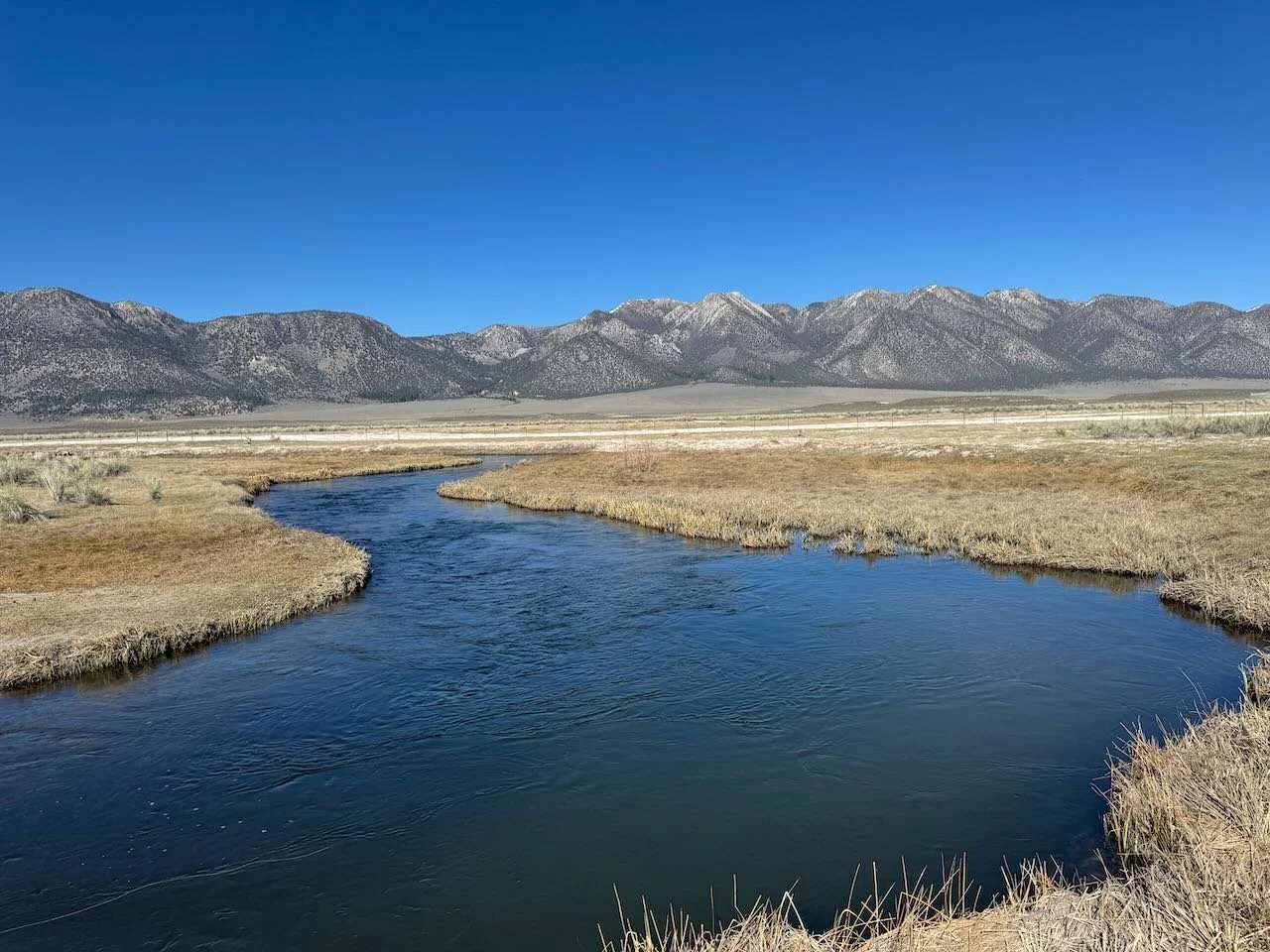
Long Valley waters are drying out with this summer like weather that the Eastern Sierra has had for several weeks and the fish are feeding on nymphs and dries.
Lower Owens River
Wild Trout Section:
Winter fly fishing on the lower Owens River is over for this winter season. Flows are above the 300 CFS level which makes wading the lower Owens River unsafe. The river can be fished at levels over 300 CFS, but it’s tough fishing due to very little bank fly fishing opportunities. Normally the winter season ends late April to very early May when DWP needs to make room in Crowley Lake for the snow runoff. With the warm weather snow up to the 7,000 foot level and slightly beyond has melted and filled up Crowley Lake. Expect flows to increase to 500 CFS or more and stay there throughout the summer months
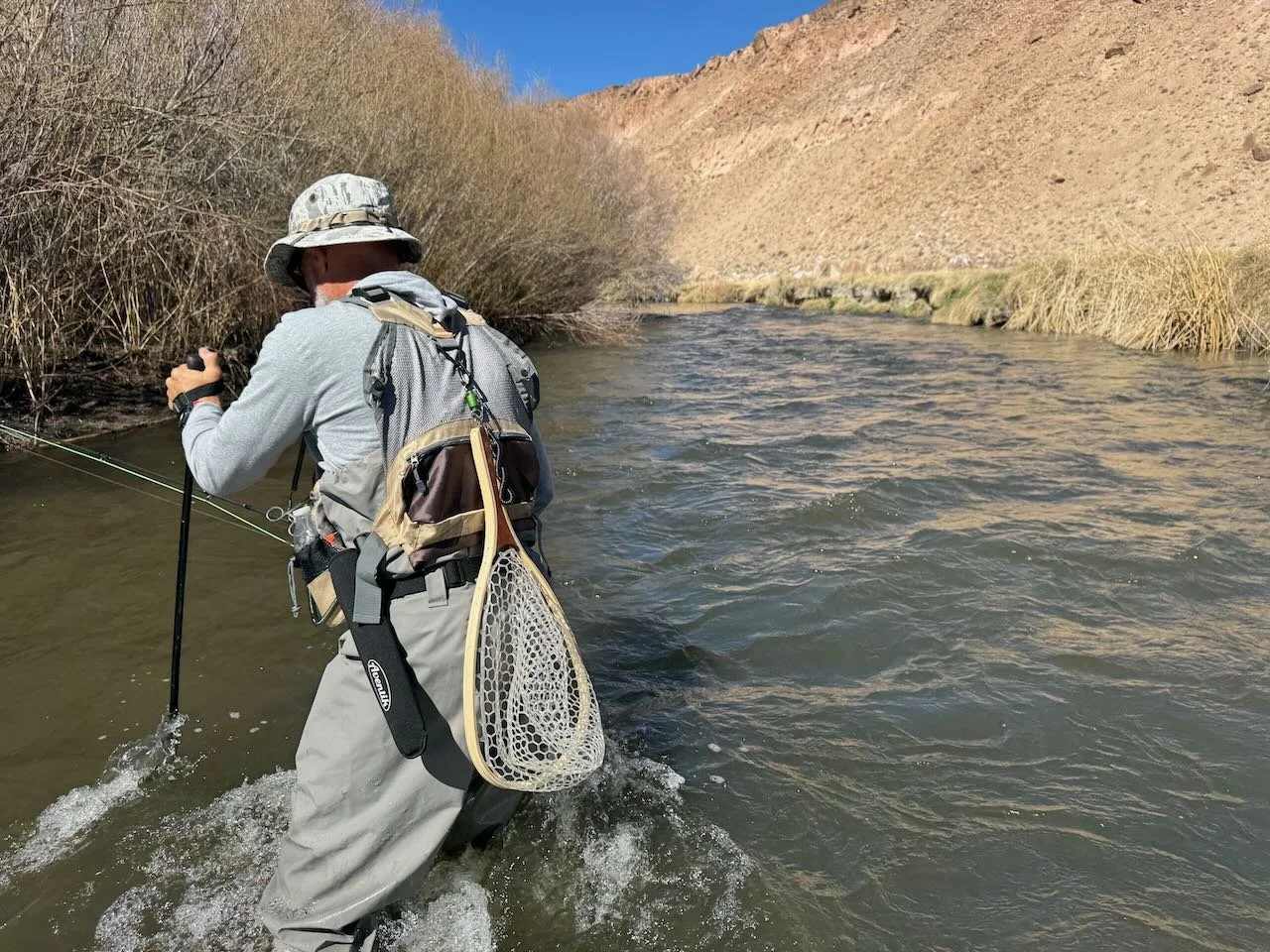
At 185 CFS the lower Owens River was tough to wade and fish and now that it’s over 300 CFS, its done until the flows come down sometime this fall.
Hot Creek
Interpretive Site:
Easy access to Hot Creek makes fly fishing the creek open to fly fishers now that winters blanket of snow is gone. Look for hatches of mayflies and midges. Early morning is when you will see the midges on the water. For the midges on the surface use size 20 Griffiths gnats, size 20 CDC midges and size 20 midge emergers. For the mayflies use size 20 blue wing olive parachutes, size 20 olive sparkle duns and size 20 Adams parachutes. Key to success is using nine to 12 foot leaders tapered to 5X and 6X and presenting the flies with a drag free drift.
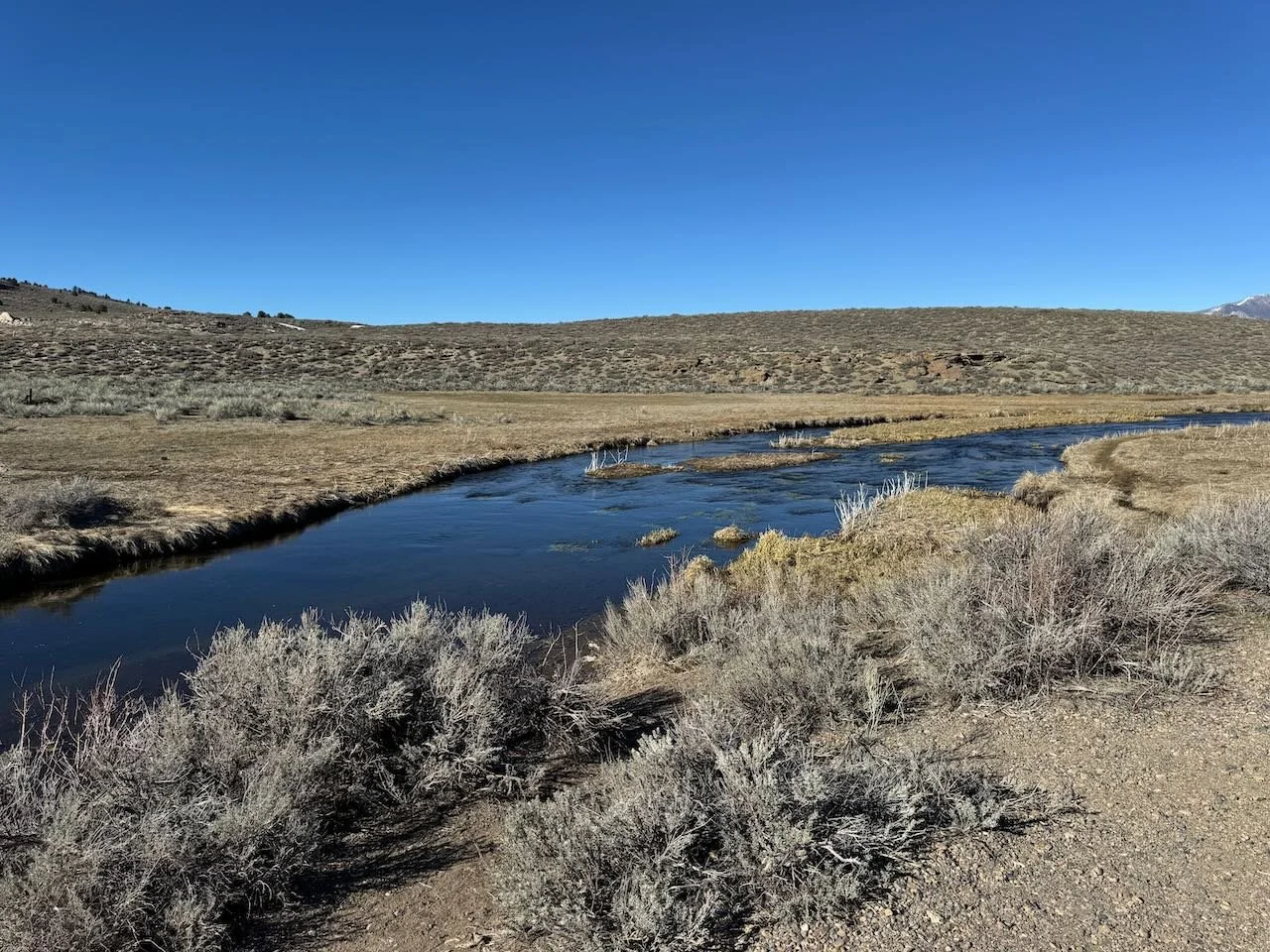
Fly fishers in the Interpretive site of Hot Creek are having luck fishing dry flies on the surface for the trout feeding on hatching mayflies and midges.
Hot Creek
Canyon Section:
Nymphing in the canyon is at its best this time of year as the weed beds are at their smallest level. Working the open areas and in and around the weed beds with a dry and dropper rig or a Euro rig will produce the wild rainbow and brown trout that inhabit the Canyon Section of Hot Creek. Use size 18 olive quilldigons, size 18 bead head flash back pheasant tail nymphs, size 18 Frenchie’s, size 18 green/gold brassies, size 18 soft hackle brassies, size 18 olive quill RS2 and size 18 thread midges in tiger and zebra coloration
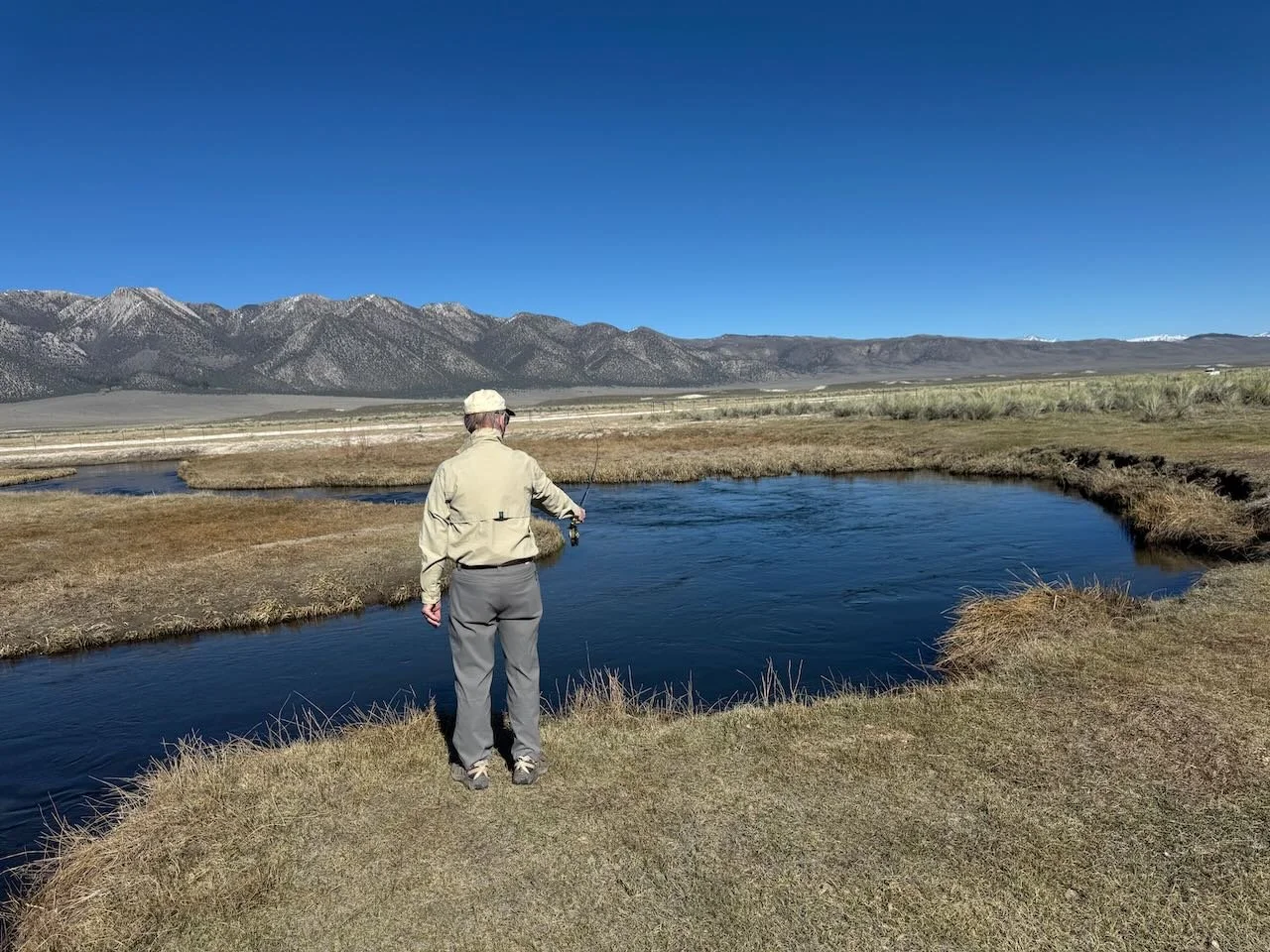
Working the deep holes, deep runs and cut banks where the trophy rainbow trout are feeding and resting with nymphs is producing the trophy trout.
Upper Owens River
Above Benton Crossing Bridge:
The snow is gone and so is most of the mud. There are a few mud puddles on the spur roads leading out to the river. Drive with caution when dealing with mud and mud puddles. There are still trophy rainbows in the river willing to take nymphs, eggs, worms and mop flies. The trophy trout holding in the deep runs, deep holes and cut banks are resting and feeding. Work your nymphs through these waters thoroughly. Nymph under an indicator or with a Euro rig with size 12 stoner nymphs, size 12 green/gold Prince nymphs, size 12 Richard’s variation of a gold ribbed hare’s ears, size 14 copper John’s, size 14 tungsten tacos, size 10 mop flies and size 12 squirmy wormies.
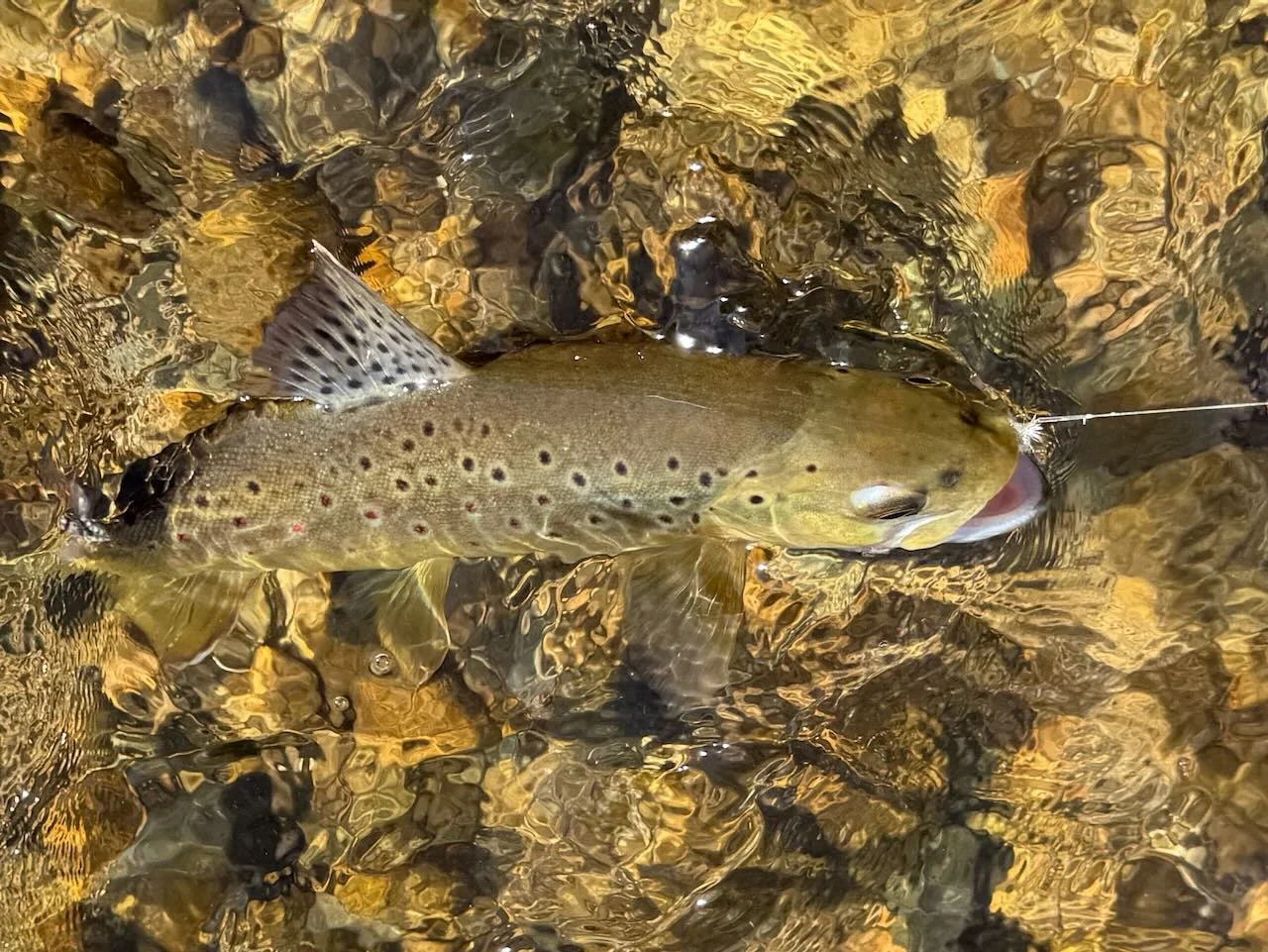
A wild brown trout from Bishop Creek Canal that took a size 18 blue wing olive parachute off the surface on a warm Owens Valley afternoon.
Bishop Creek Canal
Behind Bishop Veterinary Hospital:
Middle of the day is almost too warm to be fly fishing on Bishop Creek Canal. Mid-day hatches of blue wing olives have the trout coming to the surface. It’s fun to find consistently feeding trout and target them with size 18 blue wing olive parachutes, size 18 olive sparkle duns and size 18 Adams parachutes. Nymphing the faster runs with size 18 olive quilldigons, size 18 bead head flash back pheasant tail nymphs, size 18 Frenchie’s and size 18 olive quill RS2’s on the substrate will produce the trout feeding on nymphs.