Sierra Bright Dot Fly Fishing Report 08-13-2026

As we reach the middle of August is the heat ready to break? Let’s hope that the worse of the heat is behind us. It’s been a hot one this summer in the Owens Valley. A voluntary Hoot Owl restriction is in place for catch and release fishing on several Eastern Sierra waters including Crowley Lake, upper Owens River, lower Owens River, Bishop Creek Canal, Bridgeport Reservoir and East Walker River. Carry a thermometer and take the temperature for the water you are fishing. Fish in the creeks high up the canyons that drain the Eastern Sierra when the waters heat up on the rivers and streams at lower altitudes. Trout in the backcountry and in the front country are feeding on the substrate and on the surface on mayflies, caddisflies and midges. Starting to see hoopers on a few Eastern Sierra waters.
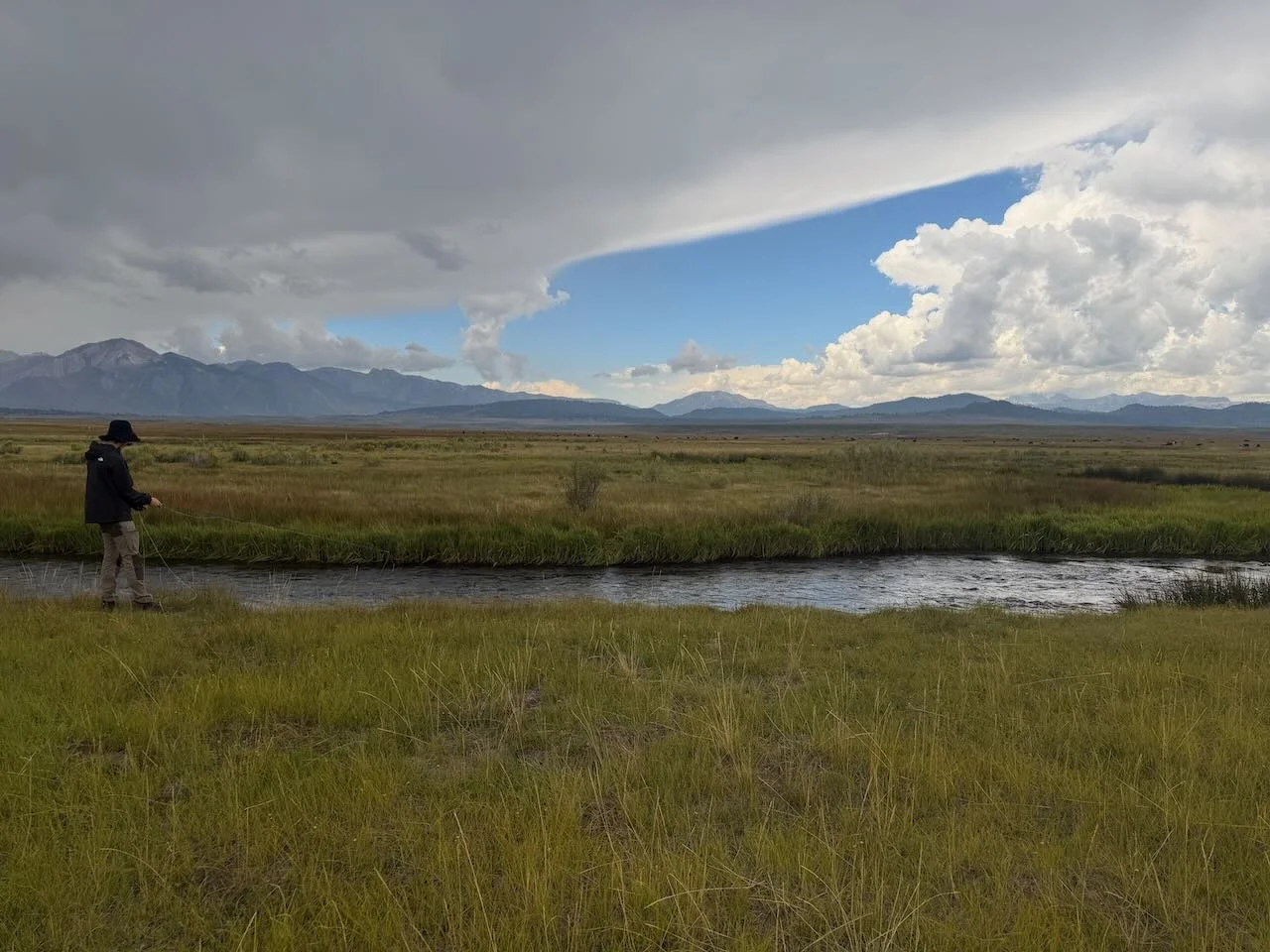
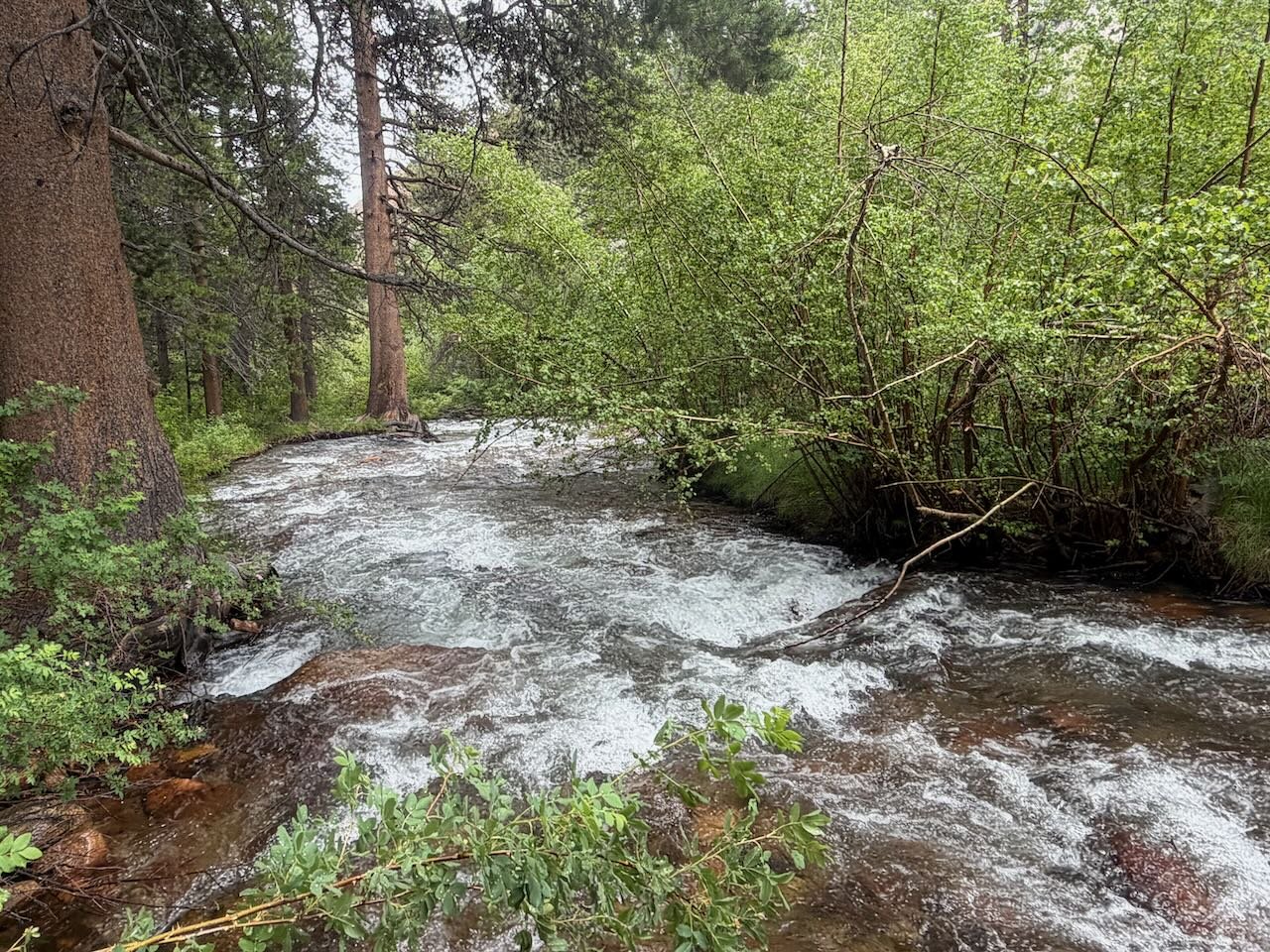
Summer rain storms help cool off the rivers and the anglers fly fishing for wild trout in the waters of the Eastern Sierra.

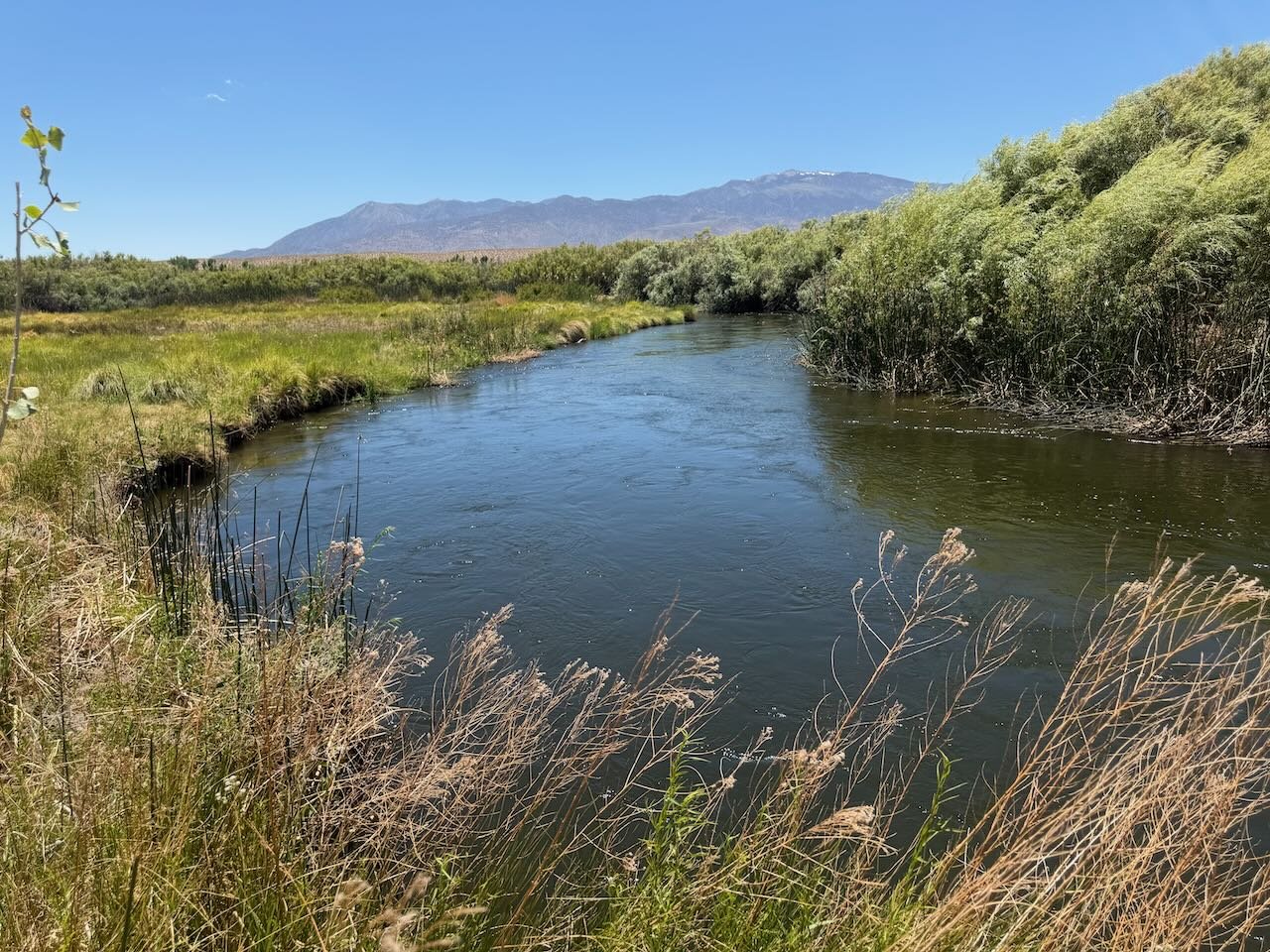
Upper Owens River

Above Benton Crossing Bridge:

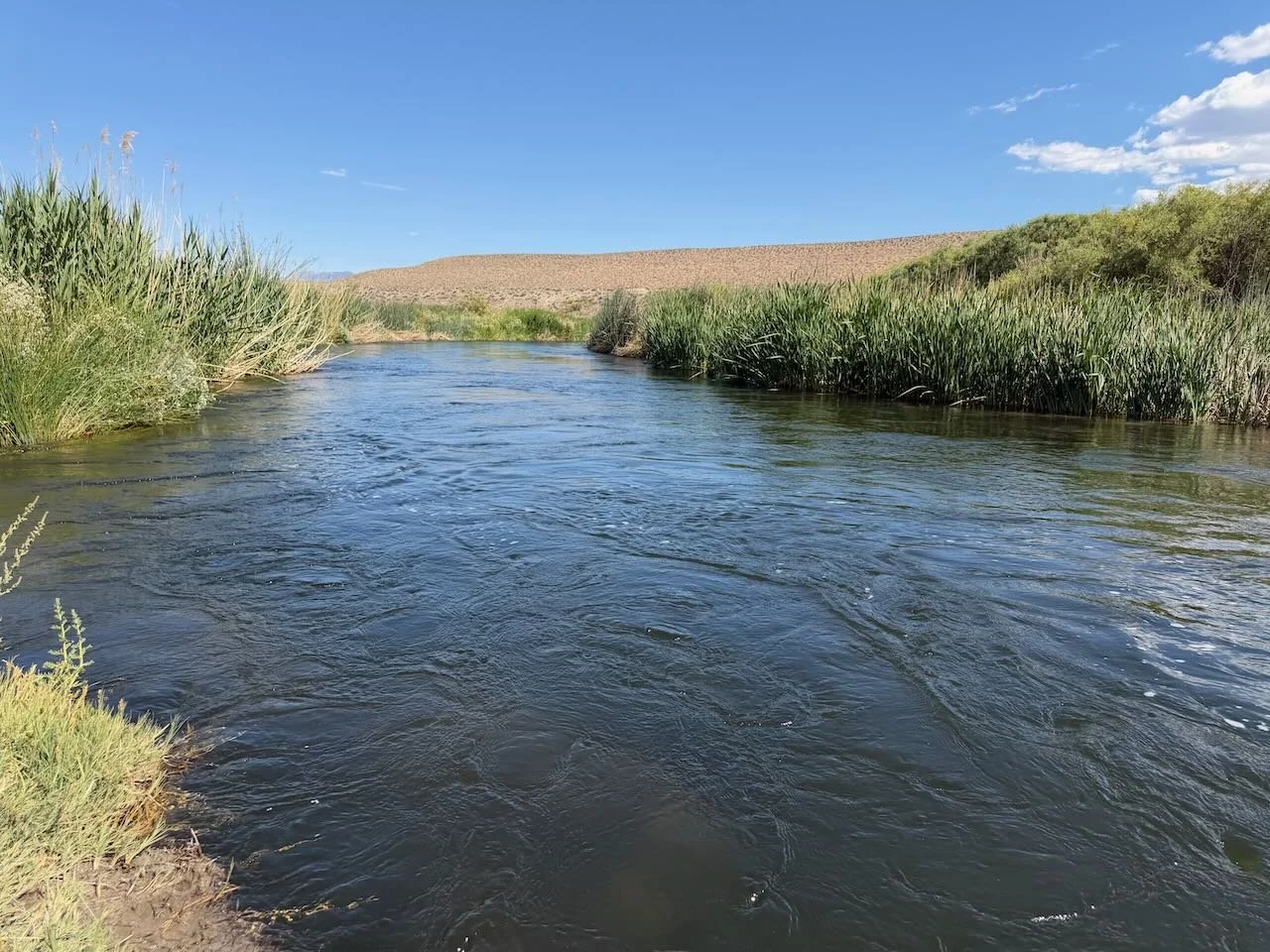
Use your thermometer to keep an eye on the temperature of the river as it’s prone for breaking the 70 degree mark. Getting out on the water early is a way to avoid the rising temperatures in the river. Start the morning with size 20 trico female dun parachutes, size 16 Adams parachutes, size 16 elk hair caddis and size 16 EC caddis. Before and after the hatch fish with size 18 tiger midges, size 18 zebra midges, size 18 bead head flash back pheasant tail nymphs and size 18 olive quilldigons to fool the trout feeding on the substrate. Fly fishers pulling size 8 wooly buggers, slumpbusters and Sculpzilla are turning some trophy brown and rainbow trout.
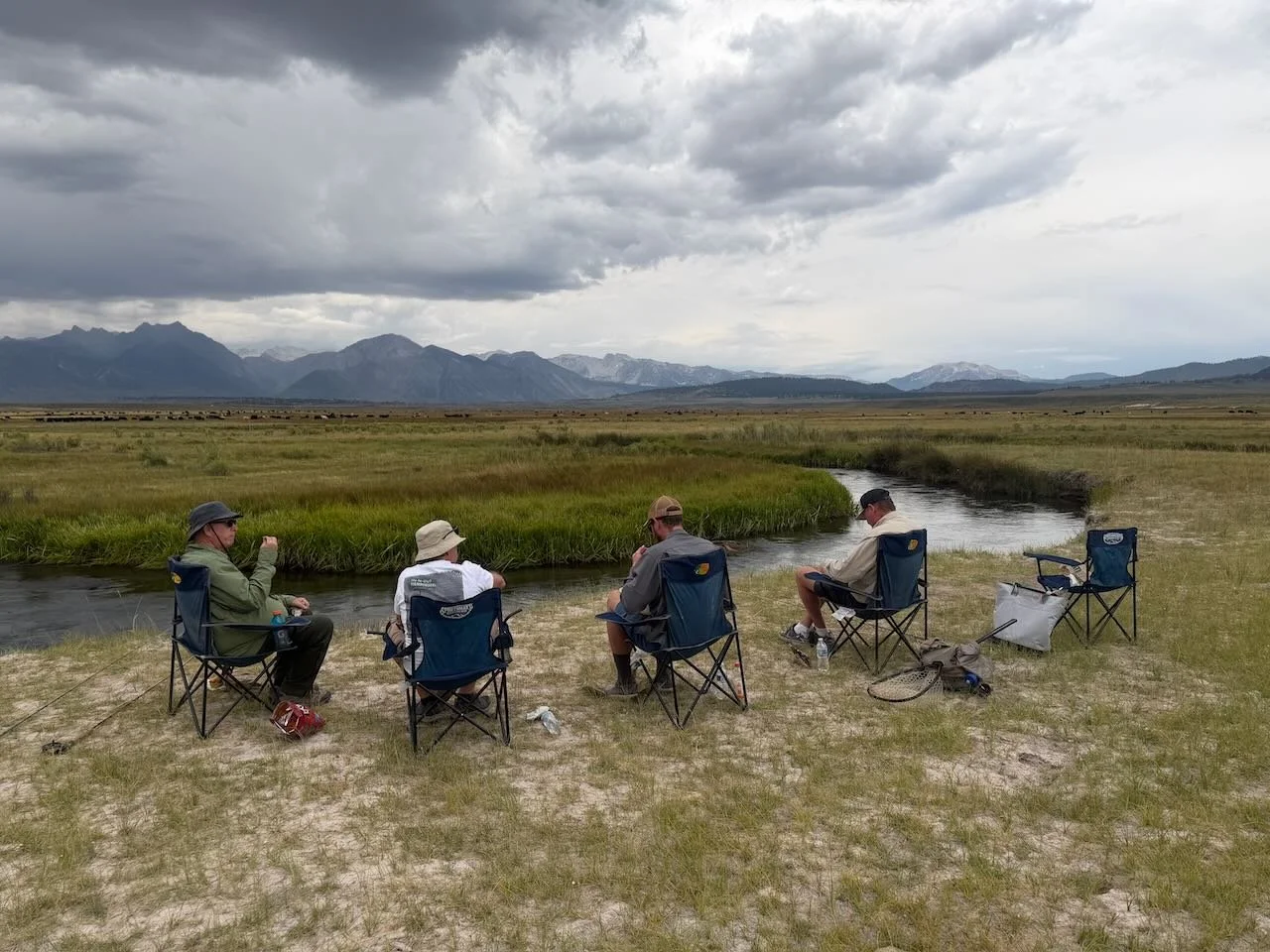
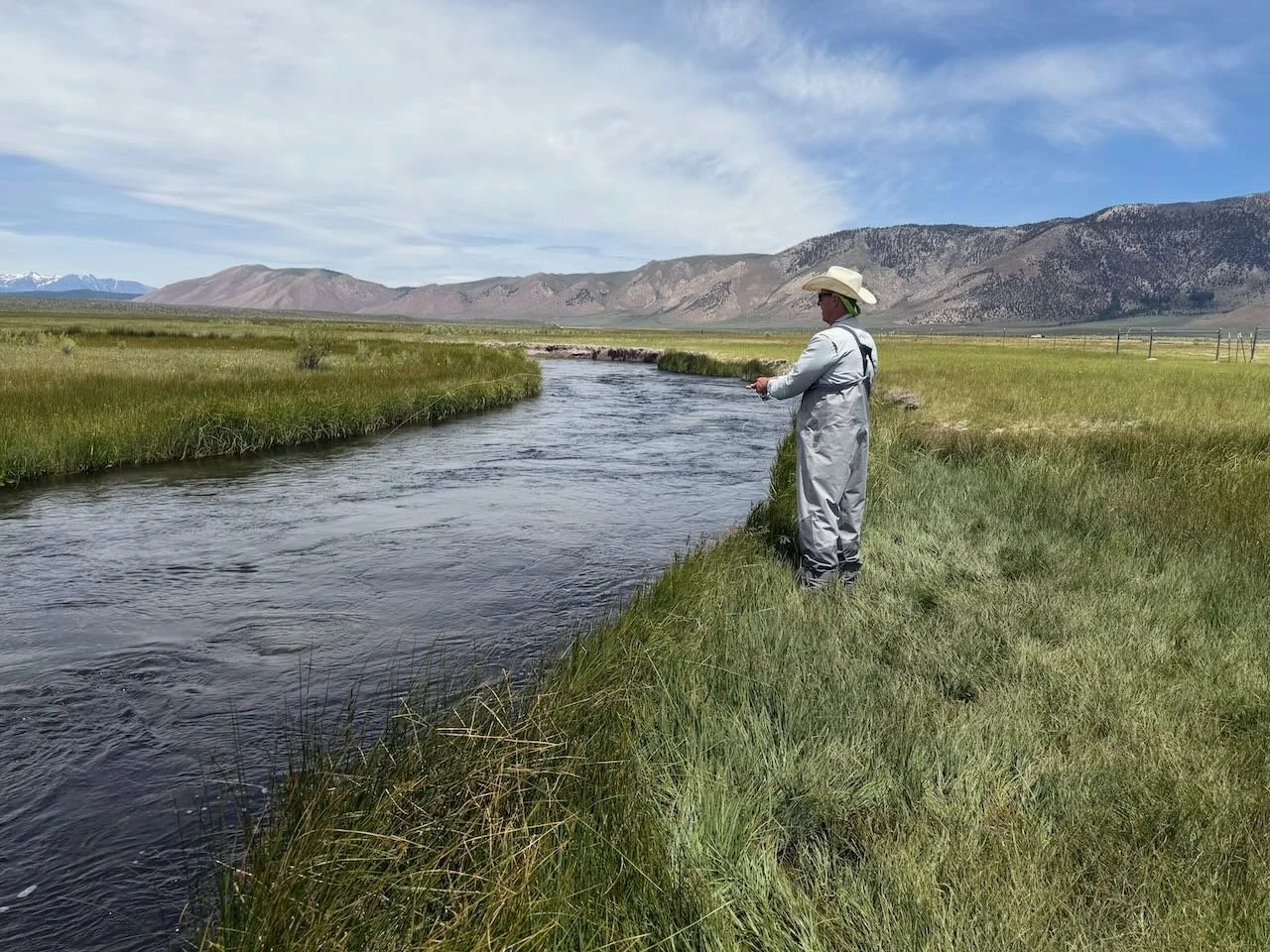
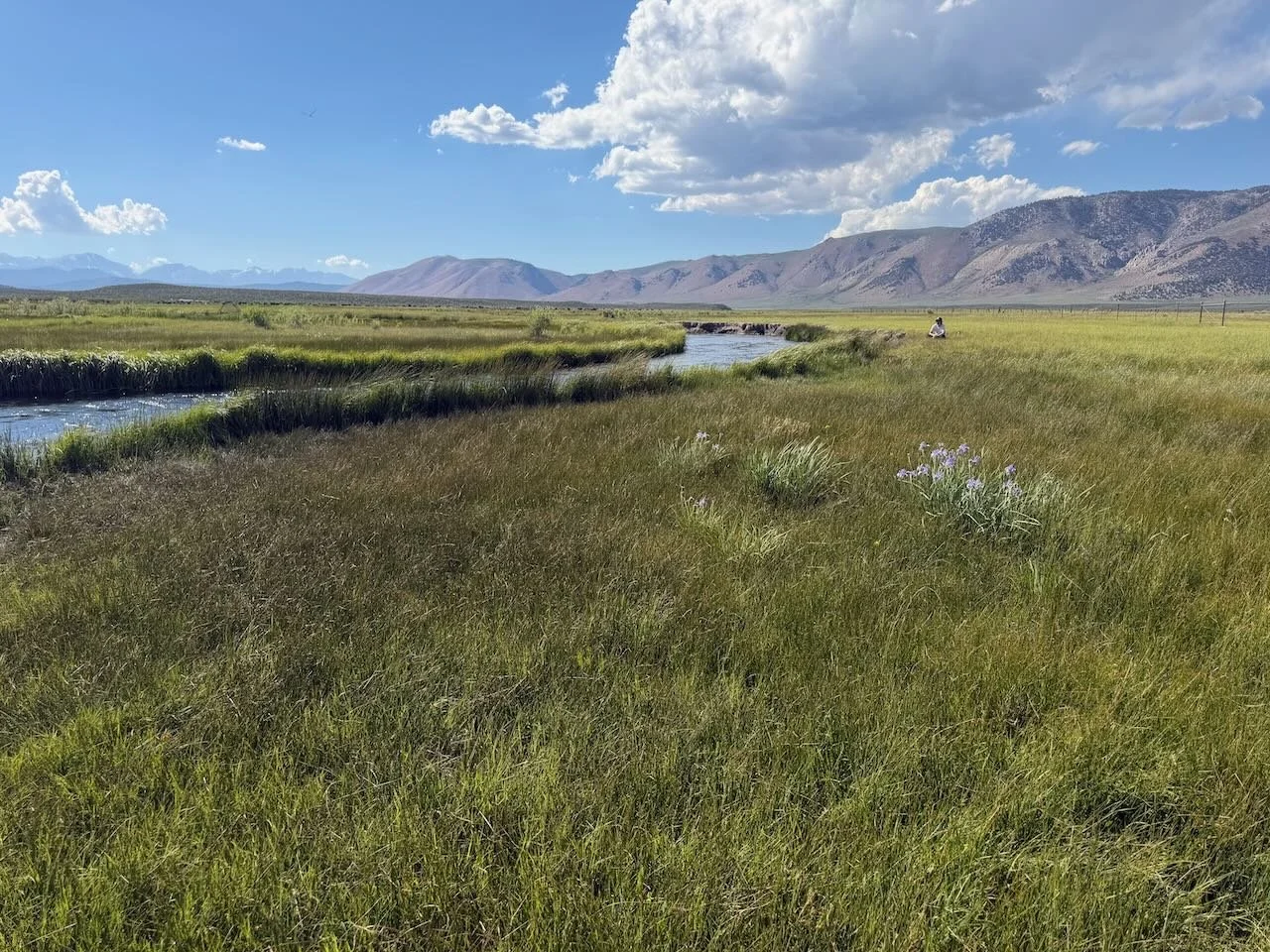
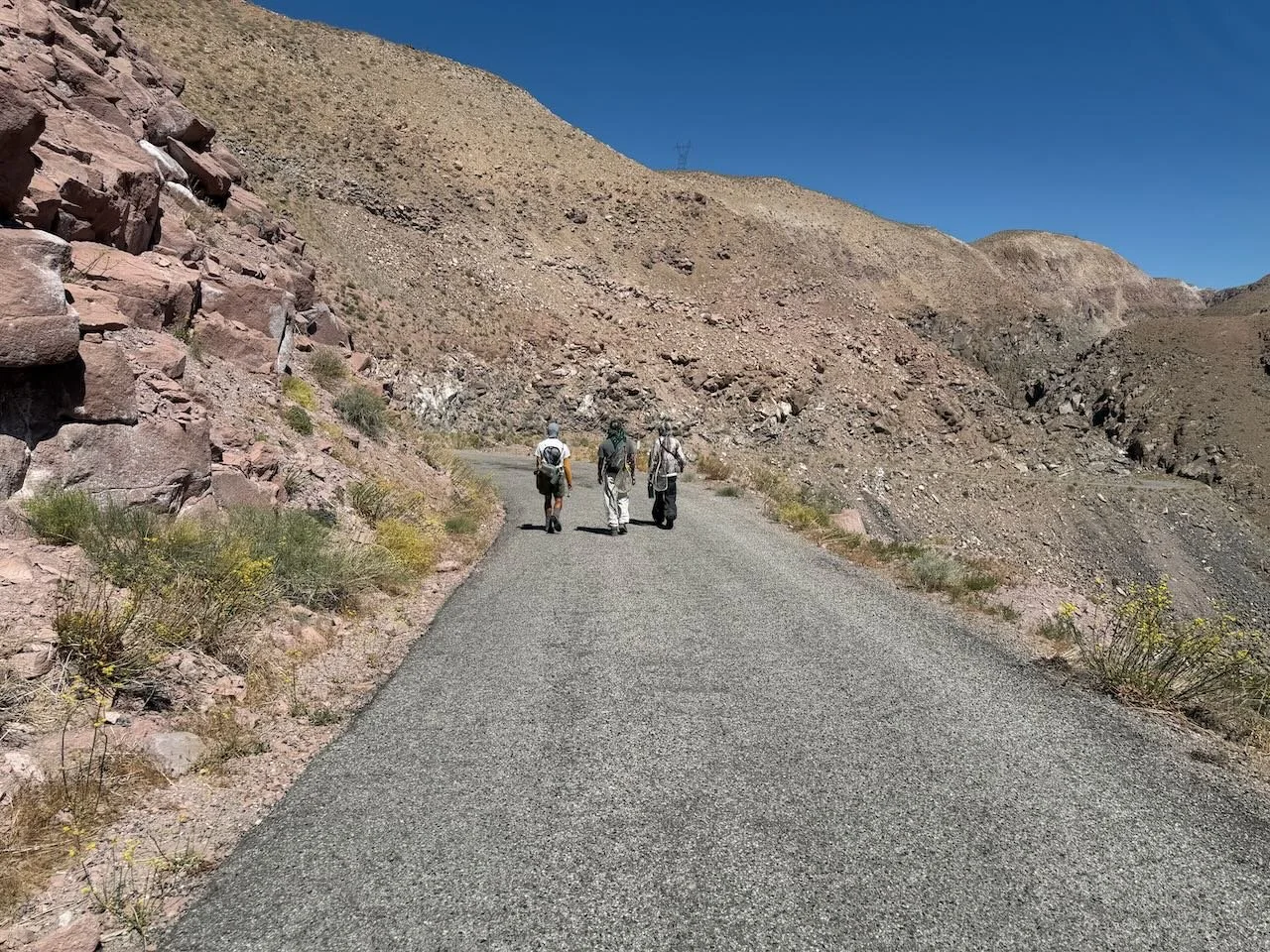
Sometimes the best part of the day is spending time with your friends eating lunch and discussing the mornings fly fishing.

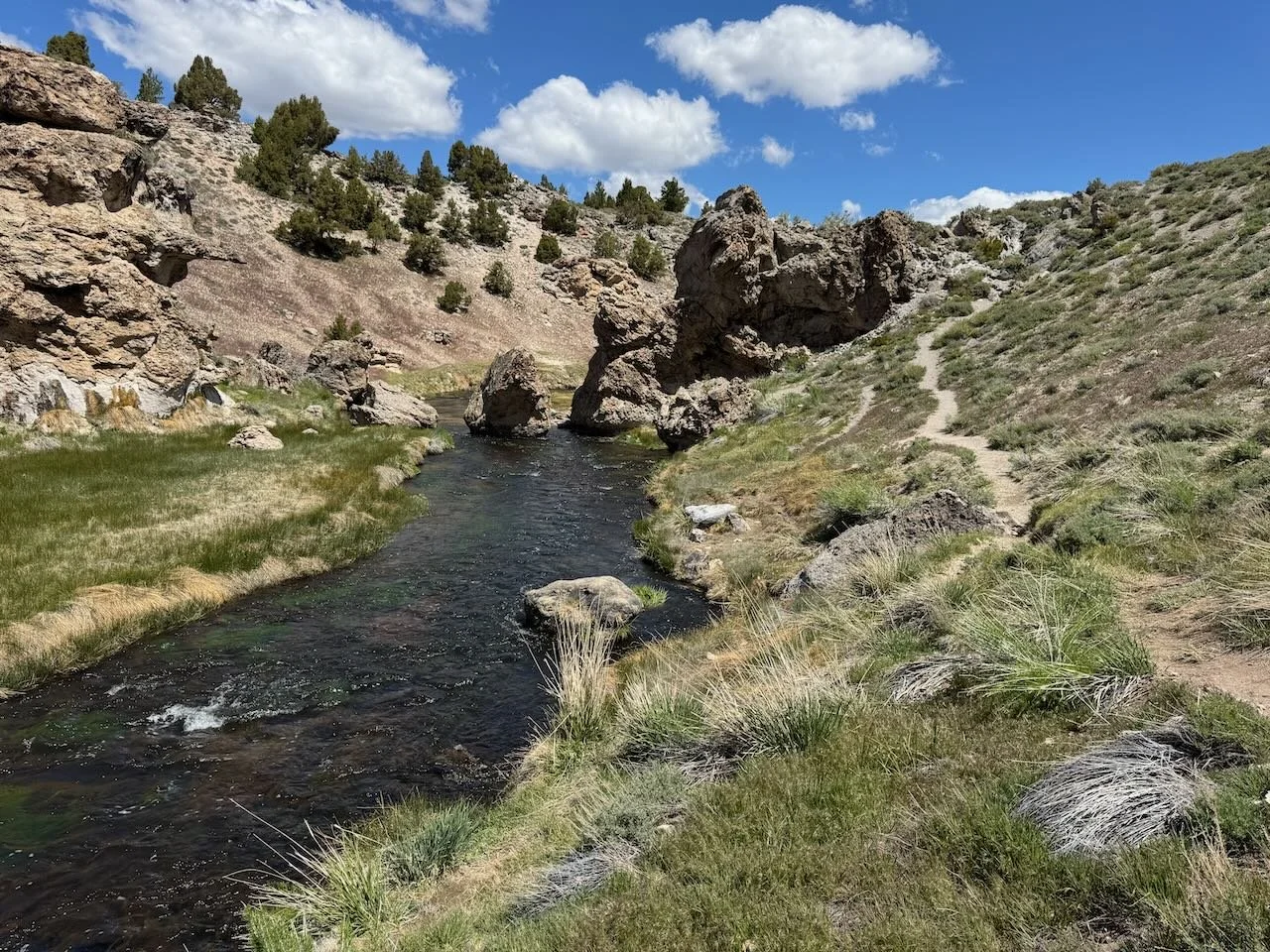
Hot Creek

Interpretive Site:

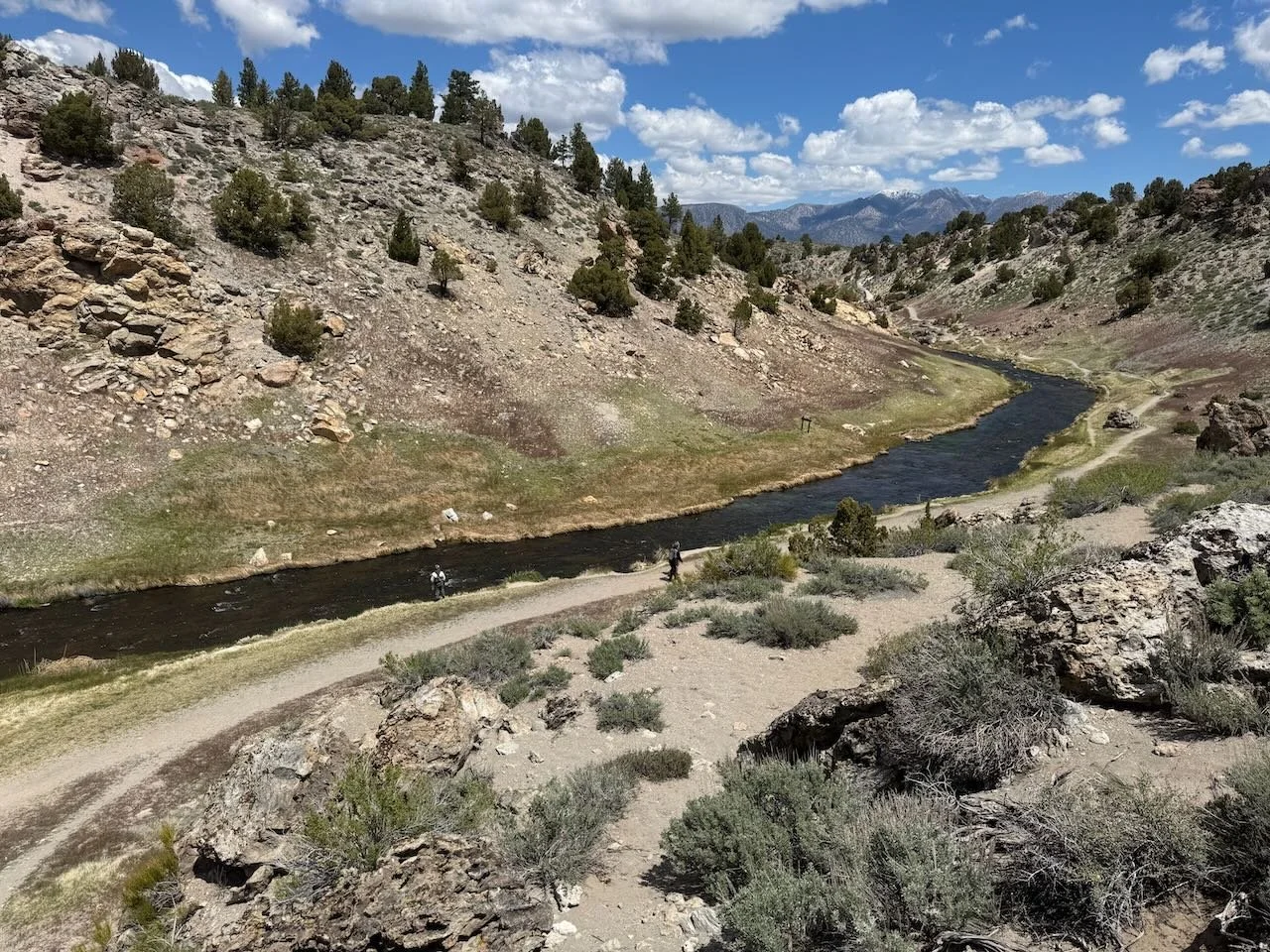
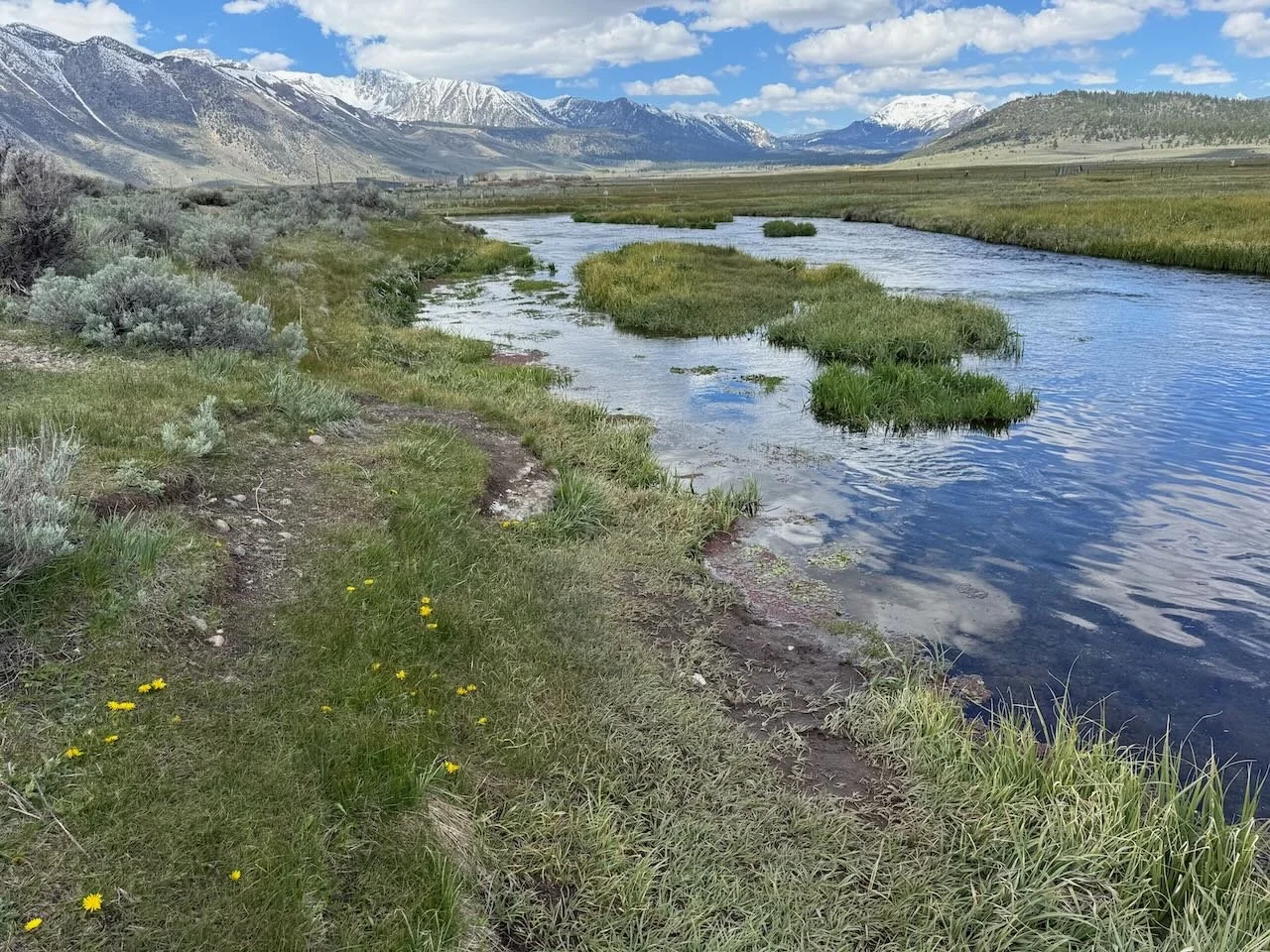
Hot Creek offers the most consistent dry fly fishing opportunities in the Eastern Sierra. Start the morning by being rigged and ready to fish either the caddis migration or the female trico hatch at 8:00 A.M. For the caddis hatch fish with size 20 gray EC caddis, size 20 gray X-caddis and size 20 gray parachute caddis. For the trico hatch use a size 20 female dun trico parachute, size 20 Adams parachute, size 20 blue wing olive parachute. Use a nine to 12 foot 5X leader with three to six feet of 6X tippet. A drag free drift is what is going to fool the picky trout of Hot Creek Interpretive Site.
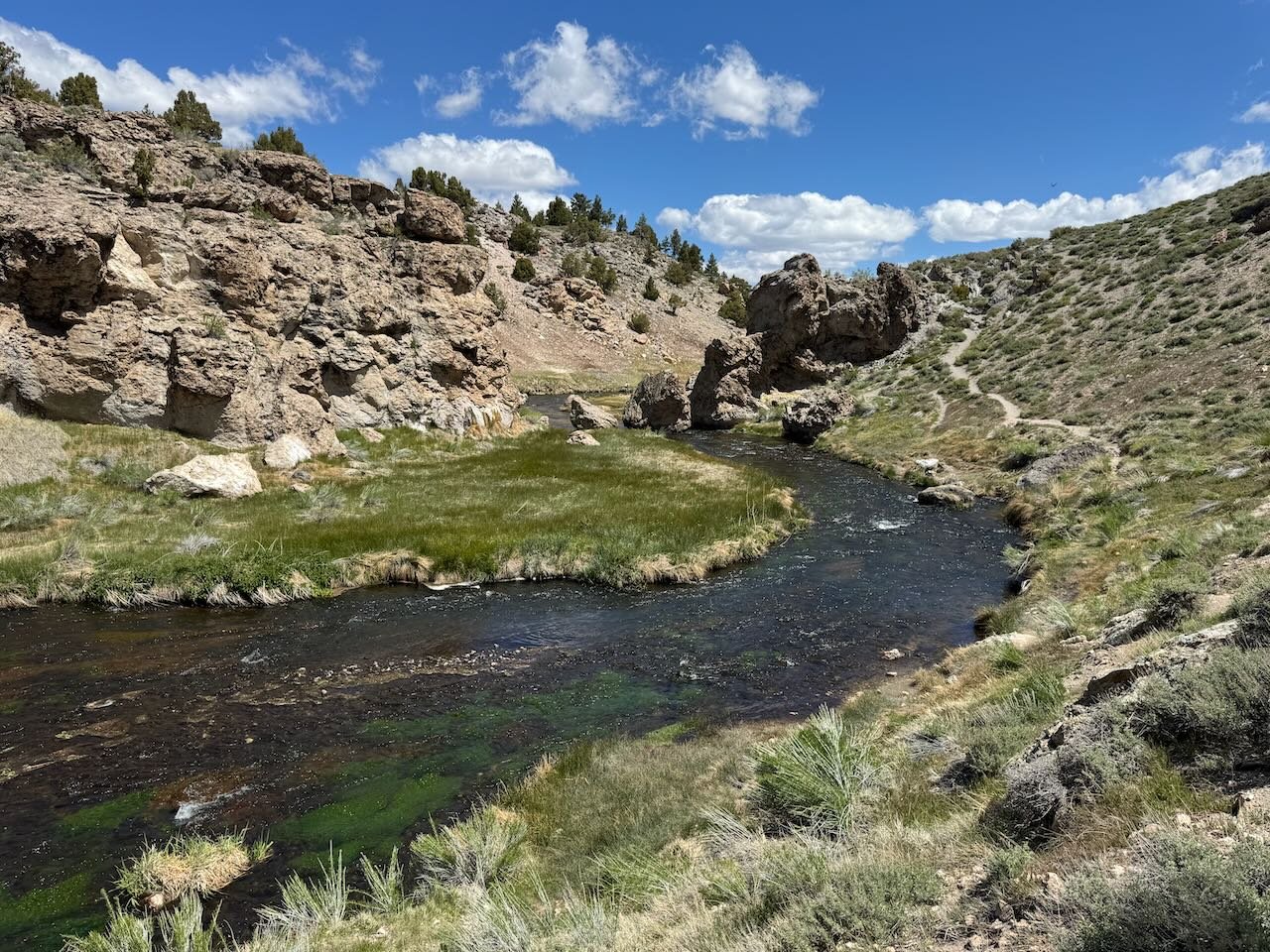
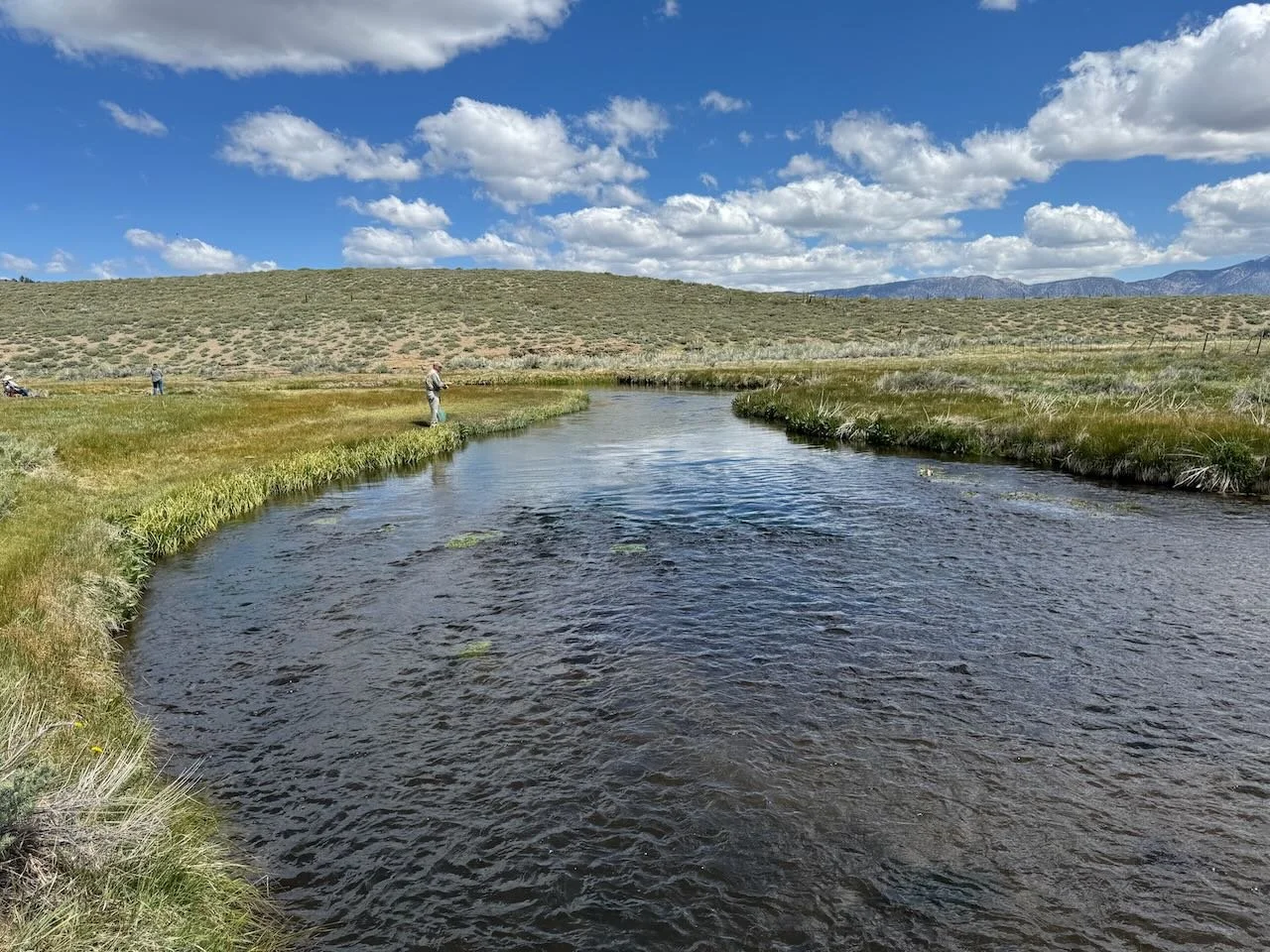
Weed beds are hiding the trout and fly fishers need to drift their flies in the tiny lanes between the weed beds.

Hot Creek

Canyon Section:

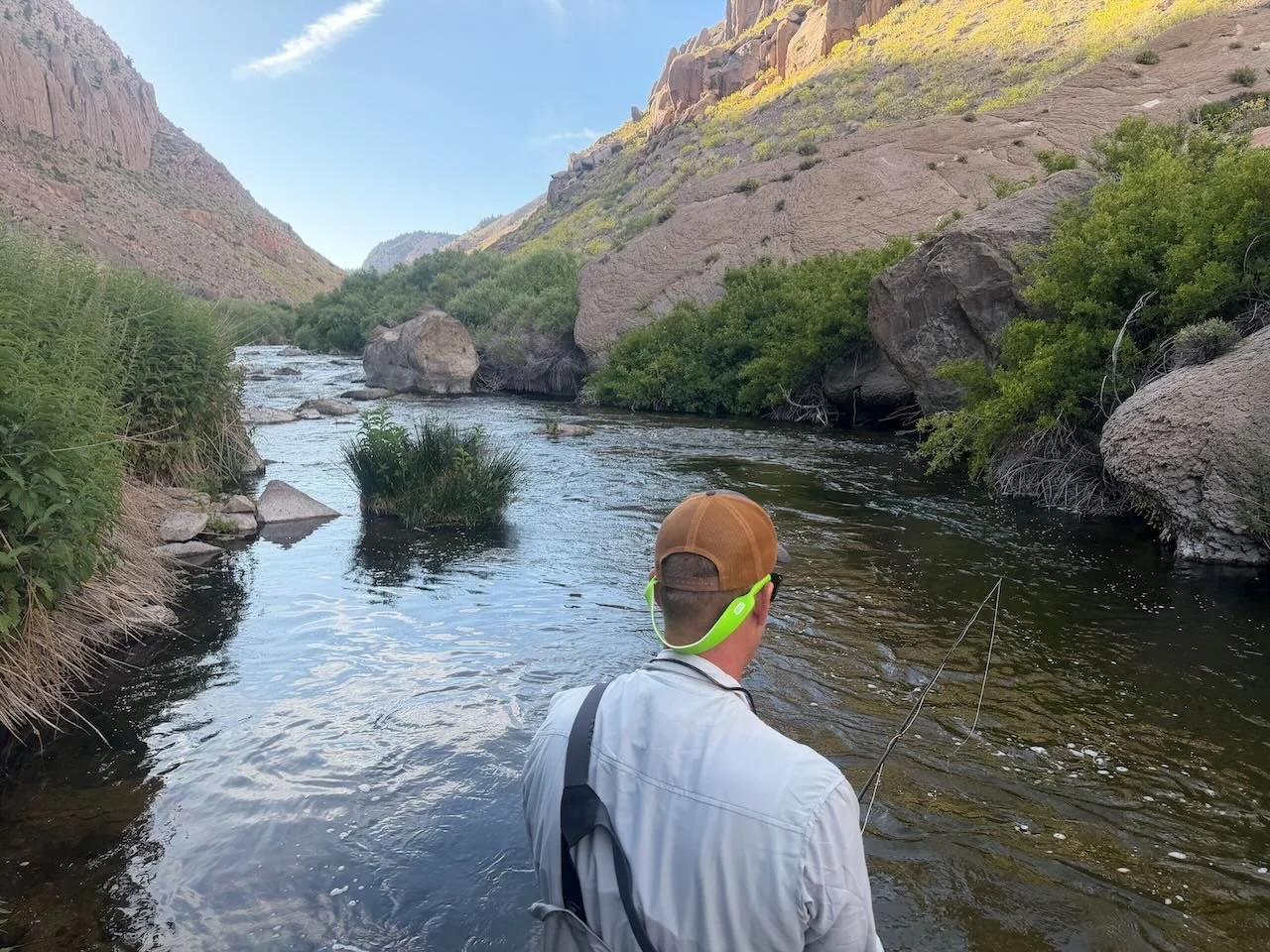
Learning to cast your flies in and around the weed beds in Hot Creek Canyon is how fly fishers successfully fly fish the canyon section. Start the morning off by fishing the caddis migration. The caddis fly upstream of where they emerged to lay their eggs. Fish with size 20 gray elk hair caddis, size 20 gray parachute caddis and size 20 gray EC caddis. The trico mayfly hatch happens simultaneously with the caddis migration. Start fishing with a size 20 trico female trico parachute, size 20 Adams parachute and size 20 blue wing olive parachute. Cast your flies in the tiny lanes between the weed beds.
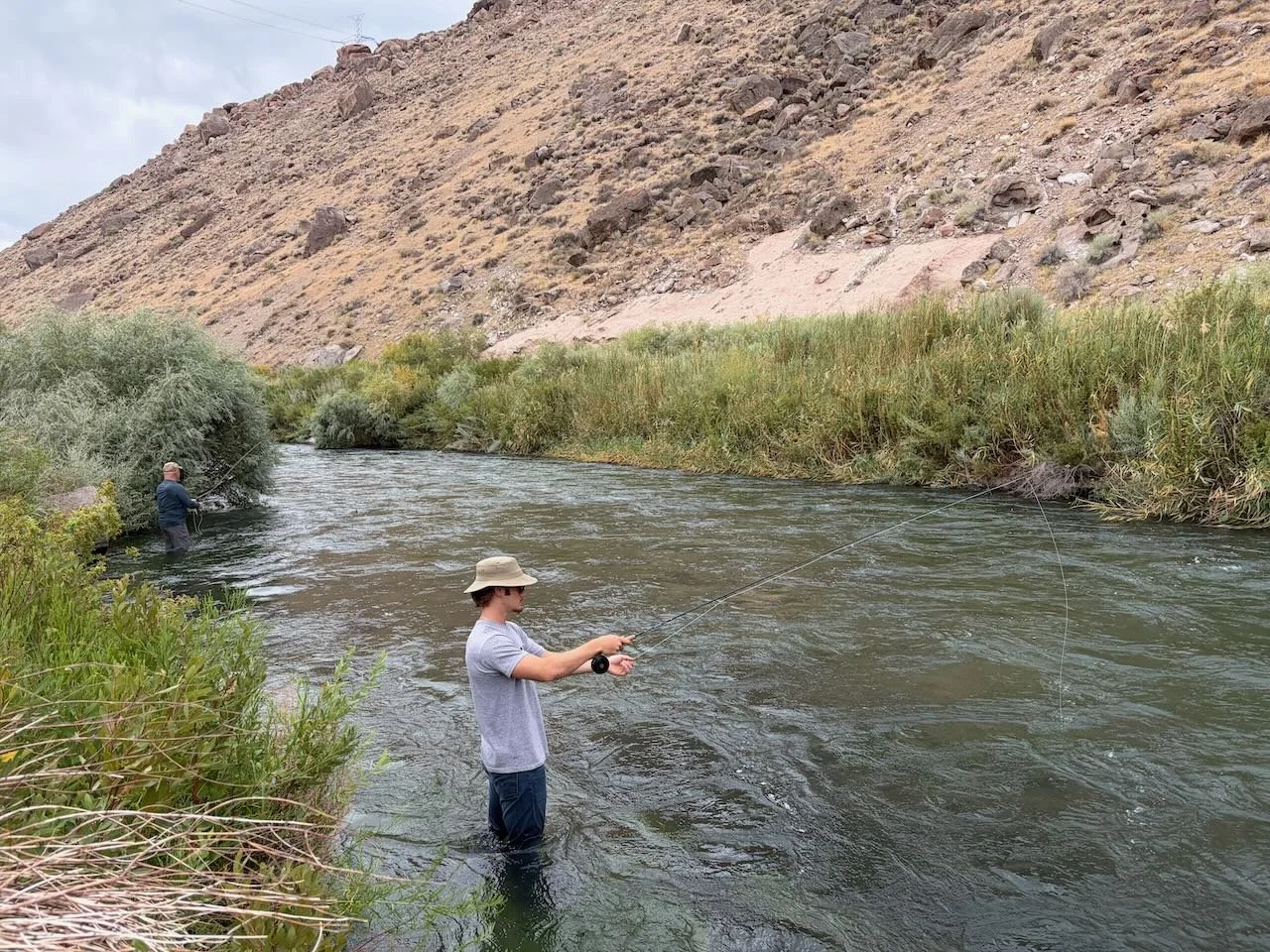
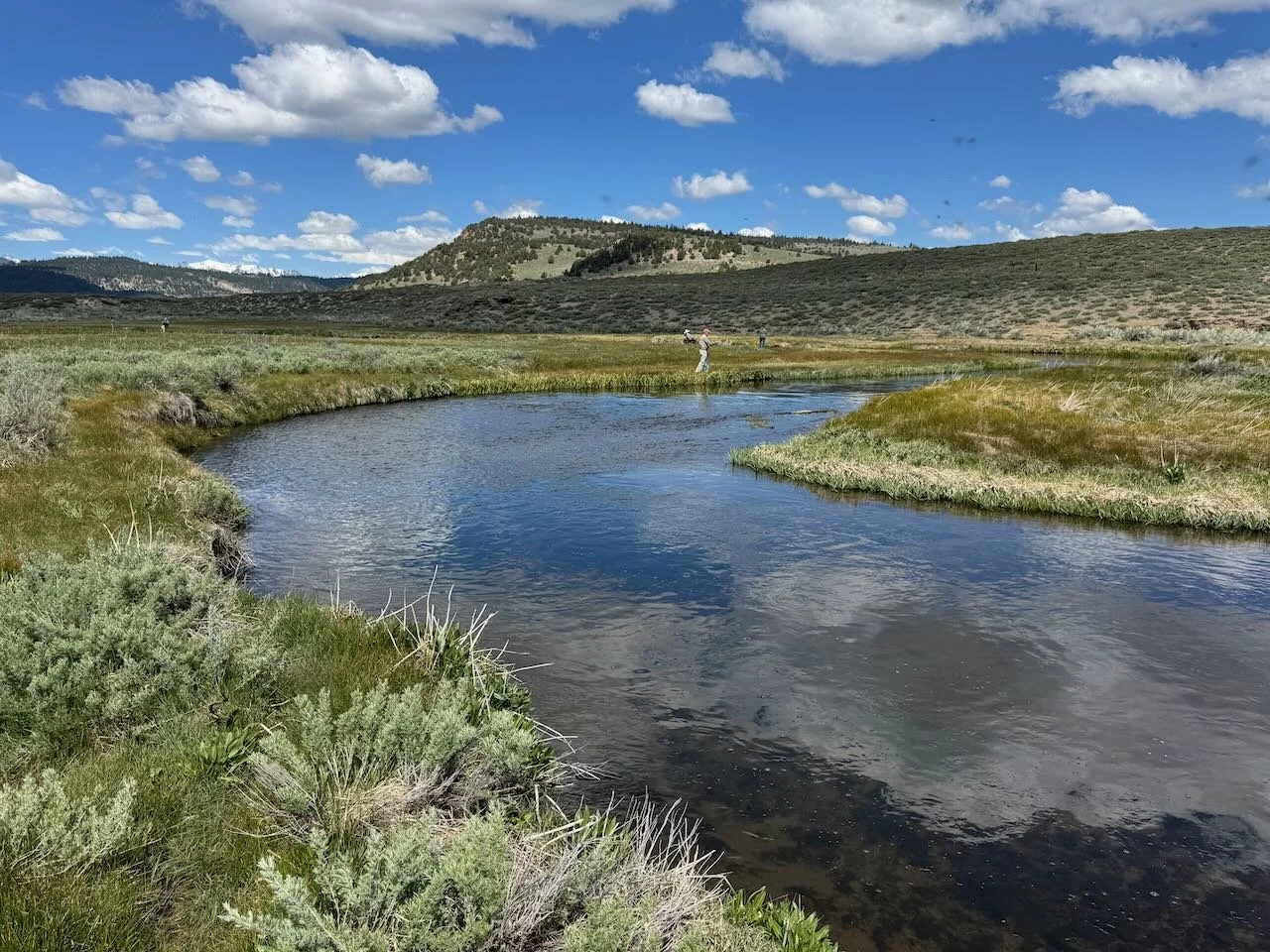
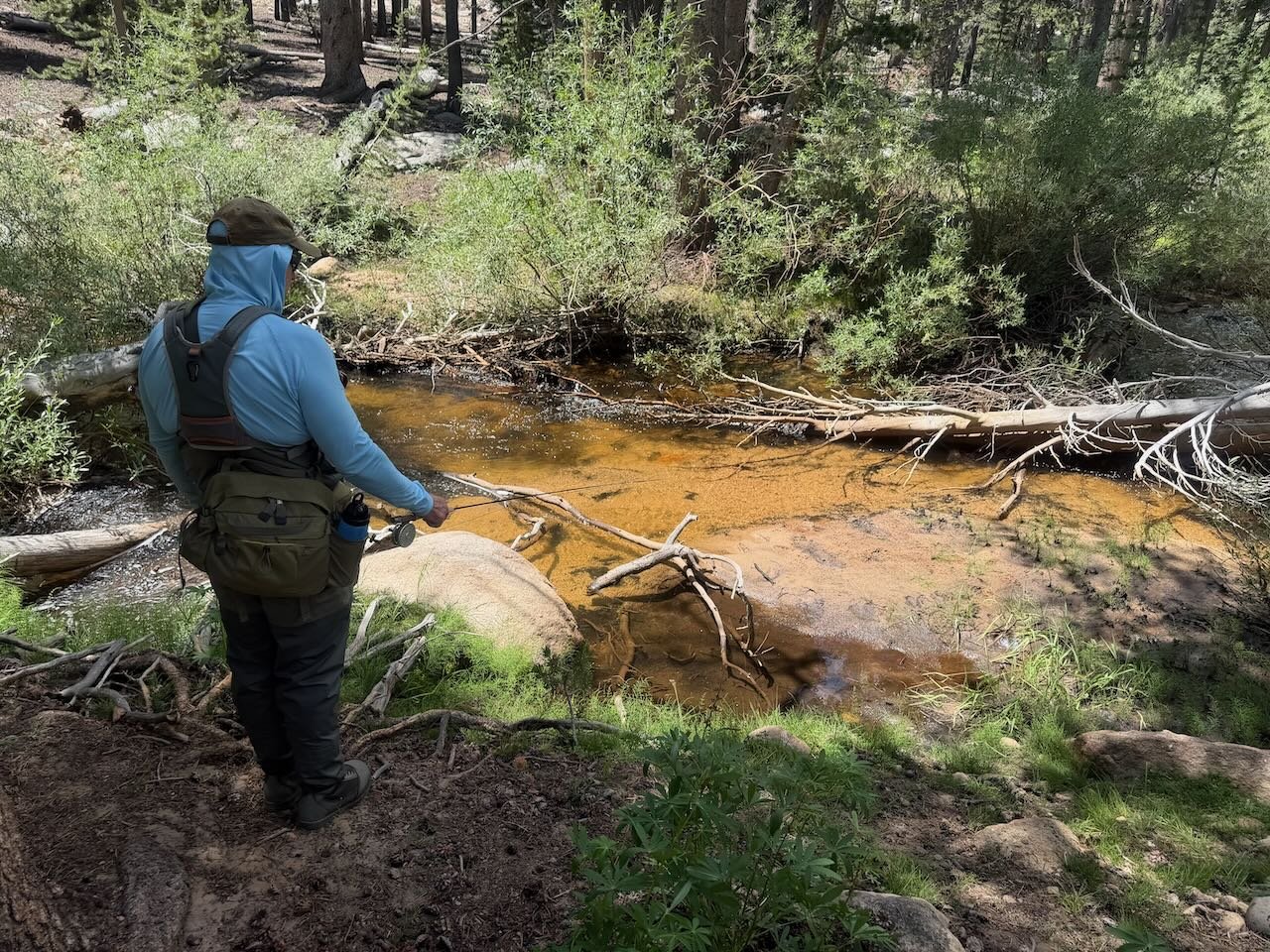
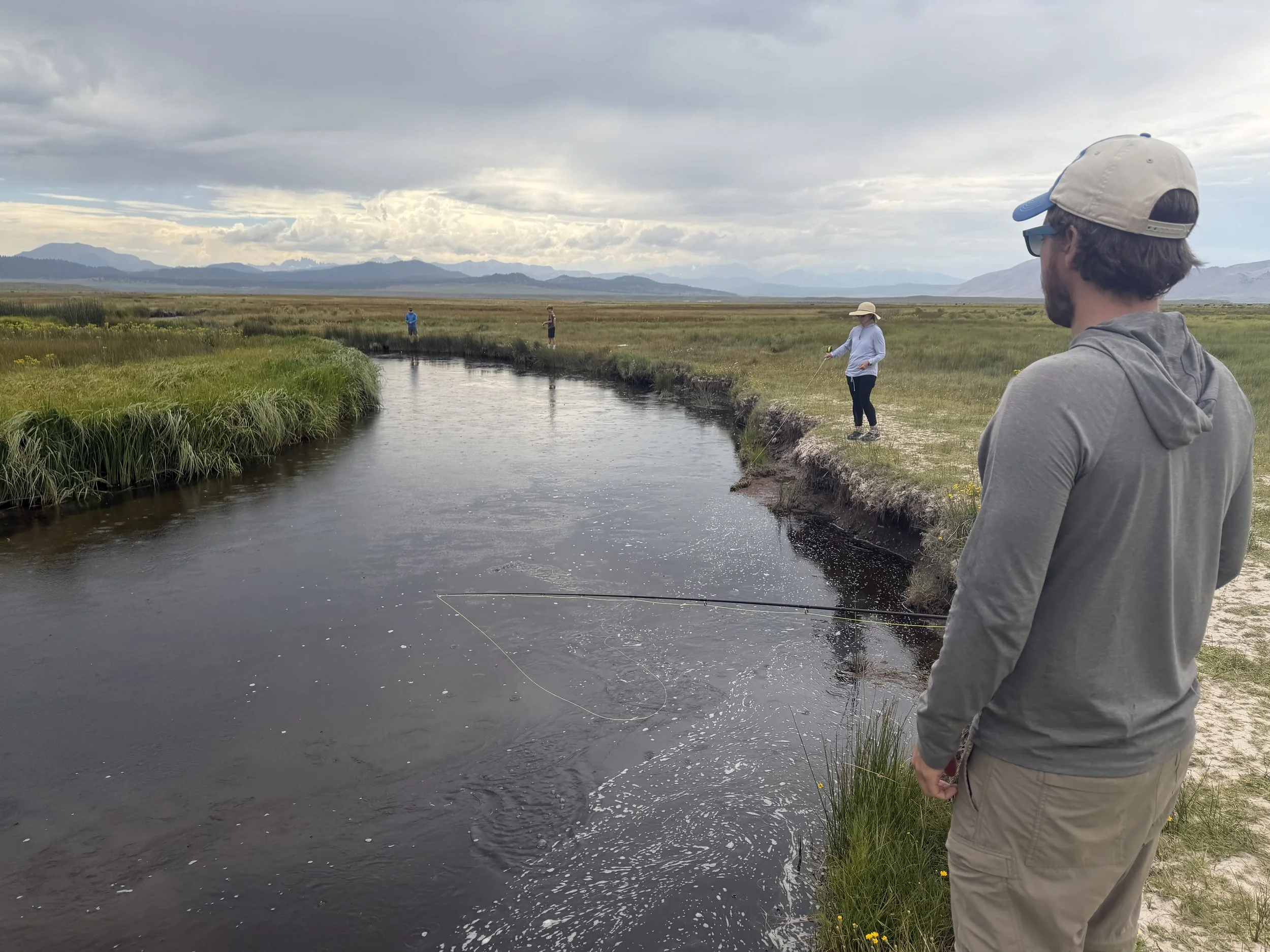
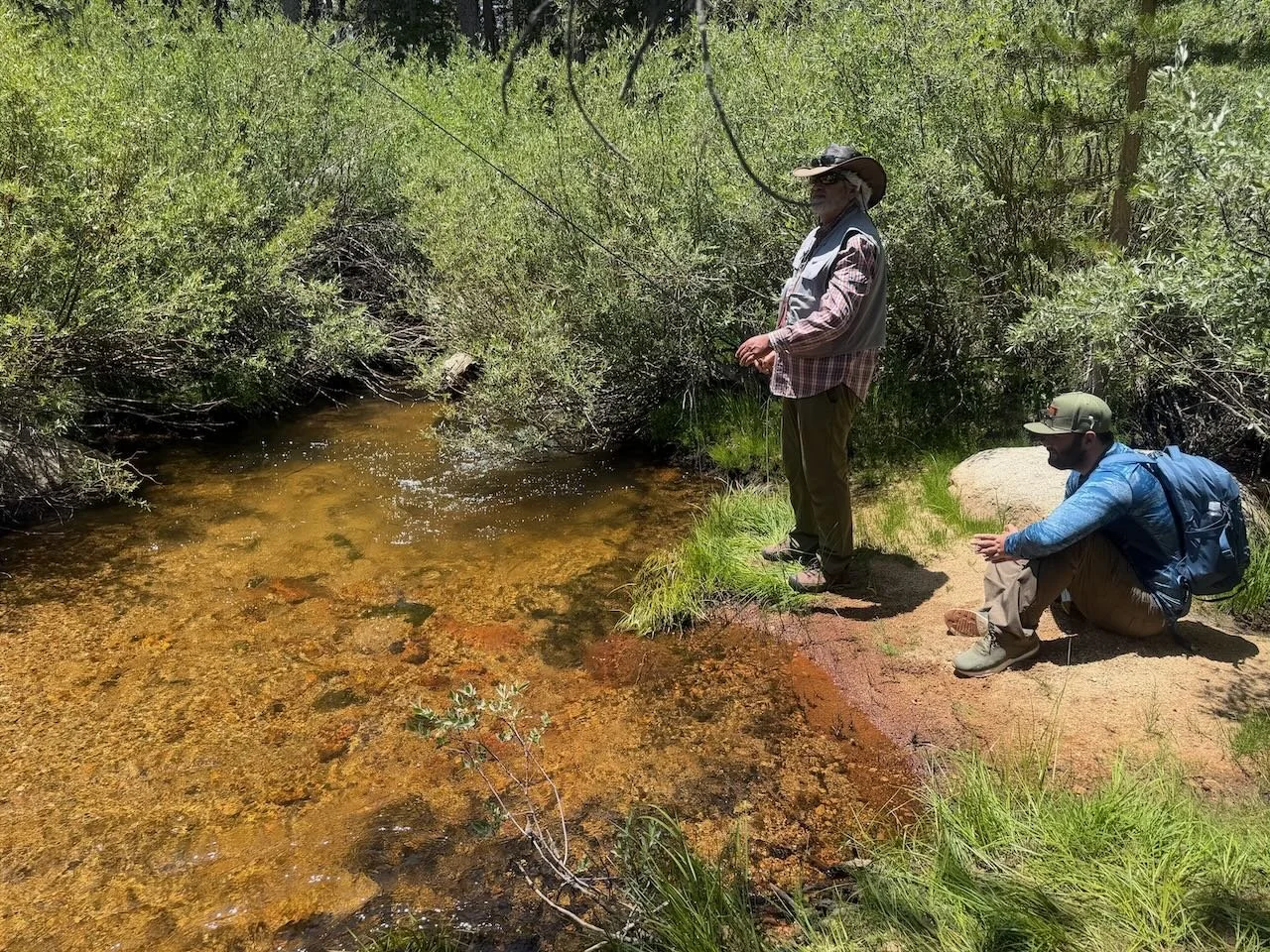
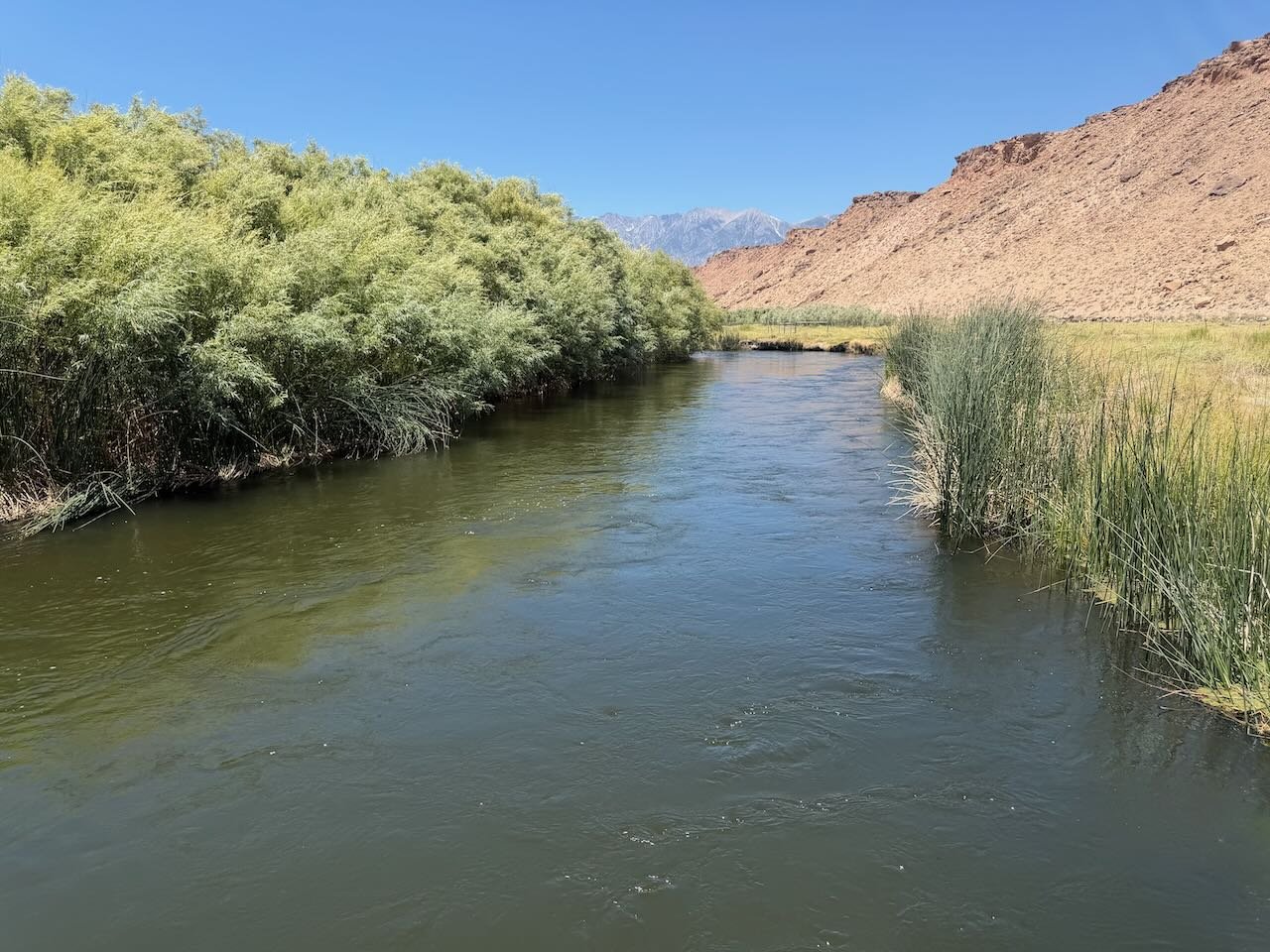
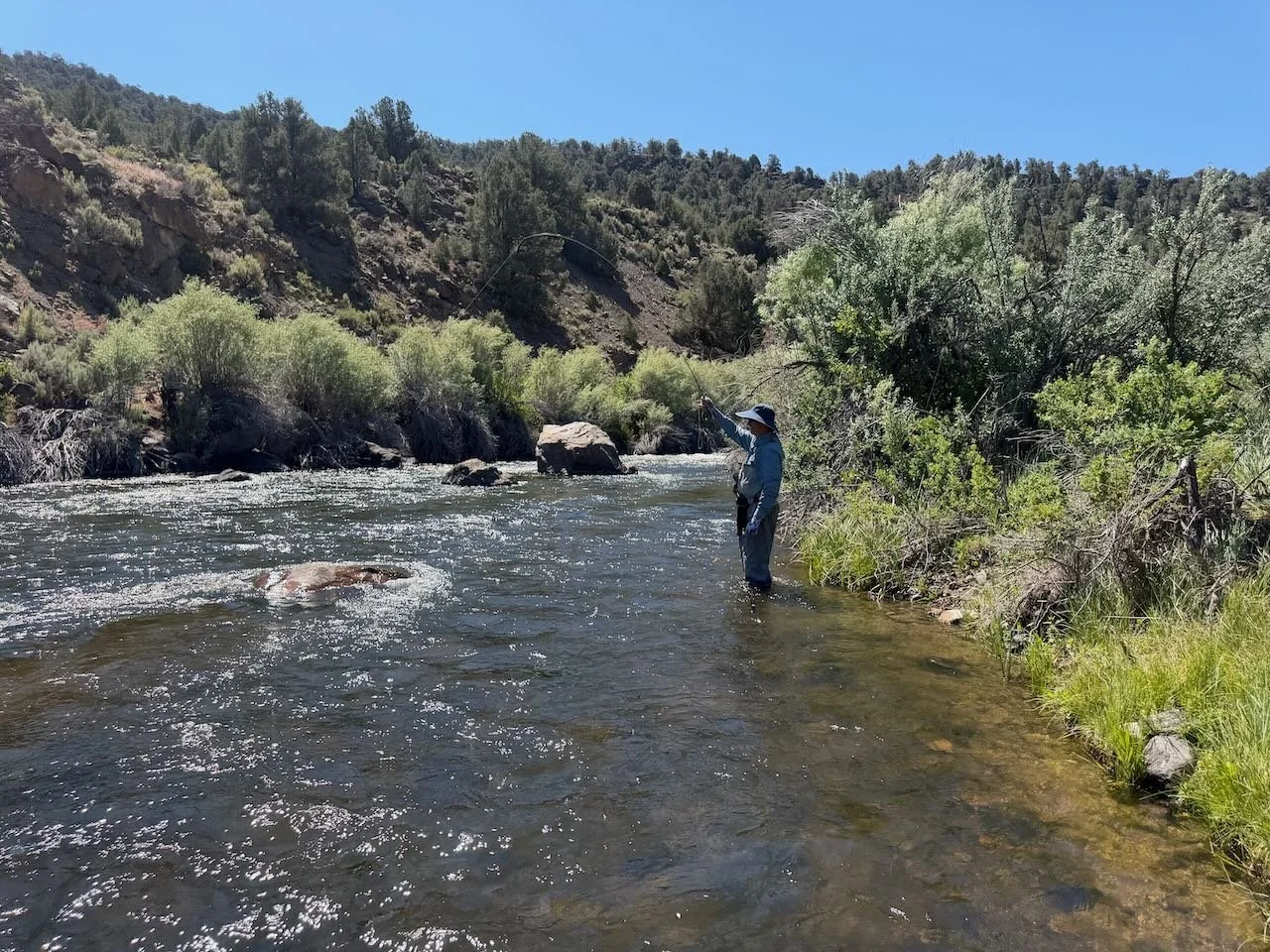
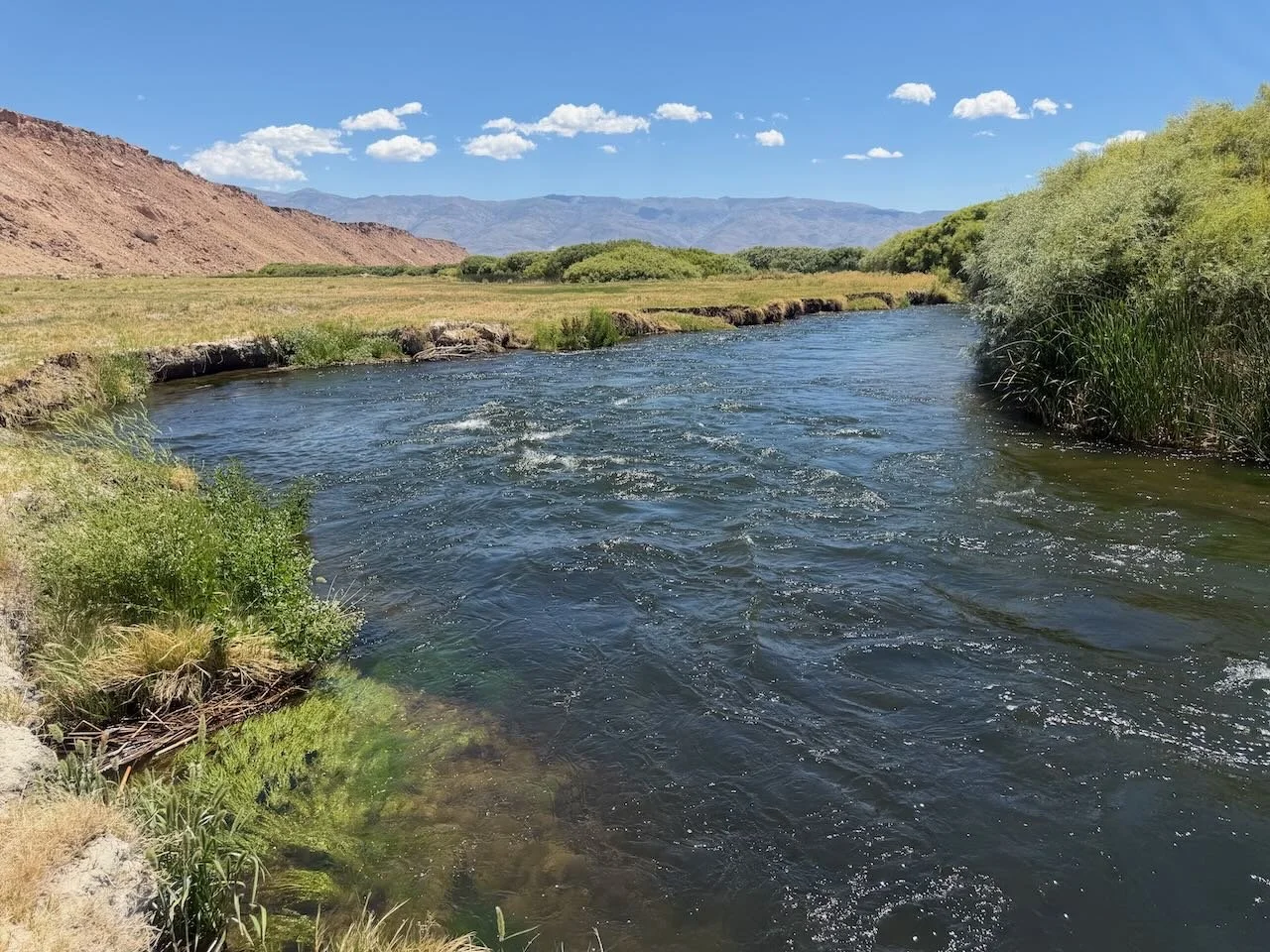
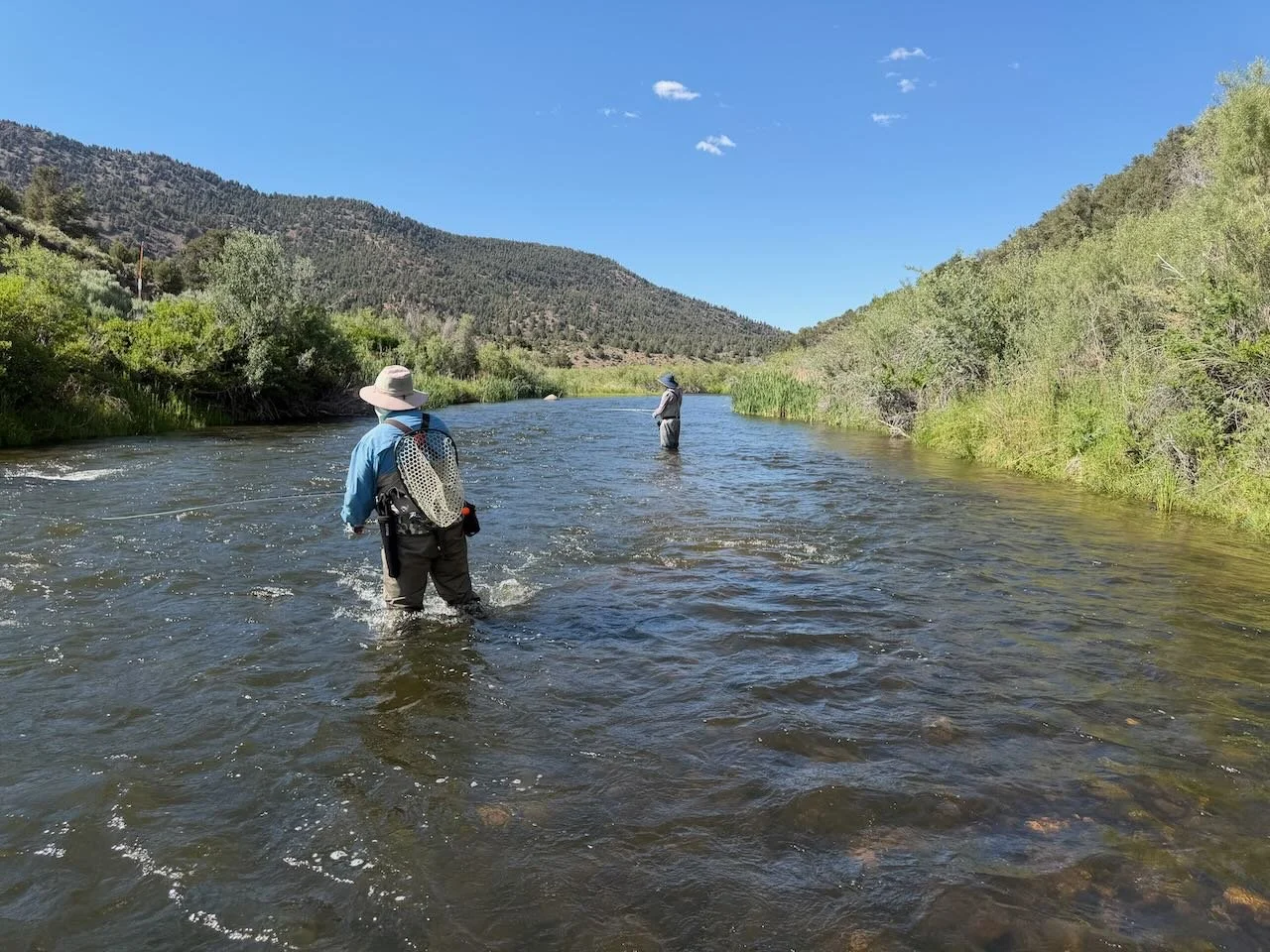
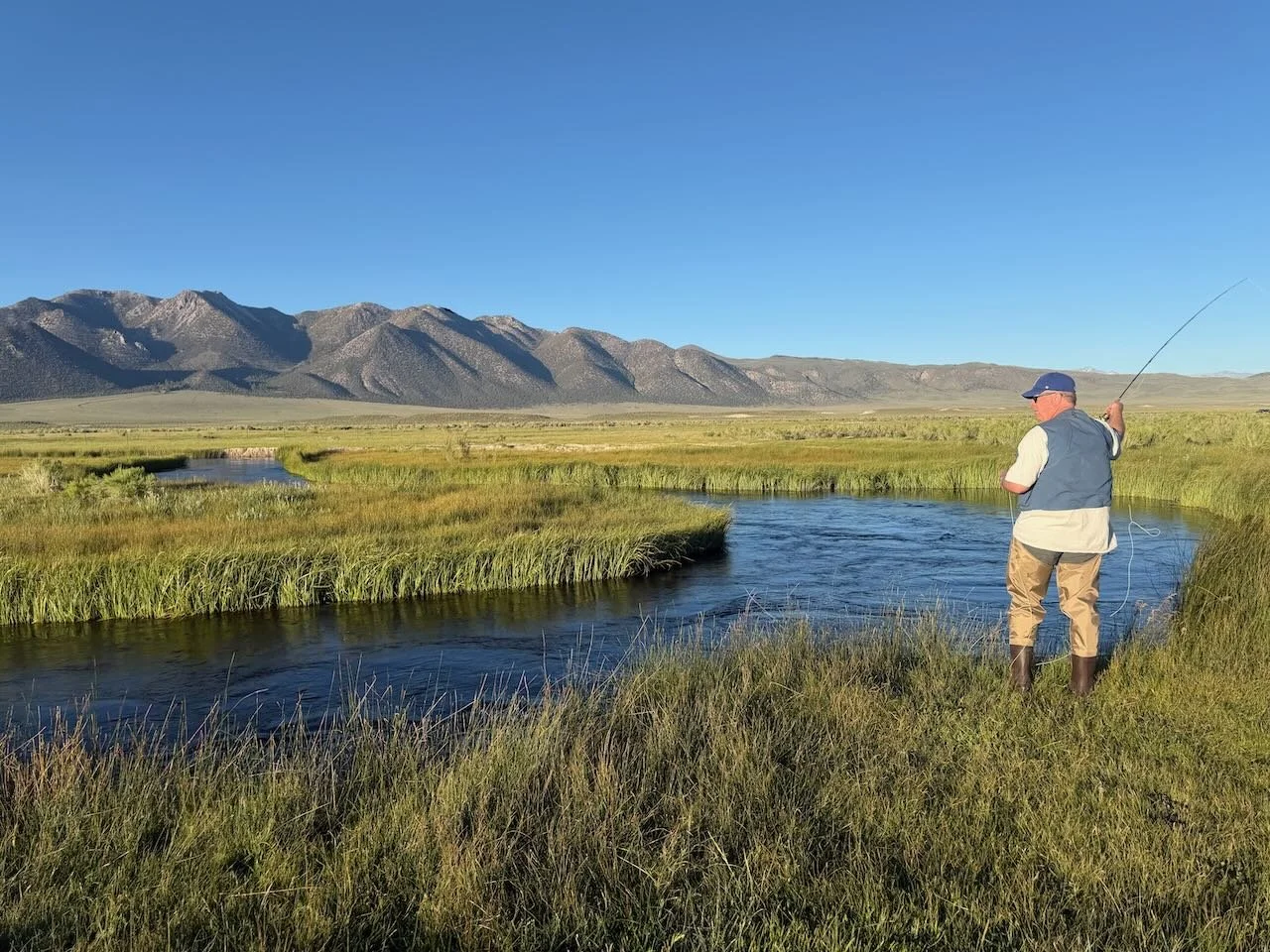
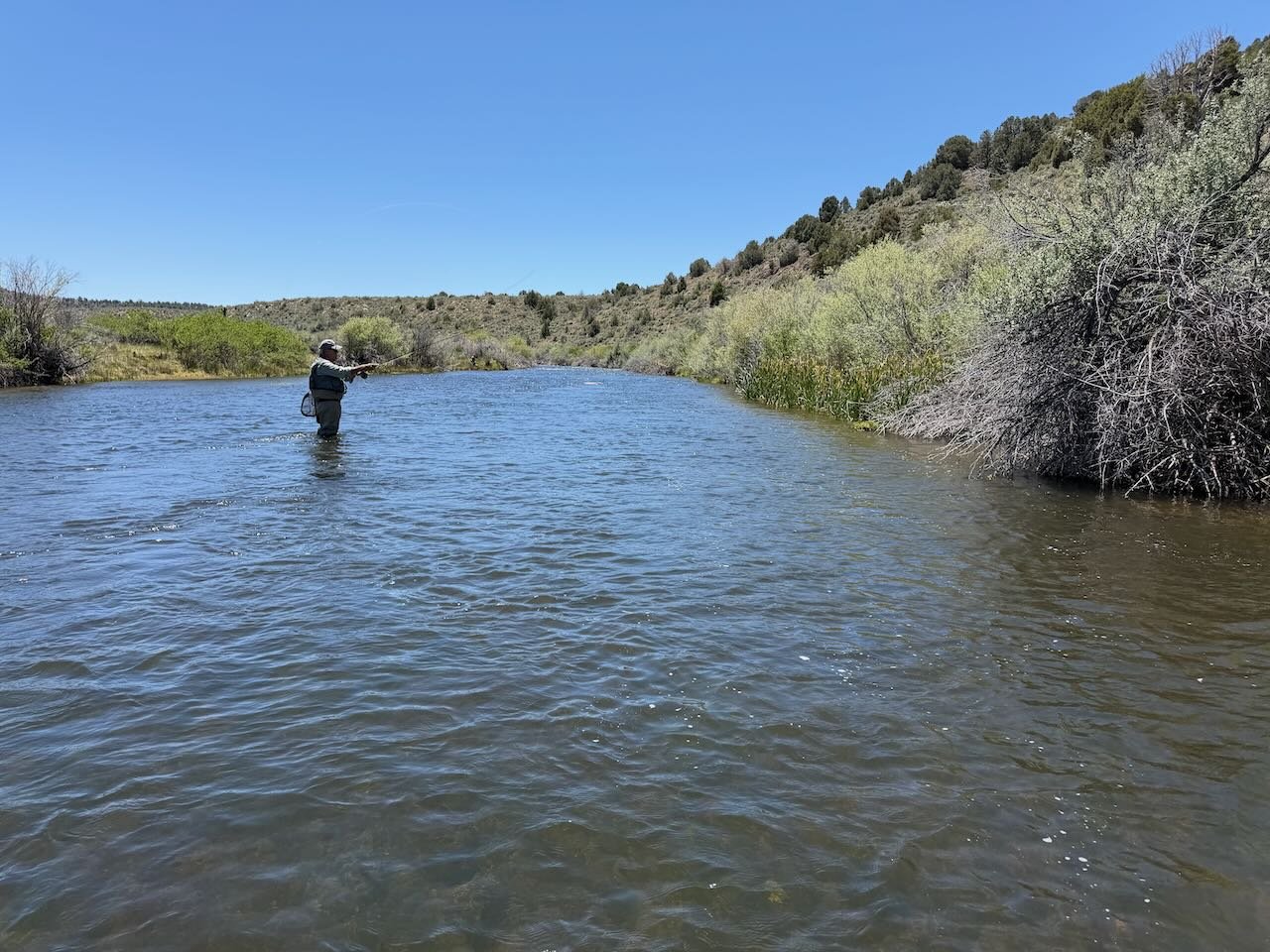
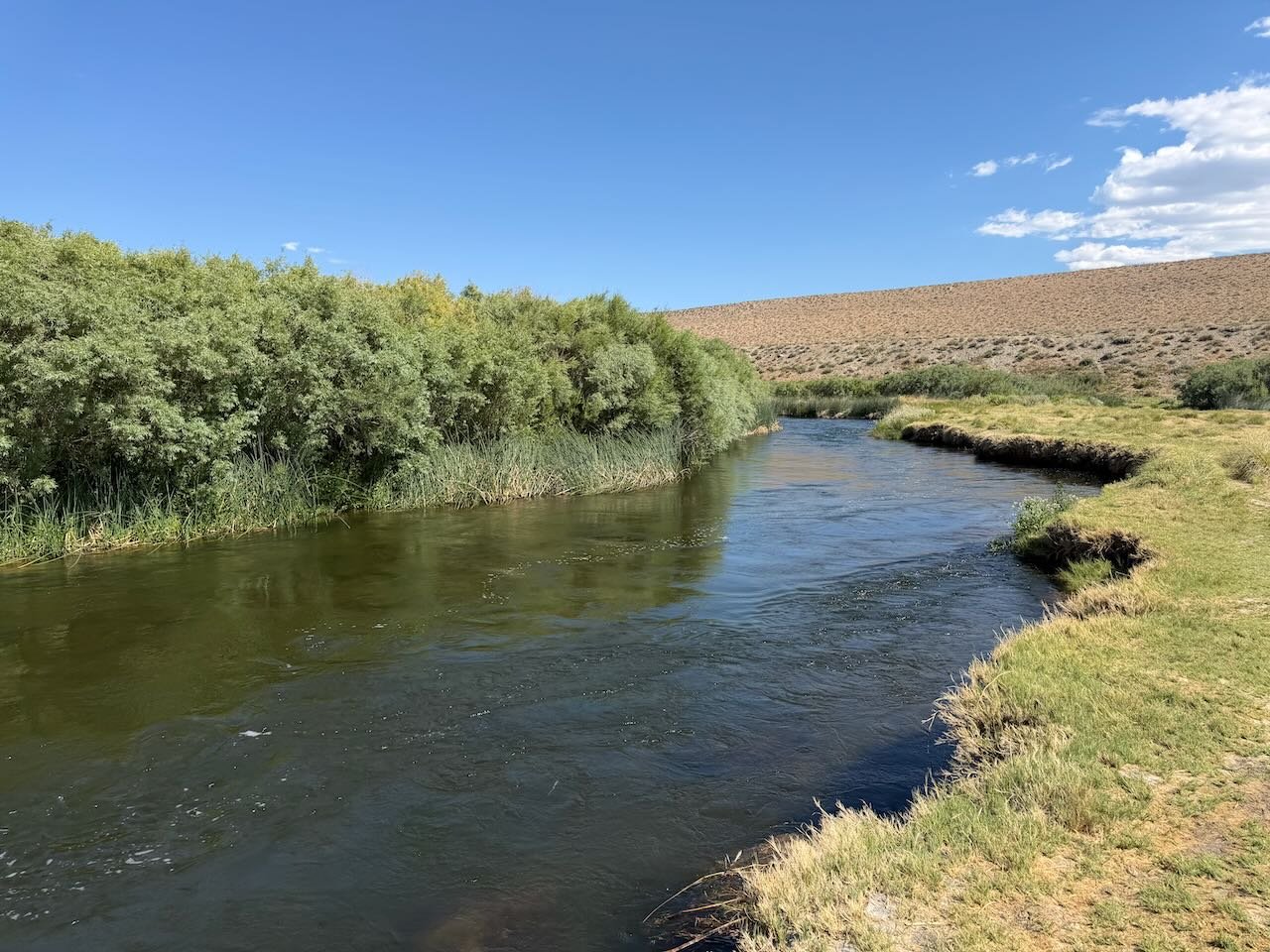
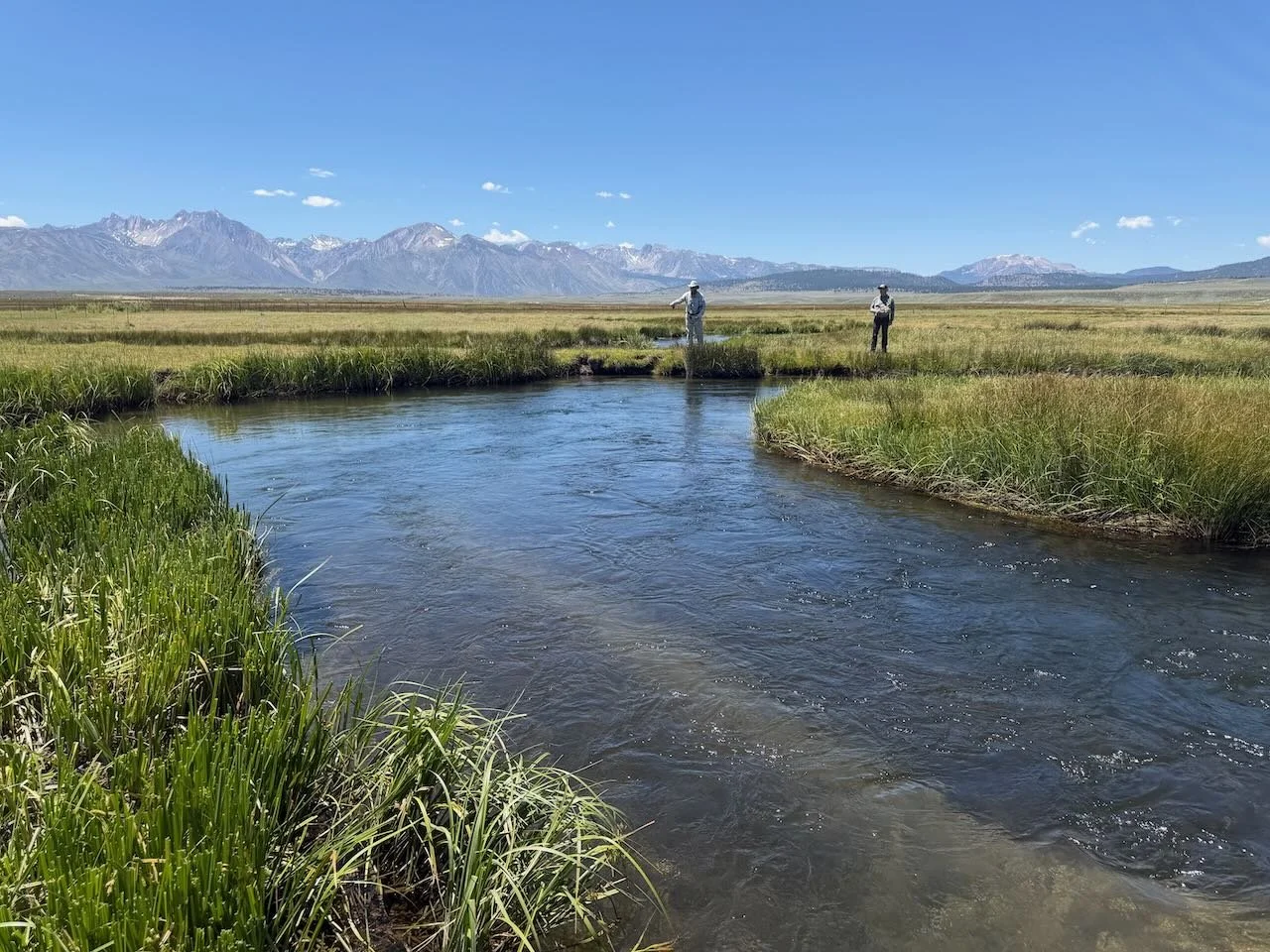
Learning to fly fish while wading the edges of the lower Owens River with Sierra Bright Dot Guide Richard Lancaster.

Lower Owens River

Wild Trout Section:

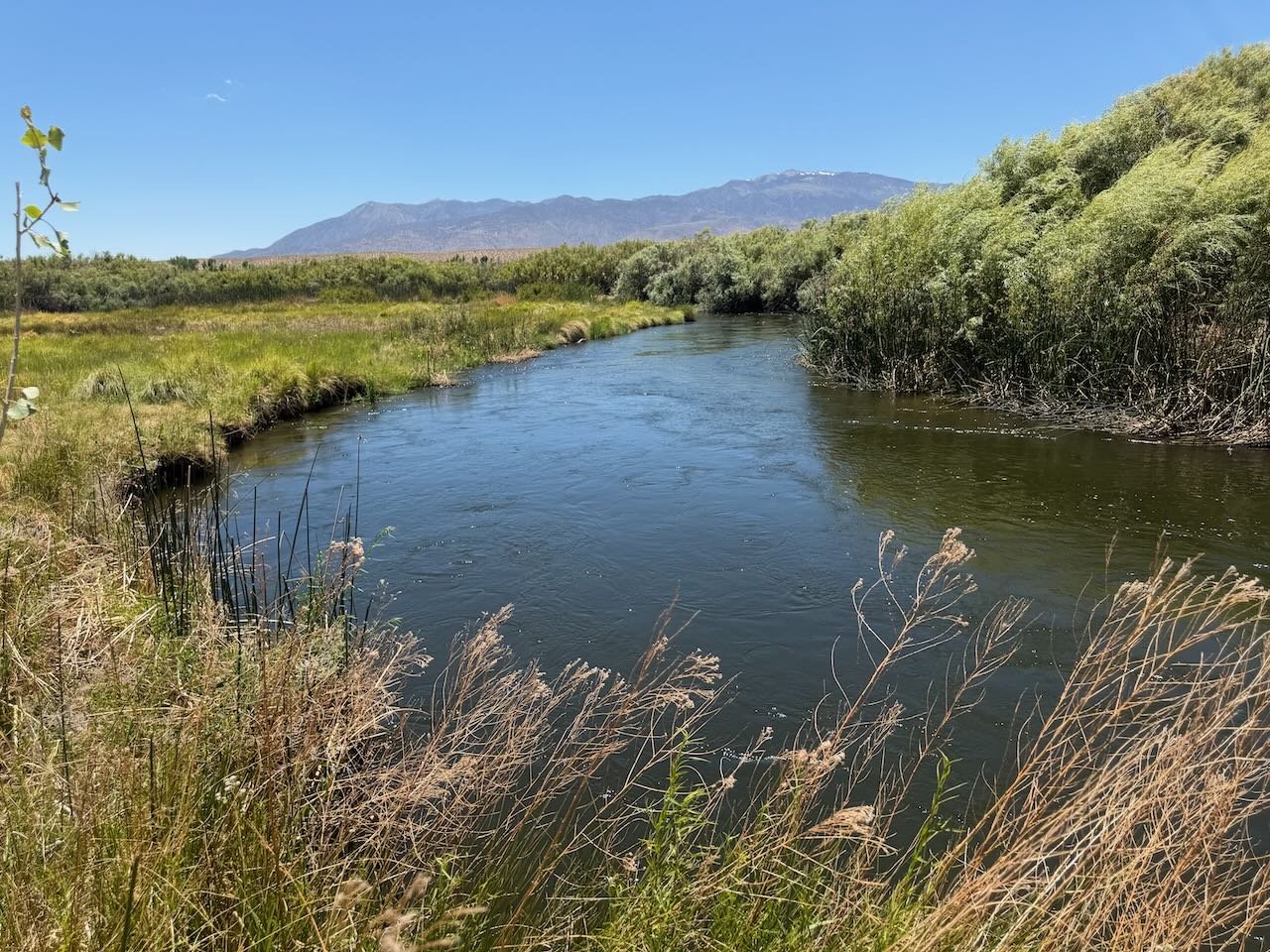
Day time temperatures cooled off middle of the week, but look for them to climb back up into the 90’s. Monitor the water temperature with your thermometer and quit catch and release fly fishing when the temperature approaches the 70 degree mark. With flows in the 500 CFS range be very careful if you are wading in the river. Fish the banks where you can find access to the river with caddis imitations in the evening and nymphs in the morning. Fish with size 12 stoner nymphs, size 18 olive quilldigons, size 18 bead head flash back pheasant tail nymphs size 16 bead head flash back gold ribbed hare’s ears, size 16 elk hair caddis and size 16 EC caddis.
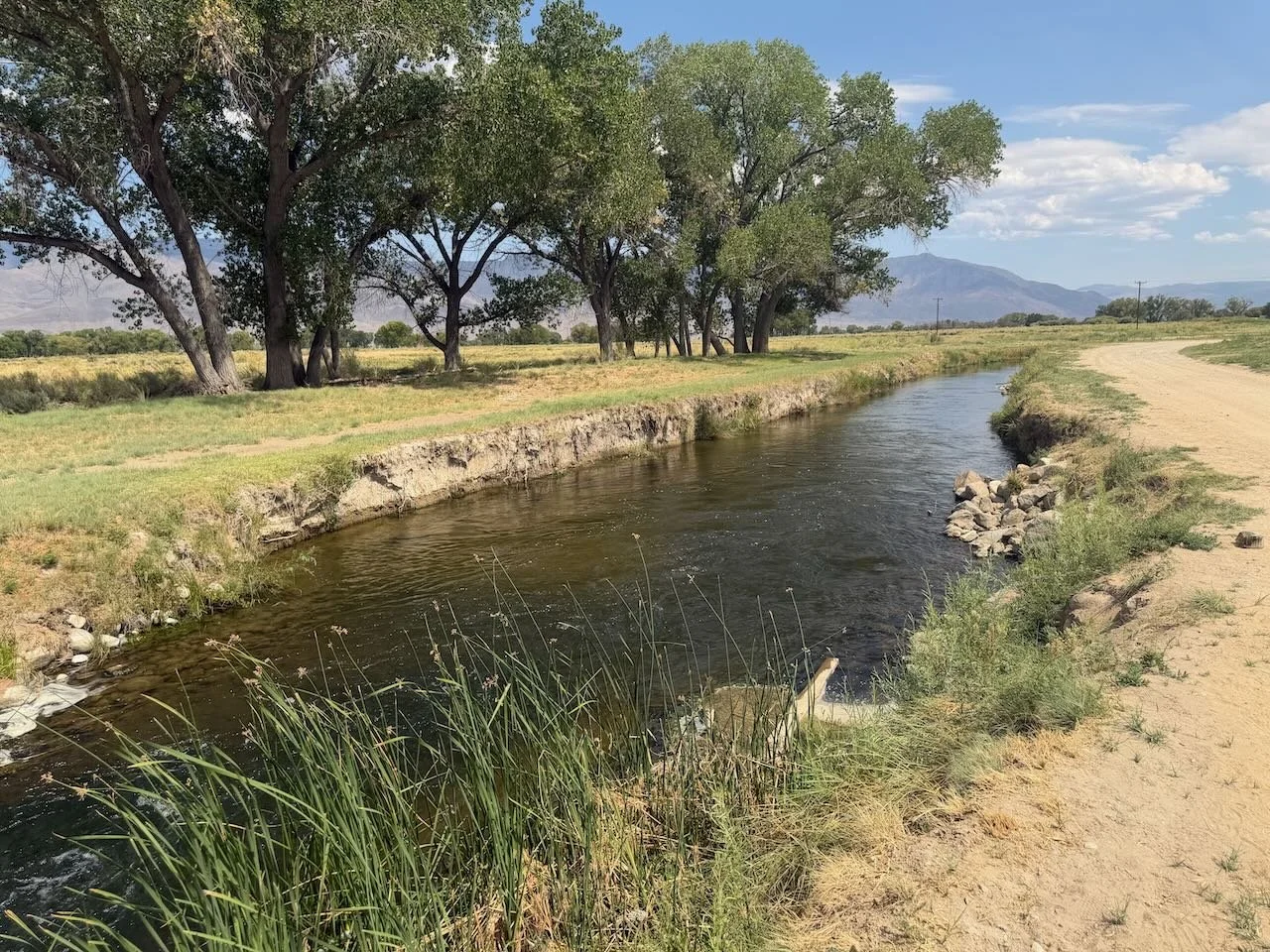
Grass hoppers are showing up in the fields next to Bishop Creek Canal, but afternoon water temperatures have been to warn to practice catch and release fly fishing.

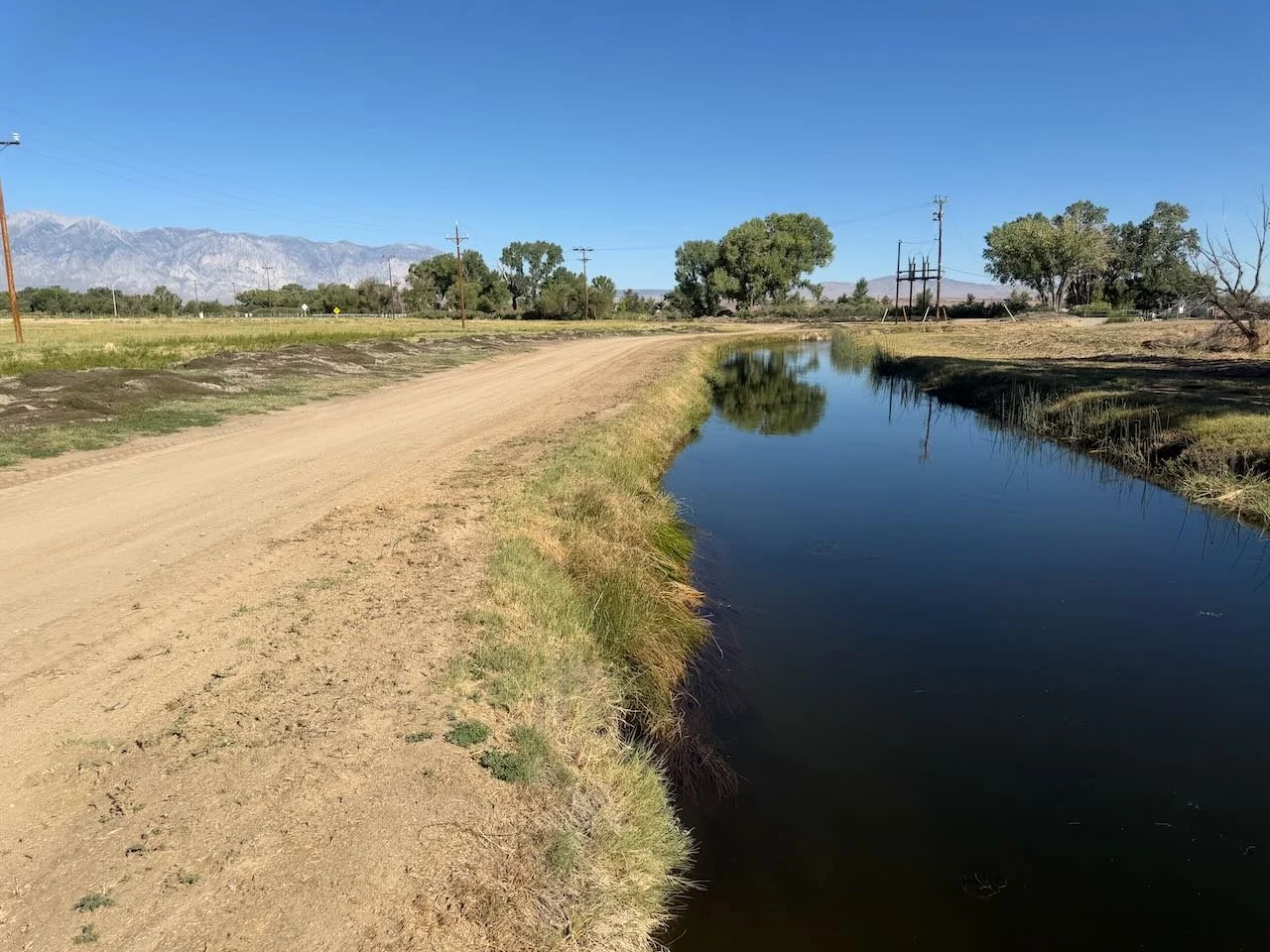
Bishop Creek Canal

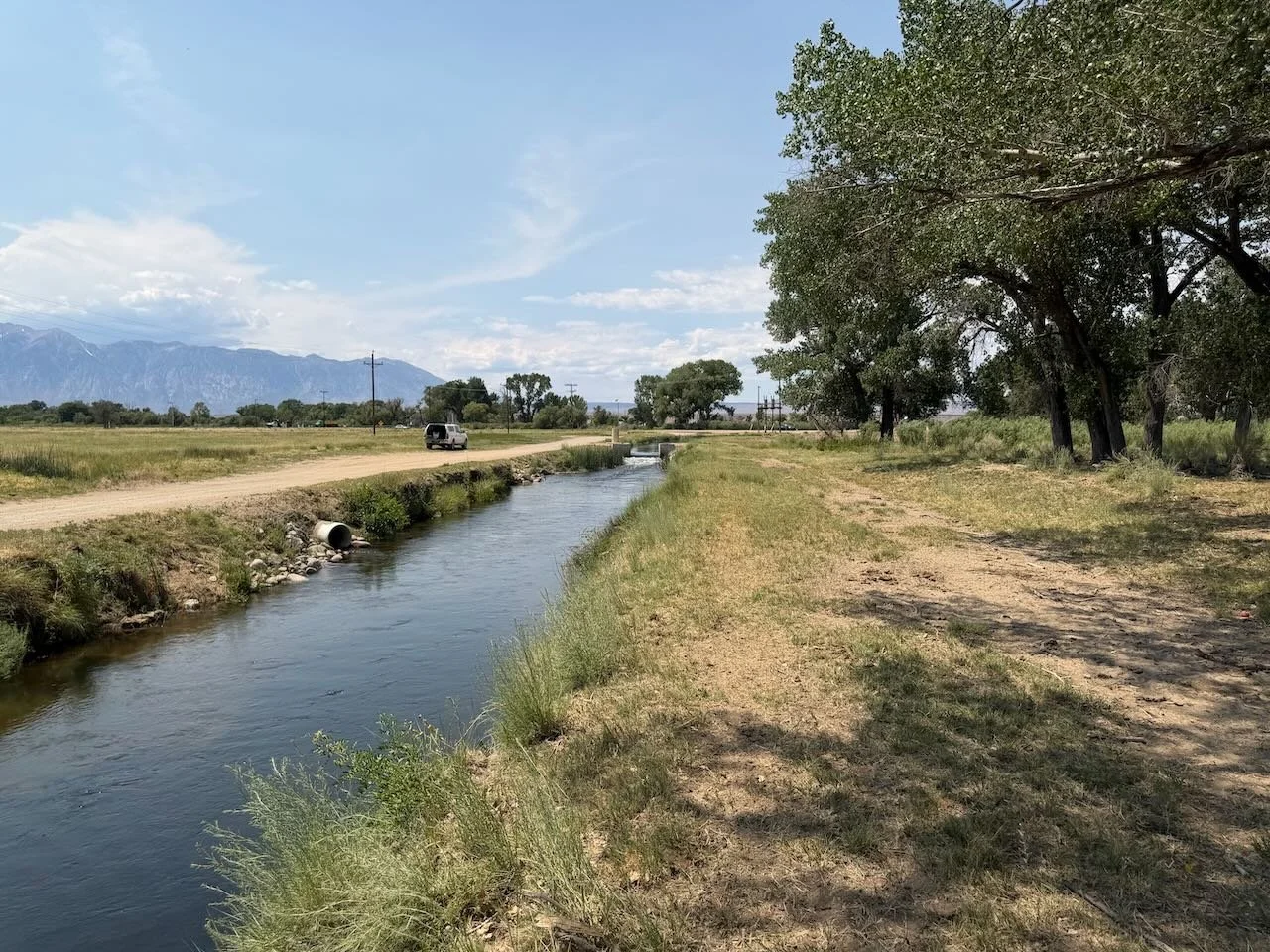
Behind Bishop Veterinary Hospital:

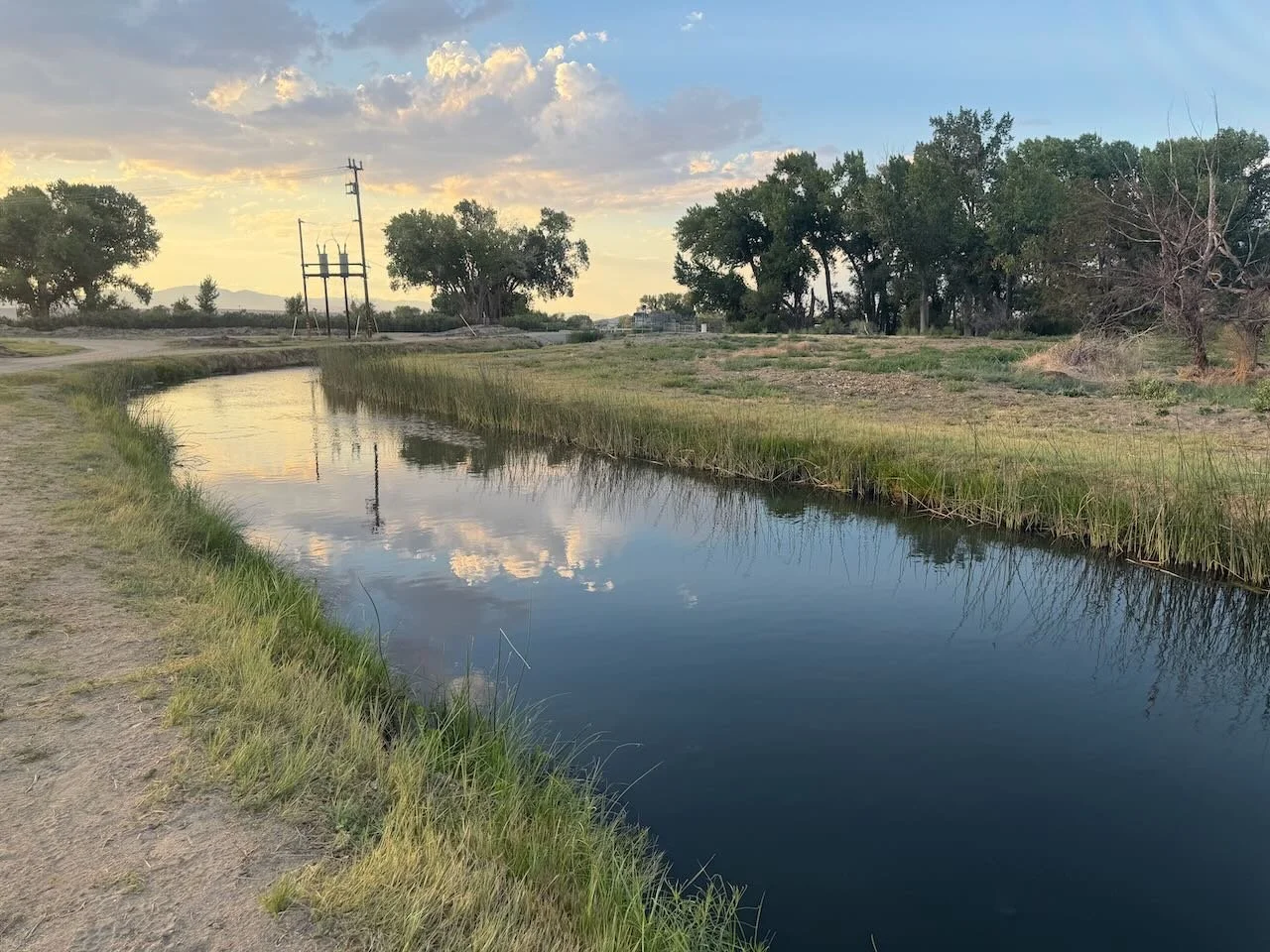
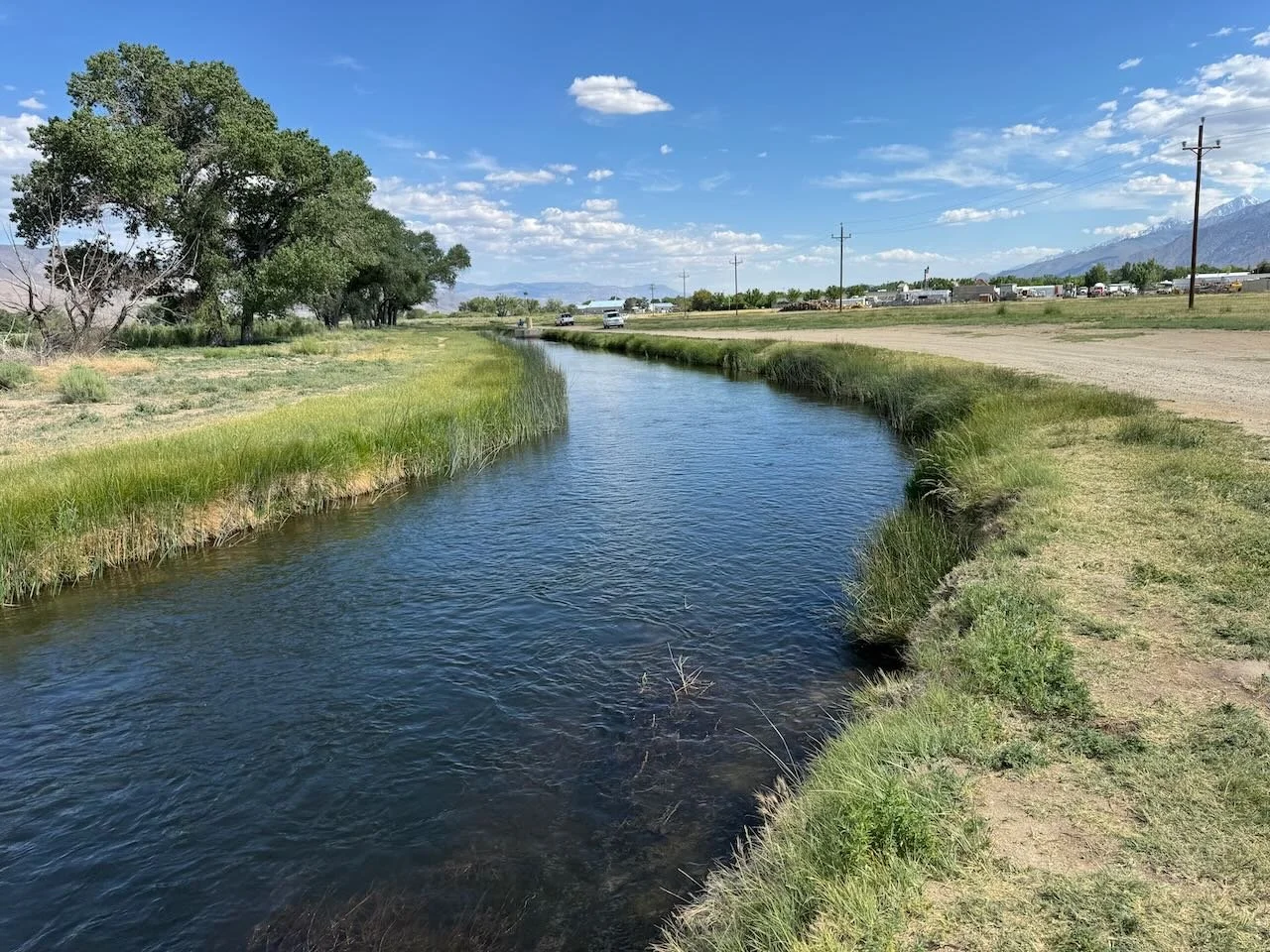
Watch the water temperatures here as the water is creeping over that 70 degree mark. Remember to quit catch and release fly fishing as the water temperature approaches the 70 degree mark. Adult hoppers are showing up in good numbers in the grasses along the sides of Bishop Creek Canal. If water temperatures are fishable in the afternoons and the winds come up try fishing with size 12 and 14 Dave’s hopper, tan stimulators and Chernobyl ants. In the morning between 8:00 and 10:00 A.M. look for the may fly hatch and fish with size 18 Adams parachutes, size 18 blue wing olive parachutes and size 18 sparkle duns. Mosquitoes have been active early and late in the day so be sure to carry insect repellant with you.
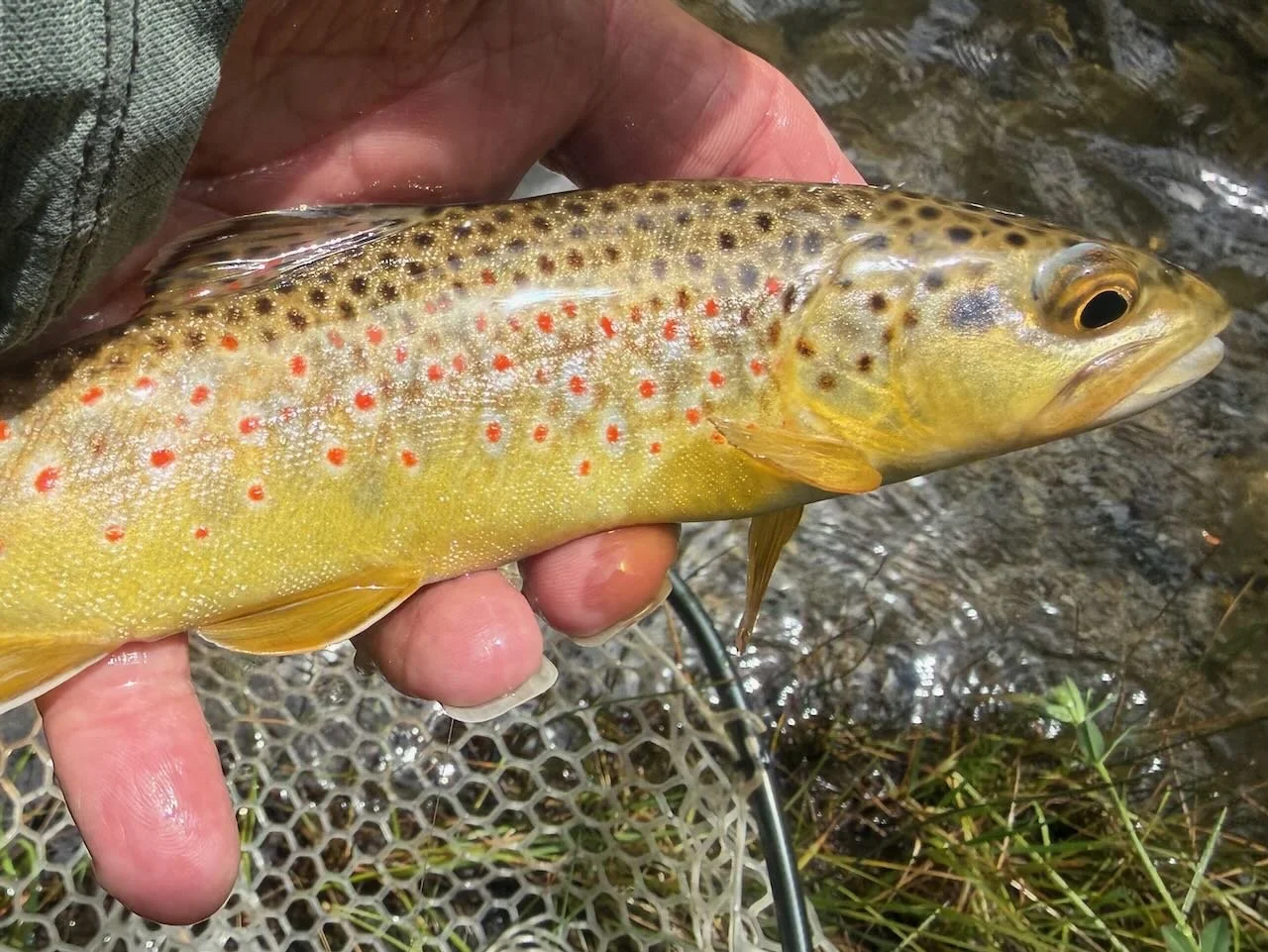
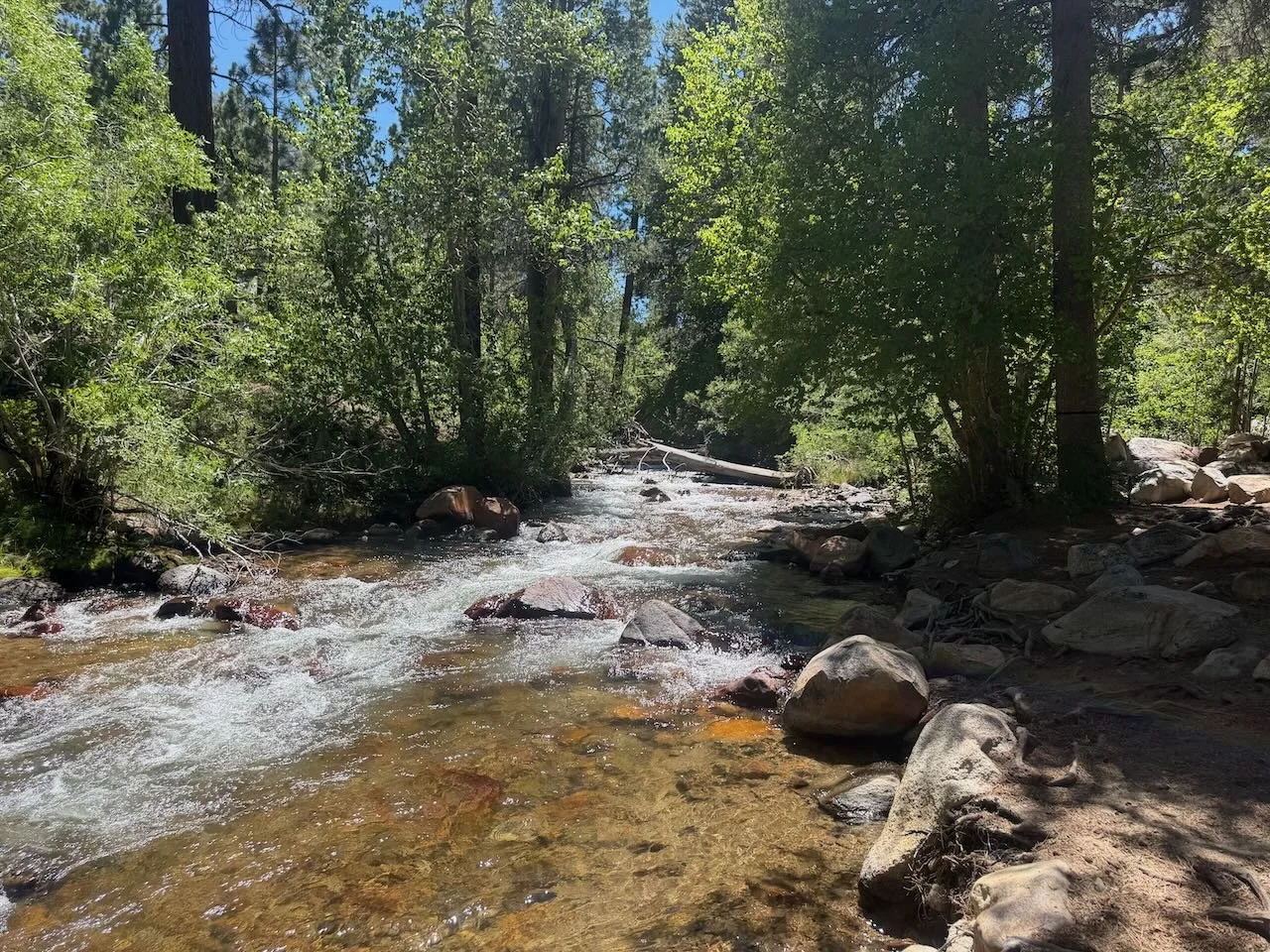
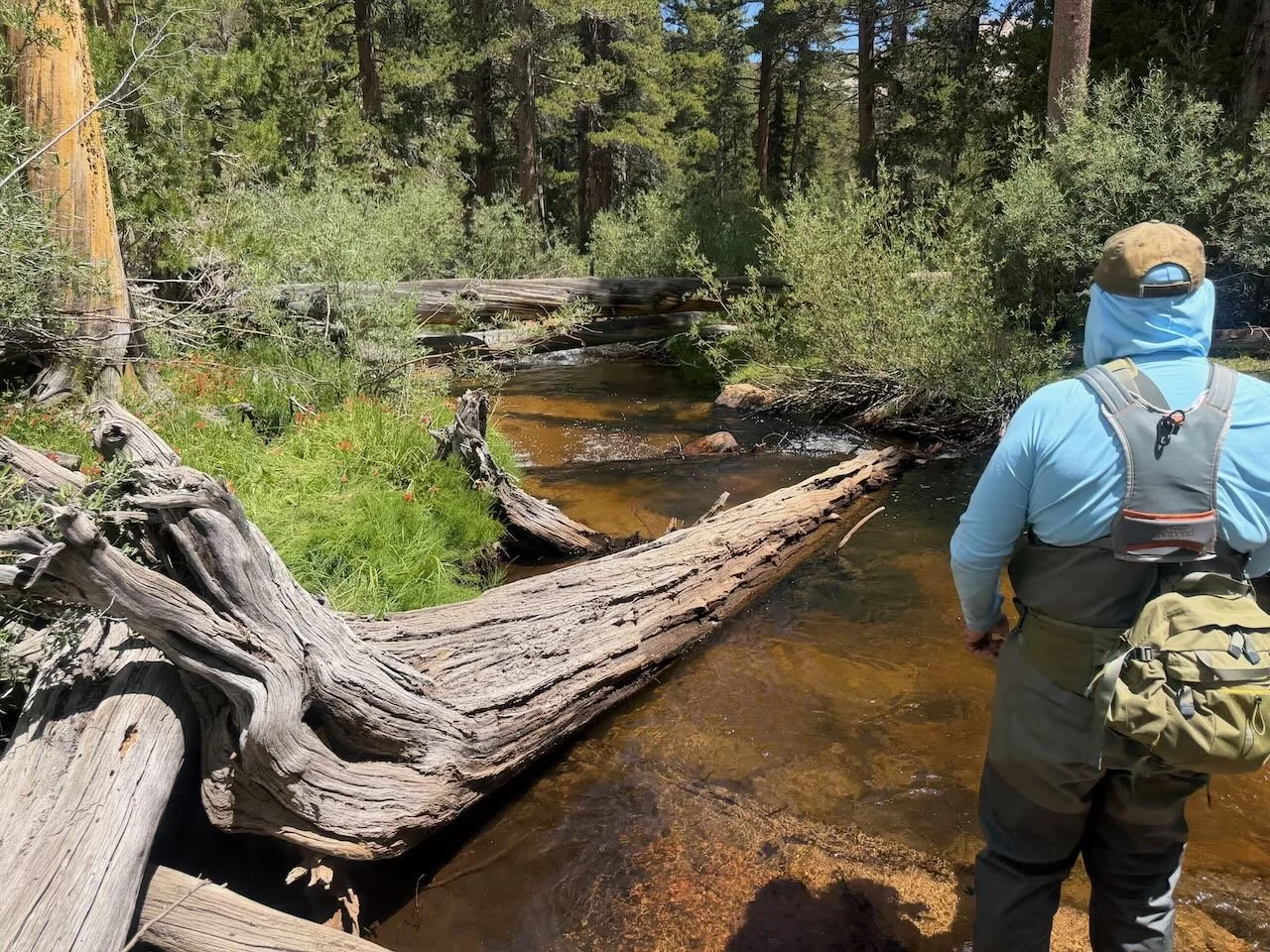
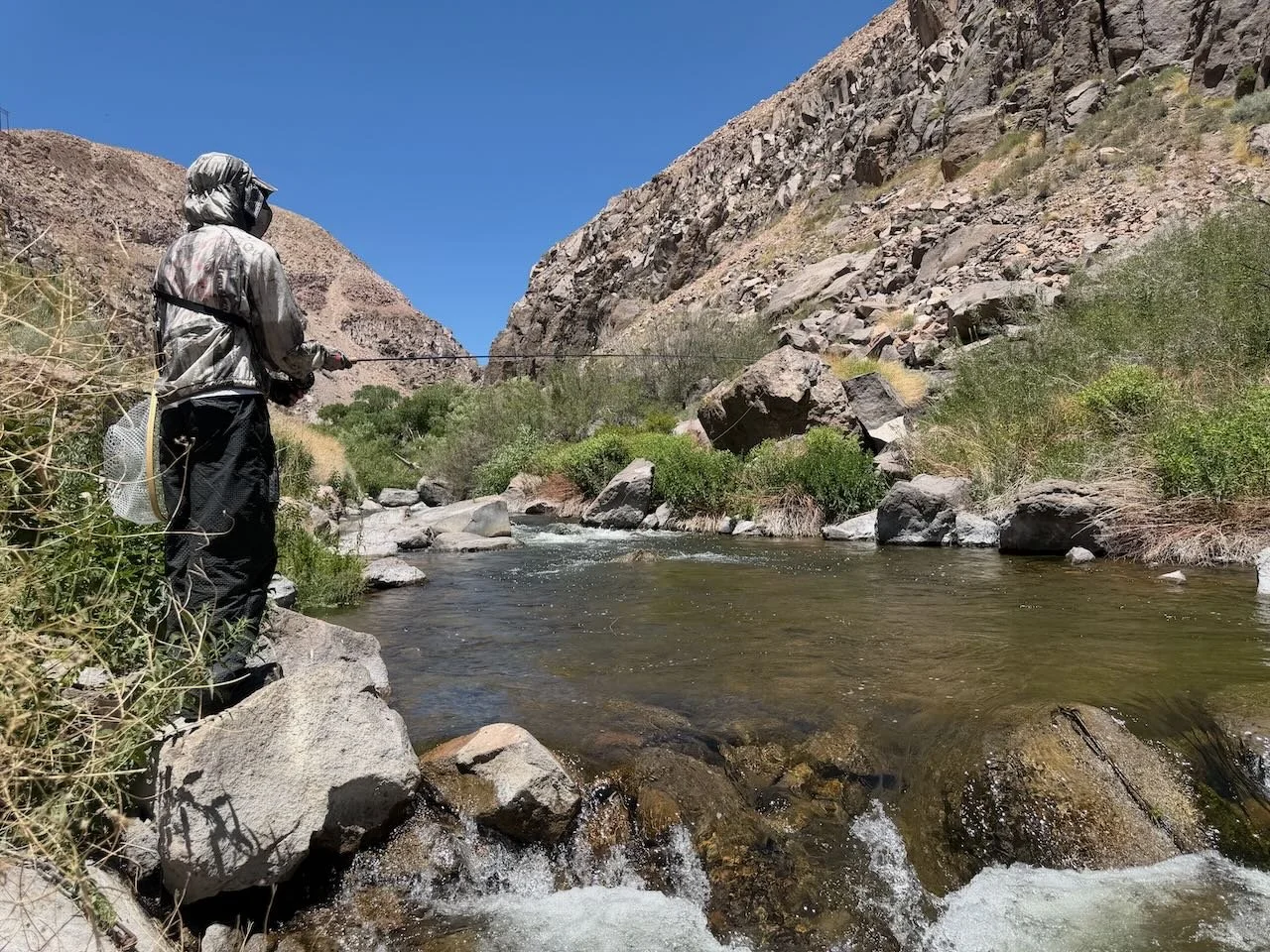
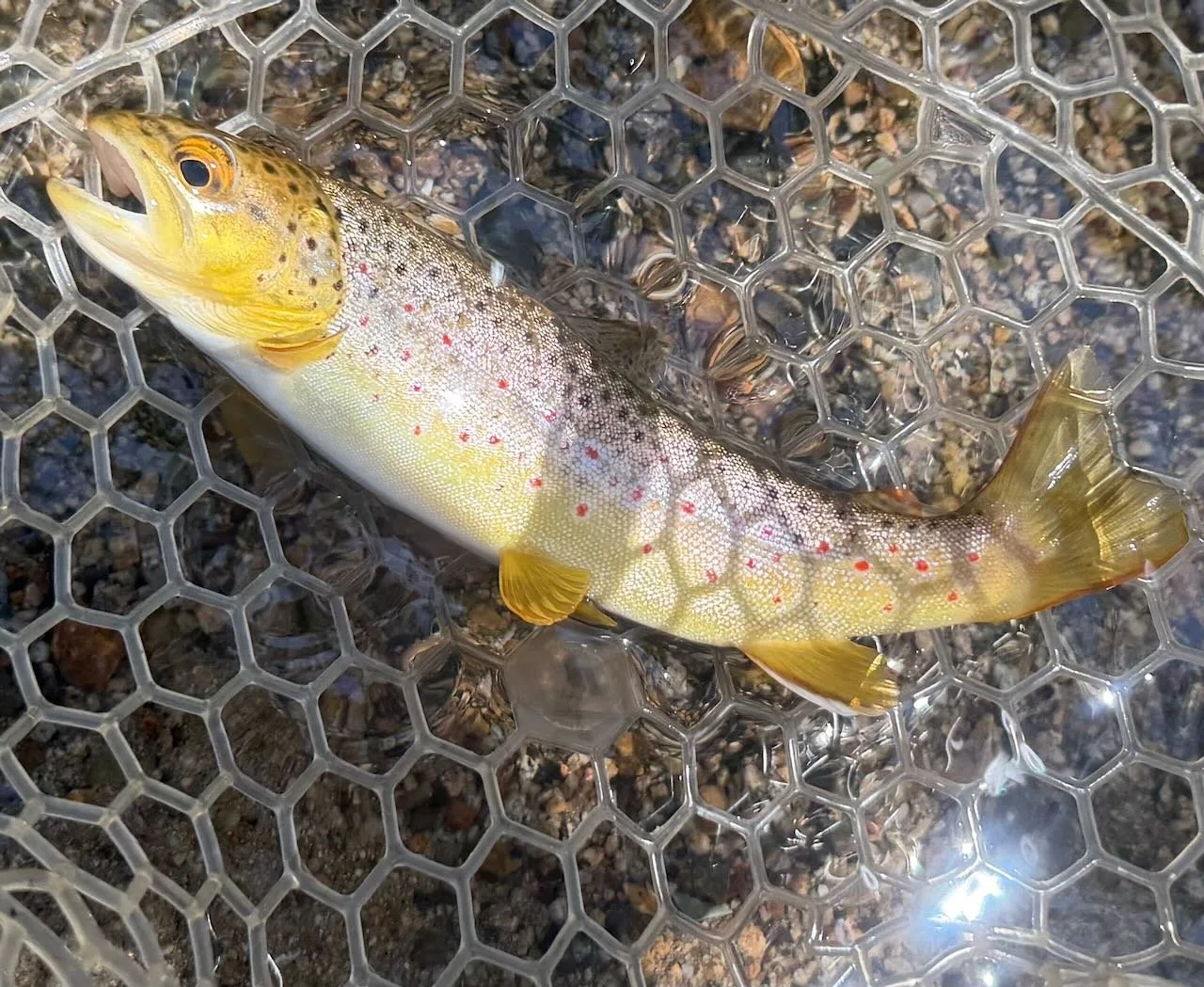
Wild brown trout are the rewards for fly fishers fishing the pools and pockets in Bishop Creek.

Bishop Creek Canyon:

This is a freestone creek that fishes well with a dry and dropper rig. Walk the banks of the creek looking for the holes and pockets where you can cast your rig into. The key to fishing freestone creeks is getting your fly - flies on the water so the fish can take them. This is not typical fly casting. It’s dabbling, roll casting and water load casting. Fish your favorite dry fly since you have lots of confidence in it. I like fishing with a high floating high visible fly like size 14 stimulators, size 14 Royal Wulff’s, size 16 elk hair caddis, and size 14 Adams parachutes. For nymphs use size 16 bead head flash back gold ribbed hare’s ears, size 16 Prince nymph, size 16 green/gold brassie, size 16 zebra midge and size 16 tiger midge.
Sierra Bright Dot Fly Fishing Report for 08-06-2026

The heat of summer continues with temperatures in the Owens Valley in the low 100’s and temperatures at the 8,000 to 9,000 foot level in the upper 80’s to low 90’s. Fishing under the canopy on freestone streams is a great way to escape the heat of summer. A voluntary Hoot Owl restriction is in place for catch and release fishing on several Eastern Sierra waters including Crowley Lake, upper Owens River, lower Owens River, Bishop Creek Canal, Bridgeport Reservoir and East Walker River. Carry a thermometer and take the temperature for the water you are fishing every half hour if it looks like the temperature is climbing towards 70 degrees. Mayflies, caddis flies and midges are feeding the trout in the backcountry and the front country. A big advantage of the Eastern Sierra is the ability to go up in elevation to find the temperature that suits you. Now is prime time to be exploring the backcountry with day hikes and overnight hikes.

Eastern Sierra Summers are fly fishing freestone creeks for wild brown trout, rainbow trout and brook trout high up in the canyons that drain the Eastern Sierra.

Upper Owens River

Above Benton Crossing Bridge:

Afternoon water temperatures are pushing above the 70 degree mark so catch and release fly fishers need to stop fly fishing once the river hits the 70 degree mark. Morning mayfly and afternoon caddis hatches have the trout feeding on the surface. Fish with size 18 blue wing olive parachutes, size 18 Adams parachutes, size 18 elk hair caddis and size 18 parachute caddis. Nymphing before the hatch with size 18 olive quilldigons, size 18 bead head flash back pheasant tail nymphs, size 16 bead head flash back gold ribbed hare’s ears, size 16 sparkle pupae, size 18 tiger midge and size 18 zebra midge will fool the wild trout.

Afternoons have been hot and fly fishers need to monitor the water temperature and quit catch and release fly fishing when the temperatures get to 70 degrees or more on the upper Owens River.

Hot Creek

Interpretive Site:

Be on the water rigged and ready to fish by 8:00 A.M. with a caddis pattern or a trico pattern. The hatches are happening almost simultaneously on the water. Start with a size 20 gray elk hair caddis, size 20 gray parachute caddis, size 20 gray X-caddis, size 20 female dun trico parachute pattern and size 20 blue wing olive parachute. The trico spinner fall starts about an hour after the female trico duns start hatching. When the trout quit taking your trico parachute switch to a size 22 trico spinner pattern. Trico spinner patterns can be hard to see on the water so fish your trico spinner pattern as part of a dry and dry rig. Use a size 16 Adams parachute, size 16 stimulator and size 16 elk hair caddis for the big fly in your dry and dry fly rig.

The right leader, fly pattern and drag free drift is how you fool the wild rainbows and brown trout of Hot Creek Interpretive Site.

Hot Creek

Canyon Section:

The Canyon Section is inundated with weeds from the annual summer growth of the weed beds. This is dry fly time in the canyon. Working small dry flies on long light leaders in between the four to six inch lanes between the weed beds is how fly fishers are successful in the summer time in the canyon. Matching the hatch, getting a drag free drift and setting the hook on the fish that take your dry flies is how to be successful Use nine foot 5X leaders with three to six feet of 6X tippet tied to size 20 female trico dun parachutes, size 20 female trico sparkle duns, size 20 blue wing olive parachutes, size 20 gray X-caddis, size 20 gray parachute caddis and size 20 gray elk hair caddis.

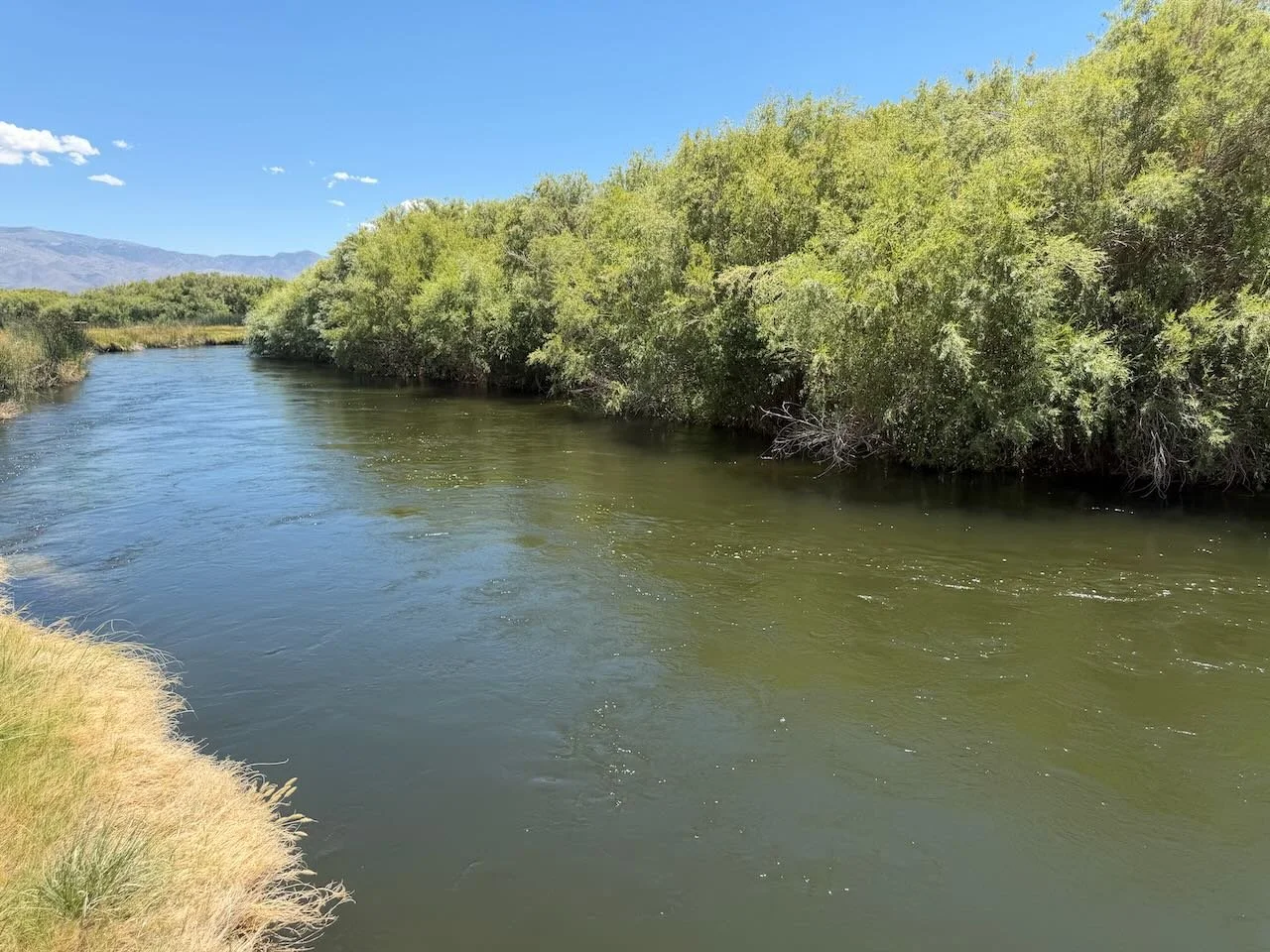
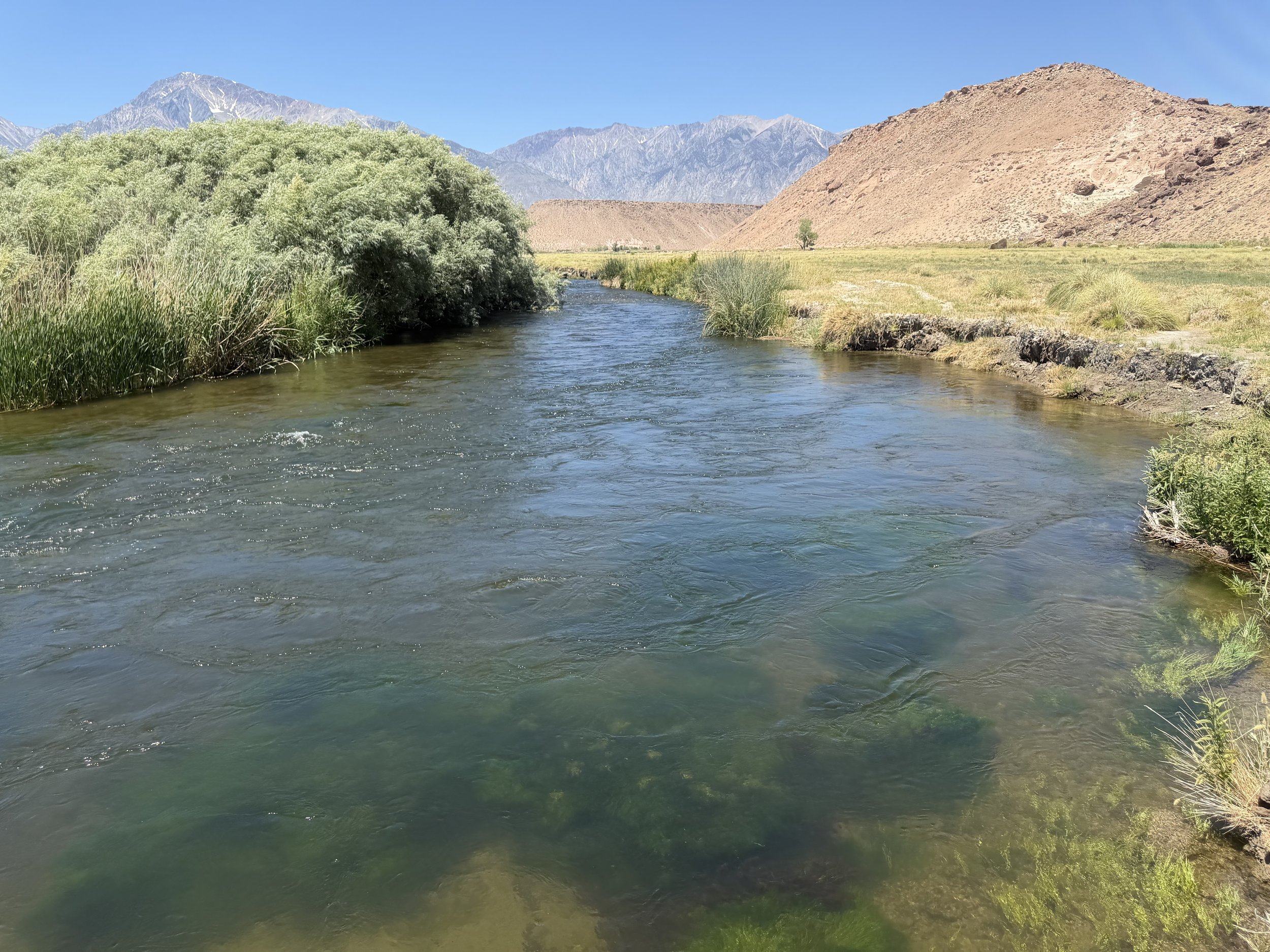
Finding places where the fly fisher can fish from the banks is how you need to fish the lower Owens River is the summer time.

Lower Owens River

Wild Trout Section:

Day time temperatures in the low 100’s makes it uncomfortable to fly fish during the day on the wild trout section of the lower Owens River. Fish the river early or late when the air temperature is comfortable to the fly fisher and the river temperature is under 70 degrees. Fishing in those places where the fly fisher can fish from shore with a size 18 elk hair caddis is producing wild rainbow and brown trout in the evening when the sun has gone behind the mountains. Fishing an hour before sunrise with size 10 wooly buggers, slumpbusters matukas and muddler minnows will turn some trophy trout and the fly fisher will be fishing the coolest part of the day. Fly fishers should be sure to have insect repellant with them when fly fishing early and late in the day on the lower Owens River.

Evening is the perfect time to be fly fishing Bishop Creek Canal with caddis patterns.

Bishop Creek Canal

Behind Bishop Veterinary Hospital:

There has been a morning hatch of mayflies coming off between 8:00 A.M. and 10:00 A.M. Fish with size 18 elk hair caddis, size 18 Adams parachutes, size 18 blue wing olive parachutes and size 12 yellow stimulators. Nymphing with size 18 bead head flash back pheasant tail nymphs, size 18 olive quilldigons, size 16 Duracell nymphs, size 16 bead head flash back gold ribbed hare’s ears, size 12 green/gold wire Prince nymphs and size 12 stoner nymphs is producing trout. Mosquitoes have been active early and late in the day so be sure to carry insect repellant with you.

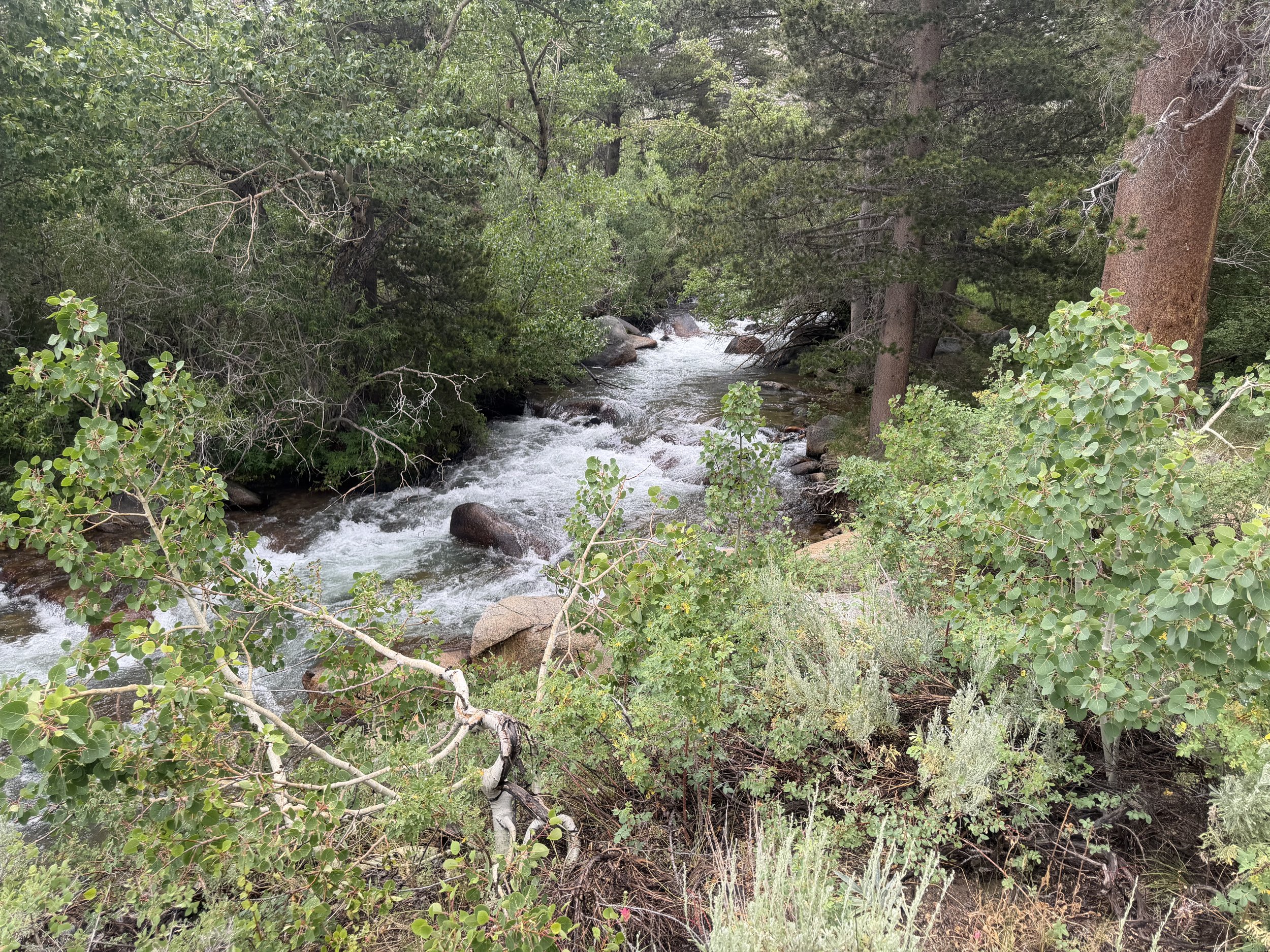
As summer heads into fall the flows in the forks of Bishop Creek are at a perfect flow to be fishing with a dry and dropper rig.

Bishop Creek Canyon:

Heat on the creek middle of the day is about 15 degrees cooler than in the Owens Valley. Fishing under the canopy of riparian vegetation is keeping fly fishers cooler. Heading up into the canyon to fly fish in the middle of the day is great way to escape the heat of the Owens Valley right now. The fish in the creek feed opportunistically and will take almost any size 14 or 16 dry fly. The best dry fly to fish with is your favorite dry fly as you will fish that fly with the most confidence. I like high visible, high floating dry flies like elk hair caddis, stimulators, Royal Wulff’s and Adams parachutes. I’m tying no more than three feet of 5X fluorocarbon tippet to the dry fly and tying a nymph to the fluorocarbon tippet. From dry fly to nymph should be 1.5 to 2 times the average depth of water. Most of the time I’m fishing in two feet or less of water depth. For the nymphs fish with size 16 bead head flash back pheasant tail nymphs, size 16 Prince nymph, size 18 bead head flash back pheasant tail nymphs, size 16 green/gold brassie, size 16 tiger midge and size 16 zebra midge.

The key to success on freestone creeks is walking the banks looking for those pockets that have the room to cast and are holding the golden trout that you are seeking to catch.

High Altitude Creeks

With Golden Trout:

August is hot in the Eastern Sierra and a perfect time to be fly fishing above 9,000 feet for golden trout in high mountain creeks. This is not typical fly fishing as fly fishers need to walk the banks of the creeks searching out those little pools and pockets that hold golden trout and dab their flies on the surface of the creek. On these tiny creeks it’s rare that I have fly line out the end of the fly rod. Fly fishing for goldens is with bright attractor style patterns like a size 14 Sierra bright dot, size 14 Sierra Adams, size 14 Royal Wulff and size 14 orange stimulator. Standard dry flies like a size 14 Adams Parachute, size 16 elk hair caddis, size 14 ants and size 12 beetles work great when the golden trout are not taking the attractor patterns. These fish are small, but make up for it in their beauty and abundance. Contact Sierra Bright Dot Guide Service if you are looking to hook up with some golden trout in the Eastern Sierra.

Sierra Bright Dot Fly Fishing Report 07-30-2026

Dog days of summer are here. A lot of Eastern Sierra waters are under voluntary Hoot Owl restrictions. This means you need to quit fly fishing  - catch and release fishing - when water temperatures reach 70 degrees or more. Waters that you need to be monitoring the temperature include Crowley Lake, upper Owens River, lower Owens River, Bishop Creek Canal, Bridgeport Reservoir and East Walker River. This is prime time to be fishing lakes and creeks above 9,000 feet where water temperatures stay under 65 degrees. Mosquitoes are prevalent and fly fishers should be sure to have insect repellant with them. Be prepared for hot afternoons, but be sure to have a rain jacket and a light jacket for afternoon showers. Trout on the surface and on the substrate are feeding on mayflies, caddis flies and midges.

Upper Owens River in the summer time is fishing mayflies in the mornings and caddis in the evenings on the surface for six to 14 inch wild brown and rainbow trout.

Upper Owens River

Above Benton Crossing Bridge:

Be sure to test water temperatures every afternoon as the river has been in the upper sixties and low seventies every sunny afternoon. Best time to be fly fishing the river is in the morning when the water temperature is in the mid-sixties and there is a hatch bringing trout to the surface. Fish with size 18 Adams Parachutes, size 18 blue wing olive parachutes, size 20 female dun trico parachutes and size 16 elk hair caddis on the surface. Nymphing with size 18 bead head flash back pheasant tail nymphs, size 18 olive quilldigons, size 18 Frenchie’s, size 12 stoner nymphs, size 14 copper John’s and size 16 Duracell nymphs is producing wild rainbows and browns up to 16 inches. Fish with size 10 balanced leeches, Landon Mayers jigged pine squirrel leeches, wooly buggers, slumpbusters, muddler minnows and matukas early and late in the day in deep holes, deep runs and next to cut banks.

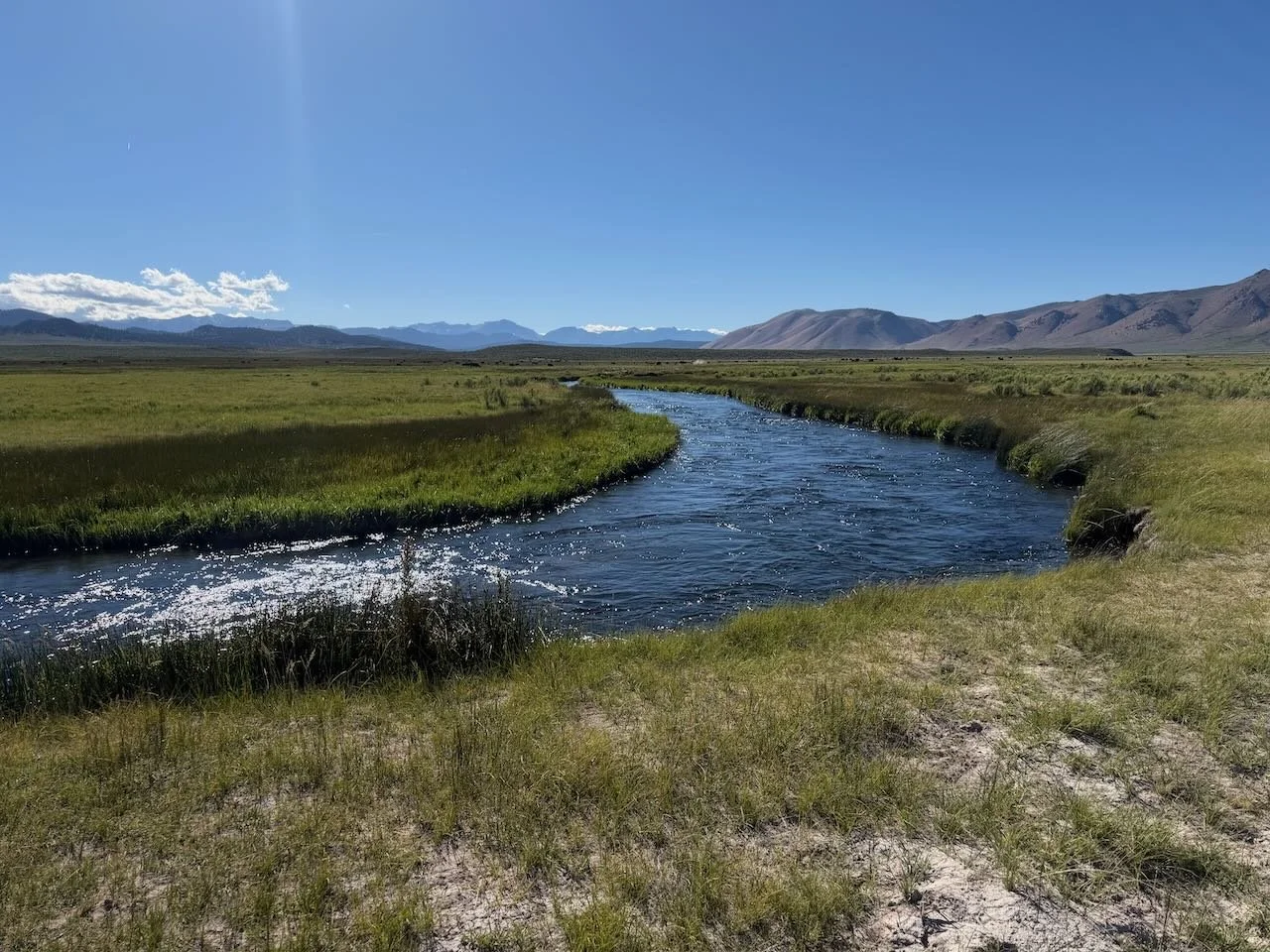
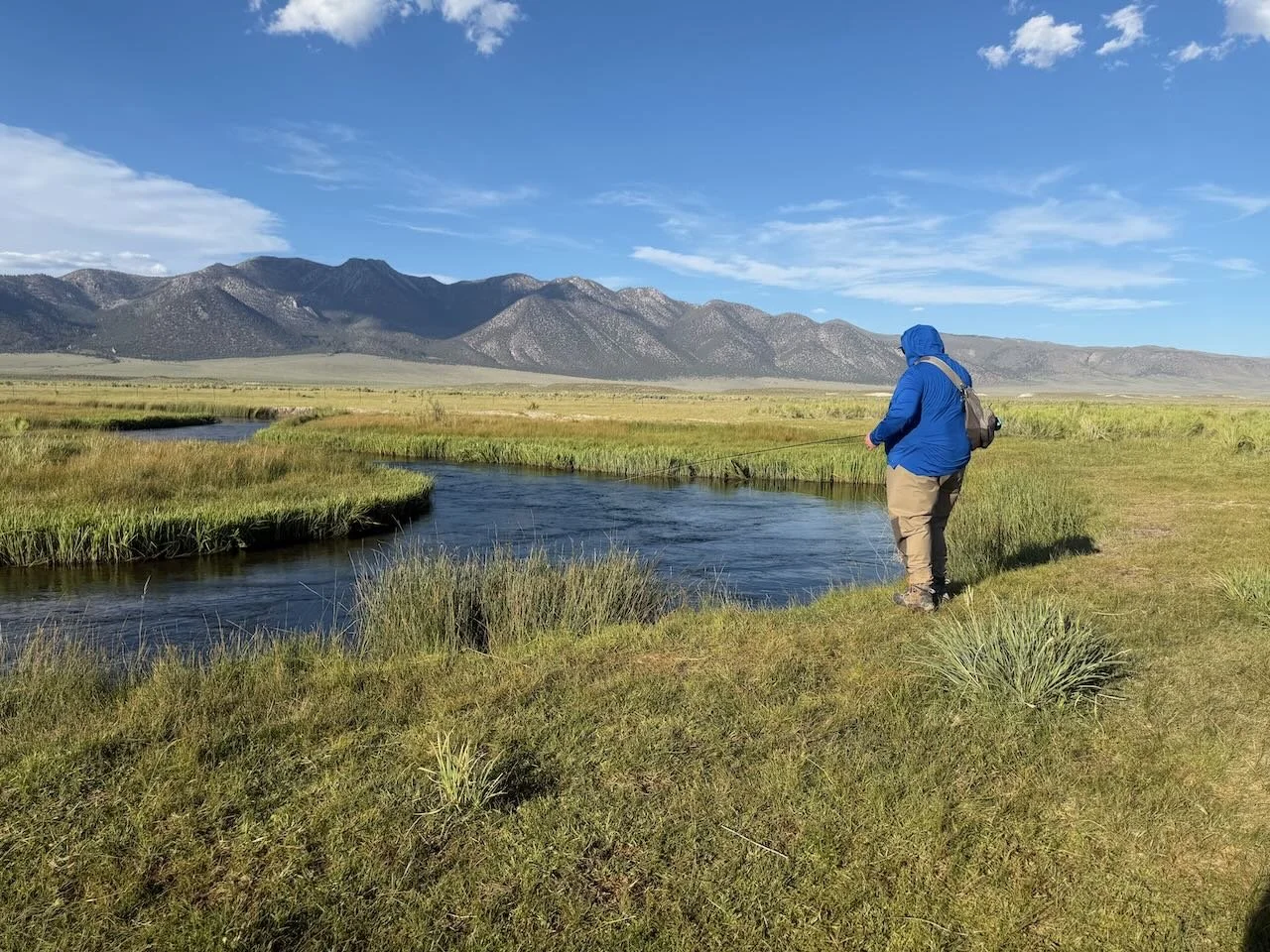
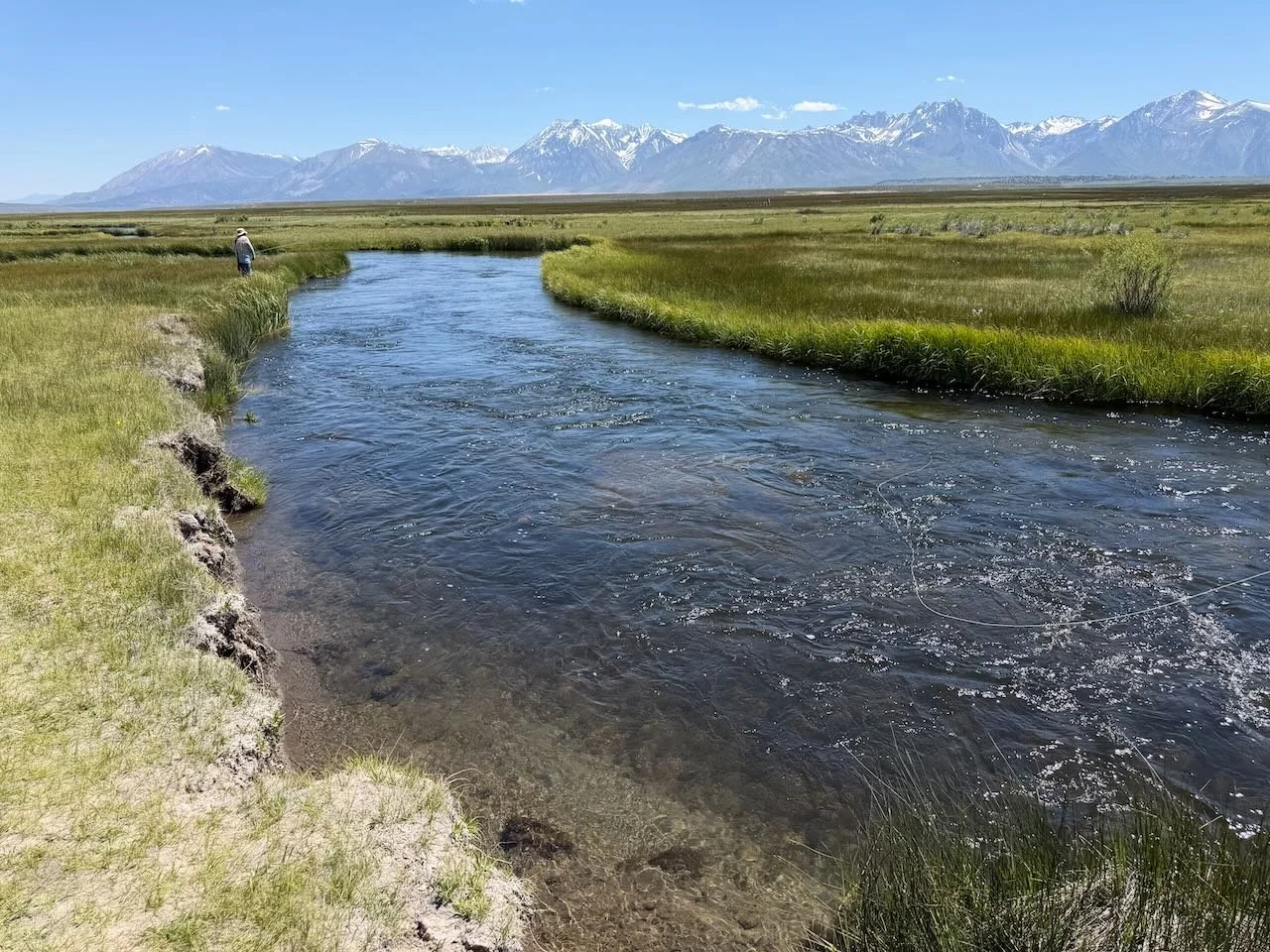
Fishing the upper Owens River in the summer time is wet wading and fishing dries and nymphs for wild trout in a high mountain meadow.

Hot Creek

Interpretive Site:

Hot Creek Interpretive Site offers some of the most consistent dry fly fishing in the Eastern Sierra. The trico hatch and caddis migration starts things off in the mornings around 8:00 A.M. Look for a good trico spinner fall around 9:00 A.M. Start the morning off with a size 20 gray parachute caddis, size 20 gray X-caddis and size 20 elk hair caddis. Fish the caddis while the migration is taking place and switch to a size 20 female dun trico parachute pattern when the trout stop hitting the caddis. Fish the female dun trico parachute until the trout quit hitting and have switched to feeding on the trico spinner fall. Use a size 22 trico spinner pattern fished three feet below a size 16 Adams parachute fished on 6X tippet. This is a dry and dry rig and should be fished just like a dry and dropper rig. Fly fishers need to set the hook on any movement in the leader-tippet or the Adams parachute. 

Hot Creek and surrounding waters are in danger once again from KORE Mining resubmitting a drilling permit. Your voice is needed to stop KORE Mining from moving forward with exploratory drilling. For more information contact nohotcreekmine.com.

With weed beds at full growth fly fishers need to fish with dry flies in Hot Creek Canyon.

Hot Creek

Canyon Section:

Fly fishing with nymphs in the Hot Creek Canyon area is tough as nymphs hang up on the weed beds that are full growth this time of the season. Now is the time to be dry fly fishing with size 20 gray X-caddis, size 20 gray parachute caddis, size 20 gray elk hair caddis, size 20 female trico dun parachutes, size 20 female trico sparkle duns and size 20 blue wing olive parachutes. Key to success is getting your dry fly or your dry and dry fly rig to float in the tiny three to four inch lanes between the weeds. Start your morning by being on the creek by 8:00 A.M. and fish with either a caddis imitation or a trico parachute. Somewhere around 9:00 A.M. switch to a size 22 trico spinner pattern.

With flows on the lower Owens River holding around 400 CFS, fly fishers need to find unobscured banks to fly fish from in the morning and evenings.

Lower Owens River

Wild Trout Section:

With temperatures in the Owens Valley being in the 100’s, it’s tough to be fly fishing in the middle of the day. Pulling streamers first thing in the morning and last thing at night will produce some nice sized wild trout. Use size 10 wooly buggers, slumpbusters matukas and muddler minnows. Early and late in the day fish with mayflies and caddisflies on the surface of the river. Use size 16 elk hair caddis, size 18 blue wing olive mayflies and size 20 trico parachutes. Flows have been hovering around the 400 CFS range and at these levels fly fishers need to be fly fishing from the  banks. Mosquitoes are in full force early and late in the day on the lower Owens River. Fly fishers should be sure to have insect repellant with them.

With a voluntary hoot howl in effect fly fishers will find trout feeding in the evening on Bishop Creek Canal.

Bishop Creek Canal

Behind Bishop Veterinary Hospital:

Eight to 10:00 A.M. is the time to be on the water with caddis and mayfly imitations. Mid-day temperatures in the low 100’s is making it too hot to be fly fishing on the canal. Use size 18 elk hair caddis, size 18 Adams parachutes, size 18 blue wing olive parachutes and size 14 stimulators to fool the wild brown trout and stocked rainbows. Nymphing with size 18 bead head flash back pheasant tail nymphs, size 18 olive quilldigons, size 16 Duracell nymphs, size 16 bead head flash back gold ribbed hare’s ears, size 12 green/gold wire Prince nymphs and size 12 stoner nymphs is producing trout. Use size 10 balanced leeches, Landon Mayer’s jigged pine squirrel leeches, wooly buggers, slumpbusters, muddler minnows and matukas for pulling streamer for bass, carp and trout. Mosquitoes have been active early and late in the day.

Wild brown trout are the rewards for fishing a size 14 stimulator with a size 16 green/gold brassie as a dry dropper rig in Bishop Creek.

Bishop Creek Canyon:

This is where you can fly fish middle of the day to escape the heat of the middle of the day. The trout are feeding opportunistically on your favorite dry fly. Size 14 Royal Wulff’s, size 14 stimulators, size 16 elk hair caddis and size 14 Adams parachute are high visibility flies that float high on the water making it easy for fly fishers to see their flies. A dry and dropper is a great way to be fly fishing for opportunistically feeding trout in a freestone creek. For the nymphs fish with size 18 bead head flash back pheasant tail nymphs, size 16 Prince nymphs, size 16 bead head flash back gold ribbed hare’s ears, size 16 tiger midges, size 16 zebra midges and size 16 green/gold brassies.

Golden trout are sitting in the pools around the logs and under the willows looking for insects to float by to feed on.

High Altitude Creeks

With Golden Trout:

Summer is the time to be chasing golden trout in high Sierra streams. It’s a perfect way to escape the heat of the Owens Valley. Golden trout like dry flies particularly ones that are bright in color. Fish with size 14 Sierra bright dots, size 14 Sierra Adams, size 14 Royal Wulff’s, size 16 elk hair caddis and size 14 stimulators. A dead drift is a great way to present a dry fly to actively feeding trout. Golden trout like flies that are bouncing and moving on the waters surface. If you’re not getting hits on a drag free drift try a little movement in the flies. These fish are small, but make up for it in their beauty and abundance.

Sierra Bright Dot Fly Fishing Report for 07-23-2026

Summers are hot in the Owens Valley. The cure is to go up in elevation and find an altitude that is comfortable to fish. For me this is fishing the creeks that drain every canyon from Lone Pine to the Nevade border north of Bridgeport. It’s the time to be fishing with dry flies and dry and dropper rigs. Be prepared for summer showers by carrying a rain jacket and a warm layer or two to keep you warm when the wind blows through your wet clothes. Mosquitoes are prevalent on these high altitude creeks so be sure to have insect repellant with you. Caddis, mayflies and midges are the insects feeding the fish on the surface and on the substrate. Volunteer hoot owl regulations are in effect on Crowley Lake, upper Owens River, East Walker River and Bishop Creek Canal.

Summer flowers, small stream trout and three to four weight fly rods is summer fly fishing in the Eastern Sierra mountains.

Upper Owens River

Above Benton Crossing Bridge:

Afternoon water temperatures are hitting the 70 degree mark. At these temperatures mortality rates for catch and release fly fishing increases greatly. So do not fish the river in the afternoons when the river temperatures reach 70 degrees or more. Best time to be fly fishing the river is in the mornings when there is a mayfly hatch that is bringing rainbow and brown trout to the surface. Afternoon showers help keep the river cool enough to fish all day. Fish with size 18 Adams Parachutes, size 18 blue wing olive parachutes, size 20 female dun trico parachutes and size 16 elk hair caddis on the surface. Nymphing is working before and after the hatch. Fish with size 18 bead head flash back pheasant tail nymphs, size 18 olive quilldigons, size 18 Frenchie’s, size 12 stoner nymphs, size 14 copper John’s and size 16 Duracell nymphs. Pulling streamers in the deep holes, deep runs and cutbanks are producing a few trout on size 10 balanced leeches, Landon Mayers jigged pine squirrel leeches, wooly buggers, slumpbusters, muddler minnows and matukas. Mosquitoes have been active early and late in the day.

Afternoon rain storms cool off the Owens River allowing fly fishers to fish all afternoon without harming trout while catch and release fishing.

Hot Creek

Interpretive Site:

Morning are when you will find hatches of trico mayflies and a caddis migration. Start the morning with a size 20 gray X-caddis, size 20 gray parachute caddis and size 20 gray elk hair caddis to imitate the caddis migration. Once the caddis migration is in full swing look for the start of the female trico hatch. This starts with the female dun tricos. Fish with size 20 female dun trico parachute, size 20 female trico sparkle duns and size 20 Adams parachutes. Once the trout start refusing the dun parachute pattern switch to a size 22 trico spinner pattern


Hot Creek and surrounding waters are in danger once again from KORE Mining resubmitting a drilling permit. Your voice is needed to stop KORE Mining from moving forward with exploratory drilling. For more information contact nohotcreekmine.com.

The flats of Hot Creek Interpretive Site is perfect for fishing tiny dry flies for rainbow and brown trout feeding on trico mayflies and gray bodied caddisflies.

Hot Creek

Canyon Section:

The weed beds provide protection from predators above the water. This is where the trout are living and where the fly fishers needed to fish their dry fly patterns. There is a learning curve to learning how to fish tiny dry flies in the two to four inch channels between the weed beds. Fly fishers that have learned how to fish in and around the weed beds will be successful with size 20 gray X-caddis, size 20 gray parachute caddis, size 20 gray elk hair caddis, size 20 female trico dun parachutes, size 20 female trico sparkle duns and size 20 blue wing olive parachutes.

Finding spots you can fish from the banks of the lower Owens River with caddis adult patterns and mayfly nymphs is how to catch the wild rainbows and brown trout that inhabit the river.

Lower Owens River

Wild Trout Section:

Middle of the day is too hot to be fly fishing on the lower Owens River. Be on the river around 7:00 A.M. and be off the river by 10:00 A.M. or be on the river when the sun goes behind the Eastern Sierra Mountains. Best fly fishing has been in those spots where there are two channels. This way you are not fly fishing in the full force of the 400 CFS current in the main channel. First thing in the morning and last thing at night is a good time to be fly fishing with size 10 wooly buggers, slumpbusters matukas and muddler minnows for trophy trout. In the mornings fish with size 18 olive quilldigons, size 18 bead head flash back pheasant tail nymphs, size 16 Duracell nymphs, size 16 bead head flash back gold ribbed hare’s ears and size 12 stoner nymphs. Mosquitoes are in full force early and late in the day on the lower Owens River.

Evening fly fishing on Bishop Creek Canal is cooler for fly fishers, water temperatures are cooler and the trout are feeding on caddis as the sun goes behind the Eastern Sierra Mountains.

Bishop Creek Canal

Behind Bishop Veterinary Hospital:

Mid-day temperatures are in the low 100’s and not comfortable for fly fishers and afternoon water temperatures are too warm for catch and release trout fly fishing. So fly fishers need to fish first thing in the morning or last thing in the evening. Fly fishers need to check water temperatures in the afternoons. Nymphing with size 18 bead head flash back pheasant tail nymphs, size 18 olive quilldigons, size 16 Duracell nymphs, size 16 bead head flash back gold ribbed hare’s ears, size 12 green/gold wire Prince nymphs and size 12 stoner nymphs is producing wild brown trout and the occasional stocked rainbow trout. Use size 10 balanced leeches, Landon Mayer’s jigged pine squirrel leeches, wooly buggers, slumpbusters, muddler minnows and matukas for pulling streamer for bass, carp and trout. Mosquitoes have been active early and late in the day.

Bushwhacking through the streamside vegetation looking for that pool or pocket holding wild brown trout is how to fish on Bishop Creek.

Bishop Creek Canyon:

Bush whacking is walking along the banks of the creek looking for a spot that will hold trout and allow the fly fisher to drift a dry fly or a dry and dropper rig. This is not casting 20 to 40 feet of fly line. It’s fishing the leader and tippet or maybe a few feet of fly line out of the rod tip. The trout are holding in the pools and pockets that allow the trout to stay out of the main current. The fly fisher needs to present the fly or flies with a drag free drift. For dry flies use size 16 elk hair caddis, size 14 Adams parachute, size 14 Royal Wulff’s and size 14 stimulators. For the nymphs fish with size 18 bead head flash back pheasant tail nymphs, size 16 Prince nymphs, size 16 bead head flash back gold ribbed hare’s ears, size 16 tiger midges, size 16 zebra midges and size 16 green/gold brassies.

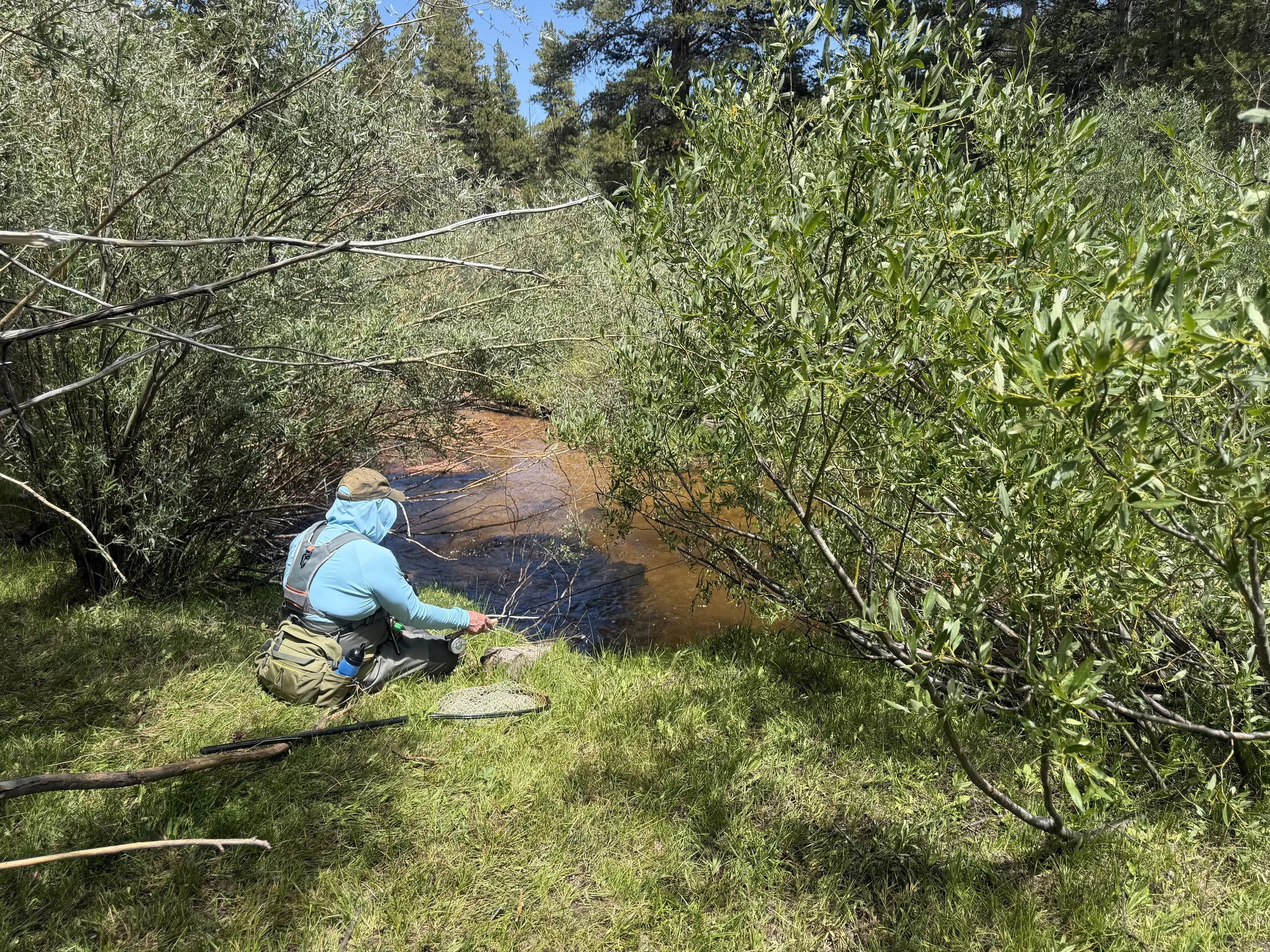
Sometimes the best way to fish a hole tightly covered in vegetation is to sit on the banks and dabble Sierra Bright Dots for golden trout.

 High Altitude Creeks

With Golden Trout:

Catching golden trout in the summer time in creeks that drain the Eastern slope of the Sierra is a treat for fly fishers. This is bush whacking at its best for tiny, abundant and brightly colored trout at 9,000 feet and above. The fish are not in the fast water sections. They are in the pools and in the pockets. Finding these spots hidden in stream side vegetation is where you want to drift your flies. Golden trout love brightly colored flies in size 12, 14 and 16 like Sierra bright dots, Sierra Adams, Royal Wulff’s, elk hair caddis and stimulators. The fish are not big, but they make up for it in abundance and beauty.

Sierra Bright Dot Fly Fishing Report 07-16-2026

Summer rain storms are a great way to get out of the summer heat in the Owens Valley The creeks that drain the Eastern Sierra are a great place to be fly fishing in a summer rain storm. The rain washes terrestrial and aquatic adult insects into the water offering the trout a feast. I get  to use my rain jacket maybe once or twice a year in a rain storm. I used my rain jacket this week.  One of the advantages of fishing in the Eastern Sierra are the opportunities to fish at different elevations to find a temperature that is comfortable for the fly fisher. Summer hatches of caddis, mayflies and stoneflies are what brings the trout to the surface and feeds the trout on the substrate. Summer is the perfect time to be a dry fly fisher.

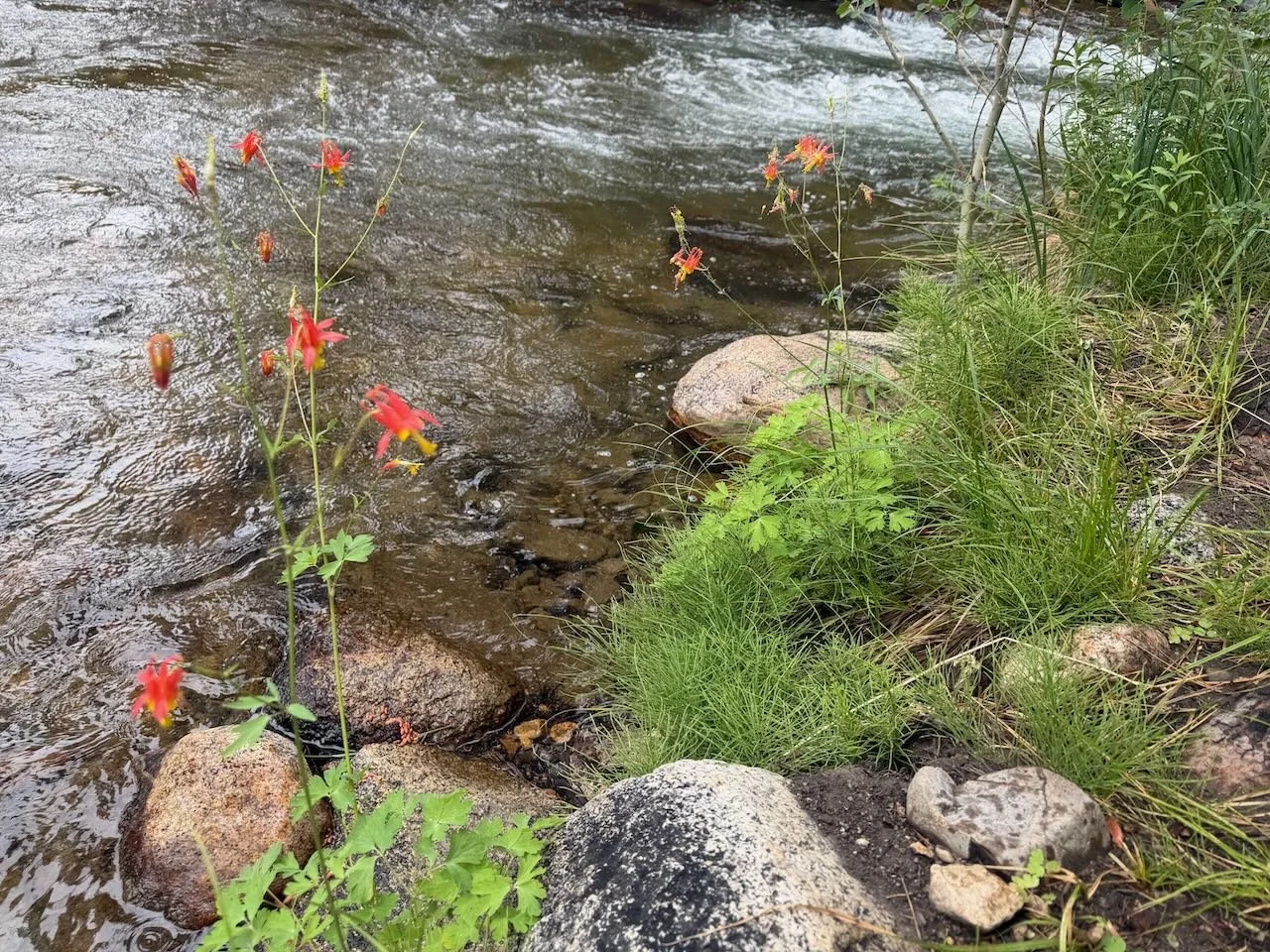
Stream side flowers just add a pretty touch to fishing the freestone creeks of the Eastern Sierra with a dry and dropper rig like a size 14 stimulator and a size 16 tiger midge.
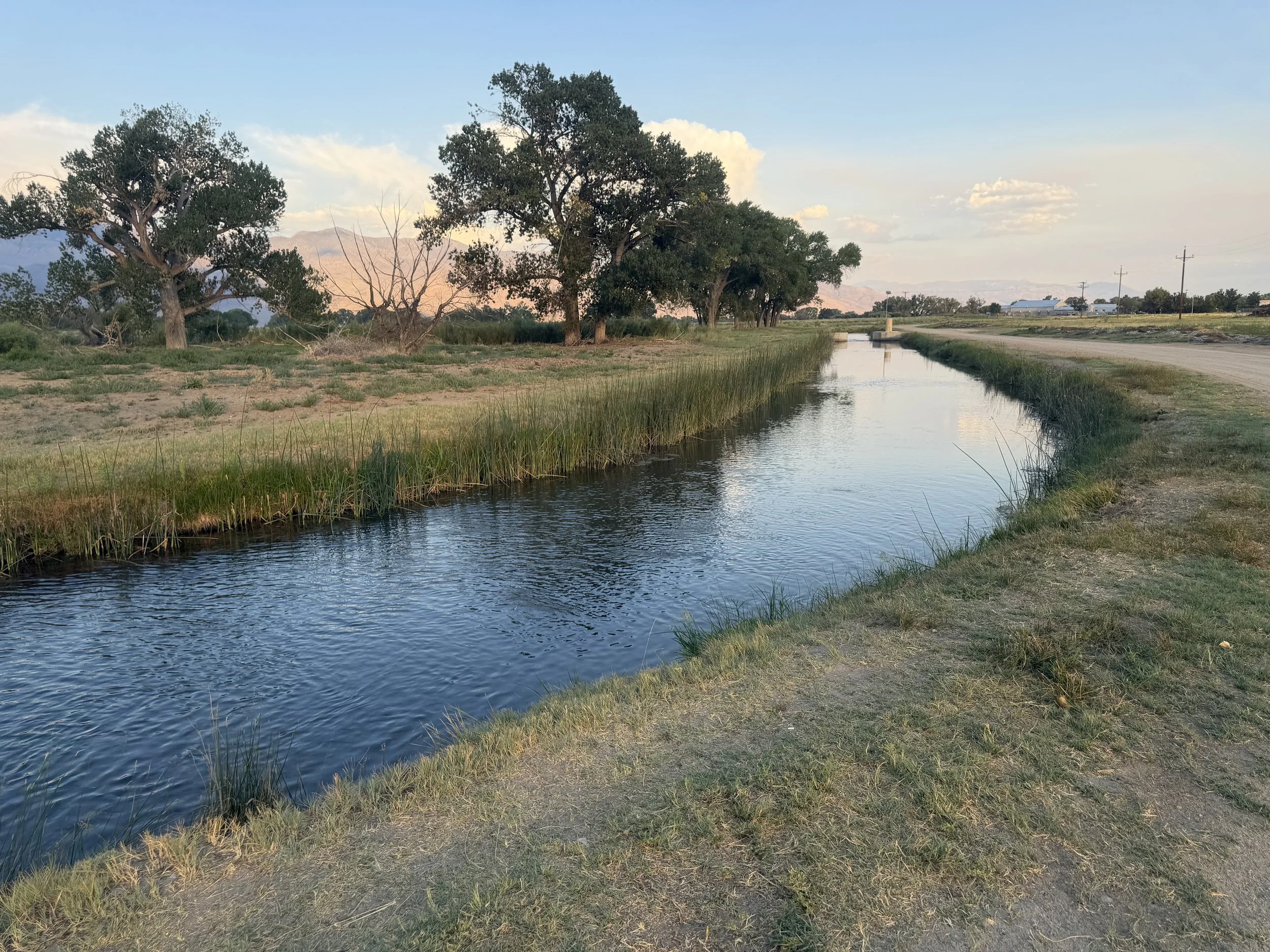
Upper Owens River

Above Benton Crossing Bridge:

The water of the upper Owens River is low and clear and the trout are spooky. Fly fishers need to approach the stream with a stealthy method to their steps. Nymphing under an indicator or with a Euro rig is the way to present nymphs to the trout feeding on the substrate. Nymph with size 18 bead head flash back pheasant tail nymphs, size 18 olive quilldigons, size 16 bead head flash back gold ribbed hare’s ear, size 18 Frenchie’s, size 12 stoner nymphs, size 14 copper John’s and size 16 Duracell nymphs. Pulling small streamers through the deeper holes and cut banks, particularly the first and last hour of legal fishing time is fooling bigger wild brown and rainbow trout. Use size 10 balanced leeches, Landon Mayers jigged pine squirrel leeches, wooly buggers, slumpbusters, muddler minnows and matukas. Mosquitoes have been active early and late in the day.

Casting dries and nymphs upstream and letting them drift with a drag free drift is how you fool the finicky trout of the upper Owens River.

Hot Creek

Interpretive Site:

Fly fishers need to be on the water rigged and ready to fish because the caddis emergence and trico hatch are underway by 8:00 A.M. Start your morning fishing with a size 20 gray elk hair caddis, size 20 gray parachute caddis and size 20 gray X-caddis. As the caddis migration is in full swing look for the trout to start feeding on the trico mayflies. Start fly fishing with a size 20 female dun trico parachute. An hour or so into the hatch or when the trout quit taking your trico parachute switch to a size 20 trico spinner pattern. Fish with nine to 12 foot 6X leaders with three feet of 6X or 7X tippet. A drag free drift is necessary to fool the spooky brown and rainbow trout of Hot Creek Interpretive Site. If you can’t see the tiny caddis and mayfly patterns on the water use a dry and dry method. Fish with a size 16 Adams parachute and three feet of 6X tippet attached to the bend of the Adams and tied to the tiny dry fly pattern.


Hot Creek and surrounding waters are in danger once again from KORE Mining resubmitting a drilling permit. Your voice is needed to stop KORE Mining from moving forward with exploratory drilling. For more information contact nohotcreekmine.com.

The middle and lower section of Hot Creek is separated by bedrock so fly fishers have to climb up and over to reach the next section of Hot Creek Canyon.

Hot Creek

Canyon Section:

With its stepper gradient the trout of Hot Creek Canyon feed more reactionary then the trout of the Interpretive Site. The weed beds form a natural protection from predators for the trout. For fly fishers willing to learn how to drift dry flies in the tiny lanes between the weed beds will find trout ready to grab their flies. The weed beds are growing with the summer weather are at full size. The dry fly hatch starts around 8:00 and is over before noon and fly fishers should fish with size 20 gray elk hair caddis, size 20 gray parachute caddis, size 20 X-caddis, size 20 female trico dun parachutes, size 20 female trico sparkle duns and size 20 blue wing olive parachutes.

Fishing from the banks of the lower Owens River early or late in the days with elk hair caddis and streamers is how to fool the wild brown trout.

Lower Owens River

Wild Trout Section:

With day time temperatures in the 90’s it’s best to fish early and late in the day for the comfort of the fly fisher. An hour before sunrise and an hour after sunset is a good time to be fly fishing with streamers looking for bigger trout. Use size 6 and 10 wooly buggers, slumpbusters matukas and muddler minnows. Almost every evening there is a caddis hatch and fly fishers fishing when the sun goes down with size 16 and 18 elk hair caddis will find trout willing to take their dry flies. Mosquitoes are in full force early and late in the day on the lower Owens River.

It takes a considerable amount of time for the canal echo system to fully recover, but the trout need to eat and will take dries, nymphs and streamers.

Bishop Creek Canal

Behind Bishop Veterinary Hospital:

Post dredging the trout are feeding on nymph drifted on the substrate. For nymphs fish with size 18 bead head flash back pheasant tail nymphs, size 18 olive quilldigons, size 16 Duracell nymphs, size 16 bead head flash back gold ribbed hare’s ears, size 12 green/gold wire Prince nymphs and size 12 stoner nymphs. Pulling streamers is producing trout, bass and the occasional carp. Use size 10 balanced leeches, Landon Mayers jigged pine squirrel leeches, wooly buggers, slumpbusters, muddler minnows and matukas. Mosquitoes have been active early and late in the day.

Bishop Creek flows are high and fly fishing the slower pools and side pockets with a dry and dropper is producing wild brown trout to 12 inches.

Bishop Creek Canyon:

Bishop Creek is flowing high and fast. Fly fishers working nymphs and dries in the pockets and pools will find wild brown trout willing to take their flies. This is the perfect water to be fly fishing with a dry and dropper rig. For the nymphs use size 16 tiger midges, size 16 zebra midges, size 16 green/gold brassies, size 14 Prince nymphs, size 18 bead head flash back pheasant tail nymphs and size 16 bead head flash back gold ribbed hare’s ears. For the dry fly you want to fish with a high visible fly and high floating fly like size 14 Adams parachutes, size 14 stimulators, size 14 Royal Wulff’s and size 14 elk hair caddis. Key to success is to walk along the banks of the creek looking for the quitter spots in pockets and pools. When you find these spots slowly and quietly walk up to where you can cast your rig of flies upstream into the spots holding trout. This approach to creek fishing applies to all the creeks in the Eastern Sierra from Lone Pine to Bridgeport.


High Altitude Creeks:

Dabbling flies on the water around the willow and in the tiny pockets will yield golden trout for fly fishers fishing high up in the canyons of the Eastern Sierra.

Attractor dry flies, tiny creeks that requires bush whacking and golden trout make for a great summers day of fly fishing. This is bush whacking and dabbling dry flies for small golden trout that make up for their size with their beauty. These streams are located high up in the canyons that drain the Eastern Sierra. Think of starting at the 8,000 to 10,000 foot level and higher. This is pleasant fishing days as the Owens Valley is heating up to the mid 90’s. Fish with size 14 Sierra bright dots, size 14 Sierra Adams, size 14 Royal Wulff’s, size 14 orange stimulators and size 14 Adams parachutes. There is so little casting room that the primary way of presenting the fly is to pick the fly off the water, pull the rod tip upstream and gently drop the fly back in the pool you are fishing in. Be patient and don’t set the hook to early when the golden trout take your dry fly.

Sierra Bright Dot Fly Fishing Report 07-09-2026

Dry flies, float tubing, wet wading, mosquitoes and bushwhacking freestone streams is what summers in the Eastern Sierra is all about. If it’s too hot where you are fly fishing go up in elevation until you find a temperature that is comfortable. Caddis and mayflies are hatching, ants and beetles are falling into the creeks and the trout are feeding on the substrate and the surface. It’s hot middle of the day in the Owens Valley. It’s cold at upper elevations when the sun is gone for the day.

Afternoon winds make it hard for most fly fishers to cast, but if you know how to cast in the wind you can catch trout on the upper Owens River in the afternoons with caddis and mayfly imitations.

Upper Owens River

Above Benton Crossing Bridge:

Mornings have been calm and there is a mayfly hatch coming off that the trout are inconsistently feeding on and a few caddis skittering around the surface. Use size 16 elk hair caddis, size 18 blue wing olives, size 20 trico female dun parachutes and size 18 Adams parachutes. Nymphing has been the most consistent producer of trout on the upper Owens River. Nymph under an indicator or with a Euro rig with size 18 bead head flash back pheasant tail nymphs, size 18 olive quilldigons, size 18 Frenchie’s, size 12 stoner nymphs, size 14 copper John’s and size 16 Duracell nymphs. Looking for a trophy trout, fish streamers an hour before sunrise and an hour after sunset. Fish with size 6 and 10 wooly buggers, slumpbusters, muddlers and matukas. Afternoons have been windy and most fly fishers have been giving up in the wind. Learning to cast in the wind will produce trout for those fishing with nymphs.

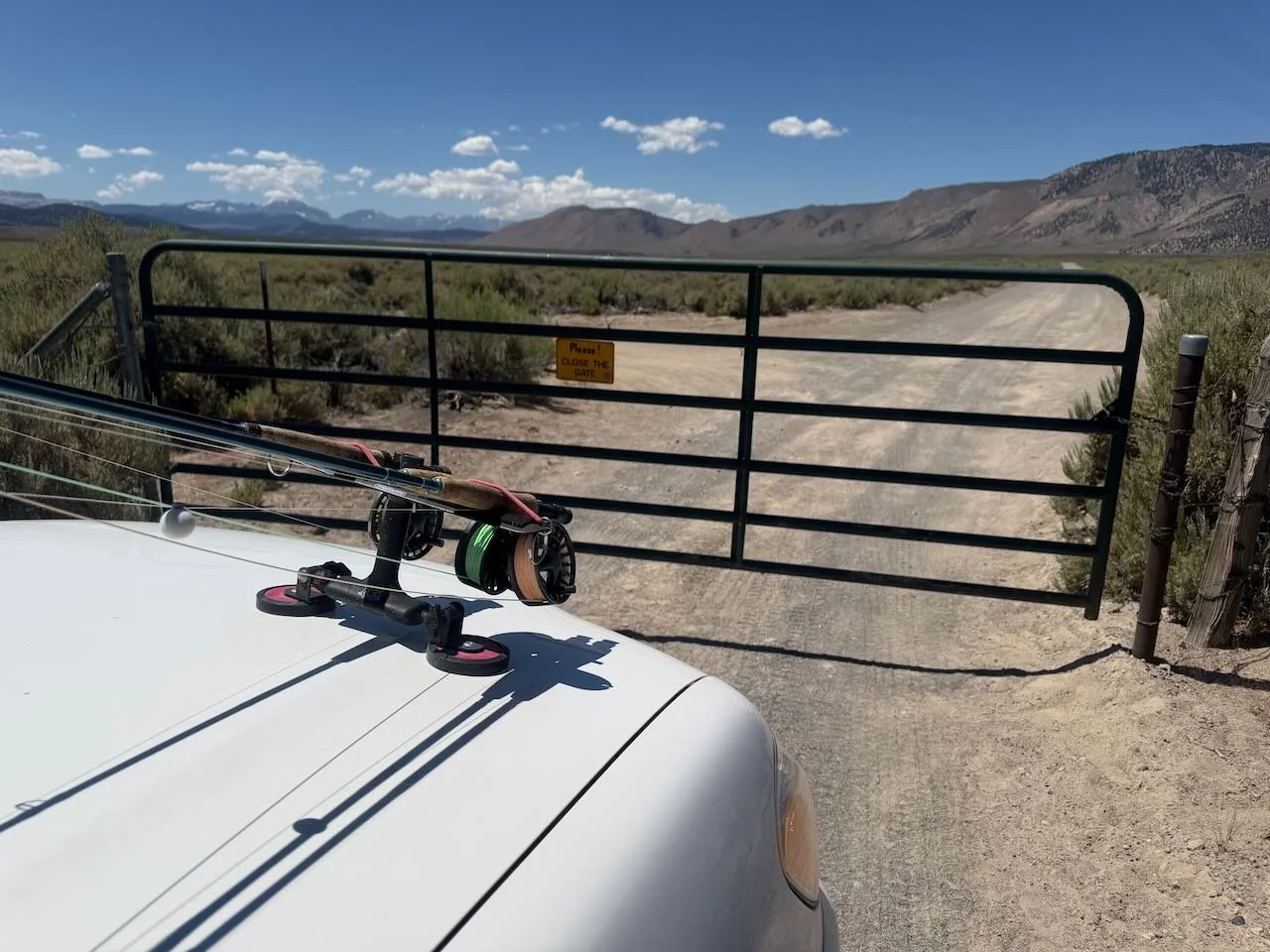
The gate on the main dirt road above Benton Crossing Road is closed and fly fishers need to open and close the gate as they drive through this gate to access waters upstream.

Hot Creek

Interpretive Site:

Easy access and early morning hatches have fly fishers dry fly fishing the Interpretive site. Be on the water by 8:00 A.M. or earlier to fish the caddis migration and the female dun trico hatch. For the caddis migration fish with a size 20 gray elk hair caddis, size 20 gray parachute caddis and size 20 X-caddis. The trico hatch starts with the female trico duns coming off the water by 8:30. Fish with size 20 female trico dun parachutes, size 20 female trico sparkle duns and size 20 blue wing olive parachutes. The key to success on the Interpretive site is to be on the water early, be rigged up when you get there and cast to rising fish with a drag free drift and set the hook when the trout take your flies.


Hot Creek and surrounding waters are in danger once again from KORE Mining resubmitting a drilling permit. Your voice is needed to stop KORE Mining from moving forward with exploratory drilling. For more information contact nohotcreekmine.com.

The Interpretive Site of Hot Creek is the perfect place to cast dry flies to rising trout.

Hot Creek

Canyon Section:

This time of the year is dry fly fishing time in Hot Creek Canyon. Be on the creek early rigged up with a dry and dry rig. Use a size 16 Adams parachute, size 16 elk hair caddis and a size 14 stimulator for the big dry fly. For the small caddis and mayflies fish with size 20 gray elk hair caddis, size 20 gray parachute caddis and size 20 X-caddis, size 20 female trico dun parachutes, size 20 female trico sparkle duns and size 20 blue wing olive parachutes. Fish the dry and dry rig in the tiny lanes in between the weed beds.

At high flows fly fishers cannot safely wade the lower Owens River and must fish from banks that are not inundated with tulles and willows.

Lower Owens River

Wild Trout Section:

Hot days of July on the lower Owens River is time to be on the river early and be done fly fishing by 10:00 A.M. or start fly fishing in the evening when the sun goes behind the Eastern Sierra. Fish with size 16 elk hair caddis, size 16 X-caddis and size 16 stimulators. For streamers use olive, tan and black streamers in size 6 or 10. Use wooly buggers, slumpbusters and muddler minnows. The only safe way to fish the river right now is to fish from the banks in those areas without willows and tulles.

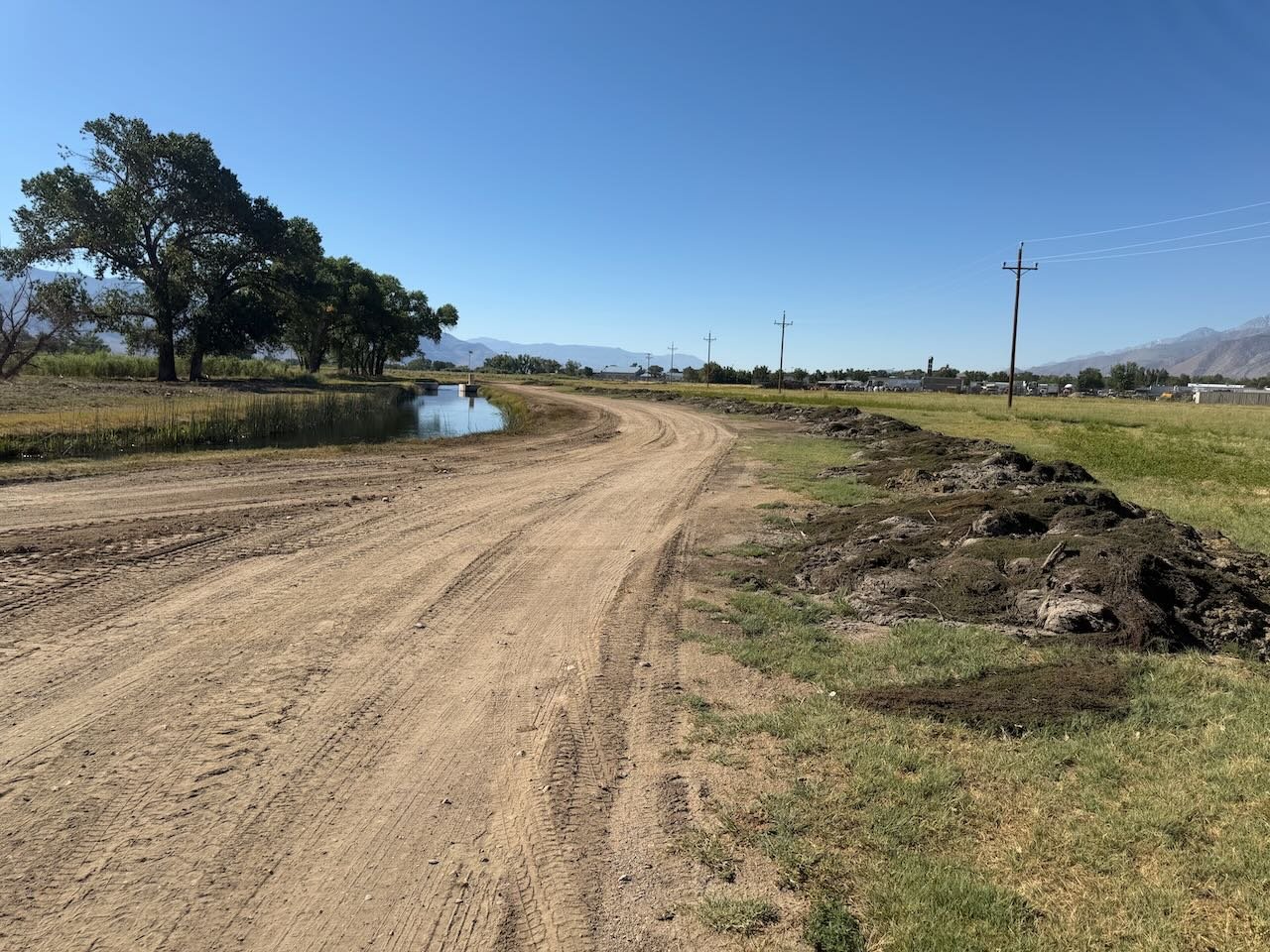
DWP has dredged Bishop Creek Canal and created some deeper runs and have removed a lot weed beds from the canal.

Bishop Creek Canal

Behind Bishop Veterinary Hospital:

DWP has dredged the canal and piled up the vegetation and mud along the dirt road that parallels the canal. If you are on the water early or late in the day be prepared for the mosquitoes. Caddis in the evening and mayflies in the mornings are the insects the trout are feeding on. For nymphs fish with size 18 bead head flash back pheasant tail nymphs, size 18 olive quilldigons, size 16 Duracell nymphs, size 16 bead head flash back gold ribbed hare’s ears, size 12 green/gold wire Prince nymphs and size 12 stoner nymphs. Steamers are fooling bass, stocked trout and wild brown trout. Use size 10 brown Landon Mayer’s jigged pine squirrel leeches, size 10 balanced leeches and size 10 wooly buggers.


High Altitude Creeks:

Golden trout are prized by fly fishers as they require an effort to access the high altitude waters that these fish inhabit.

Summer is the time to be exploring high altitude creeks for golden trout. The golden trout live in creeks above 8,000 feet. Days are much cooler at these elevations. This is bush whacking style of fishing with attractor dry flies. Fish with size 14 Sierra bright dots, size 14 Sierra Adams, size 14 orange stimulators and size 14 Adams parachutes. This is perfect water to be fishing with a Tenkara rod. This rod allows the fly fisher to easily dabble the dry fly on the surface of the water where the trout are looking for food. The golden trout are small, six to nine inches, but they are the prettiest trout found in the Eastern Sierra.

Sierra Bright Dot Fly Fishing Report 07-02-2026

Summer is here and so are the mosquitoes. Evenings and shadows are where the mosquitoes are hanging out. Make sure you have insect repellant!  It’s time to wet wade, but be prepared for cool days that require waders and sweatshirts. Now is the perfect time to be dry fly or dry and dropper fly fishing in the freestone creeks of the Eastern Sierra. Upper elevation lakes offer fly fishers a quiet fly fishing opportunity in a float tube. Mayflies, caddis and stoneflies are hatching and have the trout actively feeding on the substrate and on the surface.

Working dry flies in the freestone creeks that drain the canyons of the Eastern Sierra are producing wild brown trout, rainbow trout, brook trout and golden trout.


East Walker River

Miracle Mile Section:

Streamers have been producing browns and rainbows for fly fishers fishing with size 10 balanced leeches and size 10 Landon Mayer’s jigged pine squirrel leeches. Fish these with a dead drift right on the substrate or strip them around the obstacles in the river like rocks. Nymphing with size 18 olive quilldigons, size 18 bead head flash back pheasant tail nymphs, size 18 rainbow warriors, size 14 Duracell nymphs, size 16 bead head flash back gold ribbed hare’s ears and size 16 cream caddis nymphs. Key to success is covering water looking for trout that are rising to the hatching mayflies.

Dead drifting a micro leech is producing brown trout to 20 inches.

Upper Owens River

Above Benton Crossing Bridge:

Windy days have been good for nymphing. The wind blows the adults right off the water and the trout never have a chance to feed on them. Using size 18 bead head flash back pheasant tail nymphs, size 18 olive quilldigons, size 16 Duracell nymphs and size 16 bead head flash back gold ribbed hare’s ears is producing juvenile and resident rainbow and browns to 12 inches. On non windy days the trout are feeding on mayflies and caddis on the surface. Fish with size 18 blue wing olive parachutes, size 18 Adams parachutes, size 16 elk hair caddis, size 16 pale morning dun mayflies and size 16 little yellow stoneflies. The mosquitoes are out so be sure to wear clothes that cover the skin and wear insect repellant.

Casting upstream with a dry fly or nymph is fooling the juvenile and resident rainbows and browns. in the upper Owens River

Hot Creek

Interpretive Site:

Hot Creek and surrounding waters are in danger once again from KORE Mining resubmitting a drilling permit. Your voice is needed to stop KORE Mining from moving forward with exploratory drilling. For more information contact nohotcreekmine.com.


A caddis migration and female trico hatch are how fly fishers are starting their days on the creek. With the caddis migration the caddis are bad fliers and quite often crash on the water offering the trout an easy meal. Use size 20 gray elk hair caddis, size 20 gray X-caddis and size 20 gray parachute caddis. The female trico dun hatch starts about the same time as the caddis migration. Use a size 20 female trico dun parachute, a size 20 female trico sparkle dun and a size 20 blue wing olive parachute. About an hour or an hour and a half into the trico hatch look for the spinner fall. This is when the female tricos die on the water after egg laying and offer the trout an easy meal. Fish with a size 22 trico spinner pattern on 6X tippet with a drag free drift. If you have trouble seeing the tiny trico patterns on the water fish with a dry and dry rig. Use a size 16 Adams parachute for the bigger dry fly.

The weed beds of the Hot Creek Canyon are at full growth and fly fishers are fishing trico duns and gray caddis patterns on the surface in the tiny slots in between the weed beds.

Hot Creek

Canyon Section:

Fly fishers are taking advantage of the hatching mayflies and caddis flies by fishing dry flies in and around the weed beds. The mornings are starting off with tricos and a caddis migration. These insects are starting early and fly fishers should be on the water by 8:00 A.M. rigged with a caddis or trico dry fly. Use size 20 gray elk hair caddis, size 20 gray X-caddis, size 20 gray parachute caddis, a size 20 female trico dun parachute, a size 20 female trico sparkle dun, a size 20 blue wing olive parachute and a size 22 trico spinner.

Summer is the perfect time to be wet wading and fishing a dry and dropper rig in the Owens River Gorge.

Owens River Gorge

Middle Power Plant:

With the heat of summer being here it’s the perfect time to be wet wading in the Owens River Gorge. Fly fishers using a dry and dropper rig are producing wild brown trout from eight to 14 inches. Best time to fish in the gorge is late in the afternoon so that you don’t have to deal with the  radiant heat from the rocks and the pavement of the road on the hike out. Stinging nettles are everywhere and wearing shorts is not advised. Use size 16 Adams Parachutes, size 16 elk hair caddis and size 14 stimulators for the dry fly. For the nymphs use size 16 green/gold brassies, size 14 Duracell nymphs, size 16 rainbow warriors, size 16 bead head flash back gold ribbed hare’s ears, size 18 bead head flash back pheasant tail nymphs and size 18 olive quilldigons.

The lower Owens River is flowing around 400 CFS and fly fishers are fishing spots where they can cast from the banks of the river .

Lower Owens River

Wild Trout Section:

Heat of the day makes fly fishing on the lower Owens River uncomfortable. Fish before 10:00 or after 6:00 in the evening. There are a couple of spots in the wild trout section on the river where there two channels. Fishing these spots means fly fishers are not battling the full force of the river. For streamers use olive, tan and black streamers in size 6 or 10. Use wooly buggers, slumpbusters and muddler minnows. For dry flies use size 16 or 18 elk hair caddis, size 16 little yellow stones and size 16 pale morning duns.

Pulling streamer and fishing with nymphs under an indicator or with a Euro rig is what is producing wild brown trout and stocked rainbows.

Bishop Creek Canal

Behind Bishop Veterinary Hospital:

Mornings and evenings are offering fly fishers the most comfortable time to be on the water fly fishing. This is also the times when you will find the hatches. The mosquitoes are out at night so be sure to wear clothes that cover skin and wear insect repellant.  Mayflies in the mornings and caddis in the evening are the insects the trout are looking for to feed on. The trout are taking streamers and fly fishers should use size 10 brown Landon Mayer’s jigged pine squirrel leeches, size 10 balanced leeches and size 10 wooly buggers. For nymphs fish with size 18 bead head flash back pheasant tail nymphs, size 18 olive quilldigons, size 16 Duracell nymphs, size 16 bead head flash back gold ribbed hare’s ears, size 12 green/gold wire Prince nymphs and size 12 stoner nymphs.


High Altitude Creeks:

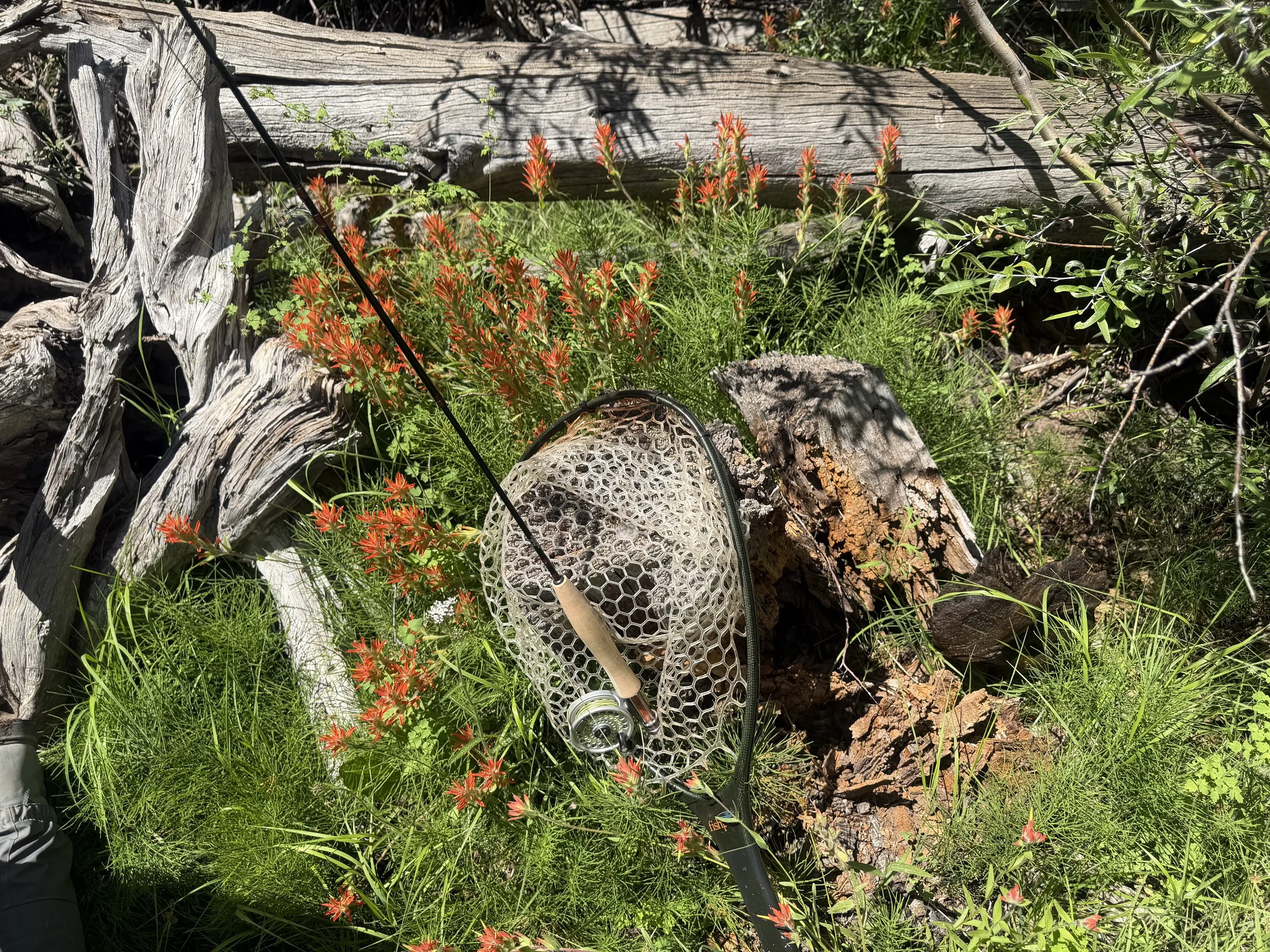
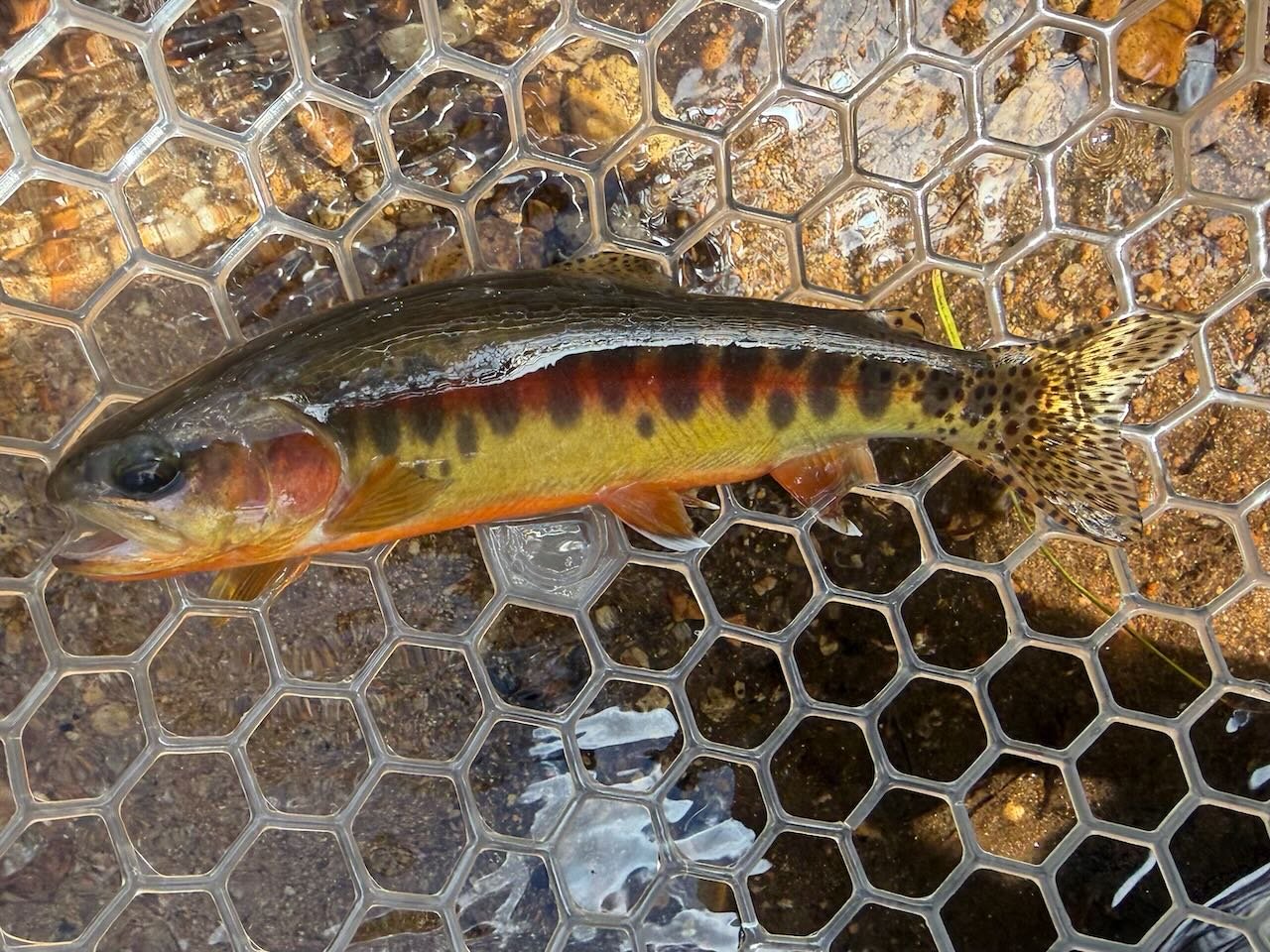
A size 14 Sierra Bright Dot fooled this tiny, but pretty golden trout from an Eastern Sierra creek at 10,000 feet.

These are the creeks that drain the canyons of the Eastern Sierra. Fishing these creeks at or above 8,000 feet will produce golden trout in the right creeks. This is bush whacking style of fly fishing with an attractor dry fly. The golden trout are small, six to nine inches, but they are the prettiest trout found in the Eastern Sierra. This is perfect water for using a Tenkara rod. This is not typical fly casting water. This is using the leader and tippet to dabble the fly on the surface of the creek in the pools where the golden trout hang out. The mosquitoes are out so be sure to wear clothes that cover skin and wear insect repellant. Use size 14 Sierra bright dots, size 14 Sierra Adams, size 14 Adams parachutes and size 14 royal stimulators.

Sierra Bright Dot Fly Fishing Report 06-25-2026

Wet wading, hatches and dry fly fishing is what summer fly fishing is all about. A dry and dropper is the perfect way to fish the freestone creeks draining the canyons of the Eastern Sierra. Caddis are the hatch of summer along with mayflies and stoneflies. Upper elevation lakes are the perfect place to spend an afternoon floating around in cool water while pulling streamers, fishing dry flies and using a dry and dropper rig. Mosquitoes are showing up and are most active early and late in the day.

Trout rising to caddis in the afternoon winds on the upper Owens River is a perfect summers day of fly fishing.

East Walker River

Miracle Mile Section:

Streamers have been producing browns and rainbows for fly fishers fishing with size 10 balanced leeches and size 10 Landon Mayer’s jigged pine squirrel leeches. Fish these with a dead drift right on the substrate or strip them around the obstacles in the river like rocks. Nymphing with size 18 olive quilldigons, size 18 bead head flash back pheasant tail nymphs, size 18 rainbow warriors, size 14 Duracell nymphs, size 16 bead head flash back pheasant tail nymphs and size 16 cream caddis nymphs. Key to success is covering water looking for trout that are rising to the hatching mayflies.

Nymphing in the pockets created by rock and boulders in the East Walker River is producing trout for fly fishers fishing under an indicator or with a Euro rig.

Upper Owens River

Above Benton Crossing Bridge:

Insect hatches are bringing the trout to the surface to feed on caddis and mayflies. Caddis are being blown onto the surface in the afternoon winds and the trout are taking advantage of these caddis. Fish with size 18 elk hair caddis, size 18 X-caddis and size 18 parachute caddis. Cast your flies close to the banks where the wind is blowing the caddis onto the wind. Mid-day hatches of mayflies are bringing trout to the surface. Fish with a size 18 blue wing olive parachutes, size 18 olive sparkle duns and size 18 Adams parachutes. Nymphing with an indicator or a Euro rig is the way to present your nymphs to the trout. Fish size 18 bead head flash back pheasant tail nymphs, size 18 olive quilldigons, size 16 Duracell nymphs, size 16 bead head flash back gold ribbed hare’s ears, size 18 Frenchie’s and size 16 rainbow warriors in the pockets and riffles. The mosquitoes are out so be sure to wear clothes that cover the skin and wear insect repellant.

Working nymphs and dries in the pockets and riffles is producing wild brown and rainbow trout to 12 inches in the upper Owens River.

Hot Creek

Interpretive Site:

Hot Creek and surrounding waters are in danger once again from KORE Mining resubmitting a drilling permit. Your voice is needed to stop KORE Mining from moving forward with exploratory drilling. For more information contact nohotcreekmine.com.

Mornings on the Interpretive Site of Hot Creek starts with a caddis migration. Just like salmon and steelhead migrate upstream to reproduce so do caddis. Caddis are poor fliers and often crash on the water during the morning caddis migration and the trout take advantage of the caddis on the surface by feeding on them. Use size 20 gray elk hair caddis, size 20 gray parachute caddis and size 20 X-caddis to fool the trout feeding on the crashing on the water caddis. As the caddis migration is taking place look for hatching female tricos. Use size 20 female trico parachute duns, size 20 female trico dun sparkle duns and size 20 blue wing olive parachutes. The caddis hatch is coming off late in the day. Show up about the time the sun is going behind the Sierra peaks to fish the evening caddis hatch.

Fishing trico and caddis patterns in the morning on the Interpretive Site in the pools where the trout are feeding is producing trout for fly fishers.

Hot Creek

Canyon Section:

With a steeper gradient in the canyon the trout feed more reactionary. This makes the canyon a tad easier to fish. Nymphing is harder with the increased size of the weed beds. If you’re nymphing use size 18 olive quilldigons, size 18 bead head flash back pheasant tail nymphs, size 18 Frenchie’s and size 18 Duracell nymphs. The caddis migration starts in the morning and fishing with gray size 20 elk hair caddis, X-caddis and parachute caddis will produce trout feeding on the migrating trout as the caddis crash on the water as they are bad flies. As the caddis migration is ongoing look for the trico mayfly hatch to start. It starts with the female tricos hatching and then the females reproduce and then fall dead on the water creating a trico spinner fall. Use size 20 female dun parachute tricos, size 20 female trico dun sparkle duns, size 20 blue wing olive parachutes and size 20 trico spinners.

Working the pools along the roadside in the middle Power Plant section is producing wild brown trout to 12 inches on a dry and dropper rig.

Owens River Gorge

Middle Power Plant:

The walk out of the Owens River Gorge in the middle of the day is tough in the mid-90’s that we are experiencing right now. The radiation of the sun on the rocks and the pavement is baking the fly fishers waling out in the afternoons. Walking out after the sun goes behind the canyon wall is a more comfortable walk out. When the road gets close to the river start fishing with a dry and dropper working upstream covering each pocket or pool with your flies. Once you’ve completely covered the pool walk backout to the road and walk upstream looking for the next pocket to fly fish in. Use size 16 Adams Parachutes, size 16 elk hair caddis and size 14 stimulators for the dry fly. For the nymphs use size 16 green/gold brassies, size 14 Duracell nymphs, size 16 rainbow warriors, size 16 bead head flash back gold ribbed hare’s ears, size 18 bead head flash back pheasant tail nymphs and size 18 olive quilldigons.

Fishing from the banks of the lower Owens River with dry flies or streamers is producing a few trout in the mornings for fly fishers.

Lower Owens River

Wild Trout Section:

With the high flows fly fishers need to fish from the banks. There are very few spots that offer fly fishers uninhibited banks on the lower Owens River. Fish with streamers or dry flies to avoid hanging up on the obstructions on the substrate of the river. For nymphs fish with size 16 bead head flash back gold ribbed hare’s ears, size 16 Duracell nymphs, size 18 olive quilldigons, size 18 bead head flash back pheasant tail nymphs and size 12 stoner nymphs. For streamers use olive, tan and black streamers in size 6 or 10. Use wooly buggers, slumpbusters and muddler minnows.

It’s hot during the day and fly fishers will find the fish feeding early in the morning and late in the evening.

Bishop Creek Canal

Behind Bishop Veterinary Hospital:

Mid-day temperatures in the 90’s are keeping most fly fishers off the water. Fly fishers working the canal in the mornings before 10:00 A.M. with streamers and nymphs are finding a few wild brown trout and stocked rainbows taking their flies. For nymphs fish with size 18 bead head flash back pheasant tail nymphs, size 18 olive quilldigons, size 16 Duracell nymphs, size 16 bead head flash back gold ribbed hare’s ears, size 12 green/gold wire Prince nymphs and size 12 stoner nymphs. For streamers use size 10 brown Landon Mayer’s jigged pine squirrel leeches, size 10 balanced leeches and size 10 wooly buggers. The mosquitoes are out at night so be sure to wear clothes that cover skin and wear insect repellant.

Sierra Bright Dot Fly Fishing Report 06-18-2026

Summer heat is here. With the heat look for insect activity first thing in the morning and last thing at night. Mayflies, stoneflies and caddis flies are the insects the trout are feeding on the substrate and on the surface. Mosquitoes are showing up and are most active early and late in the day. It’s wet wading time on most Eastern Sierra waters. This is a great time to be using float tubes in upper elevation lakes. The freestone creeks that drain the Eastern Sierra are prime for a dry and dropper rig.

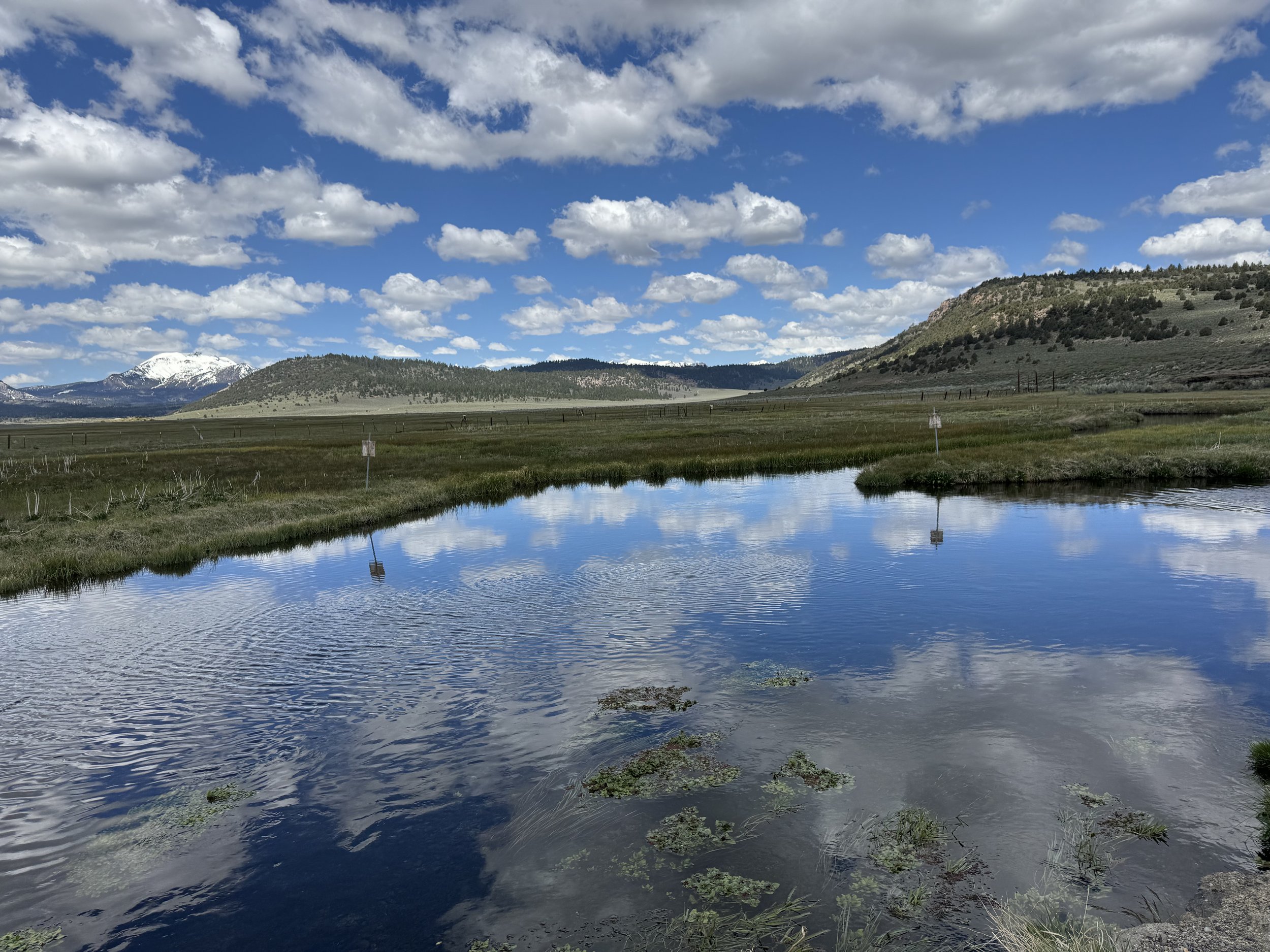
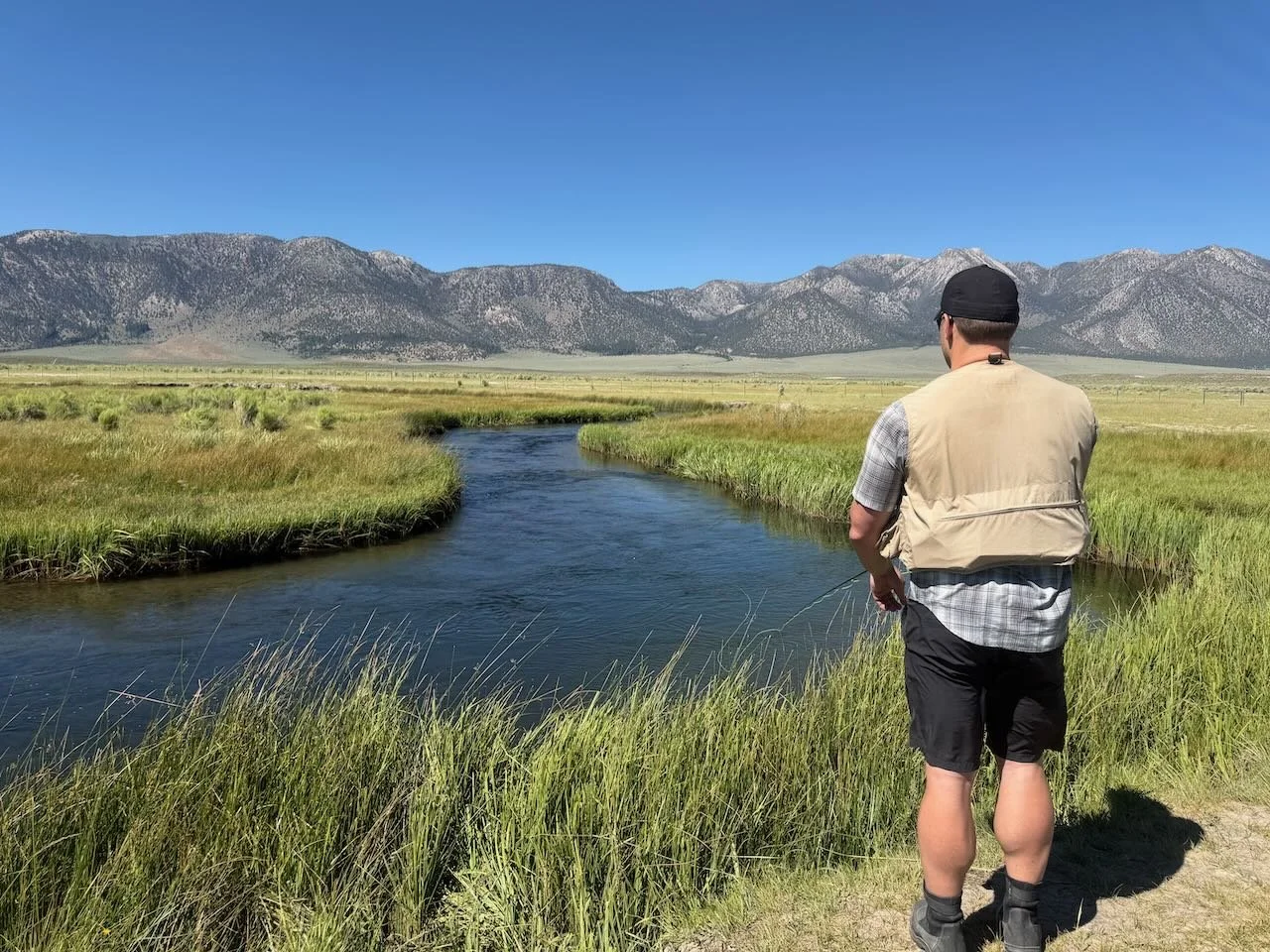
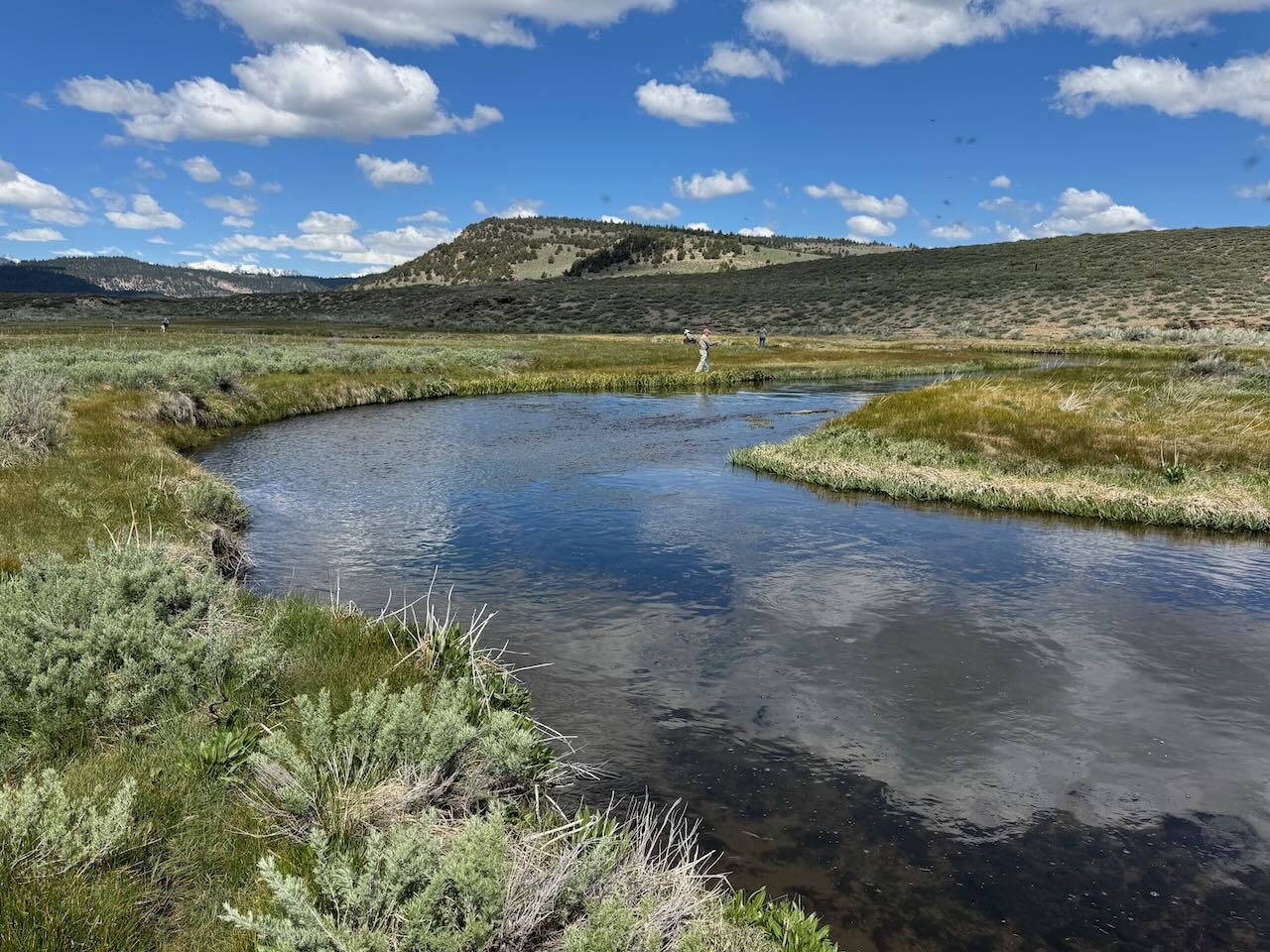
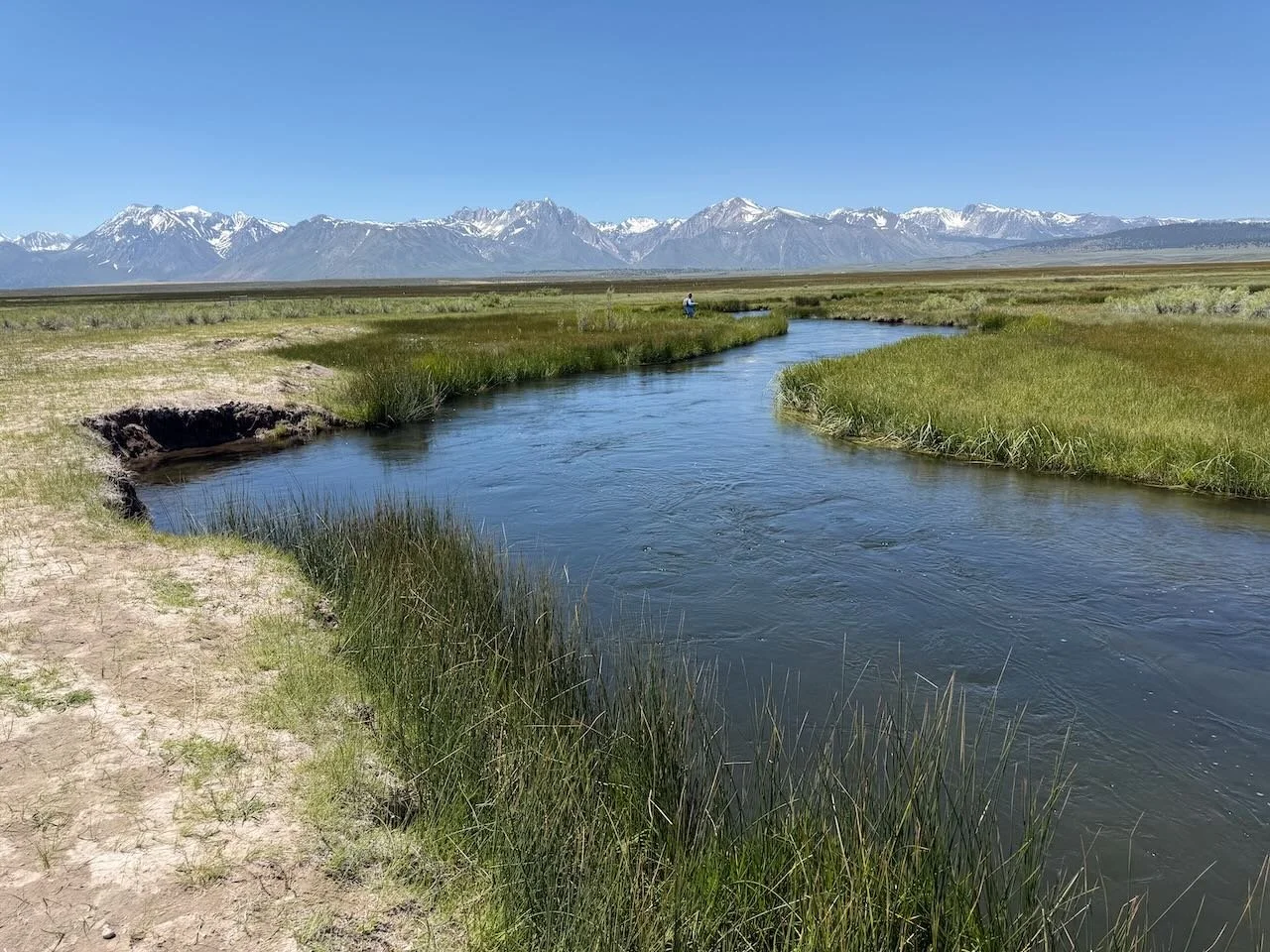
Summers in a meadow watching the river flow by is a great way to learn what the trout are doing in the river and how to fly fish for them.

East Walker River

Below the Miracle Mile Section:

Fishing has been slow with nymphs and dries as there has not been much of a mayfly or caddis hatch during the day. For nymphs use size 16 bead head flash back gold ribbed hare’s ear, size 14 Duracell nymphs,  size 18 bead head flash back pheasant tail nymph, size 18 olive quilldigons, size 18 green/gold brassies, size 14 copper John’s and size 12 stoner nymphs. Dead drifting and stripping a size 6 articulated goldie, size 10 Landon Mayer’s jigged pine squirrel leech, size 10 black and blue balanced leeches and size 10 olive balanced leeches is fooling wild rainbows and browns from 10 inches to 20 inches. Fish these leeches in and around the obstacles in the river like large rocks and through the deeper holes.

Fishing streamers around the obstacles that the trout are holding behind is where you will find 10 to 20 inch trout willing to take leech patterns.

Upper Owens River

Above Benton Crossing Bridge:

Nymphing has been the most productive method of fly fishing the upper Owens River right now for six to 16 inch wild rainbows and browns. Nymphing under an indicator or with a Euro rod with size 18 olive quilldigons, size 18 bead head flash back pheasant tail nymphs, size 16 bead head flash back gold ribbed hare’s ears, size 18 tiger midges, size 18 zebra midges and size 12 stoner nymphs is fooling the wild trout. The hatches have been inconsistent, but when you see fish rising switch to a dry fly and fish with size 18 Adams parachutes, size 18 blue wing olive parachutes, size 16 PMD parachutes and size 16 elk hair caddis. For those throwing size 6 and 10 wooly buggers, Hornberg’s, and slumpbusters are moving a few rainbows and browns to 18 inches. The mosquitoes are out so be sure to wear clothes that cover the skin and wear insect repellant.

Working upstream with dries and nymphs thoroughly covering the water is how you will catch the wild trout in the upper Owens River.

Hot Creek

Interpretive Site:

Hot Creek and surrounding waters are in danger once again from KORE Mining resubmitting a drilling permit. Your voice is needed to stop KORE Mining from moving forward with exploratory drilling. For more information contact nohotcreekmine.com.


Early in the morning the trout are feeding on caddis and mayflies. Get to the creek around 8:00 A.M. rigged with a size 20 gray elk hair caddis, size 20 gray parachute caddis and size 20 gray X-caddis. The caddis are migrating upstream in the morning and since they are poor fliers they crash on the water and the trout are feeding on them. If you want to fish the caddis hatch show up on the creek around the time the sun goes behind the Eastern Sierra peaks. During the caddis migration is the start of trico hatch. The female tricos are hatching in the morning and the hatch is in full swing by 8:30 A.M. Use size 20 female trico dun parachutes, size 20 female trico dun sparkle duns and size 20 blue wing olive parachutes.

The lower Canyon Section of Hot Creek offers riffle sections where the fish have to feed reactively and fly fishers catch more fish.

Hot Creek

Canyon Section:

Nymphing in the canyon is getting tough as it is hard to drift nymphs in Hot Creek Canyon without hanging up on the weed beds which are quickly inundating the creek. Best thing to do is float dry flies in the tiny six to eight inch lanes between the weed beds. Start the morning fishing with size 20 gray elk hair caddis, size 20 gray X-caddis and size 20 gray parachute caddis. Once you see the mayflies on the water start fishing with trico female duns and spinner patterns. Use size 22 trico spinners, size 20 female dun trico parachutes and size 20 blue wing olive parachutes. When the hatches are over it’s time to go find another creek or river to fly fish.

Owens River Gorge in the evening offers dry fly fishing and is a slightly cooler walk out after the fly fishing is done.

Owens River Gorge

Upper Power Plant:

A way to beat the heat walking out of the Owens River Gorge is to come out late in the evening after the sun has disappeared from the canyon. Upper Power Plant is best fished by getting in the river and wading upstream. Fishing a dry and dropper rig is producing wild brown trout from eight to 14 inches. For the dry fly use size 16 Adams parachutes, size 16 yellow stimulators, size 14 Royal Wulff’s and size 16 elk hair caddis. For the nymphs fish with size 16 green/gold brassies, size 14 Duracell nymphs, size 16 rainbow warriors, size 16 bead head flash back gold ribbed hare’s ears, size 18 bead head flash back pheasant tail nymphs and size 18 olive quilldigons. If your planning on using waders pack them in and out and put them on when your reach the river. Now is the perfect time to be wet wading. Watch out for rose bushes, stinging nettles and rattlesnakes. It’s hot out and make sure you’re carrying enough water to keep you hydrated in the heat of summer.

At flows of 400 CFS and banks lined with tulles and willows; fly fishers need to find spots where they can fly fish from the banks.

Lower Owens River

Wild Trout Section:

Flows continue to fluctuate around 400 CFS which is beyond safe for wading in the river. For fly fishers wanting to fly fish in the lower Owens River fish from the few banks that are not overgrown from tulles and willows. Checking the DWP lower Owens River flows before going out to the river is crucial to knowing how the river is flowing. Check out the flows at: http://wsoweb.ladwp.com/Aqueduct/realtime/norealtime.htm. Day time temperatures have been in the high 90’s and it’s not fun being on the river fishing in the heat. Try fishing the caddis ovipositing from the time the sun goes behind the Sierra peaks and the hatch stops. Fish with size 16 elk hair caddis and fish it by skittering a caddis.

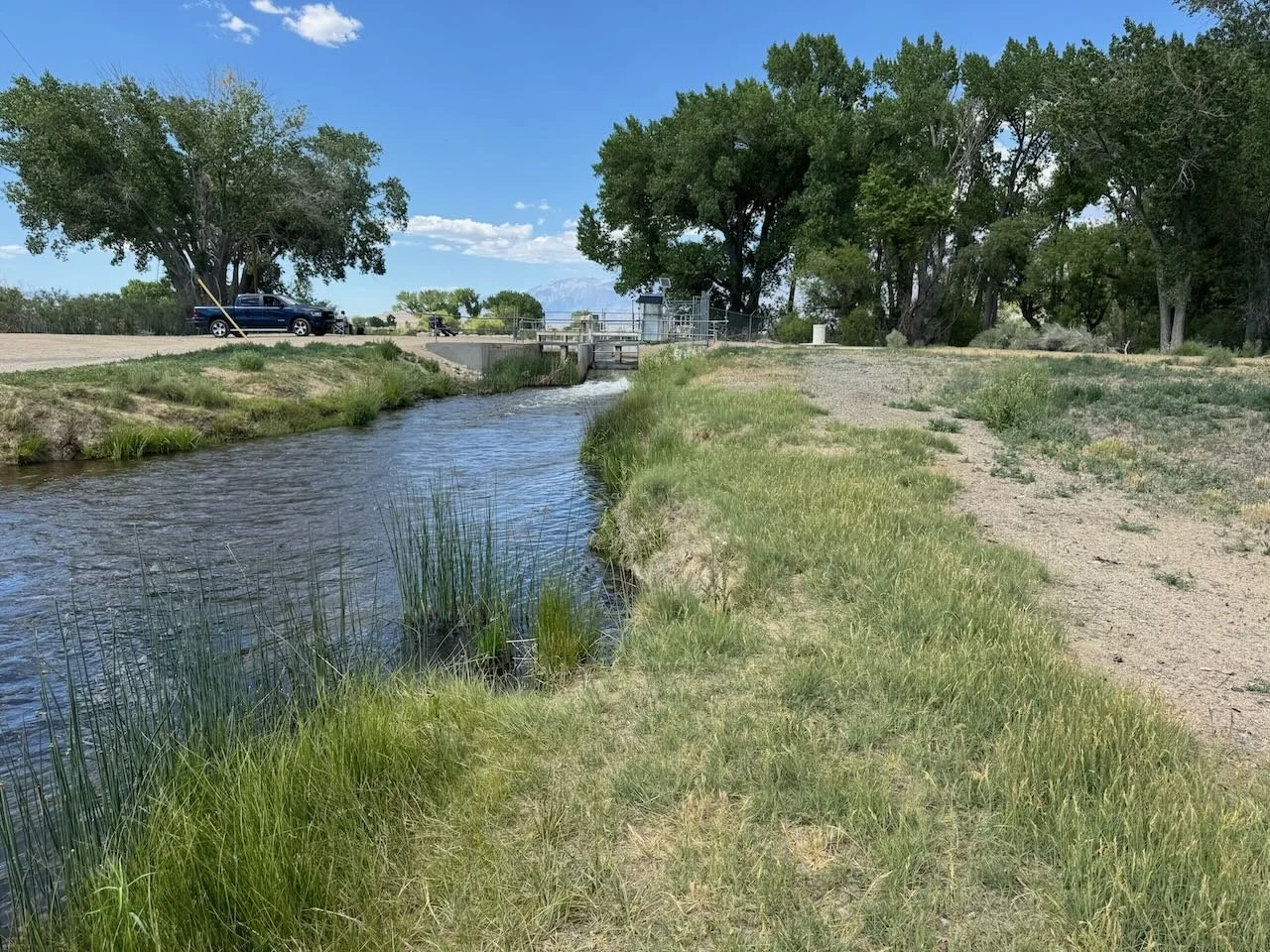
Bishop Creek Canal comes out of Bishop Creek and the fast water right below the weir is a good place to fish nymphs under an indicator or with a Euro Rig.

Bishop Creek Canal

Behind Bishop Veterinary Hospital:

There are a few fish to be caught during the day if you’re willing to fish in the heat. Best fishing is to skitter a caddis in the canal to the trout feeding on the ovipositing caddis in the evening when the light is off the canal. I park on the canal and wait for the sun to disappear over the peaks of the Eastern Sierra. Once the sun is off the water cast up stream and let a size 16 elk hair caddis dead drift along the opposite bank. Once it drags across the creek slowly strip it upstream. If the wind picks the fly off the water and lands it kind of hard back on the water let it drift downstream a foot by giving a foot of fly line through the end of the rod. If nothing hits the fly recast and work the caddis by dead drifting and skittering it again. The mosquitoes are out at night so be sure to wear clothes that cover skin and wear insect repellant.

Sierra Bright Dot Fly Fishing Report 06-11-2026

Weather has not quite settled into summer heat as there are still some storms moving through the Eastern Sierra. So plan on it being warm, but bring the jackets along just in case you need it. Dry fly fishing is just starting as hatching insects like caddis, mayflies and stoneflies are bringing the trout to the surface. Coming soon will be pale morning dun mayflies, little yellow stoneflies and evening caddis hatches.

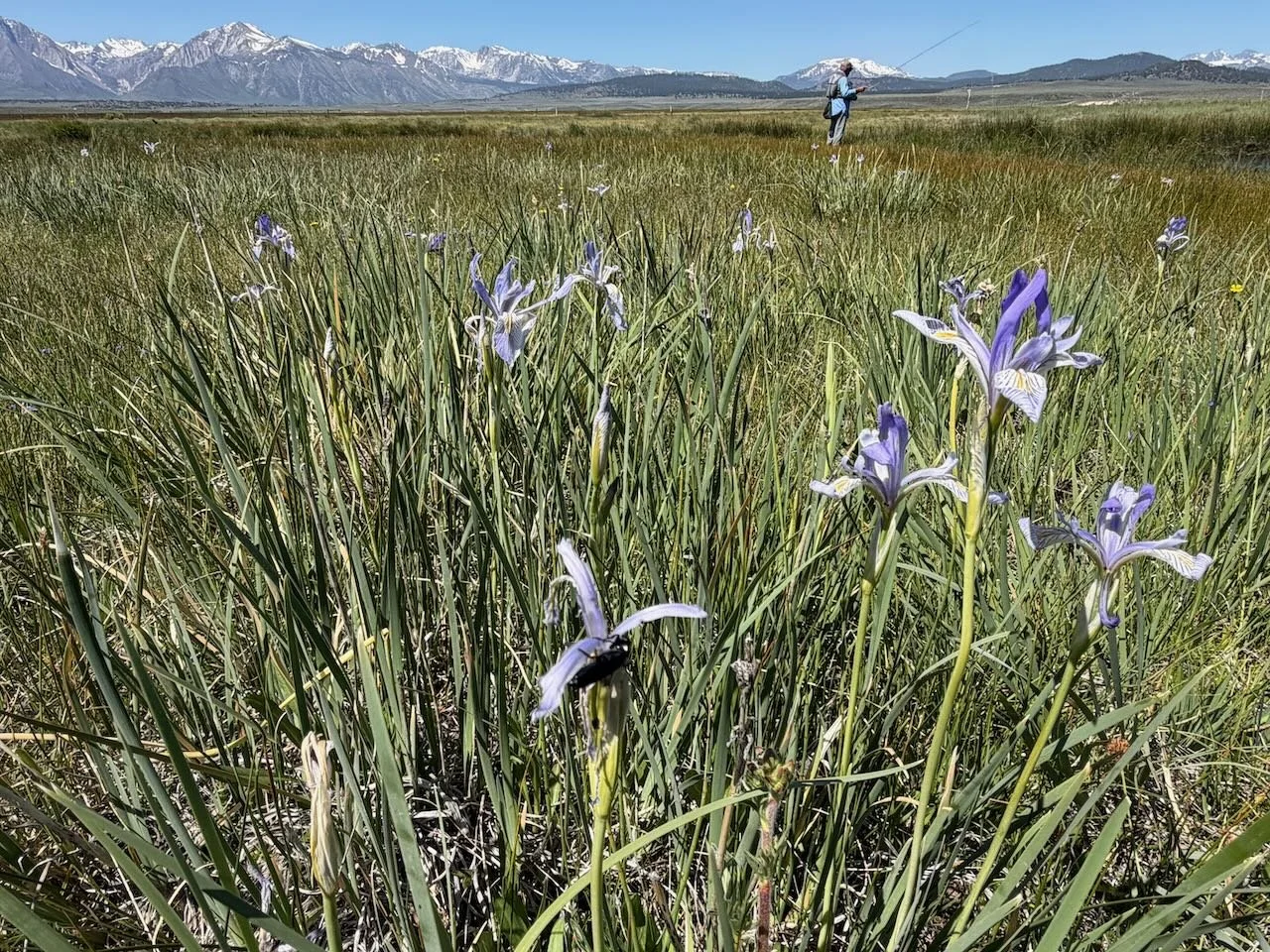
Flowers of spring are blooming and hatches of pale morning duns, little yellow stoneflies and evening caddis hatches will be feeding the trout on the surface of Eastern Sierra waters.

East Walker River

Miracle Mile Section:

Mayfly hatches are feeding the trout on the substrate and on the surface. On the surface fish with size 18 blue wing olive parachutes, size 18 olive sparkle duns and size 18 Adams parachutes. On the substrate fish with size 18 bead head flash back pheasant tail nymphs, size 18 olive quilldigons, size 18 Frenchie’s and size 12 stoner nymphs. Fly fishers looking for trophy trout in the East Walker River are pulling streamers. Use size 6 and 10 balanced leeches, mini jig leeches and an articulated goldie.

Nymphing the Miracle Mile section of the East Walker River is producing trout if you are in a section where the trout are feeding on the hatching mayflies.

Upper Owens River

Above Benton Crossing Bridge:

The hatchery run of cutthroat trout in the upper Owens River is done for the season. Fly fishers are nymphing for resident and juvenile rainbow and brown trout from six to 12 inches. There is a sporadic hatch of mayflies in the early afternoon. For fly fishers nymphing under an indicator or with a Euro rig the key to success is to thoroughly covering the water with drag free drifts. Using size 18 bead head flash back pheasant tail nymphs, size 18 olive quilldigons, size 18 Frenchie’s, size 16 hot spot pheasant tail nymphs, size 14 Duracell nymphs, size 16 bead head flash back gold ribbed hare’s ears and size 12 stoner nymphs are fooling the rainbows and browns. For those throwing size 6 and 10 wooly buggers, Hornberg’s, and slumpbusters are moving a few rainbows and browns to 18 inches. The mosquitoes are out so be sure to wear clothes that cover skin and wear insect repellant.

Working the pockets and riffles with mayfly nymphs is producing six to 12 inch resident rainbows and browns.

Hot Creek

Interpretive Site:

Hot Creek and surrounding waters are in danger once again from KORE Mining resubmitting a drilling permit. Your voice is needed to stop KORE Mining from moving forward with exploratory drilling. For more information contact nohotcreekmine.com.


The trico hatch and the blue wing olive hatch has fly fishers fishing dry flies for the rising rainbows and browns. Mornings are starting with the caddis migration upstream. The trico hatch starts right around the same time as the caddis emergence. You will see a few blue wing olive mayflies in the mix. This is classic Hot Creek Interpretive Site dry fly fishing. Start your morning around 8:00 A.M. fishing with a size 20 parachute caddis, size 20 elk hair caddis, size 20 X-caddis. As the caddis migrate upstream to find a spot to lay their eggs some of the caddis crash on to the water as the caddis are poor flyers and the trout take advantage of an easy meal. The female trico hatch starts at about the same time that the caddis are starting their migration. The female duns have an olive body with a black thorax. Use a size 20 female dun trico parachute, size 20 trico sparkle dun, and size 20 blue wing olive parachutes. The caddis hatch starts in the late afternoon to dusk for those fly fishers fishing the evening bite.

The flat water sections of Hot Creek Interpretive Site are perfect for floating tiny dry flies like tricos and caddis

Hot Creek

Canyon Section:

The weed beds are growing with the increase of day light. It’s hard to drift nymphs in and around the weed beds. Dry flies can be cast into the narrow lanes between the weed beds. There are spots in the canyon section that can be nymphed. Fish with size 18 olive quilldigons, size 18 bead head flash back pheasant tail nymphs, size 18 Frenchie’s, size 16 bead head flash back gold ribbed hare’s ears and size 12 stoner nymphs. For the dry flies fish with size 20 parachute caddis, size 20 elk hair caddis, size 20 X-caddis, size 20 female dun trico parachute and size 20 trico sparkle duns. The evening caddis hatch can be a lot of fun to fish as long as you can see your flies in the glare of the sun on the Creek.


The walk in and out of the gorge is the summer time can be brutal as the heat from the sun radiates off the rocks and asphalt.

Owens River Gorge

Middle Power Plant:

As the heat of summer warms up the Owens River Gorge the hike in and out of the gorge can be hot. There are lots of rose bushes and stinging nettles to deal with on the banks of the Owens River Gorge and fly fishers should be aware where they step as there are rattle snakes to contend with. The trout are feeding on mayflies and stoneflies. Fishing a dry and dropper is a great way to fly fish the river in the gorge. Use size 16 Adams parachutes, size 16 stimulators, size 12 Chernobyl ants and size 16 elk hair caddis for the dry flies. For the nymphs fish with size 16 zebra midges, size 16 tiger midges, size 16 green/gold brassies, size 14 Duracell nymphs, size 16 rainbow warriors and size 12 stoner nymphs. Now is the perfect time to be wet wading in the Owens River Gorge.

Fly fishers need to find areas where they can fly fish from the banks of the lower Owens River as flows are too high to be wading the river.

Lower Owens River

Wild Trout Section:

It’s unsafe to wade the river at flows over 300 CFS. The river has been flowing at over 400 CFS. I recommend checking the DWP lower Owens River flows before going out to the river

at: http://wsoweb.ladwp.com/Aqueduct/realtime/norealtime.htm. The flows are fluctuating. Nymphing the river at these flows fly fishers will lose to many rigs and flies. For those willing to nymph the river from the bank use size 16 bead head flash back gold ribbed hare’s ears, size 18 bead head flash back pheasant tail nymphs, size 16 Duracell nymphs and size 16 hot spot pheasant tail nymphs. Evening caddis hatches are the time to be on the river dry fly fishing with size 16 elk hair caddis.

A mid-day mayfly hatch is bringing a few trout to the surface for fly fishers fishing with size 18 Adams parachutes.

Bishop Creek Canal

Behind Bishop Veterinary Hospital:

A mid-day mayfly hatch has a few trout rising to the surface to feed on the emerging mayflies. Fish with a size 18 blue wing olive parachute, size 18 olive sparkle dun and size 18 Adams parachute. Best fly fishing right now is when the sun goes down behind the Eastern Sierra Mountains with a size 16 elk hair caddis. Once the sun is off the canal the caddis come out to lay their eggs. Fish the caddis quartering upstream by casting to the opposite bank. Let the fly drag across the creek and then slowly strip it up stream. This is how you skitter a caddis. A very productive method of fishing an elk hair caddis during the evening caddis ova posting. The mosquitoes are out at night so be sure to wear clothes that cover skin and wear insect repellant.