
Summers are hot in the Owens Valley. The cure is to go up in elevation and find an altitude that is comfortable to fish. For me this is fishing the creeks that drain every canyon from Lone Pine to the Nevade border north of Bridgeport. It’s the time to be fishing with dry flies and dry and dropper rigs. Be prepared for summer showers by carrying a rain jacket and a warm layer or two to keep you warm when the wind blows through your wet clothes. Mosquitoes are prevalent on these high altitude creeks so be sure to have insect repellant with you. Caddis, mayflies and midges are the insects feeding the fish on the surface and on the substrate. Volunteer hoot owl regulations are in effect on Crowley Lake, upper Owens River, East Walker River and Bishop Creek Canal.
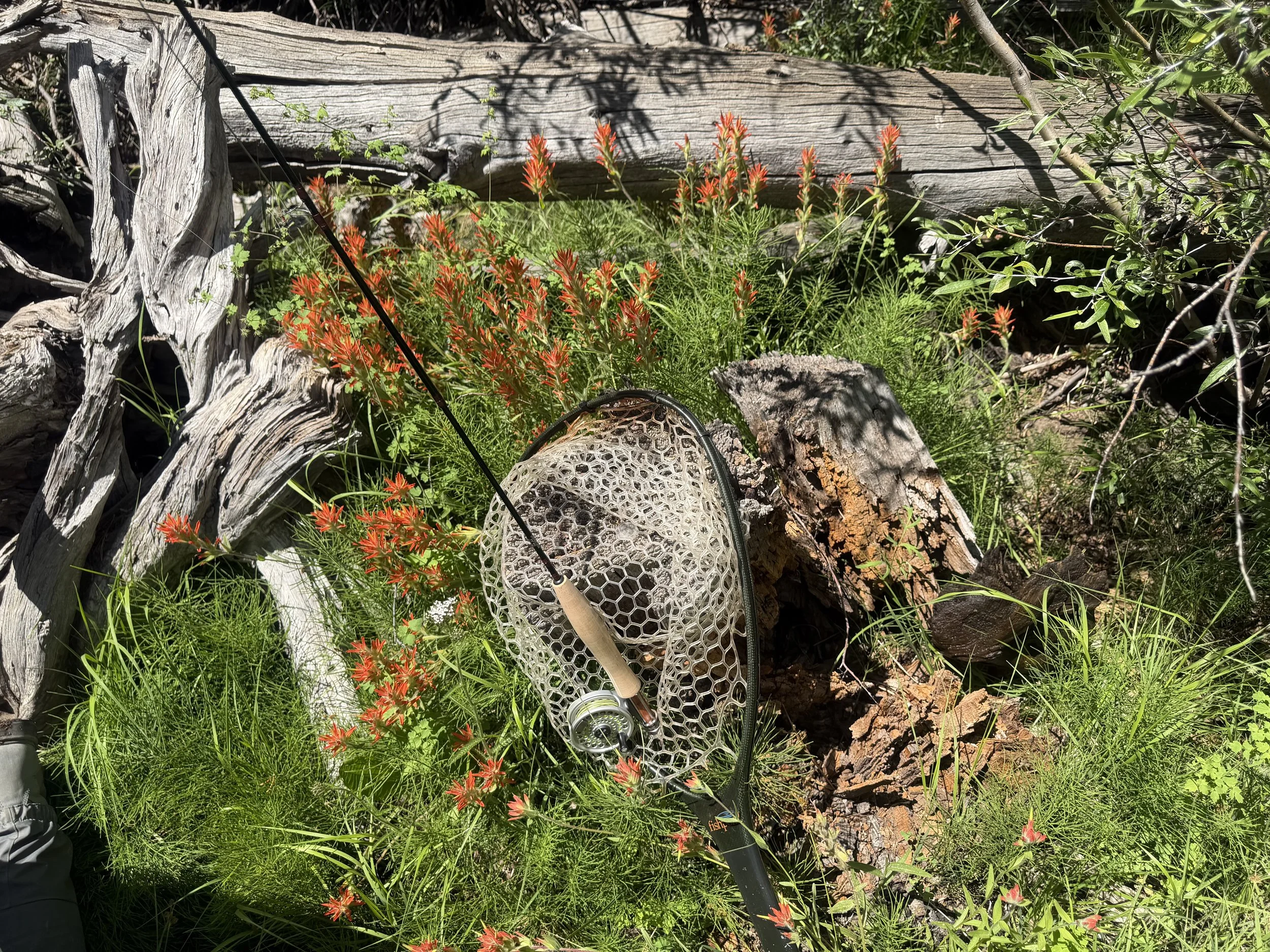
Summer flowers, small stream trout and three to four weight fly rods is summer fly fishing in the Eastern Sierra mountains.
Upper Owens River
Above Benton Crossing Bridge:
Afternoon water temperatures are hitting the 70 degree mark. At these temperatures mortality rates for catch and release fly fishing increases greatly. So do not fish the river in the afternoons when the river temperatures reach 70 degrees or more. Best time to be fly fishing the river is in the mornings when there is a mayfly hatch that is bringing rainbow and brown trout to the surface. Afternoon showers help keep the river cool enough to fish all day. Fish with size 18 Adams Parachutes, size 18 blue wing olive parachutes, size 20 female dun trico parachutes and size 16 elk hair caddis on the surface. Nymphing is working before and after the hatch. Fish with size 18 bead head flash back pheasant tail nymphs, size 18 olive quilldigons, size 18 Frenchie’s, size 12 stoner nymphs, size 14 copper John’s and size 16 Duracell nymphs. Pulling streamers in the deep holes, deep runs and cutbanks are producing a few trout on size 10 balanced leeches, Landon Mayers jigged pine squirrel leeches, wooly buggers, slumpbusters, muddler minnows and matukas. Mosquitoes have been active early and late in the day.
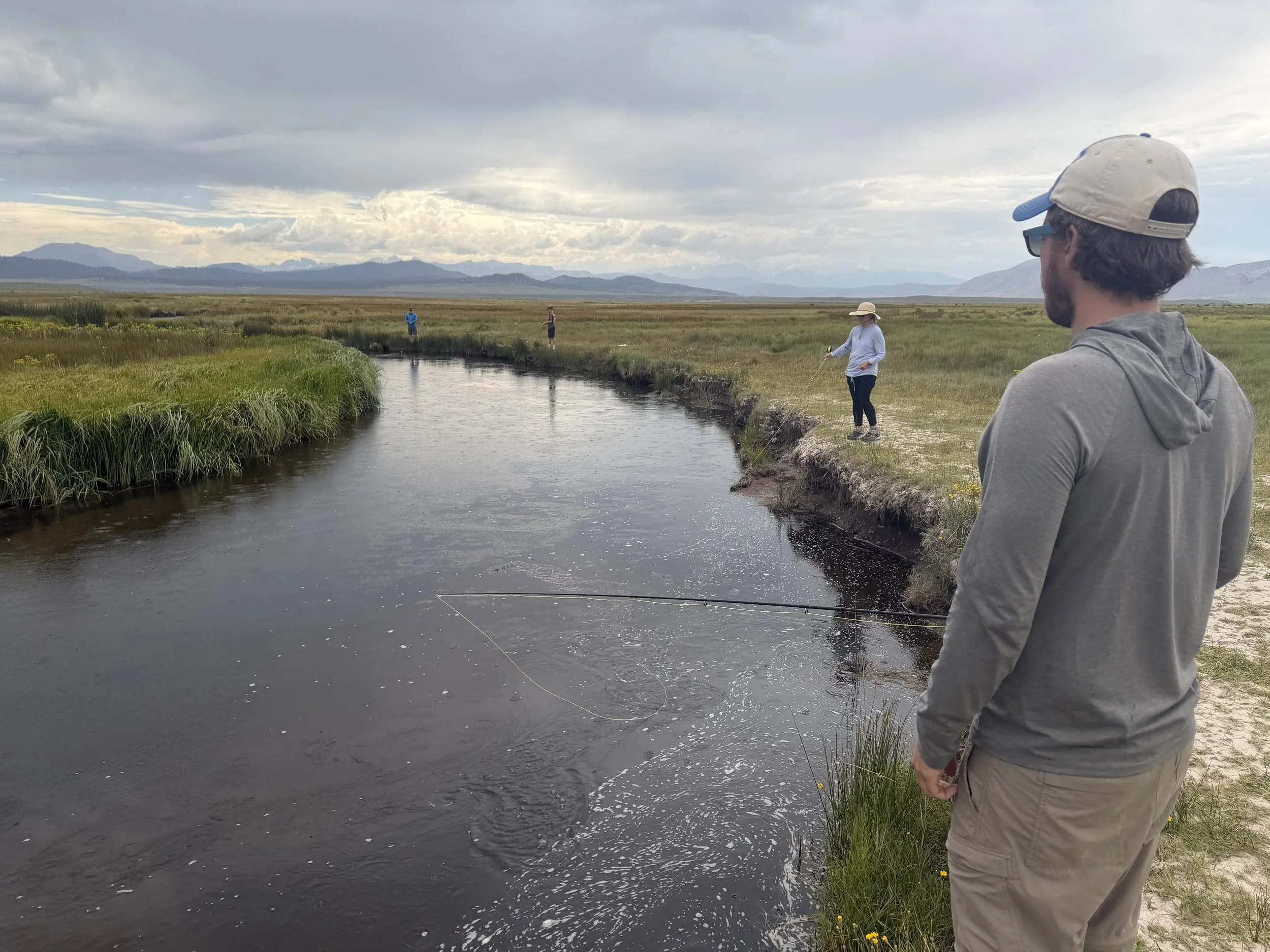
Afternoon rain storms cool off the Owens River allowing fly fishers to fish all afternoon without harming trout while catch and release fishing.
Hot Creek
Interpretive Site:
Morning are when you will find hatches of trico mayflies and a caddis migration. Start the morning with a size 20 gray X-caddis, size 20 gray parachute caddis and size 20 gray elk hair caddis to imitate the caddis migration. Once the caddis migration is in full swing look for the start of the female trico hatch. This starts with the female dun tricos. Fish with size 20 female dun trico parachute, size 20 female trico sparkle duns and size 20 Adams parachutes. Once the trout start refusing the dun parachute pattern switch to a size 22 trico spinner pattern
Hot Creek and surrounding waters are in danger once again from KORE Mining resubmitting a drilling permit. Your voice is needed to stop KORE Mining from moving forward with exploratory drilling. For more information contact nohotcreekmine.com.
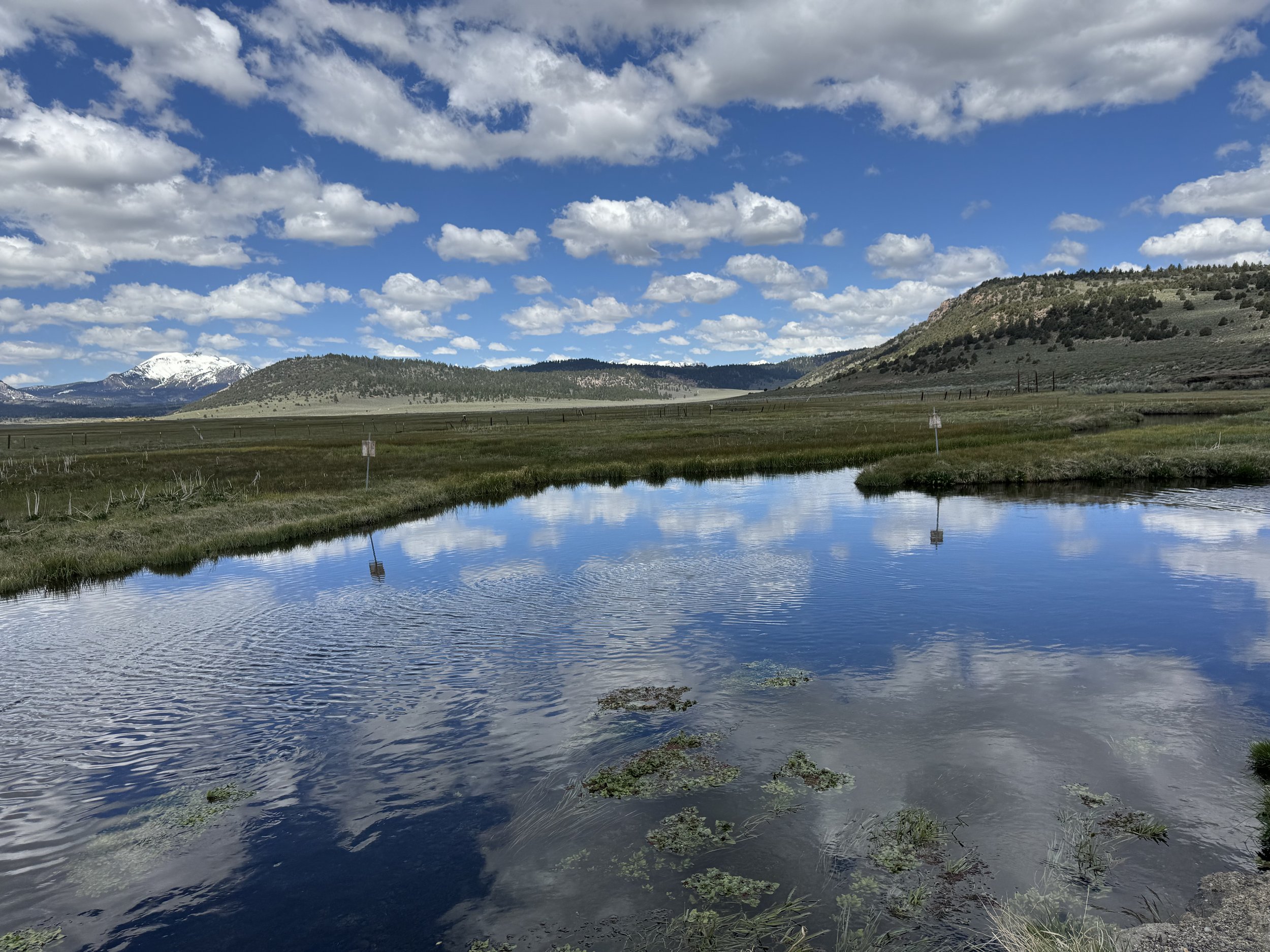
The flats of Hot Creek Interpretive Site is perfect for fishing tiny dry flies for rainbow and brown trout feeding on trico mayflies and gray bodied caddisflies.
Hot Creek
Canyon Section:
The weed beds provide protection from predators above the water. This is where the trout are living and where the fly fishers needed to fish their dry fly patterns. There is a learning curve to learning how to fish tiny dry flies in the two to four inch channels between the weed beds. Fly fishers that have learned how to fish in and around the weed beds will be successful with size 20 gray X-caddis, size 20 gray parachute caddis, size 20 gray elk hair caddis, size 20 female trico dun parachutes, size 20 female trico sparkle duns and size 20 blue wing olive parachutes.
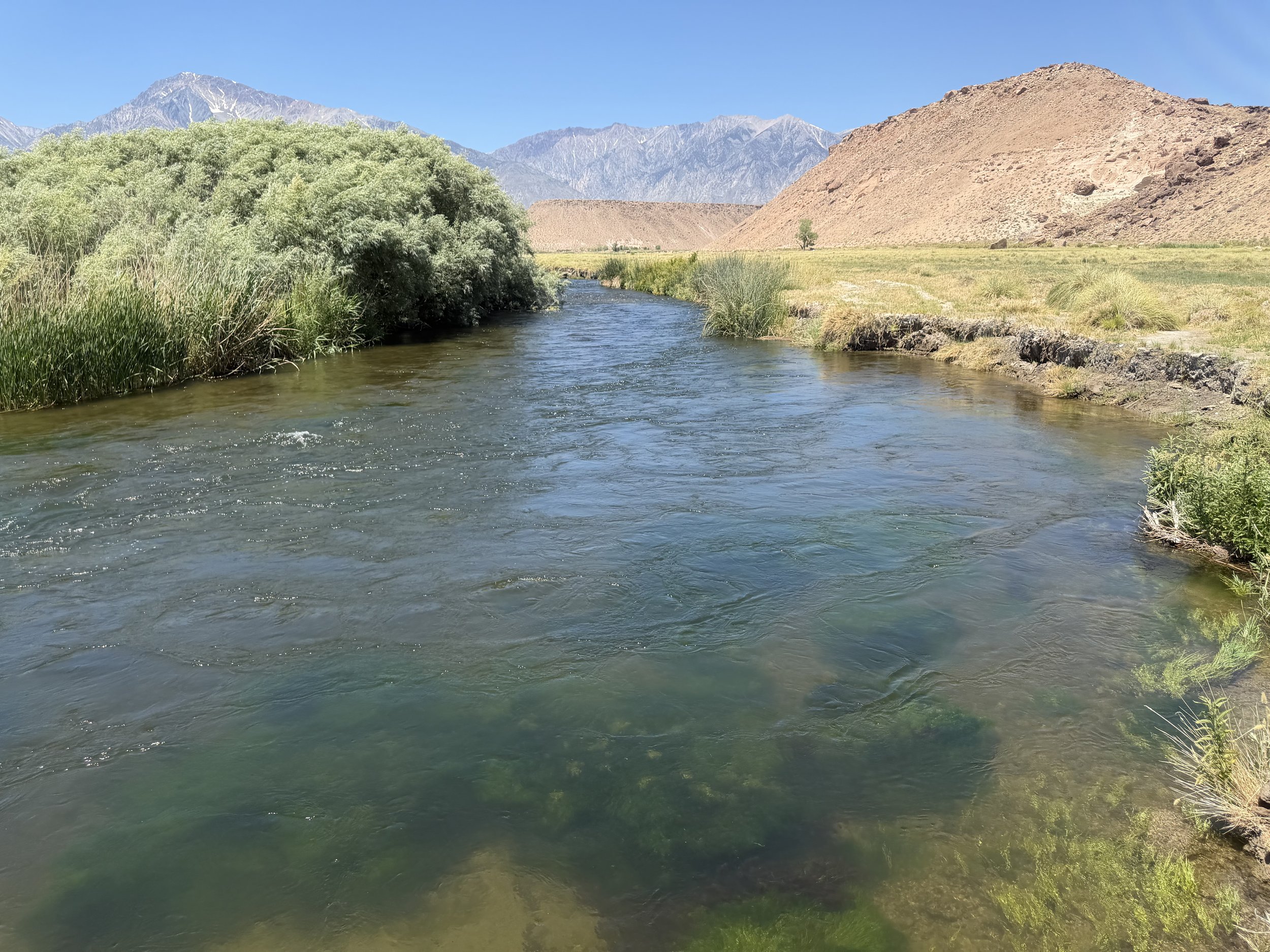
Finding spots you can fish from the banks of the lower Owens River with caddis adult patterns and mayfly nymphs is how to catch the wild rainbows and brown trout that inhabit the river.
Lower Owens River
Wild Trout Section:
Middle of the day is too hot to be fly fishing on the lower Owens River. Be on the river around 7:00 A.M. and be off the river by 10:00 A.M. or be on the river when the sun goes behind the Eastern Sierra Mountains. Best fly fishing has been in those spots where there are two channels. This way you are not fly fishing in the full force of the 400 CFS current in the main channel. First thing in the morning and last thing at night is a good time to be fly fishing with size 10 wooly buggers, slumpbusters matukas and muddler minnows for trophy trout. In the mornings fish with size 18 olive quilldigons, size 18 bead head flash back pheasant tail nymphs, size 16 Duracell nymphs, size 16 bead head flash back gold ribbed hare’s ears and size 12 stoner nymphs. Mosquitoes are in full force early and late in the day on the lower Owens River.
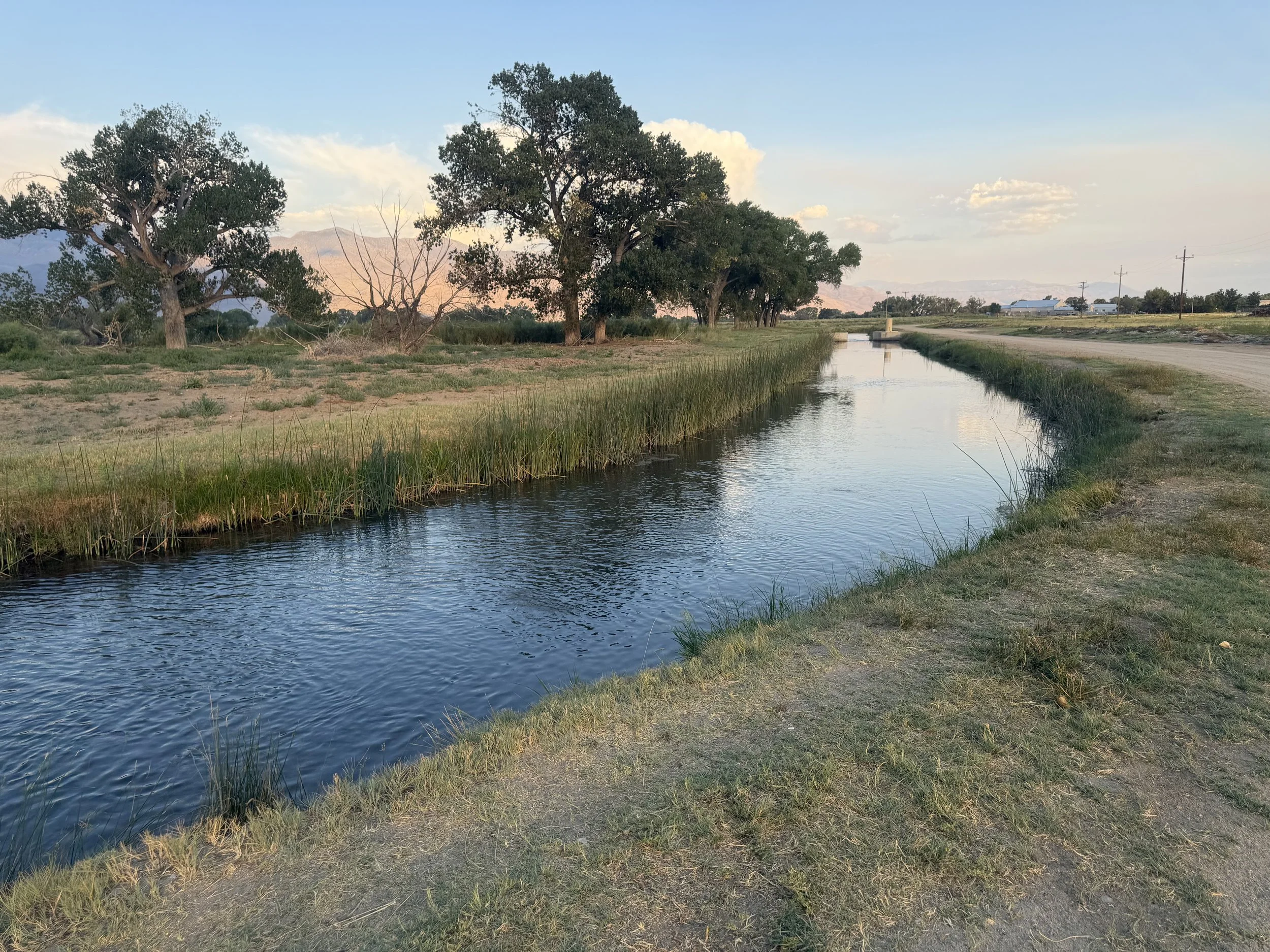
Evening fly fishing on Bishop Creek Canal is cooler for fly fishers, water temperatures are cooler and the trout are feeding on caddis as the sun goes behind the Eastern Sierra Mountains.
Bishop Creek Canal
Behind Bishop Veterinary Hospital:
Mid-day temperatures are in the low 100’s and not comfortable for fly fishers and afternoon water temperatures are too warm for catch and release trout fly fishing. So fly fishers need to fish first thing in the morning or last thing in the evening. Fly fishers need to check water temperatures in the afternoons. Nymphing with size 18 bead head flash back pheasant tail nymphs, size 18 olive quilldigons, size 16 Duracell nymphs, size 16 bead head flash back gold ribbed hare’s ears, size 12 green/gold wire Prince nymphs and size 12 stoner nymphs is producing wild brown trout and the occasional stocked rainbow trout. Use size 10 balanced leeches, Landon Mayer’s jigged pine squirrel leeches, wooly buggers, slumpbusters, muddler minnows and matukas for pulling streamer for bass, carp and trout. Mosquitoes have been active early and late in the day.
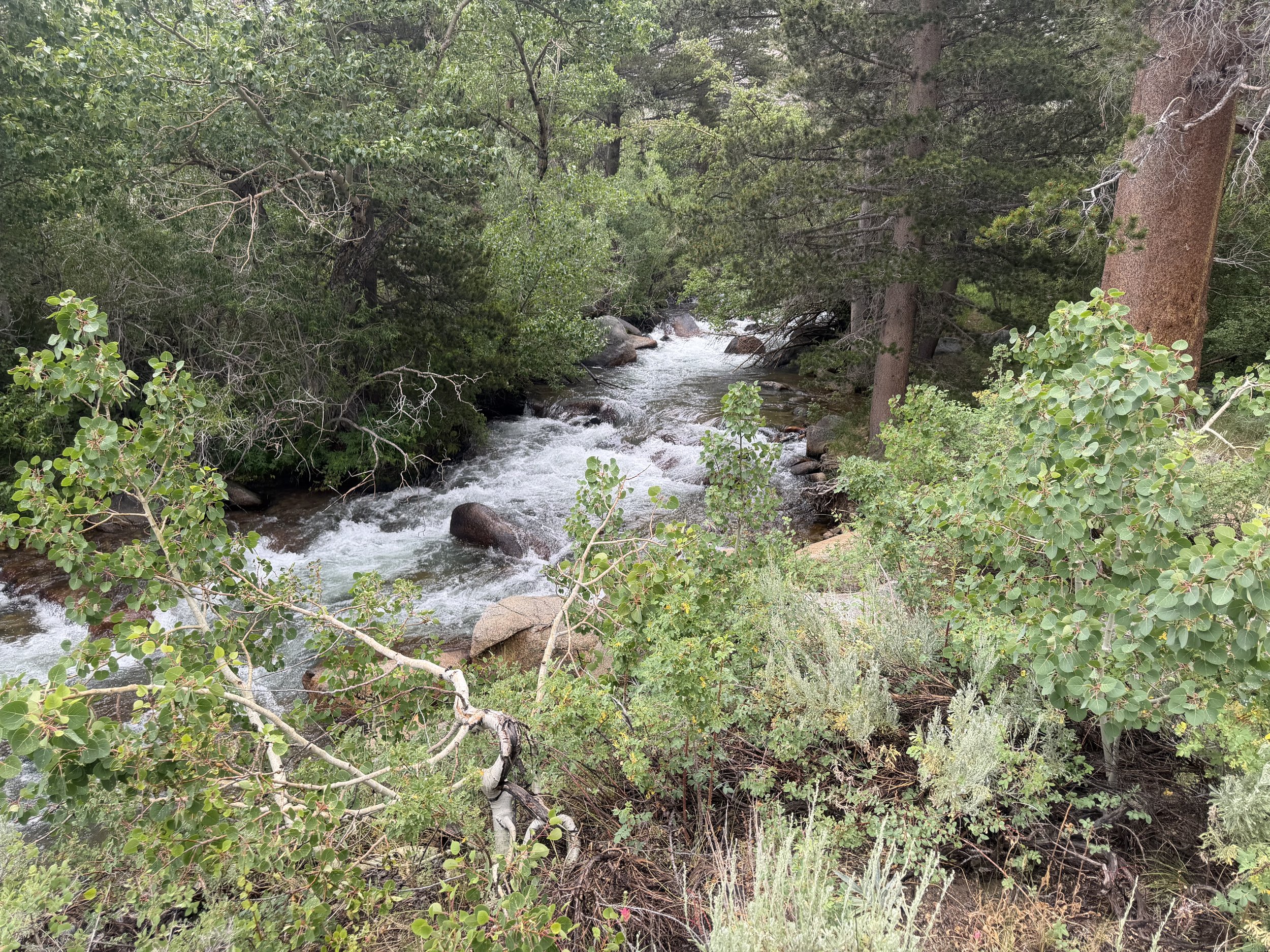
Bushwhacking through the streamside vegetation looking for that pool or pocket holding wild brown trout is how to fish on Bishop Creek.
Bishop Creek Canyon:
Bush whacking is walking along the banks of the creek looking for a spot that will hold trout and allow the fly fisher to drift a dry fly or a dry and dropper rig. This is not casting 20 to 40 feet of fly line. It’s fishing the leader and tippet or maybe a few feet of fly line out of the rod tip. The trout are holding in the pools and pockets that allow the trout to stay out of the main current. The fly fisher needs to present the fly or flies with a drag free drift. For dry flies use size 16 elk hair caddis, size 14 Adams parachute, size 14 Royal Wulff’s and size 14 stimulators. For the nymphs fish with size 18 bead head flash back pheasant tail nymphs, size 16 Prince nymphs, size 16 bead head flash back gold ribbed hare’s ears, size 16 tiger midges, size 16 zebra midges and size 16 green/gold brassies.
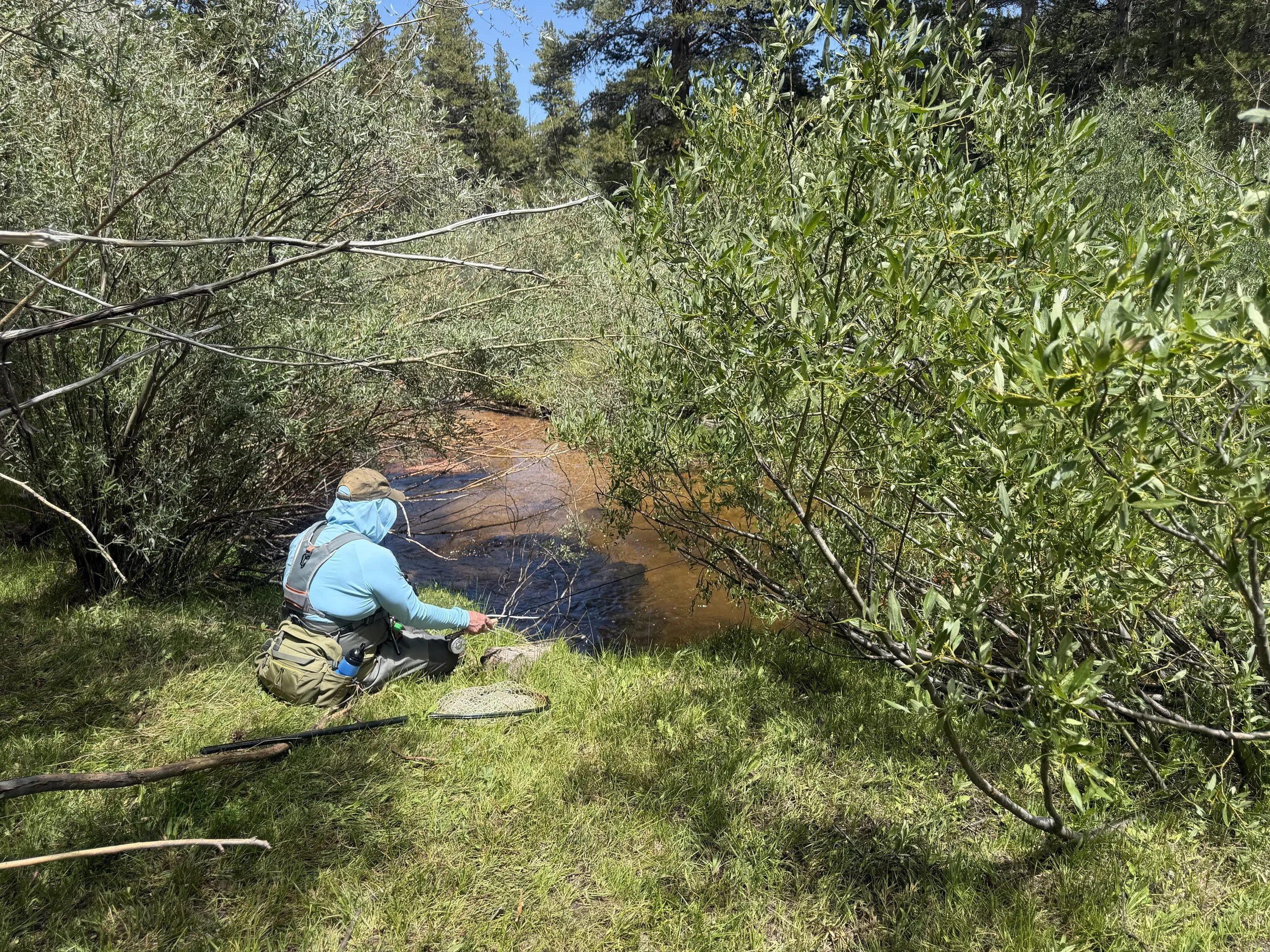
Sometimes the best way to fish a hole tightly covered in vegetation is to sit on the banks and dabble Sierra Bright Dots for golden trout.
High Altitude Creeks
With Golden Trout:
Catching golden trout in the summer time in creeks that drain the Eastern slope of the Sierra is a treat for fly fishers. This is bush whacking at its best for tiny, abundant and brightly colored trout at 9,000 feet and above. The fish are not in the fast water sections. They are in the pools and in the pockets. Finding these spots hidden in stream side vegetation is where you want to drift your flies. Golden trout love brightly colored flies in size 12, 14 and 16 like Sierra bright dots, Sierra Adams, Royal Wulff’s, elk hair caddis and stimulators. The fish are not big, but they make up for it in abundance and beauty.