
The heat of summer continues with temperatures in the Owens Valley in the low 100’s and temperatures at the 8,000 to 9,000 foot level in the upper 80’s to low 90’s. Fishing under the canopy on freestone streams is a great way to escape the heat of summer. A voluntary Hoot Owl restriction is in place for catch and release fishing on several Eastern Sierra waters including Crowley Lake, upper Owens River, lower Owens River, Bishop Creek Canal, Bridgeport Reservoir and East Walker River. Carry a thermometer and take the temperature for the water you are fishing every half hour if it looks like the temperature is climbing towards 70 degrees. Mayflies, caddis flies and midges are feeding the trout in the backcountry and the front country. A big advantage of the Eastern Sierra is the ability to go up in elevation to find the temperature that suits you. Now is prime time to be exploring the backcountry with day hikes and overnight hikes.
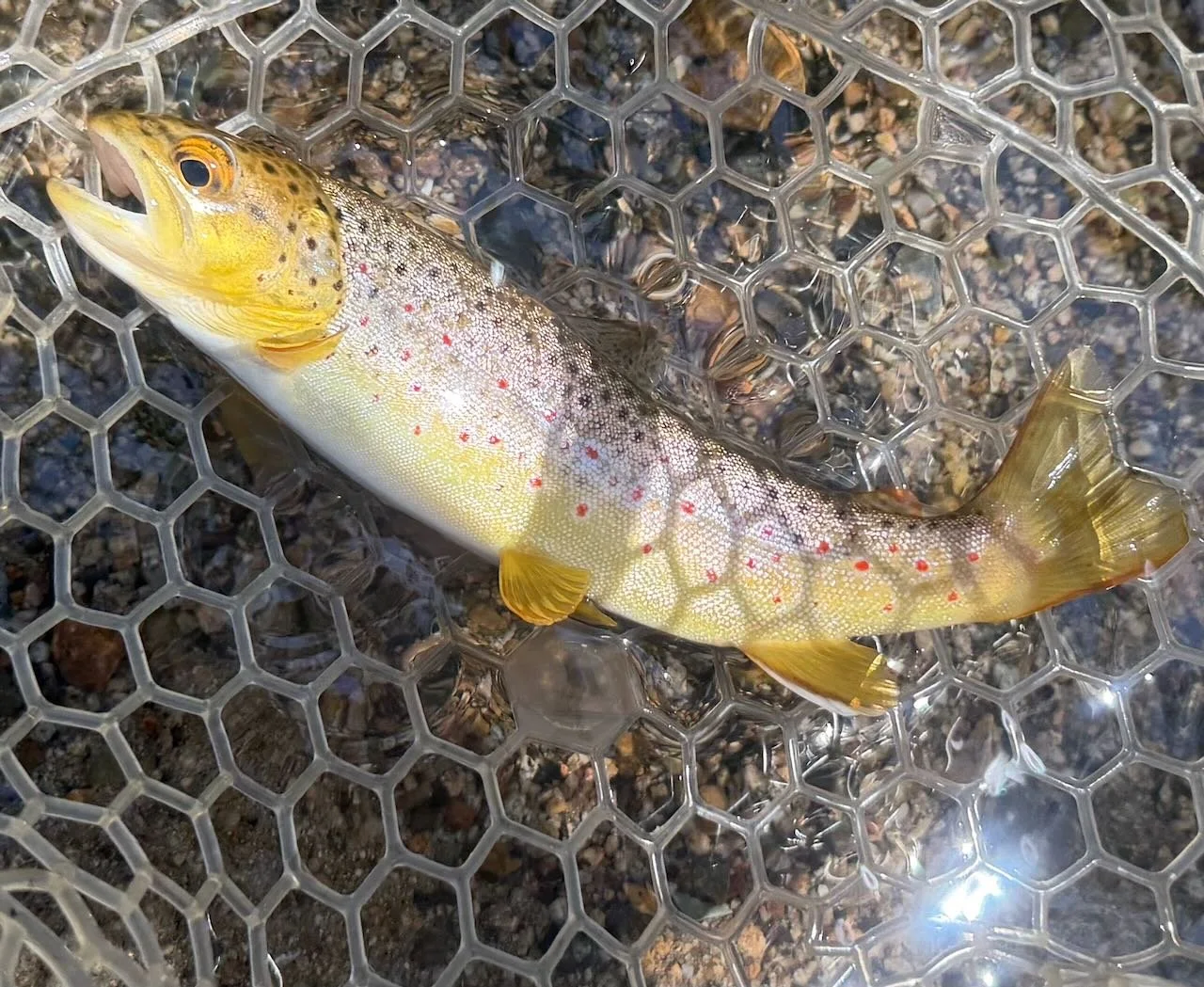
Eastern Sierra Summers are fly fishing freestone creeks for wild brown trout, rainbow trout and brook trout high up in the canyons that drain the Eastern Sierra.
Upper Owens River
Above Benton Crossing Bridge:
Afternoon water temperatures are pushing above the 70 degree mark so catch and release fly fishers need to stop fly fishing once the river hits the 70 degree mark. Morning mayfly and afternoon caddis hatches have the trout feeding on the surface. Fish with size 18 blue wing olive parachutes, size 18 Adams parachutes, size 18 elk hair caddis and size 18 parachute caddis. Nymphing before the hatch with size 18 olive quilldigons, size 18 bead head flash back pheasant tail nymphs, size 16 bead head flash back gold ribbed hare’s ears, size 16 sparkle pupae, size 18 tiger midge and size 18 zebra midge will fool the wild trout.
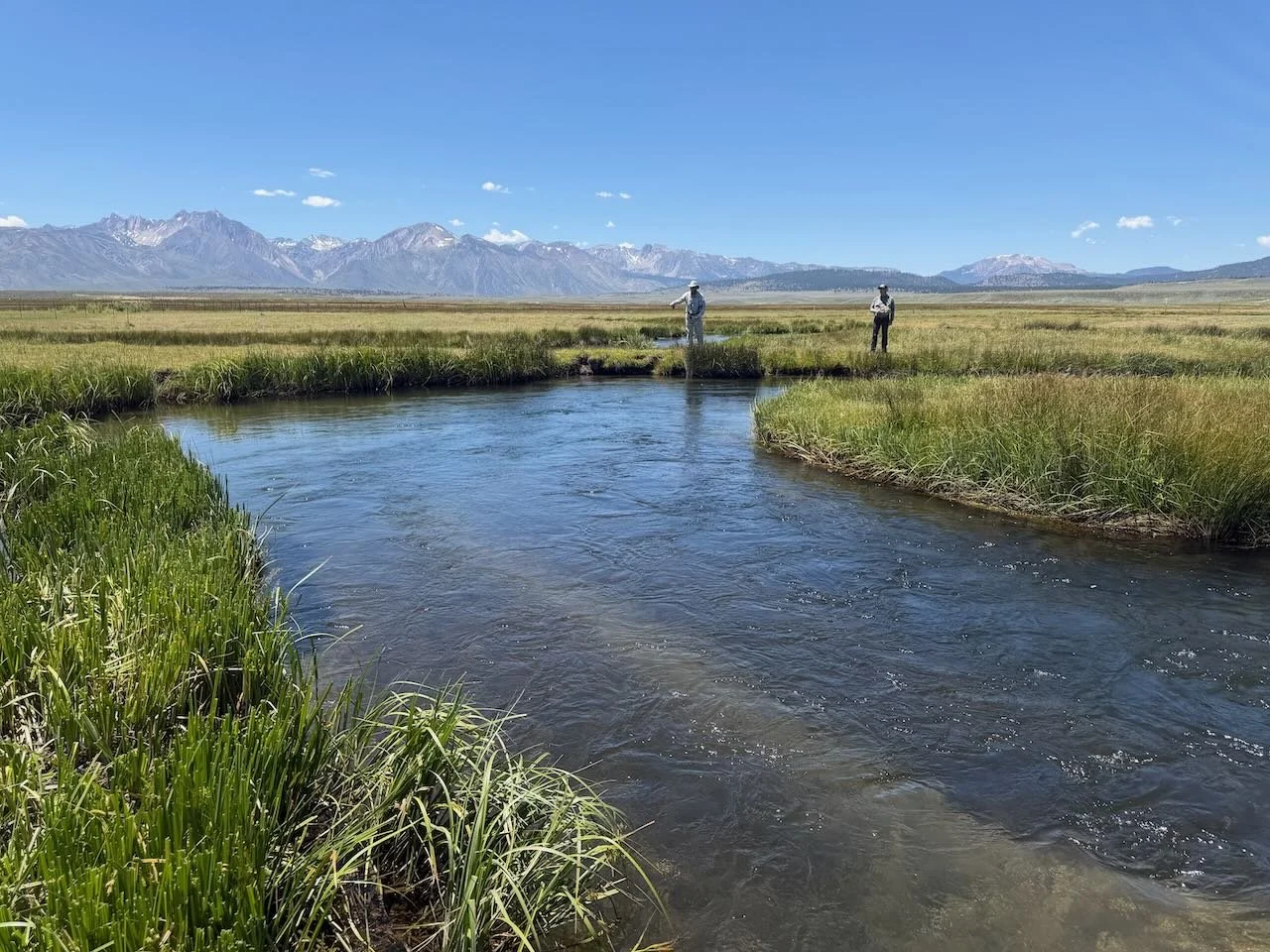
Afternoons have been hot and fly fishers need to monitor the water temperature and quit catch and release fly fishing when the temperatures get to 70 degrees or more on the upper Owens River.
Hot Creek
Interpretive Site:
Be on the water rigged and ready to fish by 8:00 A.M. with a caddis pattern or a trico pattern. The hatches are happening almost simultaneously on the water. Start with a size 20 gray elk hair caddis, size 20 gray parachute caddis, size 20 gray X-caddis, size 20 female dun trico parachute pattern and size 20 blue wing olive parachute. The trico spinner fall starts about an hour after the female trico duns start hatching. When the trout quit taking your trico parachute switch to a size 22 trico spinner pattern. Trico spinner patterns can be hard to see on the water so fish your trico spinner pattern as part of a dry and dry rig. Use a size 16 Adams parachute, size 16 stimulator and size 16 elk hair caddis for the big fly in your dry and dry fly rig.
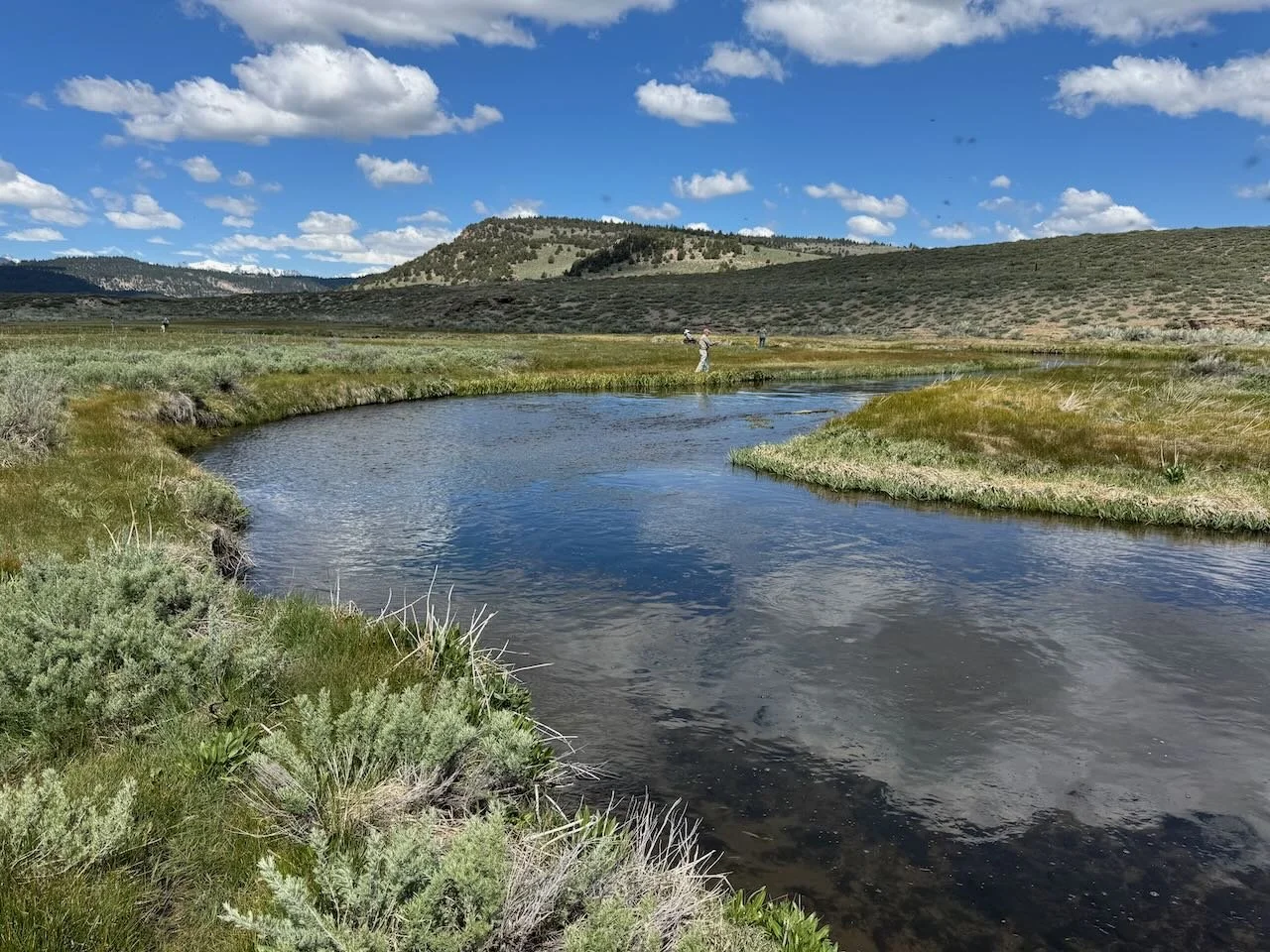
The right leader, fly pattern and drag free drift is how you fool the wild rainbows and brown trout of Hot Creek Interpretive Site.
Hot Creek
Canyon Section:
The Canyon Section is inundated with weeds from the annual summer growth of the weed beds. This is dry fly time in the canyon. Working small dry flies on long light leaders in between the four to six inch lanes between the weed beds is how fly fishers are successful in the summer time in the canyon. Matching the hatch, getting a drag free drift and setting the hook on the fish that take your dry flies is how to be successful Use nine foot 5X leaders with three to six feet of 6X tippet tied to size 20 female trico dun parachutes, size 20 female trico sparkle duns, size 20 blue wing olive parachutes, size 20 gray X-caddis, size 20 gray parachute caddis and size 20 gray elk hair caddis.
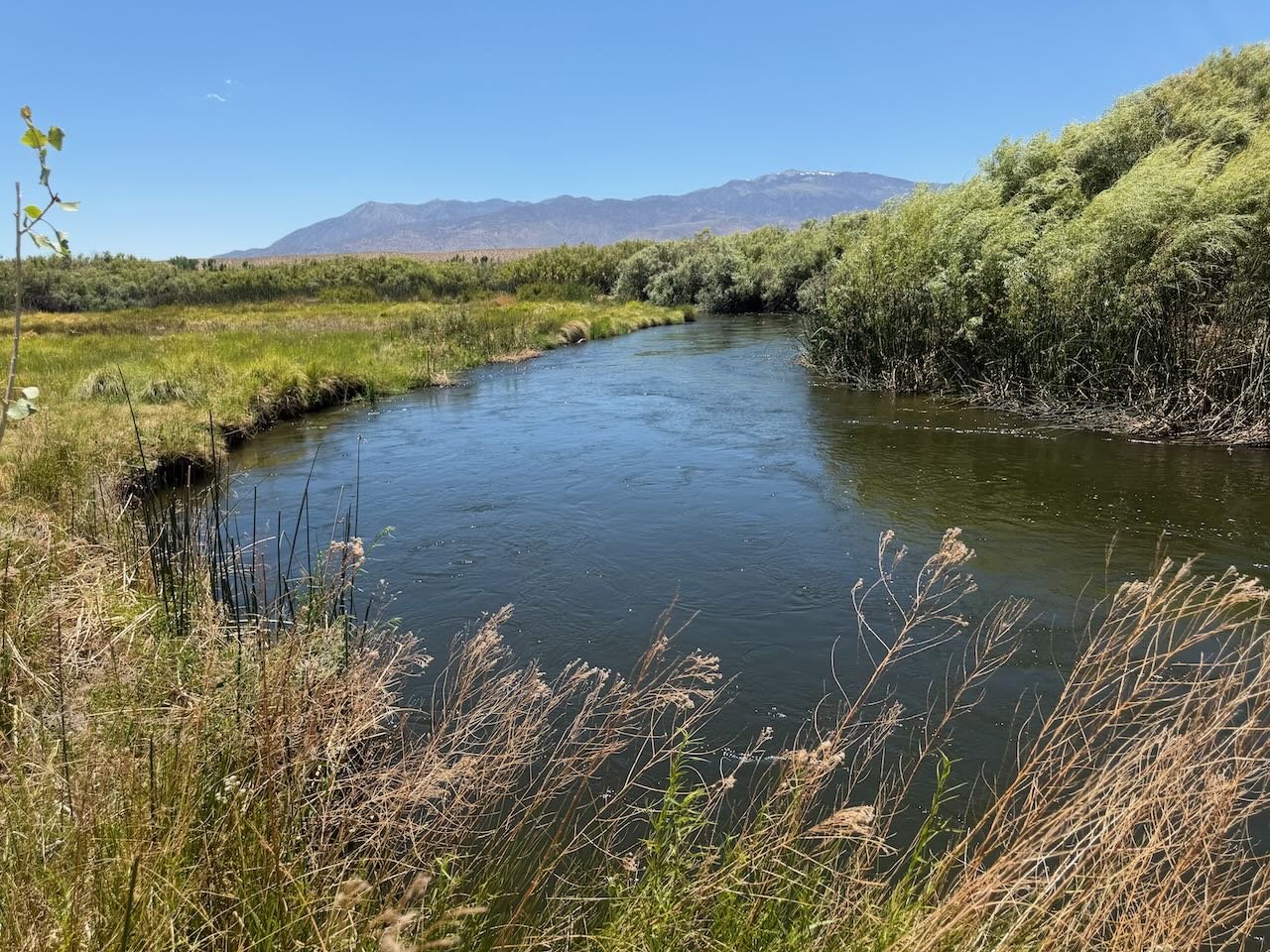
Finding places where the fly fisher can fish from the banks is how you need to fish the lower Owens River is the summer time.
Lower Owens River
Wild Trout Section:
Day time temperatures in the low 100’s makes it uncomfortable to fly fish during the day on the wild trout section of the lower Owens River. Fish the river early or late when the air temperature is comfortable to the fly fisher and the river temperature is under 70 degrees. Fishing in those places where the fly fisher can fish from shore with a size 18 elk hair caddis is producing wild rainbow and brown trout in the evening when the sun has gone behind the mountains. Fishing an hour before sunrise with size 10 wooly buggers, slumpbusters matukas and muddler minnows will turn some trophy trout and the fly fisher will be fishing the coolest part of the day. Fly fishers should be sure to have insect repellant with them when fly fishing early and late in the day on the lower Owens River.
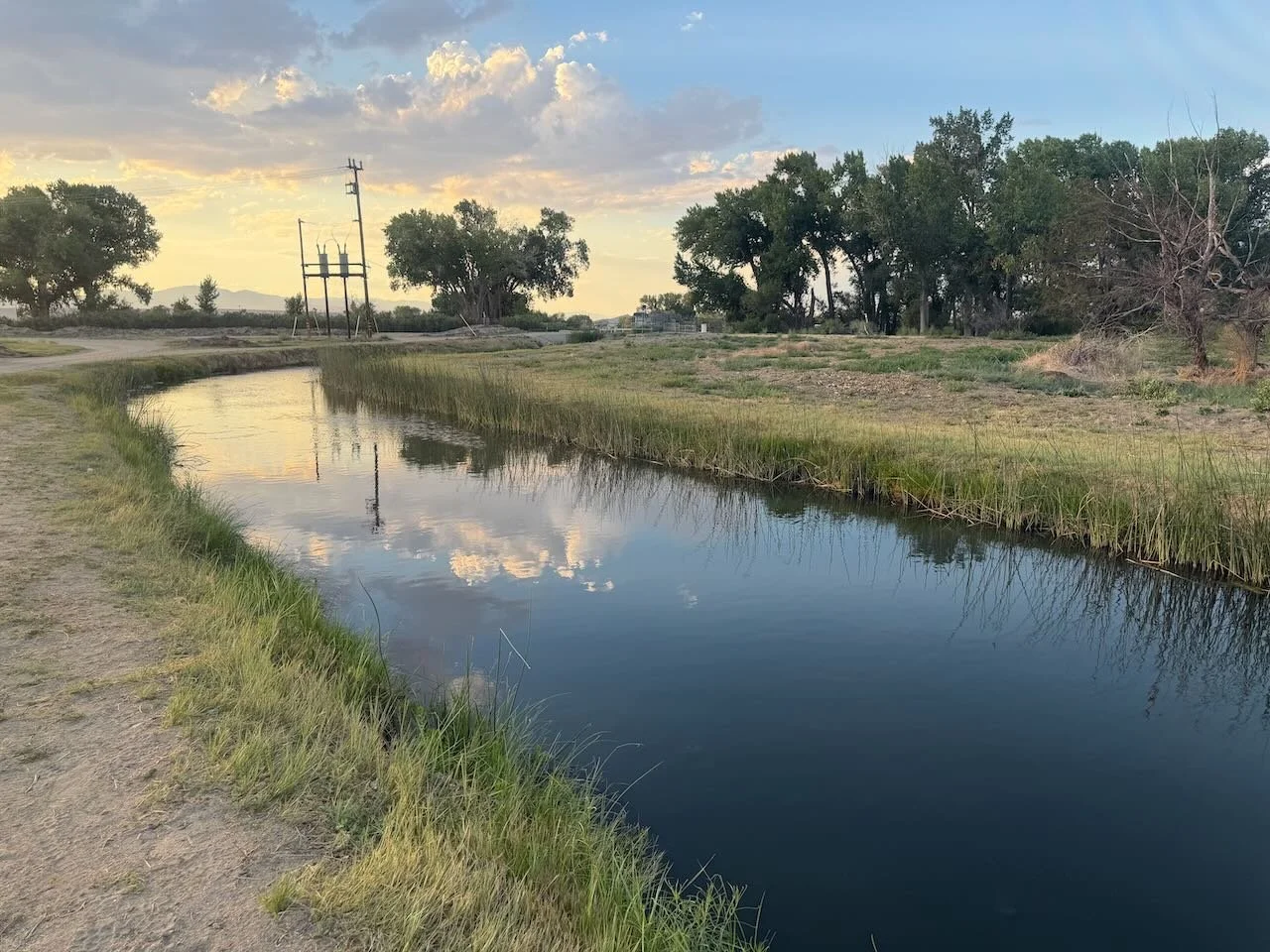
Evening is the perfect time to be fly fishing Bishop Creek Canal with caddis patterns.
Bishop Creek Canal
Behind Bishop Veterinary Hospital:
There has been a morning hatch of mayflies coming off between 8:00 A.M. and 10:00 A.M. Fish with size 18 elk hair caddis, size 18 Adams parachutes, size 18 blue wing olive parachutes and size 12 yellow stimulators. Nymphing with size 18 bead head flash back pheasant tail nymphs, size 18 olive quilldigons, size 16 Duracell nymphs, size 16 bead head flash back gold ribbed hare’s ears, size 12 green/gold wire Prince nymphs and size 12 stoner nymphs is producing trout. Mosquitoes have been active early and late in the day so be sure to carry insect repellant with you.
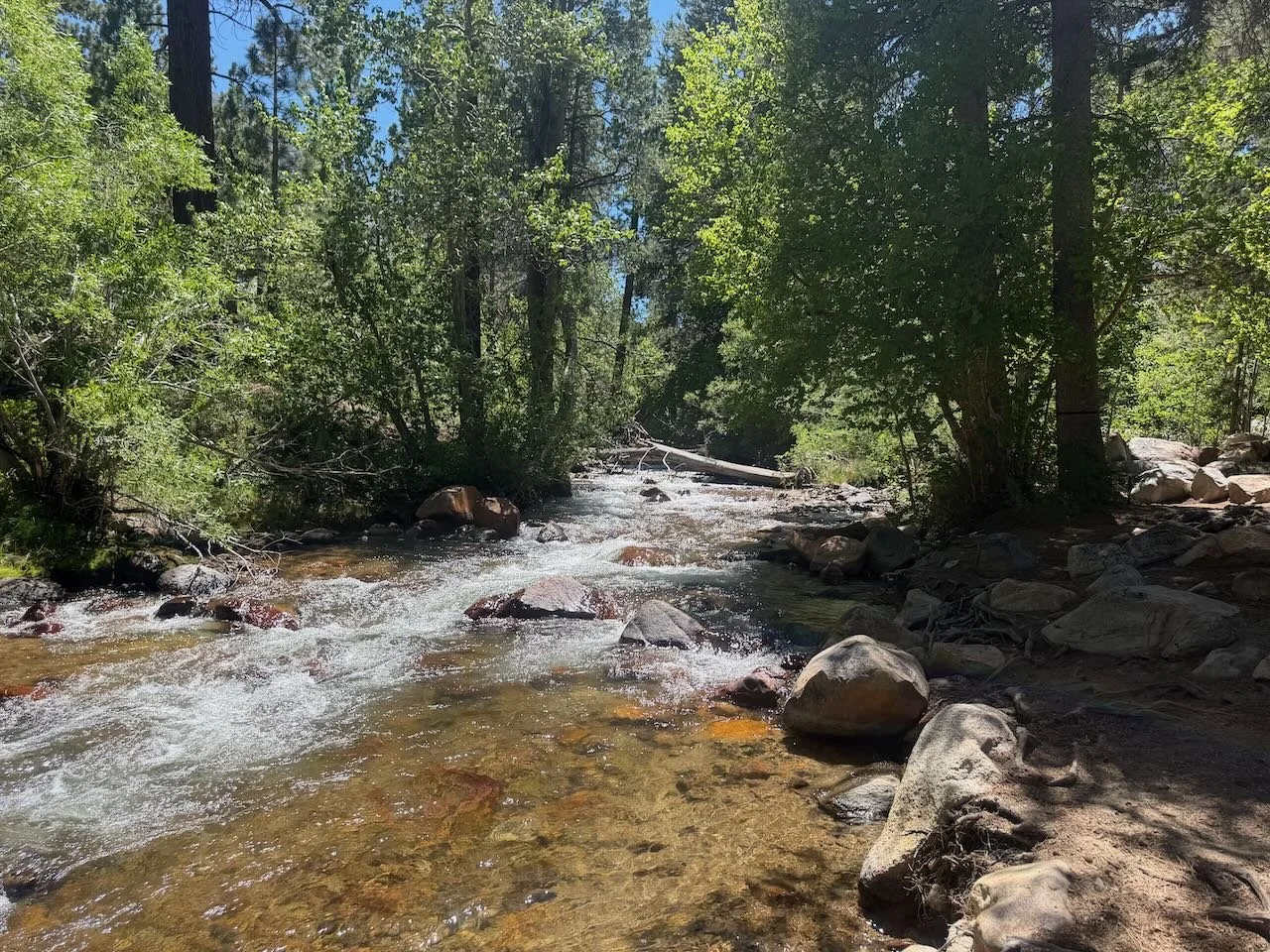
As summer heads into fall the flows in the forks of Bishop Creek are at a perfect flow to be fishing with a dry and dropper rig.
Bishop Creek Canyon:
Heat on the creek middle of the day is about 15 degrees cooler than in the Owens Valley. Fishing under the canopy of riparian vegetation is keeping fly fishers cooler. Heading up into the canyon to fly fish in the middle of the day is great way to escape the heat of the Owens Valley right now. The fish in the creek feed opportunistically and will take almost any size 14 or 16 dry fly. The best dry fly to fish with is your favorite dry fly as you will fish that fly with the most confidence. I like high visible, high floating dry flies like elk hair caddis, stimulators, Royal Wulff’s and Adams parachutes. I’m tying no more than three feet of 5X fluorocarbon tippet to the dry fly and tying a nymph to the fluorocarbon tippet. From dry fly to nymph should be 1.5 to 2 times the average depth of water. Most of the time I’m fishing in two feet or less of water depth. For the nymphs fish with size 16 bead head flash back pheasant tail nymphs, size 16 Prince nymph, size 18 bead head flash back pheasant tail nymphs, size 16 green/gold brassie, size 16 tiger midge and size 16 zebra midge.
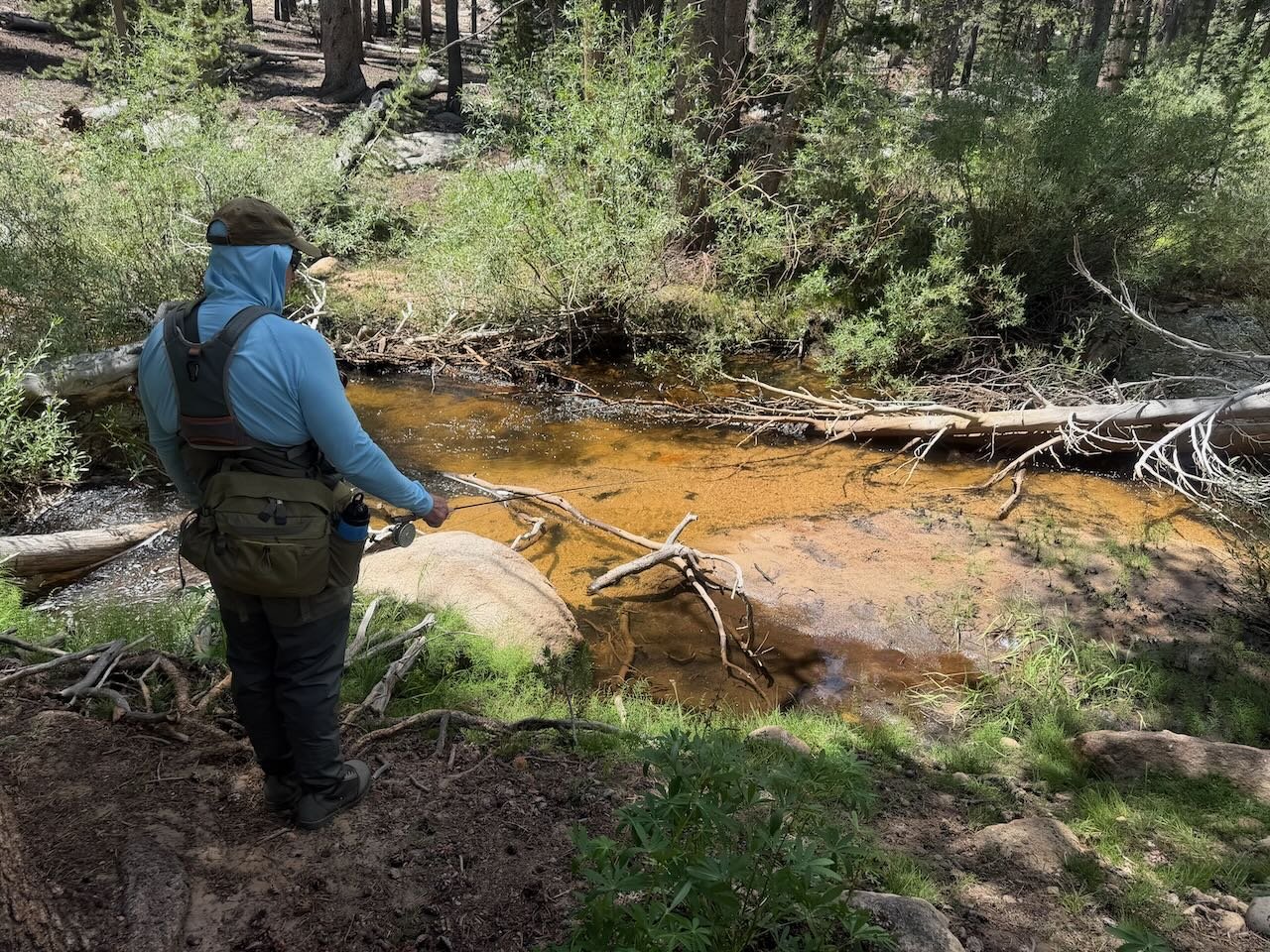
The key to success on freestone creeks is walking the banks looking for those pockets that have the room to cast and are holding the golden trout that you are seeking to catch.
High Altitude Creeks
With Golden Trout:
August is hot in the Eastern Sierra and a perfect time to be fly fishing above 9,000 feet for golden trout in high mountain creeks. This is not typical fly fishing as fly fishers need to walk the banks of the creeks searching out those little pools and pockets that hold golden trout and dab their flies on the surface of the creek. On these tiny creeks it’s rare that I have fly line out the end of the fly rod. Fly fishing for goldens is with bright attractor style patterns like a size 14 Sierra bright dot, size 14 Sierra Adams, size 14 Royal Wulff and size 14 orange stimulator. Standard dry flies like a size 14 Adams Parachute, size 16 elk hair caddis, size 14 ants and size 12 beetles work great when the golden trout are not taking the attractor patterns. These fish are small, but make up for it in their beauty and abundance. Contact Sierra Bright Dot Guide Service if you are looking to hook up with some golden trout in the Eastern Sierra.