
Summer rain storms are a great way to get out of the summer heat in the Owens Valley The creeks that drain the Eastern Sierra are a great place to be fly fishing in a summer rain storm. The rain washes terrestrial and aquatic adult insects into the water offering the trout a feast. I get to use my rain jacket maybe once or twice a year in a rain storm. I used my rain jacket this week. One of the advantages of fishing in the Eastern Sierra are the opportunities to fish at different elevations to find a temperature that is comfortable for the fly fisher. Summer hatches of caddis, mayflies and stoneflies are what brings the trout to the surface and feeds the trout on the substrate. Summer is the perfect time to be a dry fly fisher.
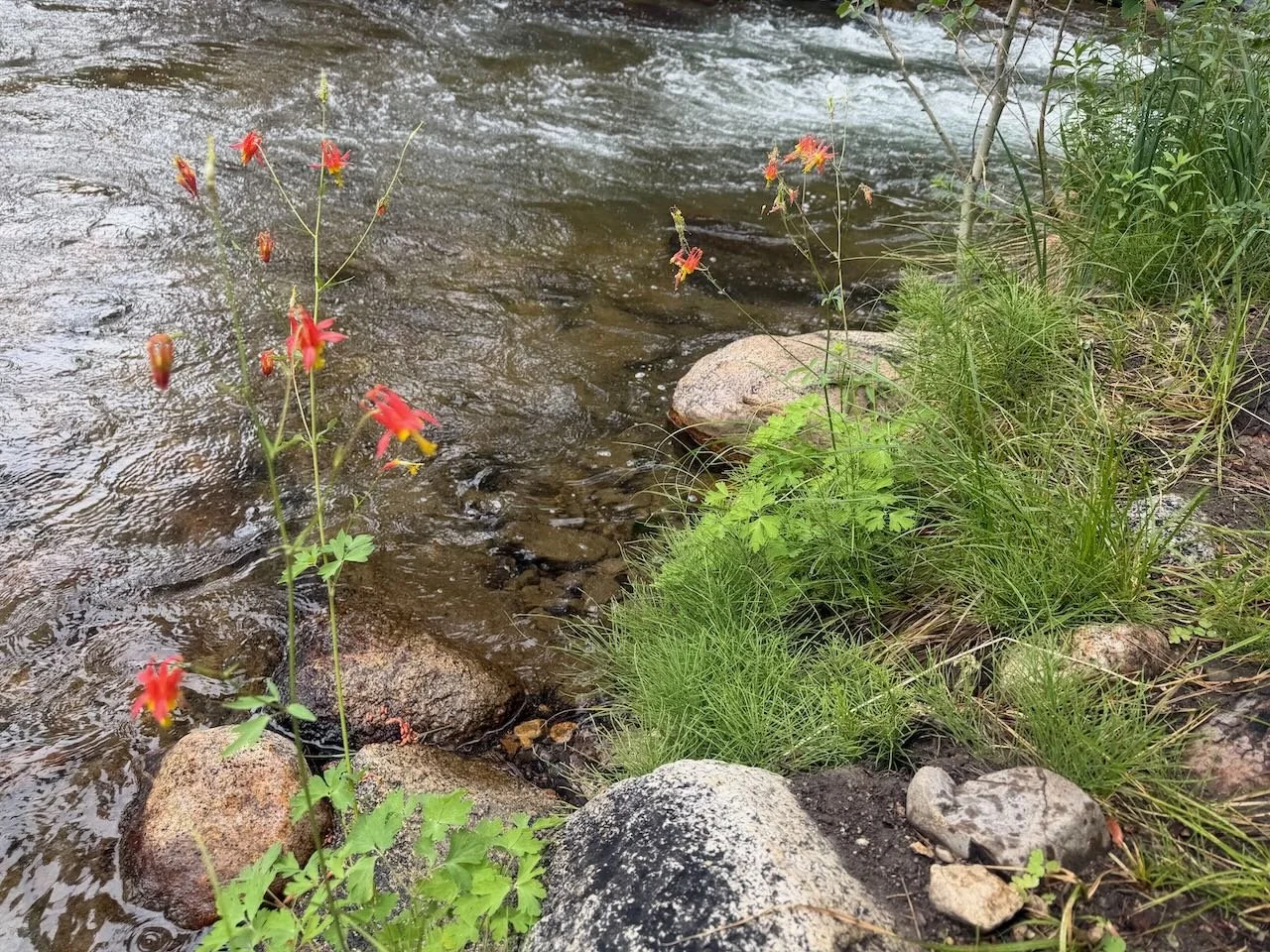
Stream side flowers just add a pretty touch to fishing the freestone creeks of the Eastern Sierra with a dry and dropper rig like a size 14 stimulator and a size 16 tiger midge.
Upper Owens River
Above Benton Crossing Bridge:
The water of the upper Owens River is low and clear and the trout are spooky. Fly fishers need to approach the stream with a stealthy method to their steps. Nymphing under an indicator or with a Euro rig is the way to present nymphs to the trout feeding on the substrate. Nymph with size 18 bead head flash back pheasant tail nymphs, size 18 olive quilldigons, size 16 bead head flash back gold ribbed hare’s ear, size 18 Frenchie’s, size 12 stoner nymphs, size 14 copper John’s and size 16 Duracell nymphs. Pulling small streamers through the deeper holes and cut banks, particularly the first and last hour of legal fishing time is fooling bigger wild brown and rainbow trout. Use size 10 balanced leeches, Landon Mayers jigged pine squirrel leeches, wooly buggers, slumpbusters, muddler minnows and matukas. Mosquitoes have been active early and late in the day.
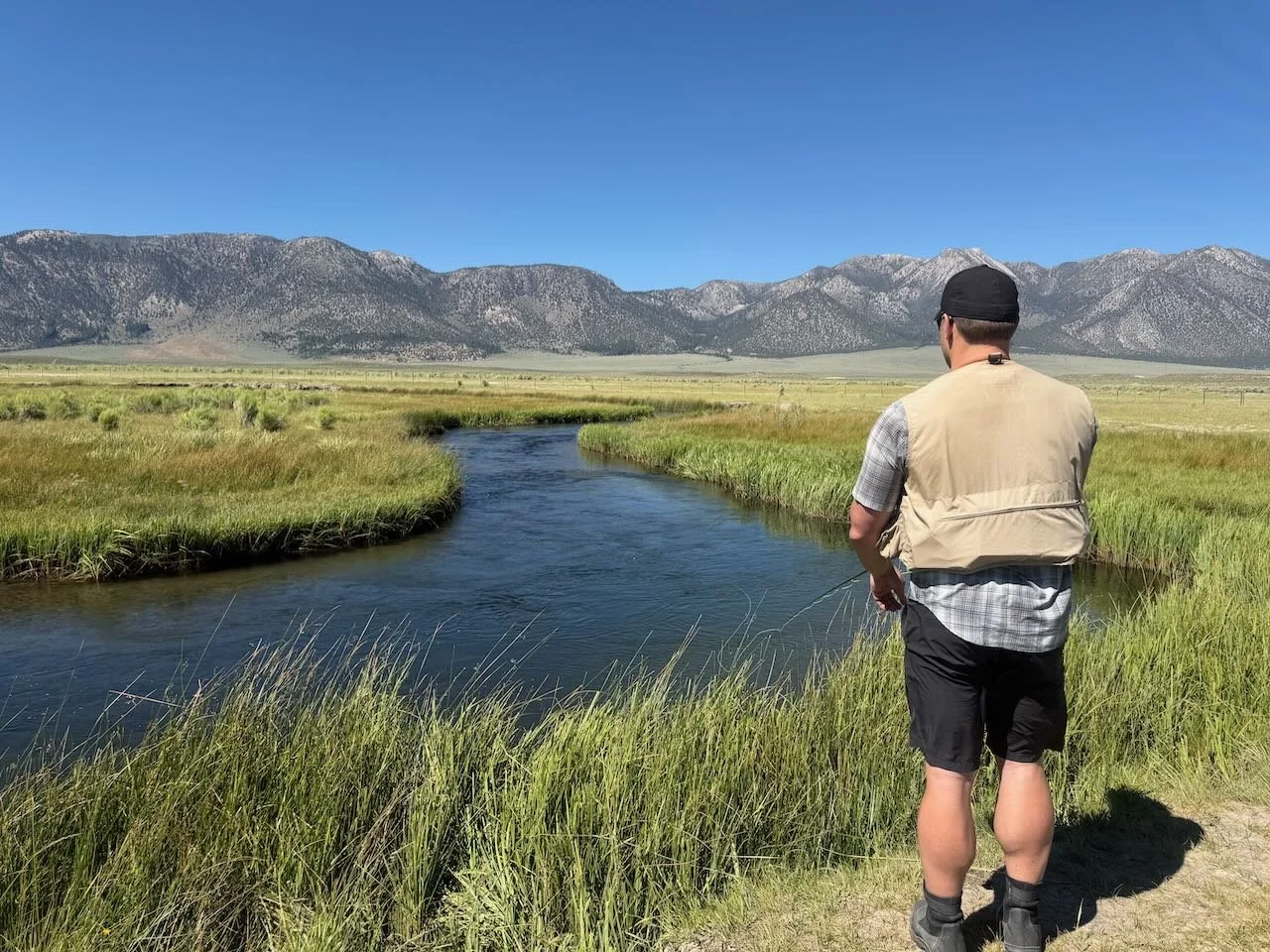
Casting dries and nymphs upstream and letting them drift with a drag free drift is how you fool the finicky trout of the upper Owens River.
Hot Creek
Interpretive Site:
Fly fishers need to be on the water rigged and ready to fish because the caddis emergence and trico hatch are underway by 8:00 A.M. Start your morning fishing with a size 20 gray elk hair caddis, size 20 gray parachute caddis and size 20 gray X-caddis. As the caddis migration is in full swing look for the trout to start feeding on the trico mayflies. Start fly fishing with a size 20 female dun trico parachute. An hour or so into the hatch or when the trout quit taking your trico parachute switch to a size 20 trico spinner pattern. Fish with nine to 12 foot 6X leaders with three feet of 6X or 7X tippet. A drag free drift is necessary to fool the spooky brown and rainbow trout of Hot Creek Interpretive Site. If you can’t see the tiny caddis and mayfly patterns on the water use a dry and dry method. Fish with a size 16 Adams parachute and three feet of 6X tippet attached to the bend of the Adams and tied to the tiny dry fly pattern.
Hot Creek and surrounding waters are in danger once again from KORE Mining resubmitting a drilling permit. Your voice is needed to stop KORE Mining from moving forward with exploratory drilling. For more information contact nohotcreekmine.com.
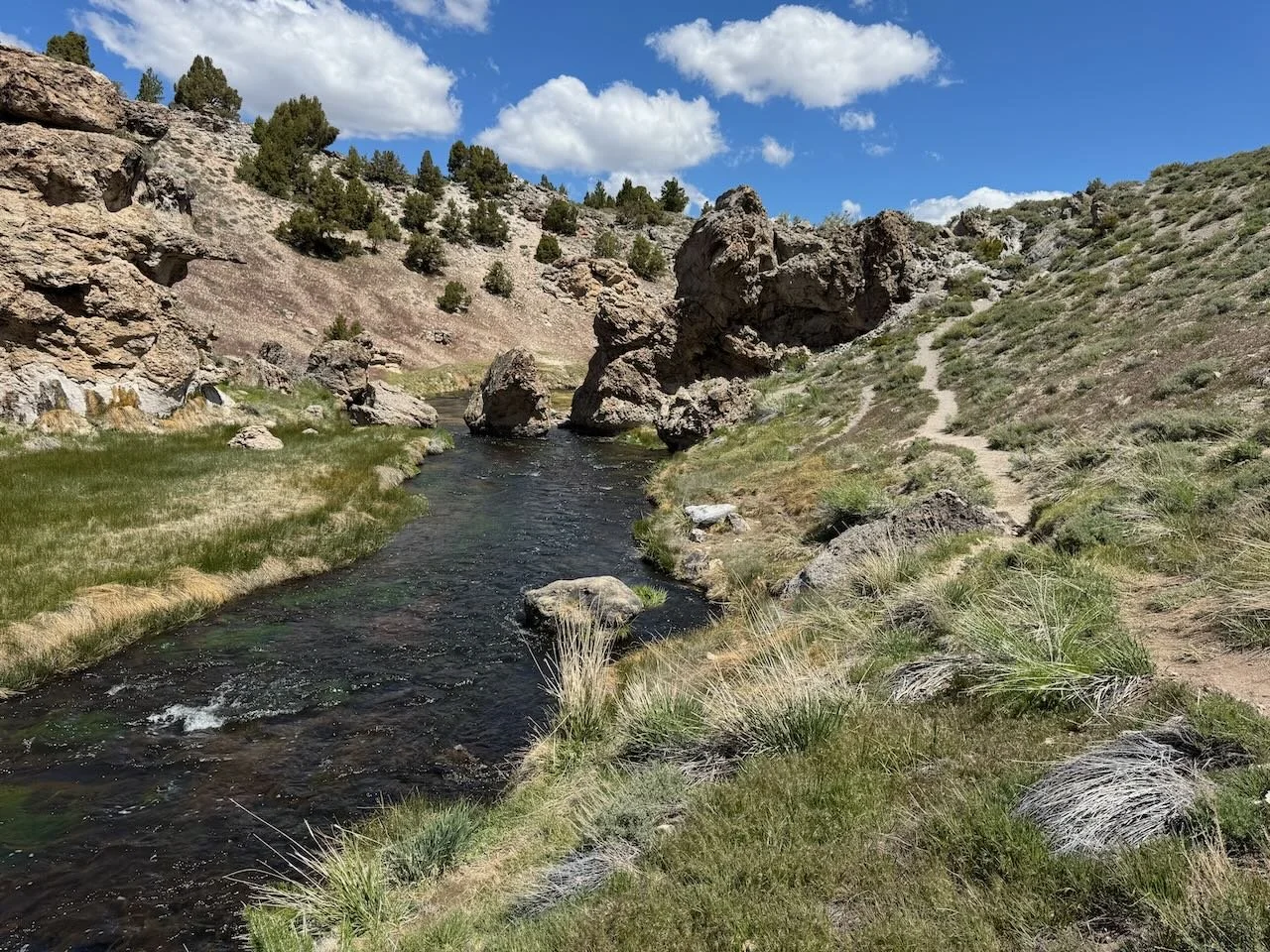
The middle and lower section of Hot Creek is separated by bedrock so fly fishers have to climb up and over to reach the next section of Hot Creek Canyon.
Hot Creek
Canyon Section:
With its stepper gradient the trout of Hot Creek Canyon feed more reactionary then the trout of the Interpretive Site. The weed beds form a natural protection from predators for the trout. For fly fishers willing to learn how to drift dry flies in the tiny lanes between the weed beds will find trout ready to grab their flies. The weed beds are growing with the summer weather are at full size. The dry fly hatch starts around 8:00 and is over before noon and fly fishers should fish with size 20 gray elk hair caddis, size 20 gray parachute caddis, size 20 X-caddis, size 20 female trico dun parachutes, size 20 female trico sparkle duns and size 20 blue wing olive parachutes.
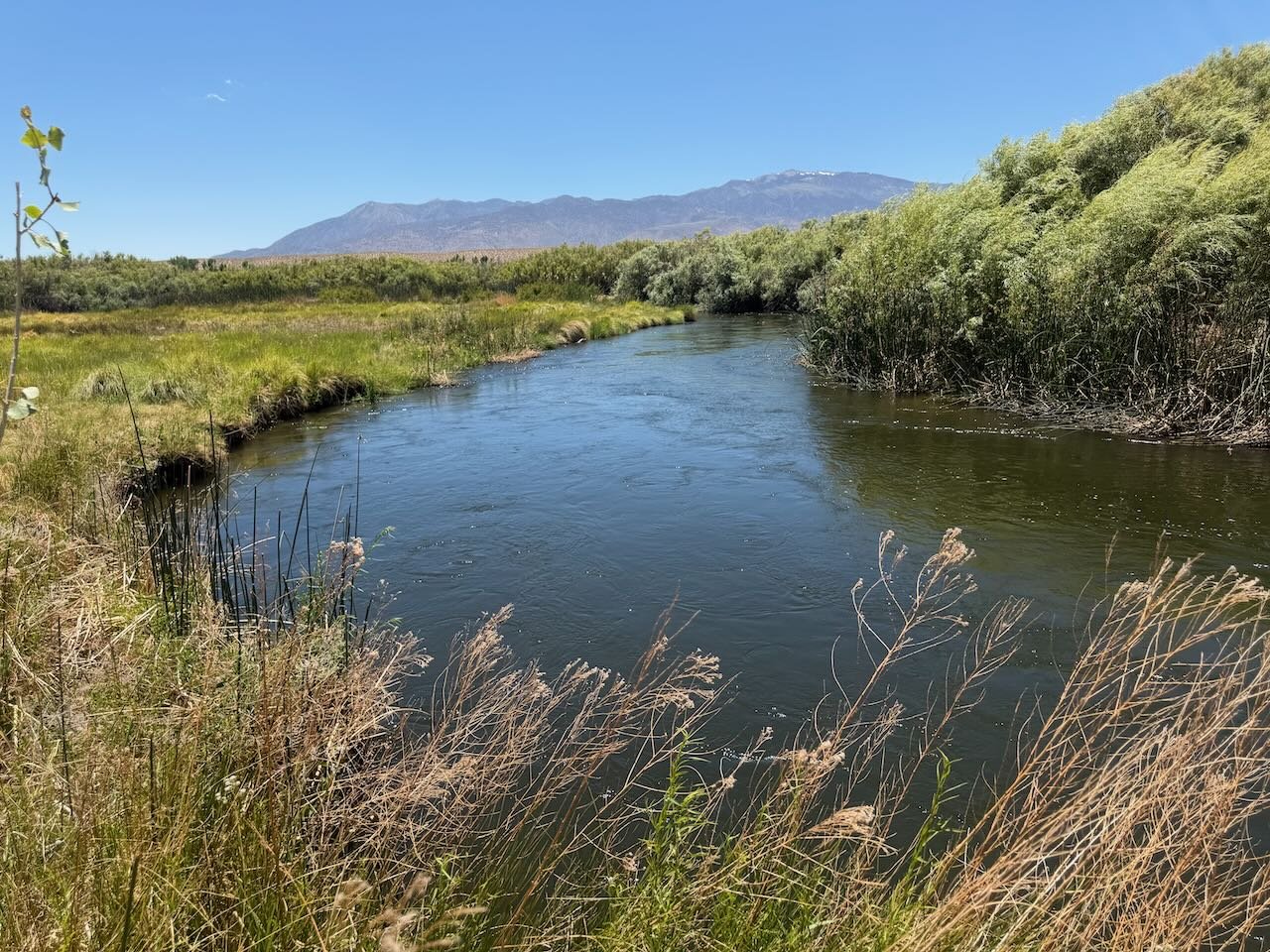
Fishing from the banks of the lower Owens River early or late in the days with elk hair caddis and streamers is how to fool the wild brown trout.
Lower Owens River
Wild Trout Section:
With day time temperatures in the 90’s it’s best to fish early and late in the day for the comfort of the fly fisher. An hour before sunrise and an hour after sunset is a good time to be fly fishing with streamers looking for bigger trout. Use size 6 and 10 wooly buggers, slumpbusters matukas and muddler minnows. Almost every evening there is a caddis hatch and fly fishers fishing when the sun goes down with size 16 and 18 elk hair caddis will find trout willing to take their dry flies. Mosquitoes are in full force early and late in the day on the lower Owens River.
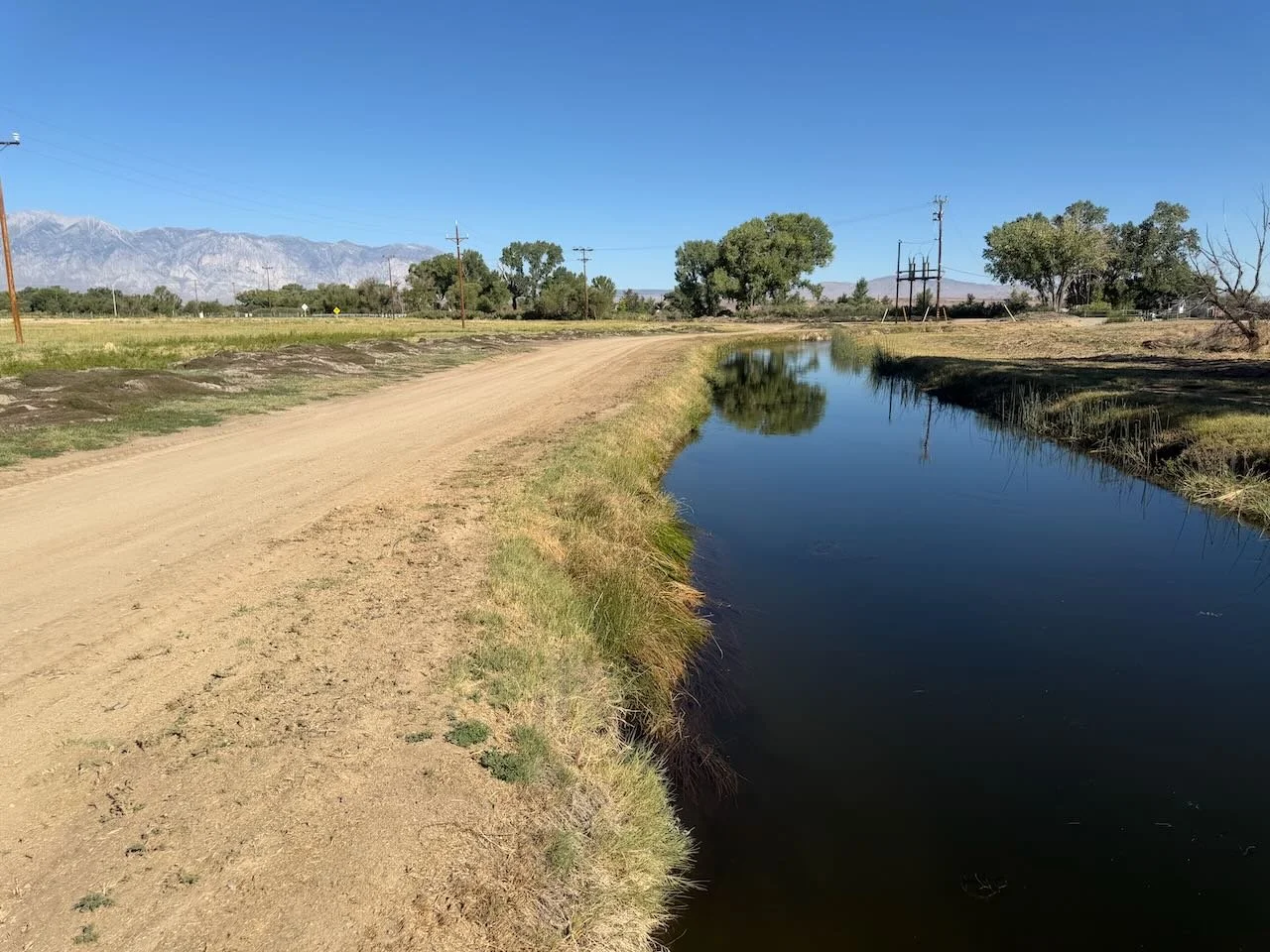
It takes a considerable amount of time for the canal echo system to fully recover, but the trout need to eat and will take dries, nymphs and streamers.
Bishop Creek Canal
Behind Bishop Veterinary Hospital:
Post dredging the trout are feeding on nymph drifted on the substrate. For nymphs fish with size 18 bead head flash back pheasant tail nymphs, size 18 olive quilldigons, size 16 Duracell nymphs, size 16 bead head flash back gold ribbed hare’s ears, size 12 green/gold wire Prince nymphs and size 12 stoner nymphs. Pulling streamers is producing trout, bass and the occasional carp. Use size 10 balanced leeches, Landon Mayers jigged pine squirrel leeches, wooly buggers, slumpbusters, muddler minnows and matukas. Mosquitoes have been active early and late in the day.
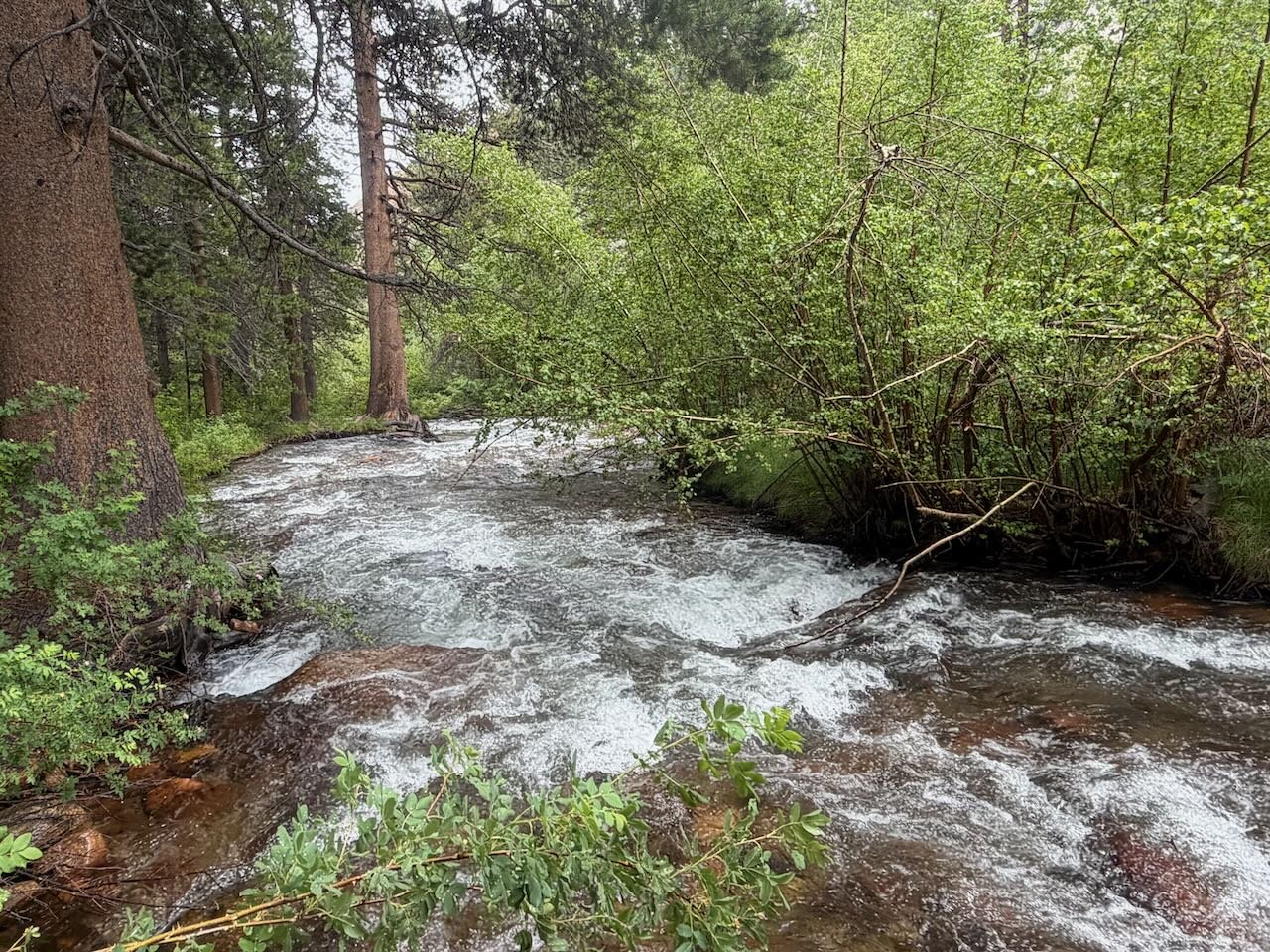
Bishop Creek flows are high and fly fishing the slower pools and side pockets with a dry and dropper is producing wild brown trout to 12 inches.
Bishop Creek Canyon:
Bishop Creek is flowing high and fast. Fly fishers working nymphs and dries in the pockets and pools will find wild brown trout willing to take their flies. This is the perfect water to be fly fishing with a dry and dropper rig. For the nymphs use size 16 tiger midges, size 16 zebra midges, size 16 green/gold brassies, size 14 Prince nymphs, size 18 bead head flash back pheasant tail nymphs and size 16 bead head flash back gold ribbed hare’s ears. For the dry fly you want to fish with a high visible fly and high floating fly like size 14 Adams parachutes, size 14 stimulators, size 14 Royal Wulff’s and size 14 elk hair caddis. Key to success is to walk along the banks of the creek looking for the quitter spots in pockets and pools. When you find these spots slowly and quietly walk up to where you can cast your rig of flies upstream into the spots holding trout. This approach to creek fishing applies to all the creeks in the Eastern Sierra from Lone Pine to Bridgeport.
High Altitude Creeks:
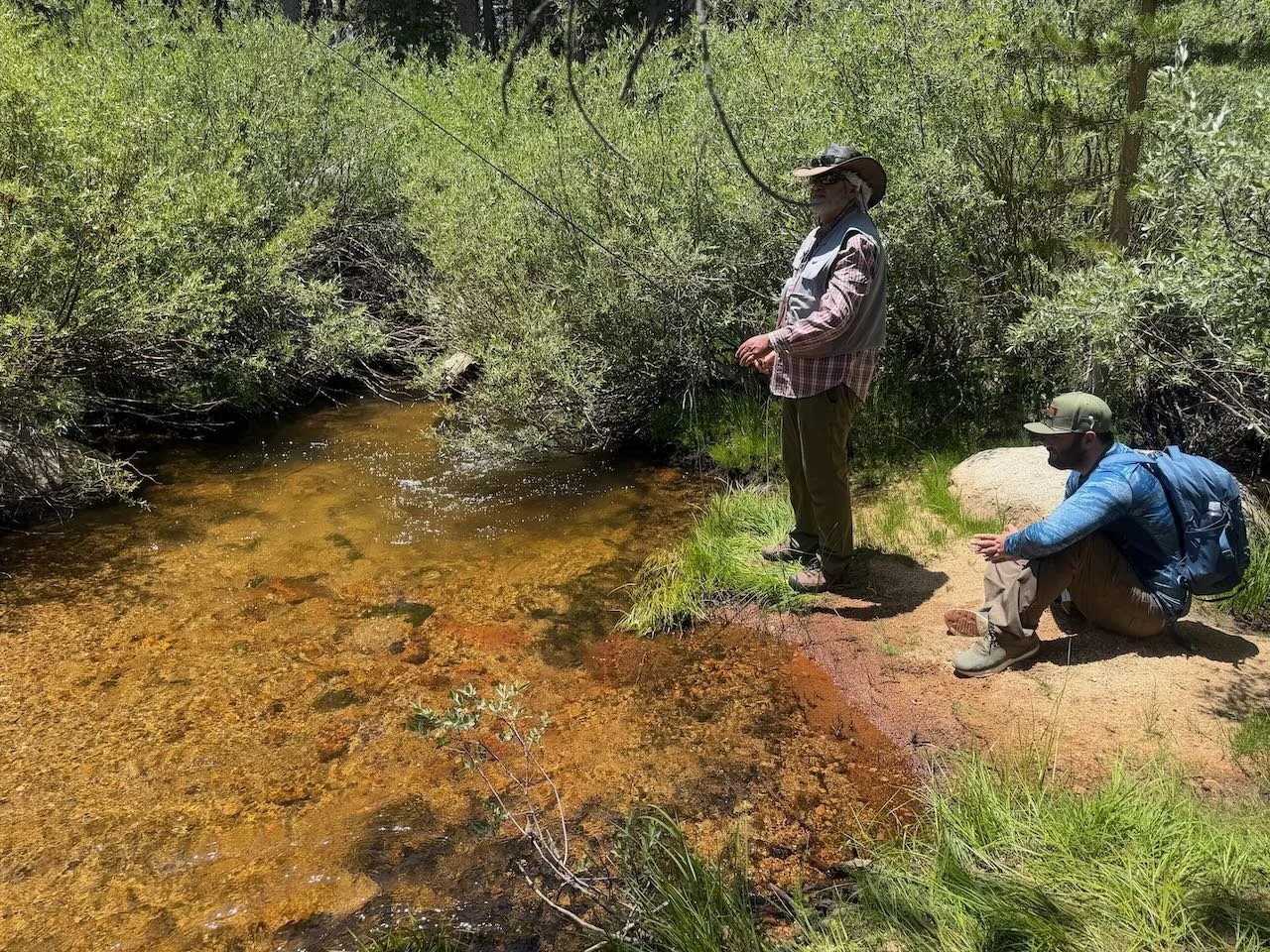
Dabbling flies on the water around the willow and in the tiny pockets will yield golden trout for fly fishers fishing high up in the canyons of the Eastern Sierra.
Attractor dry flies, tiny creeks that requires bush whacking and golden trout make for a great summers day of fly fishing. This is bush whacking and dabbling dry flies for small golden trout that make up for their size with their beauty. These streams are located high up in the canyons that drain the Eastern Sierra. Think of starting at the 8,000 to 10,000 foot level and higher. This is pleasant fishing days as the Owens Valley is heating up to the mid 90’s. Fish with size 14 Sierra bright dots, size 14 Sierra Adams, size 14 Royal Wulff’s, size 14 orange stimulators and size 14 Adams parachutes. There is so little casting room that the primary way of presenting the fly is to pick the fly off the water, pull the rod tip upstream and gently drop the fly back in the pool you are fishing in. Be patient and don’t set the hook to early when the golden trout take your dry fly.