
Summer heat is here. With the heat look for insect activity first thing in the morning and last thing at night. Mayflies, stoneflies and caddis flies are the insects the trout are feeding on the substrate and on the surface. Mosquitoes are showing up and are most active early and late in the day. It’s wet wading time on most Eastern Sierra waters. This is a great time to be using float tubes in upper elevation lakes. The freestone creeks that drain the Eastern Sierra are prime for a dry and dropper rig.
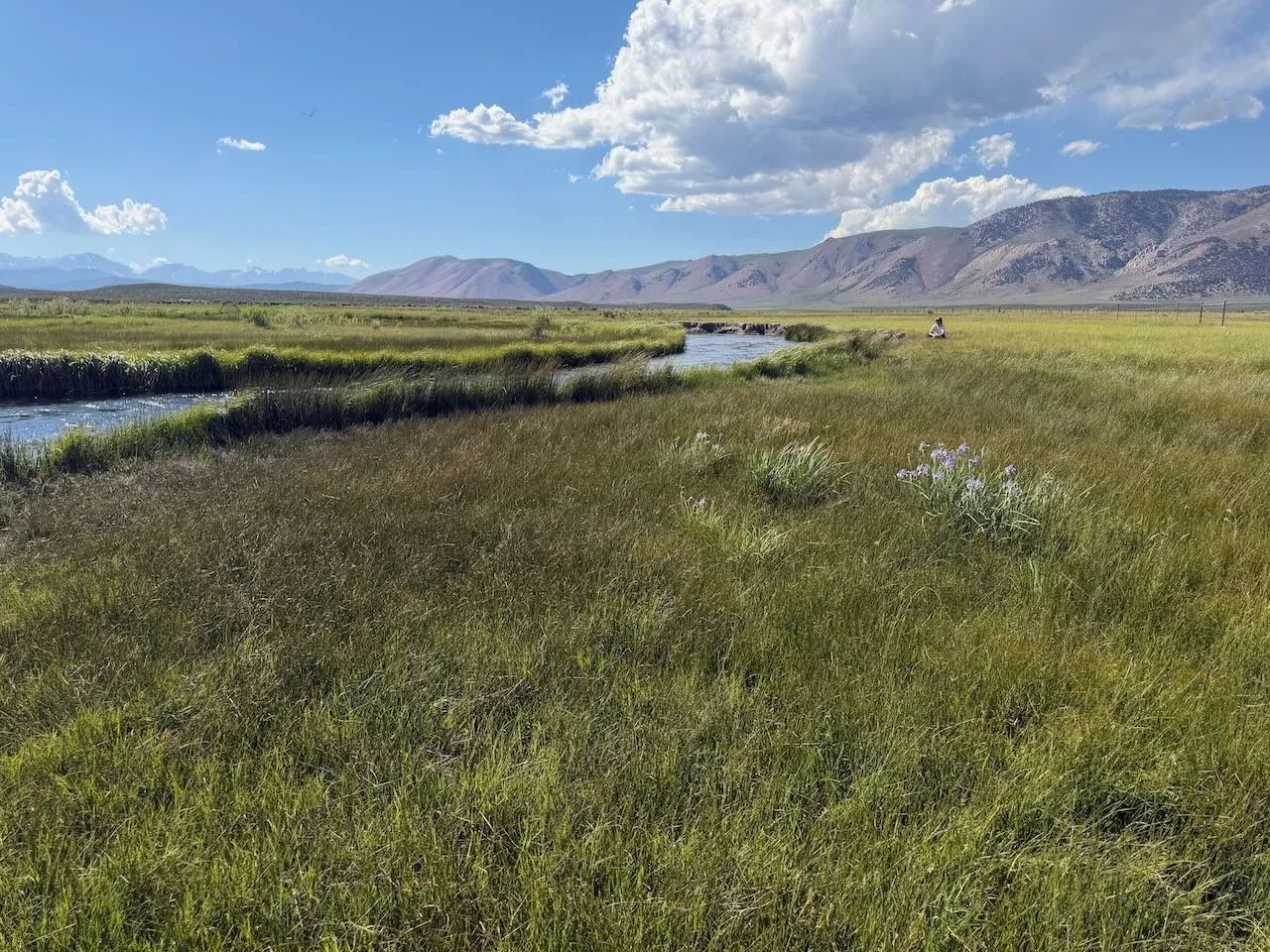
Summers in a meadow watching the river flow by is a great way to learn what the trout are doing in the river and how to fly fish for them.
East Walker River
Below the Miracle Mile Section:
Fishing has been slow with nymphs and dries as there has not been much of a mayfly or caddis hatch during the day. For nymphs use size 16 bead head flash back gold ribbed hare’s ear, size 14 Duracell nymphs, size 18 bead head flash back pheasant tail nymph, size 18 olive quilldigons, size 18 green/gold brassies, size 14 copper John’s and size 12 stoner nymphs. Dead drifting and stripping a size 6 articulated goldie, size 10 Landon Mayer’s jigged pine squirrel leech, size 10 black and blue balanced leeches and size 10 olive balanced leeches is fooling wild rainbows and browns from 10 inches to 20 inches. Fish these leeches in and around the obstacles in the river like large rocks and through the deeper holes.
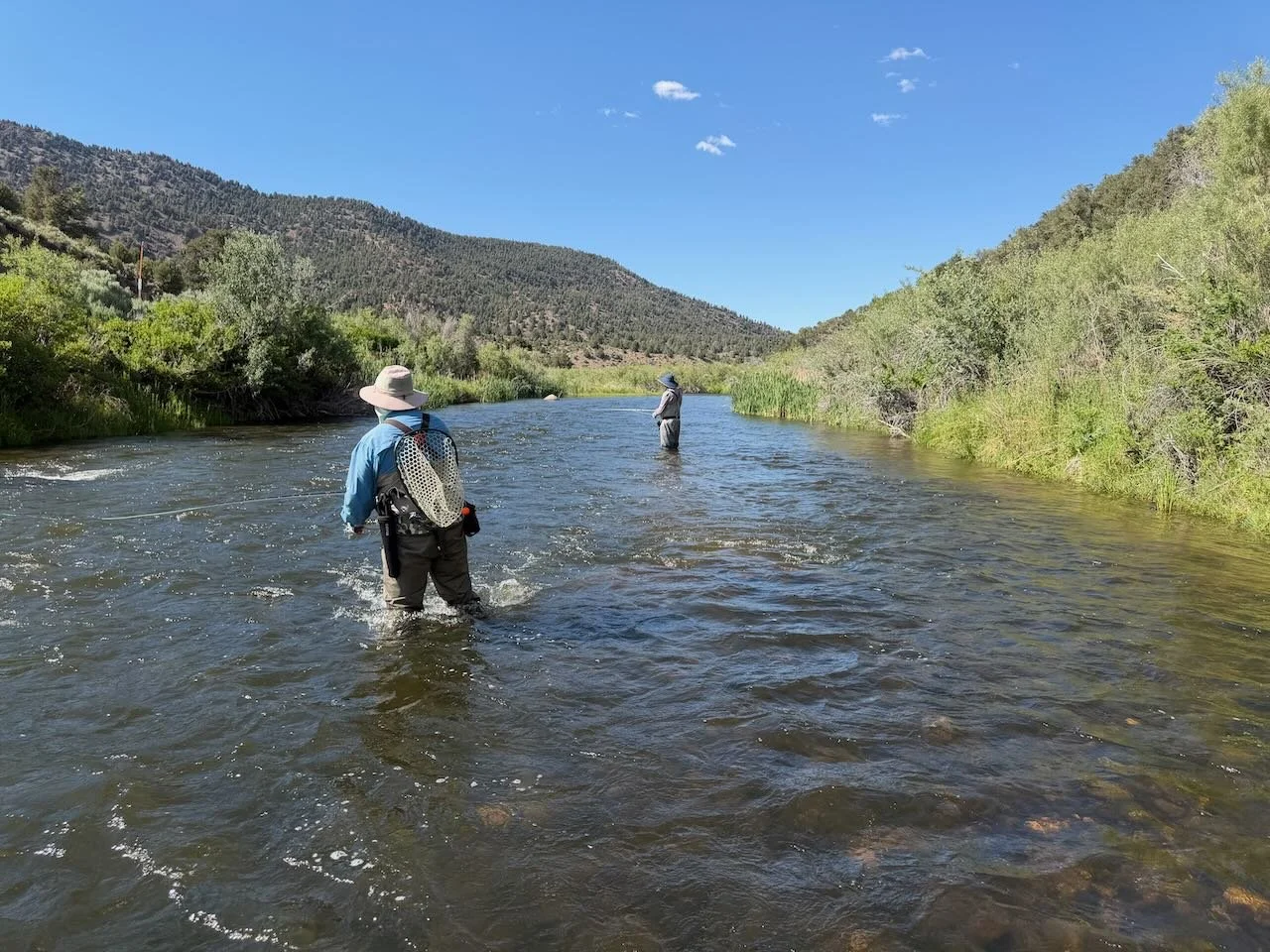
Fishing streamers around the obstacles that the trout are holding behind is where you will find 10 to 20 inch trout willing to take leech patterns.
Upper Owens River
Above Benton Crossing Bridge:
Nymphing has been the most productive method of fly fishing the upper Owens River right now for six to 16 inch wild rainbows and browns. Nymphing under an indicator or with a Euro rod with size 18 olive quilldigons, size 18 bead head flash back pheasant tail nymphs, size 16 bead head flash back gold ribbed hare’s ears, size 18 tiger midges, size 18 zebra midges and size 12 stoner nymphs is fooling the wild trout. The hatches have been inconsistent, but when you see fish rising switch to a dry fly and fish with size 18 Adams parachutes, size 18 blue wing olive parachutes, size 16 PMD parachutes and size 16 elk hair caddis. For those throwing size 6 and 10 wooly buggers, Hornberg’s, and slumpbusters are moving a few rainbows and browns to 18 inches. The mosquitoes are out so be sure to wear clothes that cover the skin and wear insect repellant.
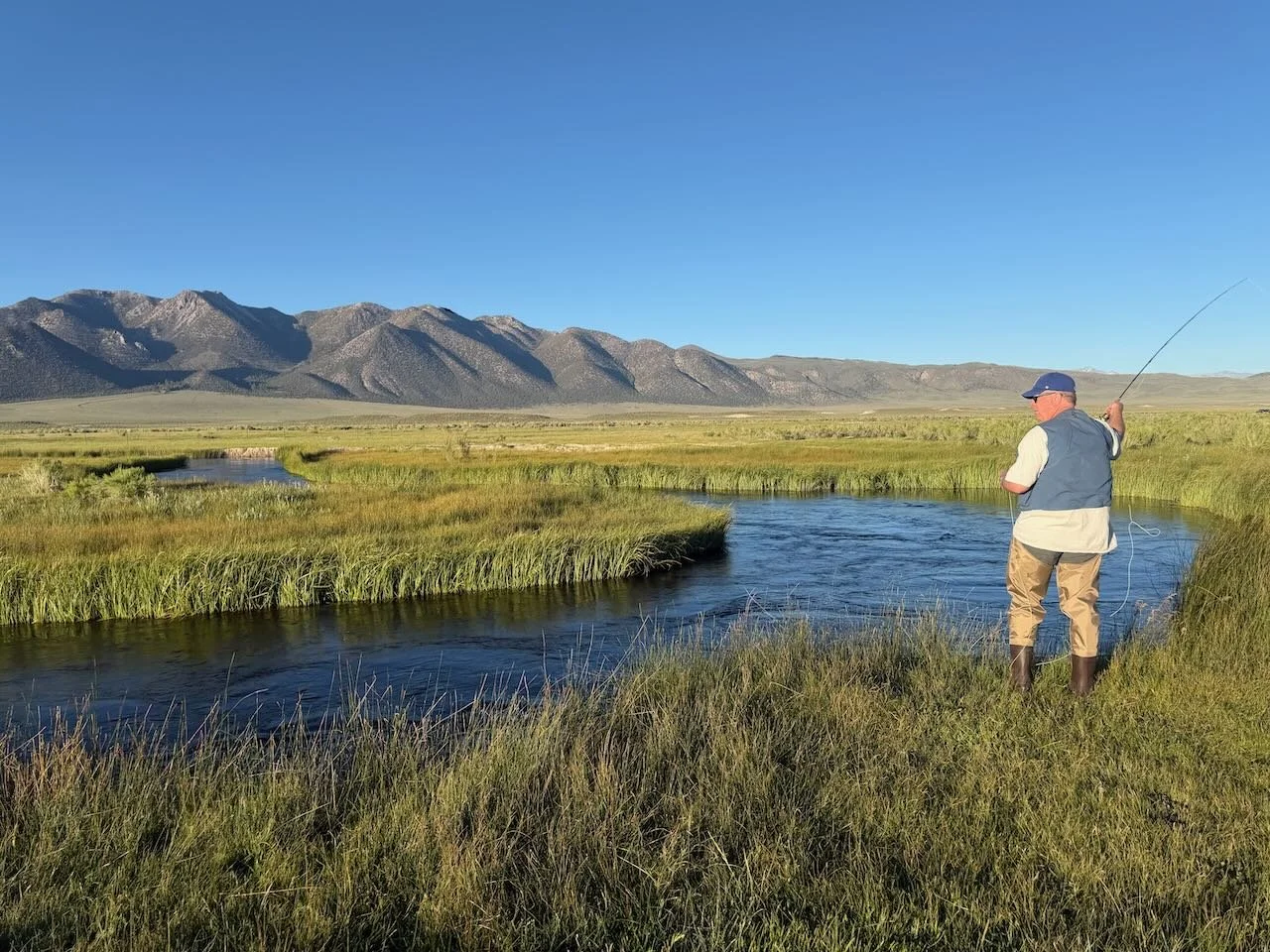
Working upstream with dries and nymphs thoroughly covering the water is how you will catch the wild trout in the upper Owens River.
Hot Creek
Interpretive Site:
Hot Creek and surrounding waters are in danger once again from KORE Mining resubmitting a drilling permit. Your voice is needed to stop KORE Mining from moving forward with exploratory drilling. For more information contact nohotcreekmine.com.
Early in the morning the trout are feeding on caddis and mayflies. Get to the creek around 8:00 A.M. rigged with a size 20 gray elk hair caddis, size 20 gray parachute caddis and size 20 gray X-caddis. The caddis are migrating upstream in the morning and since they are poor fliers they crash on the water and the trout are feeding on them. If you want to fish the caddis hatch show up on the creek around the time the sun goes behind the Eastern Sierra peaks. During the caddis migration is the start of trico hatch. The female tricos are hatching in the morning and the hatch is in full swing by 8:30 A.M. Use size 20 female trico dun parachutes, size 20 female trico dun sparkle duns and size 20 blue wing olive parachutes.
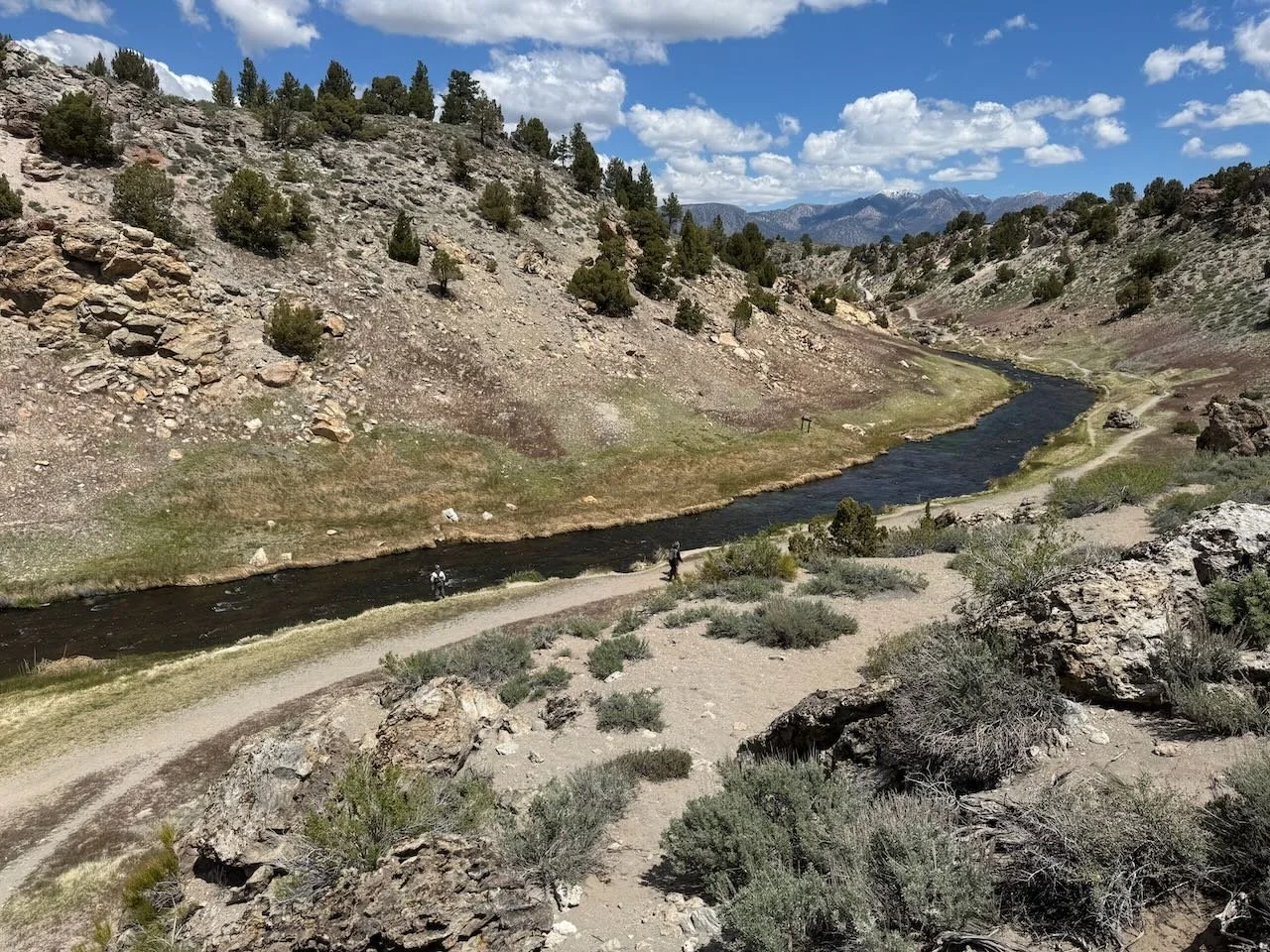
The lower Canyon Section of Hot Creek offers riffle sections where the fish have to feed reactively and fly fishers catch more fish.
Hot Creek
Canyon Section:
Nymphing in the canyon is getting tough as it is hard to drift nymphs in Hot Creek Canyon without hanging up on the weed beds which are quickly inundating the creek. Best thing to do is float dry flies in the tiny six to eight inch lanes between the weed beds. Start the morning fishing with size 20 gray elk hair caddis, size 20 gray X-caddis and size 20 gray parachute caddis. Once you see the mayflies on the water start fishing with trico female duns and spinner patterns. Use size 22 trico spinners, size 20 female dun trico parachutes and size 20 blue wing olive parachutes. When the hatches are over it’s time to go find another creek or river to fly fish.
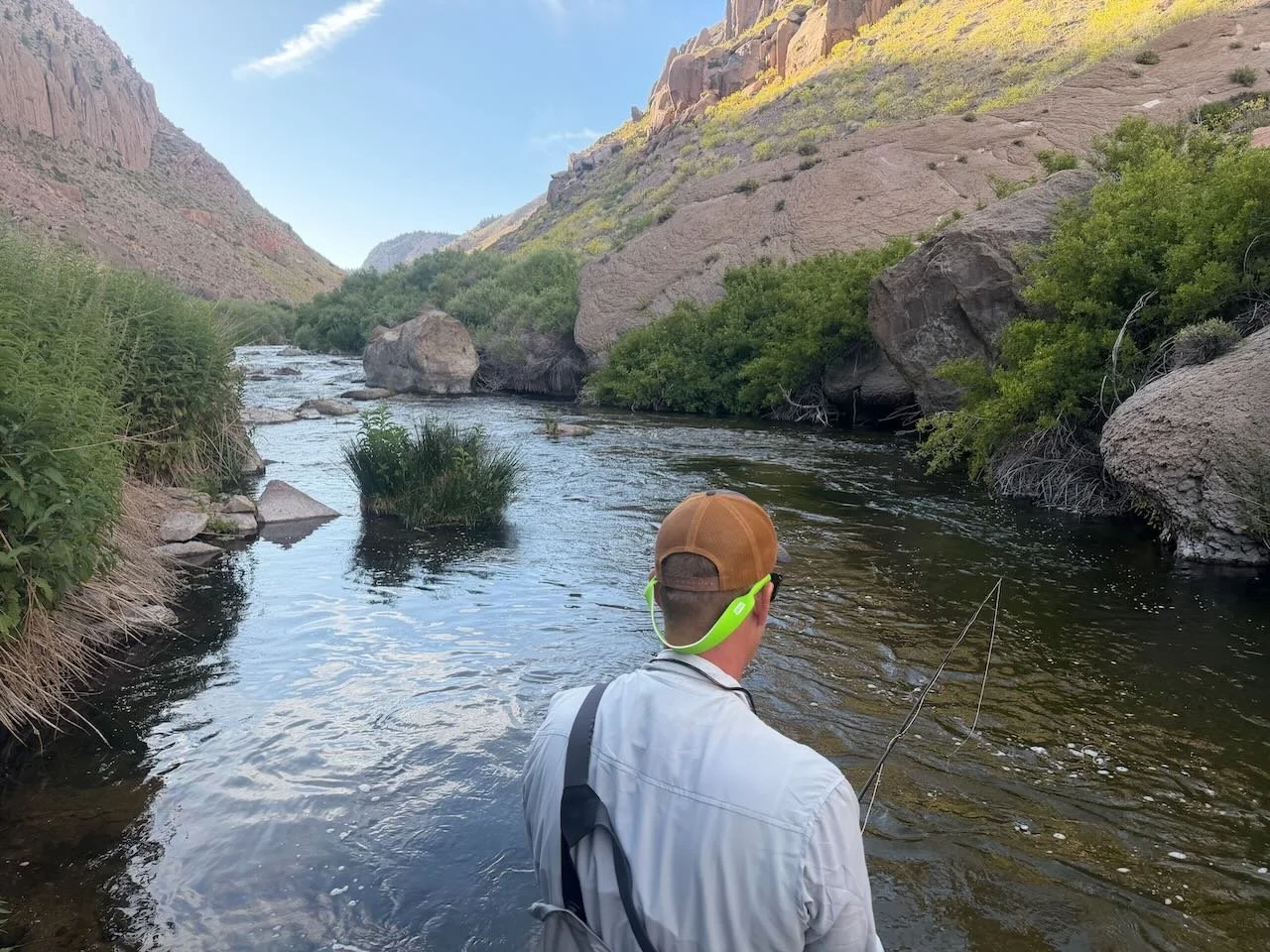
Owens River Gorge in the evening offers dry fly fishing and is a slightly cooler walk out after the fly fishing is done.
Owens River Gorge
Upper Power Plant:
A way to beat the heat walking out of the Owens River Gorge is to come out late in the evening after the sun has disappeared from the canyon. Upper Power Plant is best fished by getting in the river and wading upstream. Fishing a dry and dropper rig is producing wild brown trout from eight to 14 inches. For the dry fly use size 16 Adams parachutes, size 16 yellow stimulators, size 14 Royal Wulff’s and size 16 elk hair caddis. For the nymphs fish with size 16 green/gold brassies, size 14 Duracell nymphs, size 16 rainbow warriors, size 16 bead head flash back gold ribbed hare’s ears, size 18 bead head flash back pheasant tail nymphs and size 18 olive quilldigons. If your planning on using waders pack them in and out and put them on when your reach the river. Now is the perfect time to be wet wading. Watch out for rose bushes, stinging nettles and rattlesnakes. It’s hot out and make sure you’re carrying enough water to keep you hydrated in the heat of summer.
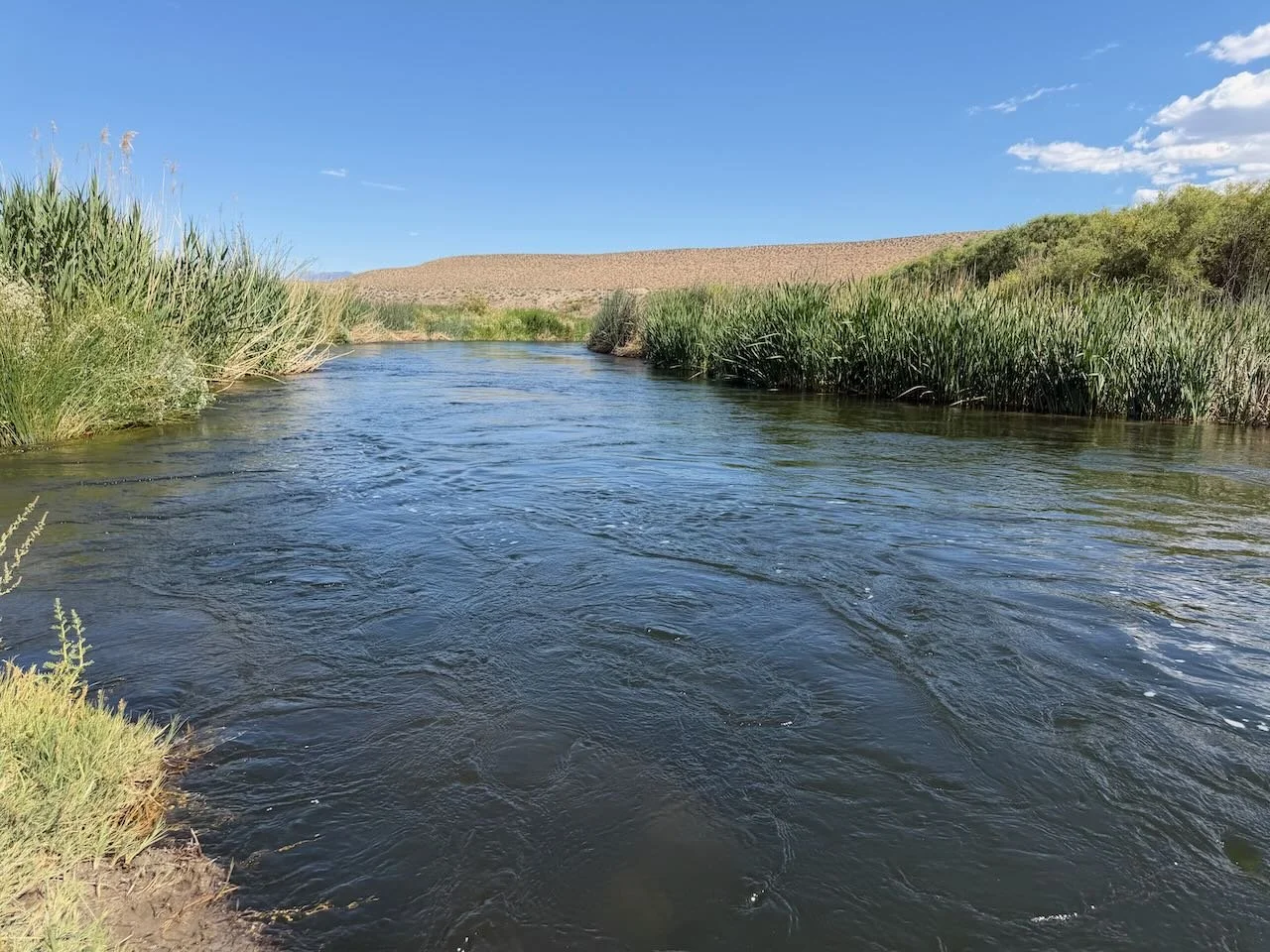
At flows of 400 CFS and banks lined with tulles and willows; fly fishers need to find spots where they can fly fish from the banks.
Lower Owens River
Wild Trout Section:
Flows continue to fluctuate around 400 CFS which is beyond safe for wading in the river. For fly fishers wanting to fly fish in the lower Owens River fish from the few banks that are not overgrown from tulles and willows. Checking the DWP lower Owens River flows before going out to the river is crucial to knowing how the river is flowing. Check out the flows at: http://wsoweb.ladwp.com/Aqueduct/realtime/norealtime.htm. Day time temperatures have been in the high 90’s and it’s not fun being on the river fishing in the heat. Try fishing the caddis ovipositing from the time the sun goes behind the Sierra peaks and the hatch stops. Fish with size 16 elk hair caddis and fish it by skittering a caddis.
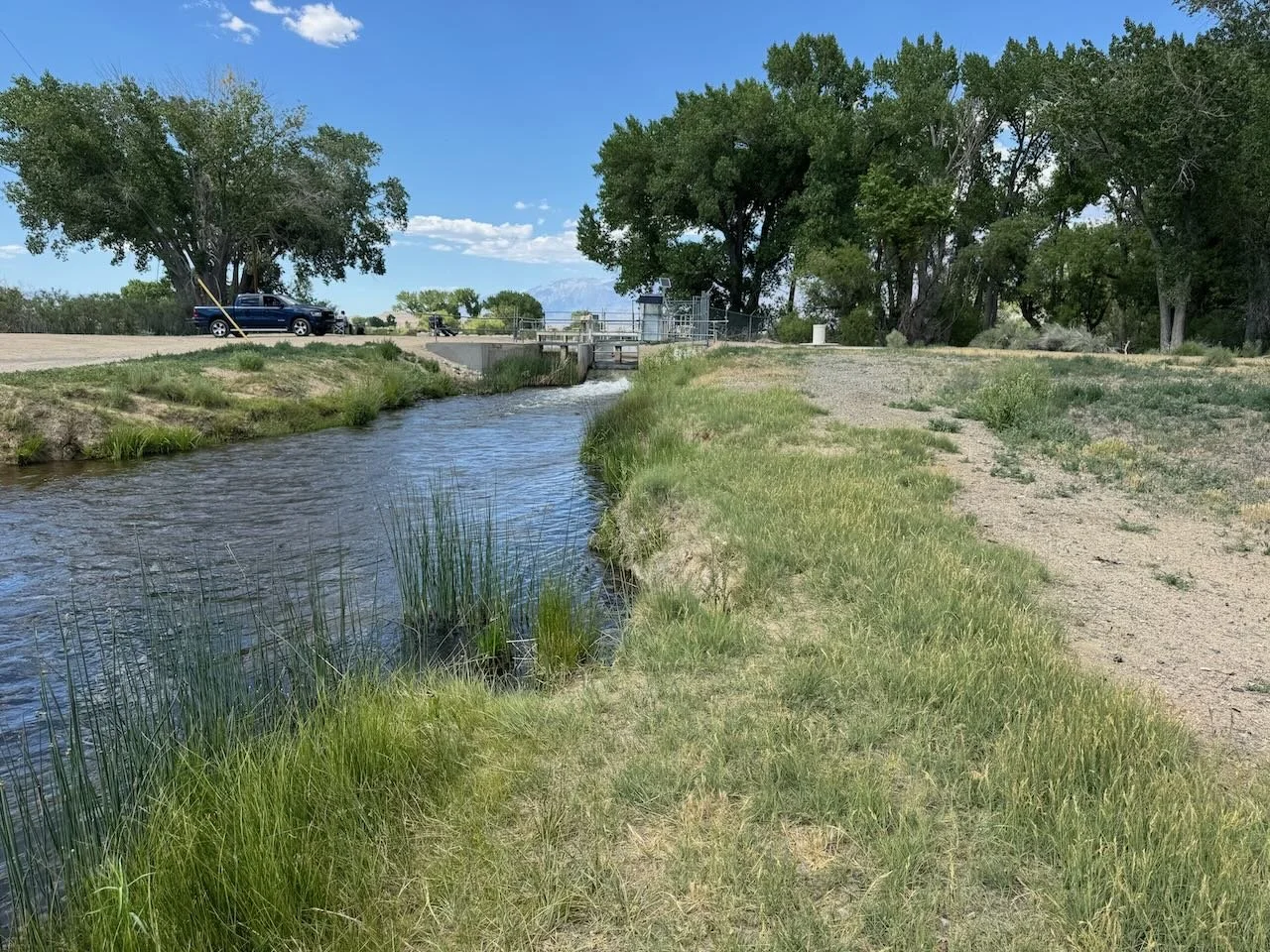
Bishop Creek Canal comes out of Bishop Creek and the fast water right below the weir is a good place to fish nymphs under an indicator or with a Euro Rig.
Bishop Creek Canal
Behind Bishop Veterinary Hospital:
There are a few fish to be caught during the day if you’re willing to fish in the heat. Best fishing is to skitter a caddis in the canal to the trout feeding on the ovipositing caddis in the evening when the light is off the canal. I park on the canal and wait for the sun to disappear over the peaks of the Eastern Sierra. Once the sun is off the water cast up stream and let a size 16 elk hair caddis dead drift along the opposite bank. Once it drags across the creek slowly strip it upstream. If the wind picks the fly off the water and lands it kind of hard back on the water let it drift downstream a foot by giving a foot of fly line through the end of the rod. If nothing hits the fly recast and work the caddis by dead drifting and skittering it again. The mosquitoes are out at night so be sure to wear clothes that cover skin and wear insect repellant.