
Dry flies, float tubing, wet wading, mosquitoes and bushwhacking freestone streams is what summers in the Eastern Sierra is all about. If it’s too hot where you are fly fishing go up in elevation until you find a temperature that is comfortable. Caddis and mayflies are hatching, ants and beetles are falling into the creeks and the trout are feeding on the substrate and the surface. It’s hot middle of the day in the Owens Valley. It’s cold at upper elevations when the sun is gone for the day.
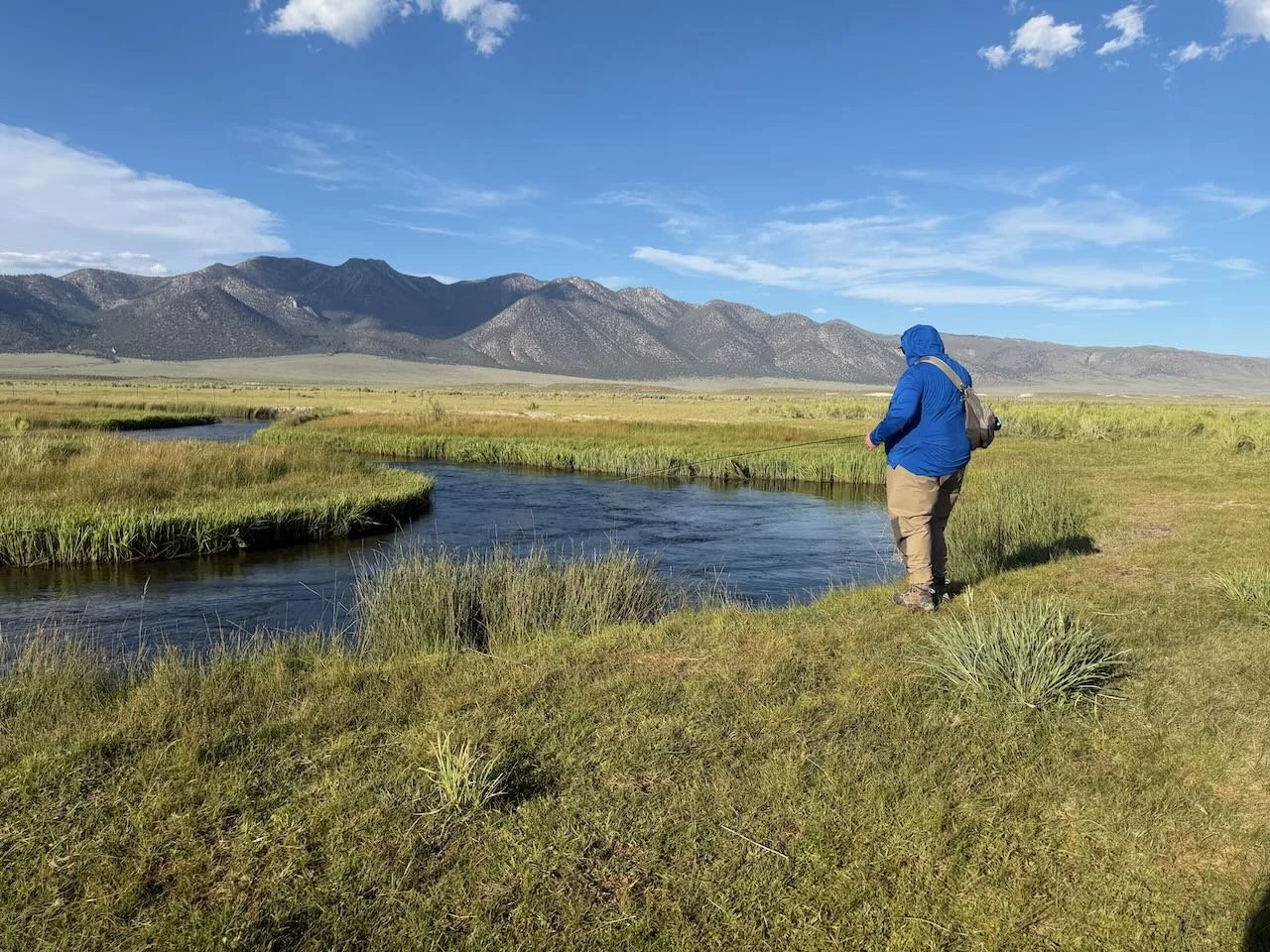
Afternoon winds make it hard for most fly fishers to cast, but if you know how to cast in the wind you can catch trout on the upper Owens River in the afternoons with caddis and mayfly imitations.
Upper Owens River
Above Benton Crossing Bridge:
Mornings have been calm and there is a mayfly hatch coming off that the trout are inconsistently feeding on and a few caddis skittering around the surface. Use size 16 elk hair caddis, size 18 blue wing olives, size 20 trico female dun parachutes and size 18 Adams parachutes. Nymphing has been the most consistent producer of trout on the upper Owens River. Nymph under an indicator or with a Euro rig with size 18 bead head flash back pheasant tail nymphs, size 18 olive quilldigons, size 18 Frenchie’s, size 12 stoner nymphs, size 14 copper John’s and size 16 Duracell nymphs. Looking for a trophy trout, fish streamers an hour before sunrise and an hour after sunset. Fish with size 6 and 10 wooly buggers, slumpbusters, muddlers and matukas. Afternoons have been windy and most fly fishers have been giving up in the wind. Learning to cast in the wind will produce trout for those fishing with nymphs.
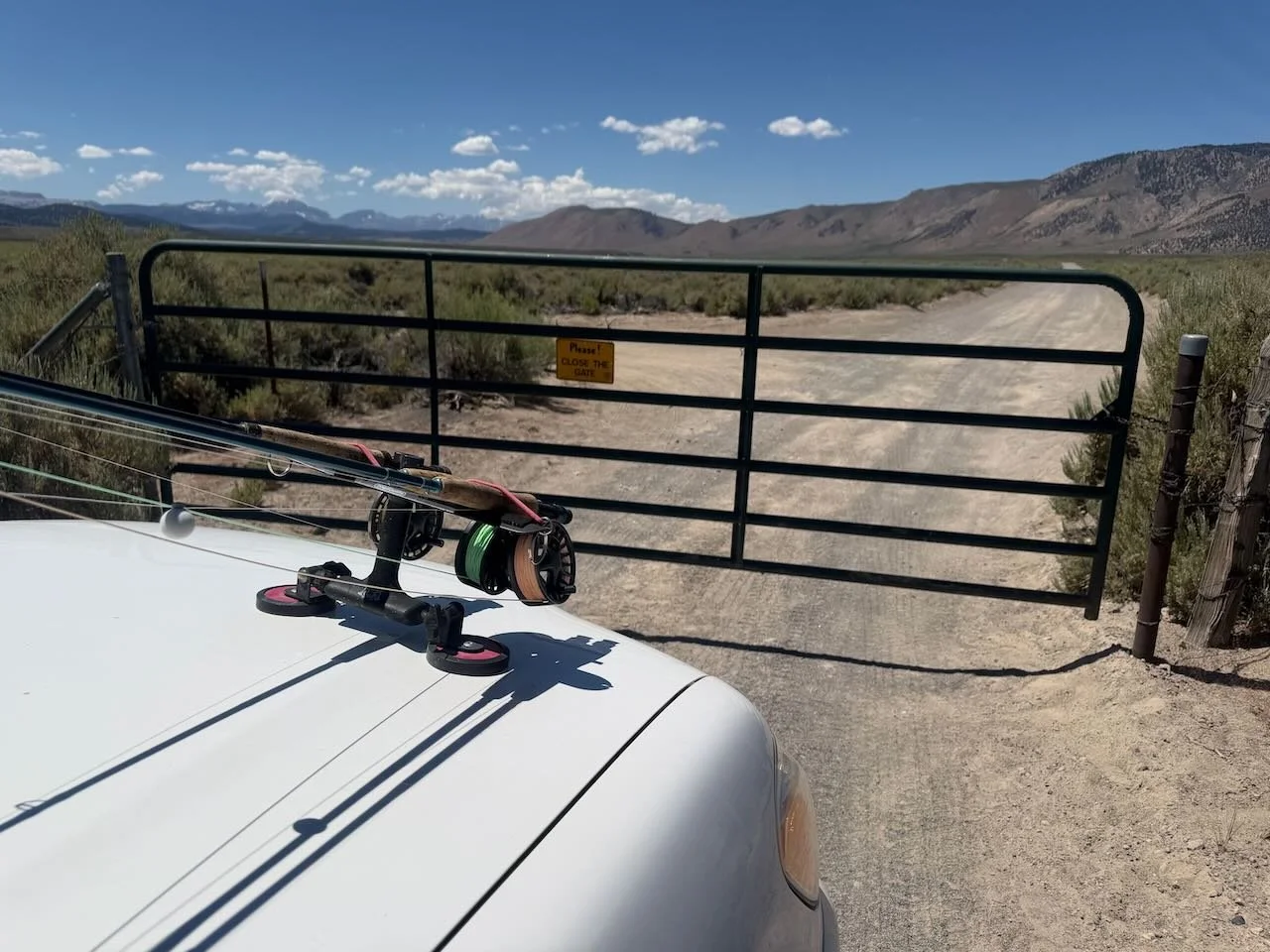
The gate on the main dirt road above Benton Crossing Road is closed and fly fishers need to open and close the gate as they drive through this gate to access waters upstream.
Hot Creek
Interpretive Site:
Easy access and early morning hatches have fly fishers dry fly fishing the Interpretive site. Be on the water by 8:00 A.M. or earlier to fish the caddis migration and the female dun trico hatch. For the caddis migration fish with a size 20 gray elk hair caddis, size 20 gray parachute caddis and size 20 X-caddis. The trico hatch starts with the female trico duns coming off the water by 8:30. Fish with size 20 female trico dun parachutes, size 20 female trico sparkle duns and size 20 blue wing olive parachutes. The key to success on the Interpretive site is to be on the water early, be rigged up when you get there and cast to rising fish with a drag free drift and set the hook when the trout take your flies.
Hot Creek and surrounding waters are in danger once again from KORE Mining resubmitting a drilling permit. Your voice is needed to stop KORE Mining from moving forward with exploratory drilling. For more information contact nohotcreekmine.com.
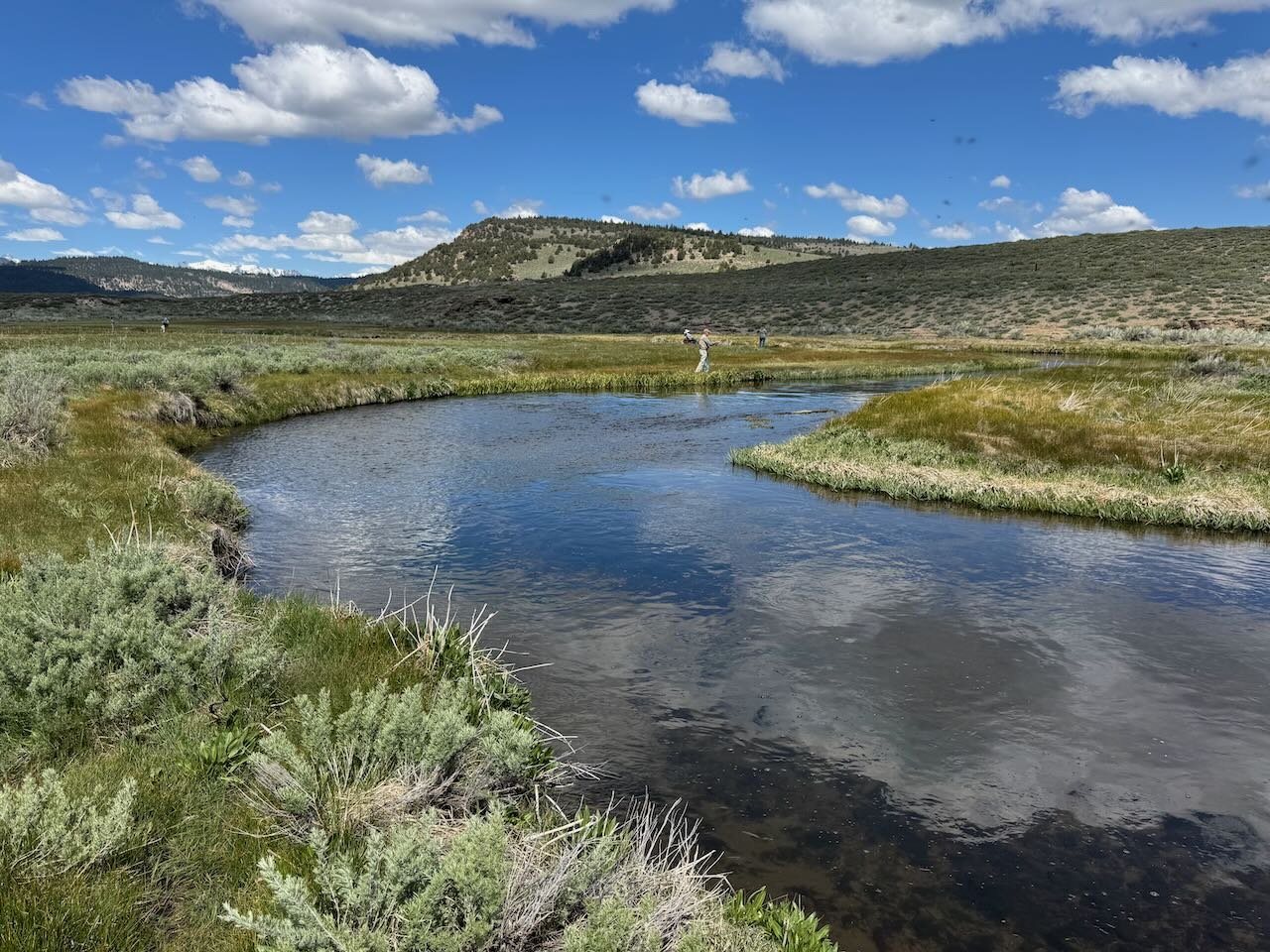
The Interpretive Site of Hot Creek is the perfect place to cast dry flies to rising trout.
Hot Creek
Canyon Section:
This time of the year is dry fly fishing time in Hot Creek Canyon. Be on the creek early rigged up with a dry and dry rig. Use a size 16 Adams parachute, size 16 elk hair caddis and a size 14 stimulator for the big dry fly. For the small caddis and mayflies fish with size 20 gray elk hair caddis, size 20 gray parachute caddis and size 20 X-caddis, size 20 female trico dun parachutes, size 20 female trico sparkle duns and size 20 blue wing olive parachutes. Fish the dry and dry rig in the tiny lanes in between the weed beds.
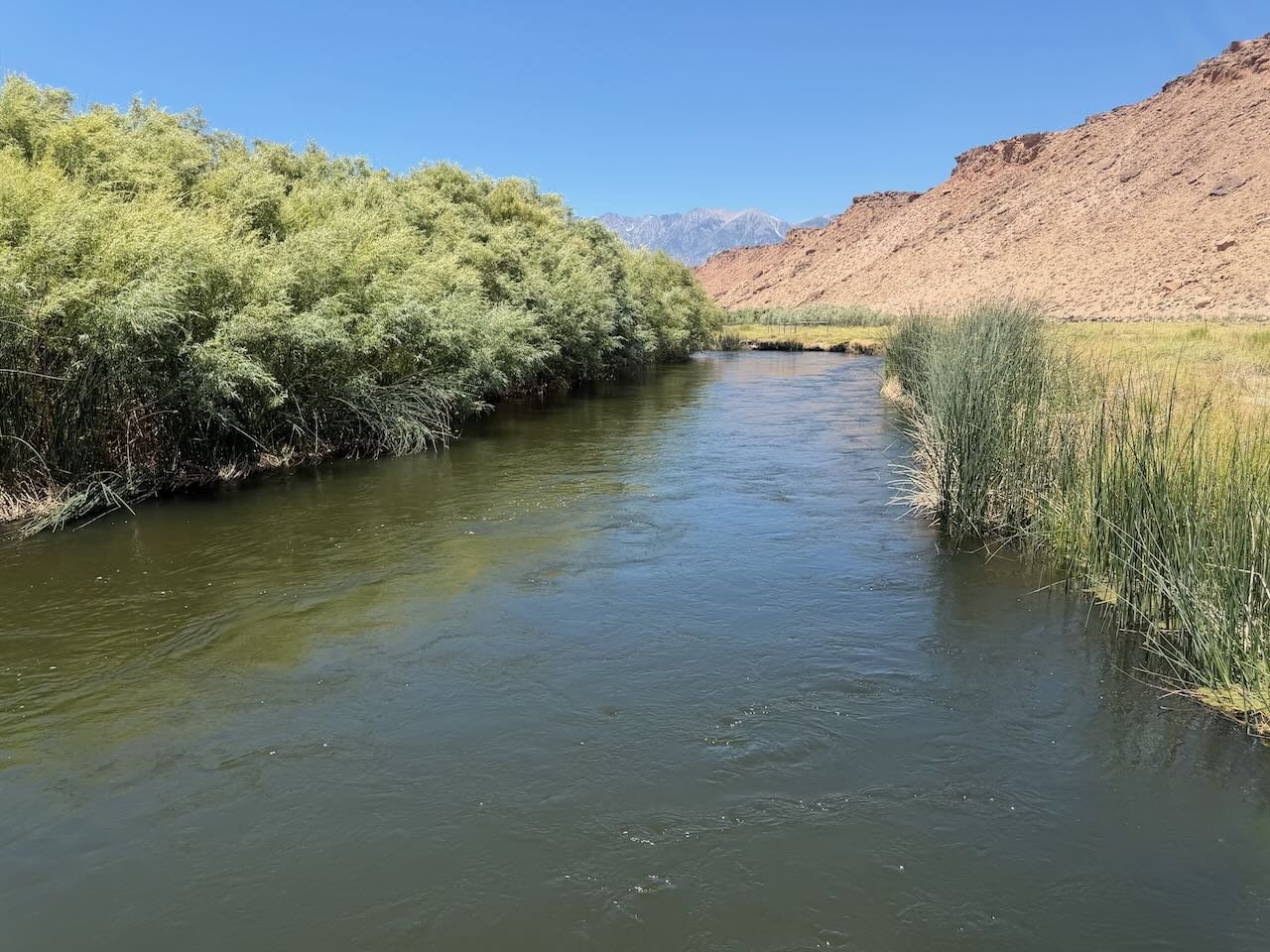
At high flows fly fishers cannot safely wade the lower Owens River and must fish from banks that are not inundated with tulles and willows.
Lower Owens River
Wild Trout Section:
Hot days of July on the lower Owens River is time to be on the river early and be done fly fishing by 10:00 A.M. or start fly fishing in the evening when the sun goes behind the Eastern Sierra. Fish with size 16 elk hair caddis, size 16 X-caddis and size 16 stimulators. For streamers use olive, tan and black streamers in size 6 or 10. Use wooly buggers, slumpbusters and muddler minnows. The only safe way to fish the river right now is to fish from the banks in those areas without willows and tulles.
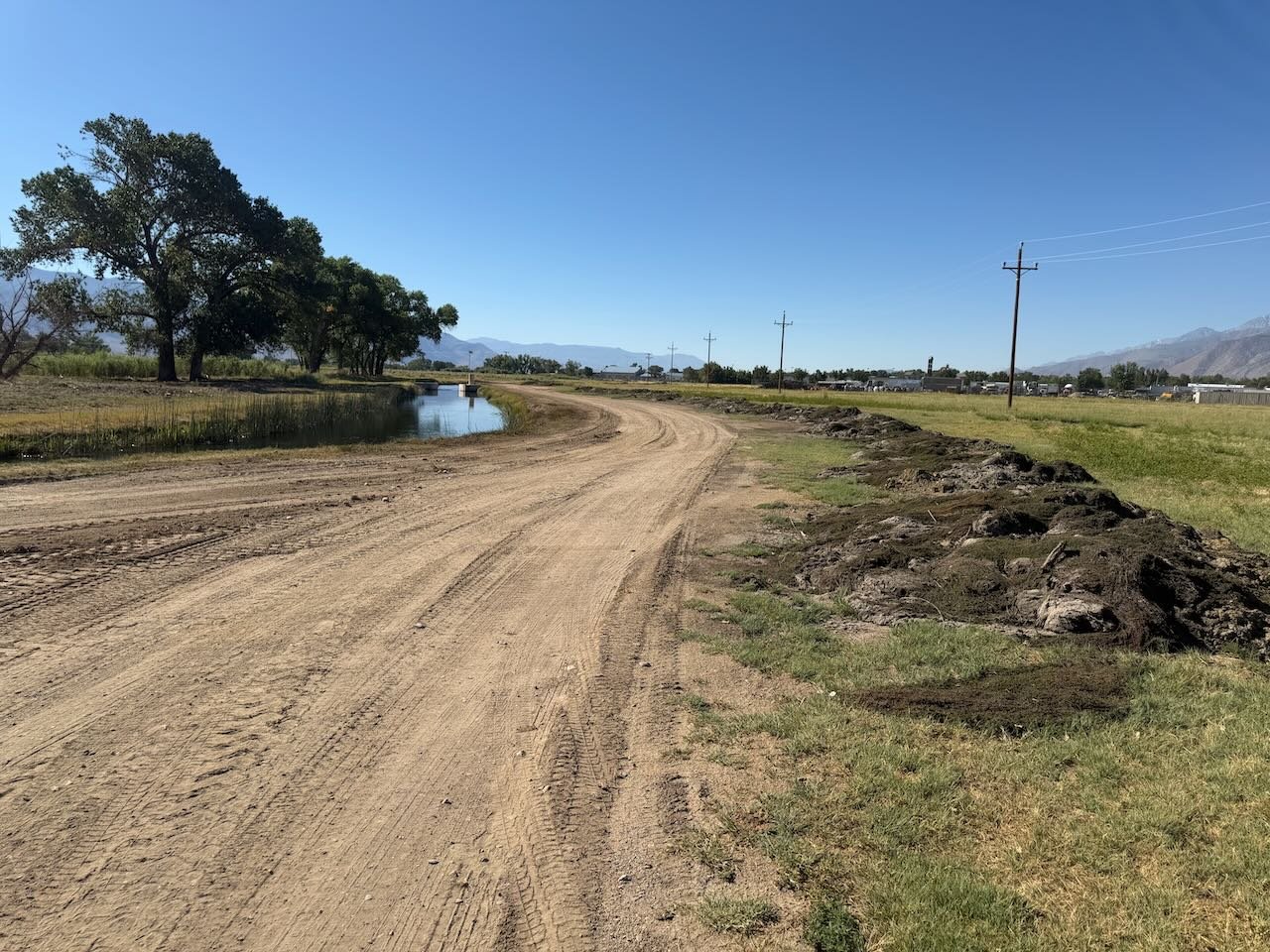
DWP has dredged Bishop Creek Canal and created some deeper runs and have removed a lot weed beds from the canal.
Bishop Creek Canal
Behind Bishop Veterinary Hospital:
DWP has dredged the canal and piled up the vegetation and mud along the dirt road that parallels the canal. If you are on the water early or late in the day be prepared for the mosquitoes. Caddis in the evening and mayflies in the mornings are the insects the trout are feeding on. For nymphs fish with size 18 bead head flash back pheasant tail nymphs, size 18 olive quilldigons, size 16 Duracell nymphs, size 16 bead head flash back gold ribbed hare’s ears, size 12 green/gold wire Prince nymphs and size 12 stoner nymphs. Steamers are fooling bass, stocked trout and wild brown trout. Use size 10 brown Landon Mayer’s jigged pine squirrel leeches, size 10 balanced leeches and size 10 wooly buggers.
High Altitude Creeks:
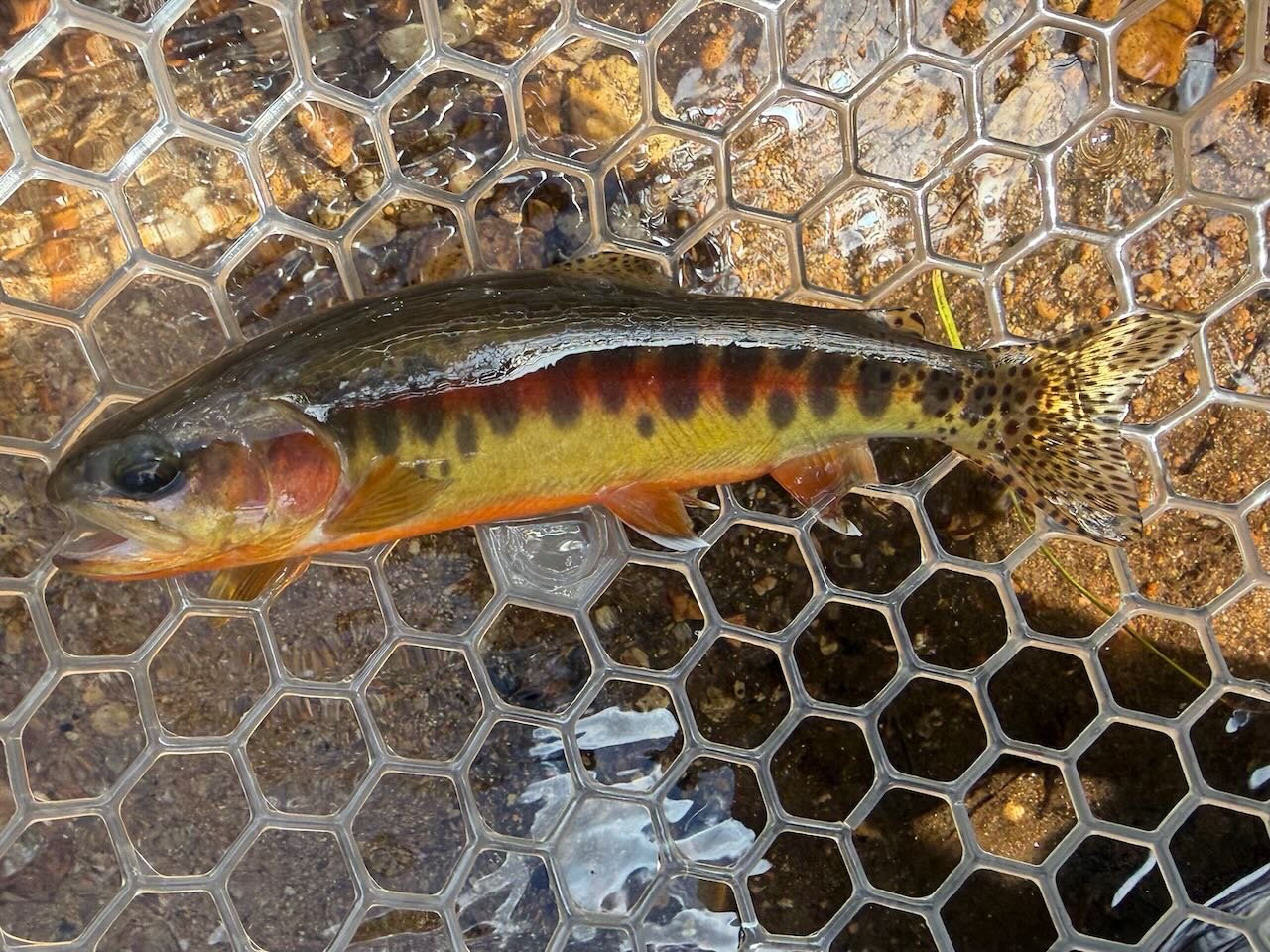
Golden trout are prized by fly fishers as they require an effort to access the high altitude waters that these fish inhabit.
Summer is the time to be exploring high altitude creeks for golden trout. The golden trout live in creeks above 8,000 feet. Days are much cooler at these elevations. This is bush whacking style of fishing with attractor dry flies. Fish with size 14 Sierra bright dots, size 14 Sierra Adams, size 14 orange stimulators and size 14 Adams parachutes. This is perfect water to be fishing with a Tenkara rod. This rod allows the fly fisher to easily dabble the dry fly on the surface of the water where the trout are looking for food. The golden trout are small, six to nine inches, but they are the prettiest trout found in the Eastern Sierra.