
Wet wading, hatches and dry fly fishing is what summer fly fishing is all about. A dry and dropper is the perfect way to fish the freestone creeks draining the canyons of the Eastern Sierra. Caddis are the hatch of summer along with mayflies and stoneflies. Upper elevation lakes are the perfect place to spend an afternoon floating around in cool water while pulling streamers, fishing dry flies and using a dry and dropper rig. Mosquitoes are showing up and are most active early and late in the day.
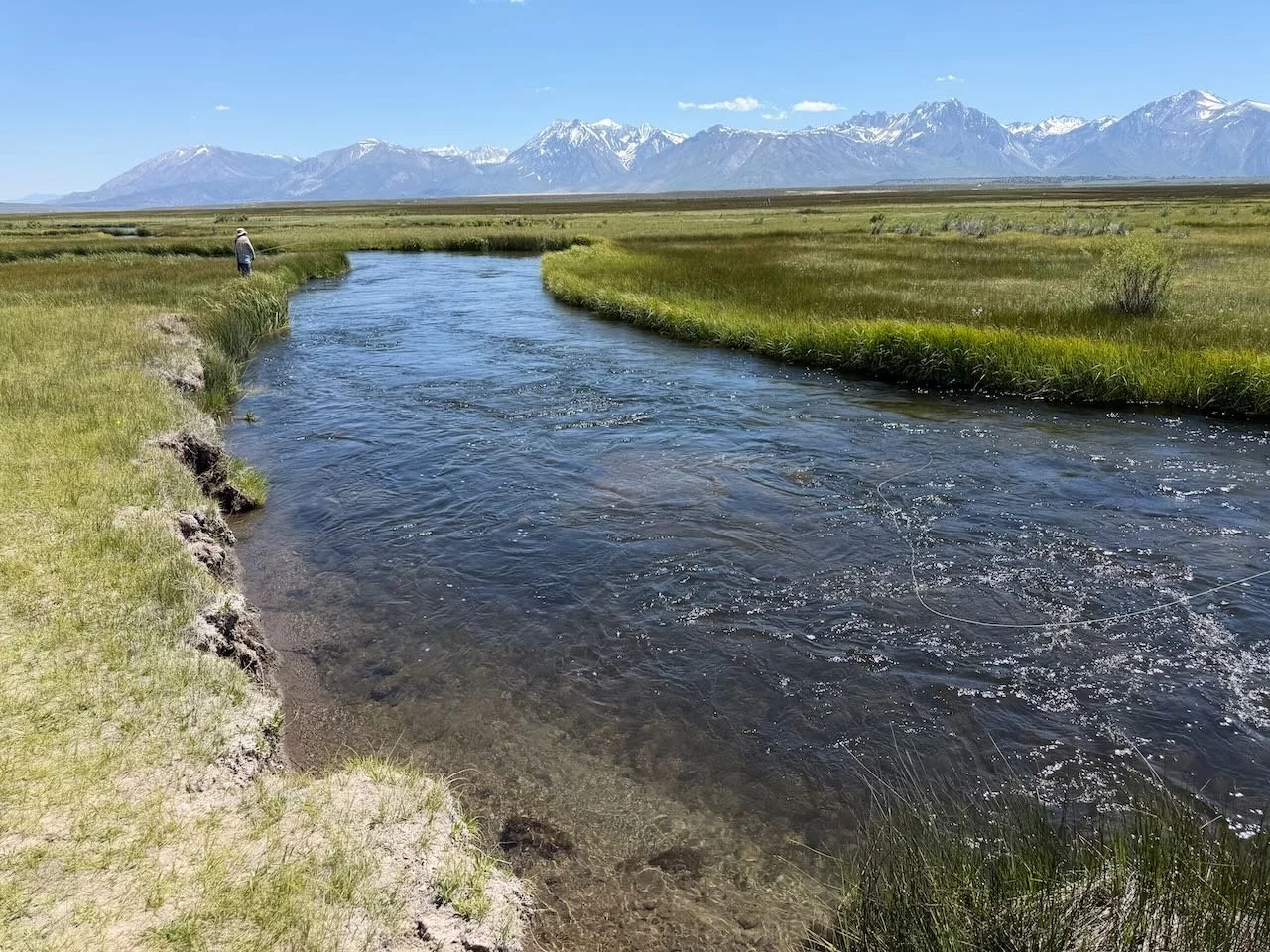
Trout rising to caddis in the afternoon winds on the upper Owens River is a perfect summers day of fly fishing.
East Walker River
Miracle Mile Section:
Streamers have been producing browns and rainbows for fly fishers fishing with size 10 balanced leeches and size 10 Landon Mayer’s jigged pine squirrel leeches. Fish these with a dead drift right on the substrate or strip them around the obstacles in the river like rocks. Nymphing with size 18 olive quilldigons, size 18 bead head flash back pheasant tail nymphs, size 18 rainbow warriors, size 14 Duracell nymphs, size 16 bead head flash back pheasant tail nymphs and size 16 cream caddis nymphs. Key to success is covering water looking for trout that are rising to the hatching mayflies.
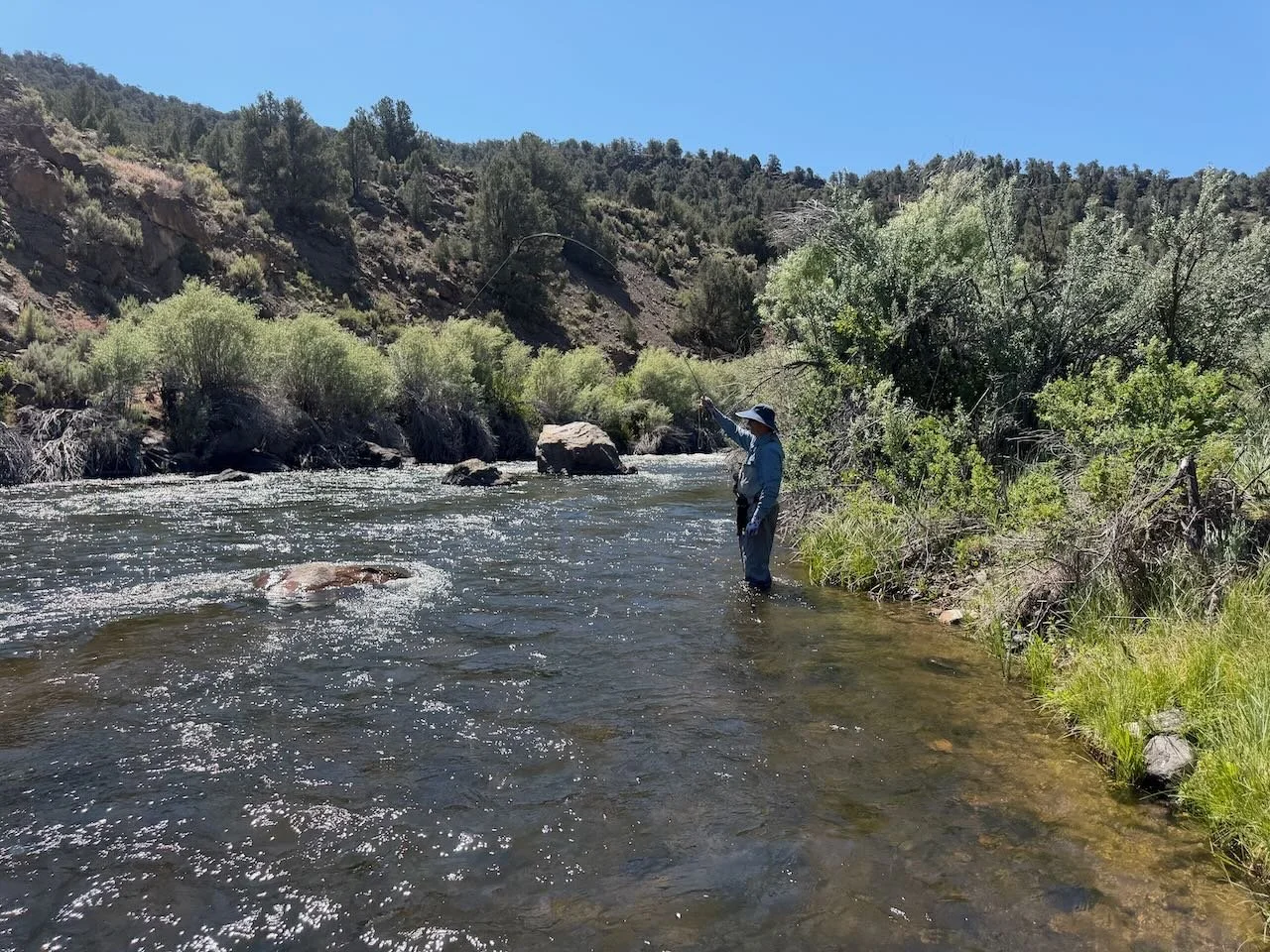
Nymphing in the pockets created by rock and boulders in the East Walker River is producing trout for fly fishers fishing under an indicator or with a Euro rig.
Upper Owens River
Above Benton Crossing Bridge:
Insect hatches are bringing the trout to the surface to feed on caddis and mayflies. Caddis are being blown onto the surface in the afternoon winds and the trout are taking advantage of these caddis. Fish with size 18 elk hair caddis, size 18 X-caddis and size 18 parachute caddis. Cast your flies close to the banks where the wind is blowing the caddis onto the wind. Mid-day hatches of mayflies are bringing trout to the surface. Fish with a size 18 blue wing olive parachutes, size 18 olive sparkle duns and size 18 Adams parachutes. Nymphing with an indicator or a Euro rig is the way to present your nymphs to the trout. Fish size 18 bead head flash back pheasant tail nymphs, size 18 olive quilldigons, size 16 Duracell nymphs, size 16 bead head flash back gold ribbed hare’s ears, size 18 Frenchie’s and size 16 rainbow warriors in the pockets and riffles. The mosquitoes are out so be sure to wear clothes that cover the skin and wear insect repellant.
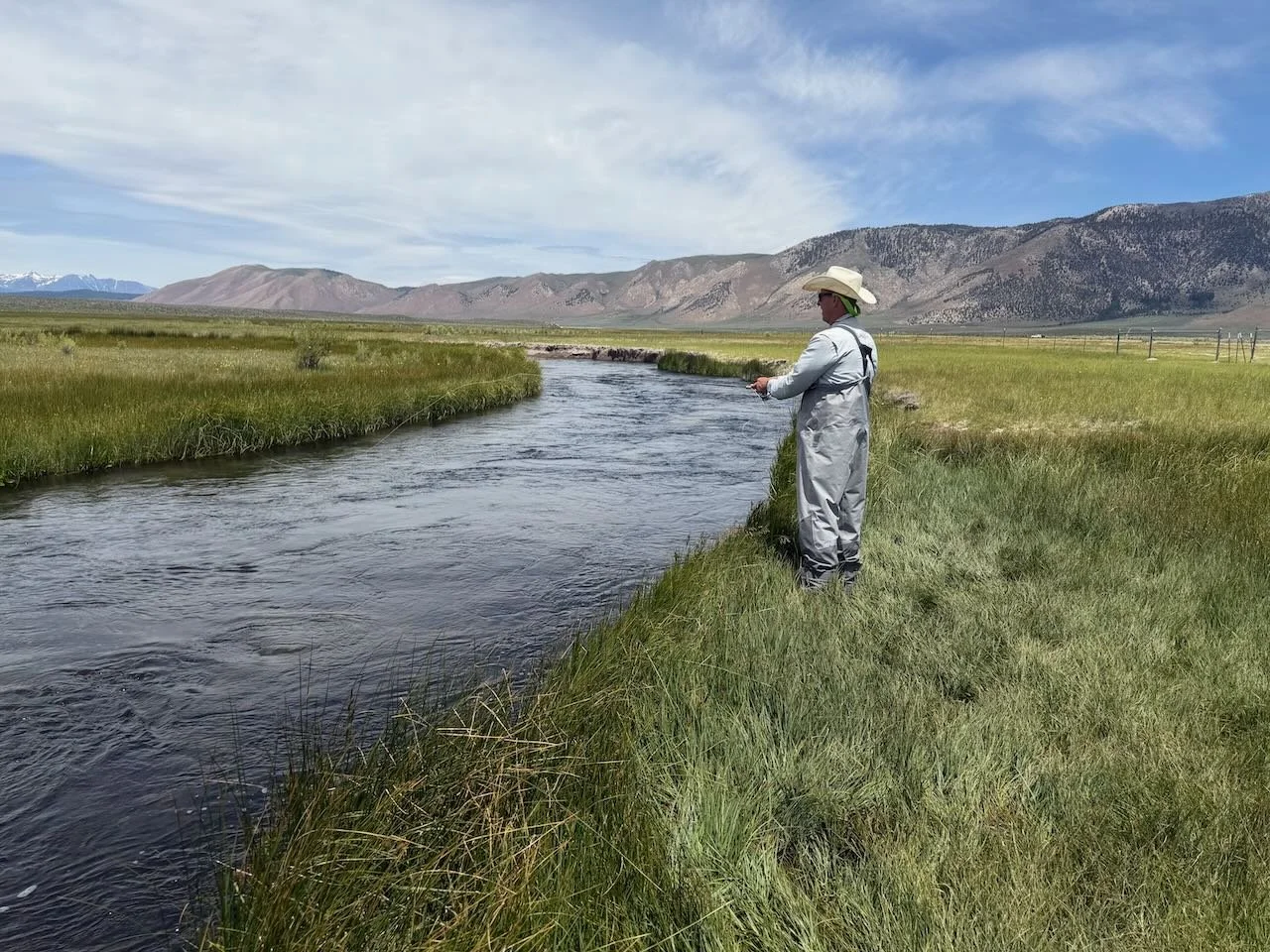
Working nymphs and dries in the pockets and riffles is producing wild brown and rainbow trout to 12 inches in the upper Owens River.
Hot Creek
Interpretive Site:
Hot Creek and surrounding waters are in danger once again from KORE Mining resubmitting a drilling permit. Your voice is needed to stop KORE Mining from moving forward with exploratory drilling. For more information contact nohotcreekmine.com.
Mornings on the Interpretive Site of Hot Creek starts with a caddis migration. Just like salmon and steelhead migrate upstream to reproduce so do caddis. Caddis are poor fliers and often crash on the water during the morning caddis migration and the trout take advantage of the caddis on the surface by feeding on them. Use size 20 gray elk hair caddis, size 20 gray parachute caddis and size 20 X-caddis to fool the trout feeding on the crashing on the water caddis. As the caddis migration is taking place look for hatching female tricos. Use size 20 female trico parachute duns, size 20 female trico dun sparkle duns and size 20 blue wing olive parachutes. The caddis hatch is coming off late in the day. Show up about the time the sun is going behind the Sierra peaks to fish the evening caddis hatch.
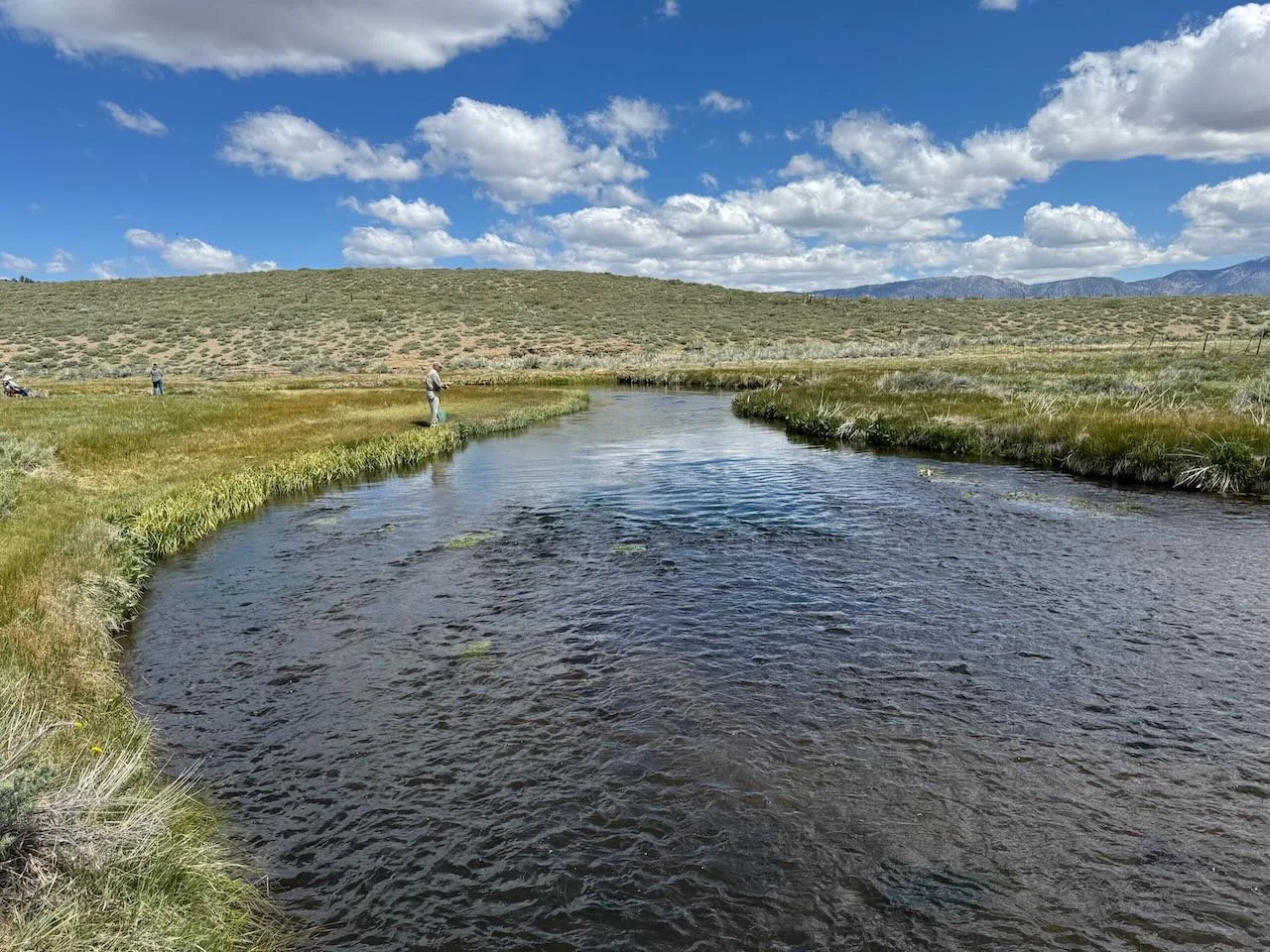
Fishing trico and caddis patterns in the morning on the Interpretive Site in the pools where the trout are feeding is producing trout for fly fishers.
Hot Creek
Canyon Section:
With a steeper gradient in the canyon the trout feed more reactionary. This makes the canyon a tad easier to fish. Nymphing is harder with the increased size of the weed beds. If you’re nymphing use size 18 olive quilldigons, size 18 bead head flash back pheasant tail nymphs, size 18 Frenchie’s and size 18 Duracell nymphs. The caddis migration starts in the morning and fishing with gray size 20 elk hair caddis, X-caddis and parachute caddis will produce trout feeding on the migrating trout as the caddis crash on the water as they are bad flies. As the caddis migration is ongoing look for the trico mayfly hatch to start. It starts with the female tricos hatching and then the females reproduce and then fall dead on the water creating a trico spinner fall. Use size 20 female dun parachute tricos, size 20 female trico dun sparkle duns, size 20 blue wing olive parachutes and size 20 trico spinners.
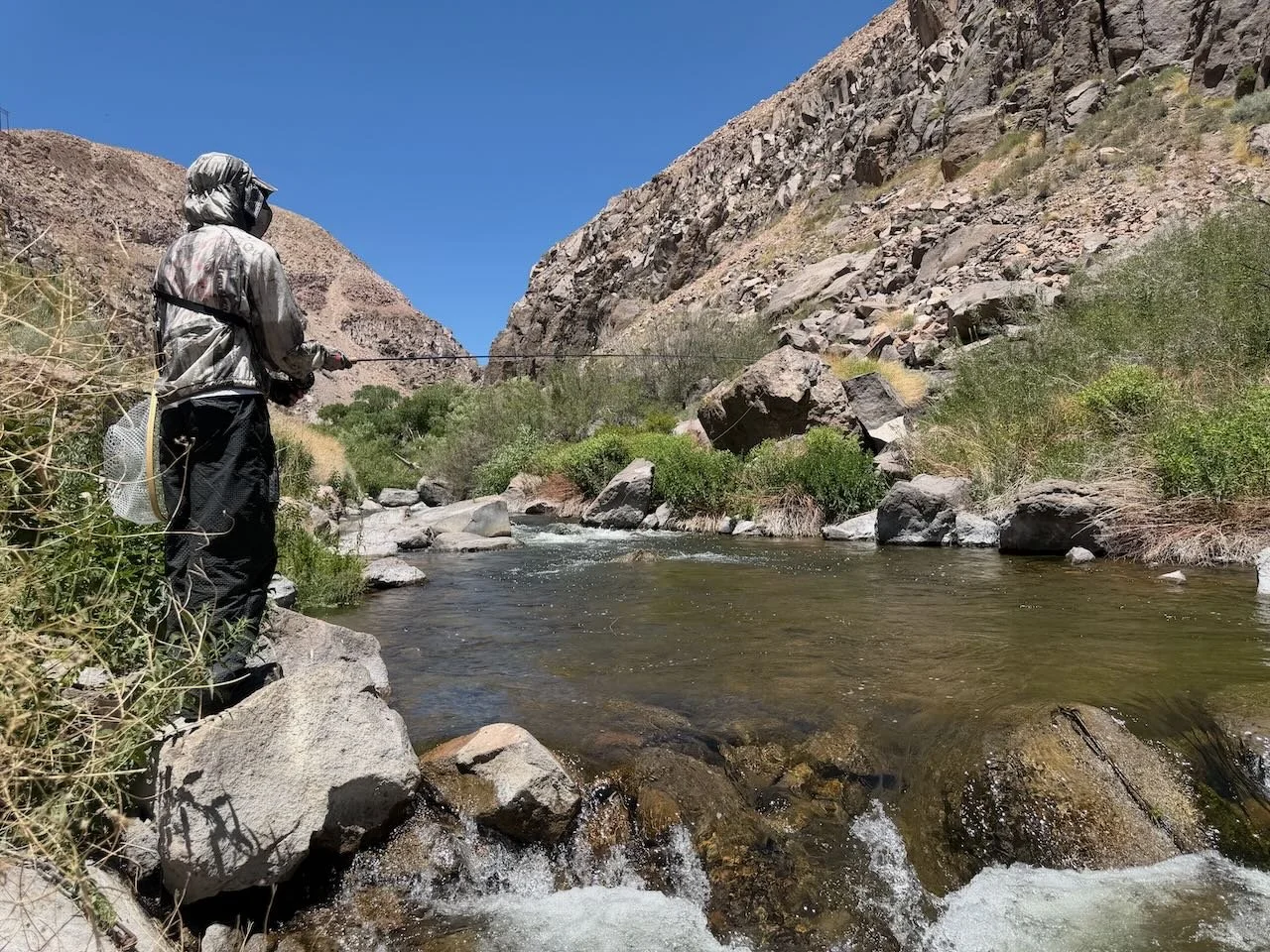
Working the pools along the roadside in the middle Power Plant section is producing wild brown trout to 12 inches on a dry and dropper rig.
Owens River Gorge
Middle Power Plant:
The walk out of the Owens River Gorge in the middle of the day is tough in the mid-90’s that we are experiencing right now. The radiation of the sun on the rocks and the pavement is baking the fly fishers waling out in the afternoons. Walking out after the sun goes behind the canyon wall is a more comfortable walk out. When the road gets close to the river start fishing with a dry and dropper working upstream covering each pocket or pool with your flies. Once you’ve completely covered the pool walk backout to the road and walk upstream looking for the next pocket to fly fish in. Use size 16 Adams Parachutes, size 16 elk hair caddis and size 14 stimulators for the dry fly. For the nymphs use size 16 green/gold brassies, size 14 Duracell nymphs, size 16 rainbow warriors, size 16 bead head flash back gold ribbed hare’s ears, size 18 bead head flash back pheasant tail nymphs and size 18 olive quilldigons.
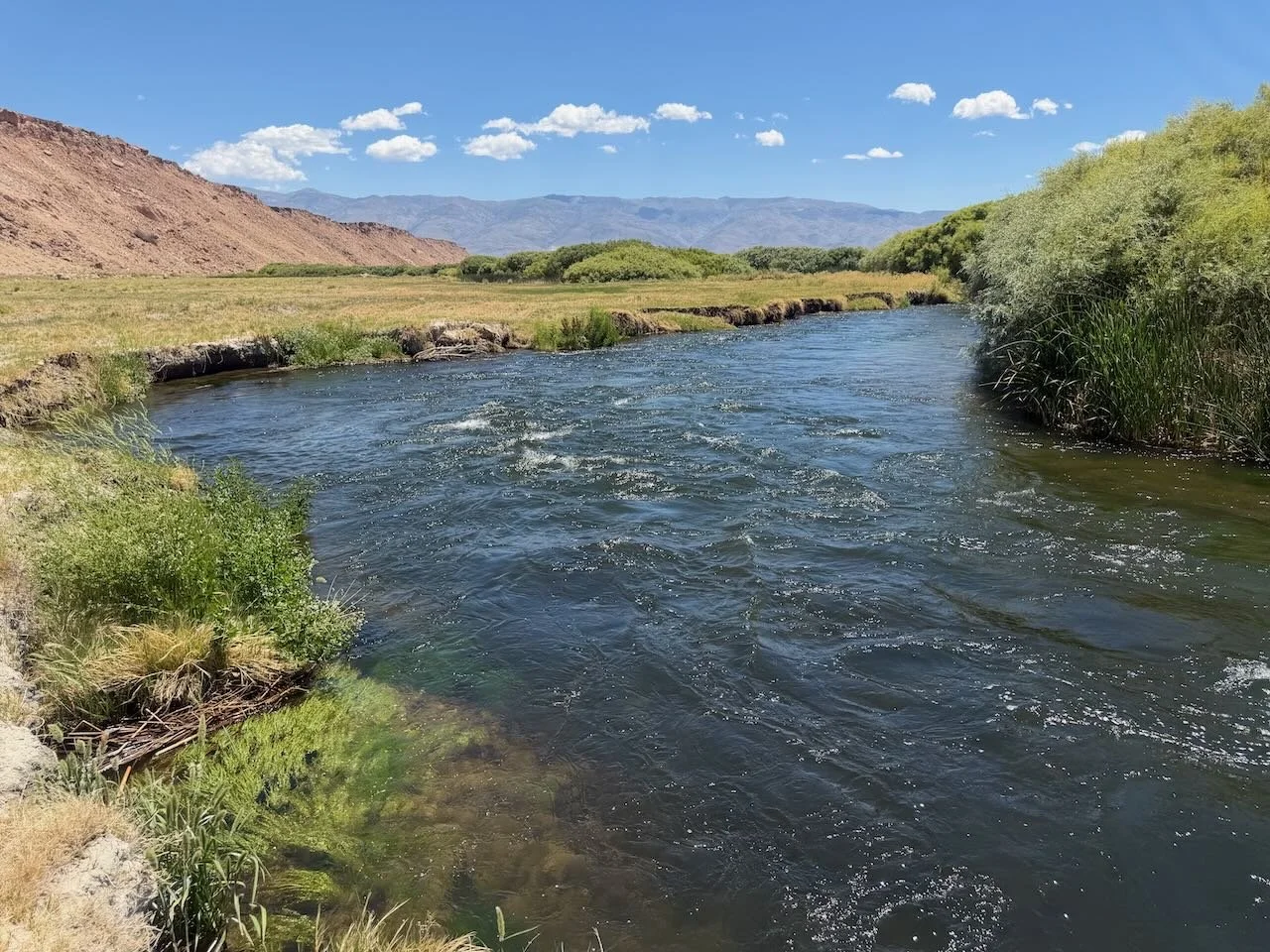
Fishing from the banks of the lower Owens River with dry flies or streamers is producing a few trout in the mornings for fly fishers.
Lower Owens River
Wild Trout Section:
With the high flows fly fishers need to fish from the banks. There are very few spots that offer fly fishers uninhibited banks on the lower Owens River. Fish with streamers or dry flies to avoid hanging up on the obstructions on the substrate of the river. For nymphs fish with size 16 bead head flash back gold ribbed hare’s ears, size 16 Duracell nymphs, size 18 olive quilldigons, size 18 bead head flash back pheasant tail nymphs and size 12 stoner nymphs. For streamers use olive, tan and black streamers in size 6 or 10. Use wooly buggers, slumpbusters and muddler minnows.
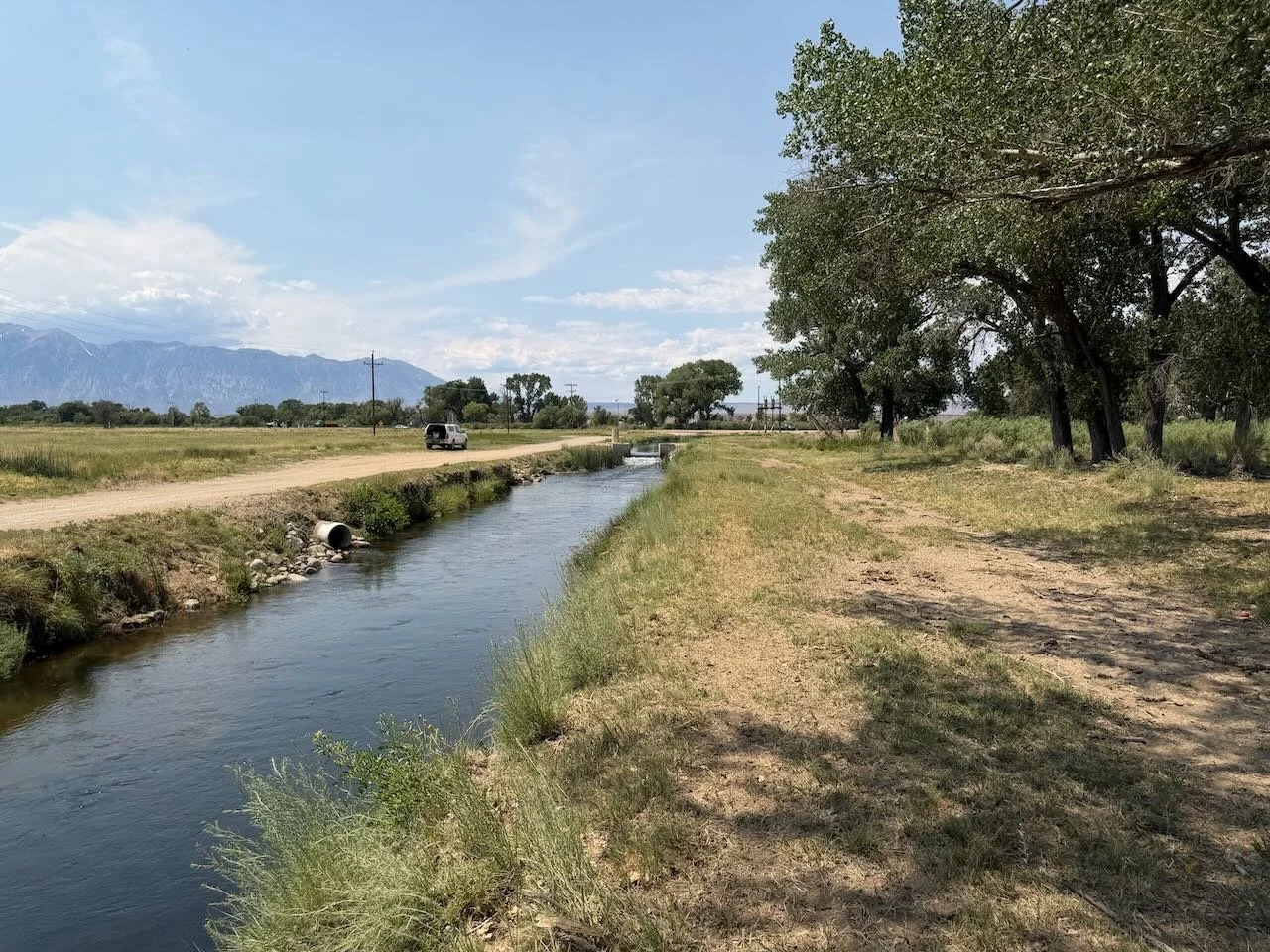
It’s hot during the day and fly fishers will find the fish feeding early in the morning and late in the evening.
Bishop Creek Canal
Behind Bishop Veterinary Hospital:
Mid-day temperatures in the 90’s are keeping most fly fishers off the water. Fly fishers working the canal in the mornings before 10:00 A.M. with streamers and nymphs are finding a few wild brown trout and stocked rainbows taking their flies. For nymphs fish with size 18 bead head flash back pheasant tail nymphs, size 18 olive quilldigons, size 16 Duracell nymphs, size 16 bead head flash back gold ribbed hare’s ears, size 12 green/gold wire Prince nymphs and size 12 stoner nymphs. For streamers use size 10 brown Landon Mayer’s jigged pine squirrel leeches, size 10 balanced leeches and size 10 wooly buggers. The mosquitoes are out at night so be sure to wear clothes that cover skin and wear insect repellant.