
With a snow storm that squeaked into the upper elevations of the Eastern Sierra over last weekend, it now is looking like April in the Eastern Sierra. Look for another storm end of the weekend or beginning of the week. I will not be surprised if we have a snow storm for opening weekend. In between the storms look for good fly fishing waters in the Eastern Sierra. Hatches of mayflies, midges and caddis are providing the food for the trout to feed on. Dry flies, nymphs and streamers are producing trout in the still waters and streams of the Eastern Sierra.
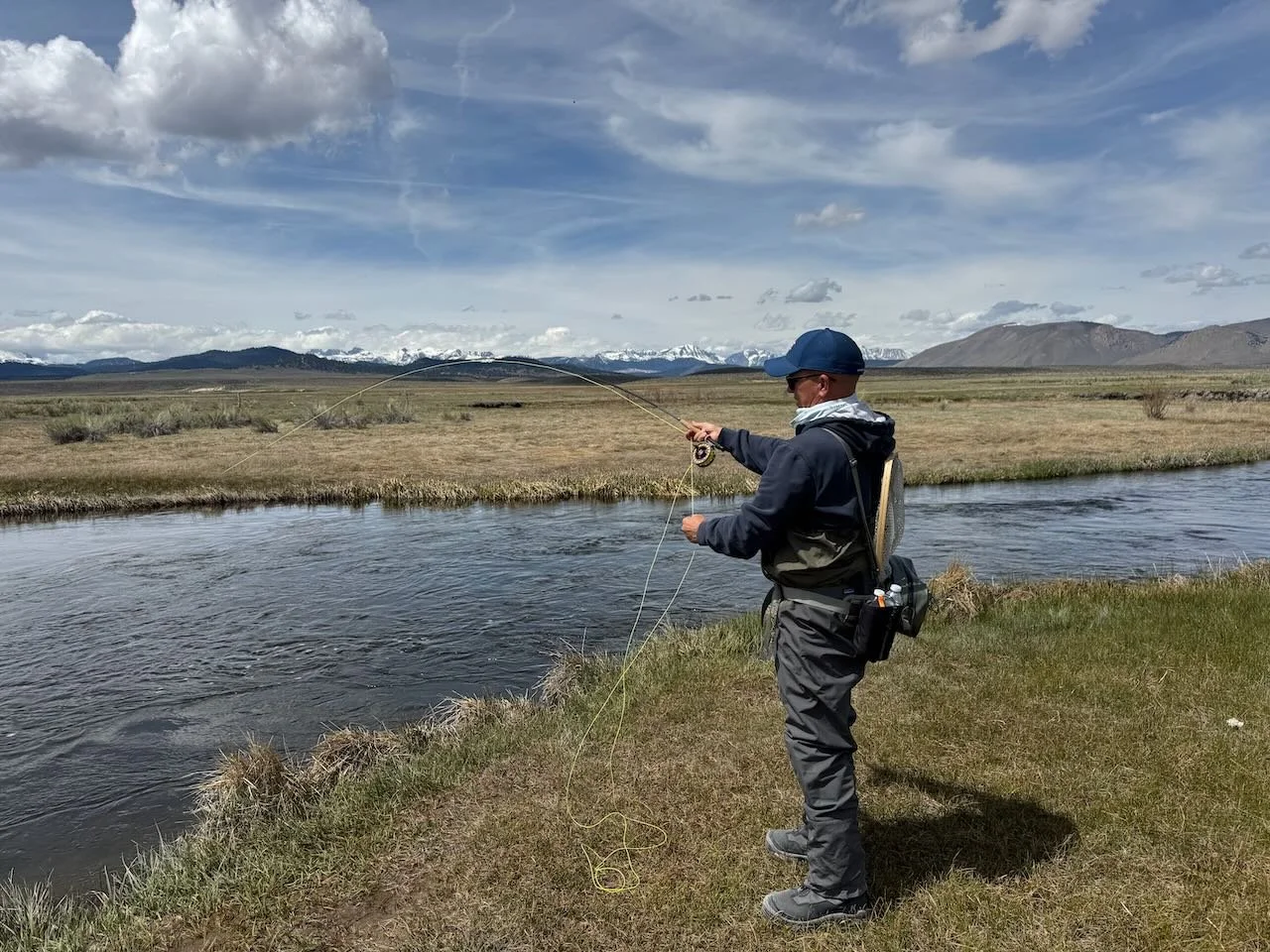
Fly fishers plying the waters of the Eastern Sierra are being treated to trout that are feeding on dries, nymphs and streamers.
Lower Owens River
Wild Trout Section:
Fluctuating flows are staying under 250 CFS. For those willing to wade at these levels are finding trout willing to take flies. Nymphing with an indicator or a Euro outfit is producing trout in the edge of the river where the water is slower. Fish with size 18 olive quilldigons, size 18 bead head flash back pheasant tail nymphs, size 18 Frenchie’s, size 16 rainbow warriors and size 16 Duracell nymphs. Key to success is having the right amount of weight in the flies or as split shot on your tippet.
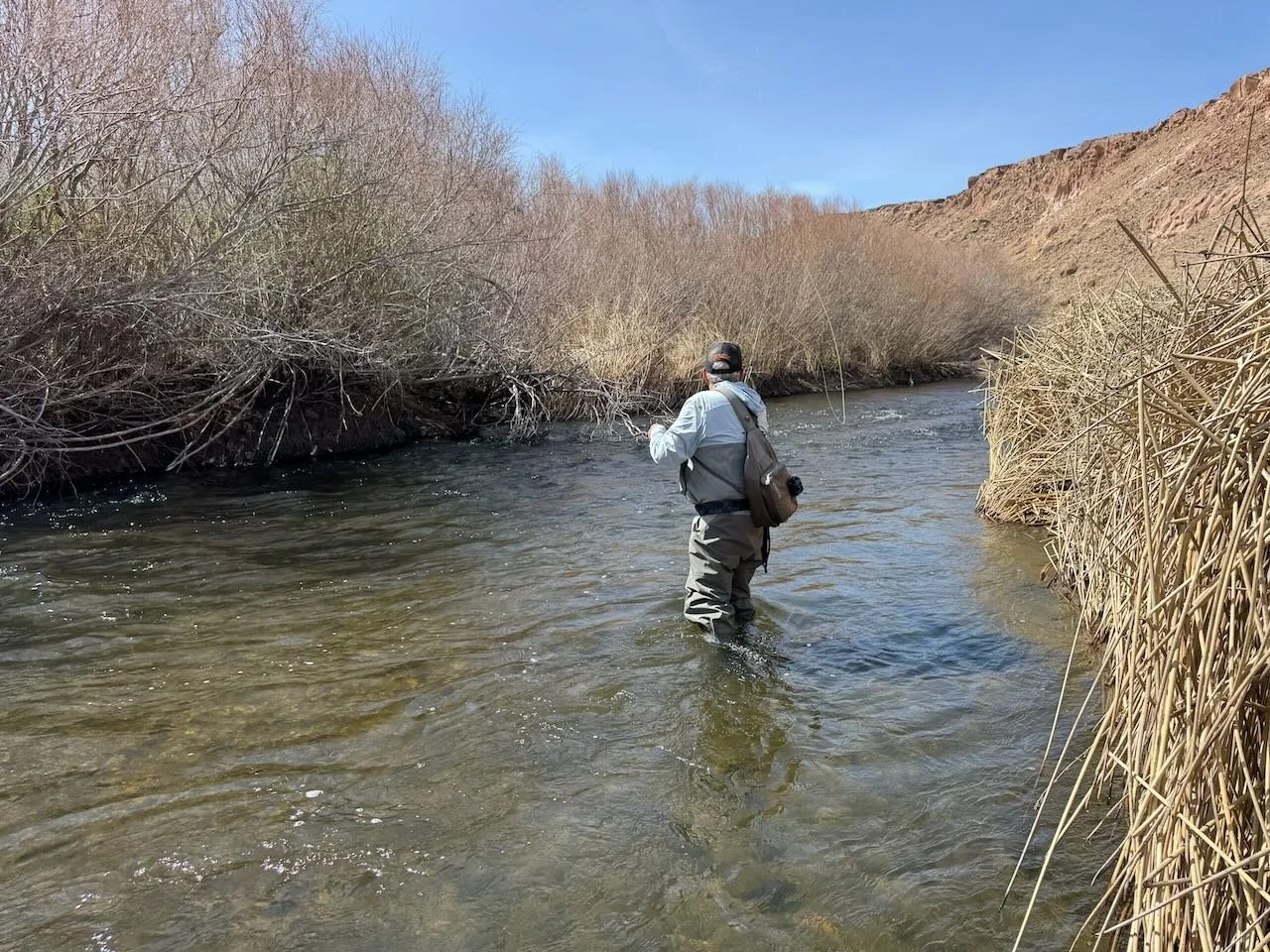
Wading the river is the only way to present flies in those sections of the river with riparian vegetation is blocking access to the banks.
Hot Creek
Interpretive Site:
Spring like weather on Hot Creek means bring a jacket. Look for trout rising to the hatching midges and mayflies in the Interpretive Site. Use size 20 blue wing olive mayflies, size 20 olive sparkle duns, size 20 Adams parachutes, size 20 Griffiths gnats and size 20 CDC midges. Look for consistently rising trout and cast your fly to that trout. It may take up to 15 casts to get the drift and timing down to fool the trout. Once you hook one trout look for a second trout to target. Casting and fooling specific rising trout is a great way to fish the Interpretive Site of Hot Creek.
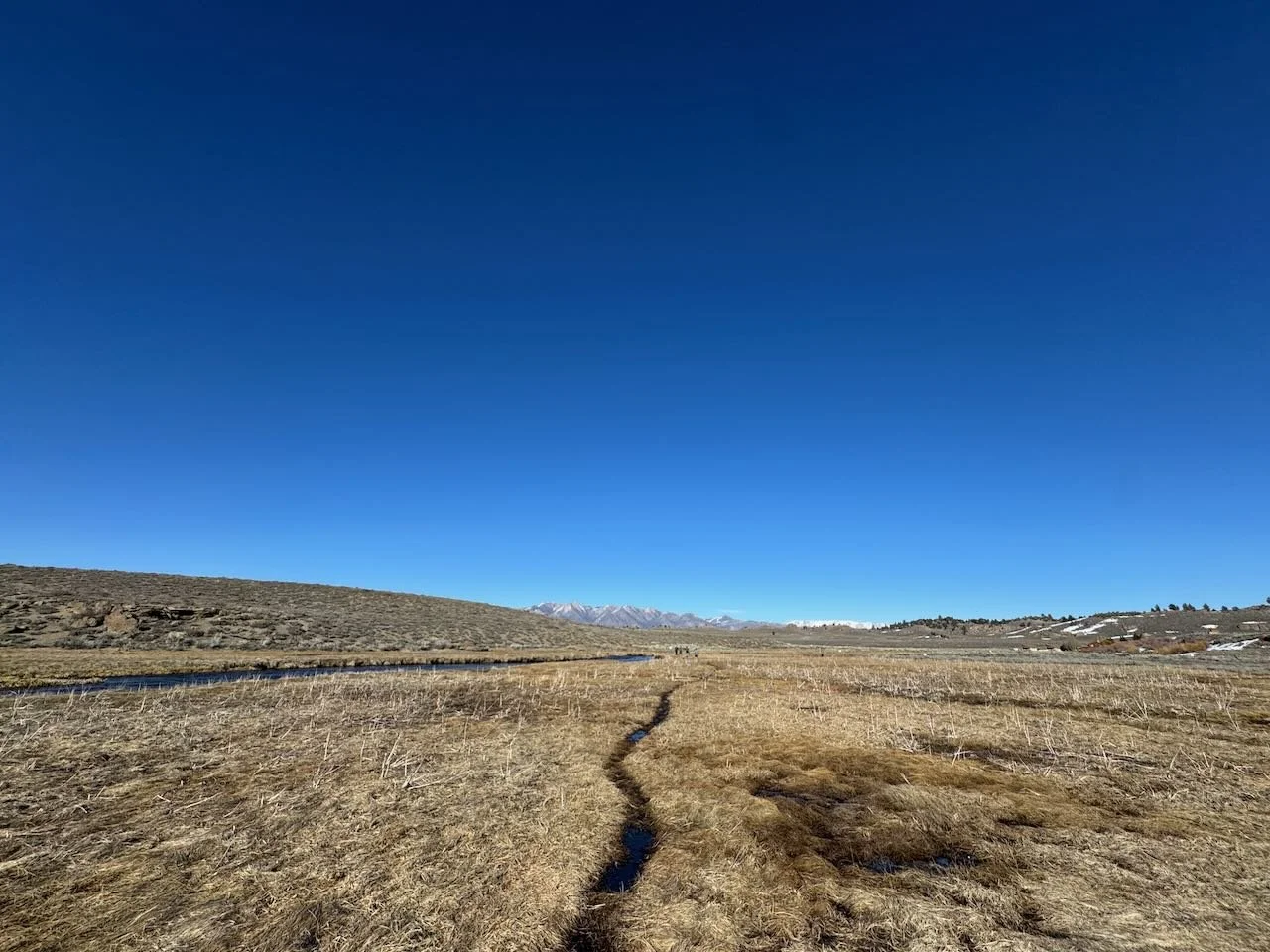
The end of the trail is where fly fishers like to work their dry flies in the deep hole that contains lots of surface feeding wild trout.
Hot Creek
Canyon Section:
Winds get concentrated in the Canyon Section of Hot Creek so getting on the creek in the mornings is a way to avoid the afternoon winds that show up every afternoon. Weed beds are just starting to grow so it is the perfect time to fish the creek with nymphs. Fish the deeper holes and riffle sections without weeds. If you don’t mind hanging up on the weeds or losing a fly or two work your flies in and around the weed beds. A dry and dropper rig is a great way to nymph in the Canyon Section of Hot Creek. For the dry fly use a size 16 Adams parachute, size 16 elk hair caddis and a size 14 stimulator. For the nymphs use a size 18 olive quilldigon, size 18 bead head flash back pheasant tail nymph, size 18 Frenchie, size 16 Duracell, size 18 green/gold brassie, size 18 soft hackle brassie, size 18 thread midges in tiger and zebra coloration.
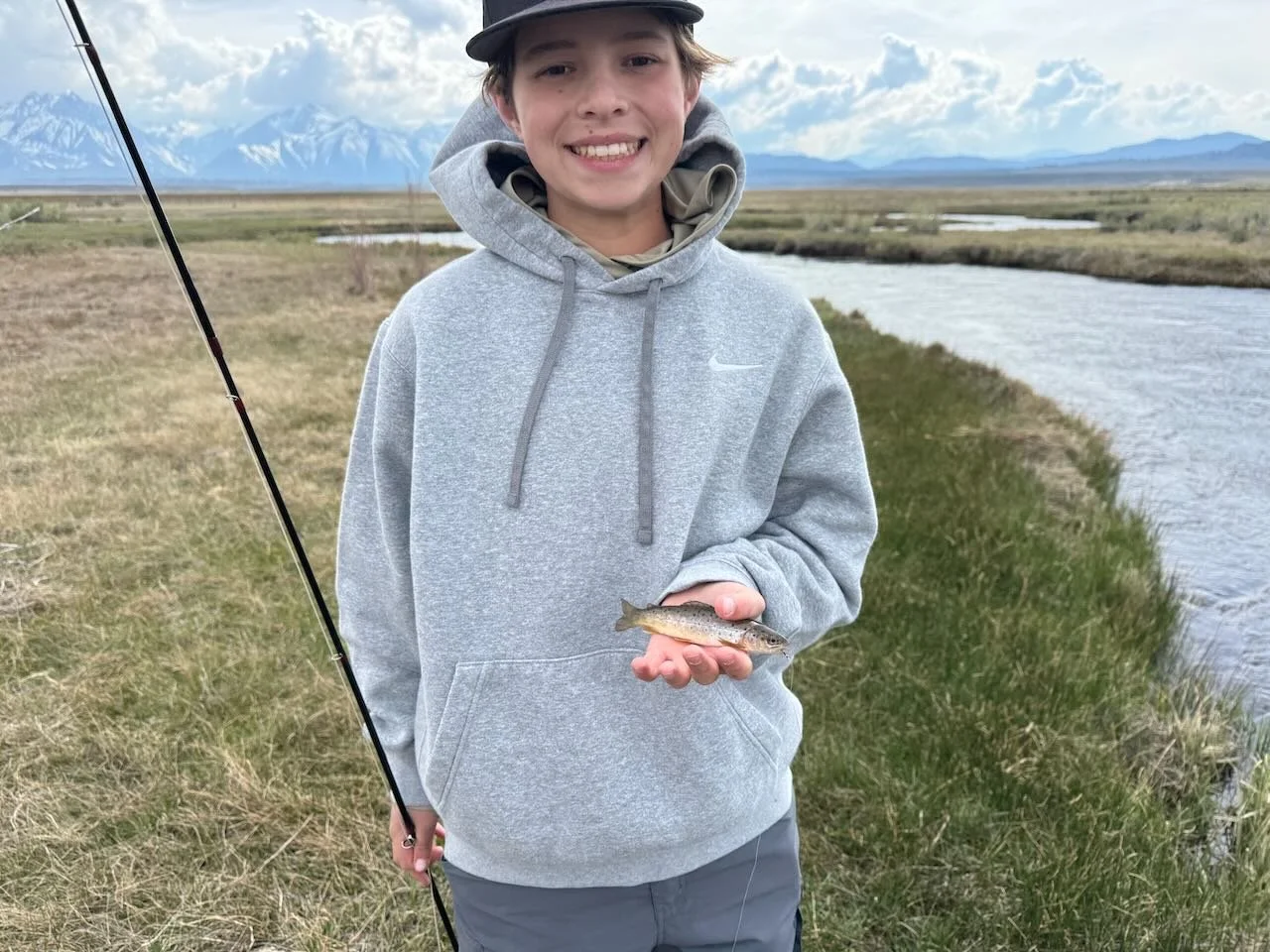
It’s important for young fly fishers to be successful when learning to fly fish particularly when indicator nymph fishing.
Upper Owens River
Above Benton Crossing Bridge:
One day it’s perfectly warm like a nice June day and the next day it’s a typical spring day with lots of wind and cooler temperatures. Spring weather is unsettled and fly fishers should be prepared for warm days as well as snowy days. The trophy rainbow trout run is pretty much done for the year and the cutthroats are not in the river yet. Working the deep holes, deep runs and cut banks with size 12 stoner nymphs, size 12 green/gold Prince nymphs, size 14 copper John’s, size 10 matukas, size 10 wooly buggers and size 10 slumpbusters is producing a few fish in the trophy trout size range. For the resident six to 12 inch rainbows and browns fish with size 16 bead head flash back gold ribbed hare’s ears, size 18 bead head flash back pheasant tail nymphs, size 18 tiger midges, size 18 zebra midges and size 18 green/gold brassies. The mid-day blue wing olive hatch has been sporadic. If you’re on the right piece of water on the right day you will find trout feeding on size 18 blue wing olive parachutes and size 18 Adams parachutes.
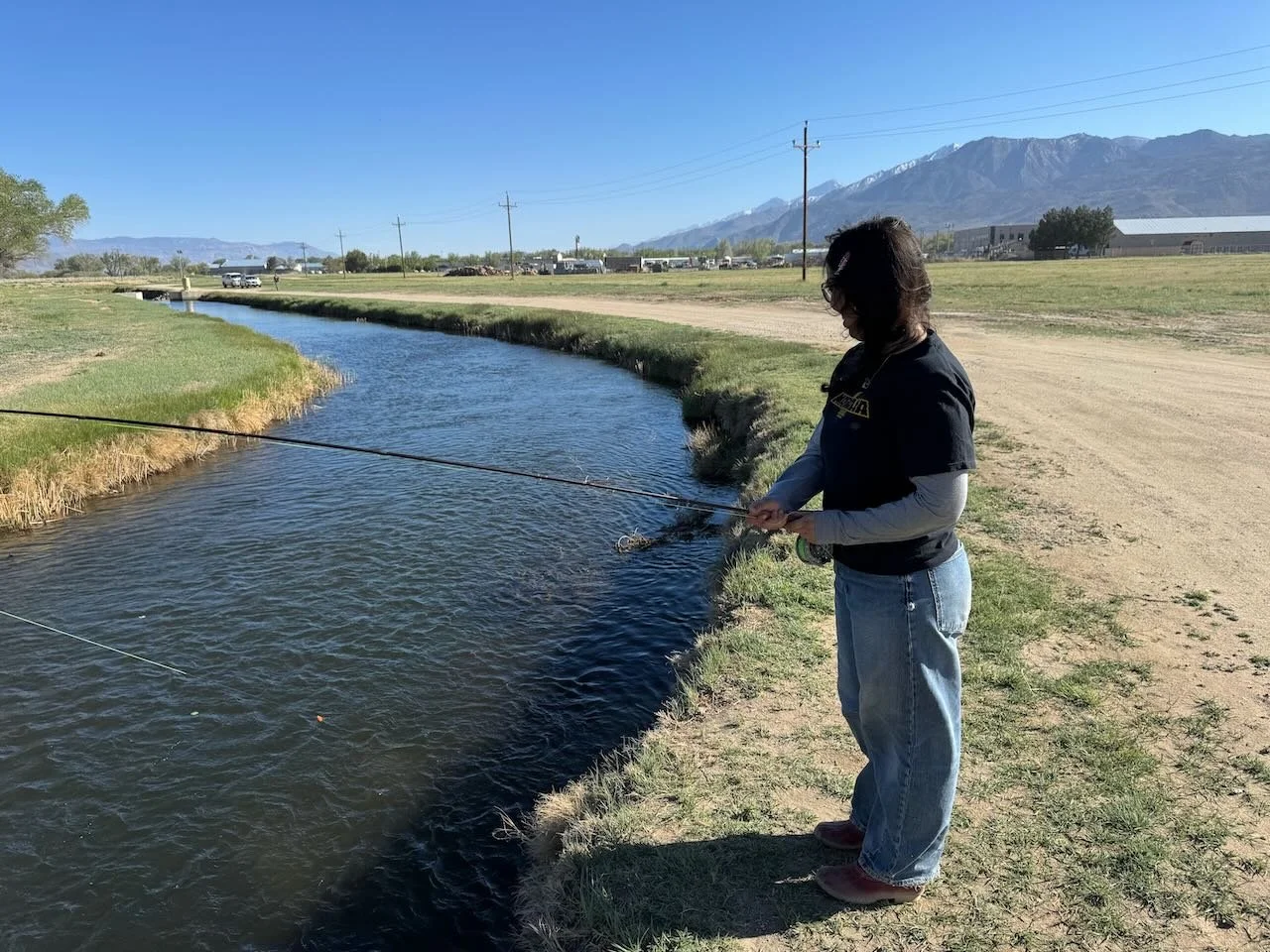
Hooked up on Bishop Creek Canal while fishing a size 18 bead head flash back pheasant tail nymph under an indicator.
Bishop Creek Canal
Behind Bishop Veterinary Hospital:
The waters cleared up and the trout are feeding on nymphs and dries. Fishing the faster moving sections of the canal has been more productive. Fishing a size 18 Adams parachute and a size 18 blue wing olive parachute and targeting the mid-day rising rainbows and browns is a fun way to spend and hour or two fly fishing on Bishop Creek Canal. Nymphing anytime of the day with size 18 olive quilldigons, size 18 bead head flash back pheasant tail nymphs, size 16 bead head flash back gold ribbed hare’s ears, size 18 Frenchie’s, size 16 Duracell’s and size 12 stoner nymphs is fooling the wild trout of Bishop Creek Canal.