
It’s acting like spring in the Eastern Sierra. No that’s not right. We normally have cold and windy springs in the Eastern Sierra. This week feels more like June than April. It’s been in the 80’s in the Owens Valley and the mid-70’s at upper elevation waters. Remember almost every opening weekend it snows or is very windy and cold. With the warm weather has come hatches of midges, mayflies and caddis. Nymphing continues to be the most consistent method of fly fishing. When the trout are consistently rising to the emerging insects put away the nymphs and tie on a dry fly rig. North Landing Road, the road that allows access to Green Banks, Sandy Point and the north side of McGee Bay, will continue to be closed through June. Expect this to be lifted when the lake levels recede probably sometime in June.
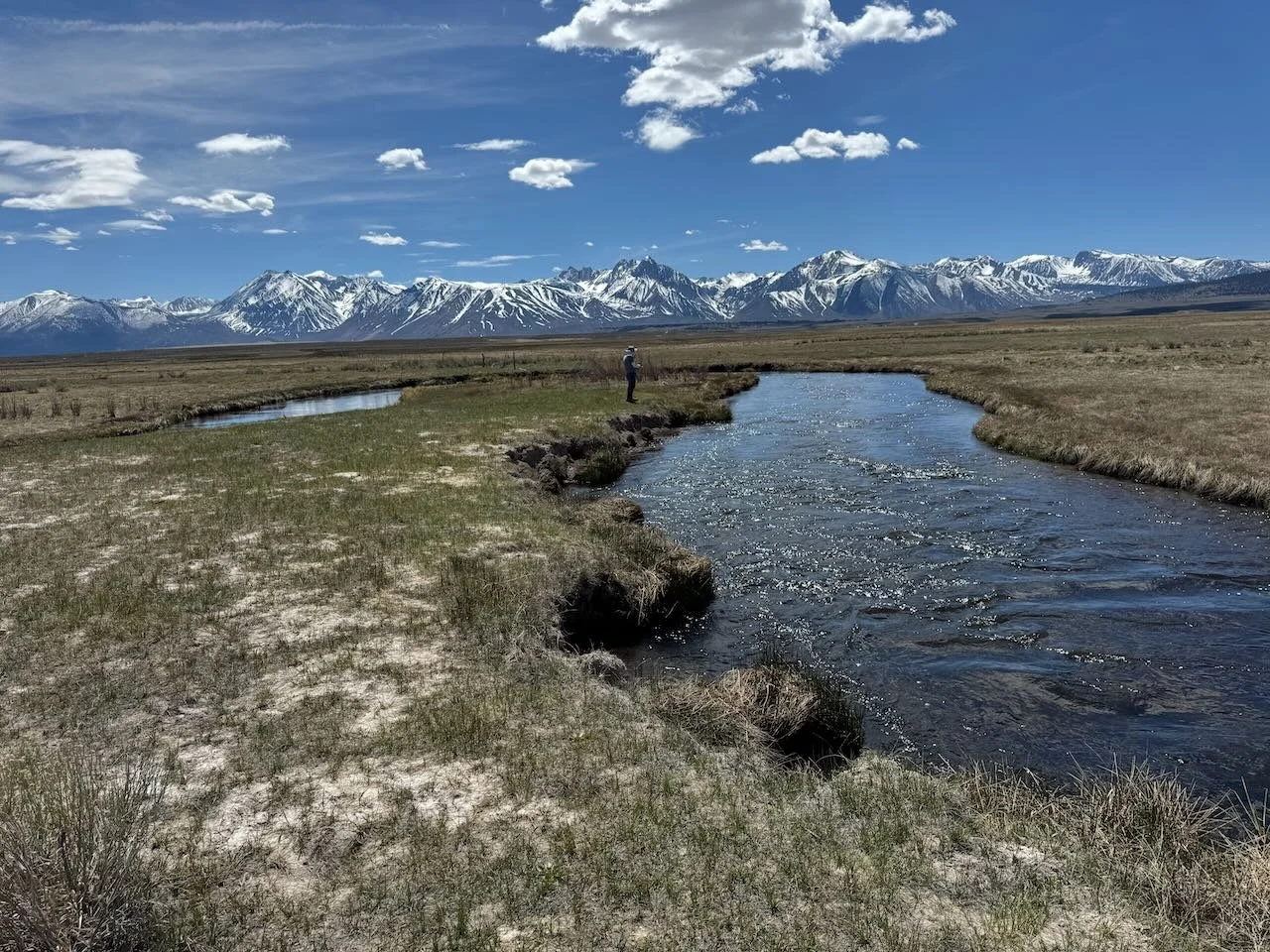
Warm days, trout feeding on nymphs and dries and mountains with the snow quickly receding is what fly fishers can expect to find on waters in the Eastern Sierra.
Lower Owens River
Wild Trout Section:
Flows are fluctuating daily from 185 CFS to 250 CFS. At 250 CFS you better be a good wader to handle the water flows. I’m done with the lower Owens unless it stay consistently under 200 CFS. For those that have battled the higher flows are finding trout willing to take their nymphs when using enough weight in the flies or on the line as split shot. Nymph under an indicator or a Euro rig with size 18 olive quilldigon, size 18 bead head flash back pheasant tail nymphs, size 18 Frenchie’s, size 16 rainbow warriors and size 16 Duracell’s.
Battling the river is hard work when the flows are in the 200 CFS range even for experienced fly fishers.
Hot Creek
Interpretive Site:
The weather is bringing out the fly fishers to enjoy what feels like a June day not an early April day. The warm weather has the midges and mayflies hatching. Fish with size 20 blue wing olive parachutes, size 20 olive sparkle duns and size 20 Adams parachutes, size 20 CDC midges and size 20 Griffiths gnats. Key to success is to be on the water before the hatches start and fish your dry fly with a drag free drift targeting rising trout.
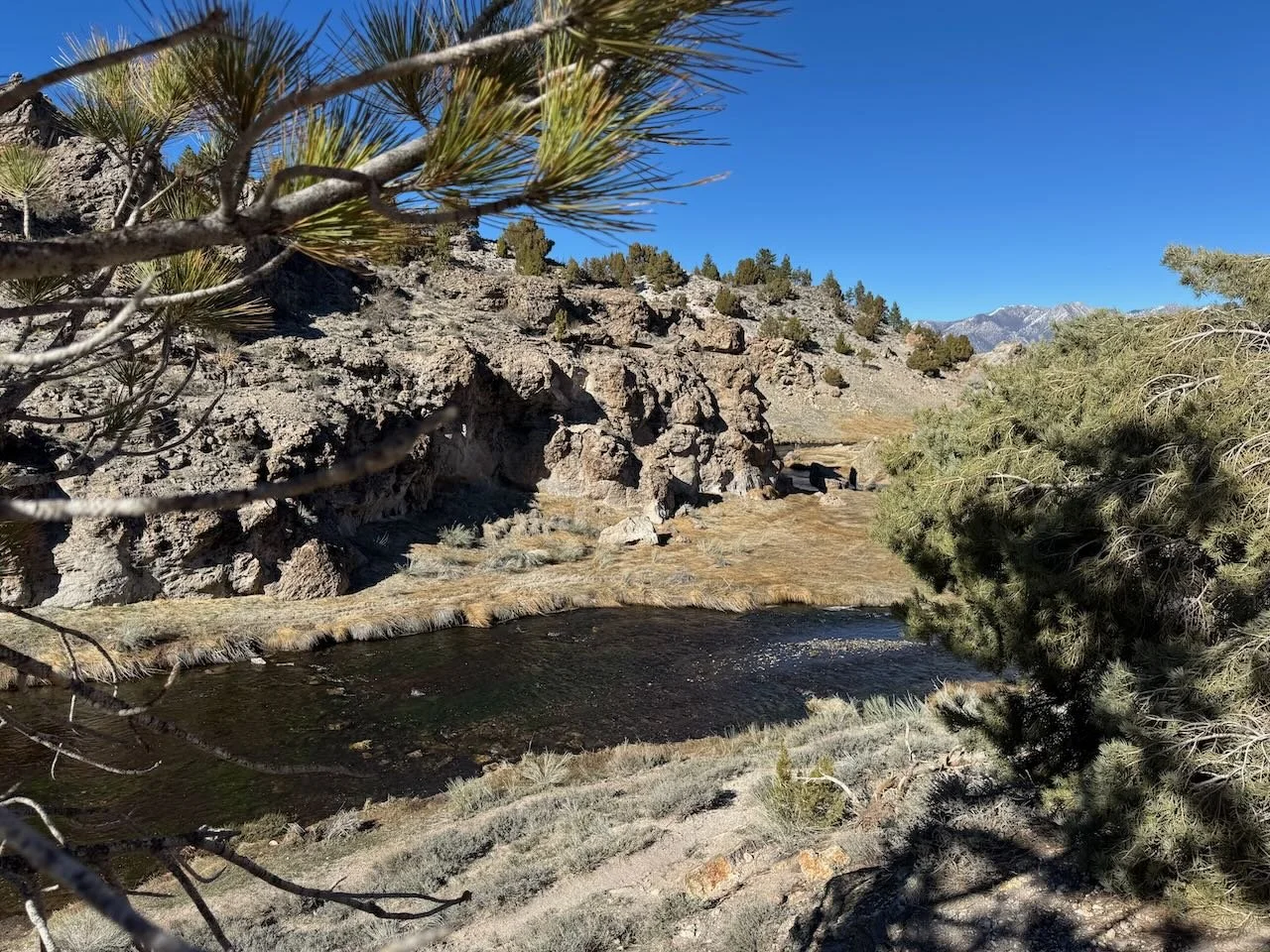
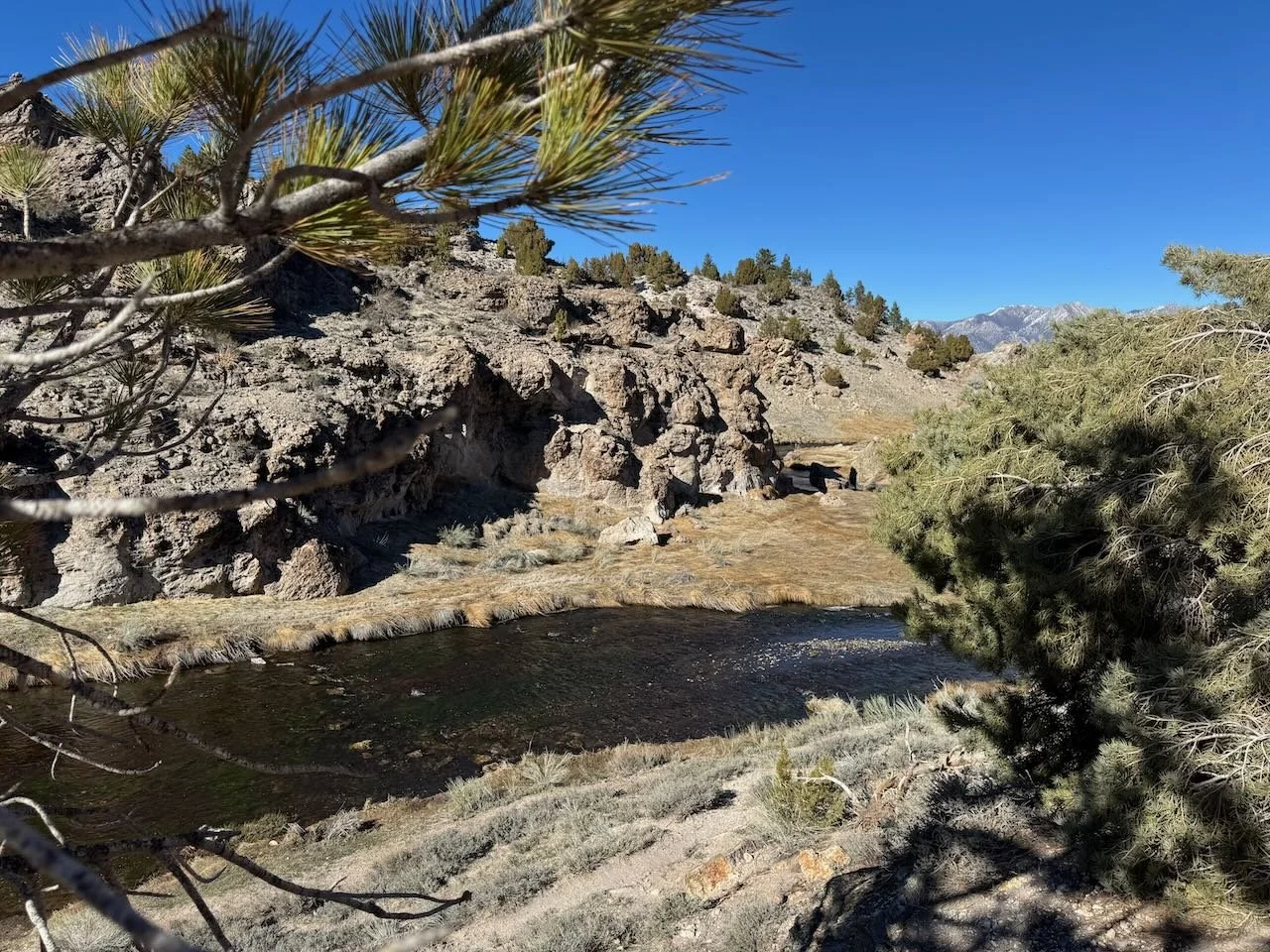
The Canyon Section of Hot Creek offers good nymphing this time of the year as the weed beds are at their lowest in the season.
Hot Creek
Canyon Section:
Nymphing in the Canyon Section of Hot Creek produces more and bigger wild brown and rainbow trout. The key to success is working your nymphs on the substrate, but not spooking the trout. Using a dry and dropper instead of an indicator will allow the dry fly to land on the surface gently without spooking the trout. A Euro rig also allows the fly fisher to get a drag free drift and not spook the trout from the splashing of the indicator on the creeks surface. For the dry fly use a size 16 Adams parachute, size 14 stimulator, size 16 elk hair caddis and a size 16 royal Wulff. For the nymph use a size 18 olive quilldigon, size 18 bead head flash back pheasant tail nymph, size 18 Frenchie, size 16 Duracell, size 18 green/gold brassie, size 18 soft hackle brassie, size 18 thread midges in tiger and zebra coloration.
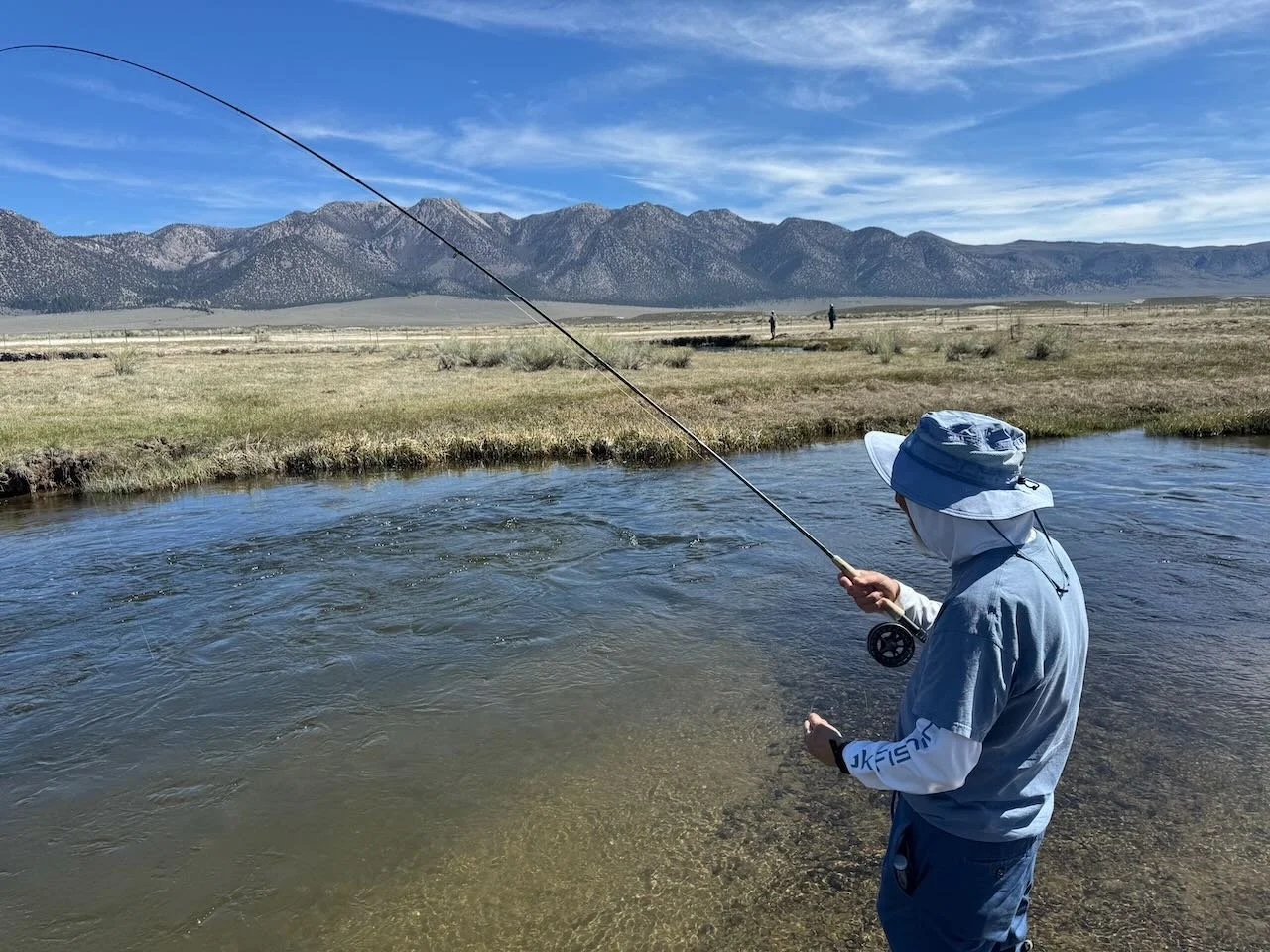
Euro nymphing with a three fly rig of a stoner, olive quilldigon and green/gold Prince nymph produced rainbows and browns in the deep holes and deep runs of the upper Owens River.
Upper Owens River
Above Benton Crossing Bridge:
June like weather makes fly fishing the upper Owens River in April a joy. Wore a T-shirt all day and was not to hot and not to cold. The trophy rainbow trout are just about done for the season. For fly fishes willing to work lots or water with nymphs or streamers are finding a few trophy rainbow trout. Use size 12 stoner nymphs, size 12 green/gold Prince nymphs, size 14 copper John’s and size 12 Richard’s variation of a gold ribbed hare’s ear, size 10 olive wooly bugger, size 10 olive matuka, size 10 olive slumpbuster, size 10 muddler minnow and size 10 Hornberg. There is a mid-day hatch of blue wing olive mayflies that the resident six to 12 inch rainbows and browns are feeding on. For dry flies fish with size 18 blue wing olive parachutes, size 18 Adams parachutes, size 18 elk hair caddis and size 18 X-caddis. For nymphs use size 18 olive quilldigon, size 18 bead head flash back pheasant tail nymph, size 16 bead head flash back gold ribbed hare’s ear, size 16 Duracell’s, size 18 Frenchie’s and size 16 rainbow warriors.
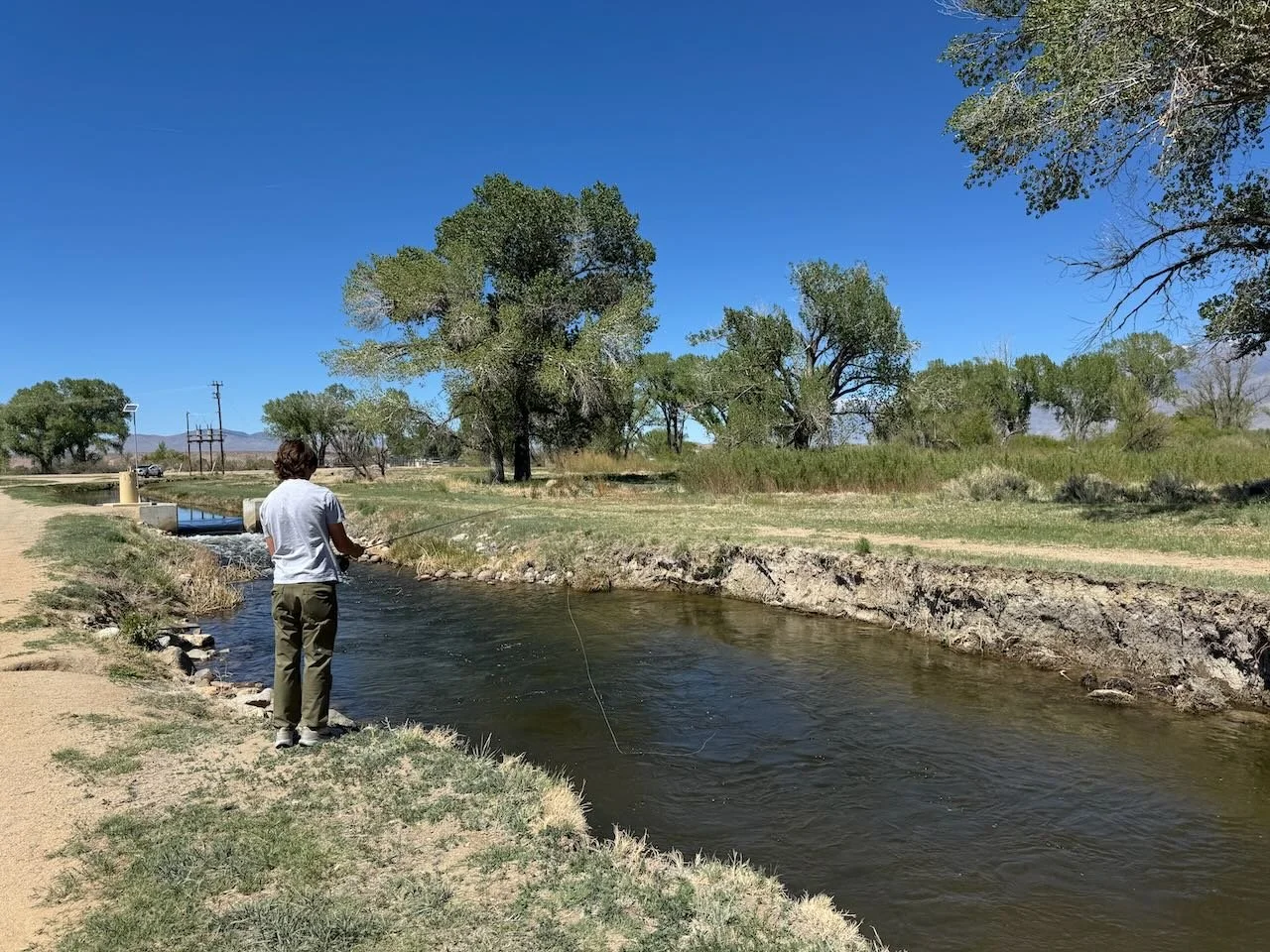
Fishing nymphs and dries in Bishop Creek Canal is producing wild brown and rainbow trout with size 18 olive quilldigons and size 18 blue wing olive parachutes.
Bishop Creek Canal
Behind Bishop Veterinary Hospital:
With higher flows fly fishers using nymphs need to be sure they have the right amount of weight in their flies or on their tippets in the form of a split shot. The early afternoon blue wing olive mayfly hatch is bringing trout to the surface to feed on the hatching mayflies. Use size 18 blue wing olive parachutes, size 18 olive sparkle duns and size 18 Adams parachutes. Under an indicator or with a Euro rig use a size 18 bead head flash back pheasant tail nymph, size 12 stoner nymph, size 18 olive quilldigon, size 18 Frenchie and size 16 Duracell nymphs.