
OPENING WEEKEND
I’ve been coming to the Eastern Sierras since the beginning of the 1970’s. As a kid it was a big spectacular. Cars, truck, RV’s and boats traveling up and down HWY 395. Getting a boat checked into Crowley Lake was waiting in a line on HWY 395 that stretched half way between the Rock Creek exit and the Crowley Lake exit and took an hour or two to get through. These days there is no expectations on fly fishing waters of the Eastern Sierra with the exception of those waters that are closed and will open on April 25, 2026 like Crowley Lake and the East Walker River. Looks like a slight chance of rain or snow for the opener. Totally expected. Weather has been warm with lots of wind. Hatches of mayflies, caddis and midges are feeding the trout. Fly fishers are fishing with streamers, nymphs and dry flies and are catching trout.
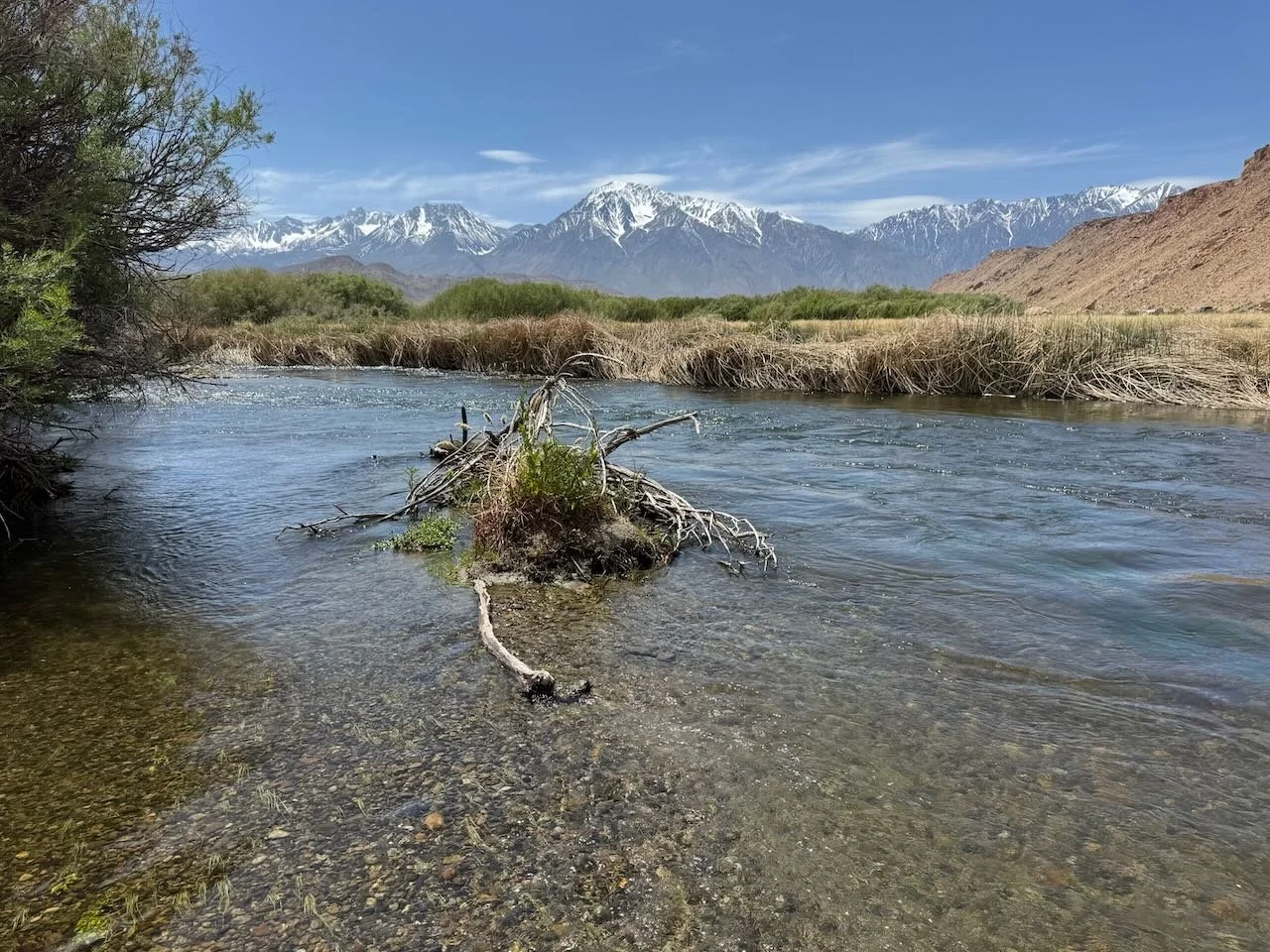
As daylight increases, the temperatures increase, plants turn green and the snow begins to recede from the mountain tops it is the start of spring time fly fishing in the Eastern Sierra.
Lower Owens River
Wild Trout Section:
Flows were expected to increase to over 300 CFS in mid-April. It did not happen. Flows are fluctuating from a low of 150 CFS to a high of 285 CFS. Right now the flows are fluctuating around 200 CFS. I suggest checking flows daily so you know what to expect when wading in the lower Owens River. You can check the lower Owens River flows here: Lower Owens River: http://wsoweb.ladwp.com/Aqueduct/realtime/norealtime.htm. There are hatching mayflies, but the trout are not consistently rising to them. Nymphing under an indicator or with a Euro rig is what’s producing the trout. Use size 18 olive quilldigons, size 18 bead head flash back pheasant tail nymphs, size 18 Frenchie’s, size 16 Duracell nymphs, size 16 rainbow warriors and size 12 stoner nymphs. At these flows make sure you have the right amount of weight in the flies or on the tippet in the form of split shot to slowly roll your flies along the substrate.
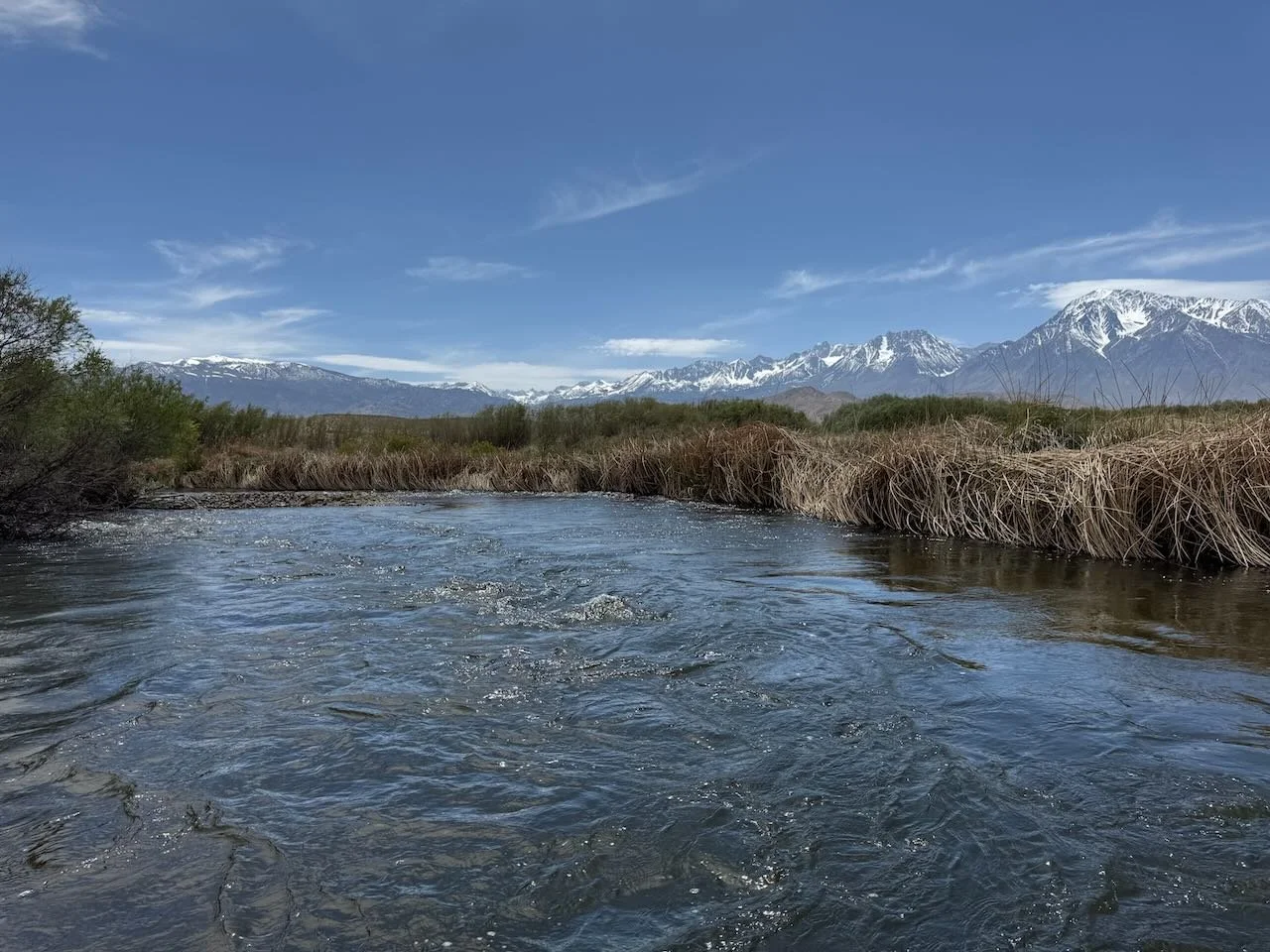
At 200 CFS the lower Owens River looks daunting, but if you’re in the right section it’s wadable if you’re a confident wader.
Hot Creek
Interpretive Site:
With a few storms moving through the Eastern Sierra and leaving snow on the ground it’s not affecting access to Hot Creek Interpretive site. What snow is stacking up is melted by the afternoon or the next day when the temperatures climb back up. Look for hatching mayflies and midges in the mornings. Start off with a size 20 Griffiths gnat or a size 20 CDC midge when you get on the water in the morning. Once you see the blue wing olive mayflies hatching mid to late morning switch to a size 20 blue wing olive parachute, size 20 olive sparkle dun and size 20 Adams parachute.
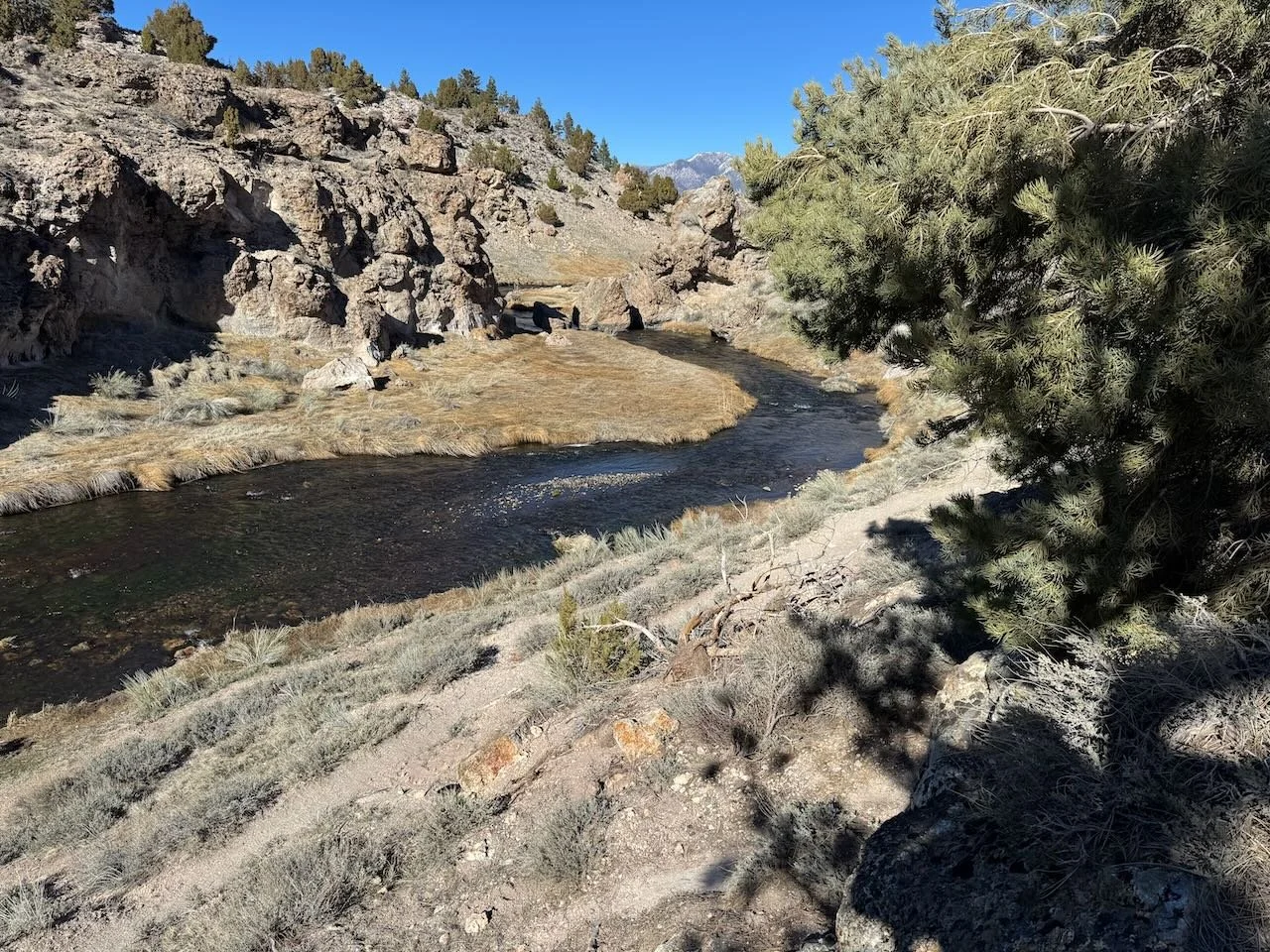
Hot Creek Canyon offers good nymph fishing opportunities in the spring before the weed beds take over the stream.
Hot Creek
Canyon Section:
Spring is the time to nymph fish in the canyon section before the weed bed growth inhibits your nymphs ability to properly float to the trout feeding on the substrate in between the weed beds. Fish your nymphs with a dry and dropper rig or with a Euro rig. Nymph with size 18 olive quilldigons, size 18 bead head flash back pheasant tail nymphs, size 18 Frenchie’s, size 16 Duracell nymphs, size 18 soft hackle brassies, size 18 tiger midge and size 18 zebra midge. Work your nymphs in and around the weed beds and concentrate your drifts in the deep holes and riffles without weed beds. For the dry fly in the dry and dropper rig use a size 16 Adams parachute, size 16 elk hair caddis and a size 14 stimulator.
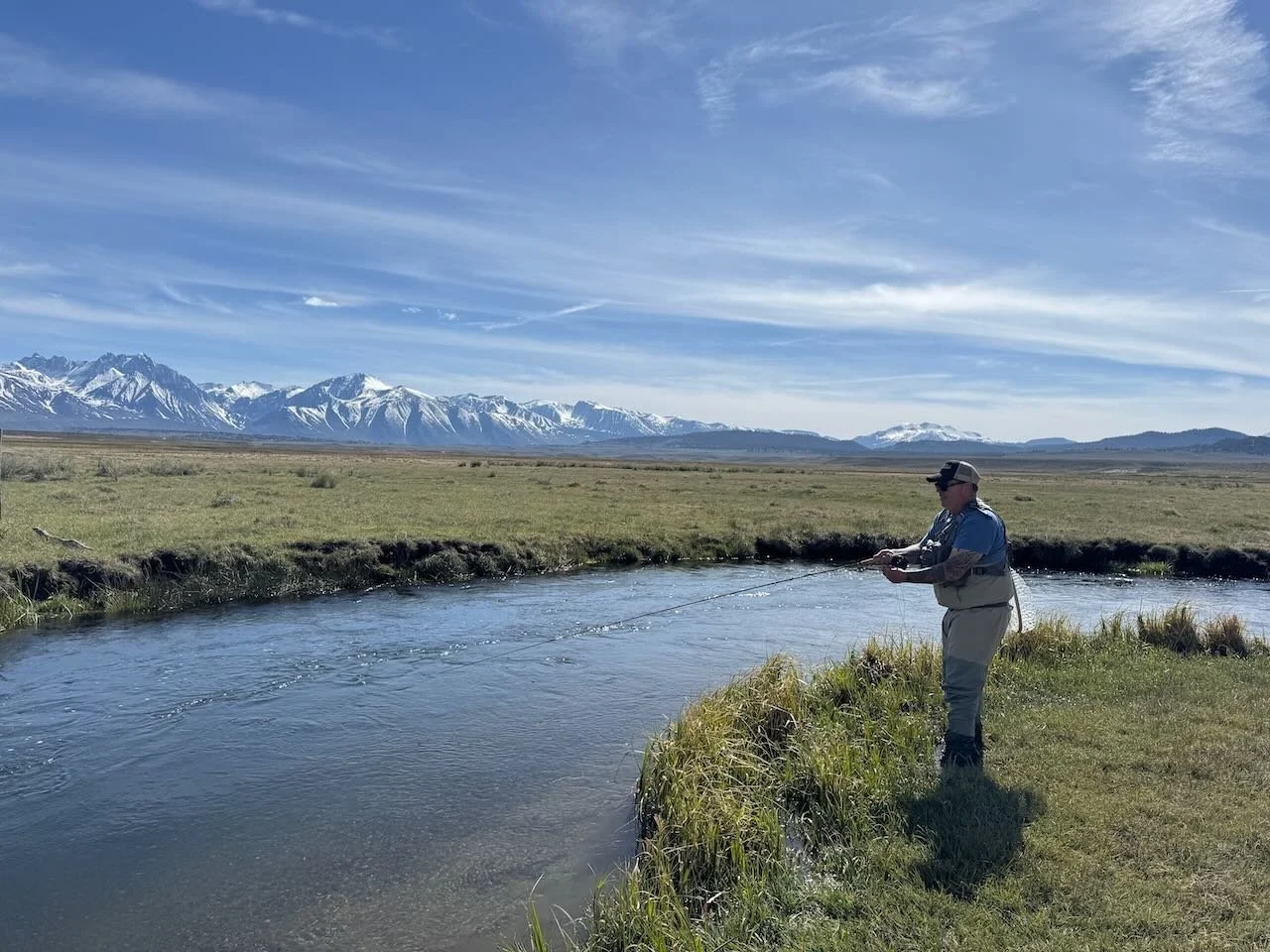
Working the deep holes, deep runs and cut banks with nymphs and streamers is how you fool the trophy cutthroats.
Upper Owens River
Above Benton Crossing Bridge:
Cutthroat season is approaching. Saw my first cutthroats of the season in the river, but did not target them. Concentrated on fishing for the resident six to 12 inch wild rainbows and browns. For dry flies fish with size 16 and 18 elk hair caddis, size 18 Adams parachutes and size 18 blue wing olive parachutes. For nymphs fish with size 18 bead head flash back pheasant tail nymph, size 18 olive quilldigons and size 16 thread midges in zebra and tiger coloration. Fish the deep holes, deep runs and cut banks with size 12 stoner nymphs, size 12 green/gold Prince nymphs, size 14 copper John’s and a size 12 Richard’s variation of a gold ribbed hare’s ear for the resting and feeding trophy cutthroats. Pulling a size 10 or size 6 olive wooly bugger, black wooly bugger, olive matuka, olive slumpbuster, muddle minnow and Hornberg’s will fool a few of the trophy cutthroat trout. Key to success with streamers is to cover lots of water and only throw a few casts in each area you are fishing.
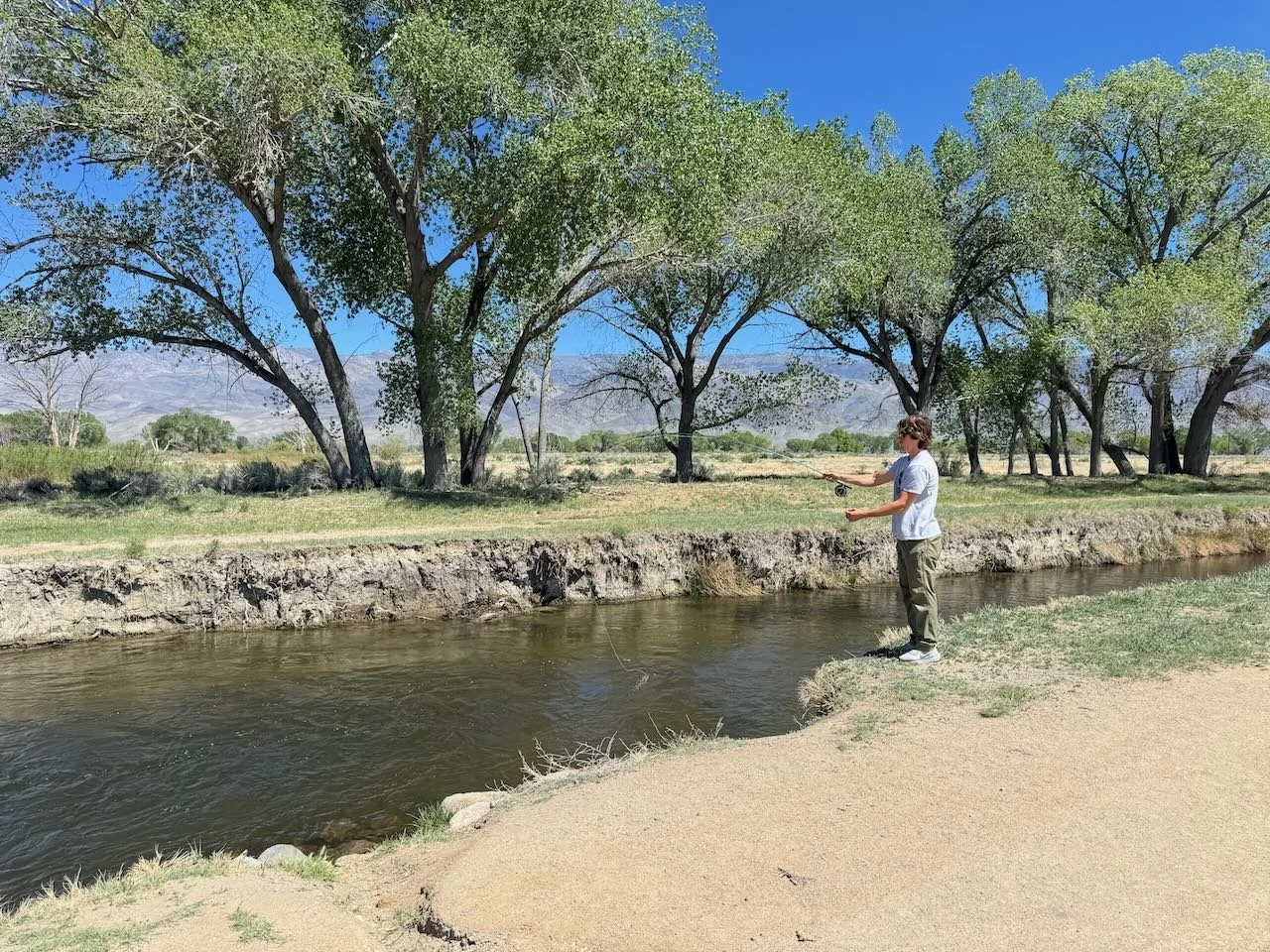
Bishop Creek Canal offers a good spot to practice fly fishing techniques as there is lots of fish in the creek and very few stream side obstacles for fly fishers to hang up on.
Bishop Creek Canal
Behind Bishop Veterinary Hospital:
Bishop Creek Canal is a great practice water with little to no stream side vegetation. When the winds come up there is no protection on the canal and fly casting is tough. Trout are feeding on mayflies on the substrate and on the surface. Fish on the surface with size 18 Adams parachutes, size 18 olive sparkle duns, size 18 blue wing olive parachutes, size 18 Griffiths gnats and size 18 CDC midges. On the substrate fish with size 16 Duracell’s, size 18 bead head flash back pheasant tail nymphs, size 16 bead head flash back gold ribbed hare’s ears, size 12 stoner nymphs and size 18 thread midges in zebra and tiger coloration.