
Is it winter or is it summer? Last week it snowed on the upper elevation mountain tops and Eastern Sierra waters. This week the Owens Valley is in the low 90’s. No see ums and mosquitoes are starting to show up and bite fly fishers. Trout are feeding on streamers, dries and nymphs of young of the year trout, mayflies, caddis flies and stone flies. This week wear your shorts and bring your warm layers to dress according to the weather on the day you are fly fishing.
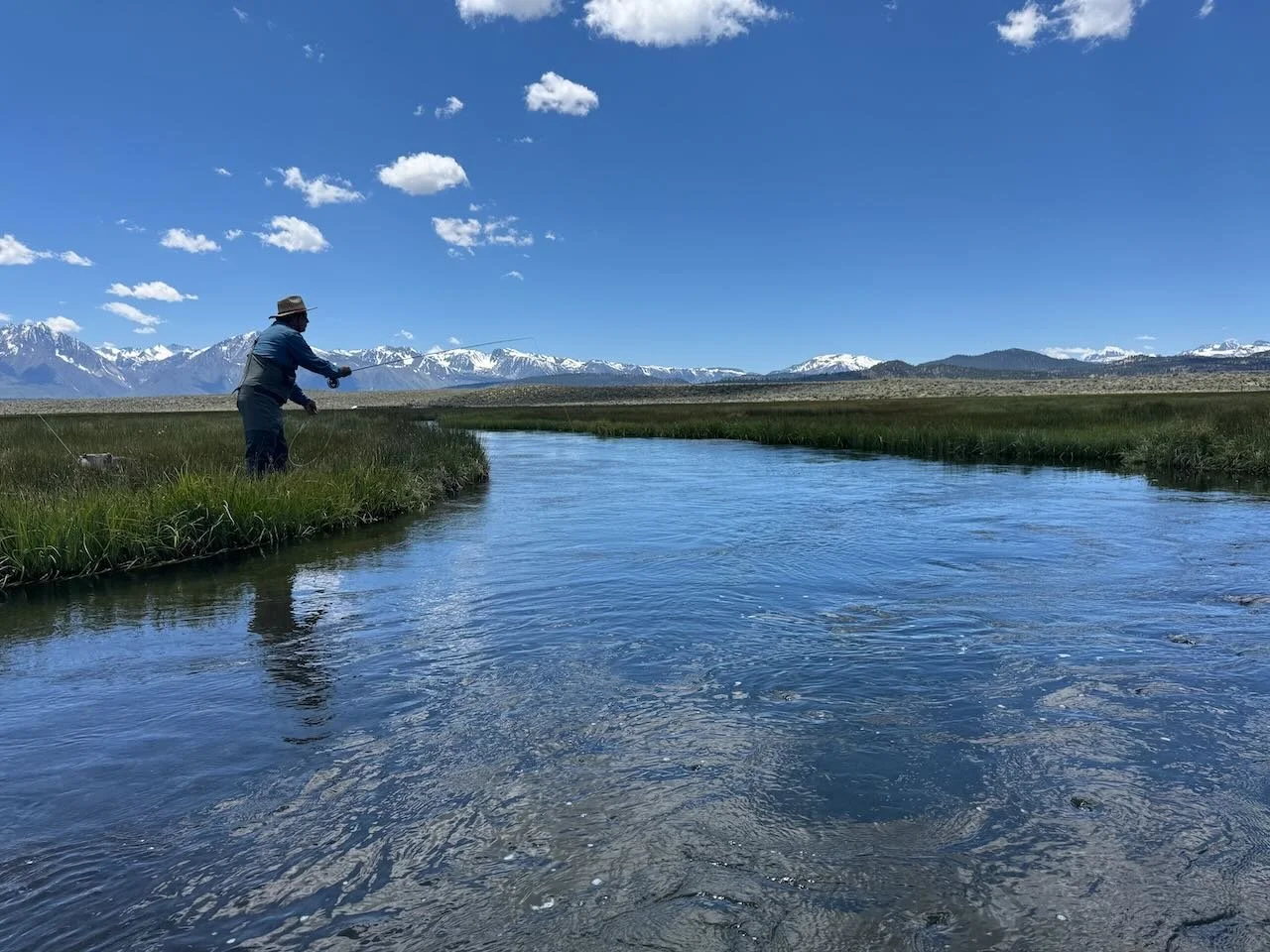
Summer is coming to the Eastern Sierra and fly fishers are awaiting the hatches of summer including pale morning dun mayflies, blue wing olive mayflies, little yellow stones and grass hoppers.
East Walker River
Miracle Mile Section:
The East Walker is producing trout for fly fishers fishing with dries, nymphs and streamers. There has been a mid-day hatch of blue wing olive mayflies. For the nymphs use size 18 olive quilldigons, size 18 bead head flash back pheasant tail nymphs, size 18 Frenchie’s and size 12 stoner nymphs. For the dries use size 20 blue wing olive parachutes, size 20 olive sparkle duns, and size 20 Adams parachutes. Streamer patterns are producing the bigger browns that the East Walker River is known for. Use size 10 balanced leeches and size 10 mini jig leeches.
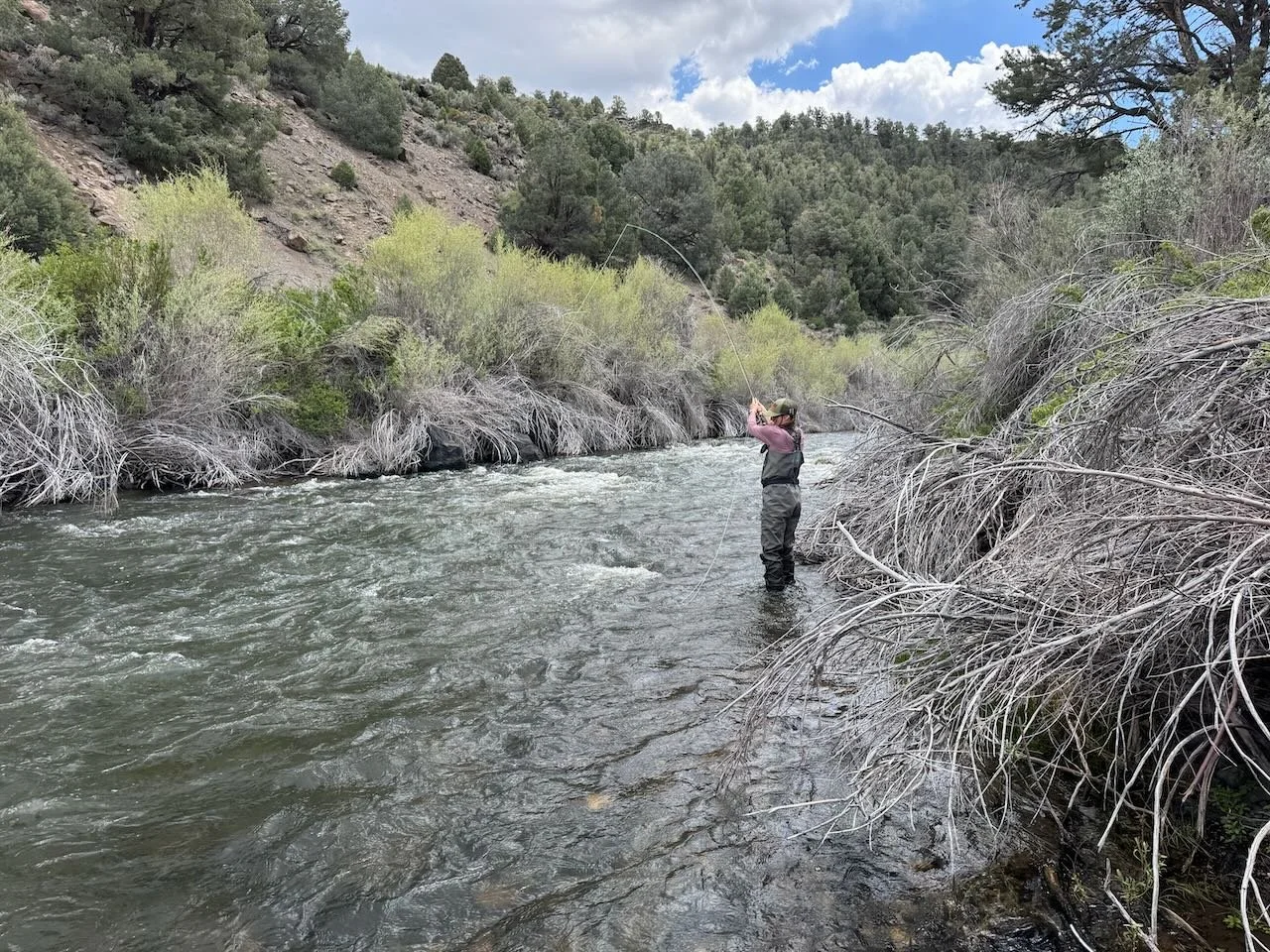
Nymphing with a size 18 olive quilldigon under and indicator during the blue wing olive hatch is producing brown trout to 15 inches.
Upper Owens River
Above Benton Crossing Bridge:
The hatchery run of cutthroat trout is coming to an end. There are no fresh cutthroats in the river. There are a few cutthroats still on redds spawning. There are lots of down streamers, cutthroats that are migrating back to Crowley Lake. There are dead fish floating down the river that did not survive the rigors of spawning. There is not much happening in the form of hatching insects. There is a sporadic blue wing olive hatch late morning into the early afternoon bringing a few trout to the surface taking size 18 blue wing olive parachutes, size 18 olive sparkle duns and size 18 Adams parachutes. Nymphing with size 18 olive quilldigons, size 18 bead head flash back pheasant tail nymphs, size 18 Frenchie’s and size 16 hot spot pheasant tail nymphs is producing six to 10 inch wild browns and rainbows. No see ums and mosquitoes are out and about and biting fly fishers.
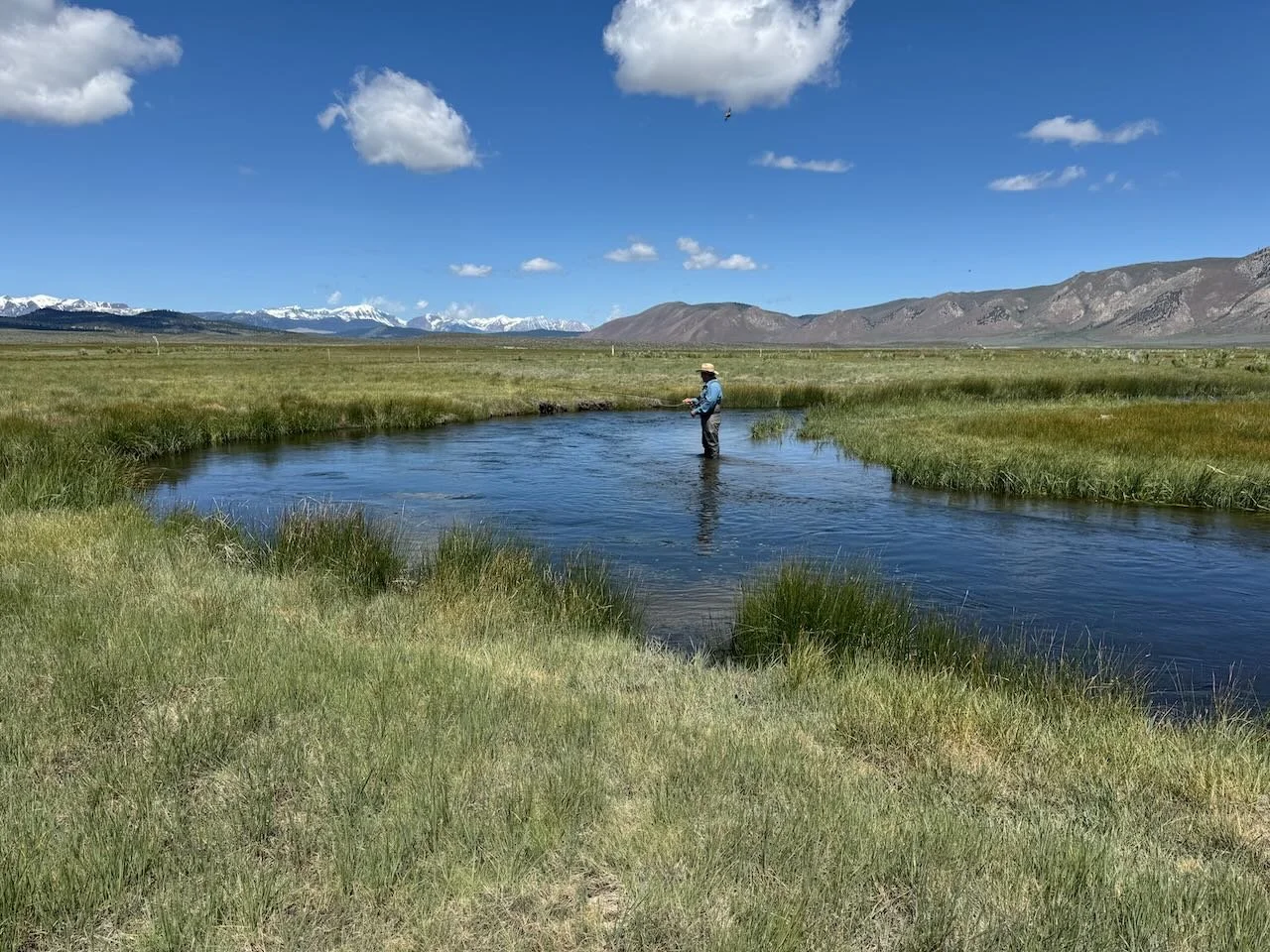
Nymphing the outside corner of an upper Owens River pool with blue wing olive nymphs is producing a few rainbows and browns to 10 inches.
Hot Creek
Interpretive Site:
This is the perfect spot on Hot Creek to fly fish with dry flies. There is a good morning hatch of blue wing olive mayflies coming off mid-morning to mid-afternoon. Fish with size 20 blue wing olive parachutes, size 20 olive sparkle duns and size 20 Adams parachutes. If you can’t see size 20 dry flies on the water use a dry and dry fly set up. Use a large high visible fly for the indicator like size 16 Adams parachutes, size 14 stimulators and size 12 Chernobyl ants. Add three feet of 5X or 6X tippet to the indicator fly and attach the size 20 fly pattern you’re fly fishing with.
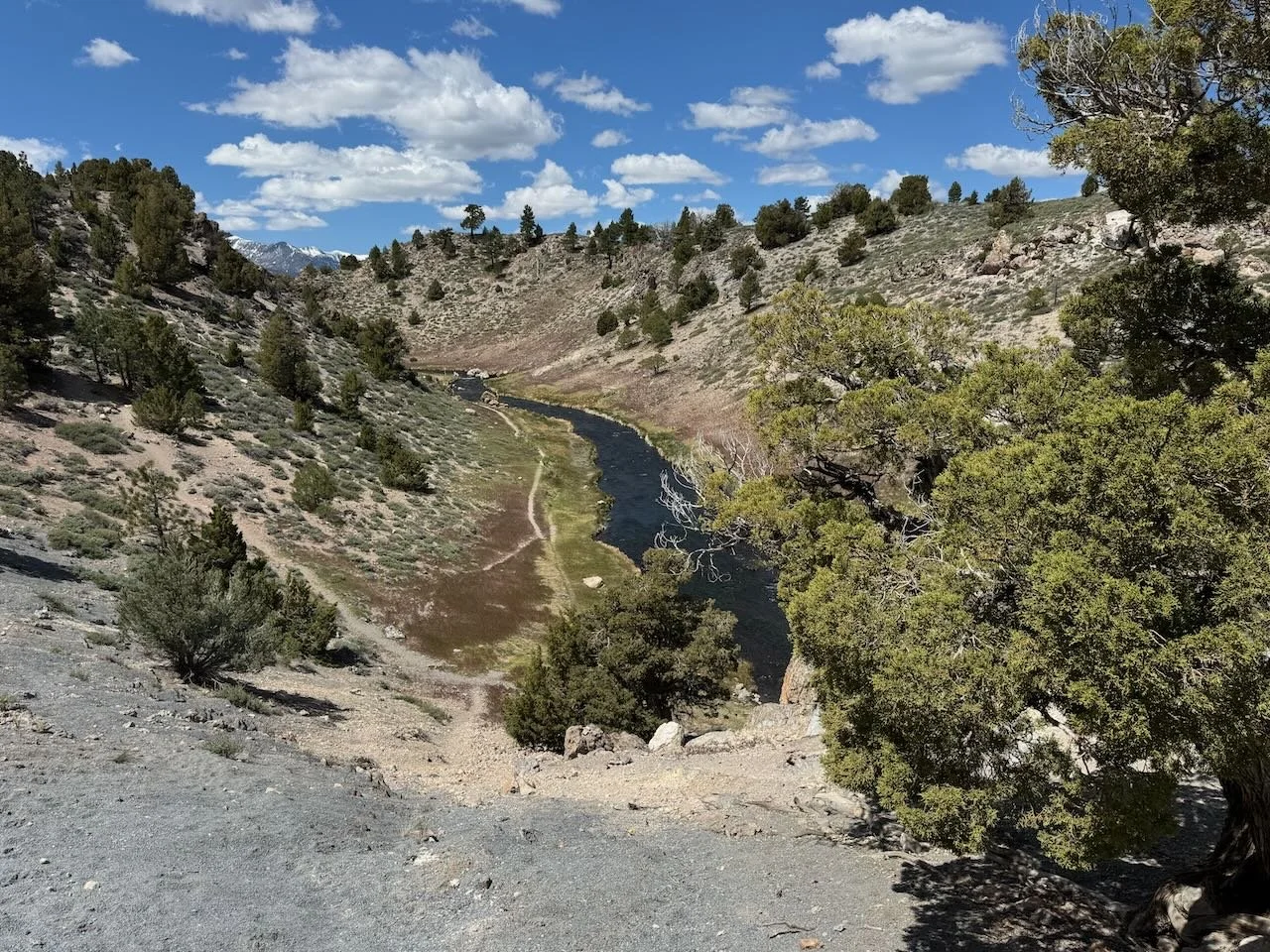
The weed beds in the canyon are starting to grow and making it hard for fly fishers to work nymphs through and around the weed beds.
Hot Creek
Canyon Section:
The weed beds are starting to grow in the Canyon Section of Hot Creek as we move into summer. As the weed beds grow it makes it tough to nymph in the canyon. The trout are feeding on blue wing olive nymphs prior to the hatch. Use a size 18 olive quilldigon, size 18 bead head flash back pheasant tail nymph, size 18 Frenchie’s and size 16 hot spot pheasant tail nymphs. Fish the nymphs under a dry fly or on a Euro rig.
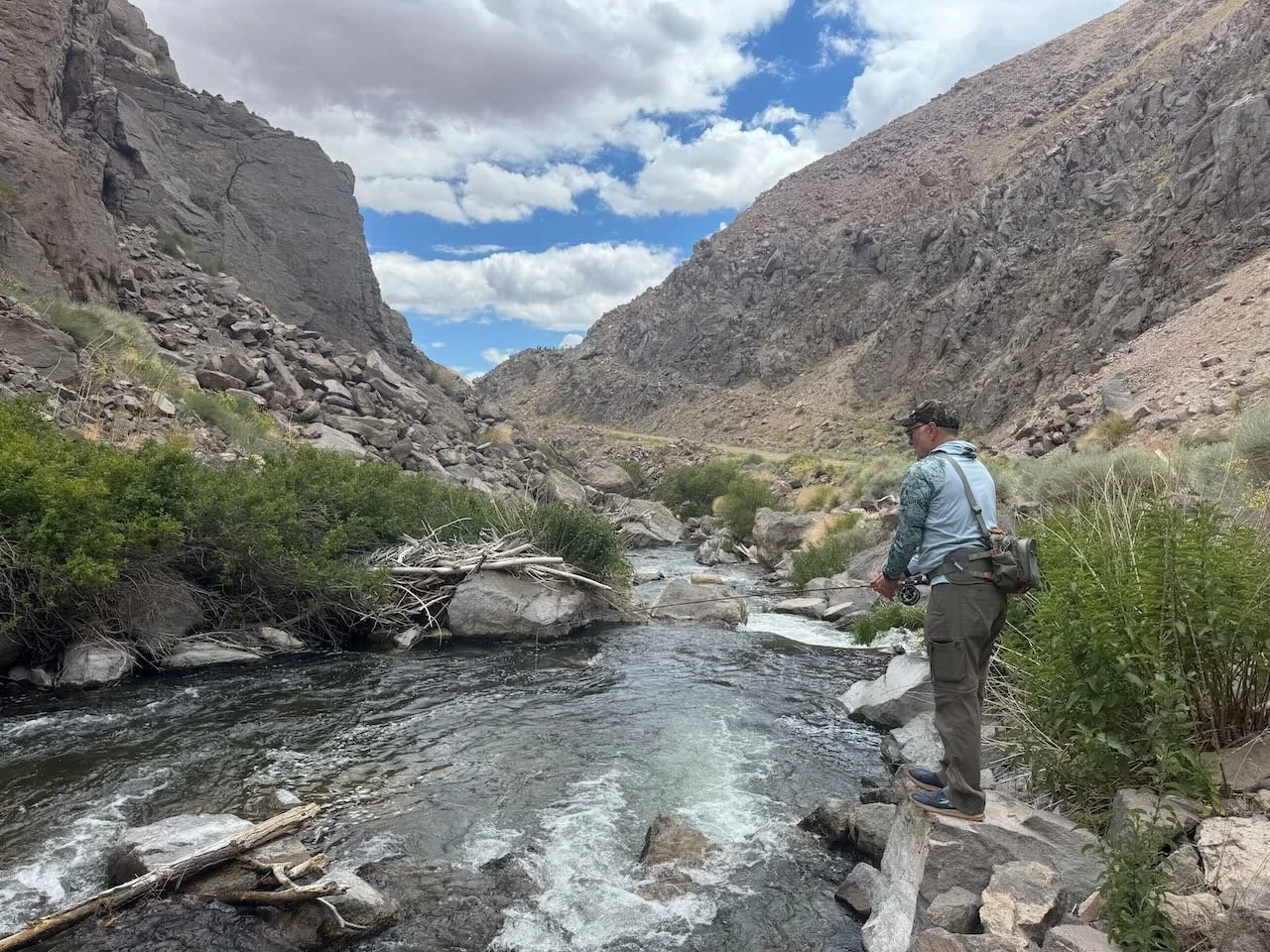
Fly fishing from the banks of the Owens River Gorge with a dry and dropper is producing wild browns to 12 inches.
Owens River Gorge
Middle Power Plant:
It’s a 20 minute walk down into the gorge to fly fish. Coming out in the middle of the afternoon when the temperatures are in the 90’s is hot and takes up to 30 minutes. The gorge is a great place to fish a dry and dropper rig. A size 16 Adams parachute will bring trout to the surface, but is hard to see in the rough water sections where there is lots of foam. For the indicator fly try using size 16 stimulators, size 12 Chernobyl ants and size 14 Royal Wulff. For the nymphs use size 16 green/gold brassies, size 16 tiger midges, size 16 zebra midges, size 16 bead head flash back gold ribbed hare’s ears, size 18 bead head flash back pheasant tail nymphs, size 18 olive quilldigons and size 16 Duracell nymphs. With the heat it’s worth using wet wading gear. For the most part working the holes and runs by fishing off the banks is an easy way to work the river.
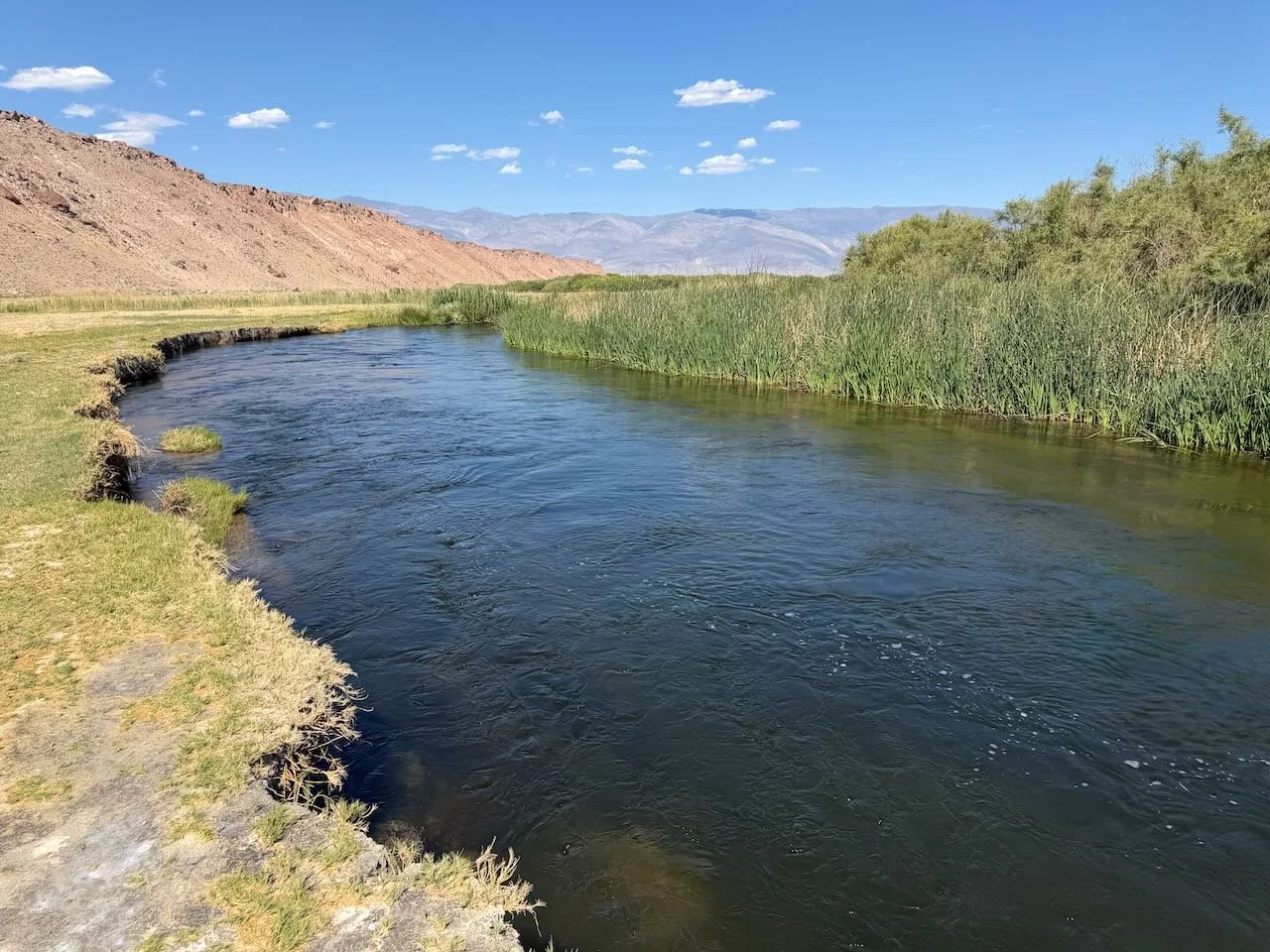
With flows over 400 CFS the lower Owens River is flowing bank to bank and should only be fished from the banks.
Lower Owens River
Wild Trout Section:
Flows on the lower Owens continue to flow over 400 CFS. At these flows it’s unsafe to wade the river. I don’t like nymphing the river at these flows as I lose to many rigs and flies. For those willing to nymph the river from the bank use size 16 bead head flash back gold ribbed hare’s ears, size 18 bead head flash back pheasant tail nymphs, size 16 Duracell nymphs and size 16 hot spot pheasant tail nymphs. Evening caddis hatches are the time to be on the river dry fly fishing with size 16 elk hair caddis. I highly recommend checking the DWP lower Owens River flows before going out to the river
at: http://wsoweb.ladwp.com/Aqueduct/realtime/norealtime.htm.
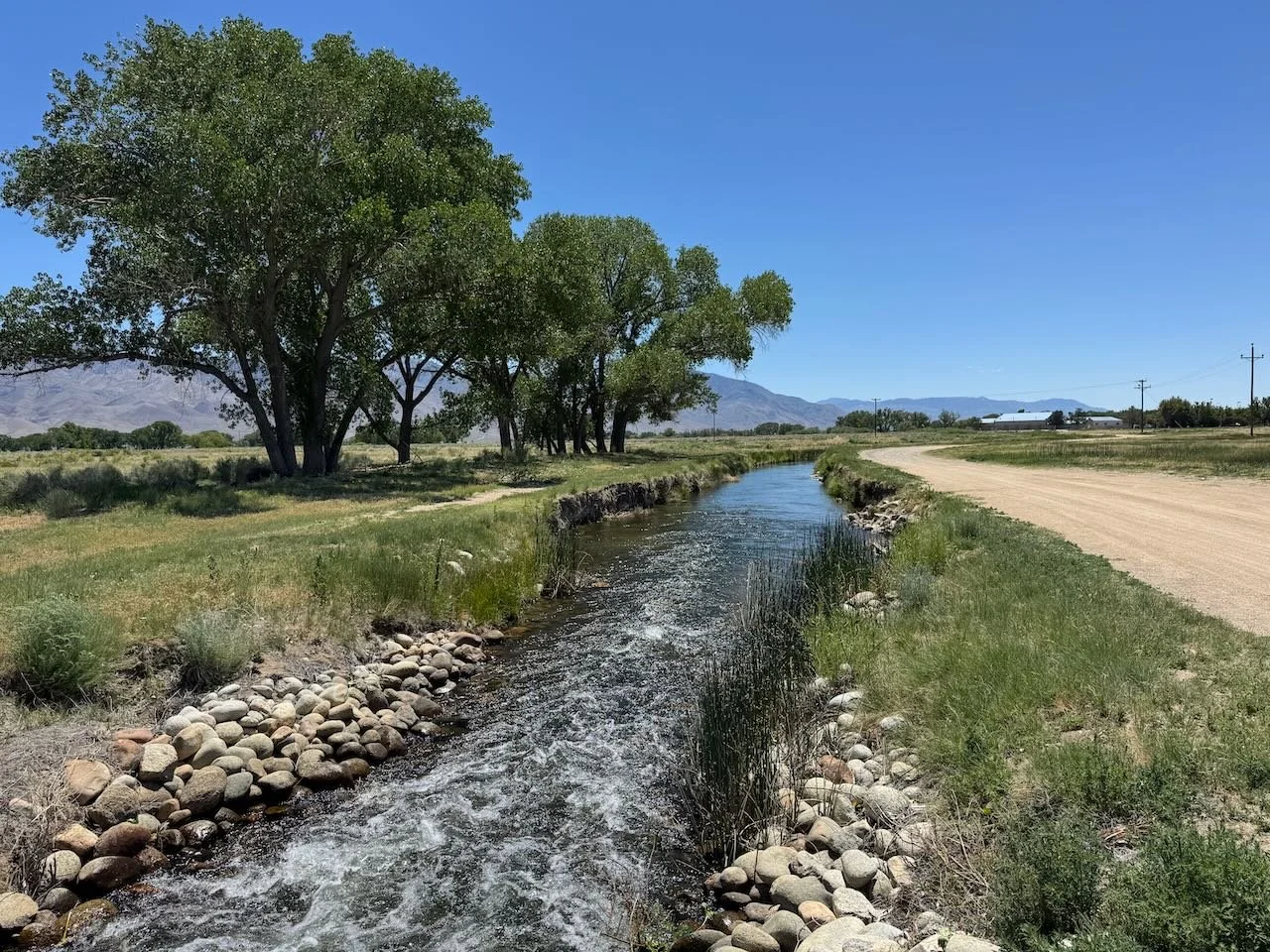
Afternoons are hot and fishing in the evenings when the caddis are laying there eggs is a great way to end a warm summer day.
Bishop Creek Canal
Behind Bishop Veterinary Hospital:
Fishing on the canal when the sun goes down is when the caddis come out to lay their eggs on the water. Cast a size 16 elk hair caddis upstream and let it drift drag free downstream. When it gets downstream let it drag across the stream. The first quarter and last quarter of the drag is where you should expect to get a hit. When the fly is straight down stream it’s time to start skittering the caddis upstream. Do this by slowly pulling the caddis upstream along the bank. If the wind grabs the fly line and pulls the fly off the water, let if land back on the water and give it slack to let it drift about a foot downstream. Then continue to pull it upstream. The mosquitoes are out at night so be sure to wear clothes that cover skin and wear insect repellant.