
Memorial Day weekend is here and so are the crowds to enjoy the kick off of summer in the Eastern Sierra. The weather continues to be unsettled. Beginning of the week I was wearing a down jacket over my sweat shirt all day long. The heat of summer is not far off. Hatches of caddisflies, mayflies, stoneflies and midges continue to feed the trout on the substrate and on the surface. Fly fishers looking for trophy trout are offering the trout a big calorie meal by pulling streamers.
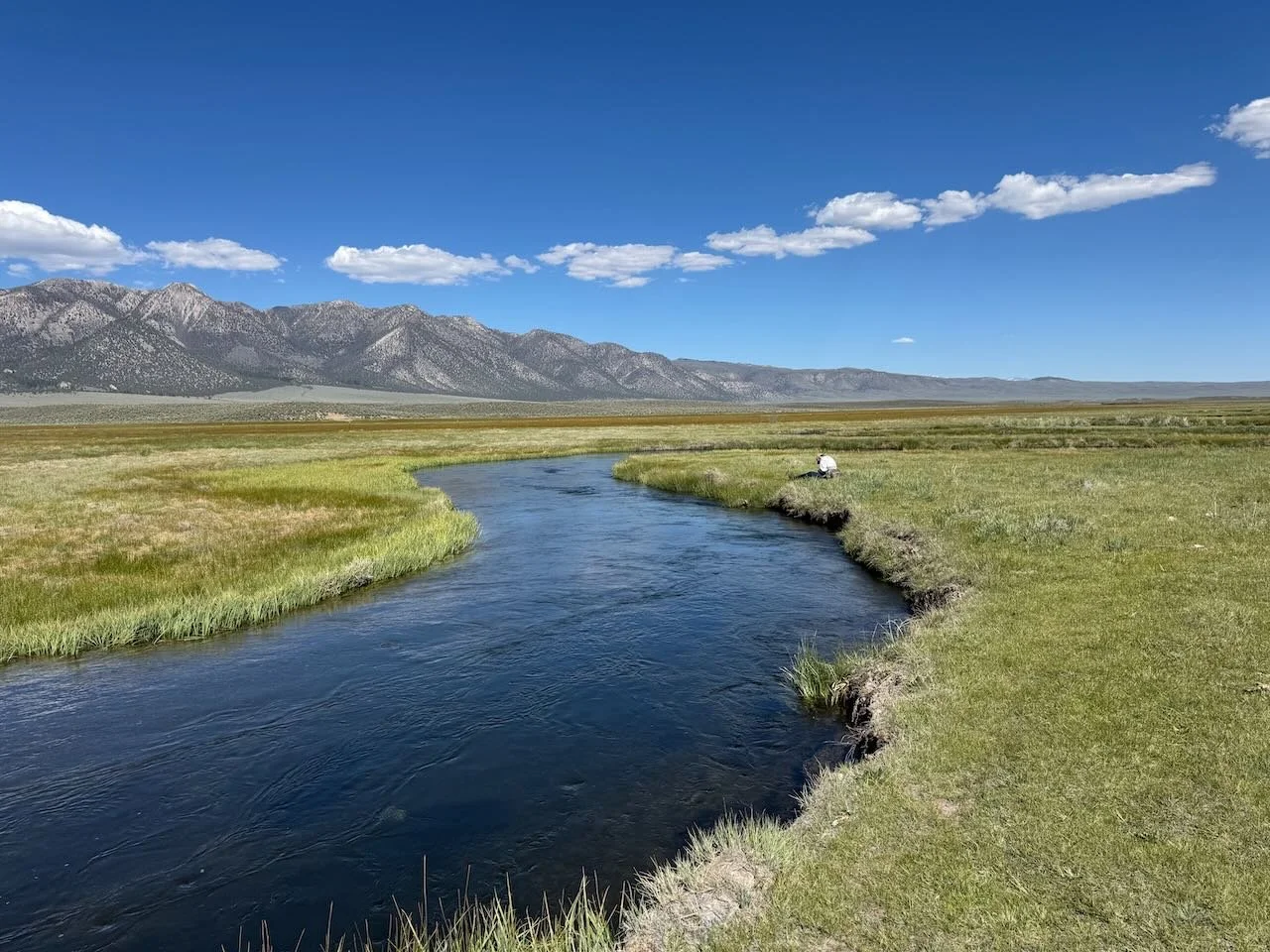
Summer is coming to the Eastern Sierra and sitting on the bank enjoying the river and watching the actions of the trout is a great way to start a day of fly fishing.
Upper Owens River
Above Benton Crossing Bridge:
The cutthroats seem to have lock jaw this season. They are in the river, but the bulk of the fish have been in the shallows spawning. Actively spawning trout are not interested in eating and fly fishers should not fish for actively spawning trout as they are the future of the trout populations in the upper Owens River. The cutthroats seem to be a non-reproducing strain of trout in the upper Owens River and the tributaries of Crowley Lake. Streamers and nymphs is what the cutthroats are taking. Fish the deep holes, deep runs and cut banks where the cutthroats are resting and feeding. For streamers use size 6 and 10 olive wooly buggers, black wooly buggers, olive slumpbusters, Hornberg’s and muddler minnows. Fish nymphs under an indicator or with a Euro rig. Use size 12 stoner nymphs, size 12 green/gold wire Prince nymphs, size 12 Richard’s version of the gold ribbed hare’s ears, size 14 copper John’s, size 12 rainbow warriors, size 14 tungsten tacos, size 10 mop flies and size 12 squirmy wormies. For the resident trout up to 12 inches fish with size 16 hot spot pheasant tail nymphs, size 18 bead head flash back pheasant tail nymphs, size 18 olive quilldigons and size 18 Frenchie’s
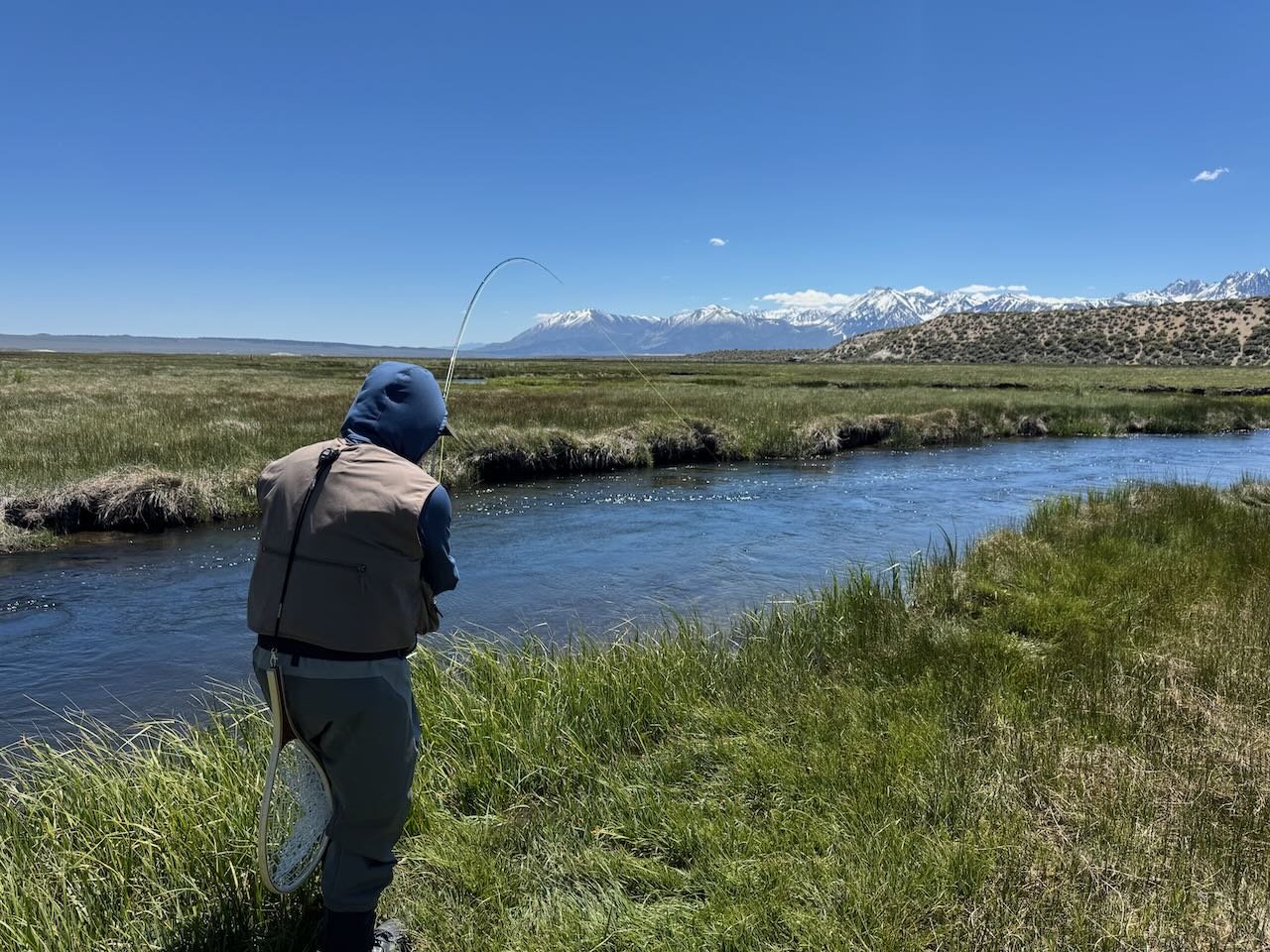
Fly fishers have been working hard to hook up with trophy cutthroat trout in the upper Owens River.
Hot Creek
Interpretive Site:
The blue wing olive hatch has been sporadic. When the hatch is not happening it’s time to nymph fish the creek. When the trout are consistently rising to the hatching blue wing olive hatch fish with size 20 blue wing olive parachutes, size 20 olive sparkle duns and size 20 Adams parachutes. When the hatch is inconsistent fish with size 18 olive quilldigons, size 18 bead head flash back pheasant tail nymphs, size 12 stoner nymphs and size 18 Frenchie’s.
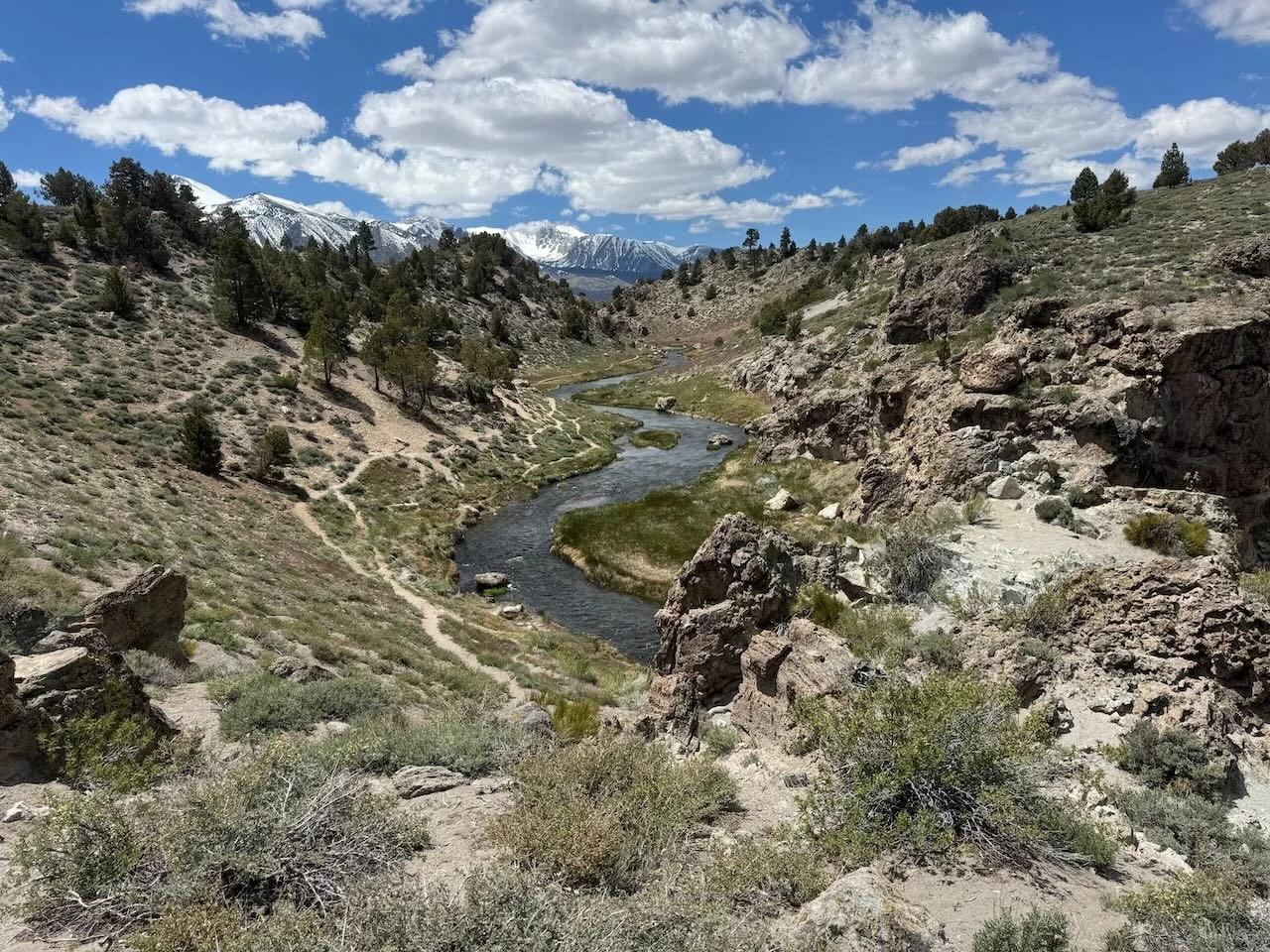
In spring time Hot Creek Canyon offers good nymph fishing opportunities with little fly fishing pressure.
Hot Creek
Canyon Section:
Flows on Hot Creek are elevated with spring runoff. This is a great time to nymph and streamer fish the canyon section of Hot Creek. Fish with size 6 olive wooly buggers, size 6 slumpbusters and your favorite articulated streamer pattern. Pull the streamers through the deep holes and around the obstructions where the trophy trout are waiting to ambush a big calorie meal. For nymphs fish with size 18 olive quilldigons, size 18 bead head flash back pheasant tail nymphs, size 12 stoner nymph, size 18 Frenchie, size 16 Duracell nymphs, size 18 green/gold brassies, size 18 soft hackle brassies and size 18 thread midges in zebra and tiger coloration. When the trout begin to feed on the surface consistently it’s time to switch to a size 20 blue wing olive parachute and size 20 Adams parachute.
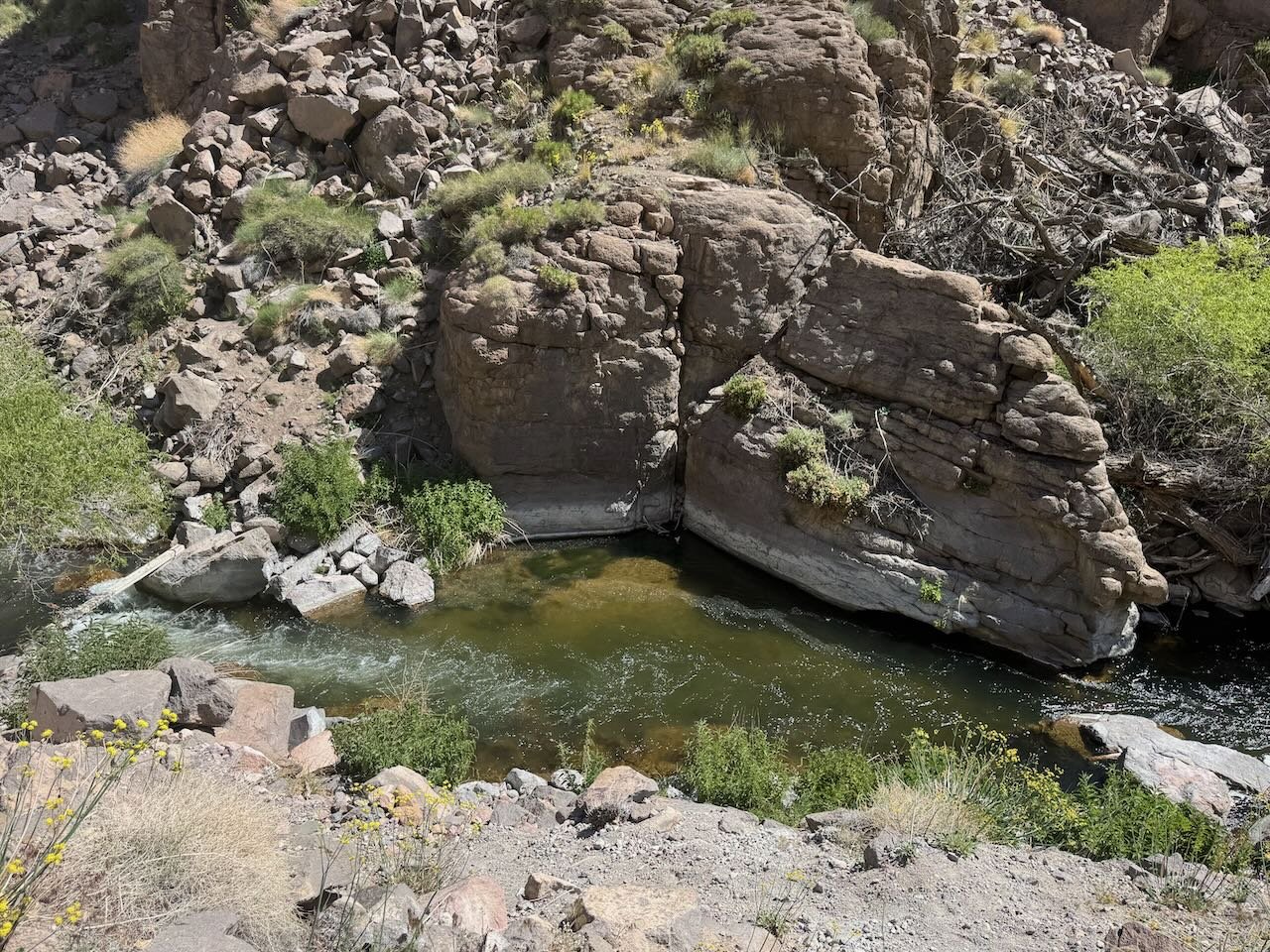
Deep holes in the Owens River Gorge is where you will find the trout feeding on nymphs, dries and streamers.
Owens River Gorge
Middle Power Plant:
Once summer heat is here it will be hot walking in and out of the gorge. For now the weather is perfect for accessing the gorge. There are lots of eight to 12 inch wild brown trout willing to take flies. The preferred method of fly fishing in the gorge is with a dry and dropper rig. For the dry fly use size 16 Adams parachutes, size 14 stimulators and size 12 Chernobyl ants. For the nymphs use size 18 olive quilldigons, size 18 bead head flash back pheasant tail nymphs, size 16 bead head flash back gold ribbed hare’s ears, size 16 green/gold brassies, size 16 Duracell nymphs and size 16 butano nymphs. Key to success is to work each pool or run thoroughly, before moving on to the next fishy looking spot
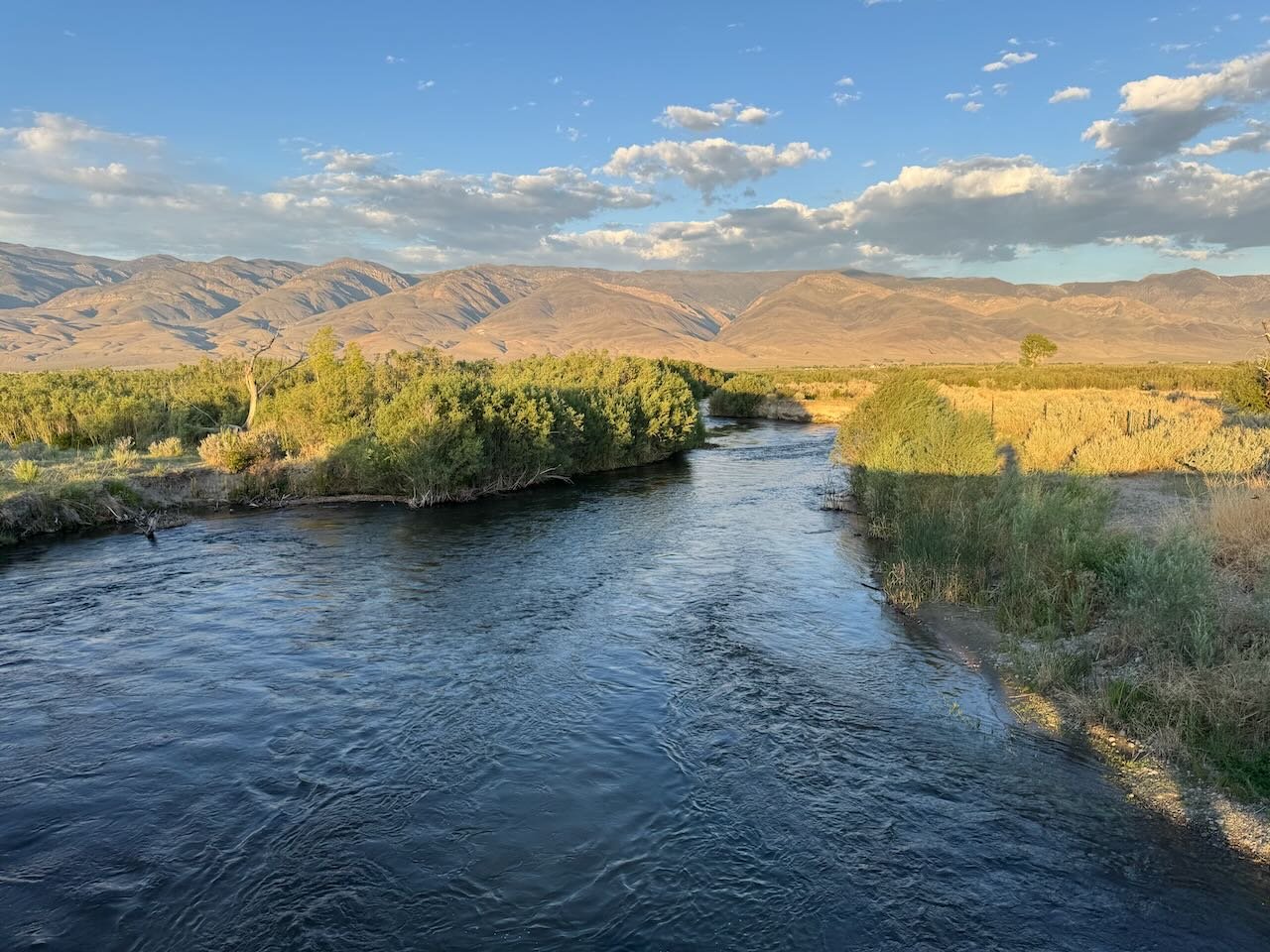
At flows in the 400 CFS range the lower Owens River is not safe to wade and fly fishers will need to find open banks to fly fish from.
Lower Owens River
Wild Trout Section:
With flows over 400 CFS it is fishing from the banks only as it is not safe to wade at flows over 300 CFS. If you are going to fly fish from the bank use nymphs with plenty of weight in the flies or on the tippet with a split shot. Use size 16 bead head flash back gold ribbed hare’s ears, size 16 Duracell nymphs, size 18 bead head flash back pheasant tail nymphs and size 18 olive quilldigons. I highly recommend checking the DWP lower Owens River flows before going out to the river at: http://wsoweb.ladwp.com/Aqueduct/realtime/norealtime.htm.
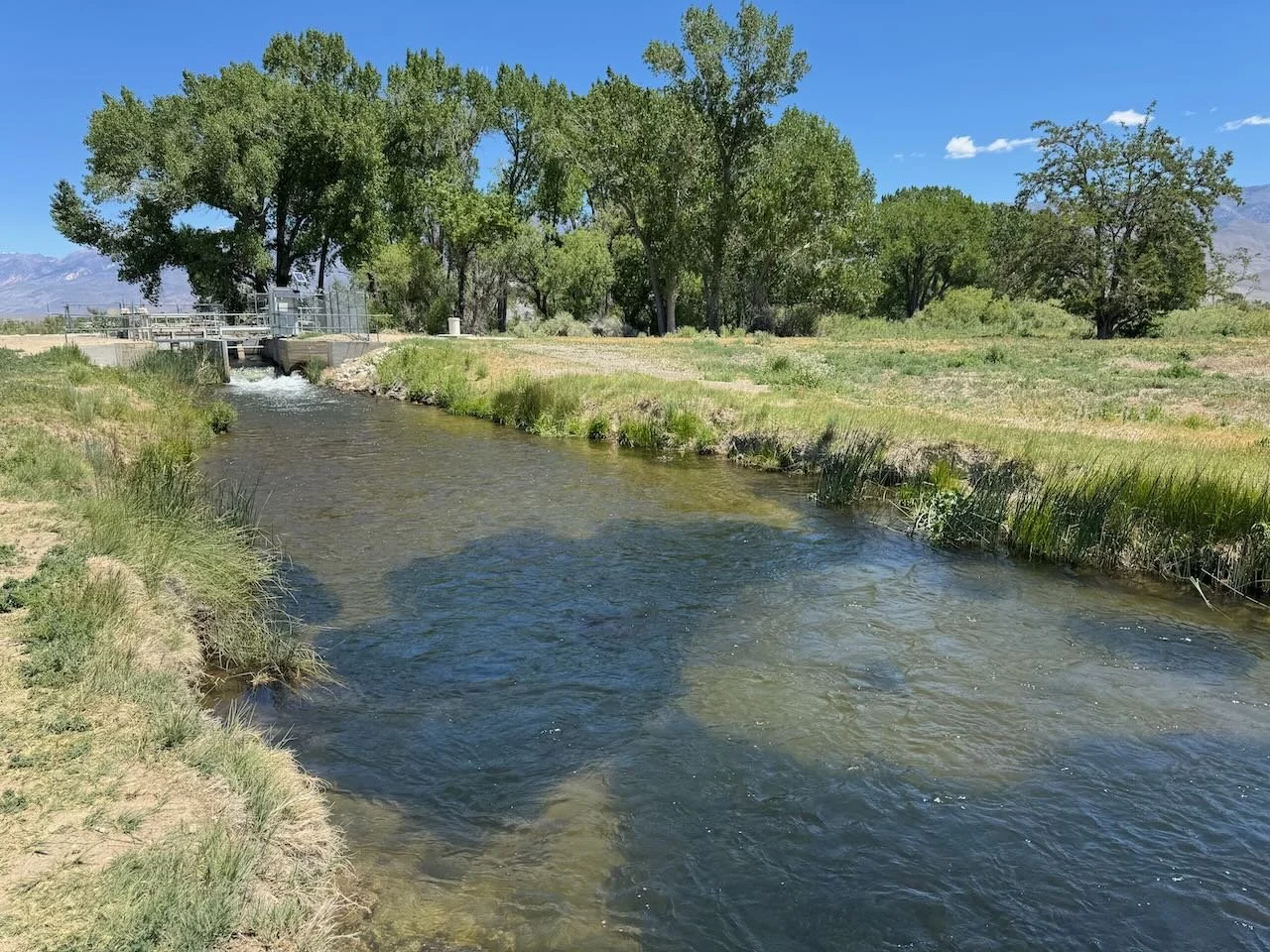
As weed beds grow it means fly fishers will need to work their flies in the seams between the weed beds where the trout are hanging out in the weeds for protection from predators.
Bishop Creek Canal
Behind Bishop Veterinary Hospital:
Mid-day temperatures have been perfect for fly fishers nymphing and dry fly fishing in Bishop Creek Canal. There are still blue wing olive mayflies hatching bringing trout to the surface. For the surface feeding trout fish with size 18 blue wing olive parachutes, size 18 olive sparkle duns, size 18 Adams parachutes and size 18 elk hair caddis. Under the surface fish with size 18 bead head flash back pheasant tail nymphs, size 18 olive quilldigons, size 16 Duracell nymphs, size 12 stoner nymphs, size 16 rainbow warriors, size 16 bead head flash back gold ribbed hare’s ears, size 18 green/gold brassies and size 18 thread midges in zebra and tiger coloration.