
With Memorial Day weekend a week away is the warm weather of summer here to stay? This week in the Owens Valley temperatures have risen into the mid-90’s. Might be time to break out the wet wading gear and retire the waders until fall. Consistent hatches of insects are not happening in the Eastern Sierra yet. The trout are primarily feeding on the larvae and pupae of midges, mayflies, caddisflies and stoneflies. With near perfect trout temperatures in the waters the trophy trout are hunting for a big meal and are looking to eat streamers first thing in the morning and last thing at night.
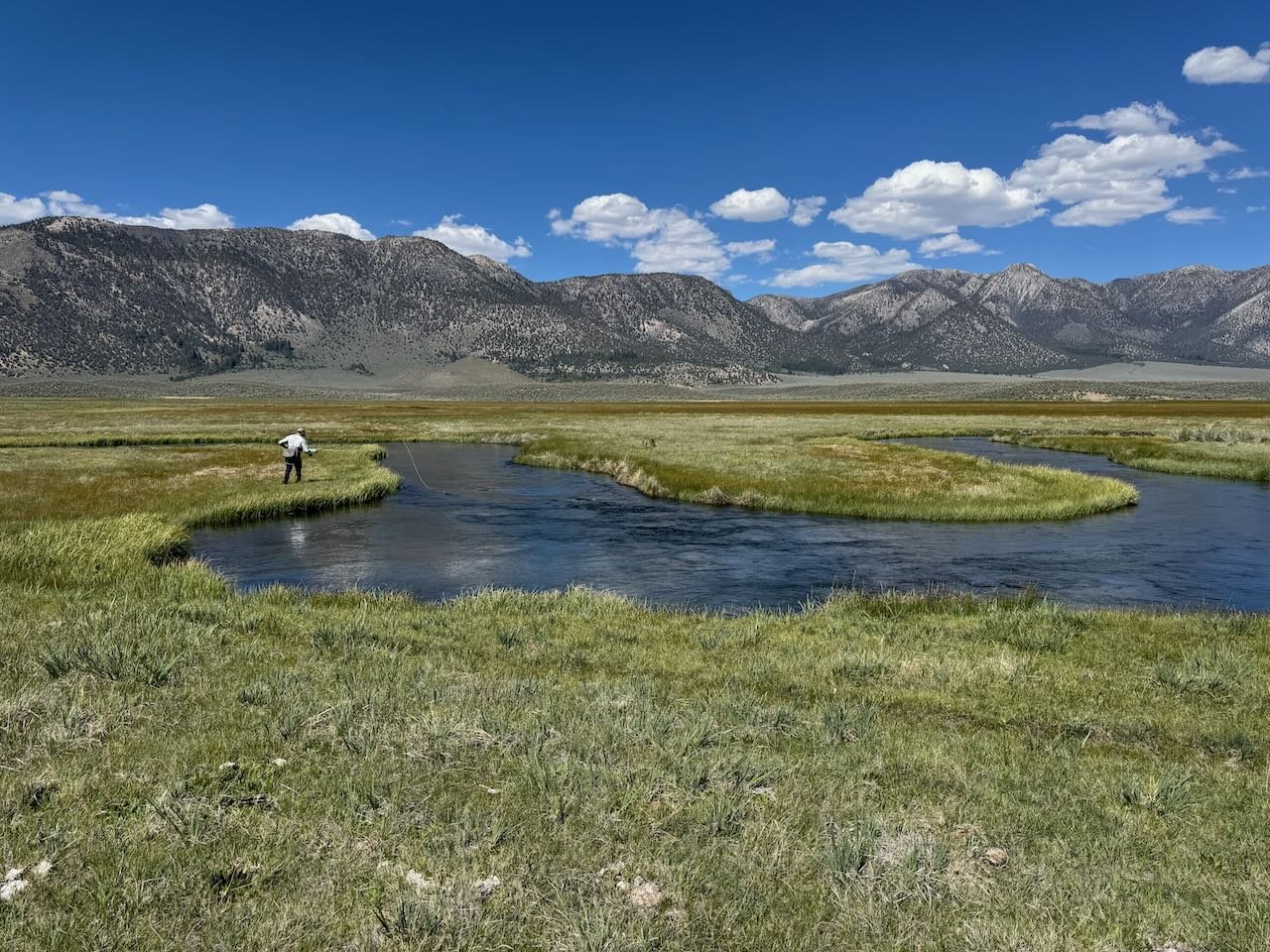
Summer weather is quickly coming to the Eastern Sierra and the meadows of the upper Owens River are ready for the iris to bloom and the cutthroat are in the river.
East Walker River:
Fly fishers working the miracle mile section of the river are finding trophy rainbows and browns willing to take streamers and nymphs. When streamer fishing remember that trout like to ambush their prey from below. Fish holes that are deep enough to allow the trout to ambush their prey. Size 6 and 10 wooly buggers, slumpbusters, muddler minnows and articulated goldies are the streamer patterns that are producing. Nymphing under and indicator or on a Euro rig is a very productive way of fly fishing the East Walker River. Use size 12 stoner nymphs, size 14 copper John’s, size 12 green/gold Prince nymphs, size 18 olive quilldigons, size 18 bead head flash back pheasant tail nymphs, size 16 bead head flash back gold ribbed hare’s ear nymphs, size 16 Duracell nymphs and size 18 thread midges in zebra and tiger coloration.
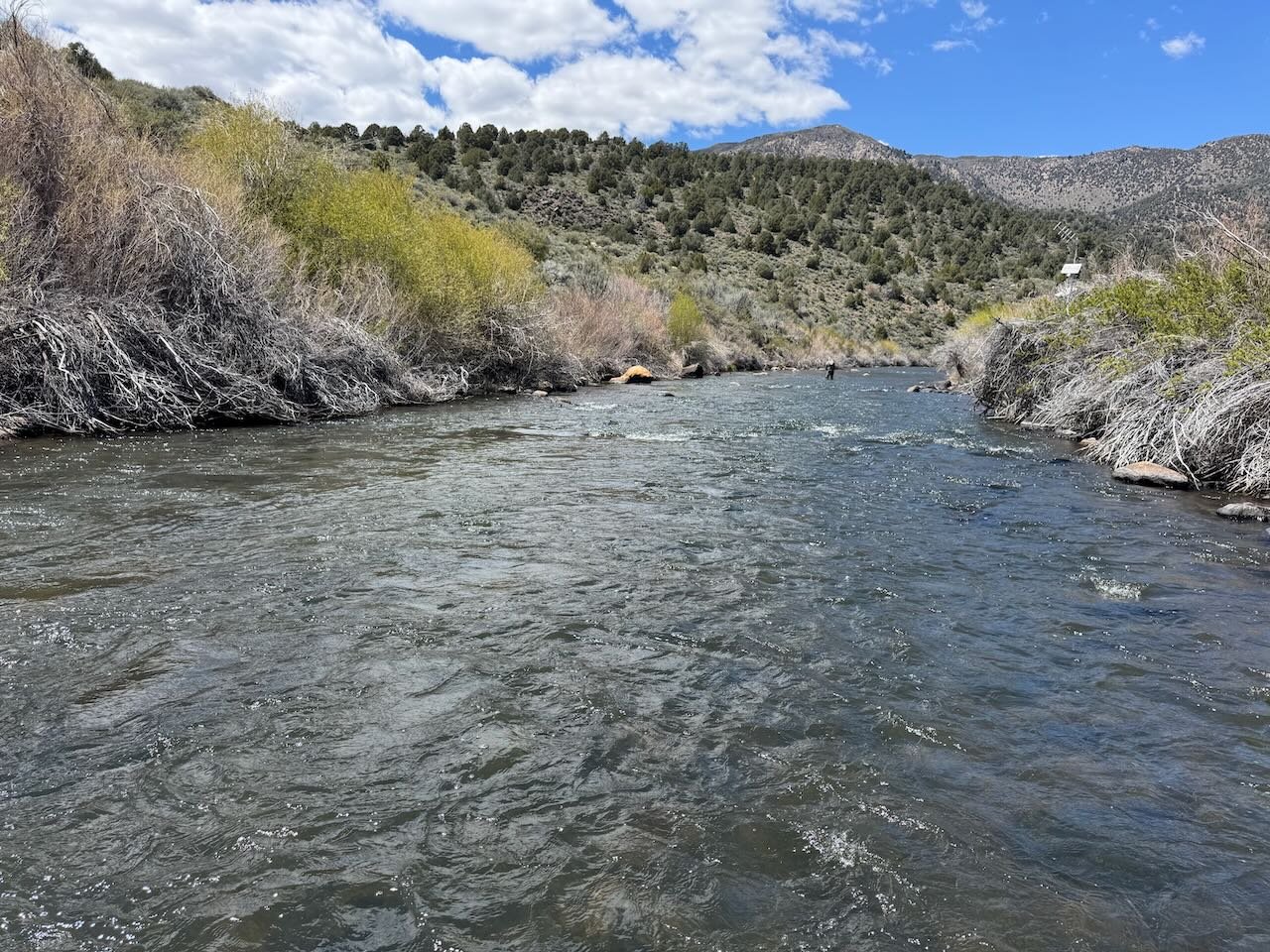
Trophy trout and fly fishers have moved back into the Miracle Mile section of the East Waler River.
Upper Owens River
Above Benton Crossing Bridge:
The cutthroat run is in full swing in the river. Spawning trout in the creeks and rivers represent the future trout population for the rivers and creeks. It’s uncertain if the cutthroats are successfully reproducing in the Crowley Lake tributaries. Avoid fishing for actively spawning cutthroats. You will be able to identify this as you will see the female turn on her side and dig up the gravel. The eggs and fry will be in the redds for about 45 days. So avoid stepping on redds if you need to wade in the river. Fishing in the deep holes, deep runs and cutbanks is where you will find the cutthroats feeding and resting. Actively spawning trout are not interested in feeding and will avoid your flies. Nymph with size 12 stoner nymphs, size 12 green/gold Prince nymphs, size 14 copper John’s, size 12 Richard’s variation of a gold ribbed hare’s ears, size 12 rainbow warriors, size 14 tungsten tacos, size 10 mop flies and size 12 squirmy wormies. Wooly buggers, slumpbusters, muddler minnows and Hornberg’s in sizes 6 and 10 are the streamer patterns that are producing cutthroat trout.
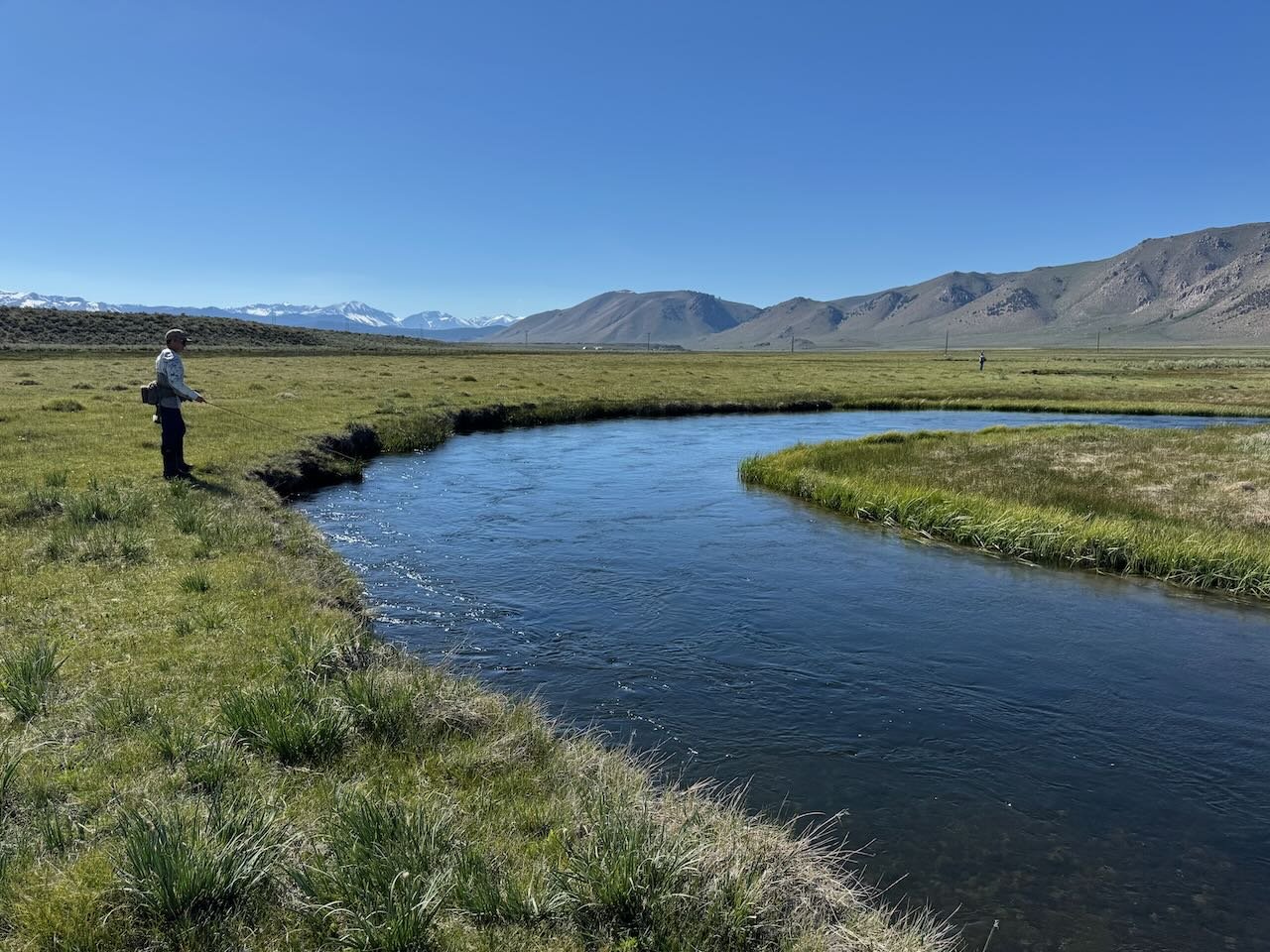
Fishing the deep holes, deep runs and cut banks of the upper Owens River is where to find the trophy cutthroat trout willing to take nymphs and streamers.
Hot Creek
Interpretive Site:
The blue wing olive hatch is starting late in the morning and lasting into early afternoon. Before the hatch fish with nymphs like a size 18 bead head flash back pheasant tail nymph, size 18 olive quilldigon, size 12 stoner nymph, size 18 midges in tiger and zebra coloration. Once the trout start feeding consistently on the surface fish with size 20 blue wing olive parachutes, size 20 olive sparkle duns and size 20 Adams parachutes. A dry and dry rig is a great way to allow the fly fisher to see the tiny size 20 blue wing olive patterns on the water.
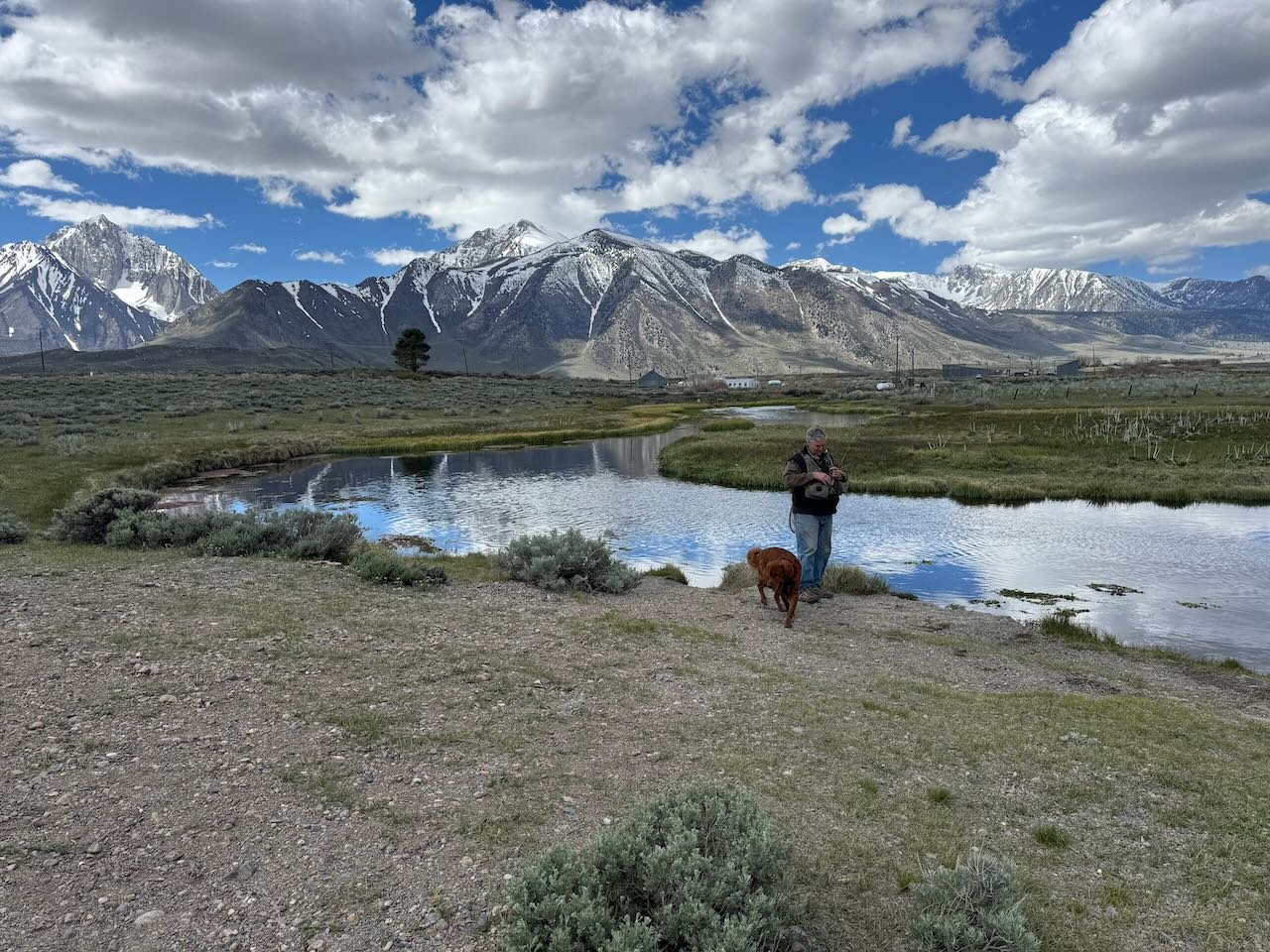
Hatches of blue wing olive mayflies have the trout of the Interpretive Site of Hot Creek feeding on the surface taking size 20 blue wing olive parachutes.
Hot Creek
Canyon Section:
The Canyon Section with higher flows from spring runoff is the perfect place to be nymphing. There are lots of open spots in the creek to bounce your nymphs through. It will not be long before the weed beds take over and it will be tough to drift a nymph through the creek. Euro nymphing with a size 12 stoner nymph, size 18 Frenchie, size 18 olive quilldigon, size 18 bead head flash back pheasant tail nymph, size 16 Duracell nymphs, size 18 green/gold brassies, size 18 soft hackle brassies and size 18 thread midges in zebra and tiger coloration are fooling wild rainbow and brown trout to 16 inches. When the trout begin to feed on the surface consistently it’s time to switch to a size 20 blue wing olive parachute and size 20 Adams parachute.
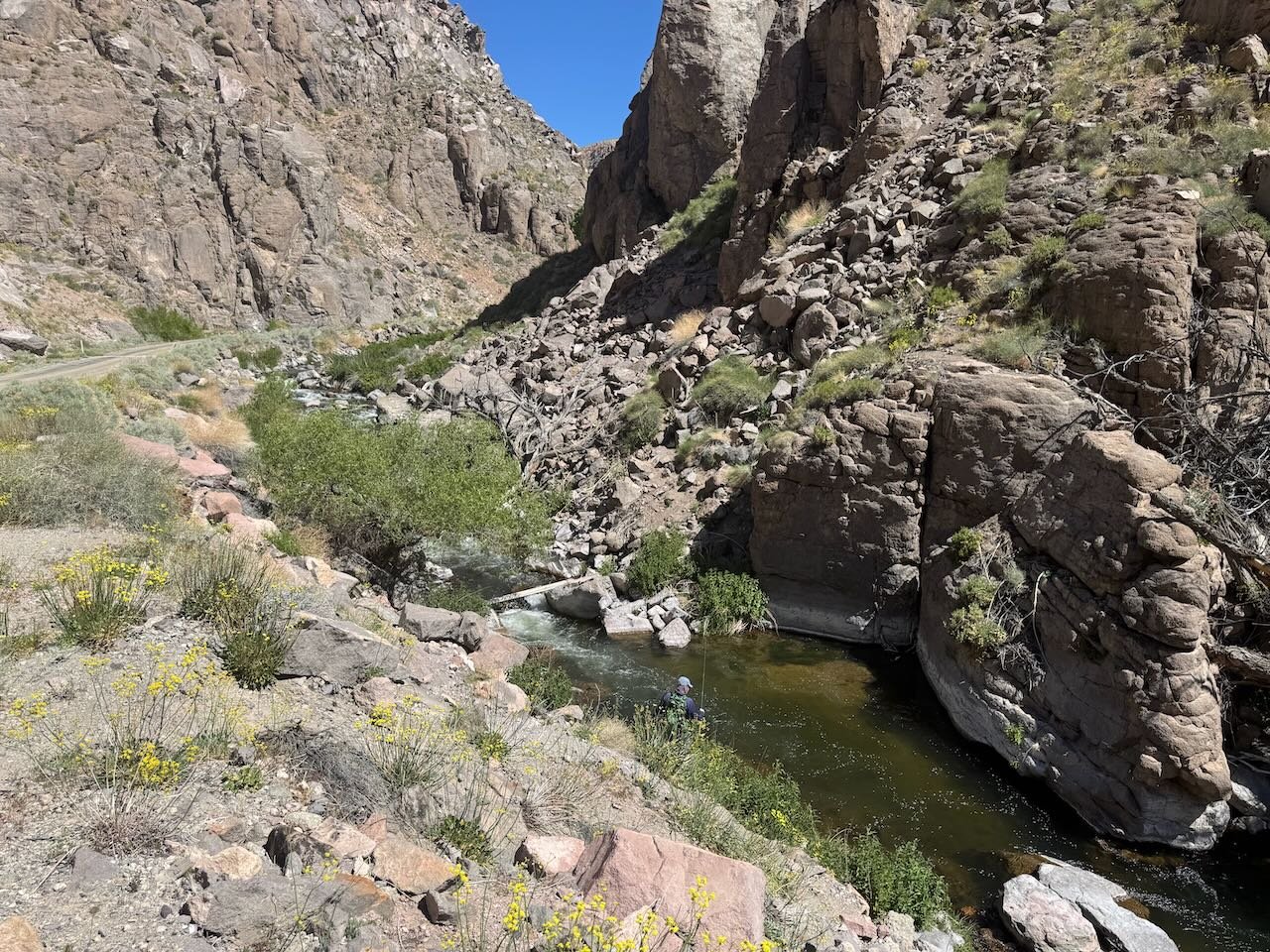
Working the holes and pockets from the banks of the Owens River Gorge with a dry and dropper rig.
Owens River Gorge
Middle Power Plant:
With the heat of summer approaching most fly fishers avoid the Owens River Gorge until fall. For those willing to hike in and out of the gorge there is fun fly fishing for eight to 12 inch wild brown trout. While this section of the Owens River is technically a tail water fishery it fishes like a freestone creek. Working the pockets and pools with a dry and dropper rig is a very successful method of fly fishing the gorge. For the dry fly use a size 16 Adams parachute, size 14 stimulator and size 12 Chernobyl ant. For nymphs fish with size 18 olive quilldigons, size 18 bead head flash back pheasant tail nymphs, size 16 green/gold brassies, size 16 Duracell nymphs and size 16 butano nymphs. With the heat of summer here be sure to carry lots of water with you into the gorge.
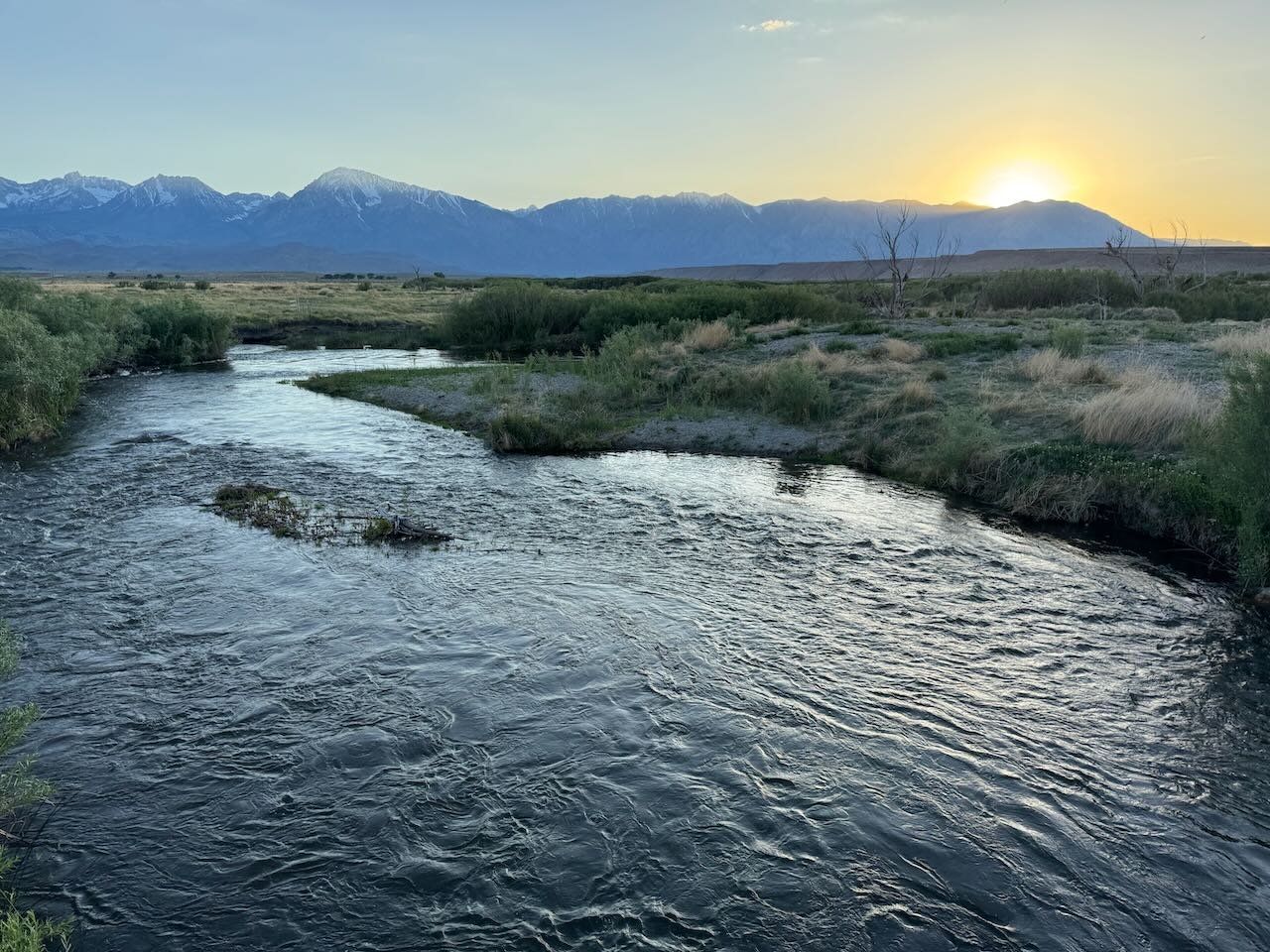
Flows in the lower Owens River are fluctuating around 300 CFS which is right at the unsafe wading level.
Lower Owens River
Wild Trout Section:
Flows continue to fluctuate up and down from 230 CFS to just over 300 CFS. I highly recommend checking the DWP lower Owens River flows before going out to the river at: http://wsoweb.ladwp.com/Aqueduct/realtime/norealtime.htm. Anything between 200 and 250 CFS is worth fishing the lower Owens River. Nymphing with a Euro rig or under an indicator is the most productive method of fishing the river right now. Use size 18 bead head flash back pheasant tail nymph, size 18 olive quilldigons, size 16 Duracell nymphs, size 18 Frenchie’s, size 16 rainbow warriors, size 16 bead head flash back gold ribbed hare’s ears and size 12 stoner nymphs.
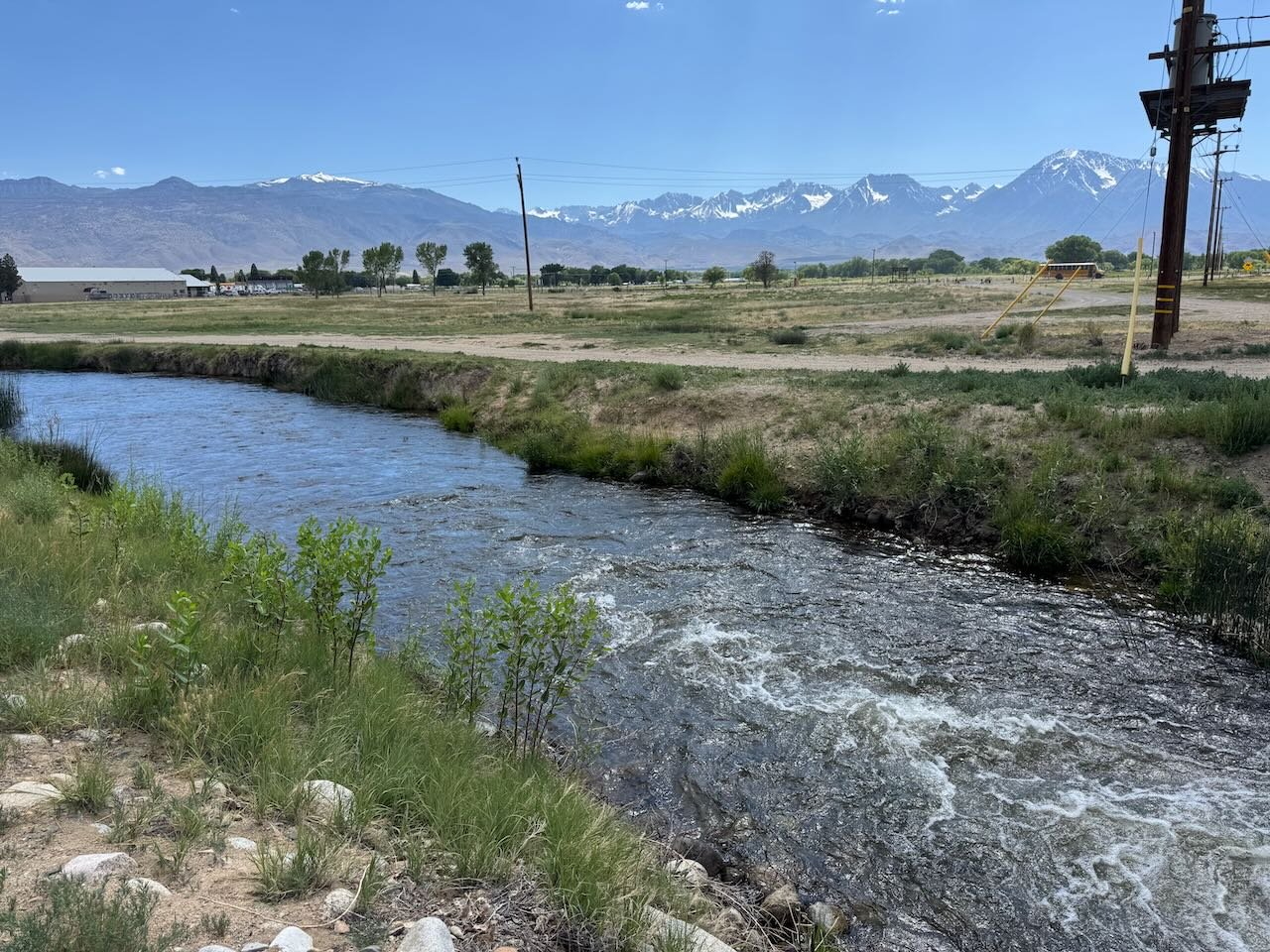
As the temperature goes up, afternoons on Bishop Creek Canal can be hot, but is very productive with nymphs and dries.
Bishop Creek Canal
Behind Bishop Veterinary Hospital:
With warm to hot afternoon temperatures it’s not necessarily pleasant to be a fly fisher in the afternoon on Bishop Creek Canal. Using nymphs and dries are producing wild brown trout and hatchery rainbow trout all day. Before the hatch fish under an indicator or with a Euro rod with size 18 bead head flash back pheasant tail nymphs, size 18 olive quilldigons, size 16 Duracell nymphs, size 12 stoner nymphs, size 16 rainbow warriors, size 16 bead head flash back gold ribbed hare’s ears, size 18 green/gold brassies and size 18 thread midges in zebra and tiger coloration. When the trout start feeding on the hatching duns use a size 18 blue wing olive parachutes and size 18 Adams parachutes.