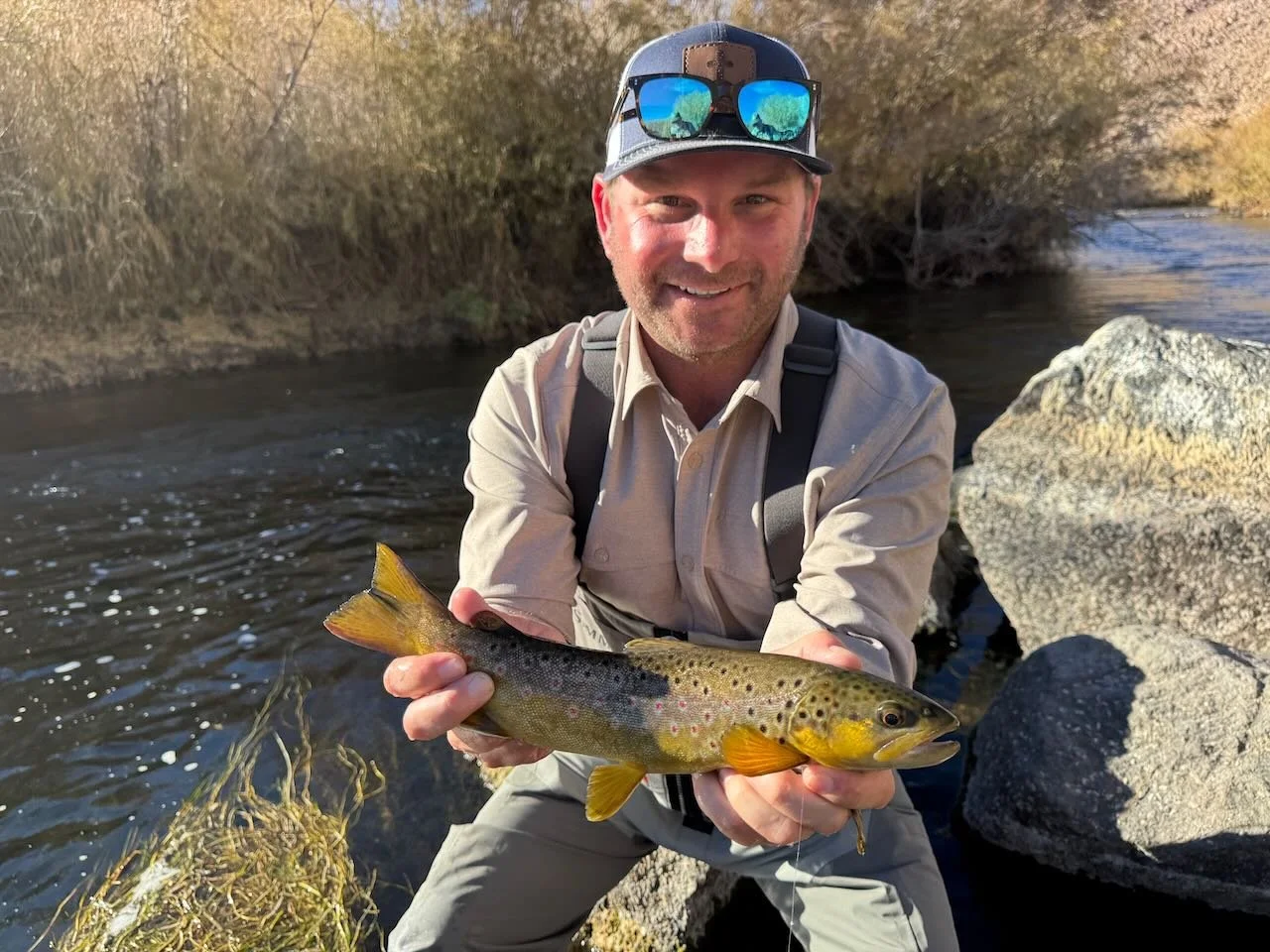
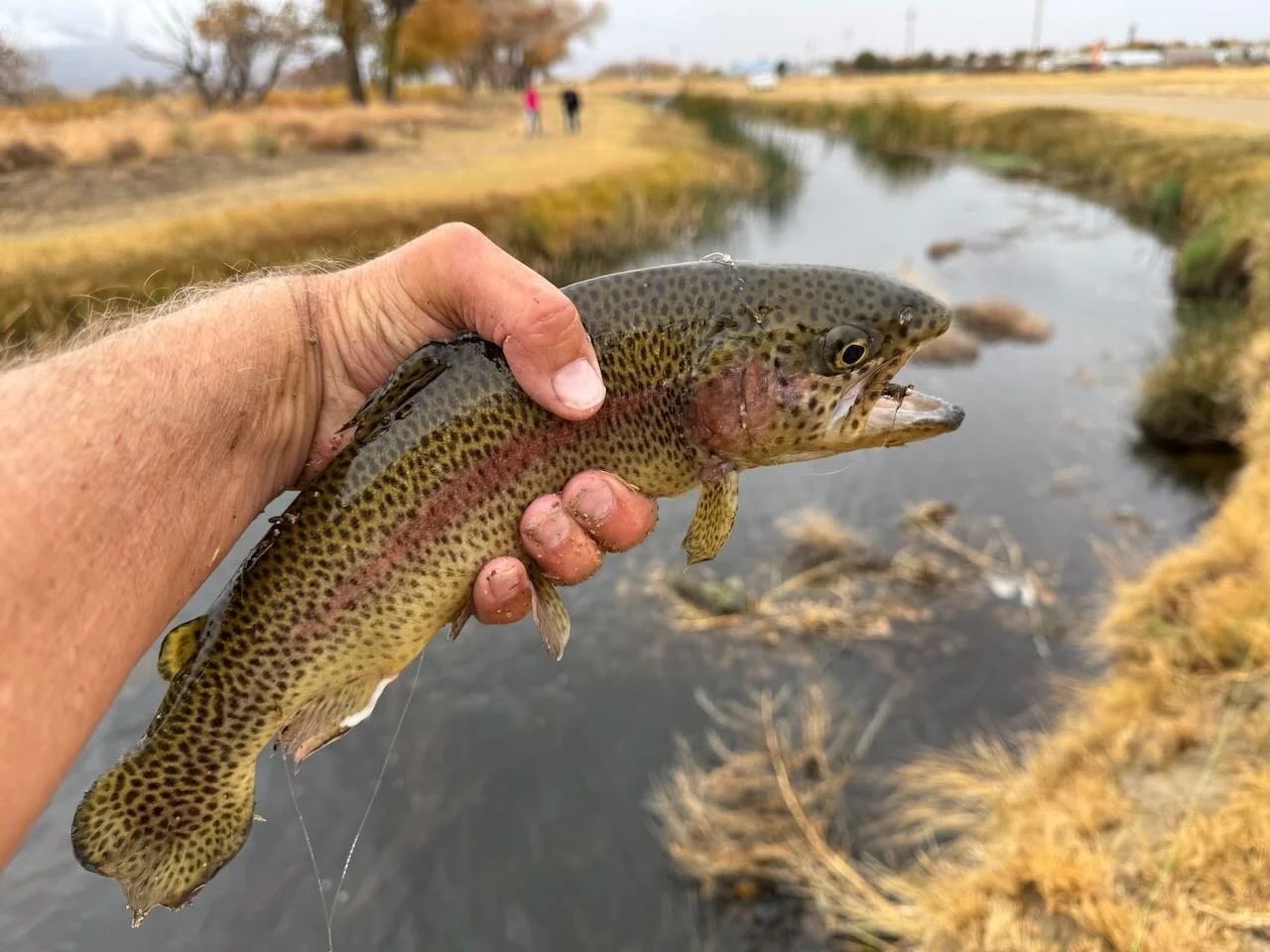
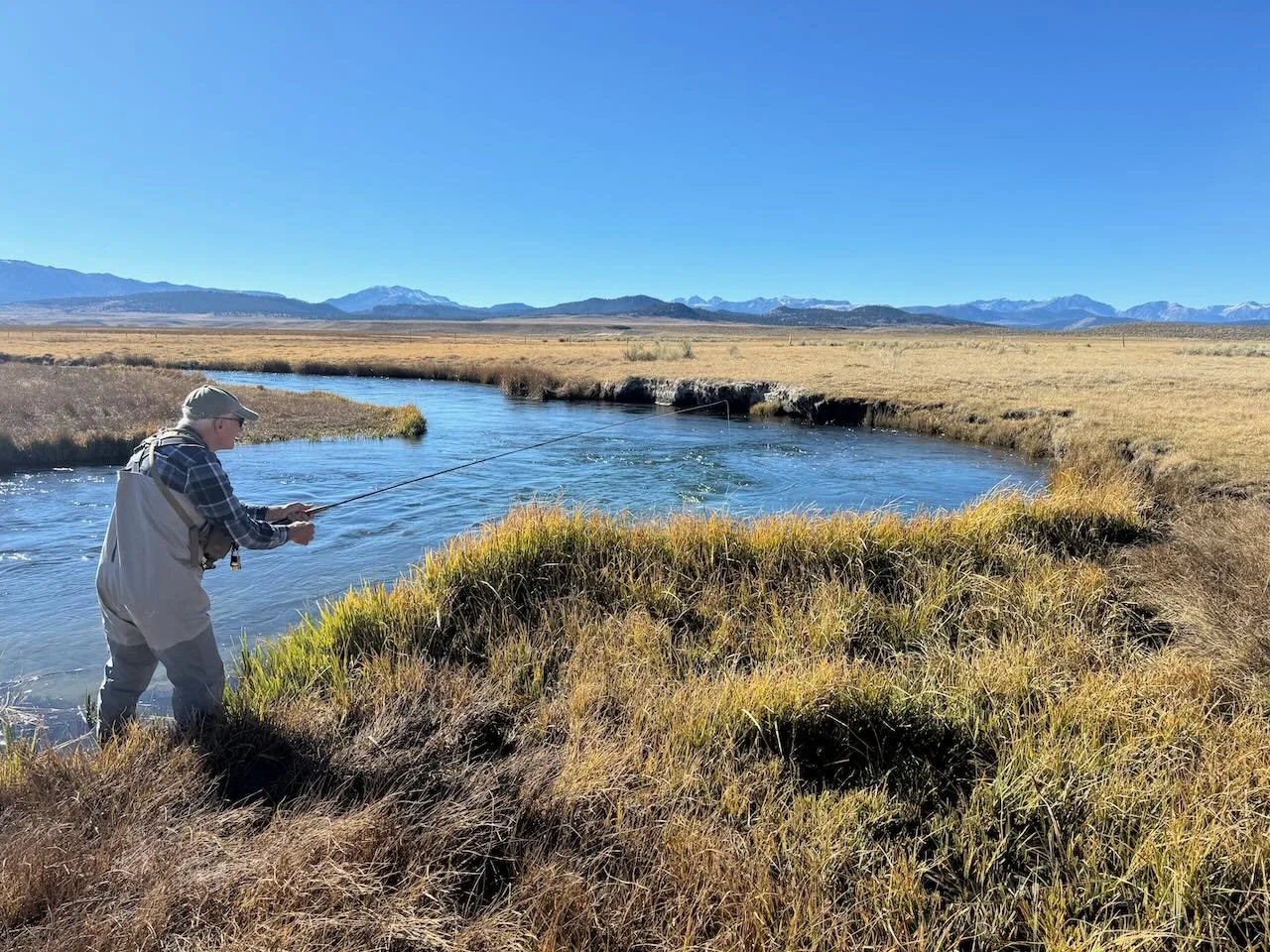
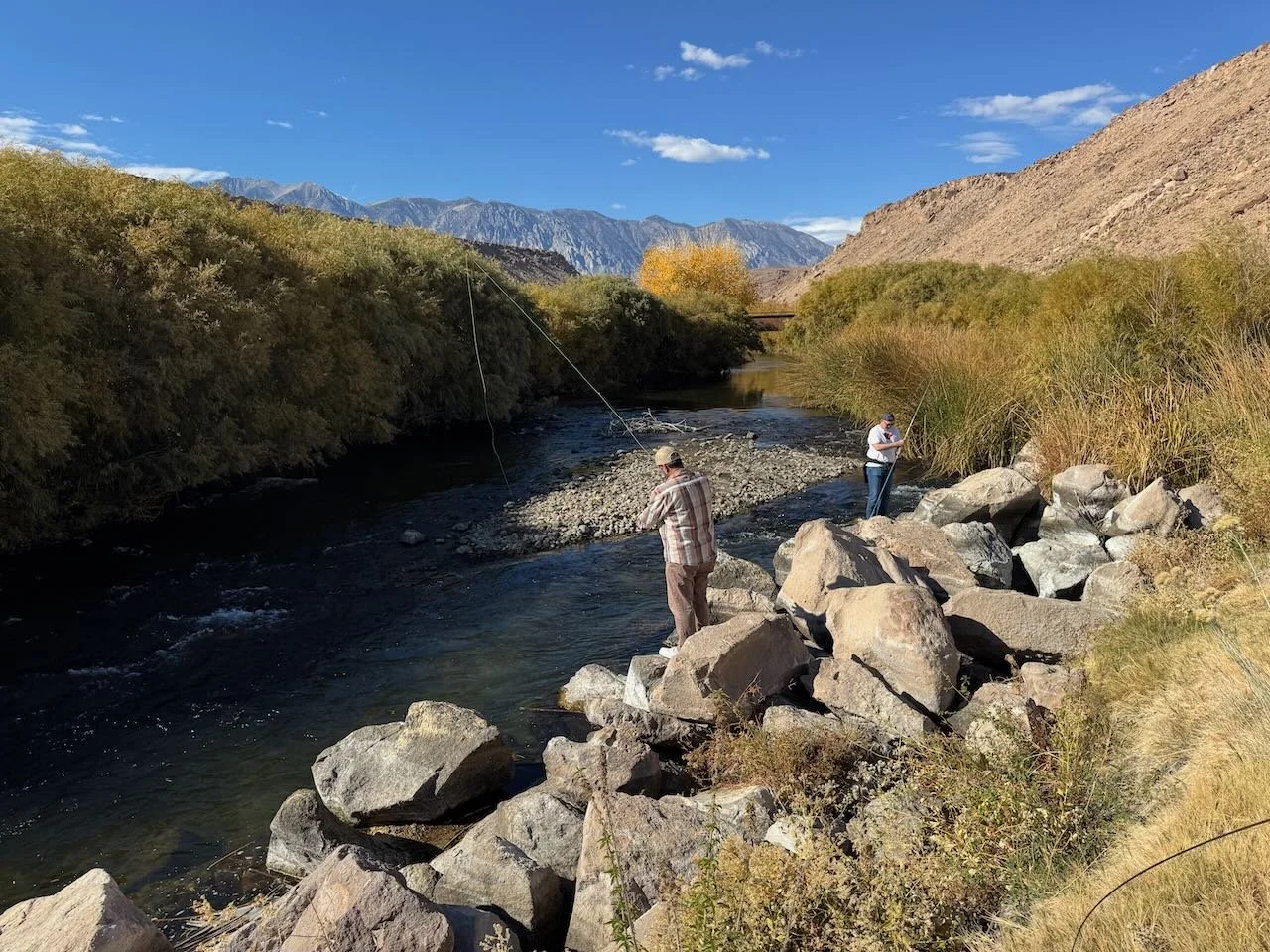
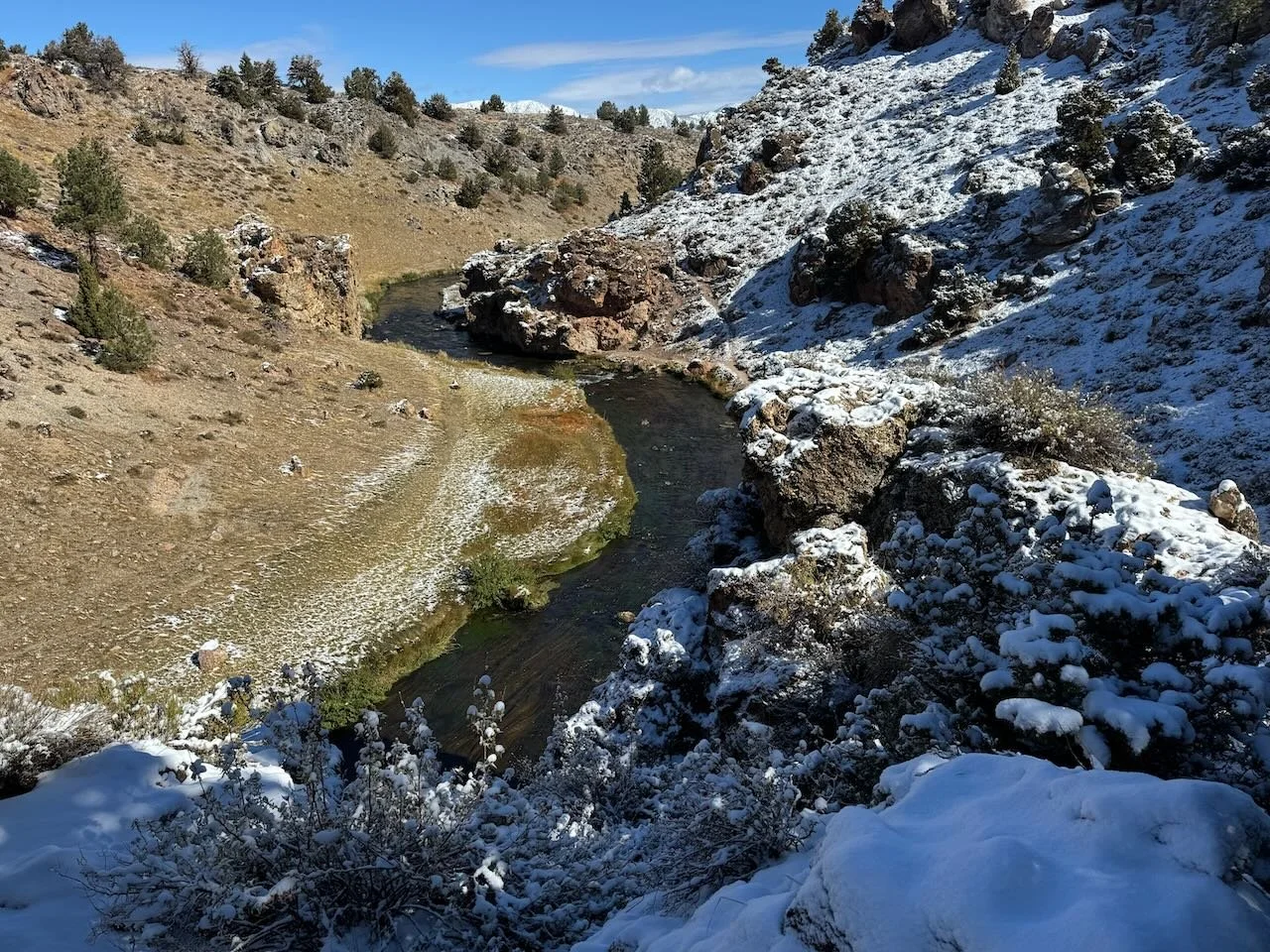
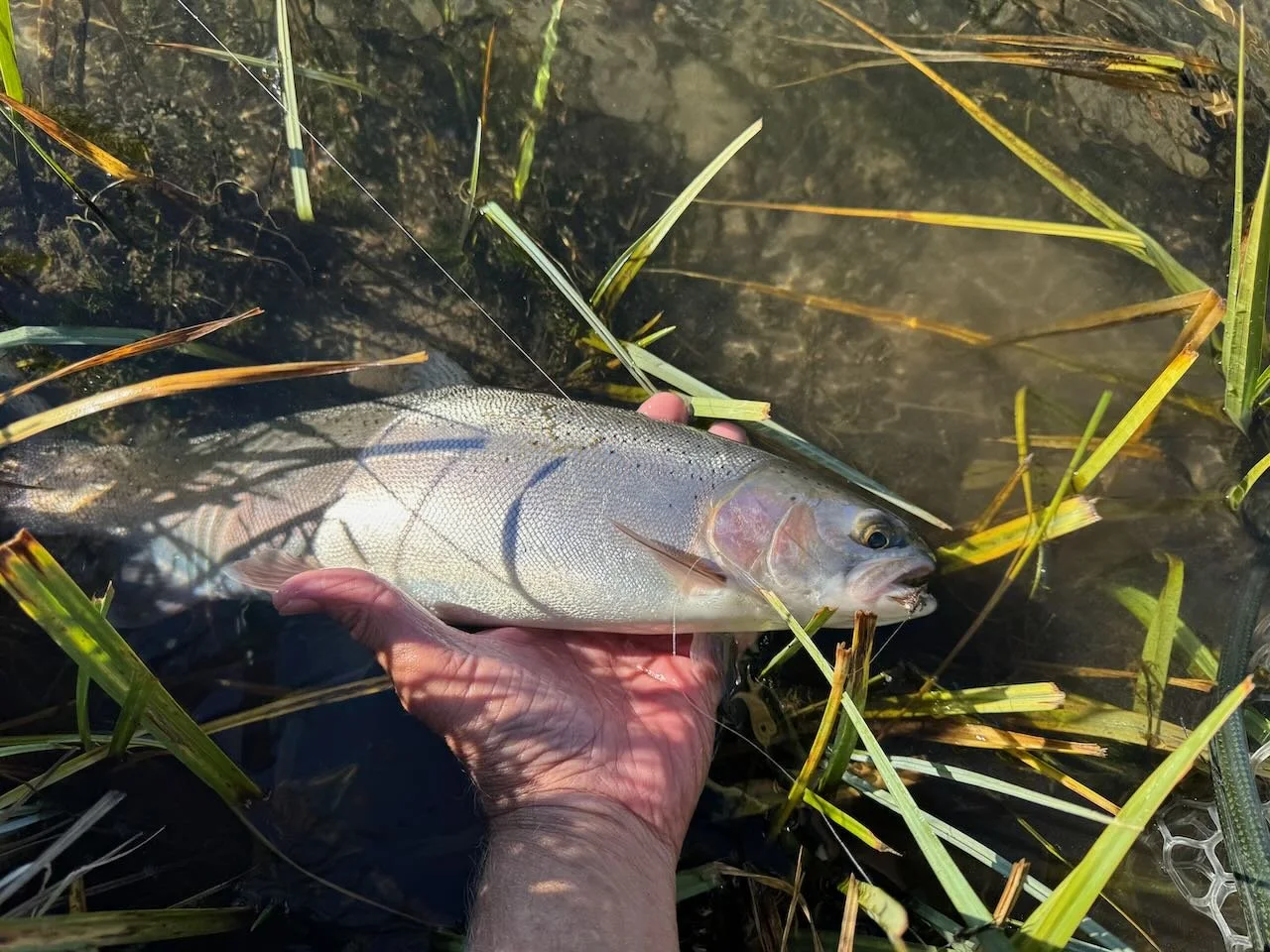
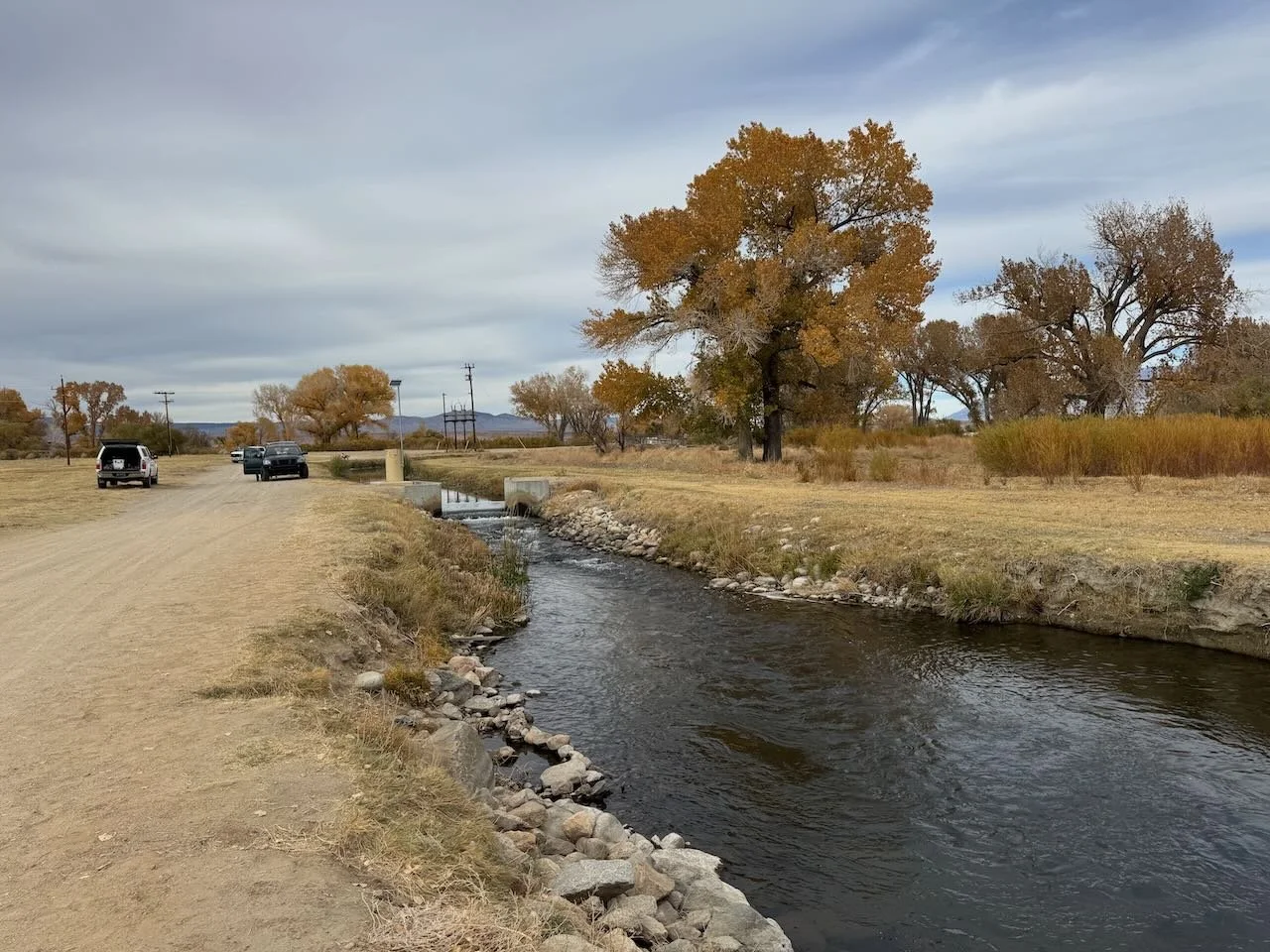
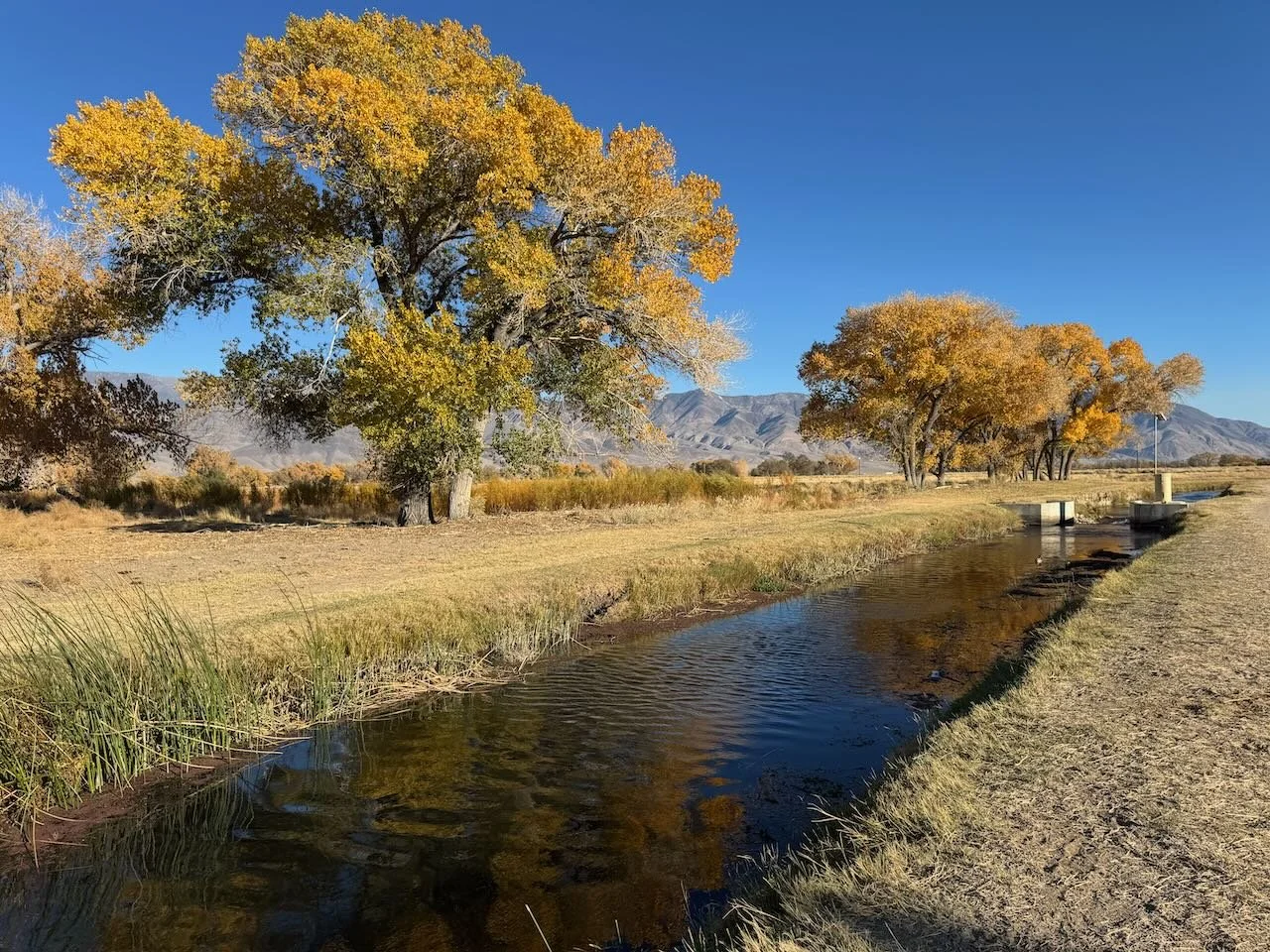
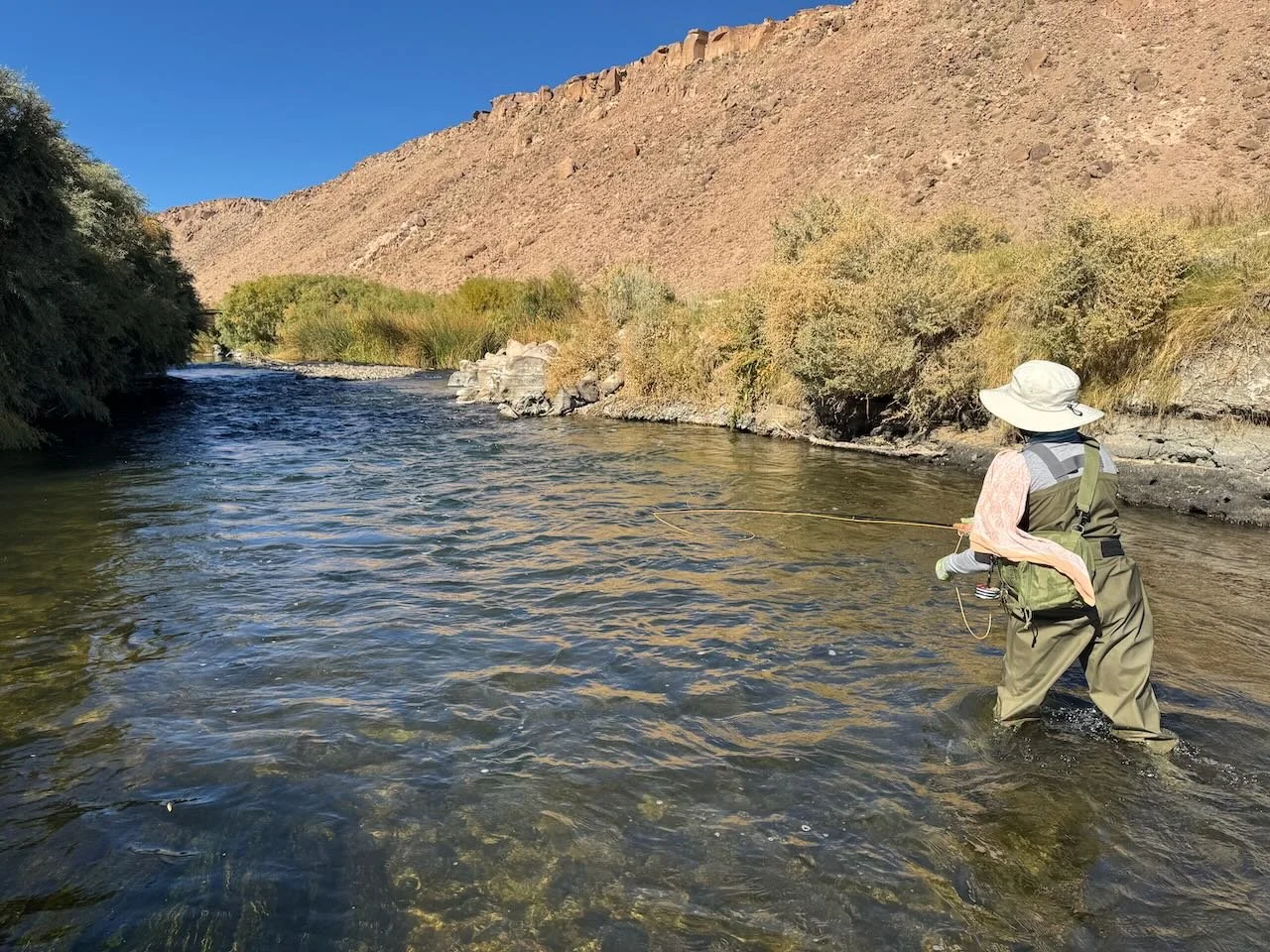
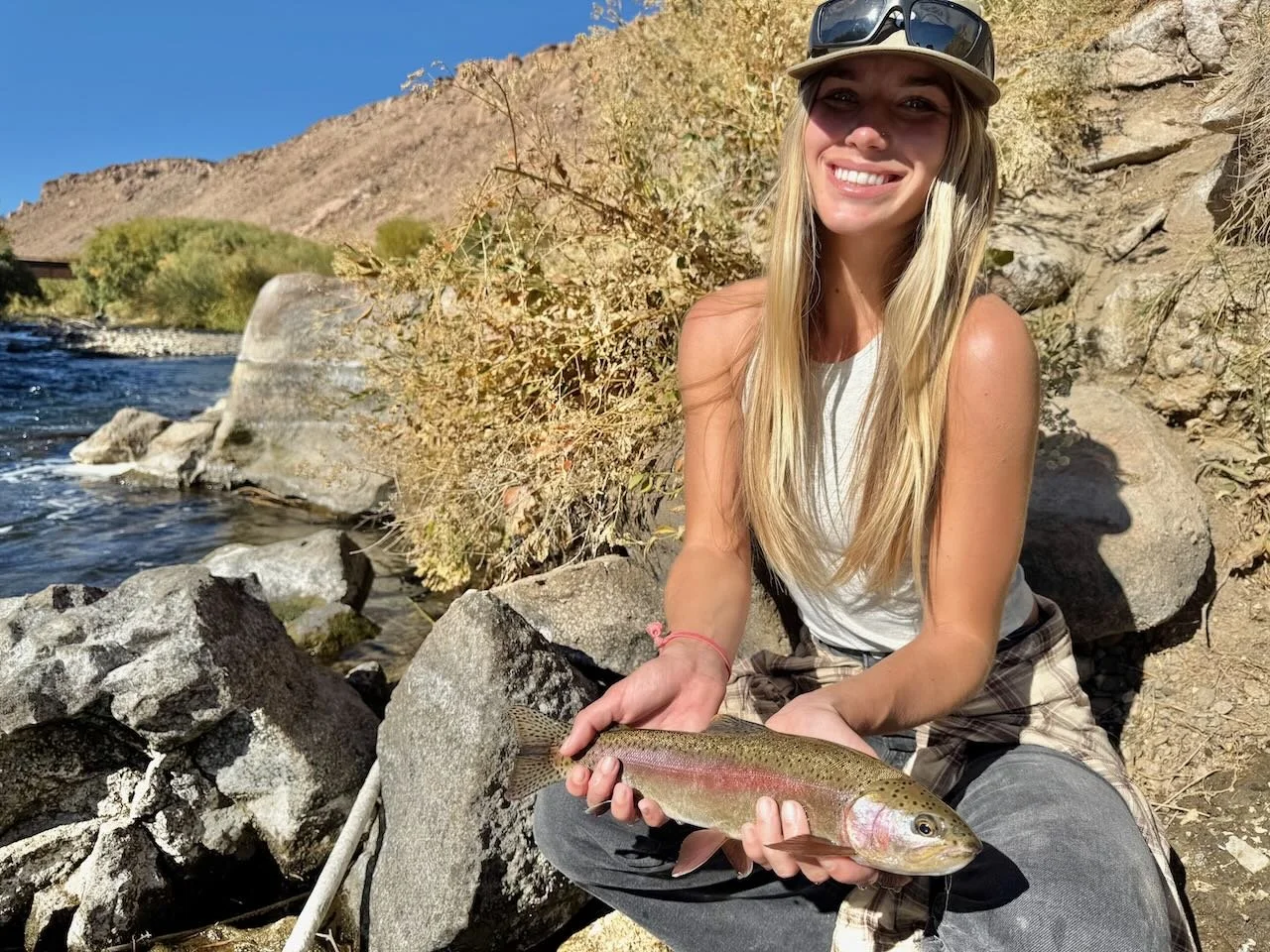
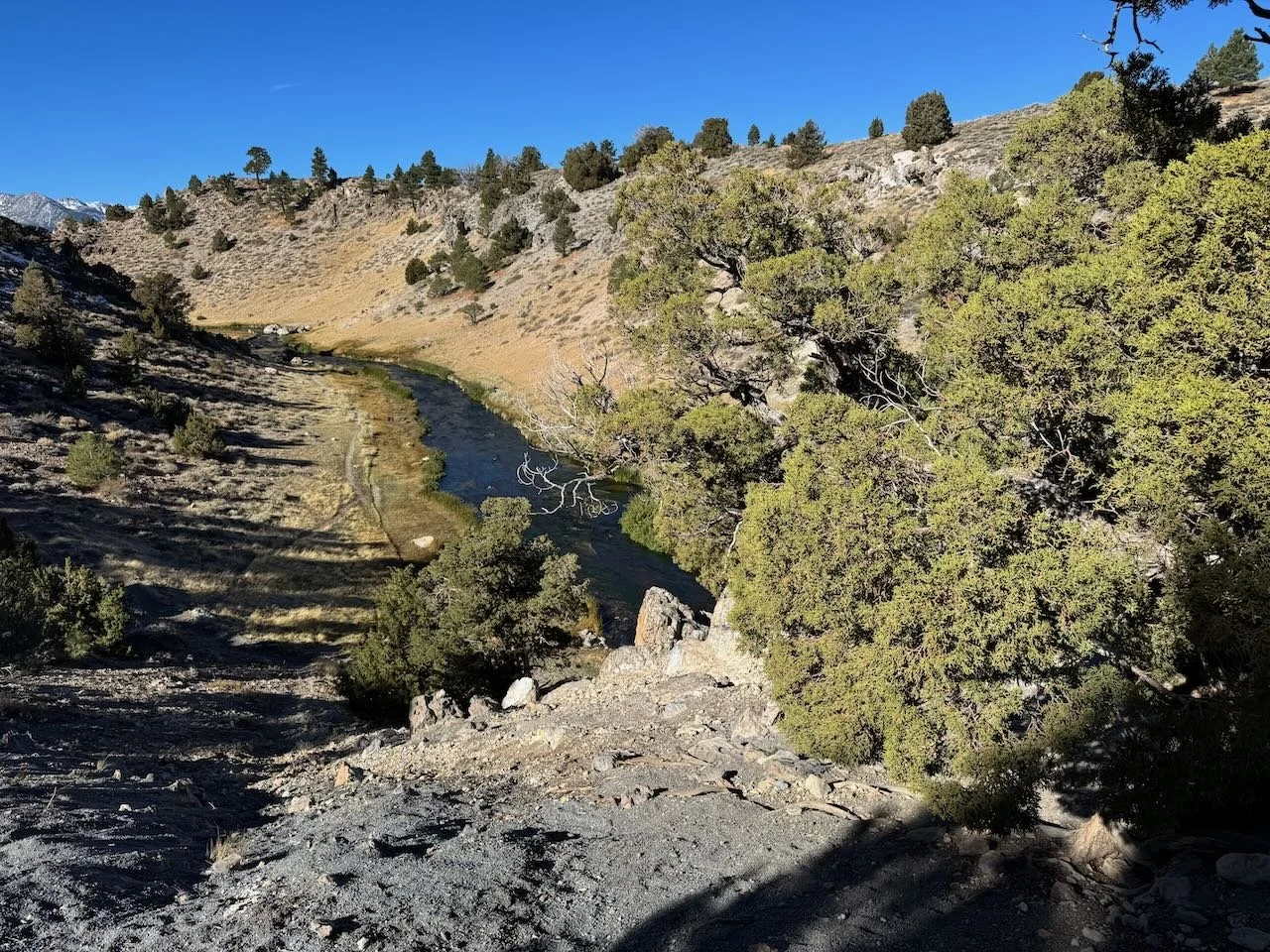
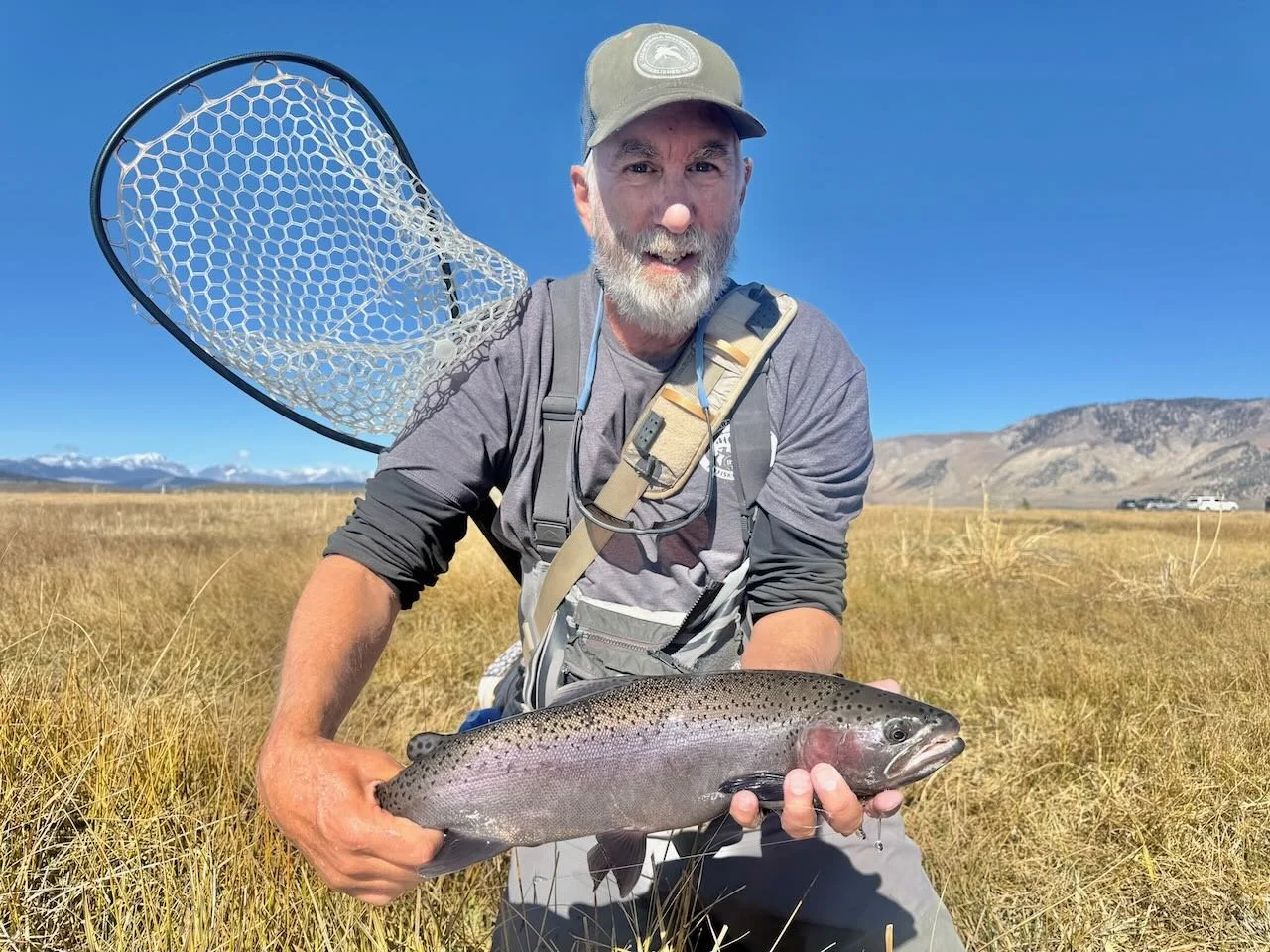
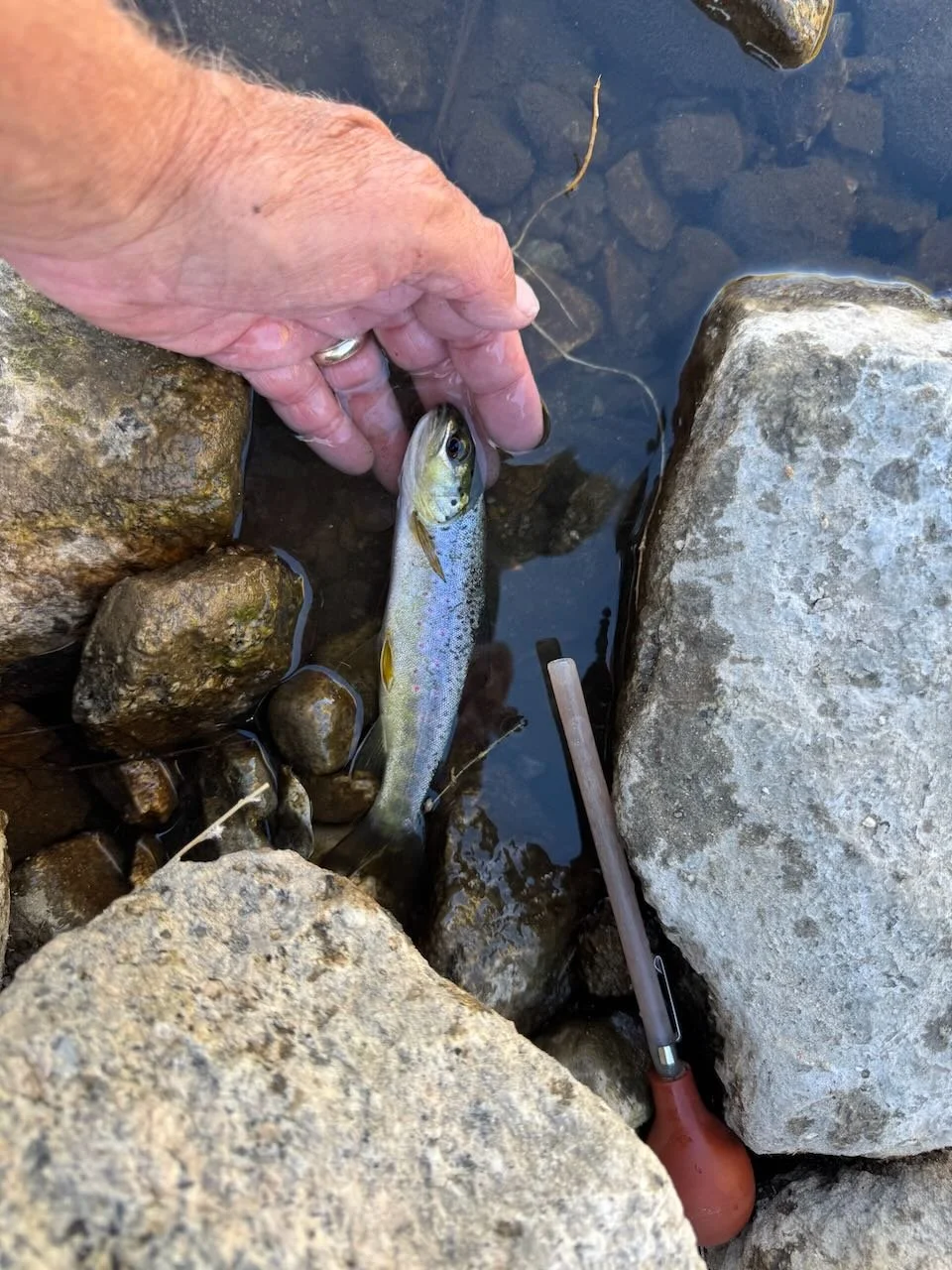
Sierra Bright Dot Fly Fishing Report 01-01-2026

Winter roared in last week. Gave us a few sunny days to dry out and dig out. Round two is starting off the new year with a series of storms not expected to deliver a lot of snow or rain. Upper elevation waters will need to be reevaluated after the storms for accessibility. Owens Valley dirt roads have not thoroughly dried out and this rain will just add to the mud puddles. December’s heat wave is over and it’s acting like winter weather. Fly fishers will need to be wearing layers when on the waters in the Eastern Sierra. When the storms move out the fishing will return to normal fly fishing conditions. Hatches of midges and mayflies are feeding the trout on the substrate with a few fish feeding on the surface taking the hatching insects. Happy New Years from Sierra Bright Dot.
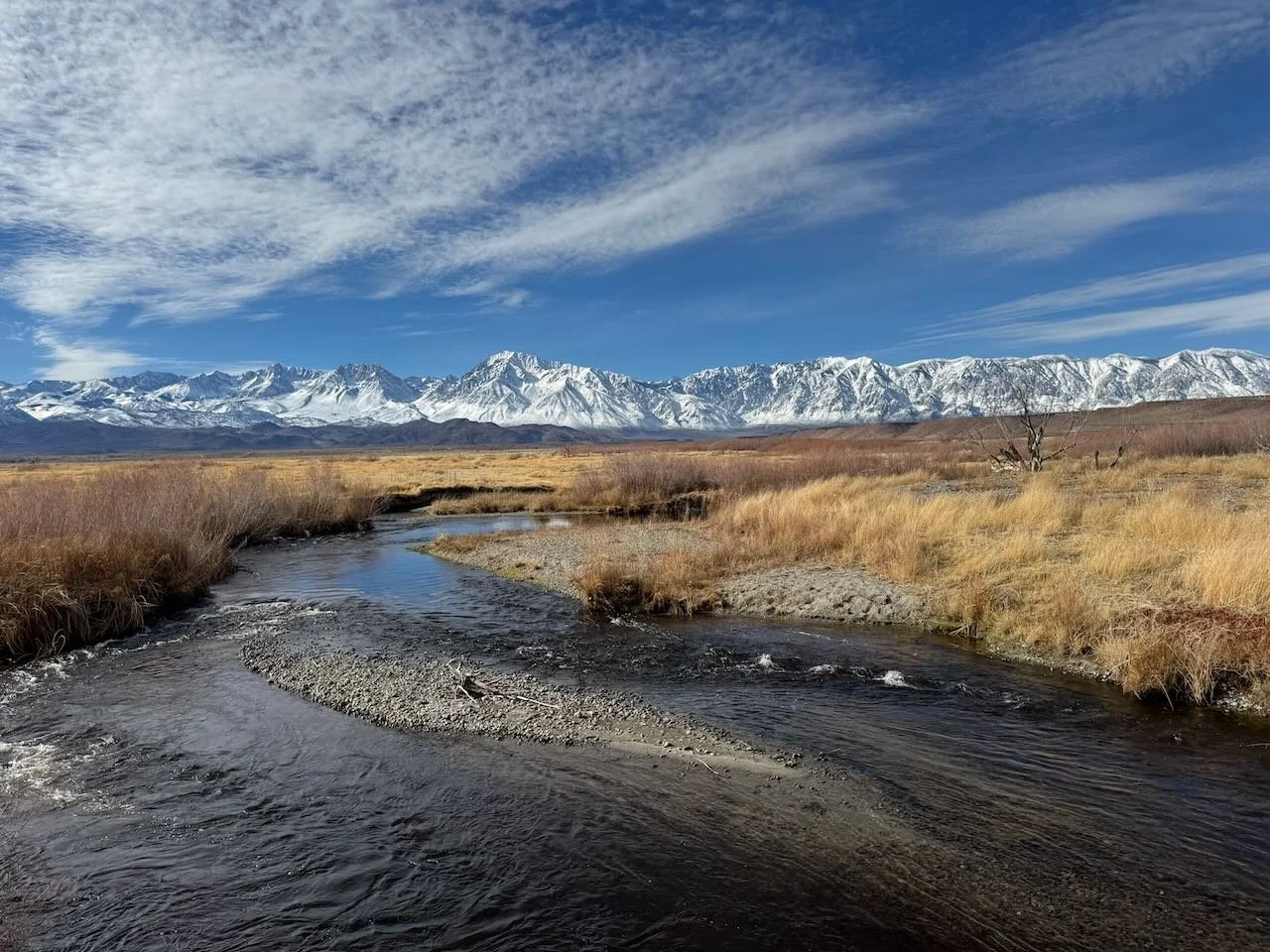
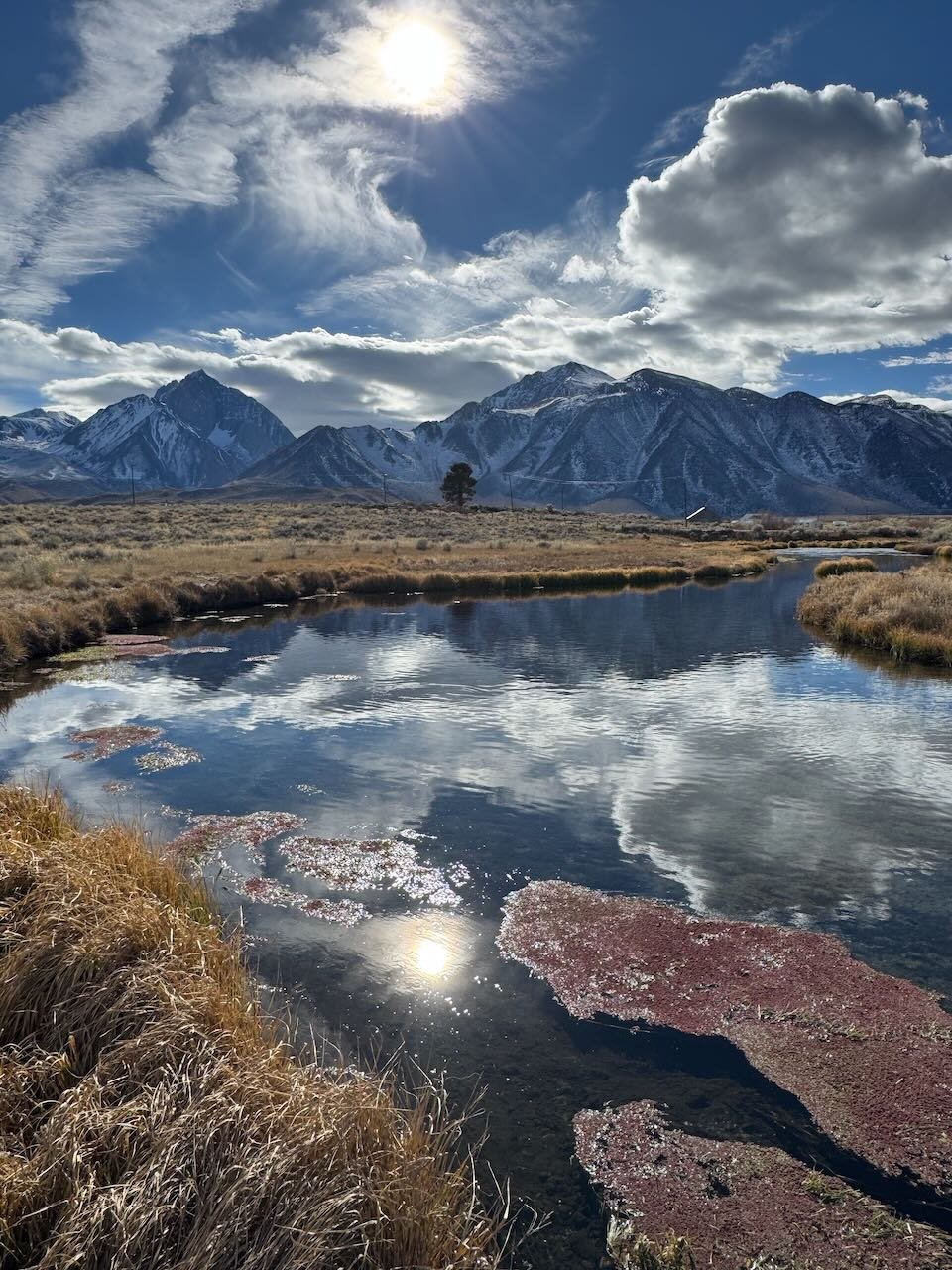
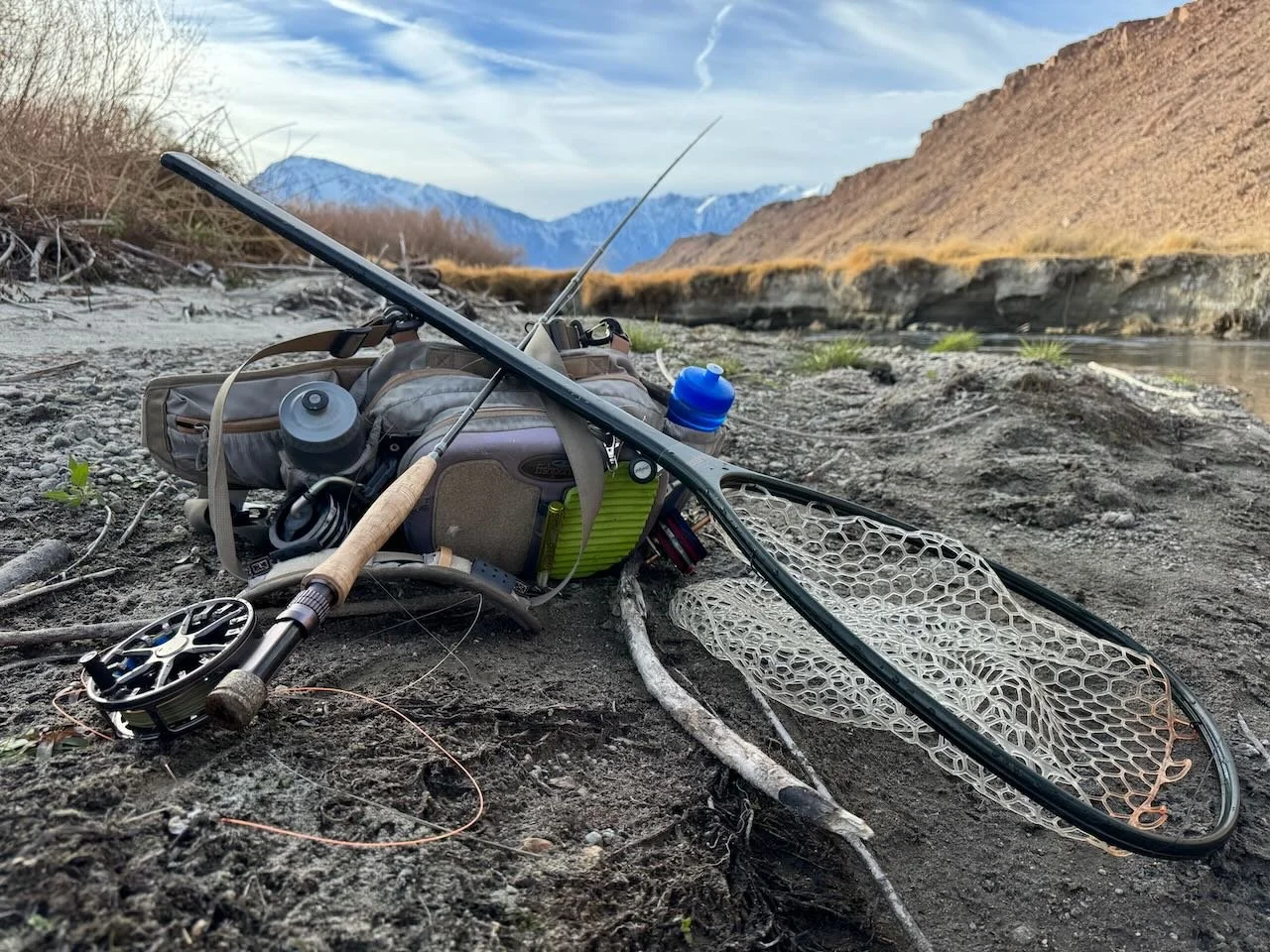
It's winter time in the Eastern Sierra with snow in the mountains and fly fishing opportunities throughout the Eastern Sierra.

Lower Owens River

Wild Trout Section:

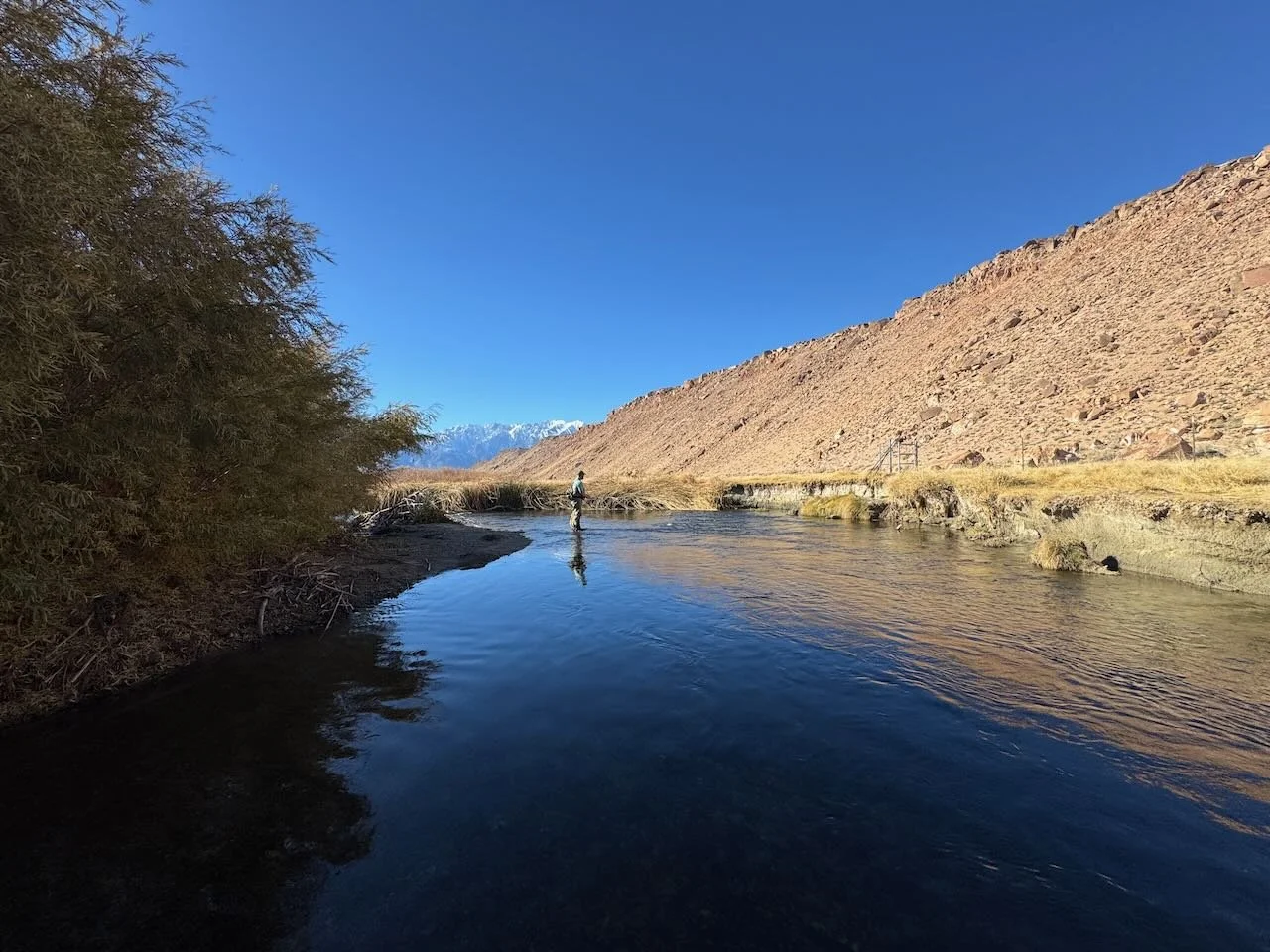
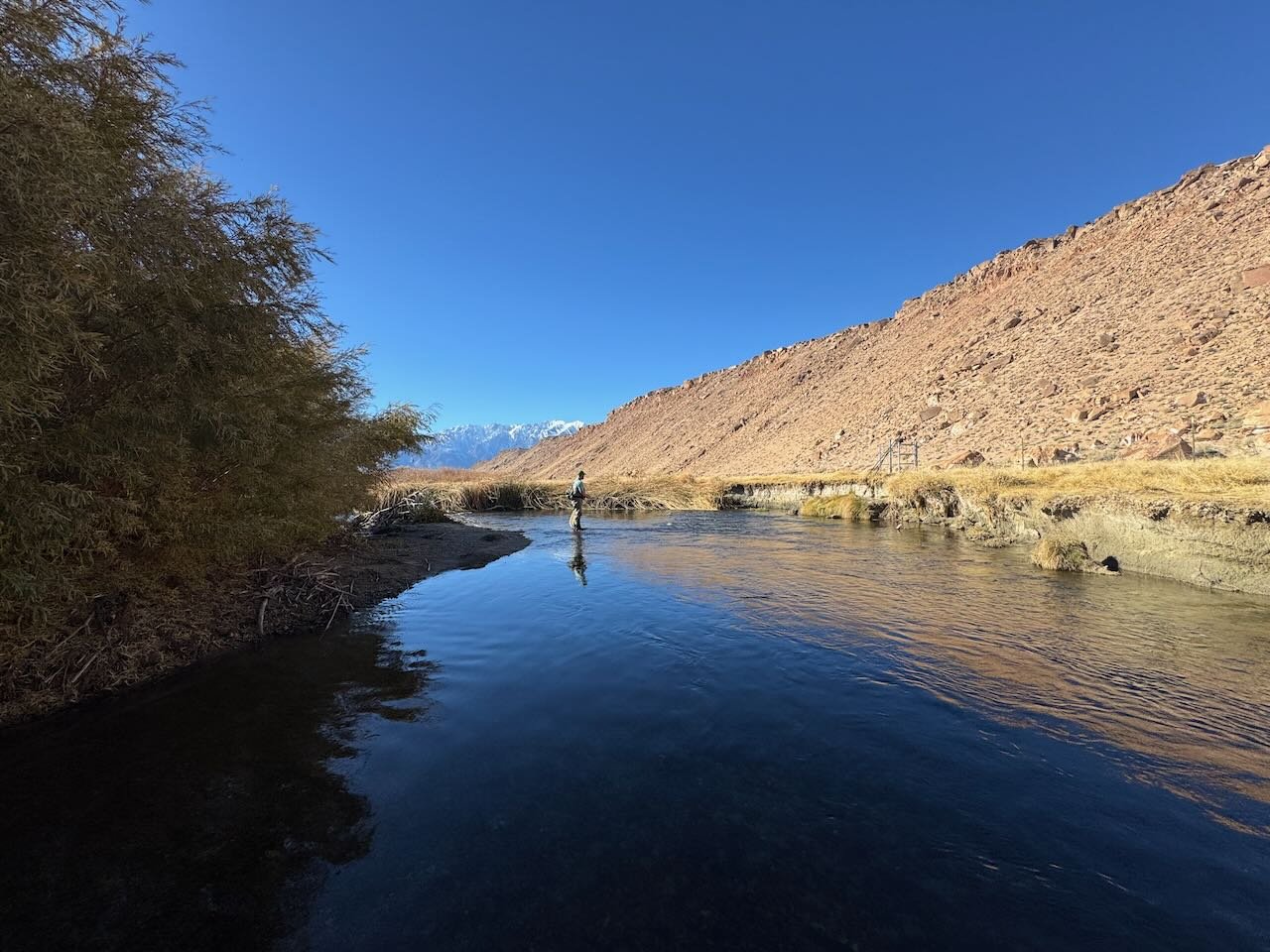
A few trout are rising to hatching blue wing olives middle of the day. These trout will take a size 20 blue wing olive parachute, a size 20 Adams parachute and a size 20 Griffith’s Gnat. Most of the success is coming from nymphing on the substrate under an indicator or with a Euro nymphing rig. Fish with size 18 olive quilldigons, size 18 bead head flash back pheasant tail nymphs, size 18 Frenchie’s, size 16 bead head flash back gold ribbed hare’s ears, size 18 Duracell’s, size 12 stoner nymphs, size 18 green/gold brassies and size 18 thread tiger and zebra midges. River levels are perfect for wading up stream casting nymphs and dries to trout holding spots. Fly fishers wading upstream are only limited to pools that are deeper than the fly fisher is tall.
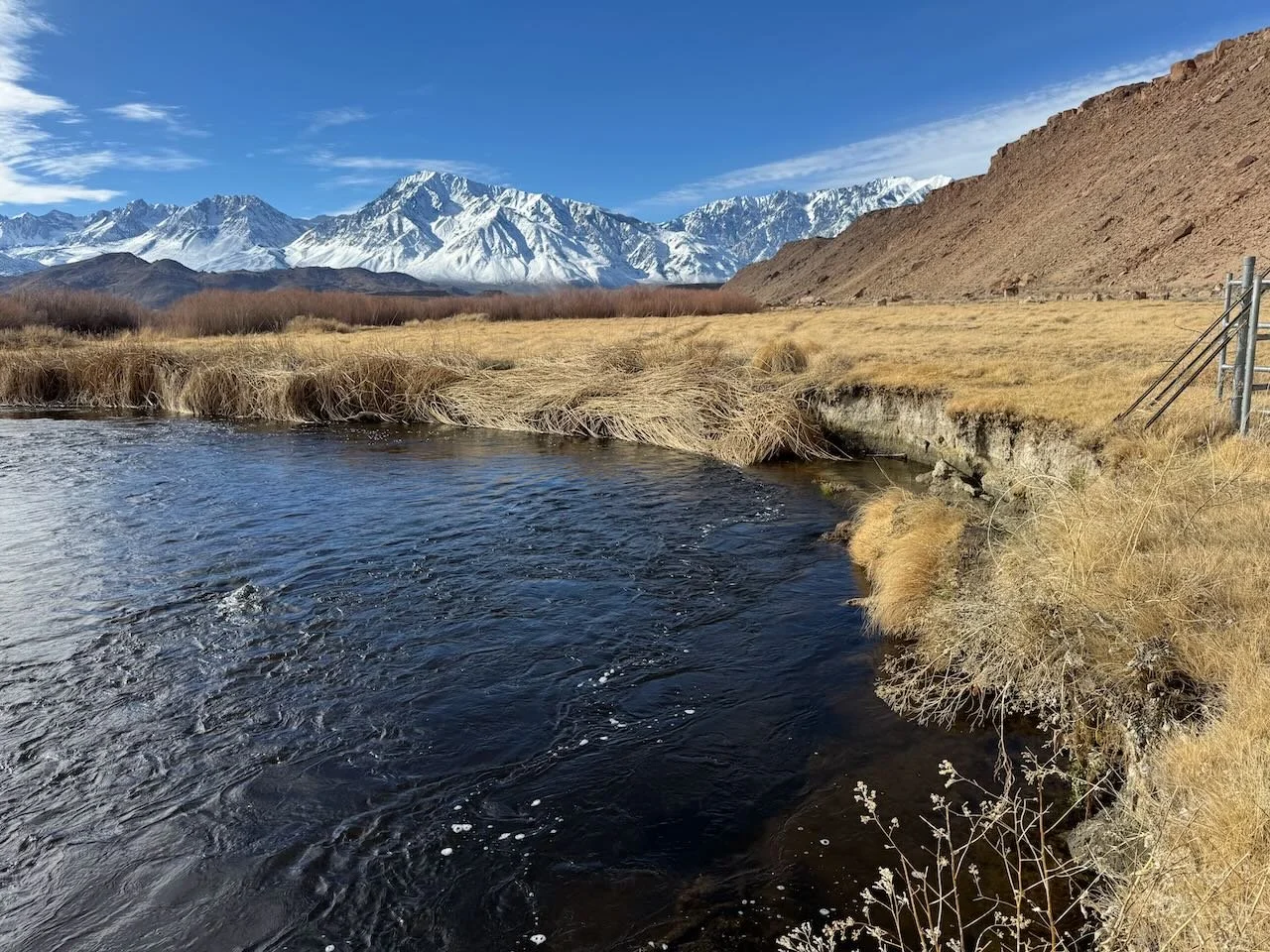
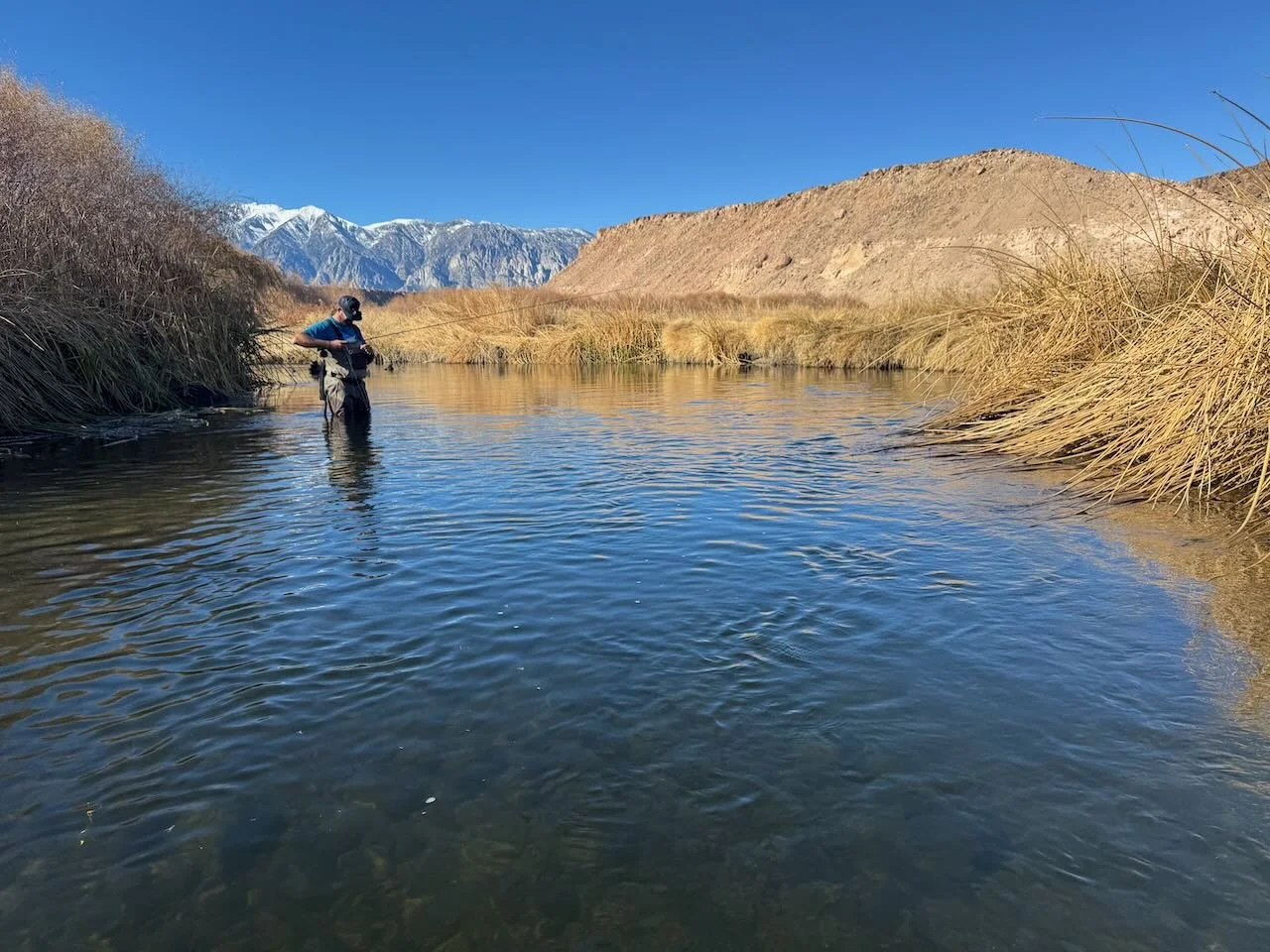
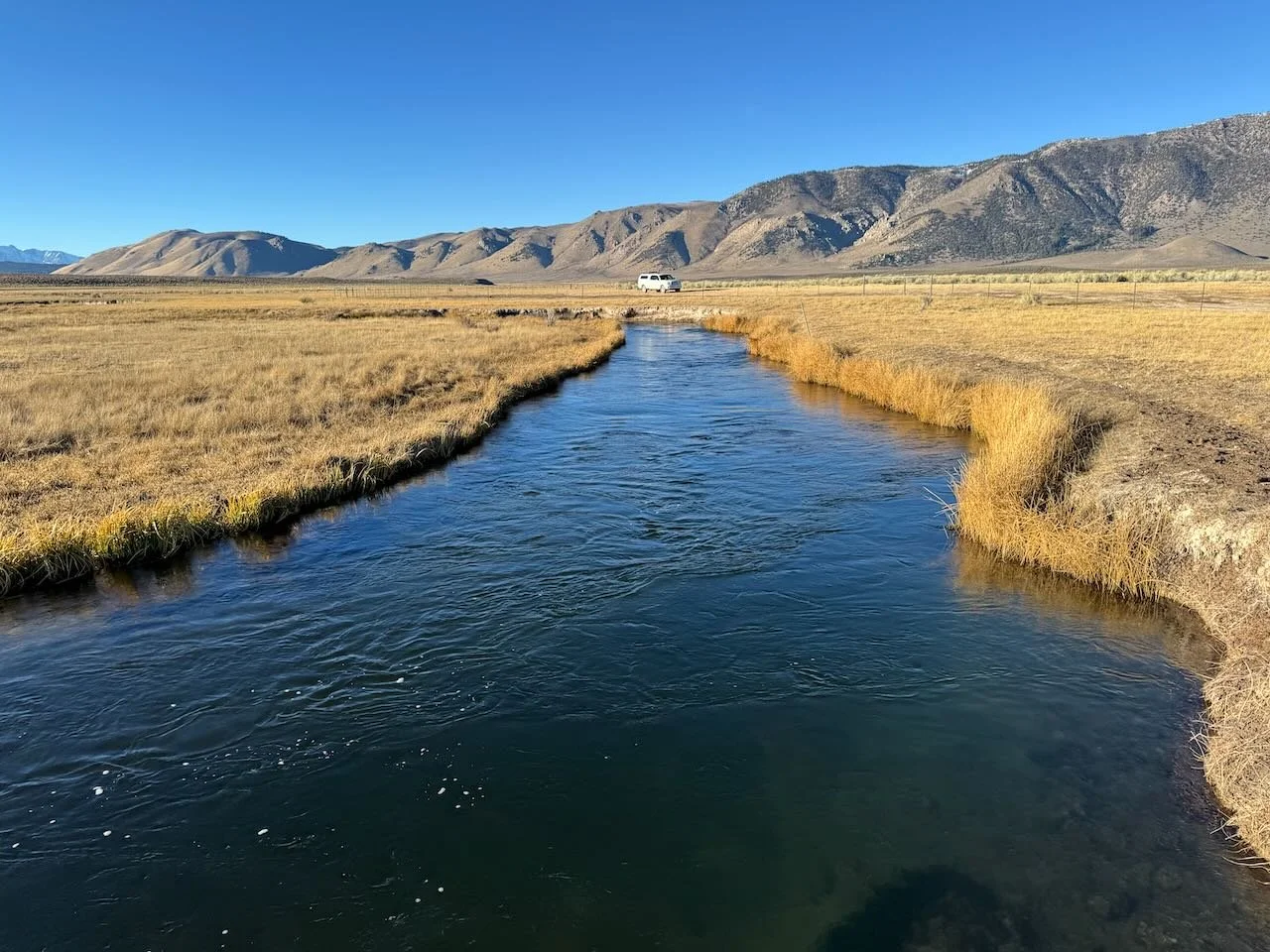
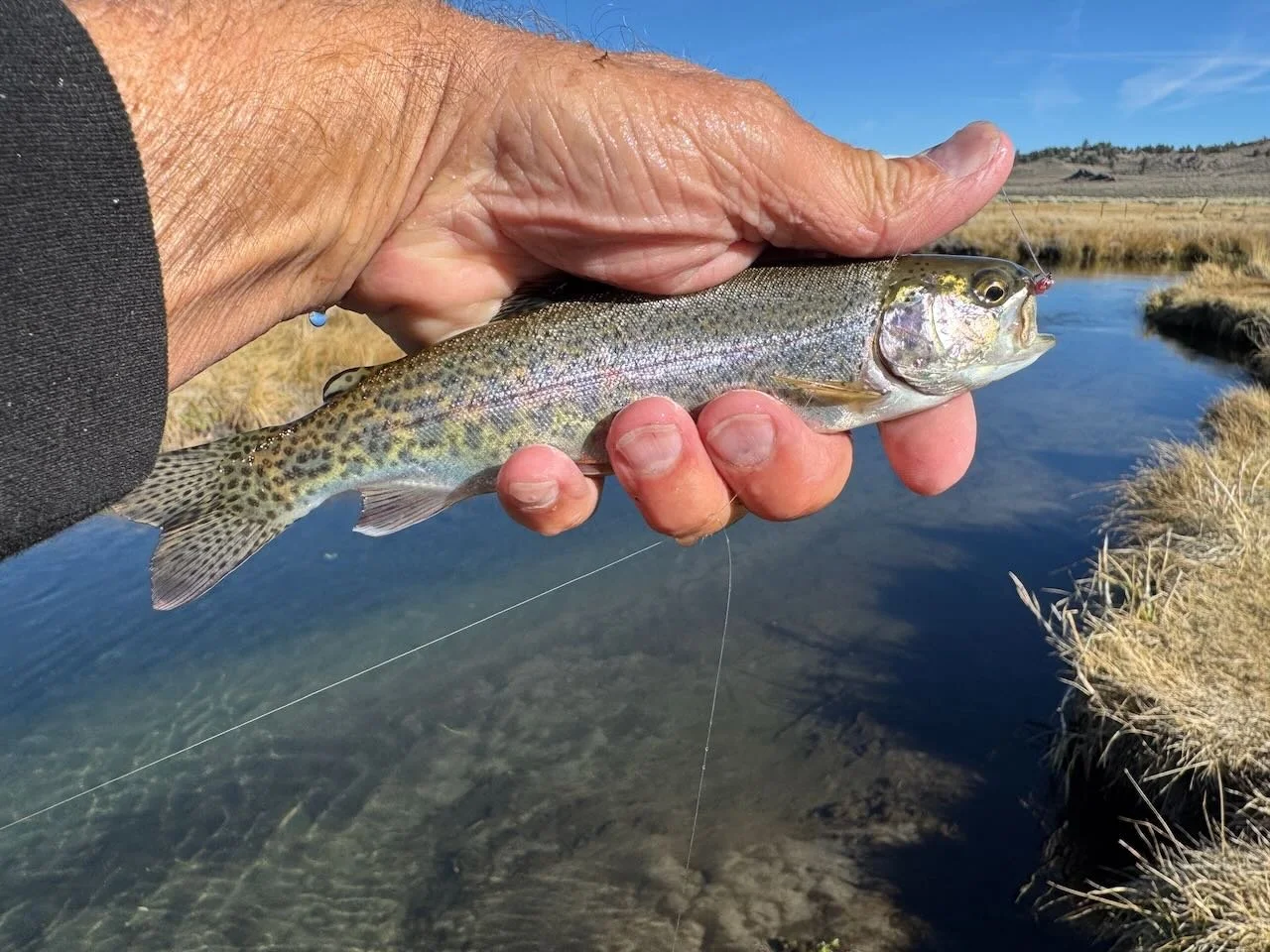
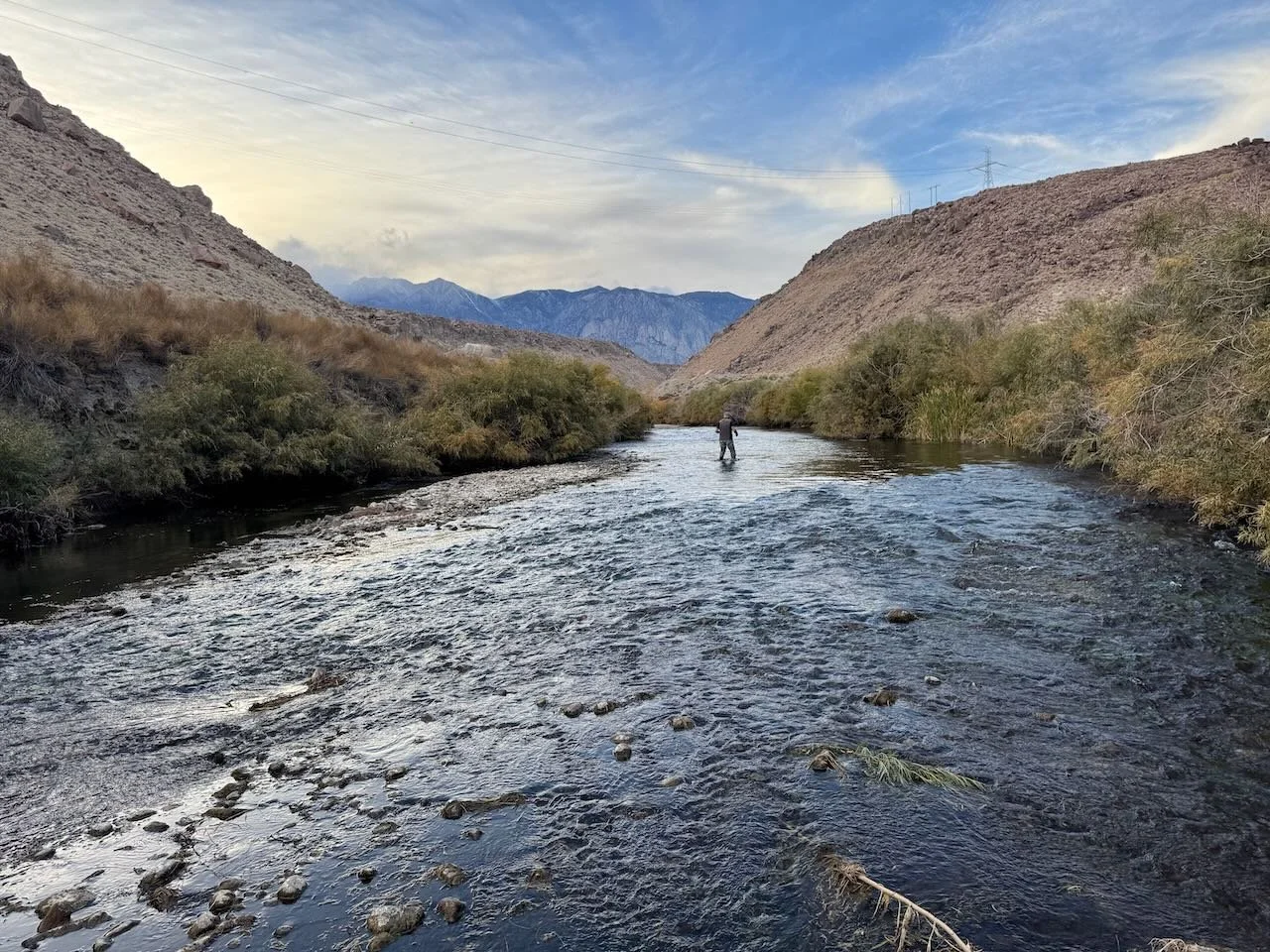
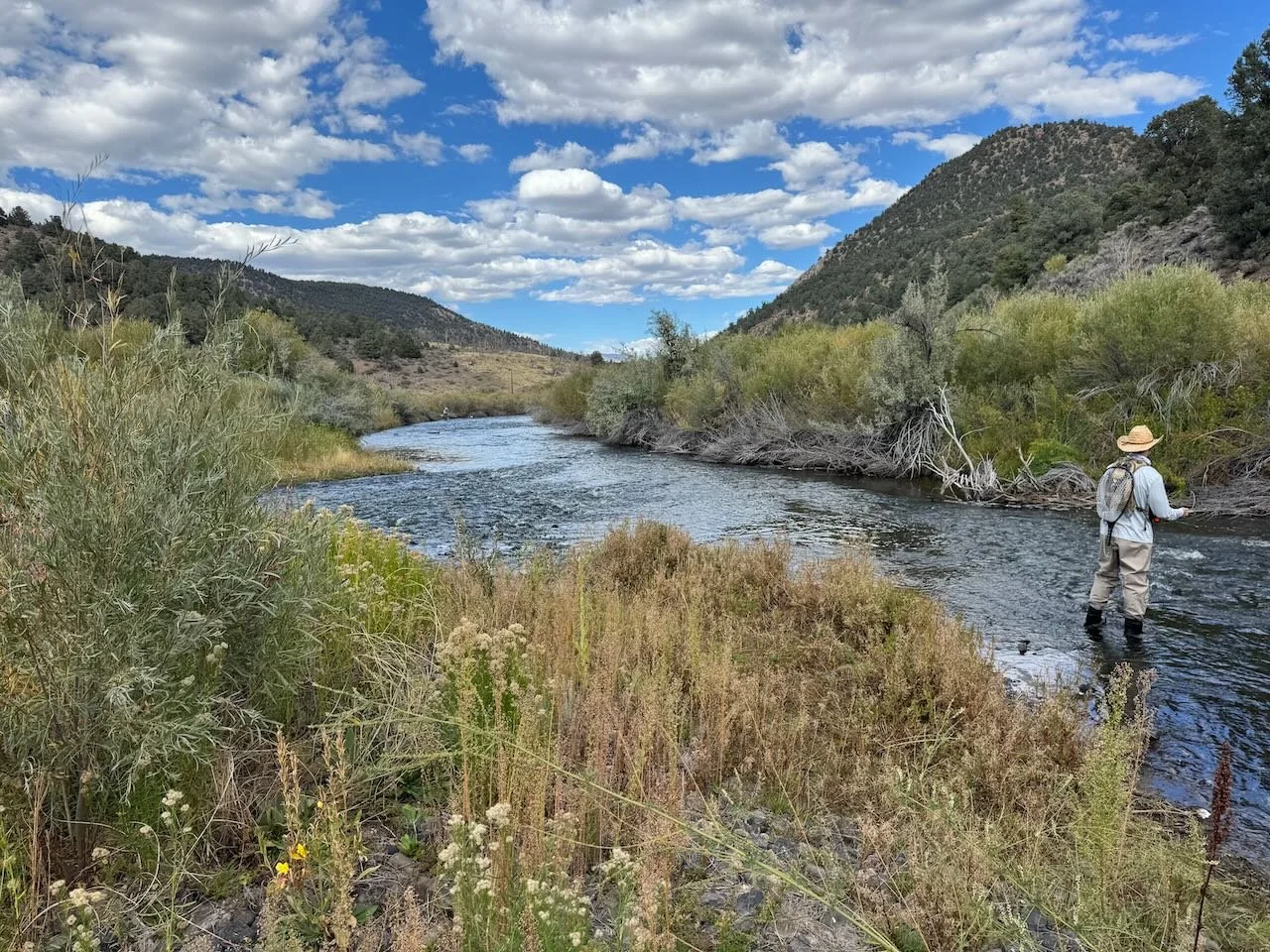
Snow on the Mountains, rainbow and brown trout willing to take nymphs and dries on the wild trout section of the lower Owens River makes it a great winter fishery.

Hot Creek

Interpretive Site:

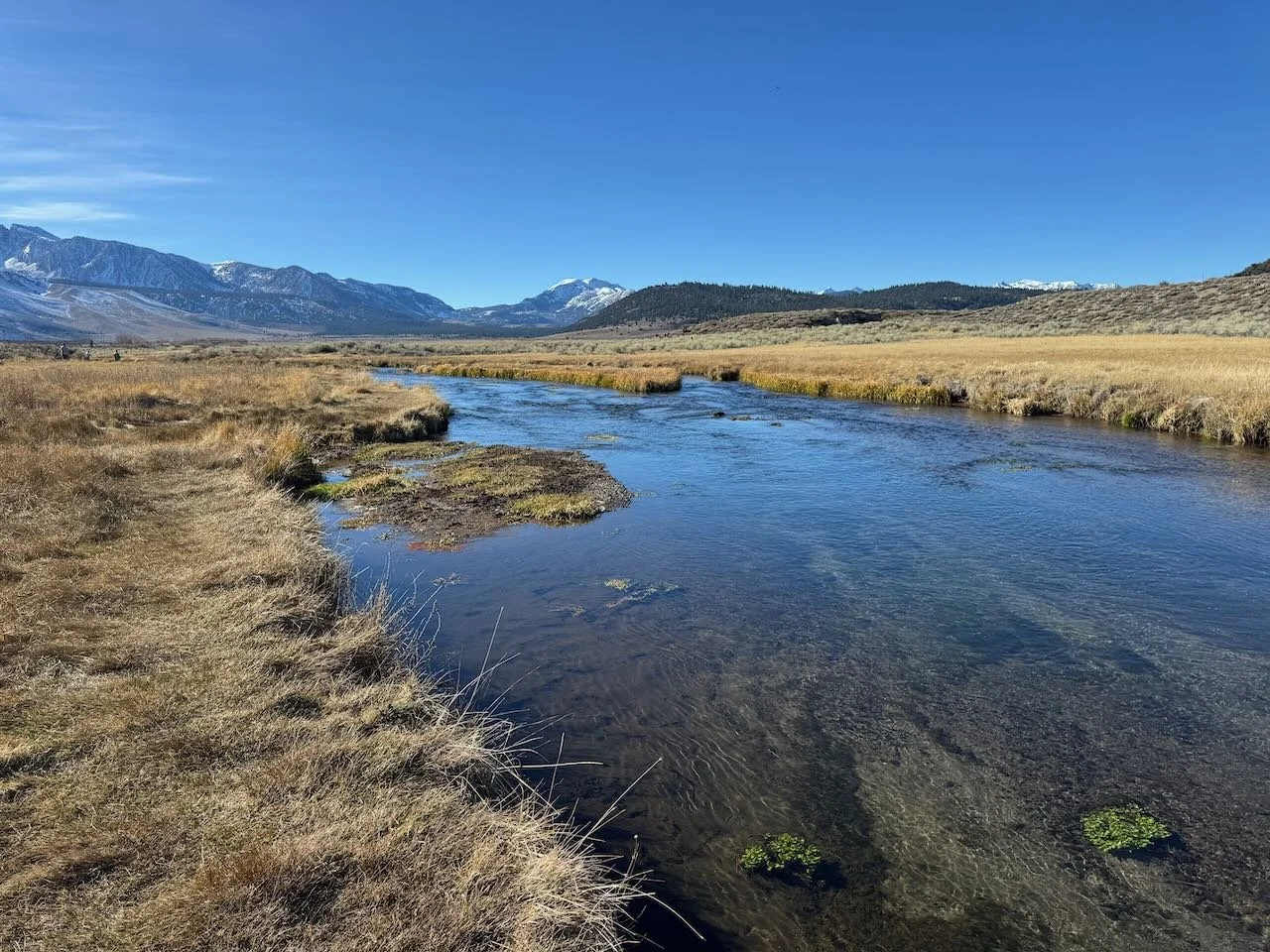
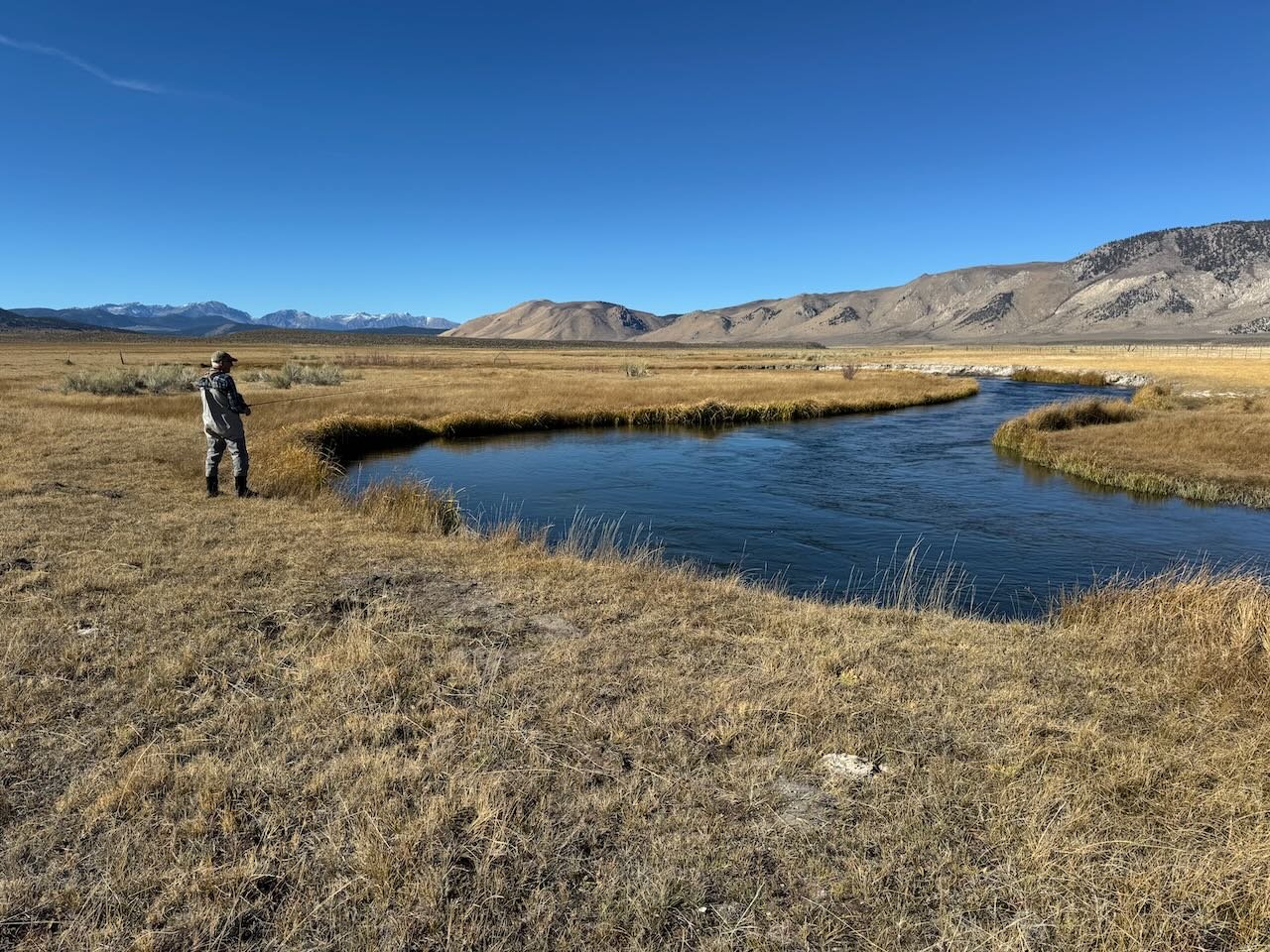
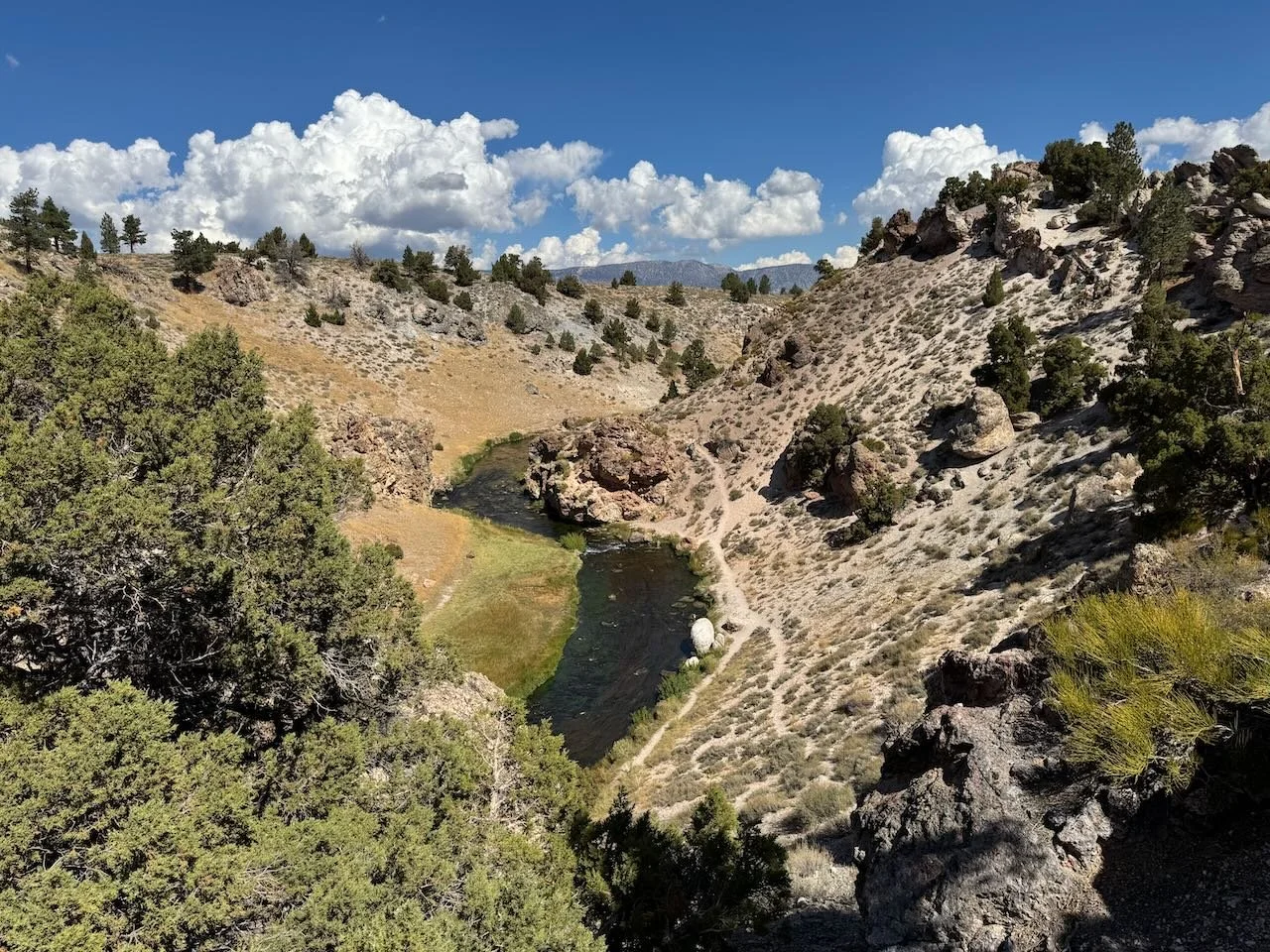
Access to Hot Creek Interpretive site is limited to parking on Hot Creek Hatchery Road and walking in through the snow. Trout in the creek are feeding on nymphs and the occasional dry fly. Fish with size 20 blue wing olive parachutes, size 20 Adams parachutes, size 20 Griffith’s gnats and size 20 CDC midges. Nymph with size 18 olive quilldigons, size 18 bead head flash back pheasant tail nymphs, size 18 Frenchie’s and size 20 thread midges in zebra and tiger coloration. Access should be the same after this week’s storms as they are not expected to bring much in the way of snow accumulation in the Hot Creek area. Once one vehicle drives into the Hot Creek Interpretive parking area other vehicles will follow.
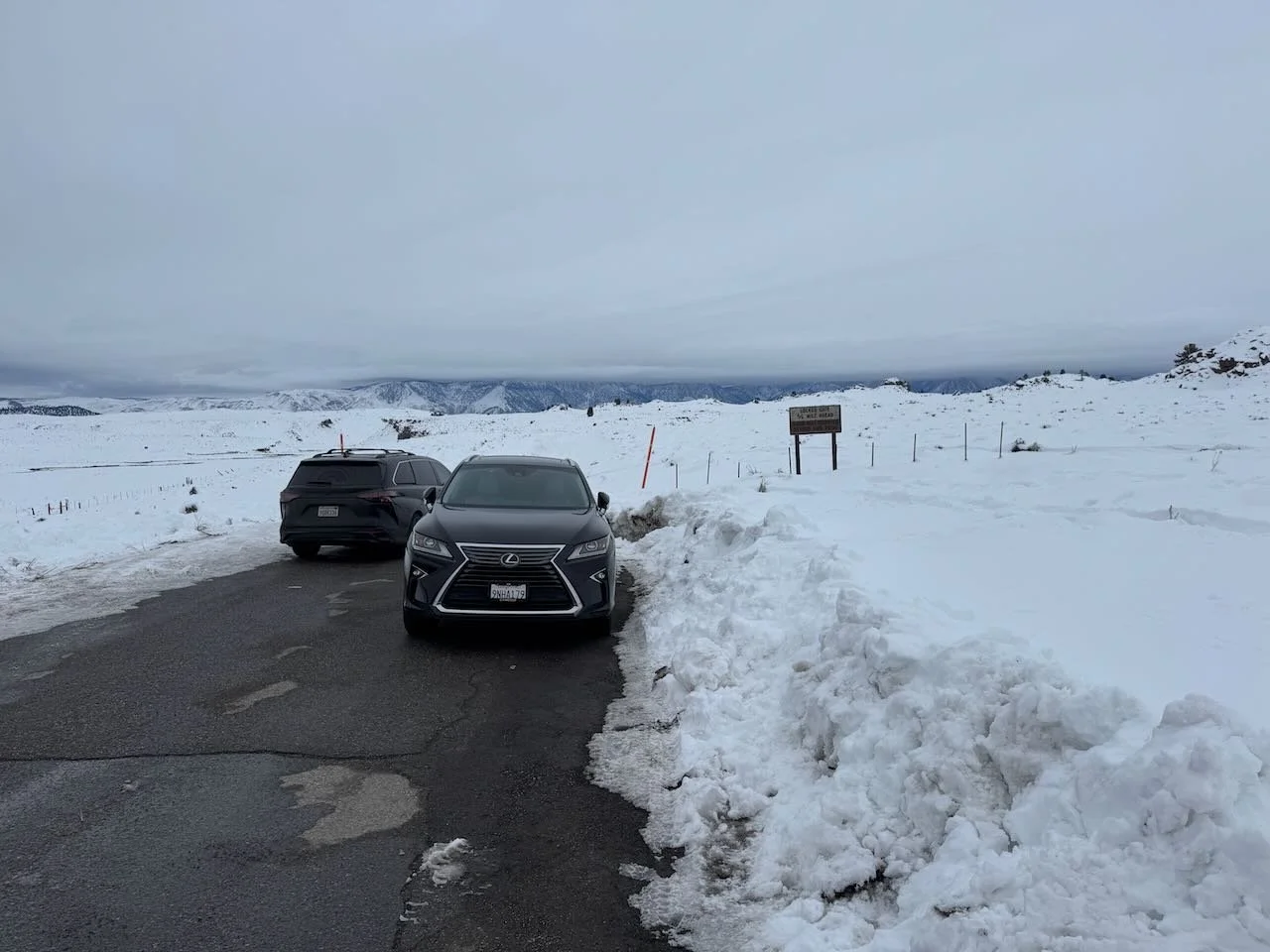
Time to park at the winter closure sign and walk into Hot Creek Canyon and remember not to park in front of Hot Creek Ranch.

Hot Creek

Canyon Section:

Fly fishers looking to access the canyon section of the creek will be  walking in over the snow starting at the winter closure sign. Be sure not to park in front of the Hot Creek Ranch drive way. You will be towed away if you park there. The cold weather is helping break up the weed beds in the canyon. Nymphing in the open water sections will produce eight to 14 inch wild rainbows and brown trout. Nymph with size 18 Frenchie’s, size 18 bead head flash back pheasant tail nymphs, size 18 olive quilldigons, size 20 green/gold brassies and size 20 thread midges in tiger and zebra coloration on the substrate. Access should be the same after this week’s storms as they are not expected to bring much in the way of snow accumulation in the Hot Creek area.
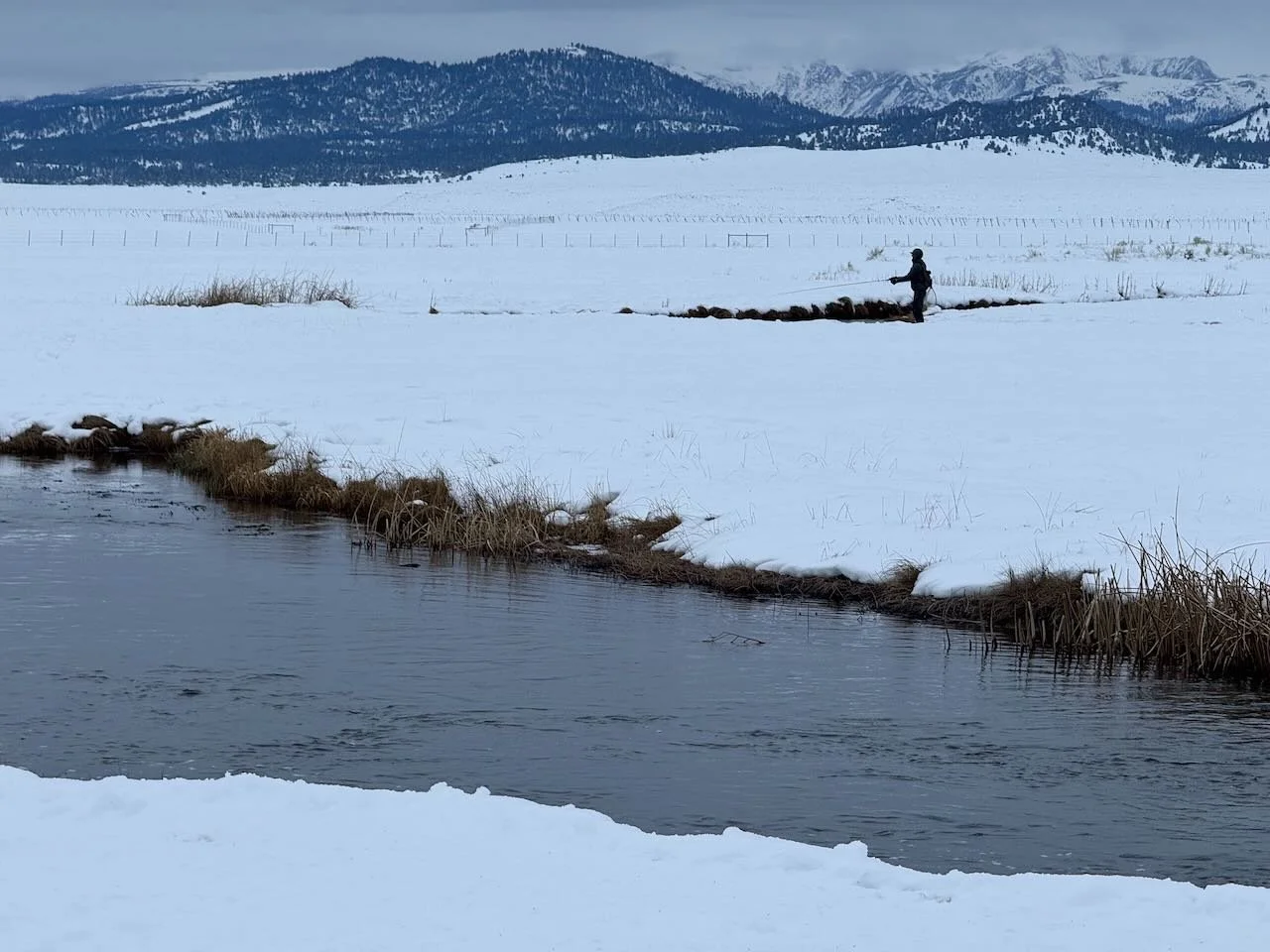
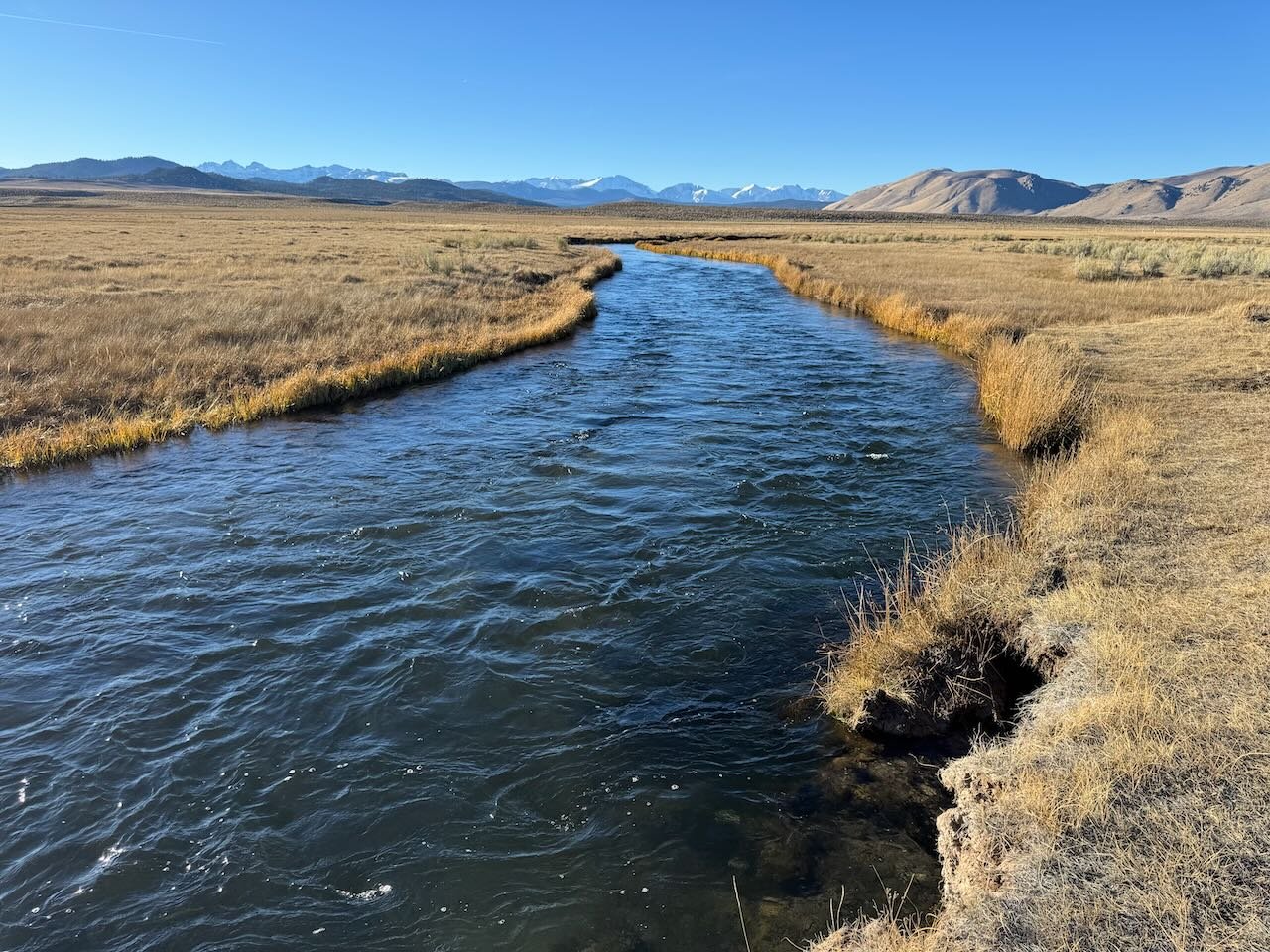
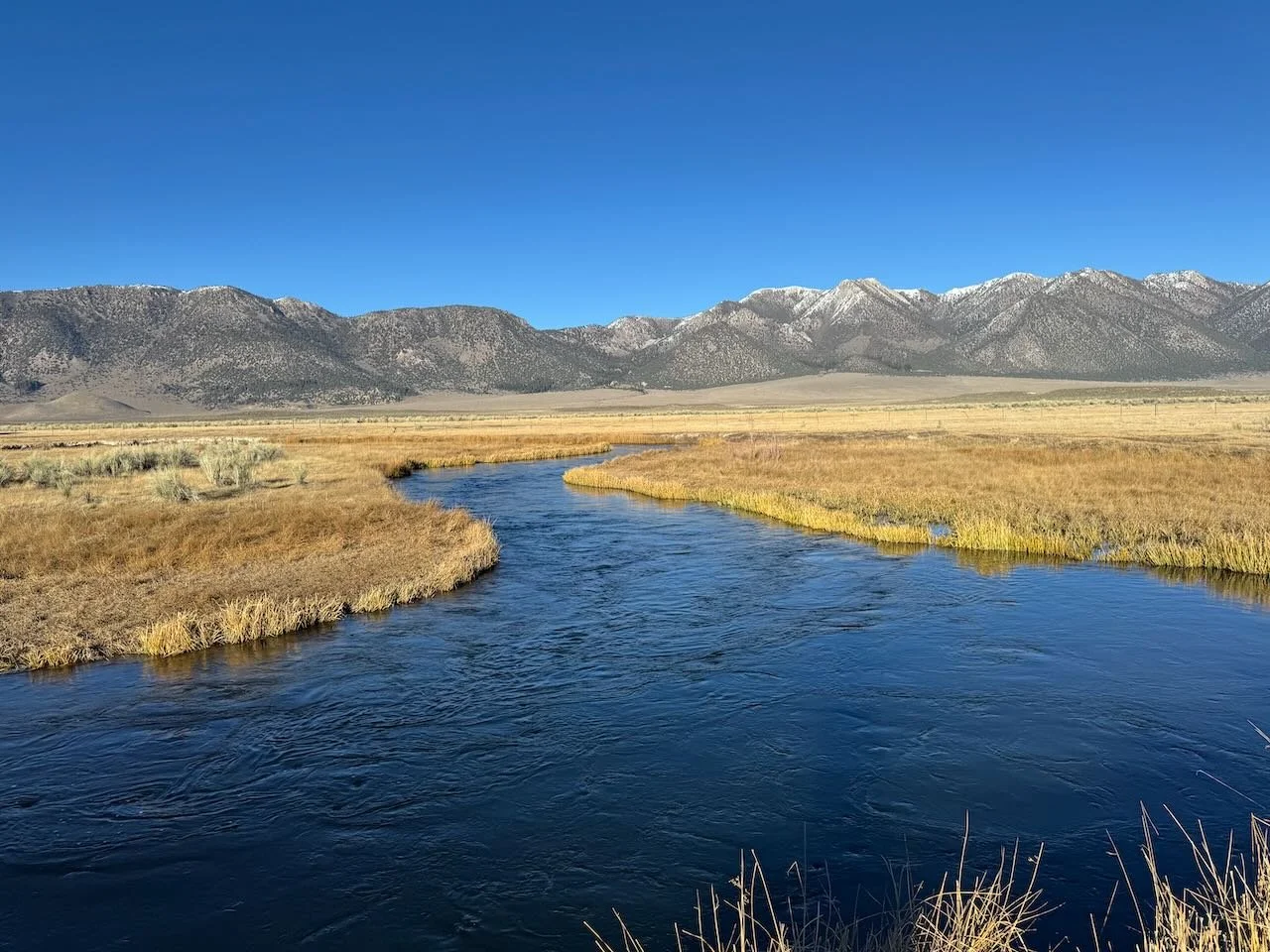
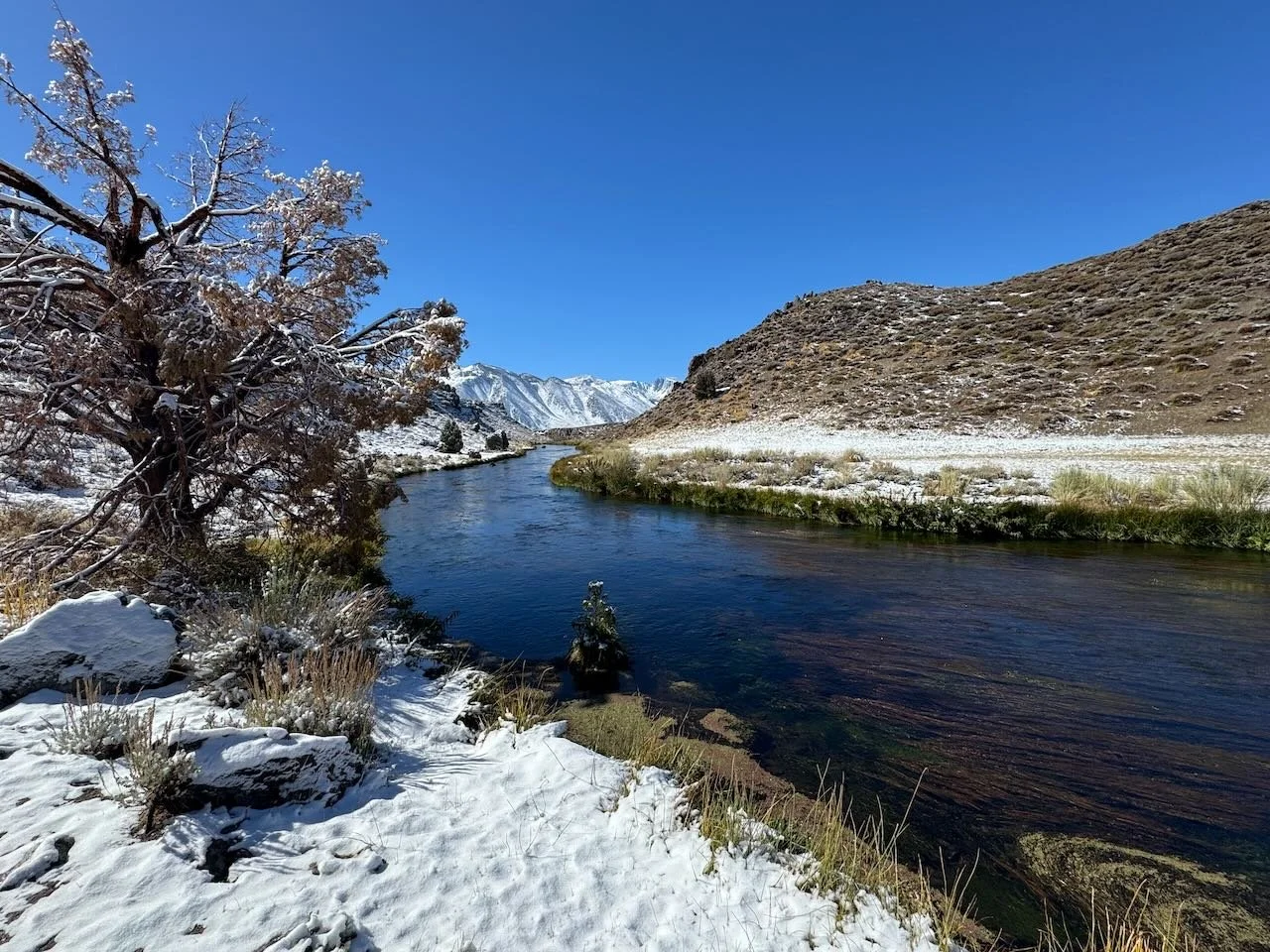
The upper Owens River with its winter coat of snow is not keeping fly fishers off the water looking for trophy trout.

Upper Owens River

Above Benton Crossing Bridge:

Snow on the dirt roads out to the upper Owens River is limiting access to four wheel drive vehicles with high clearance. The main dirt road is offering good access. The spur roads above the first gate have not been driven as much as the main road meaning there is more snow to drive through. Access to the upper Owens will need to be reevaluated after the next set of storms.  The trophy rainbows are in the system and feeding on nymphs, eggs, worms and mop flies. Use size 12 stoner nymphs, size 12 green/gold wire Prince nymphs, size 12 gold ribbed hare’s ears, size 16 hot spot pheasant tail nymphs, size 14 tungsten tacos, size 14 peach glow bugs and size 12 squirmy wormy in the deep holes, deep runs and cut banks under an indicator or with a Euro rig. Key to success is having the right amount of weight in the flies or on the line with additional weight in the form of split shot.
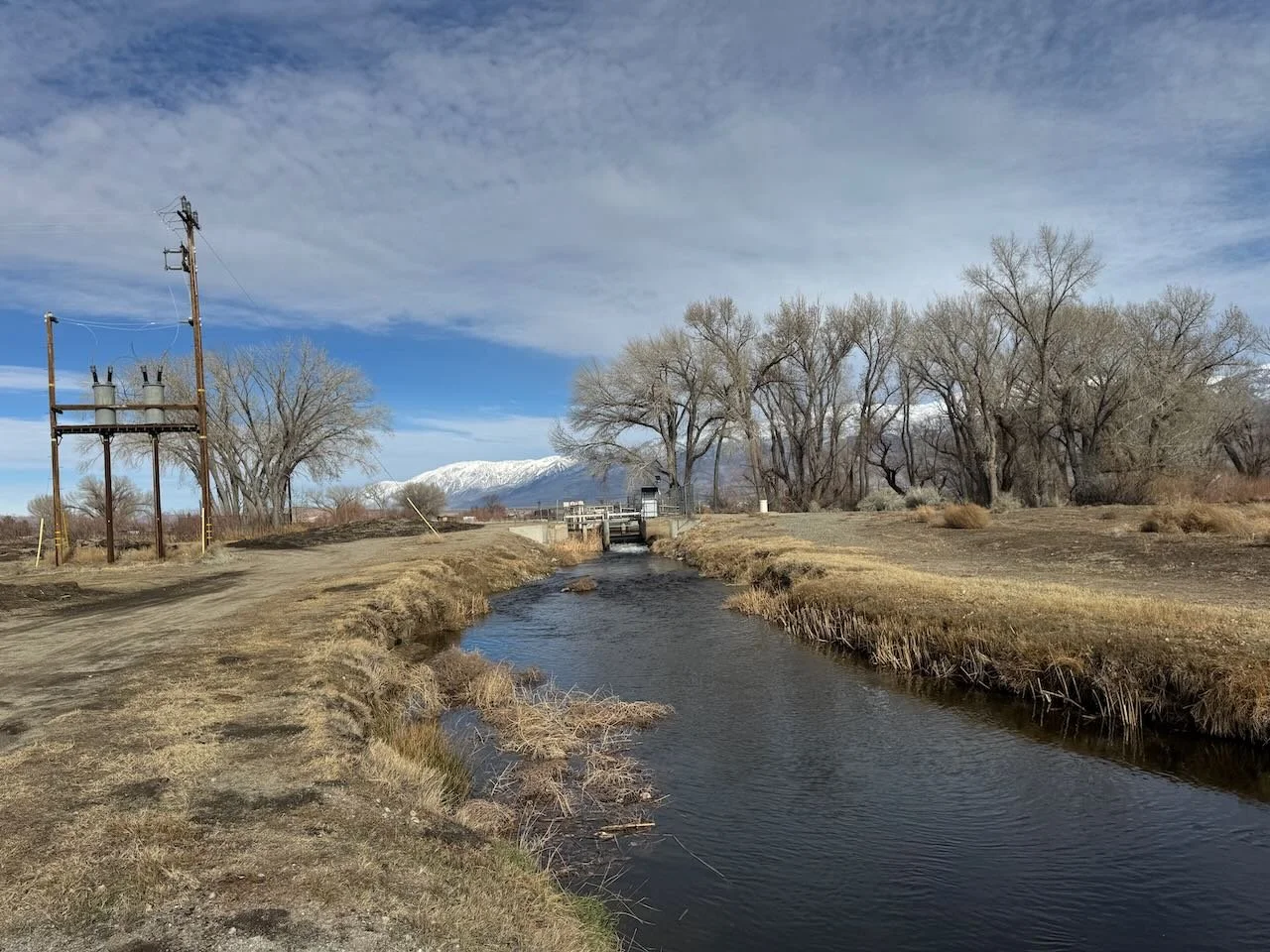
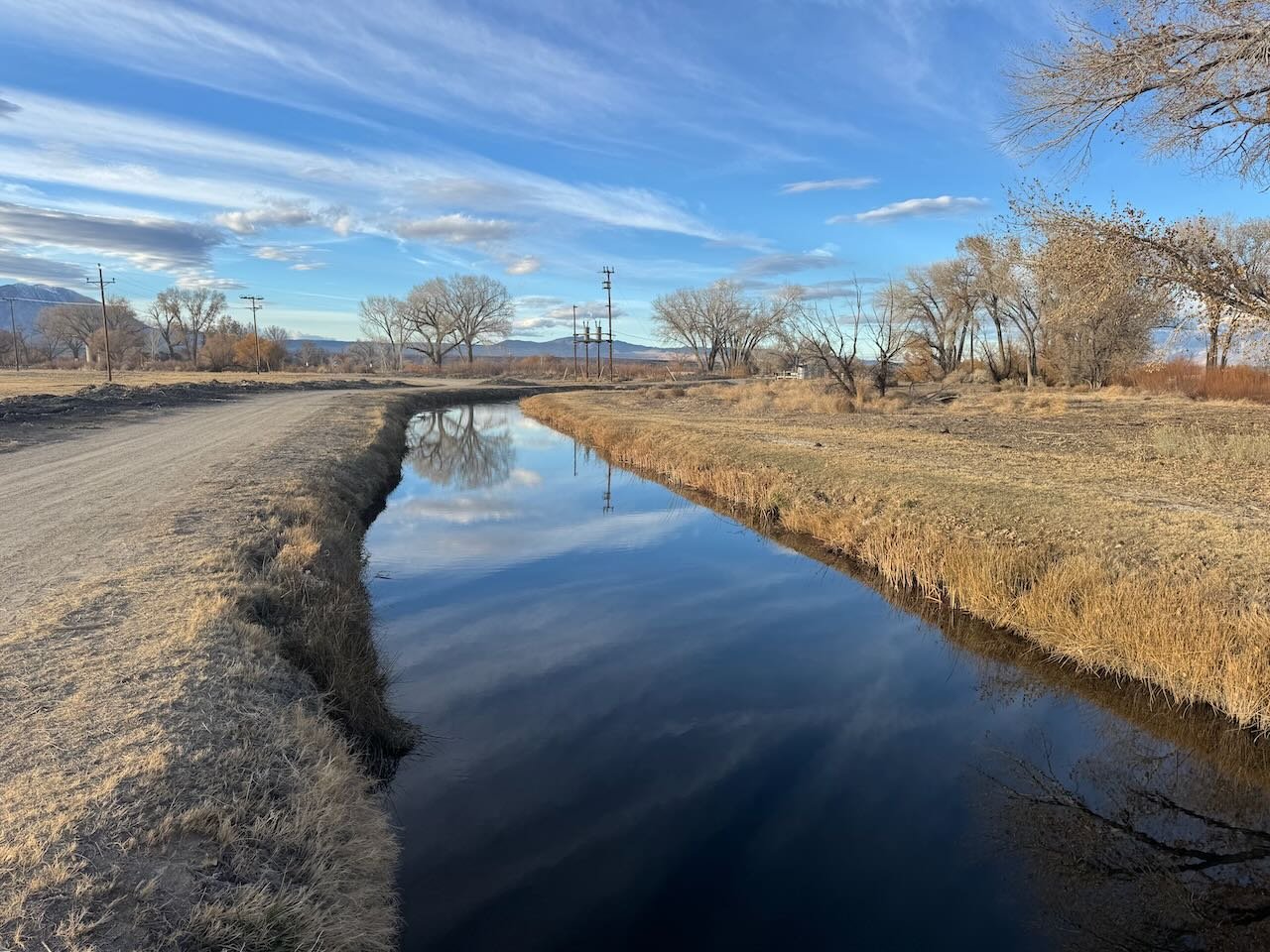
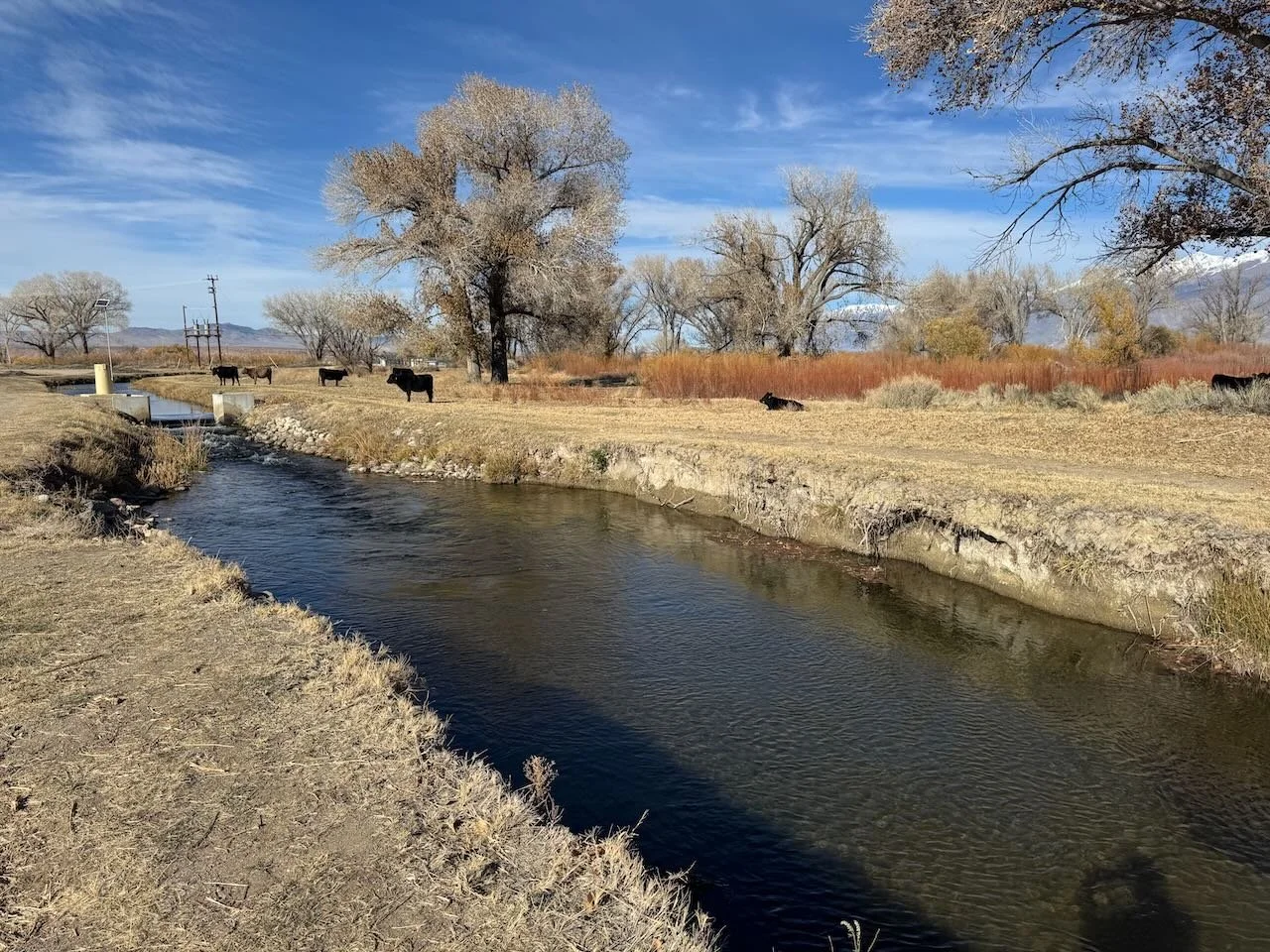
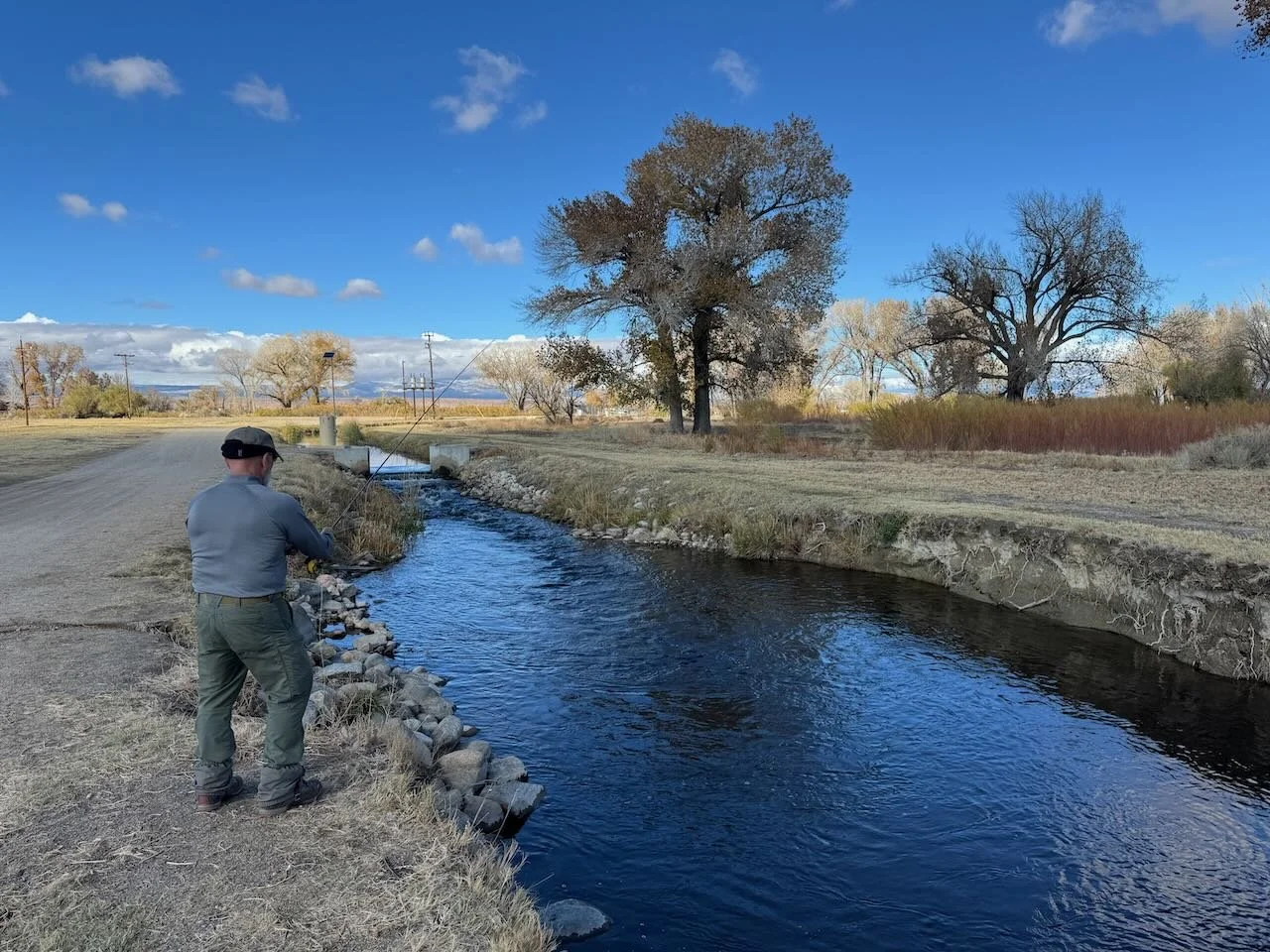
Bishop Creek Canal has cleared up and the trout are feeding on nymphs bounced of the substrate under an indicator or a Euro rig.

 Bishop Creek Canal

Behind Bishop Veterinary Hospital:

The water cleared up after the storms and nymphs are producing rainbows and browns. Euro nymphing is getting the nymphs down on the substrate where the trout are feeding on midges and mayfly nymphs. Fish with size 12 stoner nymphs, size 16 Frenchie’s, size 18 olive quilldigons, size 18 bead head flash back pheasant tail nymphs and size 18 thread midges in tiger and zebra coloration. It will take a day or two for the water to clear up after the next set of storms moves through the Owens Valley.
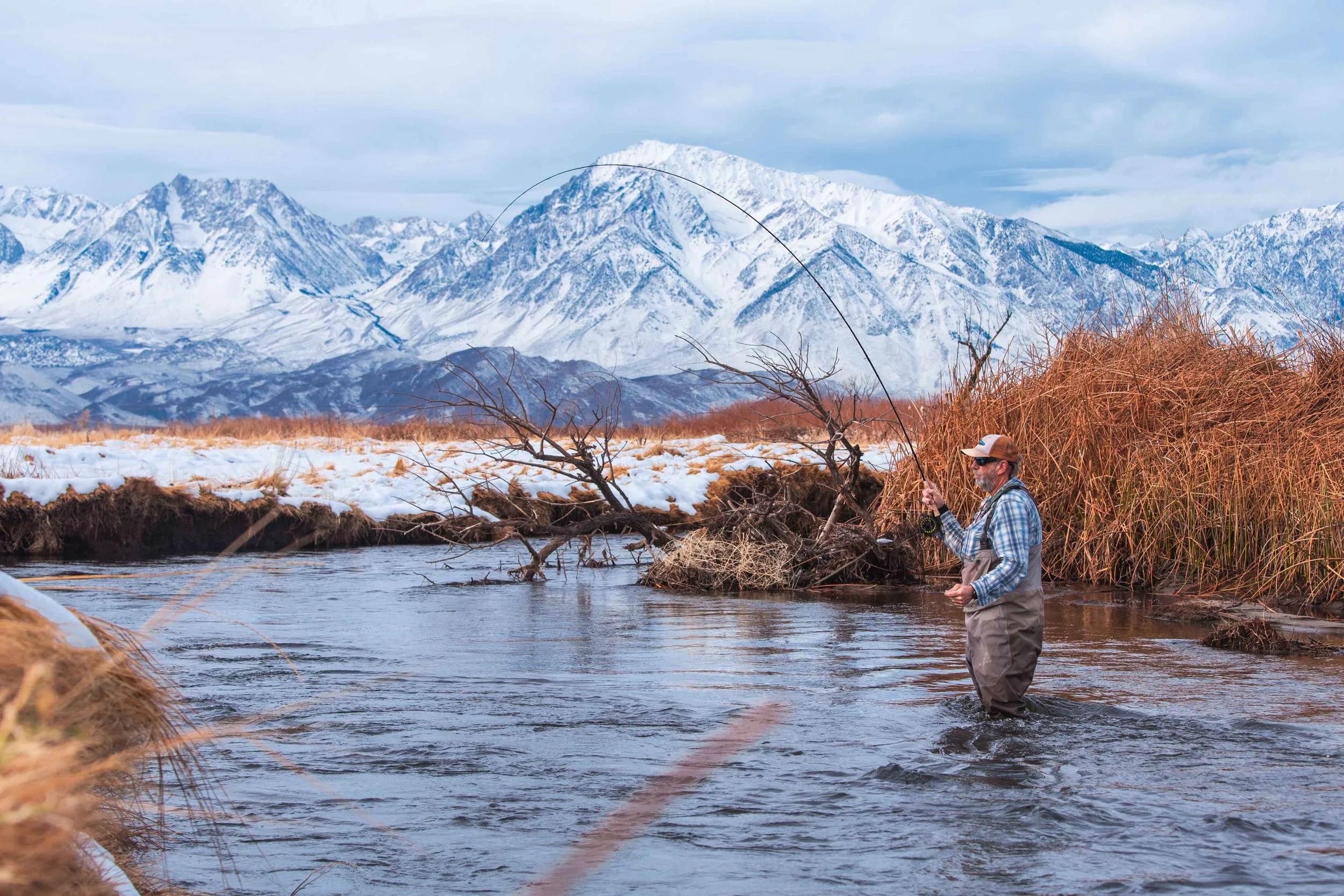
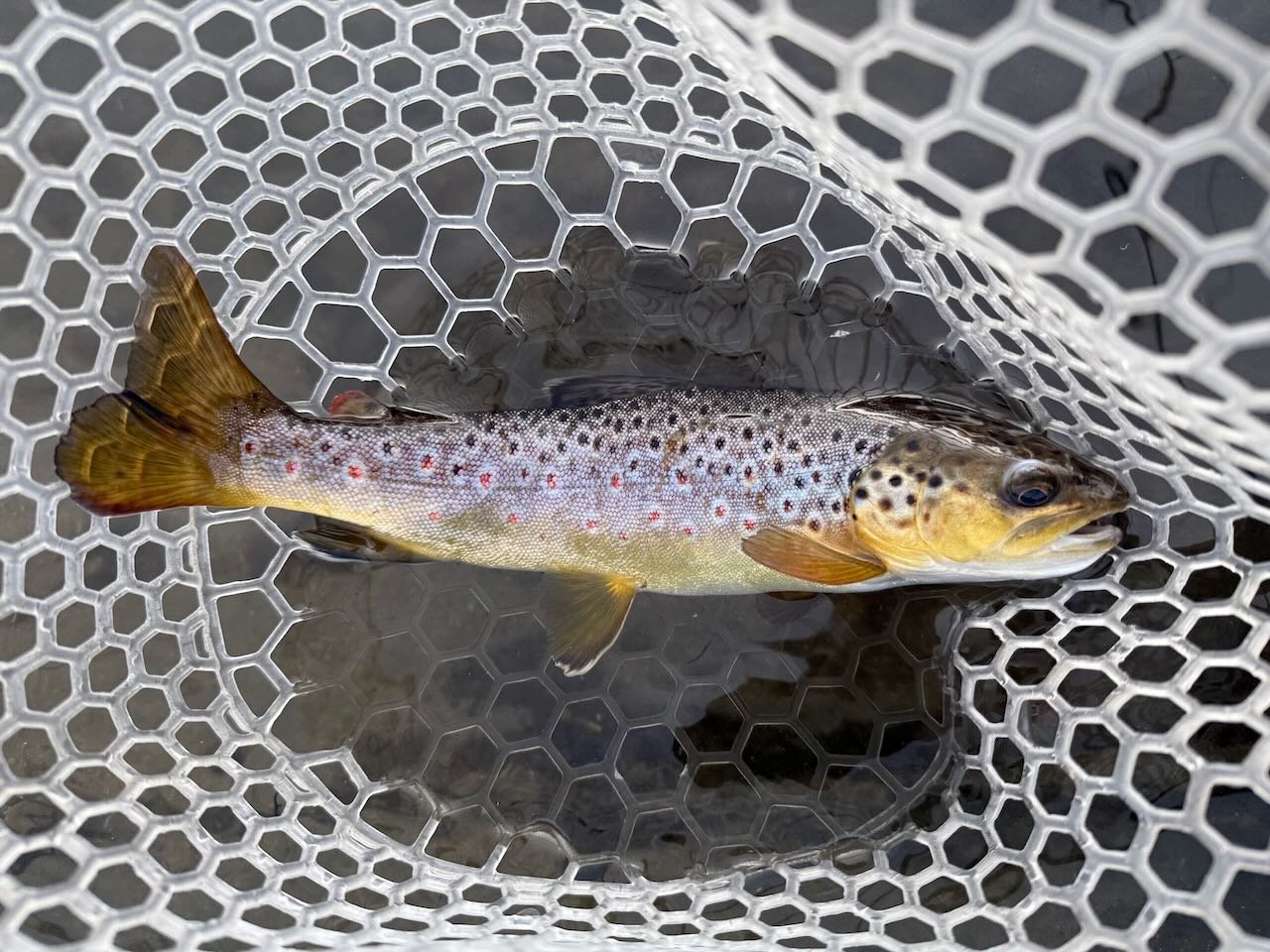
Sierra Bright Dot Fly Fishing Report 12-25-2025

The warm fall has come to an end. Christmas in the Sierra this year is a white one. Getting snow and lots more on the way. Looks like it will be cross country skis, snowshoes and snowmobiles to access the waters of Long Valley. Owens Valley is getting lots of rain. Dirt roads in the Owens Valley will be muddy for a week or two until they dry out. Midges and mayflies are the insects the trout are feeding on particularly the larval form of these insects. For those wishing for a white Christmas your gift has been delivered. Merry Christmas from Sierra Bright Dot.

For those that wished for a white Christmas you got your wish. Merry Christmas and Happy New Years from Sierra Bright Dot Fly Fishing Guide Service.

Lower Owens River

Wild Trout Section:

Trout continue to feed on mayfly, stonefly and midge nymphs. Working the tell end of the riffle as it dumps into the run is where you will find the trout feeding on nymph patterns. Fish with size 18 olive quilldigons, size 18 bead head flash back pheasant tail nymph, size 18 Frenchie’s, size 16 bead head flash back gold ribbed hare’s ears, size 16 Duracell’s, size 12 stoner nymphs, size 18 green/gold wire brassies and size 18 tiger and zebra midges. If you’re in the right spot middle of the day you will see trout rising. Switch to a size 18 blue wing olive parachute, size 18 Adams parachute, size 18 olive sparkle dun, size 20 Griffth’s gnats and size 20 CDC midges. Key to success is getting into the river and wading upstream working your nymphs and dries up and across and thoroughly covering the water before moving up stream about 10 feet to thoroughly cover the water as you fish upstream.

Wild brown trout to 14 inches is what fly fishers are catching in the lower Owens River in December when nymphing.

Hot Creek

Interpretive Site:

Snow in feet is filling the banks of Hot Creek. Come Saturday it will be time to count the total snow fall in feet from the Christmas storm. Access to Hot Creek will be limited to fly fishers willing to snow shoe or cross country ski into the Interpretive site from the paved Hot Creek Hatchery Road. For those willing to access the Interpretive Site nymphing and dry flies are producing wild rainbow and brown trout from six to 14 inches. For dry flies use size 20 Adams parachutes, size 20 blue wing olive parachutes, size 20 olive sparkle duns, size 20 CDC midges and size 20 Griffth’s gnats. For nymphs use size 18 olive quilldigons, size 18 bead head flash back pheasant tail nymphs, size 18 Frenchie’s, size 20 green/gold brassies and size 20 tiger and zebra thread midges

Before the Christmas storm Hot Creek Interpretive Site was accessible by vehicle and foot.

Hot Creek

Canyon Section:

The Canyon Section of Hot Creek will need some warmer weather to open up access to the creek. For those willing to make the trek to get into Hot Creek Canyon you will be rewarded with few to no fly fishers. The weeds are slowly dying off making it easier to fish nymphs in the canyon section. If you see consistent rising fish throw a size 20 blue wing olive parachute, size 20 Adams parachute, size 20 olive sparkle dun, size 20 CDC midge, size 20 Adams bastard midge and size 20 Griffiths gnat. For the nymphs use size 20 pheasant tail emerger,  size 18 olive quilldigon, size 20 green/gold brassies and size 20 thread midges in zebra and tiger coloration.

Its been a great fall on the upper Owens River, but now winter is here and the access is limited due to the accumulation of snow.

Upper Owens River

Above Benton Crossing Bridge:

Right up to the day before the storm hit the Eastern Sierra trophy rainbow trout were taking flies presented on a Euro rig or under an indicator. The trout were taking size 12 stoner nymphs, size 12 green/gold Prince nymphs, size 12 gold ribbed hare’s ears and size 16 hot spot pheasant tail nymphs. Egg patterns, worms and mop flies have been the patterns the trophy trout have been keying in on. A peach size 14 tungsten taco was the egg pattern that was producing all of the trophy trout. With the amounts of snow left on the ground by the Christmas snow storm fly fishers will need cross country skis, snow shoes or snowmobiles to access the upper Owens River deep holes, deep runs and cut banks upstream of Benton Crossing Bridge.

Bishop Creek Canal will be off color for a few days due to the amount of rain runoff that is flowing through the canal.

 Bishop Creek Canal

Behind Bishop Veterinary Hospital:

Nymphing before the storm with size 18 olive quilldigons, size 18 bead head flash back pheasant tail nymphs, size 16 green/gold brassies, size 12 stoner nymphs and size 18 thread midges in zebra and tiger colorations. It will take a few days for the runoff from the storm to move through the canal. This run off has the canal slightly higher than its been and off color. Once the canal clears up the fishing will pick back up for fly fishers nymphing with a Euro rig or under an indicator.

Sierra Bright Dot Fly Fishing Report 12-18-2025

Winter might show up in the Eastern Sierra just in time for Christmas. Maybe snow next week just before Christmas. For now the weather has been warm and the fish are rising and feeding on nymphs. It’s been T-shirt weather middle of the day on Owens Valley waters. Midges and mayflies are what the trout are feeding on, on the substrate and on the surface. Rain or snow might make access to Long Valley waters tough depending on how much snow or rain the area gets. Muddy or snow covered roads will inhibit access.

As we head into Christmas the warm weather fly fishing and trout feeding on the surface may be coming to an end.

Lower Owens River

Wild Trout Section:

T-shirt weather and trout feeding on midges and blue wing olive mayflies has made fly fishing the lower Owens River in December memorable. It’s rare to have such warm weather and hatches bringing the trout to the surface. Size 18 blue wing olive mayflies, size 18 Adams parachutes, size 18 olive sparkle duns, size 20 CDC midges and Griffiths gnats are fooling wild brown and rainbow trout on the surface. Nymphing has been very productive for trout from five inches to 16 inches. Size 18 bead head flash back pheasant tail nymphs, size 18 olive quilldigons, size 18 Frenchie’s, size 16 Duracell’s, size 16 gold ribbed hare’s ears, size 12 stoner nymphs, size 18 tiger and zebra midges are fooling the trout feeding on the substrate.

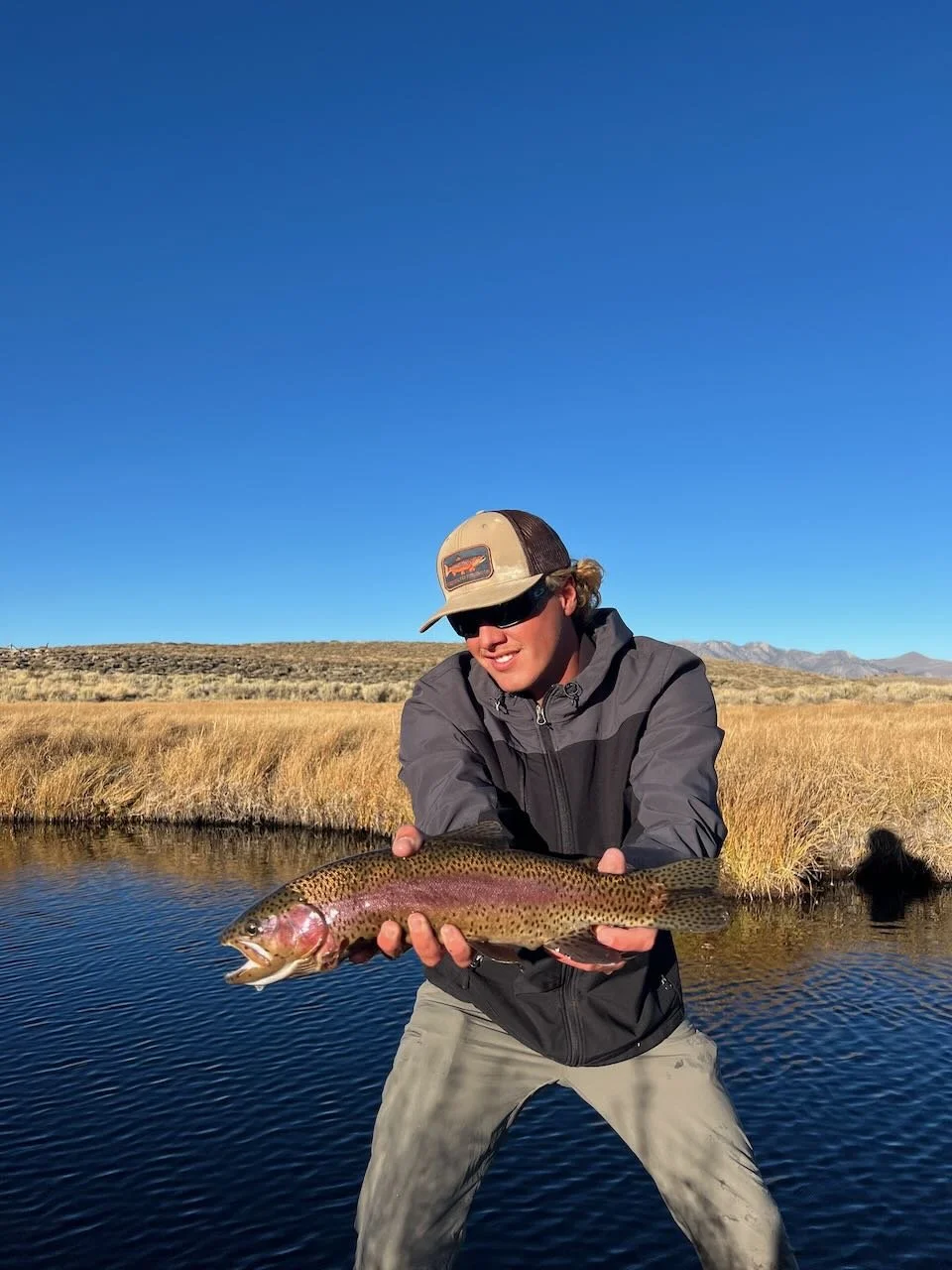
Kevin Botsford from Pasadena showing off a brown trout that took a size 18 bead head flash back pheasant tail nymph fished under an indicator.

Hot Creek

Interpretive Site:

Looks like the nice warm weather is about to come to an end. Next week could see some snow on Hot Creek. Too soon to say for sure what weather to expect. Mid-morning midge and mayfly hatches have the trout feeding on the surface. Fish with a size 20 CDC midge, size 20 Griffith’s gnats, size 20 Adams parachute and size 20 blue wing olive parachute to fool the surface feeding trout. Nymphing with size 12 stoner nymphs,  size 18 olive quilldigons, size 18 Frenchie’s, size 18 bead head flash back pheasant tail nymphs, size 20 tiger midges, size 20 zebra midges and size 18 green/gold brassies is fooling the wild rainbow trout, brown trout and Owens River suckers.

The first of a couple of storms expected to bring snow and rain to the Hot Creek area are blowing in to the Eastern Sierra.

Hot Creek

Canyon Section:

Hot Creek Canyon can be fished with nymphs, but the weed beds are still thick enough to make nymphing in and around the weed beds tough. For fly fishers willing to work their flies in and around the weed beds be ready for your flies to get stuck. There are good numbers of trout hanging out in and around the weed beds willing to take size 18 olive quilldigons, size 18 bead head flash back pheasant tail nymphs, size 18 pink Frenchie’s, size 12 stoner nymphs, size 18 brassies, size 18 green/gold brassies, size 18 tiger and zebra midges, size 16 olive quill RS2 and size 18 pheasant tail paranymphs. Dry flies are producing on the surface from 10:00 A.M. to noon daily. Fish with size 20 Adams parachutes, size 20 blue wing olive parachutes, size 20 sparkle duns, size 20 CDC midges and size 20 Griffiths gnats on the surface.

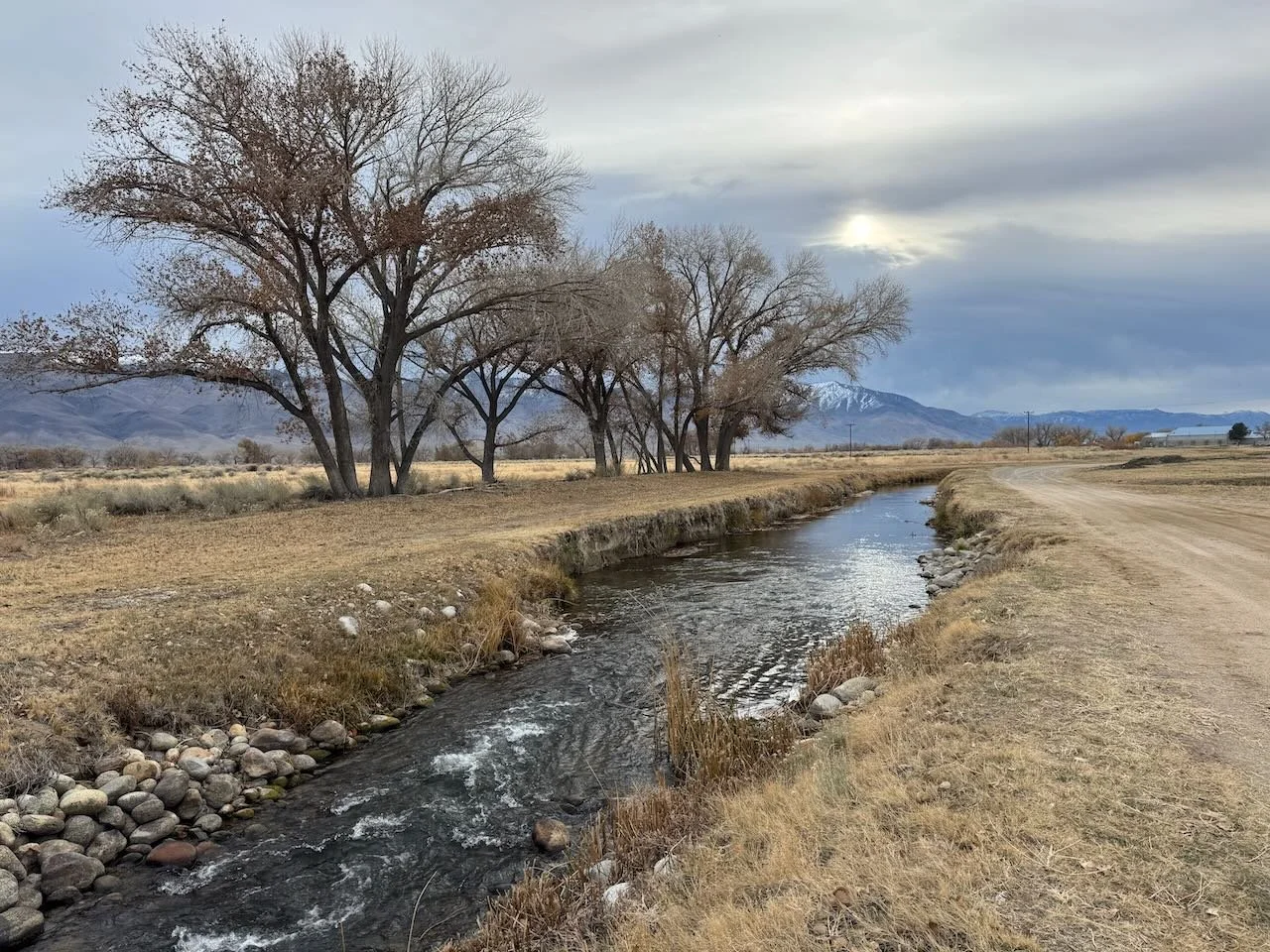
For now fly fishers can drive out to the upper Owens River, but the expected storms might make it impossible to continue driving out to the upper Owens River.

Upper Owens River

Above Benton Crossing Bridge:

Time will tell if the upcoming storms will leave a blanket of snow on the upper Owens River making it impossible to drive out to the river. For now the roads out to the upper Owens River are drivable with just a few mud puddles to avoid. Trophy rainbow trout continue to take nymphs and streamers in deep holes, deep runs and cut banks where they are feeding and resting. Nymphing with a Euro rig or indicator rig and enough weight to get your flies on the substrate where the trout are feeding is what is needed to catch the trophy trout. For nymphs fish with size 14 copper John’s, size 12 Richard’s gold ribbed hare’s ear variation, size 12 green/gold wire Prince nymphs and size 12 stoner nymphs. For streamers use size 6 and 10 wooly buggers, slumpbusters, matuka’s and balanced leeches.

Nymphing middle of the day with stoner nymphs and olive quilldigons is producing wild brown trout and hold over hatchery rainbow trout.

Bishop Creek Canal

Behind Bishop Veterinary Hospital:

Thoroughly fishing the flats and riffles with nymphs is producing wild brown trout and hold over hatchery rainbow trout. Nymphing with size 12 stoner nymphs, size 18 olive quilldigons, size 18 bead head flash back pheasant tail nymphs, size 18 brassies, size 18 green/gold brassies and size 18 tiger and zebra thread midges is fooling the trout feeding on the substrate. Best fishing has been middle of the day from 10:00 A.M. to 2:00 P.M.

Sierra Bright Dot Fly Fishing Report 12-11-2025

Unprecedented warm weather has descended on the Eastern Sierra in mid-December. Mid-day temperatures are perfect for insects to hatch. Hatches of mayflies and midges have the trout feeding on the surface and on the substrate. Dirt roads are drying out, but there are still a few mud puddles on the dirt roads that fly fishers should be avoiding. Dry fly fishing in December is a treat and is happening on Eastern Sierra waters middle of the day.

Fall like weather is making fly fishing in the Eastern Sierra fun with midges and mayflies fished on the surface and on the substrate.

Lower Owens River

Wild Trout Section:

Mid-day temperatures in the upper 60’s has fly fishers wearing T-shirts and sun shirts. Cold weather creeps back in as the sun goes down. Then it’s time to put the jacket back on. Mid-morning to mid-afternoon the trout are feeding on blue wing olive mayflies and midges. For nymphs fish with size 18 bead head flash back pheasant tail nymphs, size 18 olive quilldigons, size 18 Frenchies, size 18 midges in tiger, zebra and blood coloration and size 18 green/gold brassies. If you’re in the right spot when the mayfly hatch goes off and the trout are consistently feeding on the surface it’s time to fish with size 18 blue wing olive parachutes, size 18 Adam parachutes and size 18 olive sparkle duns. Dry flies are consistently producing five to eight inch wild browns and rainbows. Nymphs are producing five inch to 16 inch trout

Indicator nymphing with a size 18 bead head flash back pheasant tail nymph fooled a wild brown trout for Matt Roosen on the lower Owens River .

Hot Creek

Interpretive Site:

The mid-day warm weather is bringing trout to the surface for blue wing olive mayflies. Making an accurate cast and getting a drag free drift is how to fool the picky trout of Hot Creek. If the trout are refusing your dry fly try going down a size on your tippet. Start with 5X tippet and drop down to 6X tippet if the fish are not taking your flies. Fish with size 20 olive sparkle duns, size 20 Adams parachutes, size 20 blue wing olive parachutes, size 20 Griffith’s gnats, and size 20 CDC midges.

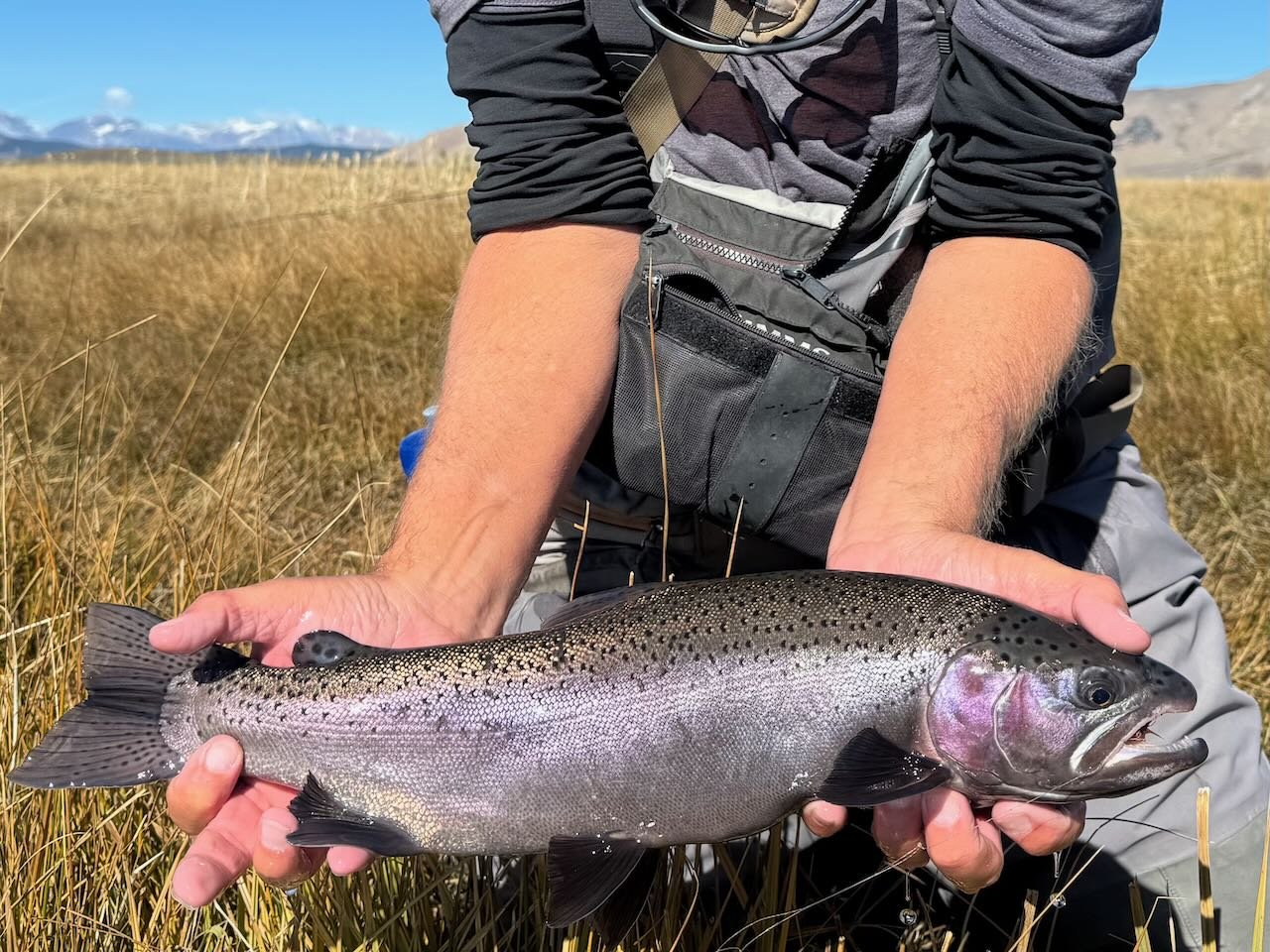
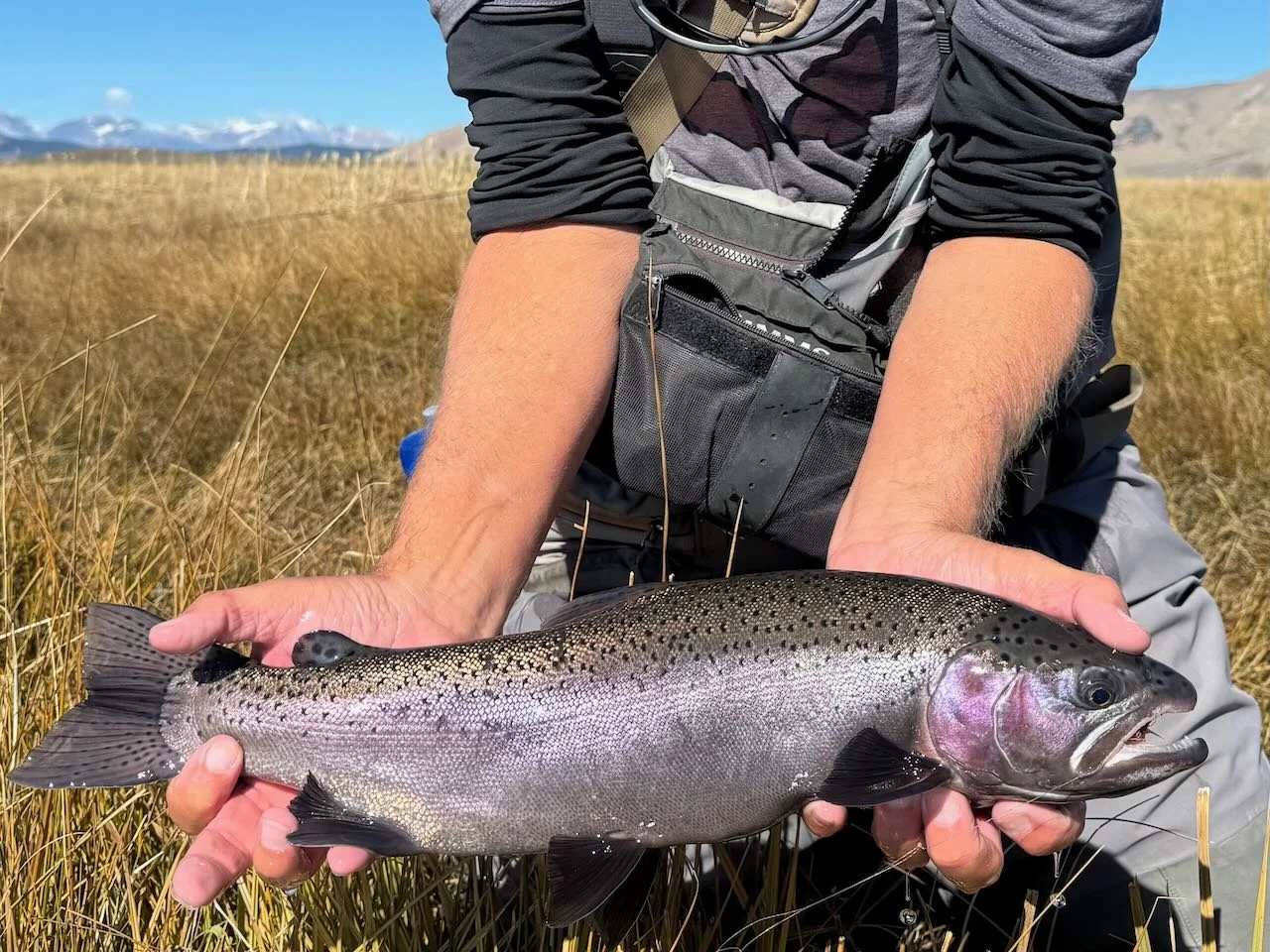
This Hot Creek rainbow took a size 16 pink Frenchie fished as part of a three fly Euro Rig fished at Hot Creek Interpretive site.

Hot Creek

Canyon Section:

Weed beds are still present in Hot Creek Canyon making it hard to drift flies to the trout. Dry flies are easier to cast into the narrow lanes between the weed beds. Nymphs are easier to fish in the riffles and pools devoid of weed beds. When nymphing use size 18 olive quilldigons, size 12 stoner nymphs, size 16 pink Frenchie’s, size 18 brassies, size 18 green/gold brassies, size 18 tiger and zebra midges, size 18 pheasant tail paranymphs and size 18 olive quill RS2’s. Fish with size 20 CDC midge, size 20 Adams midge, size 20 Griffiths gnats size 20 Adams parachutes, size 20 blue wing olive parachutes and size 20 olive sparkle duns on the surface.

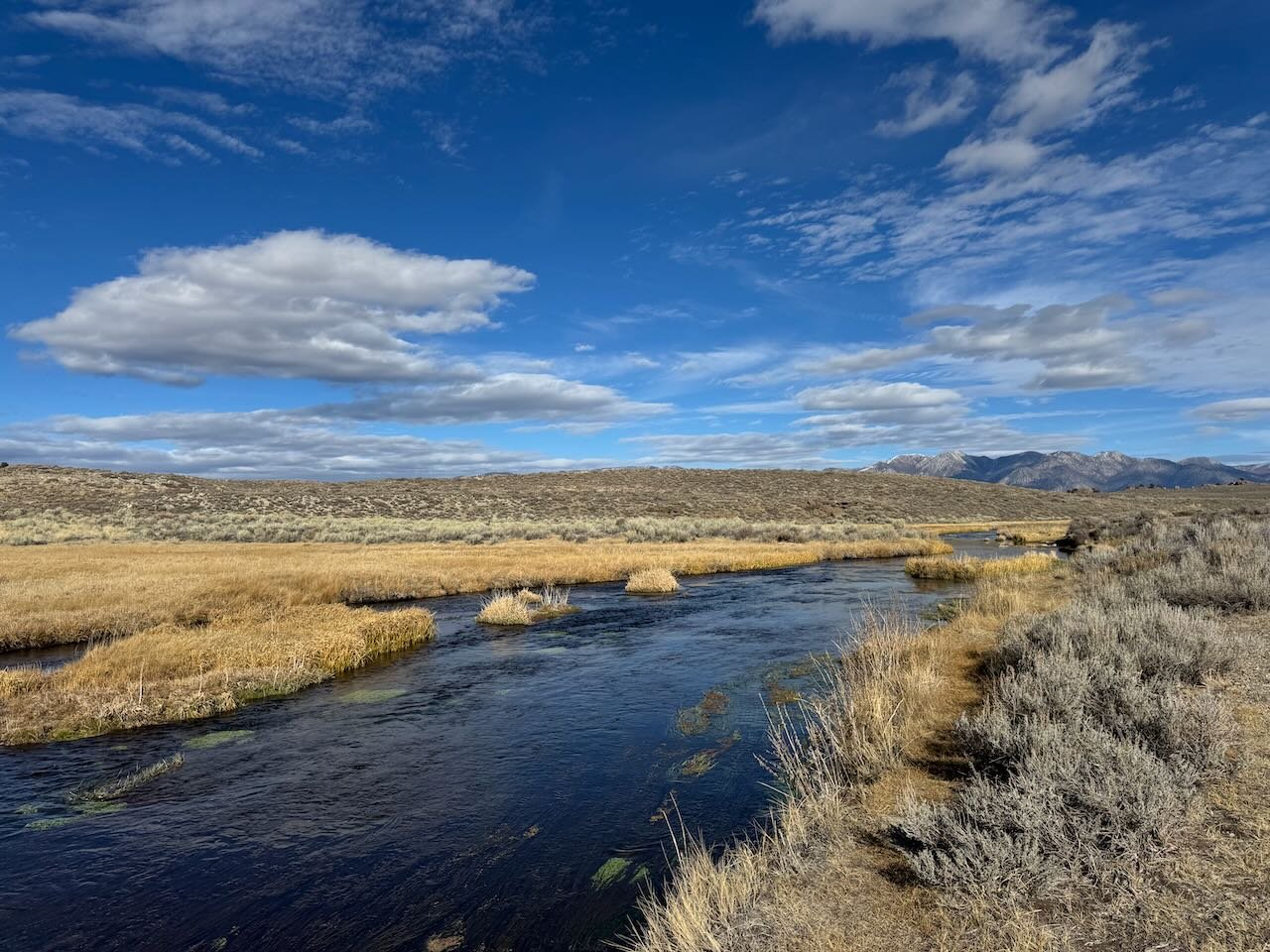
The upper Owens River is missing its coat of snow and looks more like October than December.

Upper Owens River

Above Benton Crossing Bridge:

With the warm weather the dirt roads accessing the upper Owens River above Benton Crossing Bridge are slowly drying out. Fly fishers still need to avoid the few remaining muddy patches on the spur roads leading out to the river. Trophy rainbows are resting and feeding in the deep holes, deep pools and cut banks. Success is covering the water with enough cast to get your flies and the trout in the same space in the water. The trophy trout move around in the holes so that your flies may not be drifting where the trout are. Hence lots of casts are required to get the flies where the trout are. Nymph under an indicator or with a Euro rig with size 12 green/gold prince nymphs, size 12 stoner nymphs, size 12 gold ribbed hare’s ears variations and size 14 copper John’s. There are resident six to 12 inch rainbows and browns that will take size 18 blue wing olive parachutes, size 18 Adams parachutes, size 18 olive quilldigons and size 18 bead head flash back pheasant tail nymphs.

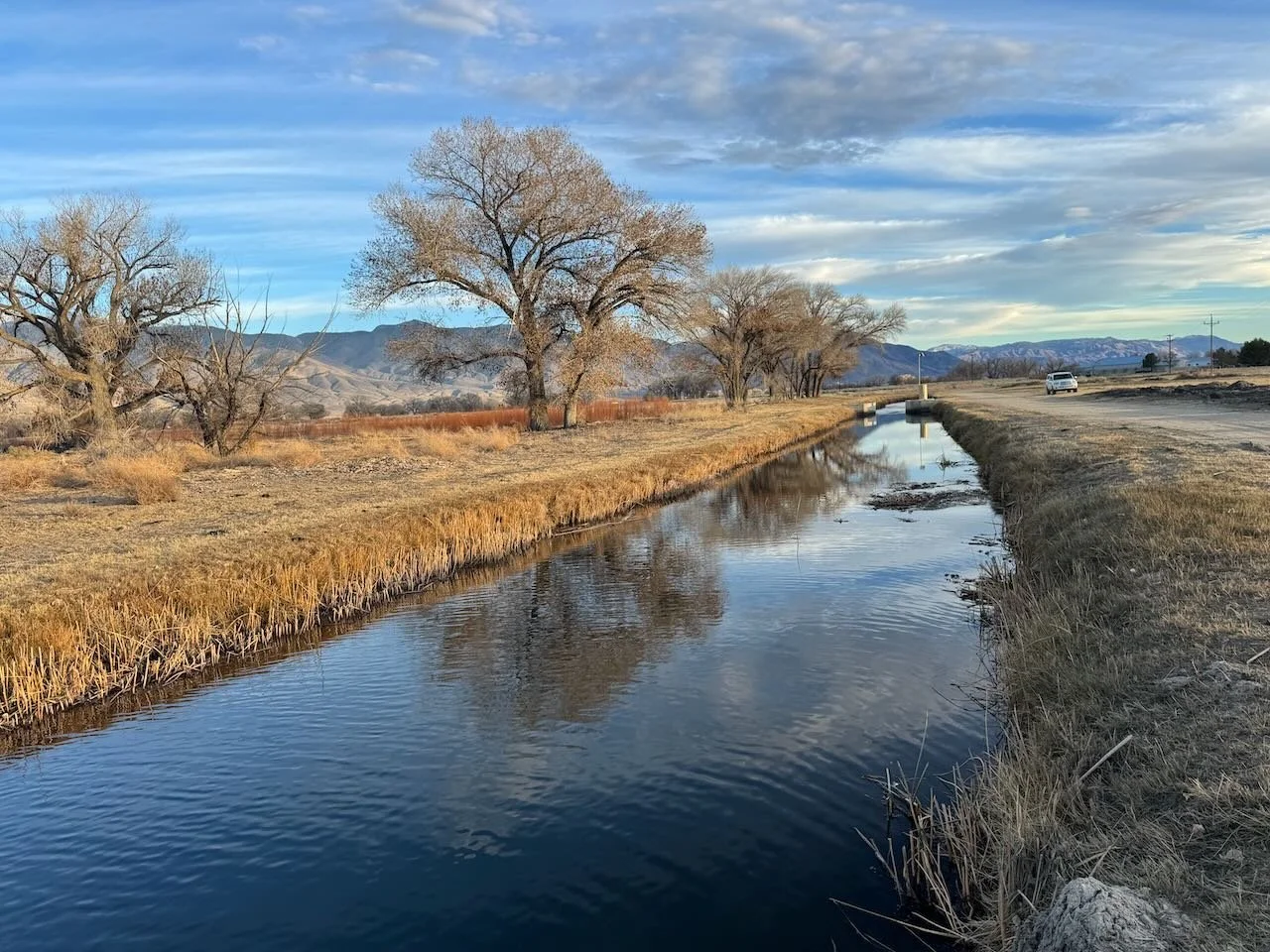
Nymphing Bishop Creek Canal with a size 18 olive quilldigon and size 12 stoner nymph is producing wild brown trout and hold over stocked rainbow trout.

Bishop Creek Canal

Behind Bishop Veterinary Hospital:

Bishop Creek Canal is easier to fish after DWP dredge the canal. The trout are feeding mid-day on mayflies and midges. Smaller fish are feeding on size 20 blue wing olive parachutes, size 20 Adams parachutes, size 18 Griffith’s gnats and size 20 CDC midges. Nymphing with size 12 stoner nymphs and size 18 olive quilldigons is fooling wild and hold over stocked trout fished in the slow flat sections of the canal.

Sierra Bright Dot Fly Fishing Report 12-04-2025

Fall is quickly looking like winter. Amazing how the trees leaves turned bright yellows and reds and how quickly the leaves are gone. Time to pick up all the leaves around the yard. It’s quickly looking like winter in the Eastern Sierra. Best fly fishing is in the middle of the day when insects are most active and trout are feeding on mayflies and midges. Brown trout spawning is coming to an end. Rainbows and browns are feeding on nymphs and dries and providing action for those taking the time to fly fish in the Eastern Sierra in December.

The trees have lost their leaves, winter is knocking on the door and the trout continue to feed on midges and mayflies on the substrate and on the surface.

Lower Owens River

Wild Trout Section:

Suns out, but day time temperatures are not going much over 60 degrees. It’s time to wear a sweat shirt or jacket when fly fishing on the river. With the low flows fly fishers can access all the waters that are not fishable from the banks by getting in the river and wading upstream presenting dries and nymphs. Fishing nymphs with a Euro rig or under an indicator is producing five inch to 16 inch rainbows and browns with size 18 bead head flash back pheasant tail nymphs, size 18 olive quilldigons, size 18 Frenchies, size 18 green/gold brassies and zebra and tiger midges in size 18. If there are enough fish feeding on the surface switch to a size 18 blue wing olive parachute, size 18 Adams parachute and size 18 olive sparkle duns.

Middle of the day is the perfect time to nymph the lower Owens River with baetis nymph patterns.

Hot Creek

Interpretive Site:

Mid-day mayfly and midge hatches have the Interpretive Site trout feeding on the surface. A will placed dry fly that gets a drag free drift will fool the selectively feeding trout. Fish with size 20 Adams parachutes, size 20 blue wing olive parachutes, size 20 olive sparkle duns, size 20 Griffiths gnats, size 20 Adams midges and size 20 CDC midges. Nymphing with size 18 bead head flash back pheasant tail nymphs, size 18 olive quilldigons, size 18 Frenchie’s, size 18 green/gold brassies, size 18 brassies, size 18 tiger and zebra midges, size 18 pheasant tail paranymphs, size 18 olive quill RS2 and size 16 Duracell will produce trout feeding on the substrate on nymphs and in the water column for emergers.

The deep holes and riffles in the Interpretive site is where you will find the trout feeding on blue wing olive mayflies and midge mid-day.

Hot Creek

Canyon Section:

Weed beds and low water flows makes nymphing in the Canyon Section of Hot Creek tough. The trout are there if you can get your flies to the trout. Working the deeper holes and riffles are easier with nymphs than the weed beds. Fish with size 18 olive quilldigons, size 18 bead head flash back pheasant tail nymphs, size 18 Frenchies, size 18 green/gold brassies, size 18 brassies, size 18 tiger and zebra midges, size 18 pheasant tail paranymphs, size 18 olive quill RS2 and size 16 Duracell will fool the trout feeding on emergers and nymphs. Dry flies are easier to fish in and around the weed beds with minimal snagging of the weeds. Fish with size 20 Adams parachutes, size 20 blue wing olive parachutes, size 20 olive sparkle duns, size 20 Griffiths gnats, size 20 Adams midges and size 20 CDC midge.

The dirt roads to access the upper Owens River are drivable and the trophy trout are in the deep holes, deep runs and cut banks resting and feeding.

Upper Owens River

Above Benton Crossing Bridge:

The main dirt road above Benton Crossing Bridge is in fine shape. The spur roads off the main road leading out to the river have lots of mud and the occasional pool of water. It’s slippery driving and if you’re not careful it’s easy to mess up and get stuck in the mud. Trophy rainbows and the occasional brown trout continue to be the trout sought after by fly fishers. Nymphing up stream of Benton Crossing Bridge is good particularly the farther upstream you go. Fish with size 12 stone nymphs, size 12 green/gold wire prince nymphs, size 12 gold ribbed hare’s ears variations and size 14 copper John’s for the trophy trout. Fishing with eggs, San Juan worms and mop flies are producing trophy trout for some anglers. Fishing for the resident trout use size 18 olive quilldigons, size 18 bead head flash back pheasant tail nymphs and size 16 bead head flash  back gold ribbed hare’s ears. For anglers moving down stream fishing with streamers cover lots of water to offer your streamer to those trophy fish wanting a bigger meal. Fish with size 6 or 10 slumpbusters, wooly buggers, matukas and balanced leeches.

Bishop Creek Canal got dredged last week, but trout this week are taking nymphs like an olive quilldigon and stoner nymph.

Bishop Creek Canal

Behind Bishop Veterinary Hospital:

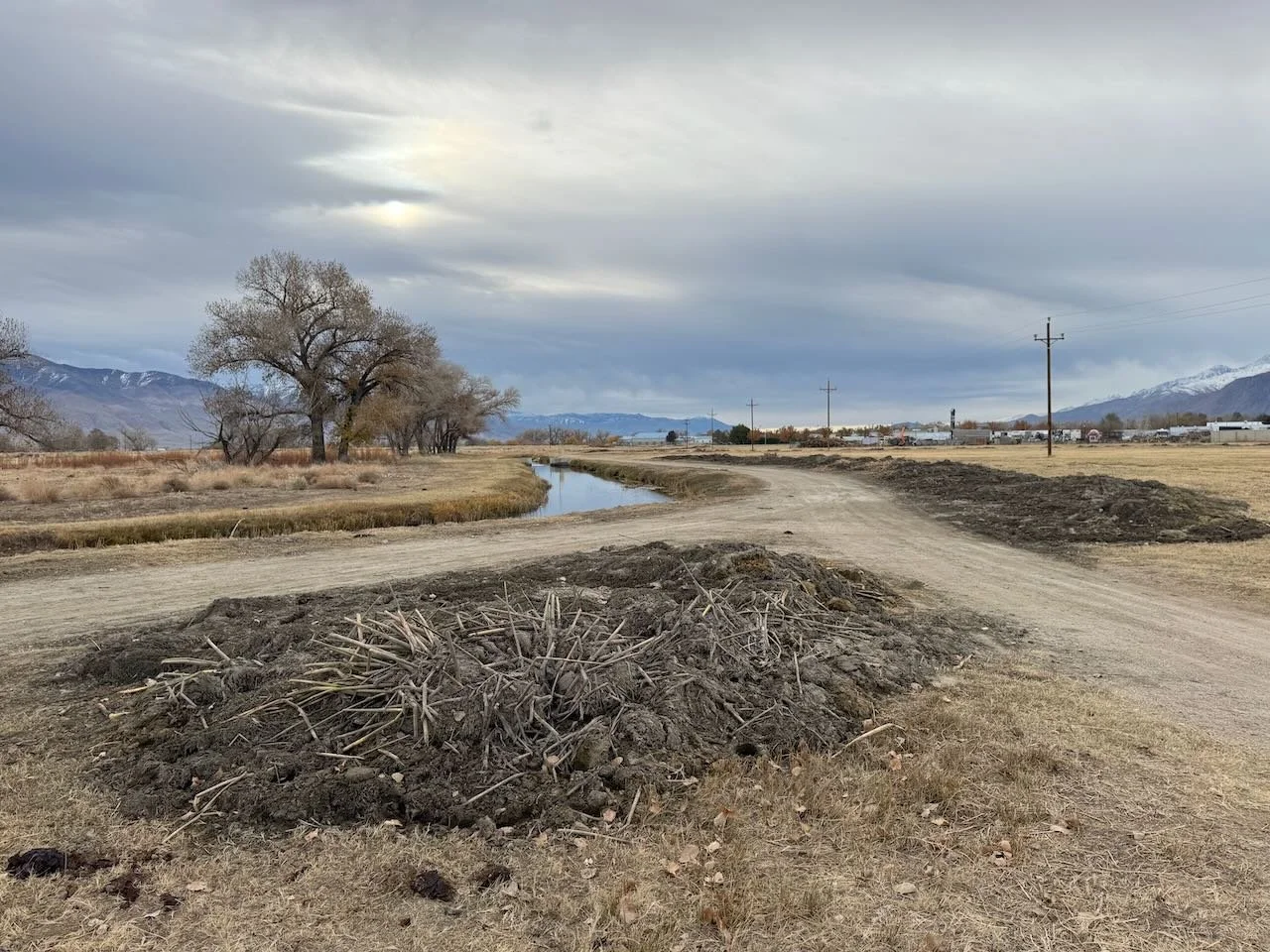
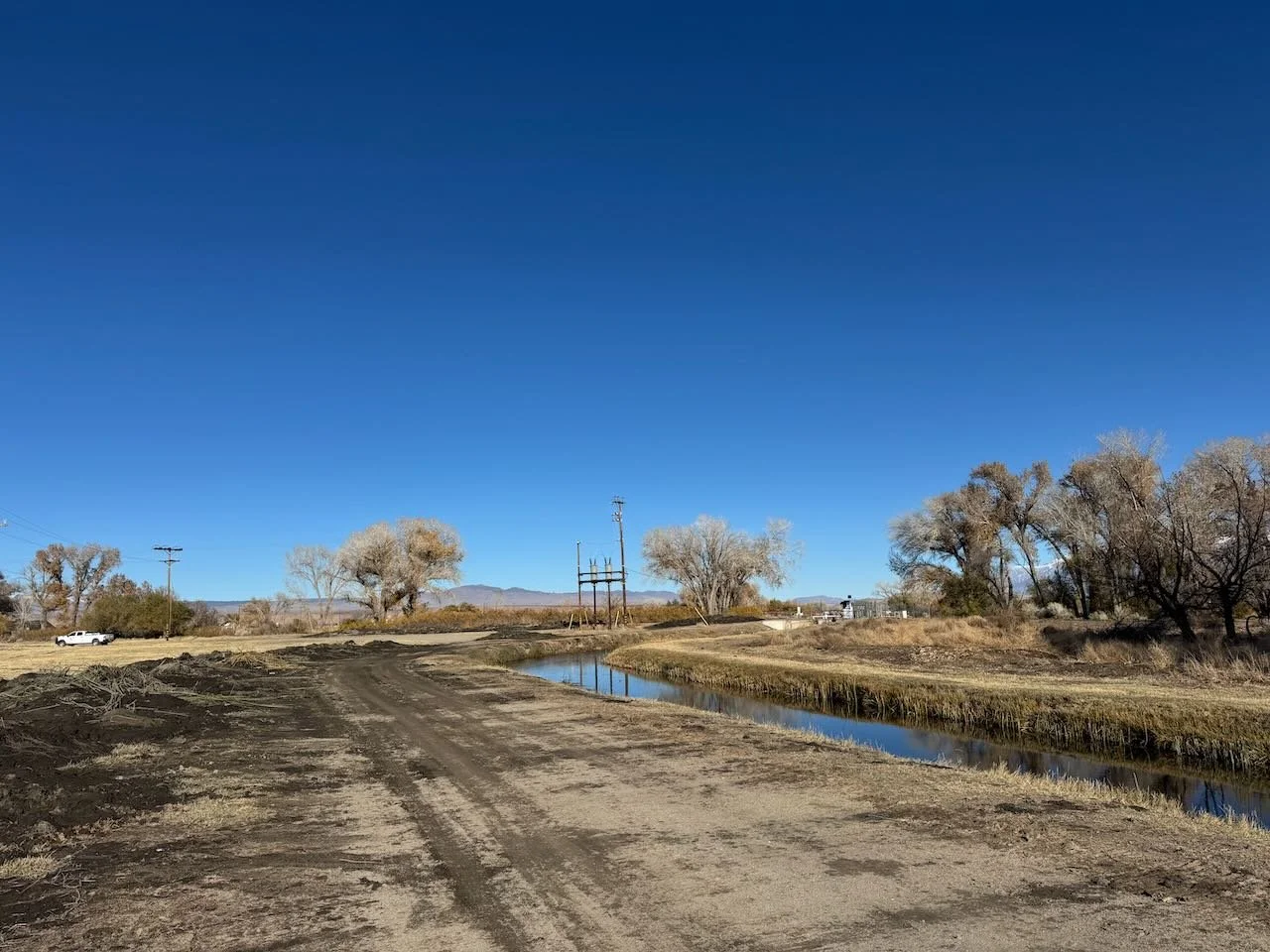
Bishop Creek Canal was dredged last week by the Department of Water and Power. This has opened up the canal making it easier to nymph now that the weeds and tulles have been removed. Nymphing on a Tenkara rod, Euro nymphing and indicator nymphing with size 12 stoner nymphs, size 16 Frenchie’s, size 18 olive quilldigons, size 18 bead head flash back pheasant tail nymphs, size 16 Duracell nymphs, size 18 green/gold brassies and size 18 midges in zebra and tiger coloration are the nymphs that are producing trout. Best fishing has been mid-day from 10:00 to 2:00. Nymphing is producing wild and stocked brown and rainbow trout from seven to 12 inches.

Sierra Bright Dot Fly Fishing Report 11-27-2025

Thanksgiving weekend will be a great time to be in the Eastern Sierra fly fishing. Thanksgiving day and Friday will be great fall weather. Look for slightly cooler days and maybe precipitation next week. Warm days and good fishing is in store for Thanksgiving fly fishers visiting the Eastern Sierra. Trophy trout, resident trout and juvenile trout are feeding on dry flies, nymphs and streamers. Mayflies and midges are the primary insects that are feeding the trout. Still seeing a few caddis on Eastern Sierra Waters.

Sunny days and fall weather, jackets in the morning and evening, two light layers during the day, and trout feeding on dries and nymphs makes this the perfect time to be fly fishing in the Eastern Sierra.

Lower Owens River

Wild Trout Section:

Mornings are cold enough to wear a sweat shirt. Mid-day is warm enough for a T-shirt and a wicking layer. A mid-day mayfly hatch has the trout feeding on the surface and on the substrate. On the surface fish with a size 18 Adams parachute, size 18 blue wing olive parachute and a size 18 olive sparkle dun. On the substrate fish with a size 18 bead head flash back pheasant tail nymph, size 18 olive quilldigon, size 18 Frenchies, size 16 Duracell, size 18 olive quill RS2 and size 12 stoner nymph. Rainbows and browns from 17 inches to four inches are the trout fly fishers are catching in the lower Owens River. Roads are drying out with one or two deep puddles to drive through on Chalk Bluff Road.

Trout from four to 17 inches have been feeding all day on mayfly nymphs and dries.

Hot Creek

Interpretive Site:

The warm weather has melted most of the snow at the Interpretive sight. Fishing with nymphs and dries is producing trout for the fly fisher fishing mid-morning. Nymphing with size 18 bead head flash back pheasant tail nymphs, size 18 olive quilldigons, size 18 Frenchies, size 18 brassies, size 18 green/gold brassies and midge nymphs in size 18 in zebra and tiger coloration is fooling wild brown and rainbow trout to 14 inches.

It does not take long for the warm weather to melt the snow on Hot Creek in the fall.

 Hot Creek

Canyon Section:

The weed beds are breaking up making it easier to nymph fish in the Canyon Section of Hot Creek. Look for the openings in the weed beds, the riffle sections and deeper pools to fish you nymphs in. Fish with size 18 midges in zebra and tiger colorations, size 18 brassies, size 18 green/gold brassies, size 18 olive quilldigons, size 18 bead head flash back pheasant tail nymphs and size 12 olive scuds. If there is enough trout feeding on the surface use size 20 blue wing olive parachutes, size 20 Adams parachutes and size 18 Griffiths gnats.

Sometimes it’s better to fish the inside bend instead of the outside bend of the river on the Upper Owens River.

Upper Owens River

Above Benton Crossing Bridge:

Dirt roads above Benton Crossing Bridge are drying out from the melting snow. Watch out for the mud as its slippery and easy to get stuck in with your vehicle. Trophy rainbows continue to offer the best opportunity for catching trophy trout. There are a few trophy brown trout still in the system being caught. Fish with size 12 stoner nymphs, size 12 green/gold wire Prince nymphs, size 12 gold ribbed hare’s ear variations, size 14 copper John’s, size 12 Duracell’s and size 16 hot spot pheasant tail nymphs in the deep holes, deep runs and cut banks where the trophy trout are resting and feeding. Fishing with streamers is producing trophy trout for fly fishers fishing with size 6 and 10 wooly buggers, size 10 balanced leeches, size 6 and 10 olive slumpbusters and size 6 and 10 olive or yellow matukas. The Owens River below Benton Crossing Bridge is closed.

City of Los Angeles Department of Water and Power has dredged the canal and has slowed down fly fishing.

Bishop Creek Canal

Behind Bishop Veterinary Hospital:

City of Los Angels Department of Water and Power has dredged Bishop Creek Canal. This has temporarily slowed down the fly fishing in the canal. The trout are still there, but with most of the weed beds gone the trout are wary as they have no ware to hide. Prior to the dredging the trout were feeding on small mayfly nymphs and dries. On the surface the trout were taking size 20 Adams parachutes, size 20 blue wing olive parachutes and size 20 olive sparkle duns. Under the surface a size 18 bead head flash back pheasant tail nymph, size 18 olive quilldigon, size 16 Duracell and size 16 Frenchie’s have been fooling the canal trout. Bishop Creek Canal is under winter regulations catch and release with barbless lures and flies through the Friday preceding the last Saturday in April.

Sierra Bright Dot Fly Fishing Report 11-20-2025

Winter has come to the Eastern Sierra this week. Owens Valley got snow that did not last more than one morning. Upper elevations waters have snow on the ground and limited access. Backcountry waters are frozen up for the winter and will not thaw until late spring or early summer. Expect warming over the weekend. Rain and snow has kept most fly fishers off the water. For those fly fishers equipped to handle the weather are being rewarded with fish. This weekend should see the Eastern Sierra dry out and offer good fall days on the water. Eastern Sierra waters are now under winter regulations. Most moving waters are now catch and release barbless lures and flies. Resort lakes are closed tell April. All other lakes are open to year round fishing. Mayflies and midges are the insects trout will be feeding on all winter. Time to stock up on midge nymphs, blue wing olive dry flies and baetis nymphs.

The best part of a winter storm in the Eastern Sierra is when the sun comes out and the trout are feeding.

Lower Owens River

Wild Trout Section:

Rain and snow during the week has slowed down the fly fishers fishing on the wild trout section of the lower Owens River. Those dressed for the conditions are finding trout taking their nymphs. Weekend is supposed to dry out and fly fishing should be good with both nymphs and dries. Mid-day mayfly hatches have the trout feeding on the substrate and on the surface. For nymphs fish with size 18 bead head flash back pheasant tail nymphs, size 18 olive quilldigons, size 18 Frenchie’s and size 18 olive quill RS2. On the surface fish size 18 Adams parachutes, size 18 blue wing olive parachutes and size 18 olive sparkle duns. Fly fishers are landing four inch to 16 inch wild rainbows and browns.

An afternoon of fly fishing the lower Owens River as the storm brews up in the mountains..

Hot Creek

Interpretive Site:

We are heading into winter and midges and baetis mayflies will be the active insects the trout will be feeding on. The key to success as we head into winter will be placing the flies right in front of the trout. As the water temperatures drop the trout’s calorie intake decreases. Make lots of casts with your flies to areas you know are holding fish. Fish with size 18 olive quilldigons, size 18 bead head flash back pheasant tail nymphs, size 18 brassies, size 18 green/gold brassies, size 18 tiger midges, size 18 zebra midges and size 18 blood midges. Carry size 20 Adams parachutes, size 20 blue wing olive parachutes and size 20 Griffiths gnats for those times the trout are feeding on the surface.

Snow on the ground in Hot Creek Canyon has slowed access to the creek, but the trout continue to feed on nymphs and dries..

Hot Creek

Canyon Section:

The cold weather and lack of daylight is helping to break up the weed beds in the canyon section of Hot Creek. Nymphing with size 18 bead head flash back pheasant tail nymphs, size 18 olive quilldigons, size 18 Frenchie’s, size 18 green/gold brassies and size 20 midges in tiger and zebra coloration is producing eight to 10 inch wild rainbows and browns. On overcast days look for hatching blue wing olive mayflies and midges. On the surface fish with size 20 Adams parachutes, size 20 blue wing olive parachutes, size 20 olive sparkle duns.

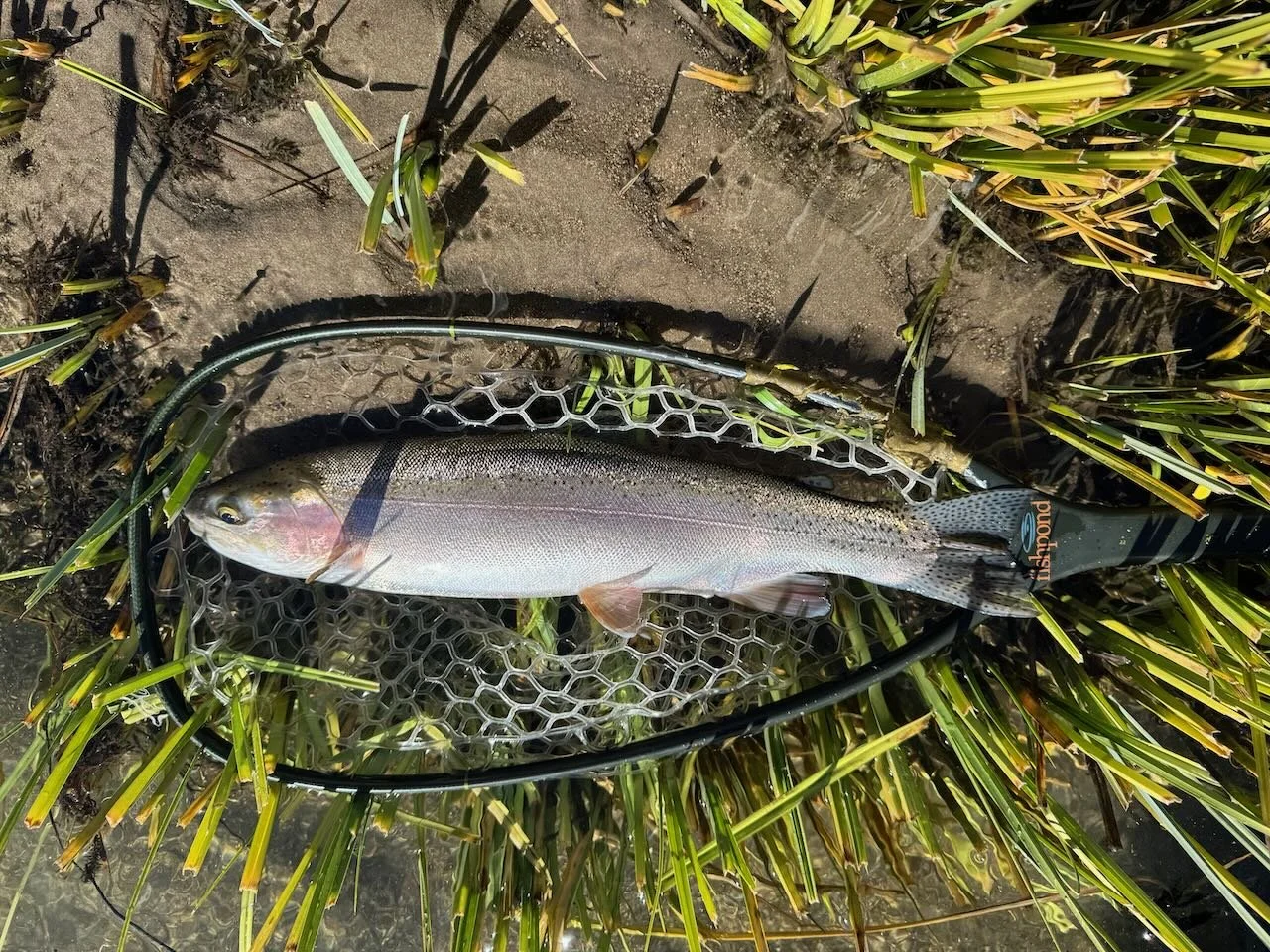
Nymphing with size 12 stoner nymphs are fooling trophy rainbow trout in the upper Owens River like this one laying in the river in the net.

Upper Owens River

Above Benton Crossing Bridge:

Access is limited with the snow on the roads leading out to the upper Owens River. Highly suggest using four wheel drive vehicles to access the upper Owens River. Remember if you get stuck you will need to call Frosty4Wheeler at (760) 625-4537. Trophy rainbows are providing most of the action for fly fishers. Fishing the deep runs, deep pools and cut banks with size 12 green/gold Prince nymphs, size 12 stoner nymphs, size 12 gold ribbed hare’s ears variations, size 14 copper John’s and size 16 hot spot pheasant tail nymphs are fooling the trophy trout that are resting and feeding on their journey up the river. The Owens River below Benton Crossing Bridge is closed.

Hold over rainbow trout are taking size 18 pheasant tail nymphs and size 12 stoner nymphs..

Bishop Creek Canal

Behind Bishop Veterinary Hospital:

Drizzle and rain has slowed down the mid-day hatch of mayflies that have juvenile rainbows and  brown trout coming to the surface. Dry fly fishing should be good over the weekend as the Owens Valley dries out from the week’s storms. On the surface fish with a size 20 Adams parachute, size 20 blue wing olive parachute and a size 16 Adams parachute, as your indicator fly. Nymphing under an indicator or with a Euro nymph rig is producing wild brown trout and stocked rainbow trout. Nymph with size 18 bead head flash back pheasant tail nymphs, size 18 olive quilldigons, size 18 Frenchie’s, size 18 olive quill RS2’s and midges in size 20 in zebra and tiger coloration. Bishop Creek Canal is under winter regulations catch and release with barbless lures and flies through the Friday preceding the last Saturday in April.

Sierra Bright Dot Fly Fishing Report 11-13-2025

Is this the end of Indian summer in the Eastern Sierra as a storm is expected to hit the Eastern Sierra this weekend? This storm is expected to leave snow on the ground above 7,000 feet. The real question, is the weather going to warm up again after the storm? Great weather, good fly fishing and the last full weekend of the regular fishing season saw lots of fly fishers taking advantage of Eastern Sierra fly fishing opportunities last weekend. Some waters were crowded for this time of the year. Spawning fish moving up the tributaries from lakes are offering good fall fly fishing for brook trout and brown trout. Midges, mayflies and caddisflies continue to feed trout on the surface and the substrate. Be aware that Saturday November 15th, 2025 is the last day of the regular fishing season. Winter regulations go into effect on Sunday November 16th, 2025.

 If you want firsthand information on Eastern Sierra fly fishing join locals and visitors every Tuesday at Mahogany Smoked Meats for Tuesday Talks with Fred from 9:00 to 11:00 A.M.

Fall in the Eastern Sierra is the perfect time to be fly fishing especially the upper Owens River looking for trophy trout.

Lower Owens River

Wild Trout Section:

Mayflies are hatching mid-day and the trout are feeding on the nymphs and the adults. There are lots of five to 15 inch wild brown and rainbow trout feeding in the riffles and pools. The words out that the fly fishing on the lower Owens River is good and there are lots of fly fishers taking advantage of the current fly fishing conditions and warm weather on the weekend. Nymphing with size 18 olive quill nymph, size 16 hot spot pheasant tail nymphs, size 18 Frenchies, size 18 olive quilldigon and size 18 bead head flash back pheasant tail nymph are the nymphs that are fooling the trout. On the surface fish with size 18 olive sparkle duns, size 18 Adams parachutes and size 18 blue wing olive parachutes to fool six to 12 inch rainbows and browns. Whether fishing with dries or nymphs an upstream cast with a drag free drift is going to produce more fish.

Fall is the perfect time to enjoy the lower Owens River with warm days and trout feeding on nymphs and dries.

Hot Creek

Interpretive Site:

Snow this weekend could hamper access to the Interpretive Site. Snow and cloudy days make the blue wing olive hatch more intense. Be on the creek by nine with a size 20 olive sparkle dun, size 20 Adams parachute and size 20 blue wing olive parachute on the end of a size 6X tippet attached to nine foot 5X or 6X leader. Caddis hatches are starting to disappear, but size 20 elk hair caddis patterns should be in the fly boxes of fly fishers for those days that the caddis hatch.

Snow is expected to lightly blanket Hot Creek this weekend as a storm moves through the Eastern Sierra.

Hot Creek

Canyon Section:

Snow on the ground, weed beds are breaking up and most fly fishers are off the creek. This is the perfect time to be fly fishing in the canyon. Working nymphs in between the weed beds, in the open riffles and deeper holes is producing wild rainbows and browns to 15 inches. Fish with size 18 olive quilldigons, size 18 bead head flash back pheasant tail nymphs and size 18 tiger and zebra midges. Fishing with dries is the best way to fly fish. When the trout come to the surface to feed on hatching insects it’s time to switch from nymphs to dries. When the blue wing olive mayfly hatch starts fish with size 20 Adams parachutes, size 20 olive sparkle duns and size 20 blue wing olive parachutes. When the hatch is over switch back to nymphs or head off the creek in search of other waters to fly fish. The upper Owens is only 20 minutes away.

Upper Owens River trophy rainbow trout are feeding on size 12 stoner nymphs in the deep holes, deep runs and cutbanks.

Upper Owens River

Above Benton Crossing Bridge:

Below Benton Crossing Bridge the upper Owens River closes to fishing on Saturday November 15th an hour after sunset. Fishing last weekend on the upper Owens River was crowded with fly fishers enjoying great weather, the last weekend of the regular season and fly fishing for trophy trout. Rainbows are providing most of the action for trophy trout. Occasionally a trophy brown trout will take a nymph or streamer. With all the fly fishing pressure successful fly fishers are covering lots of water looking for pods of trophy trout. With the fly fishing pressure the trout are spookier than normal. In these conditions fly fishers who can present nymphs and streamers gently on the water are more likely to catch fish. Size 12 stoner nymphs, size 12 green/gold wire Prince nymphs, size 12 gold ribbed hare’s ear variations, size 14 copper John’s and size 16 hot spot pheasant tail nymphs are fooling the trophy trout and the occasional juvenile trout.

Working this deep hole behind the Bishop Veterinary Hospital is producing juvenile rainbows and brown on the surface with size 20 blue wing olive parachutes middle of the day.

Bishop Creek Canal

Behind Bishop Veterinary Hospital:

Fly fishers looking to catch wild juvenile trout on dry flies should fish the canal from 11:00 A.M. to 2:00 P.M. daily with size 20 Adams parachutes, size 20 blue wing olive parachutes, size 20 Griffith’s gnats and size 20 elk hair caddis. Fishing dries in the faster riffle sections and pools below are where the juvenile trout are feeding on the hatching mayflies, caddis and midges. Nymphing with size 12 stoner nymphs, size 18 olive quilldigons, size 12 green/gold prince nymphs, size 18 midges in tiger and zebra coloration and size 16 hot spot pheasant tail nymphs are producing stocked rainbows from 12 to 16 inches. The stockers are spread throughout the canal. Fishing the sandy areas between the weed beds is where the nymphs are producing the bigger stocked rainbows. Starting on Sunday November 16th, 2025 the canal goes to catch and release fishing with barbless lures and flies.

Sierra Bright Dot Fly Fishing Report 11-06-2025

As fall fades into winter there are a few warm days left to spend on the waters of the Eastern Sierra. Fall colors are in full swing in the Owens Valley. Storms moving through the Eastern Sierra are leaving snow at the tops of the mountains. Winter is right around the corner and soon there will be snow on the ground from 8,000 feet and above. Brown and brook trout are spawning in the streams. Trophy trout can be found in the tributaries to the major Eastern Sierra Lakes. Hatches, nymphs and bait fish are feeding the trout before winter sets in. Midges, mayflies and caddisflies are the insects the trout are feeding on. If you want firsthand information on Eastern Sierra fly fishing join locals and visitors every Tuesday at Mahogany Smoked Meats for Tuesday Talks with Fred from 9:00 to 11:00 A.M.
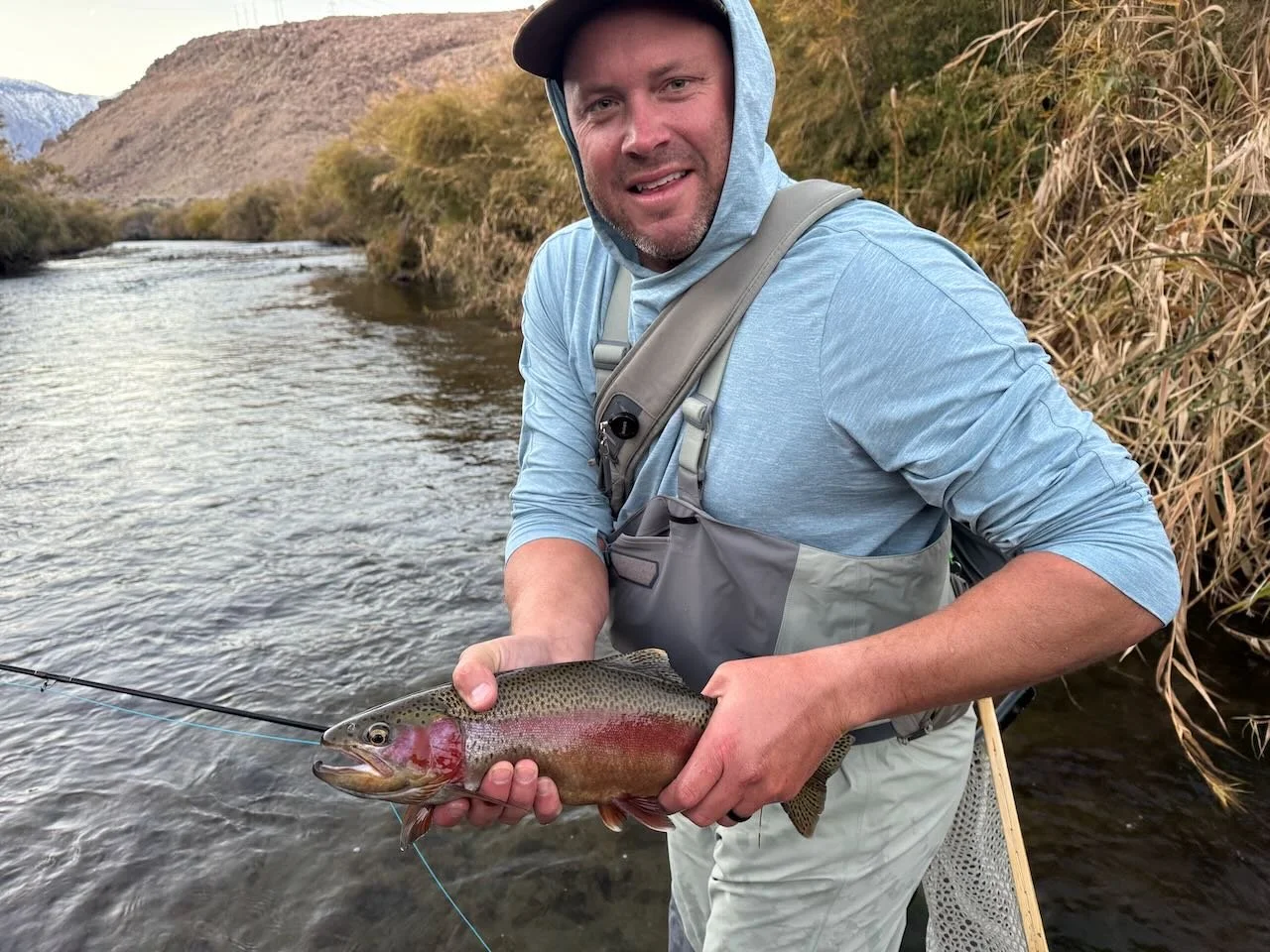
Fall is in full swing in the Owens Valley and trout in Bishop Creek Canal are taking nymphs and dries.

Lower Owens River

Wild Trout Section:

Mid-day hatches of mayflies are bringing a few trout to the surface, but the bulk of the trout are feeding on the emerging mayflies. A size 18 bead head flash back pheasant tail nymph, size 18 olive quilldigon, size 18 Frenchies, size 16 hot spot pheasant tail nymphs and size 18 olive quill nymph are fooling wild rainbow and brown trout from six inches to the occasional 16 incher. For the dry fly fisher fish with size 18 blue wing olive parachutes, size 18 Adams parachutes and size 18 olive sparkle duns. Key to success is to wade in the river fishing up stream thoroughly covering the water from one bank to the other. Where there is a riffle leading into a pool cast your flies a foot or so into the riffle and let the water present the flies to the fish in the pool.

Working nymphs off the riffle into a pool is how the fly fishers imitates the action of the larval insects .

Hot Creek

Interpretive Site:

Blue wing olive mayflies are now the predominate hatch in the Interpretive Site of Hot Creek. Start the morning casting size 20 blue wing olive parachutes, size 20 Adams parachutes and size 20 olive sparkle duns upstream with a drag free drift. Mid-morning switch to a size 20 gray elk hair caddis, size 20 parachute caddis and size 20 X-caddis. Key to success is seeing your flies and getting a drag free drift.

Hot Creek Canyon is easiest fished with a dry fly in and around the narrow lanes in between the weed beds.

Hot Creek

Canyon Section:

As the amount of day light shortens the weed beds in Hot Creek Canyon begin to break up. Fly fishers still have to contend with the narrow lanes between the weed beds and drift their flies in those narrow lanes. Nymphing is tough with all the weeds in the creek. Look for spots without weeds, next to the banks and the deep holes. For nymphs fish with size 18 tiger and zebra midges, size 18 bead head flash back pheasant tail nymphs and size 18 olive quilldigons. Dry flies drift over the weed beds better than the nymphs. Fish with size 20 blue wing olive parachutes, size 20 Adams parachutes and size 20 olive sparkle duns. For those anglers that can’t see the tiny size 20 dry flies fish with a dry and dry rig. I like to use a size 16 Adams parachute as my indicator fly.

Rusty Echeverria used a small white streamer to fool this upper Owens River rainbow.

Upper Owens River

Above Benton Crossing Bridge:

Fly fishers nymphing and stripping streamers continue to find trophy brown and rainbow trout willing to take their flies. The fish are spread out from Crowley Lake to Arcularius Ranch. The key to success is covering lots of water looking for pods of trophy trout in the deep holes, deep runs and cut banks. Fish nymphs under an indicator or with a Euro rig. Nymph with size 12 stoner nymphs, size 12 green/gold wire Prince nymphs, size 12 gold ribbed hare’s ear variations, size 14 copper John’s and size 16 hot spot pheasant tail nymphs. Cast streamers downstream and stirp them up stream. Work them at different levels in the water column and strip them in with different types of retrieves. Streamer with matukas, wooly buggers, slumpbusters, balanced leeches and marabou muddlers in sizes 6 and 10.

Hatchery rainbow trout put up a good fight on the Tenkara rod rigged with a two fly nymph rig on Bishop Creek Canal.

Bishop Creek Canal

Behind Bishop Veterinary Hospital:

This is the perfect time of year to be fishing on Bishop Creek Canal as the trees are in prime fall colors and the trout are feeding on nymphs and adults. Nymphing with size 12 stoner nymphs, size 18 olive quilldigons, size 12 green/gold wire Prince nymphs, size 18 midges in tiger and zebra coloration and size 16 hot spot pheasant tail nymphs are producing stocked rainbows and wild brown trout. The afternoon mayfly hatch is bringing only a few fish to the surface.

Sierra Bright Dot Fly Fishing Report 10-30-2025

Perfect fall weather will be welcoming fly fishers to the Eastern Sierra over the next week or so. Warm days, no wind, rising fish and trophy trout make it a perfect time to come fly fish the Eastern Sierra. It will not be long before upper elevation waters will be covered with snow. So now is the time to fly fish high country lakes and streams for spawning brown and brook trout. Trophy trout are migrating out of the lakes into the streams to spawn. Hatches of mayflies, midges and caddisflies are feeding trout on the substrate and on the surface.

Fall in the Eastern Sierra is the time to be looking for trophy trout like this rainbow trout from the upper Owens River.

East Walker River:

Flows are back up to 60 CFS which is low, but fishable. Season ends in two weeks on November 15th.

Fly fishers have two weeks to explore the fly fishing opportunities of the East Walker River before it closes on November 15, 2025.

Lower Owens River

Wild Trout Section:

Fly fishers looking for a quantity fishery will find the lower Owens River will produce good numbers of wild brown and rainbow trout nymphing. Wading upstream and casting to the riffles so your nymphs drop into the holes is where you will find the trout taking your nymphs. The key to success is having the right amount of weight in the flies or on the tippet so the flies are slowly flowing over the substrate where the trout are feeding on nymphs. For an indicator rig use a size one split shot 12 to 18 inches above the fly and the indicator six feet above the fly. Indicators go 1.5 to 2 times the average depth of water above the fly. For nymphs fish with size 18 olive quilldigons, size 18 bead head flash back pheasant tail nymphs, size 18 SOS nymphs and size 18 midges in tiger and zebra coloration. A size 20 blue wing olive parachute, size 20 Adams parachute and size 20 sparkle dun will produce a few trout on the surface mid-day.

New fly fisher Luca Burns with a nice lower Owens River rainbow that took a size 18 bead head flash back pheasant tail nymph under an indicator.

Hot Creek

Interpretive Site:

The Interpretive Site is the place to fly fish with dry flies in the morning. Look for the trico hatch in the morning followed by a blue wing olive hatch and a caddis hatch. Start the morning with a size 22 trico female parachute. Then switch to a size 20 blue wing olive parachute. Finish the morning session with a size 20 gray elk hair caddis. Fish the dry flies on a nine foot 5X leader and three feet of 6X tippet. When the hatch is over it’s time to find a new water to fly fish like head over to the upper Owens River.

Hot Creek Canyon is offering nymphing and dry fly fishing opportunities in the mornings.

Hot Creek

Canyon Section:

The weed beds are slowly starting to break up. Before and after the hatch try nymphing in the lanes between the weed beds and in the holes. Use size 18 olive quilldigons, size 18 bead head flash back pheasant tail nymphs, size 18 olive quill RS2 and size 18 tiger and zebra midges to fool the wild rainbows and brown trout feeding on the substrate. In the morning there are hatches of mayflies and caddis. Fish with size 20 blue wing olive parachutes, size 20 gray elk hair caddis and size 22 female trico parachutes on the surface to fool the trout taking dries.

A rare photo of Fred Rowe catching trophy rainbow trout on the upper Owens River. Photo by Brian Chastain

 Upper Owens River

Above Benton Crossing Bridge:

This is the time of year when trophy brown and rainbow trout from Crowley Lake migrate up the Owens River. The fish are in the river and taking nymphs and streamers. Nymph with size 12 stoner nymphs, size 12 green/gold Prince nymphs, size 12 gold ribbed hare’s ear variations, size 14 copper John’s and size 16 hot spot pheasant tail nymphs in the deep holes, deep runs and cut banks. For streamers use size 6 or 10 matukas, wooly buggers, slumpbusters and marabou muddlers stripped upstream in the deep holes, deep runs and cut banks where the trophy trout are resting and feeding. When streamer fishing fish downstream and strip upstream and cover lots of water looking for those few trout wanting to feed on your streamer. There is a morning mayfly hatch and mid-day caddis hatch that resident six to 12 inch trout are feeding on. In the morning fish with size 20 trico female parachutes, size 20 Adams Parachutes, size 20 blue wing olive parachutes and size 20 blue wing olive sparkle duns. Mid-day fish with size 18 or 20 elk hair caddis. There is very little water left from the storm two weeks ago on the dirt roads.

Figuring out what the trout were feeding on and putting on a size 20 blue wing olive parachute produced several juvenile rainbows and browns on Bishop Creek Canal.

Bishop Creek Canal

Behind Bishop Veterinary Hospital:

This time of the year is perfect to be on the waters of the Owens Valley. Bishop Creek Canal is a perfect water to fish mid-day during the fall. Mornings fish with nymphs like size 18 olive quilldigons, size 18 bead head flash back pheasant tail nymphs, size 16 hot spot pheasant tail nymphs, size 18 Frenchies, size 18 green/gold brassies and size 16 midges in tiger and zebra coloration. Mid-day there is a midge and mayfly hatch bringing juvenile rainbows and brown trout to the surface. Fish with size 18 blue wing olive parachutes, size 18 Adams parachutes, size 20 Griffith’s gnat and size 20 olive midge adults.