
Fall is quickly looking like winter. Amazing how the trees leaves turned bright yellows and reds and how quickly the leaves are gone. Time to pick up all the leaves around the yard. It’s quickly looking like winter in the Eastern Sierra. Best fly fishing is in the middle of the day when insects are most active and trout are feeding on mayflies and midges. Brown trout spawning is coming to an end. Rainbows and browns are feeding on nymphs and dries and providing action for those taking the time to fly fish in the Eastern Sierra in December.
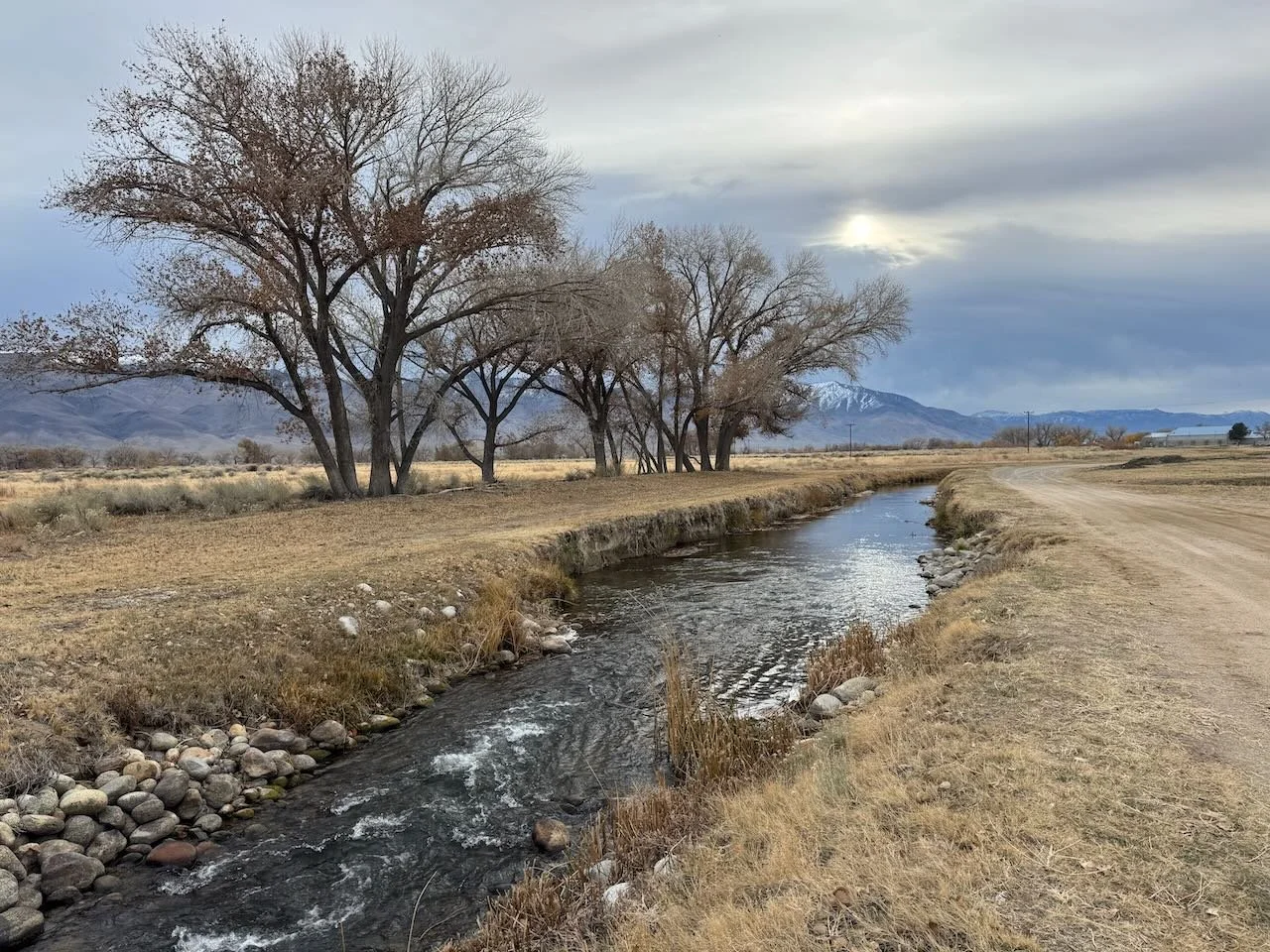
The trees have lost their leaves, winter is knocking on the door and the trout continue to feed on midges and mayflies on the substrate and on the surface.
Lower Owens River
Wild Trout Section:
Suns out, but day time temperatures are not going much over 60 degrees. It’s time to wear a sweat shirt or jacket when fly fishing on the river. With the low flows fly fishers can access all the waters that are not fishable from the banks by getting in the river and wading upstream presenting dries and nymphs. Fishing nymphs with a Euro rig or under an indicator is producing five inch to 16 inch rainbows and browns with size 18 bead head flash back pheasant tail nymphs, size 18 olive quilldigons, size 18 Frenchies, size 18 green/gold brassies and zebra and tiger midges in size 18. If there are enough fish feeding on the surface switch to a size 18 blue wing olive parachute, size 18 Adams parachute and size 18 olive sparkle duns.
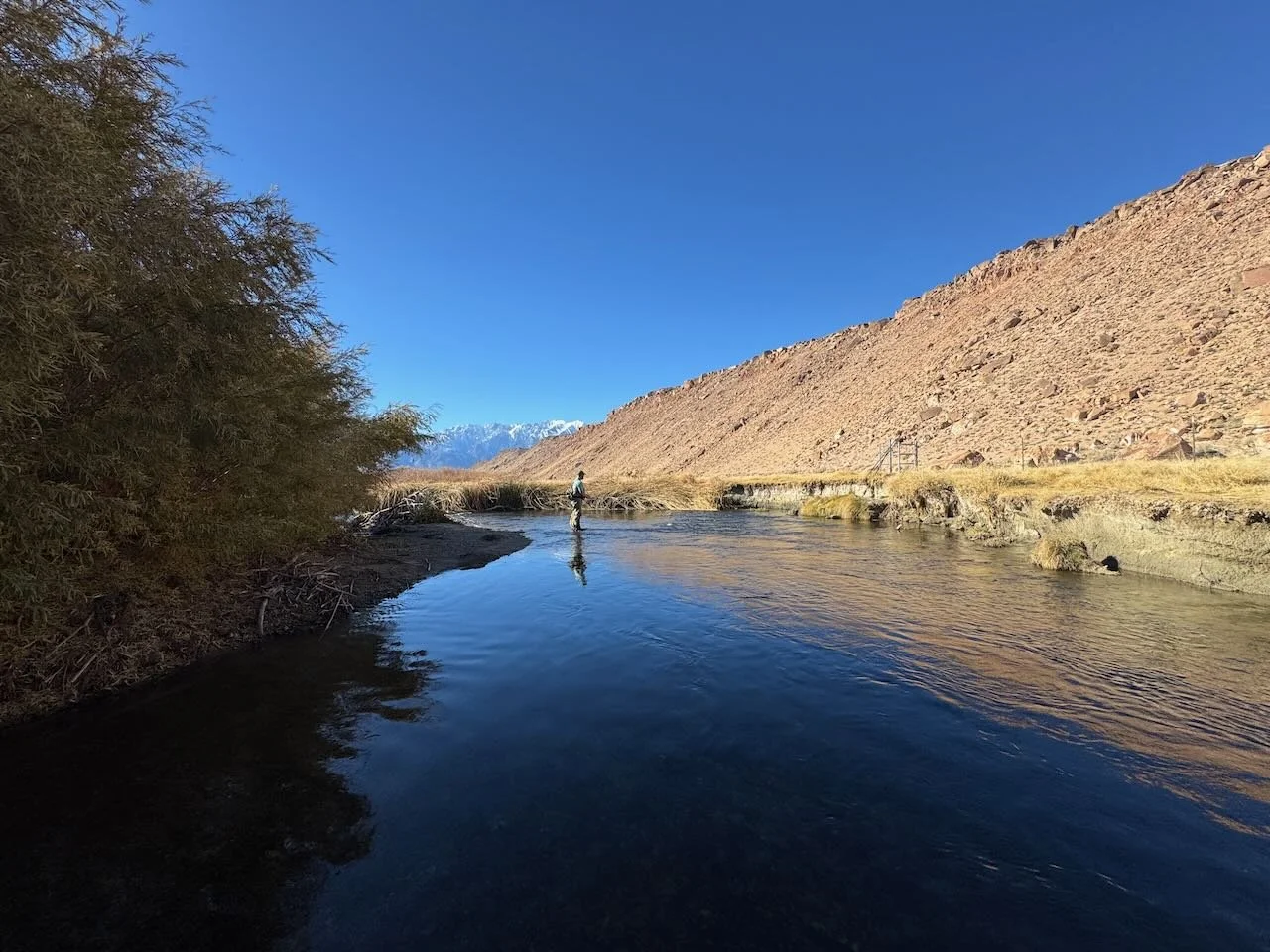
Middle of the day is the perfect time to nymph the lower Owens River with baetis nymph patterns.
Hot Creek
Interpretive Site:
Mid-day mayfly and midge hatches have the Interpretive Site trout feeding on the surface. A will placed dry fly that gets a drag free drift will fool the selectively feeding trout. Fish with size 20 Adams parachutes, size 20 blue wing olive parachutes, size 20 olive sparkle duns, size 20 Griffiths gnats, size 20 Adams midges and size 20 CDC midges. Nymphing with size 18 bead head flash back pheasant tail nymphs, size 18 olive quilldigons, size 18 Frenchie’s, size 18 green/gold brassies, size 18 brassies, size 18 tiger and zebra midges, size 18 pheasant tail paranymphs, size 18 olive quill RS2 and size 16 Duracell will produce trout feeding on the substrate on nymphs and in the water column for emergers.
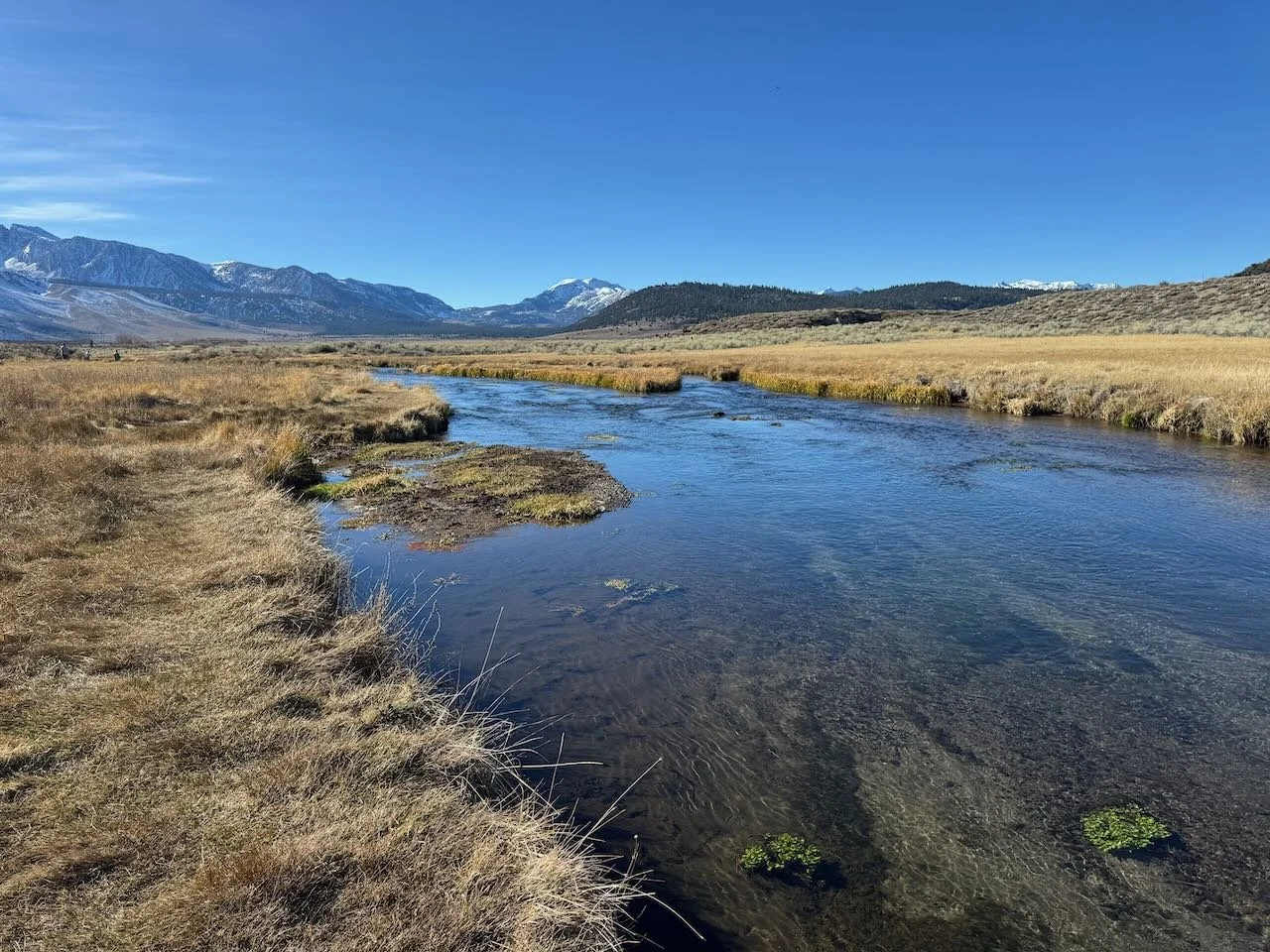
The deep holes and riffles in the Interpretive site is where you will find the trout feeding on blue wing olive mayflies and midge mid-day.
Hot Creek
Canyon Section:
Weed beds and low water flows makes nymphing in the Canyon Section of Hot Creek tough. The trout are there if you can get your flies to the trout. Working the deeper holes and riffles are easier with nymphs than the weed beds. Fish with size 18 olive quilldigons, size 18 bead head flash back pheasant tail nymphs, size 18 Frenchies, size 18 green/gold brassies, size 18 brassies, size 18 tiger and zebra midges, size 18 pheasant tail paranymphs, size 18 olive quill RS2 and size 16 Duracell will fool the trout feeding on emergers and nymphs. Dry flies are easier to fish in and around the weed beds with minimal snagging of the weeds. Fish with size 20 Adams parachutes, size 20 blue wing olive parachutes, size 20 olive sparkle duns, size 20 Griffiths gnats, size 20 Adams midges and size 20 CDC midge.
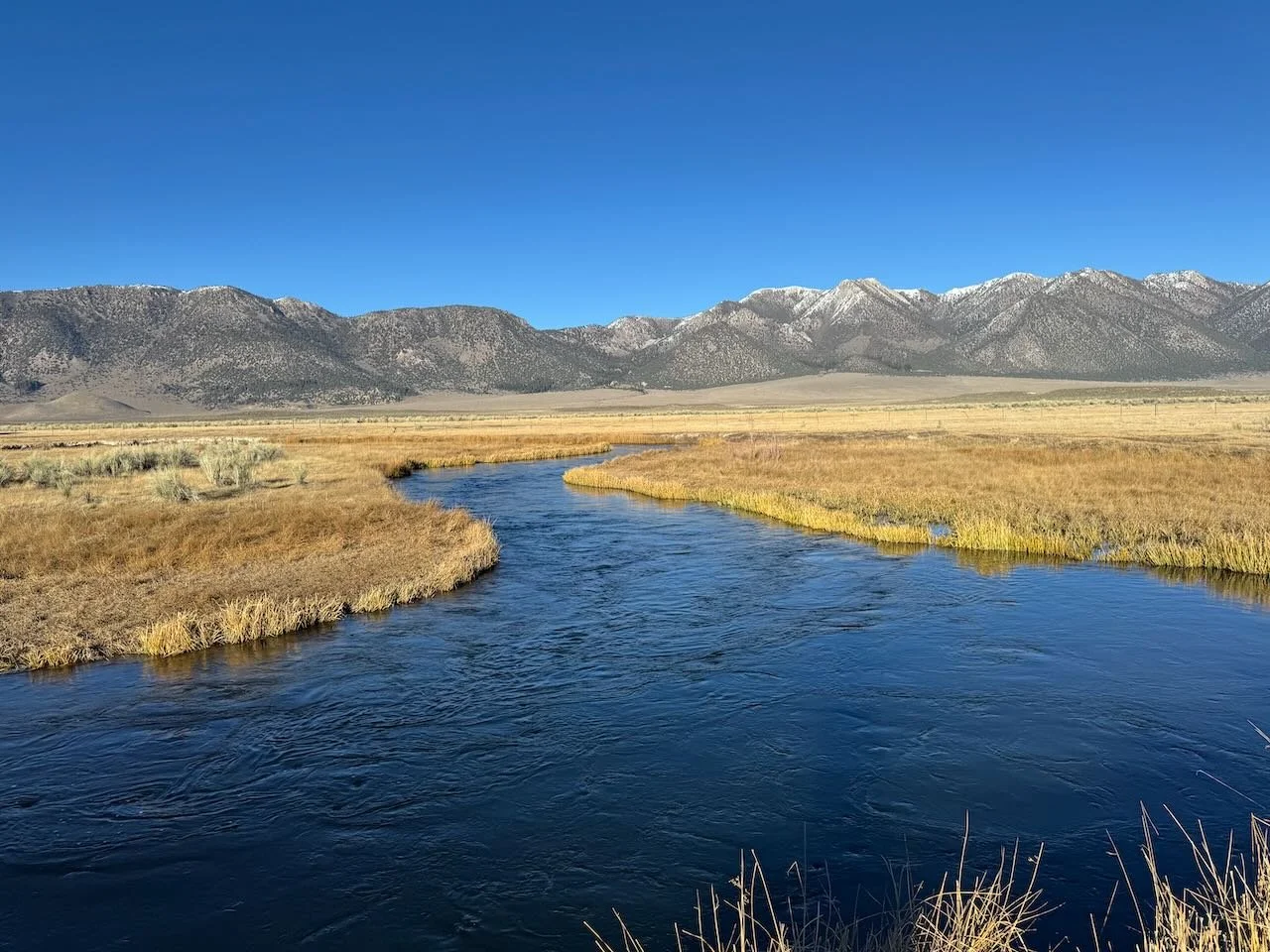
The dirt roads to access the upper Owens River are drivable and the trophy trout are in the deep holes, deep runs and cut banks resting and feeding.
Upper Owens River
Above Benton Crossing Bridge:
The main dirt road above Benton Crossing Bridge is in fine shape. The spur roads off the main road leading out to the river have lots of mud and the occasional pool of water. It’s slippery driving and if you’re not careful it’s easy to mess up and get stuck in the mud. Trophy rainbows and the occasional brown trout continue to be the trout sought after by fly fishers. Nymphing up stream of Benton Crossing Bridge is good particularly the farther upstream you go. Fish with size 12 stone nymphs, size 12 green/gold wire prince nymphs, size 12 gold ribbed hare’s ears variations and size 14 copper John’s for the trophy trout. Fishing with eggs, San Juan worms and mop flies are producing trophy trout for some anglers. Fishing for the resident trout use size 18 olive quilldigons, size 18 bead head flash back pheasant tail nymphs and size 16 bead head flash back gold ribbed hare’s ears. For anglers moving down stream fishing with streamers cover lots of water to offer your streamer to those trophy fish wanting a bigger meal. Fish with size 6 or 10 slumpbusters, wooly buggers, matukas and balanced leeches.
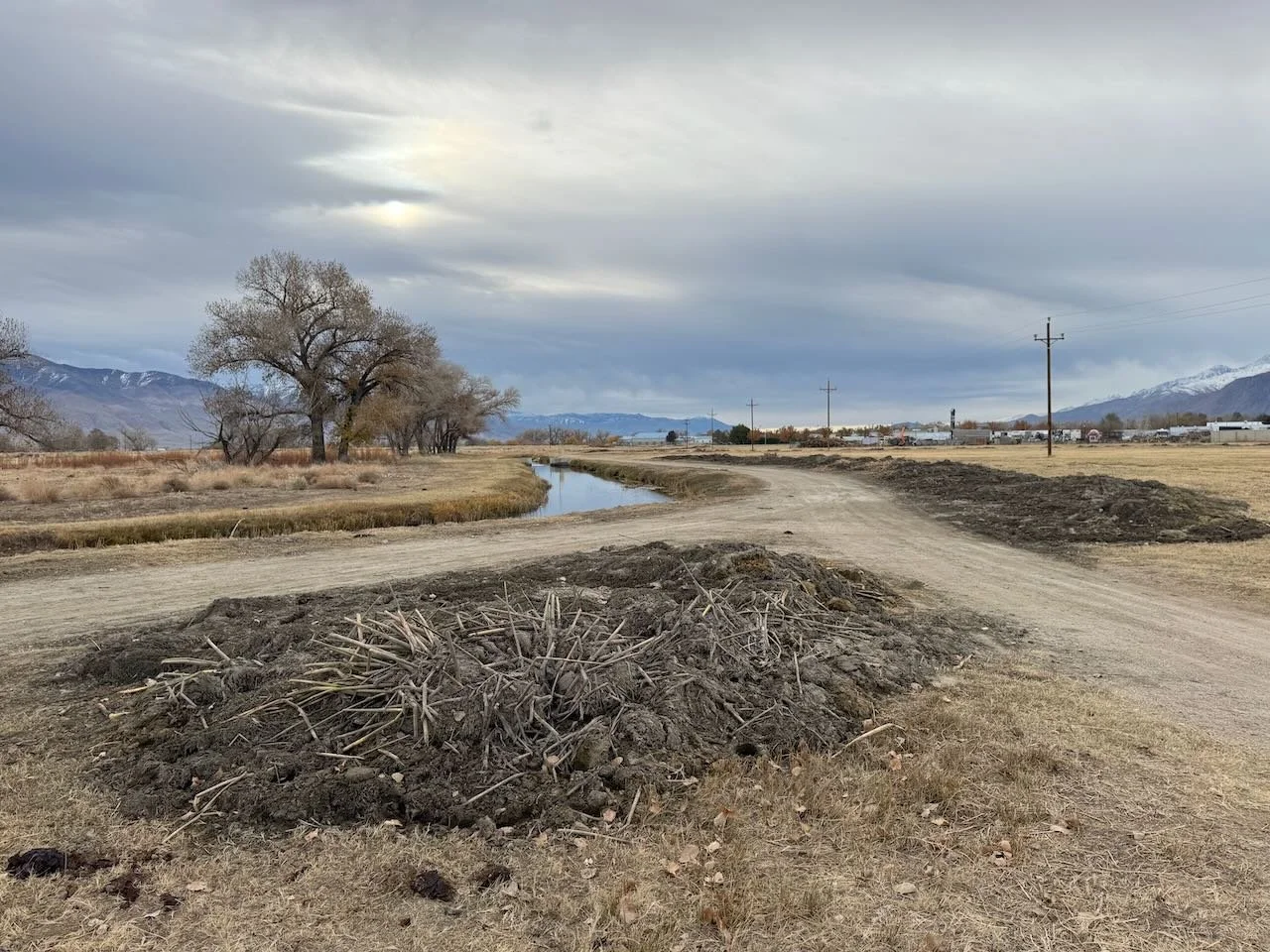
Bishop Creek Canal got dredged last week, but trout this week are taking nymphs like an olive quilldigon and stoner nymph.
Bishop Creek Canal
Behind Bishop Veterinary Hospital:
Bishop Creek Canal was dredged last week by the Department of Water and Power. This has opened up the canal making it easier to nymph now that the weeds and tulles have been removed. Nymphing on a Tenkara rod, Euro nymphing and indicator nymphing with size 12 stoner nymphs, size 16 Frenchie’s, size 18 olive quilldigons, size 18 bead head flash back pheasant tail nymphs, size 16 Duracell nymphs, size 18 green/gold brassies and size 18 midges in zebra and tiger coloration are the nymphs that are producing trout. Best fishing has been mid-day from 10:00 to 2:00. Nymphing is producing wild and stocked brown and rainbow trout from seven to 12 inches.