
It’s officially fall. Leaves are starting to change to tones of yellow and gold. Soon I will be raking up leaves instead of mowing the lawn. Mornings are cold enough to turn the heater on. Afternoons still require the air conditioner. It’s the start of spawning season for the brook and brown trout. Hatches of mayflies, midges and caddisflies are bringing trout to the surface. Nymphing and pulling streamers are producing trophy trout in the rivers above lakes and reservoirs. Brook trout in spawning colors is the prettiest part of fall.
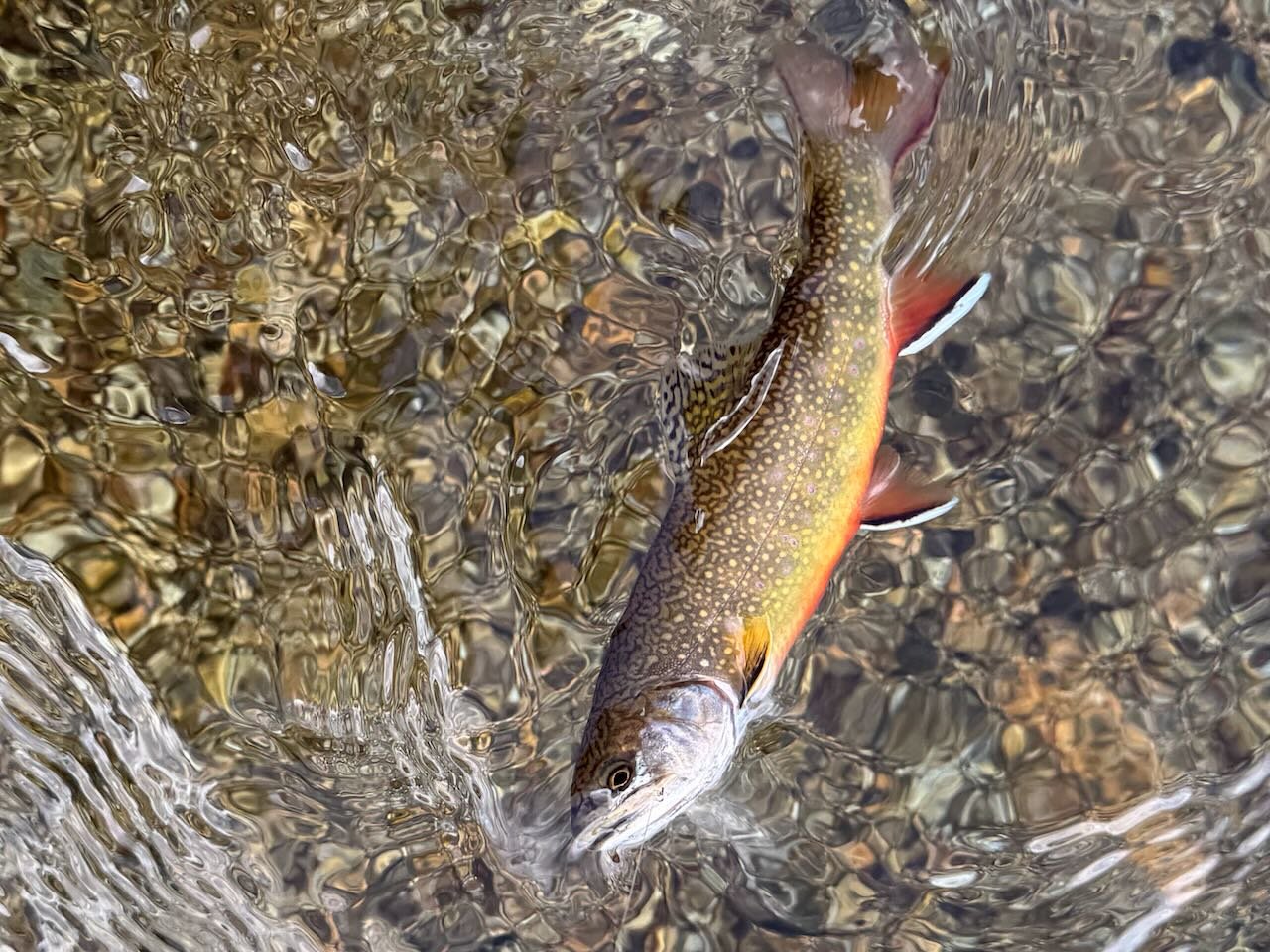
Brook trout in full spawning colors means the start of fall and winter is right around the corner.
Upper Owens River
Above Benton Crossing Bridge:
Fall is the time of the year to be on the upper Owens River. Trophy rainbow and brown trout are moving up the river from Crowley Lake. The crowds of summer are gone. The migrating trout are resting and feeding in the deep holes, deep runs and cut banks. This is where fly fishers want to present their nymphs and streamers to the feeding trophy trout. For nymphs fish them under an indicator or with a Euro rig. Use size 12 stoner nymphs, size 12 green/gold wire Prince nymphs, size 12 Richard’s variation of a gold ribbed hare’s ear, size 14 copper John’s and size 14 Duracell nymphs. Fish streamers by casting them down stream and pulling them up stream imitating the way trout and bait fish behave in the stream. Fish with size 6 sclupzilla, size 6 and 10 slumpbusters, matukas and wooly buggers. There is a morning hatch of blue wing olive mayflies and trico mayflies that the juvenile trout are feeding on, on the surface of the stream. Fish a size 16 Adams parachute, a size 18 blue wing olive parachute, size 20 female trico parachute, size 20 trico spinner to catch the trout feeding on the surface.
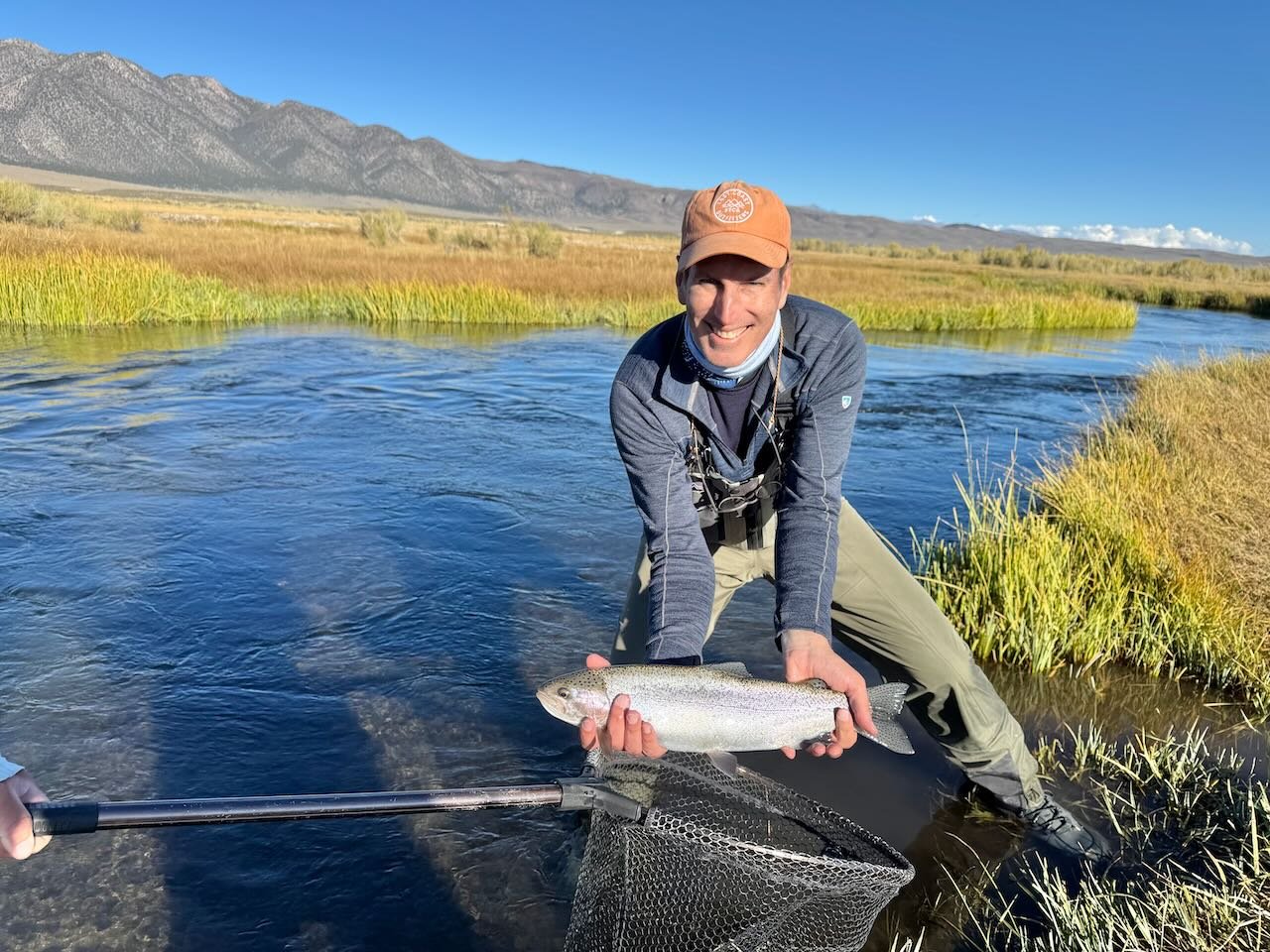
Trophy rainbows and brown trout are taking nymphs and streamers fished in the deep holes, deep runs and cut banks on the upper Owens River.
Hot Creek
Interpretive Site:
Morning mayfly hatches of blue wing olive and trico mayflies are bringing the trout to the surface to feed on the hatching duns. Start the morning off with fishing a size 22 female trico parachute. As the hatch goes on the trout will switch from feeding on the trico duns to feeding on the spinners that fall dead on the water and offer an easy meal for the trout. For the trico spinner fall fish with a size 22 trico spinner pattern. As the trico hatch ends for the morning look for bigger mayflies on the water and switch to a size 20 blue wing olive parachute, size 20 olive sparkle dun and size 20 Adams parachutes. There are still a few grass hoppers around and fishing a size 12 tan parachute hopper, size 12 tan stimulator and a size 12 tan Chernobyl ant will produce a few afternoon trout.
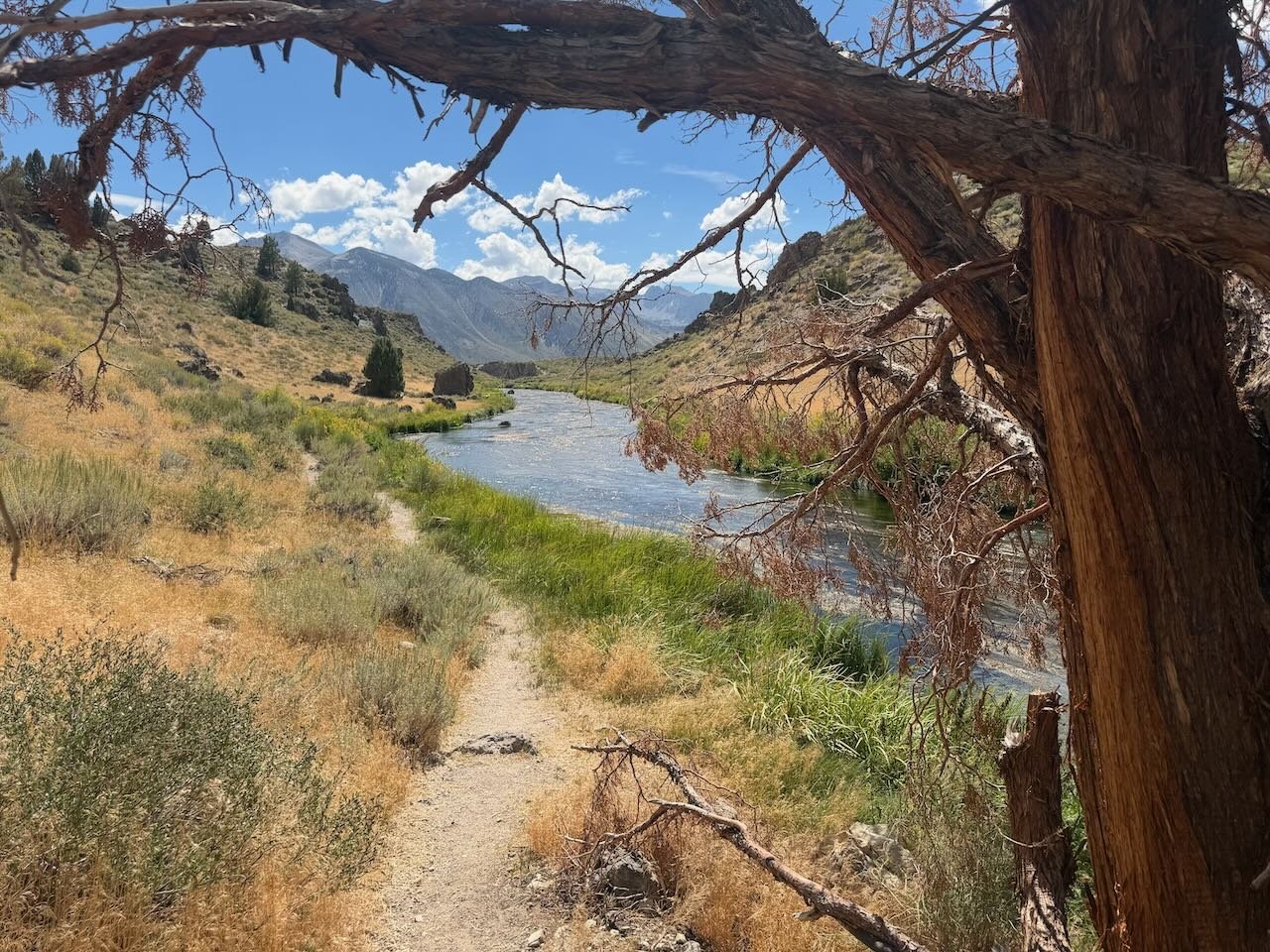
Fly fishing the upper section of Hot Creek Canyon requires accurate casts and a drag free drift to fool the finicky trout.
Hot Creek
Canyon Section:
Weed beds in the canyon section continue to be at full growth and making it hard for fly fishers to get a drag free drift with their dry flies. It will be about a month before enough of the weeds have died of and fly fishers can fish nymphs. For now start off the morning fishing with a size 22 trico female dun parachute. At the peak of the hatch switch to a size 22 trico spinner. As the trico mayfly hatch subsides switch to a size 20 blue wing olive parachute, size 20 Adams parachute and size 20 olive sparkle dun. Afternoon winds are a good time to throw a size 12 tan parachute hopper, size 12 tan Chernobyl ant and size 12 tan stimulator.
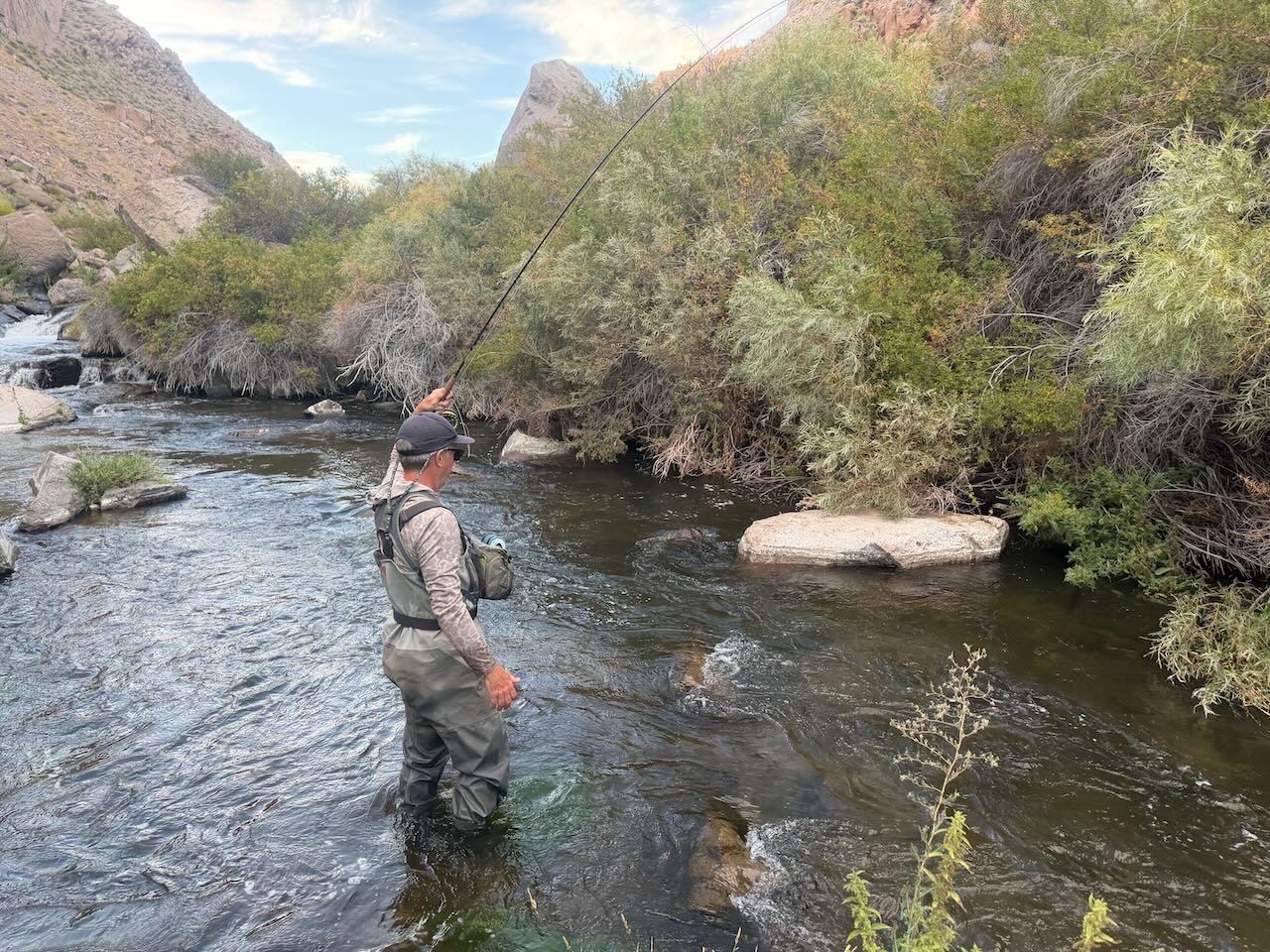
Owens River Gorge will reopen to access on Friday September 25th and will offer good dry and dropper fly fishing for eight to 12 inch wild brown trout.
Owens River Gorge:
Fall is the perfect time to head back into the Owens River Gorge after the summer’s heat. Explore the river from upper Gorge Power Plant to Control Power Plant. It requires a hike into the gorge. The rewards are wild brown trout from eight to 12 inches with the opportunity for the rare 18 incher. This is dry and dropper fly fishing at it’s best. The banks are overgrown with stinging nettles and rose bushes. There are two ways to fish this section of the Owens River. Wearing waders and wading upstream allows the fly fisher to avoid most of the stream side vegetation. The other method of fishing the gorge is to use the openings in the vegetation to fish from the bank. Once you cover one hole move back to the trail or road to find a new hole to present your flies to. Fish with size 14 stimulators, size 16 Adams parachutes, size 16 elk hair caddis and size 14 Royal Wulff’s for the dry fly. For the nymph in the dry and dropper rig use size 16 bead head flash back gold ribbed hare’s ear, size 18 bead head flash back pheasant tail nymphs, size 16 green/gold brassies, size 16 tiger midges and size 16 zebra midges. Expect the trout to take both your dry fly and your nymph.
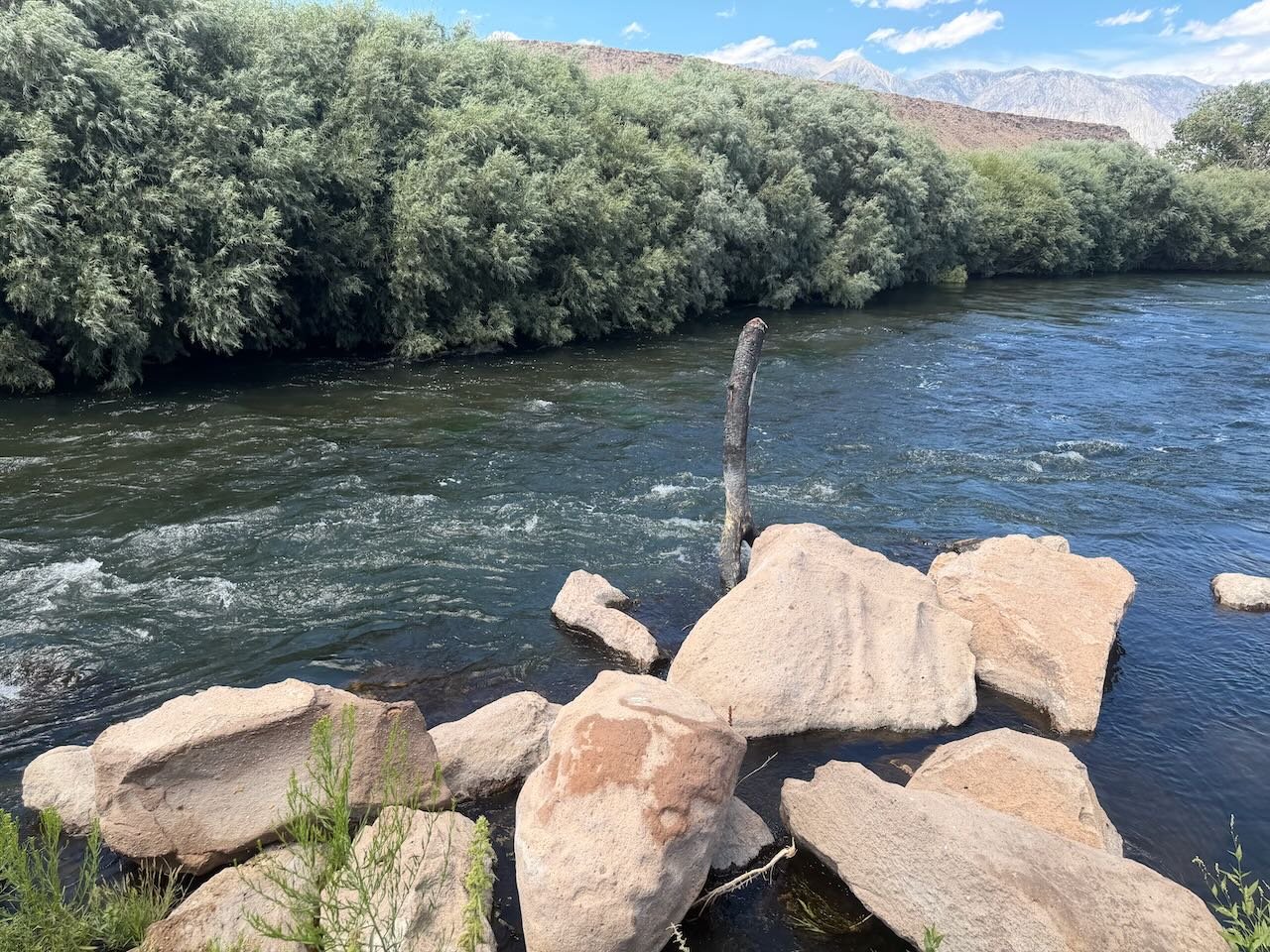
Sometimes It’s the rock rip rap protecting the rivers bank from erosion that allows the fly fisher a spot to fish from the bank.
Lower Owens River
Wild Trout Section:
Flows continue to run too high to safely wade the river and fly fishers are stuck finding a spot to fly fish the river from the bank. A good portion of the wild trout section of the lower Owens River is inundated with willows and tulles making it impossible to fly fish from the bank. With lots of willow sticks to snag your nymphs on the bottom I prefer to fly fish with streamers and dry flies at high flows. An hour before sunrise and an hour after sunset is the perfect time to be casting muddler minnows, slumpbusters, matukas and wooly buggers in size 6 and 10 downstream and strip them upstream against the current imitating the natural behavior of fish in moving water. For dry flies fish with size 18 caddis, size 18 Adams parachutes and size 18 blue wing olive parachutes. River is tough to fly fishing right now.
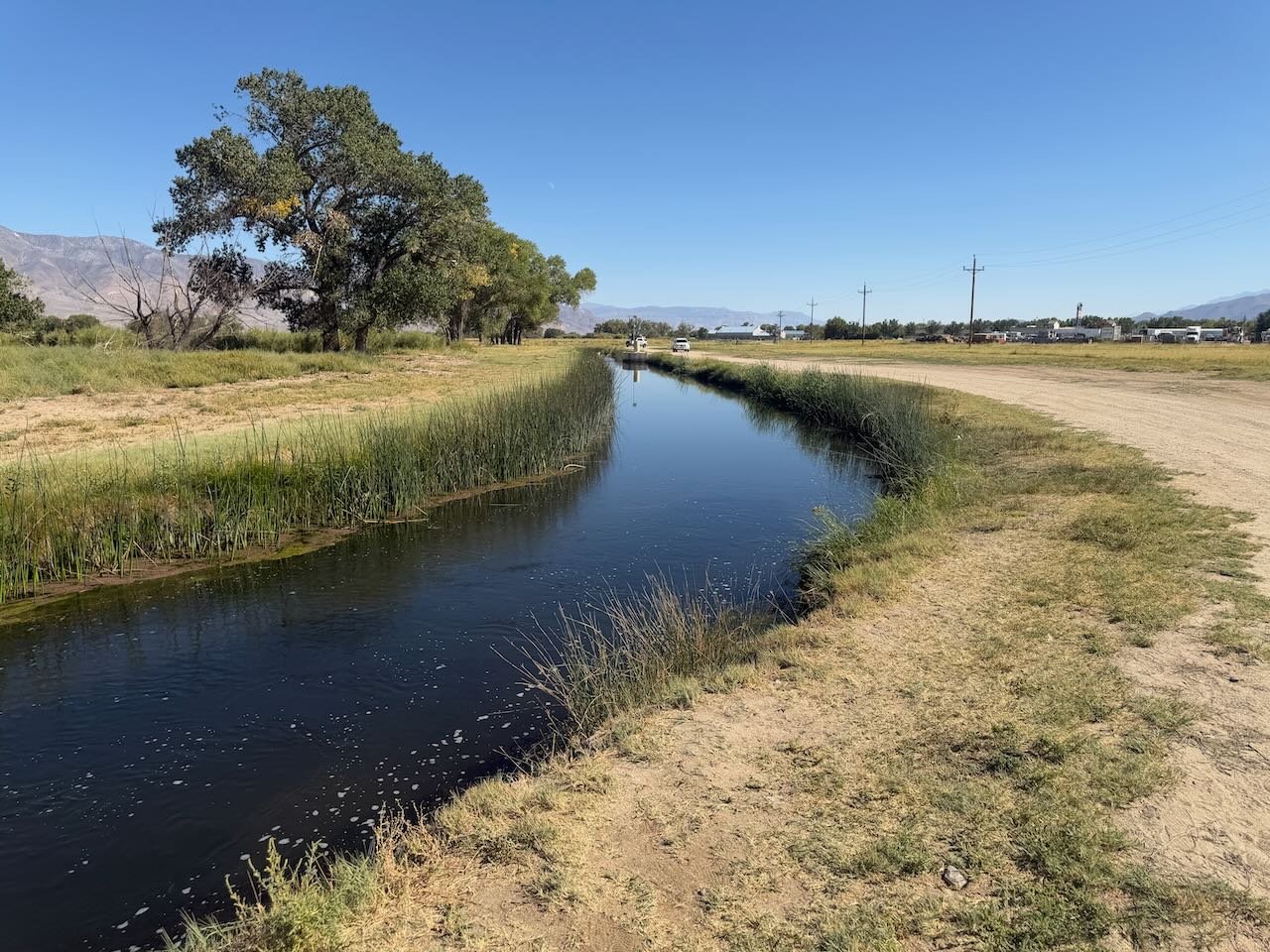
Early mornings look for trout rising to the surface feeding on the hatching trico female duns and trico spinners.
Bishop Creek Canal
Behind Bishop Veterinary Hospital:
Carry a thermometer and check afternoon water temperature looking to stop catch and release fly fishing when the water temperature breaks the 70 degree mark. In the mornings from 8:00 to 9:30 A.M. there is a trico hatch bringing wild brown trout to the surface feeding on the trico duns and trico spinners. Use a size 20 female trico dun parachute and switch to a size 20 trico spinner pattern when the trout are still rising, but refusing your parachute pattern. Fish in the afternoon winds with a size 12 tan parachute hopper, size 12 tan Chernobyl ant and size 12 tan stimulator.
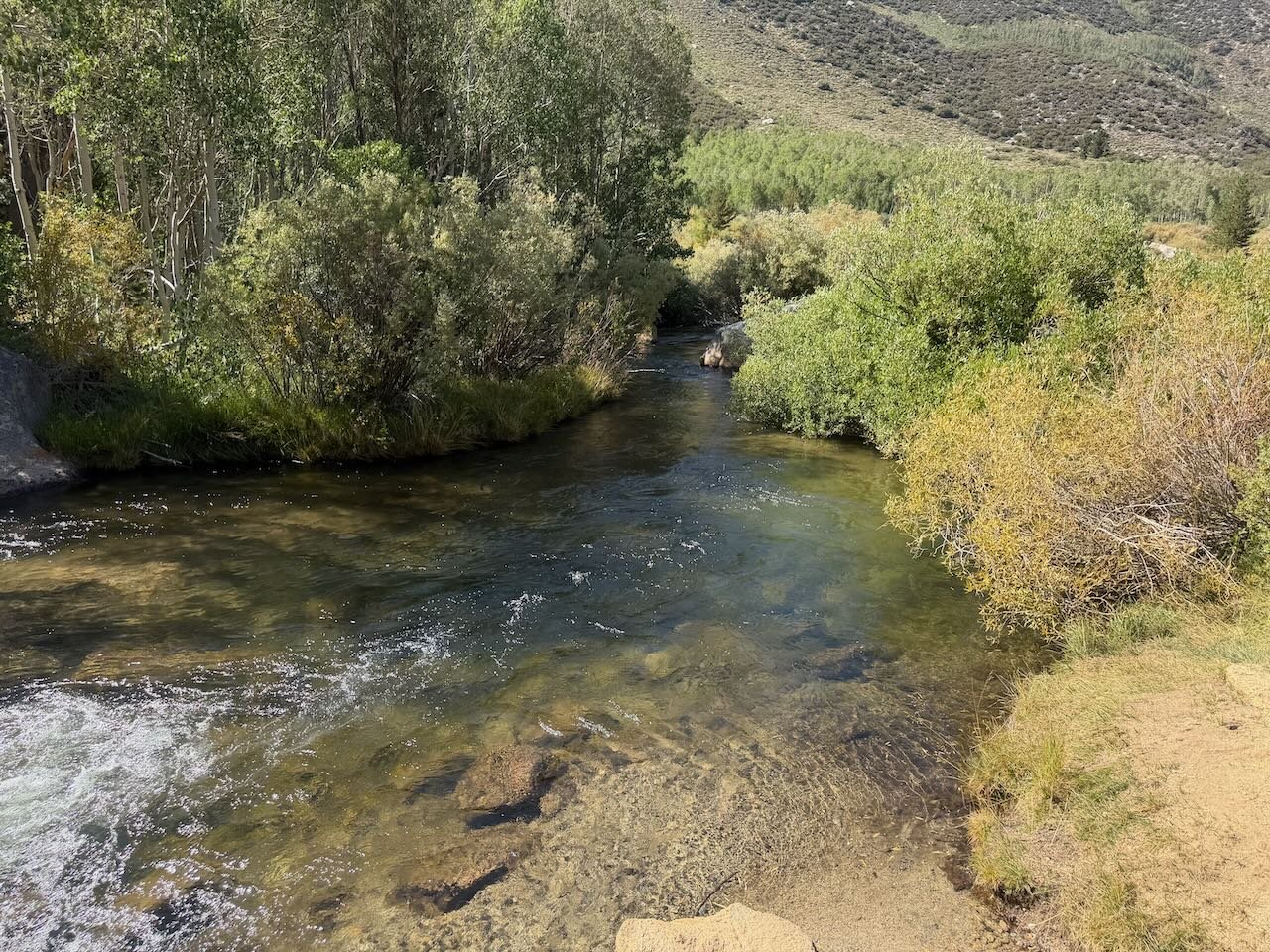
Bishop Creek is bush whacking looking for the pools and pockets where the trout are staying out of the current feeding on whatever insects drift by.
Bishop Creek Canyon
South Fork:
Fall colors are about to peak at the upper end of Bishop Creek Canyon around the areas of South Lake and North Lake. This is prime time fly fishing for spawning brook trout. These fish will take dry flies and nymphs. Work up the creek looking for pools and pockets where the trout are feeding. Use size 14 stimulators, size 16 elk hair caddis and size 16 Adams parachutes for the dry fly. For nymphs use size 16 bead head flash back gold ribbed hare’s ears, size 16 Prince nymphs, size 18 bead head flash back pheasant tail nymphs, size 16 green/gold brassies, size 16 zebra midges and size 16 tiger midges.