
This yeas Labor Day Weekend looks to be cooling off with a chance of rain. We need the water and it has been a hot summer. Look for water temperatures to drop to acceptable levels and the removal of the voluntary Hoot Owl regulations as we head into Fall. Hoppers are active throughout Eastern Sierra waters in the afternoons. The well-known Eastern Sierra fly fishing spots will be crowded this week end. Do some exploring and find some out of the way spots with fewer fly fishers. Mayflies, caddisflies, grass hoppers and midges are feeding the trout in lakes and streams of the Eastern Sierra
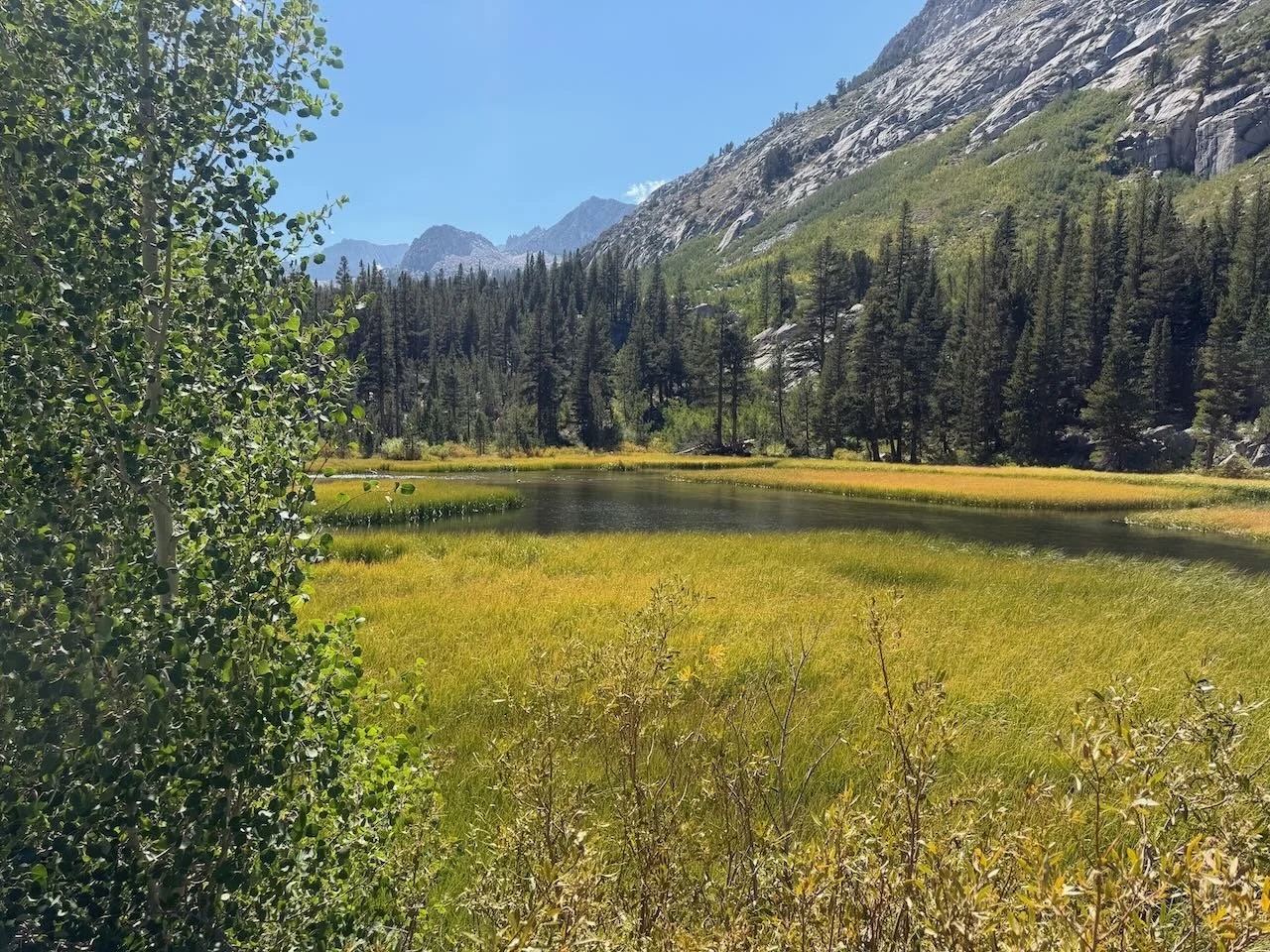
Fall is quickly coming to Eastern Sierra high country waters like Weir Pond on the south fork of Bishop Creek.
San Joaquin River
At Reds Meadows:
This is the third year that the road into the San Joaquin River is being worked on. Due to the ongoing road construction access to the river is restricted to Thursday through Sunday. This is classic freestone fly fishing for rainbows, browns, brook and golden trout with dry flies or a dry and dropper rig. This is quantity fly fishing not quality. Expect 10 to 30 fish days for fish from six to 10 inches. Waders keep fly fishers warm, but if you wet wade you will need to get out of the water to warm up. For dry flies use size 14 Royal Wulff’s, size 14 Adams parachutes, size 14 elk hair caddis and size 14 stimulators. For nymphs use size 16 bead head flash back gold ribbed hare’s ears, size 14 Prince nymphs, size 16 stoner nymphs, size 18 bead head flash back pheasant tail nymphs and size 16 midges in zebra or tiger coloration.
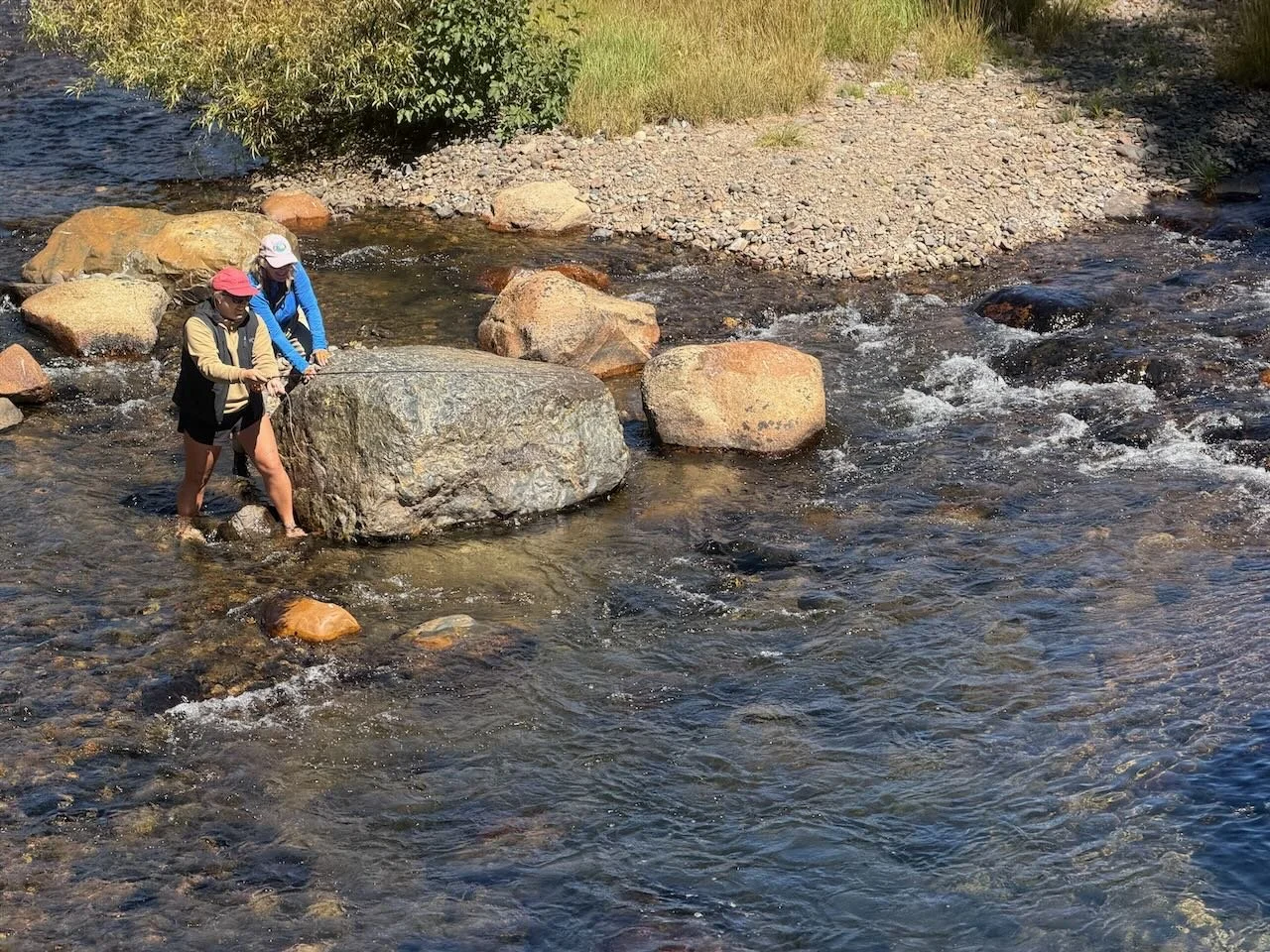
Mammoth and Bishop Chamber of Commerce marketing girls enjoying a little fly fishing time on the San Joaquin River at Devils Post Pile.
Upper Owens River
Above Benton Crossing Bridge:
With cooling temperatures fly fishers should be able to fish the river all day. Carry your thermometer and take water temperatures in the afternoons to make sure the water temp are not approaching the 70 degree mark or higher. Mornings have been good with nymphs and dries. For nymphs use size 18 olive quilldigons, size 18 bead head flash back pheasant tail nymphs, size 16 bead head flash back gold ribbed hare’s ears, size 14 Duracell nymphs and size 18 midges in zebra and tiger coloration. For dry flies use size 20 trico female dun parachutes, size 20 trico spinners, size 18 Adams parachutes, size 18 blue wing olive parachutes, size 16 elk hair caddis, size 16 E/C caddis, size 12 parachute caddis, size 12 Dave’s hopper and size 12 tan stimulators. Early mornings and late evenings are a great time of the day to be pulling streamers for trophy trout. Use size 10 wooly buggers, size 10 slumpbusters, size 10 sclupzilla and size 10 muddler minnows.
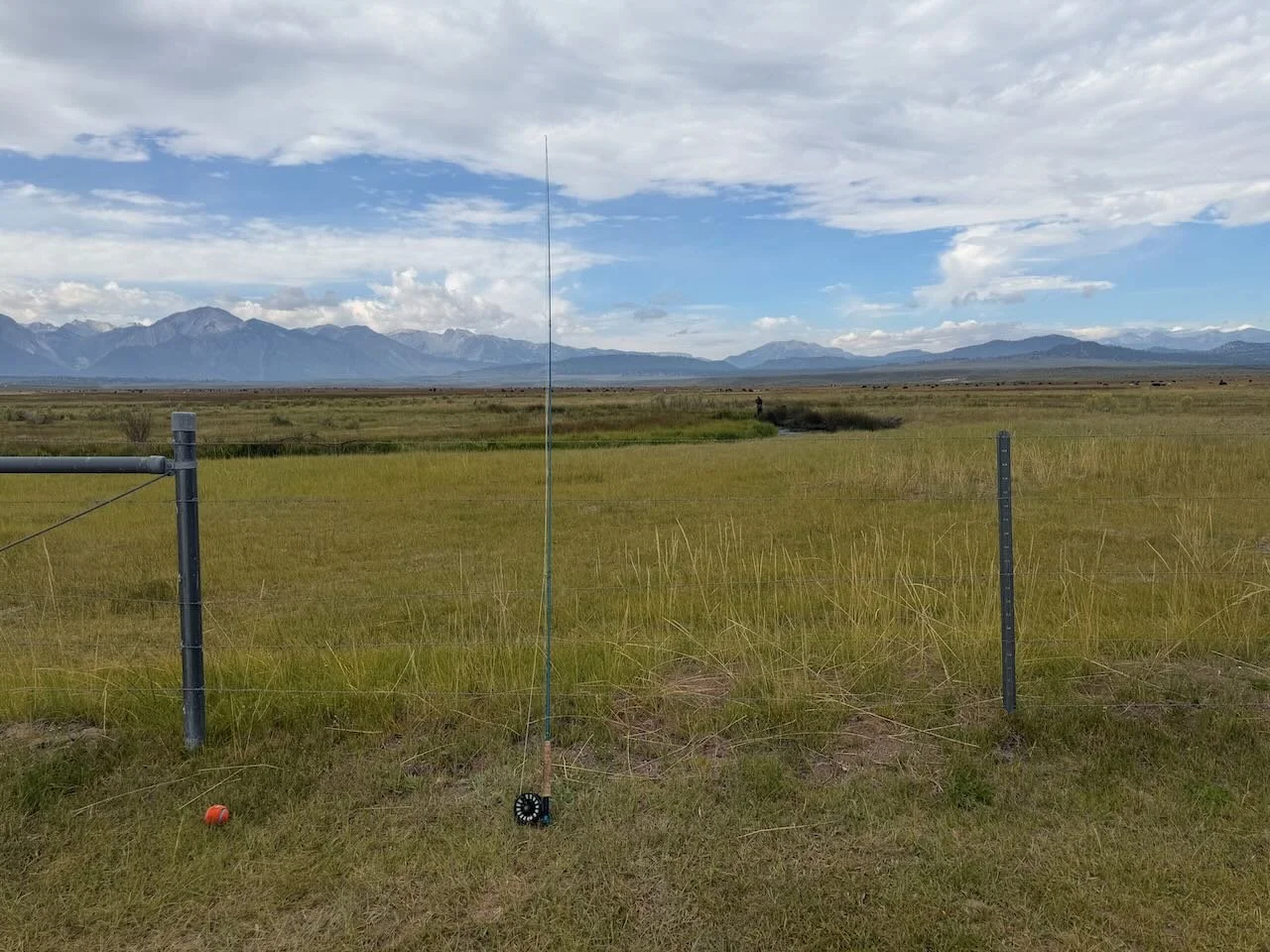
Afternoons are perfect for an after lunch grass hopper session as long as the water temperatures are around 65 degree or less.
Hot Creek
Interpretive Site:
Hot Creek offers the most consistent dry fly fishing in the Eastern Sierra. Tricos are the mayflies that are hatching and the trout are coming to the surface to feed on the trico duns. Start off fishing a size 22 trico female dun parachute pattern. The trico dun is what is hatching on the water in the morning before becoming the sexual mature spinner. When the trout quit taking you parachute switch to a size 22 trico spinner pattern. When the trico spinners are dun laying their eggs they die on the water offering the trout an easy meal. If you have trouble seeing the tiny flies on the water use a dry and dry rig. I like using a size 16 Adams parachute for the big dry in the dry and dry rig.
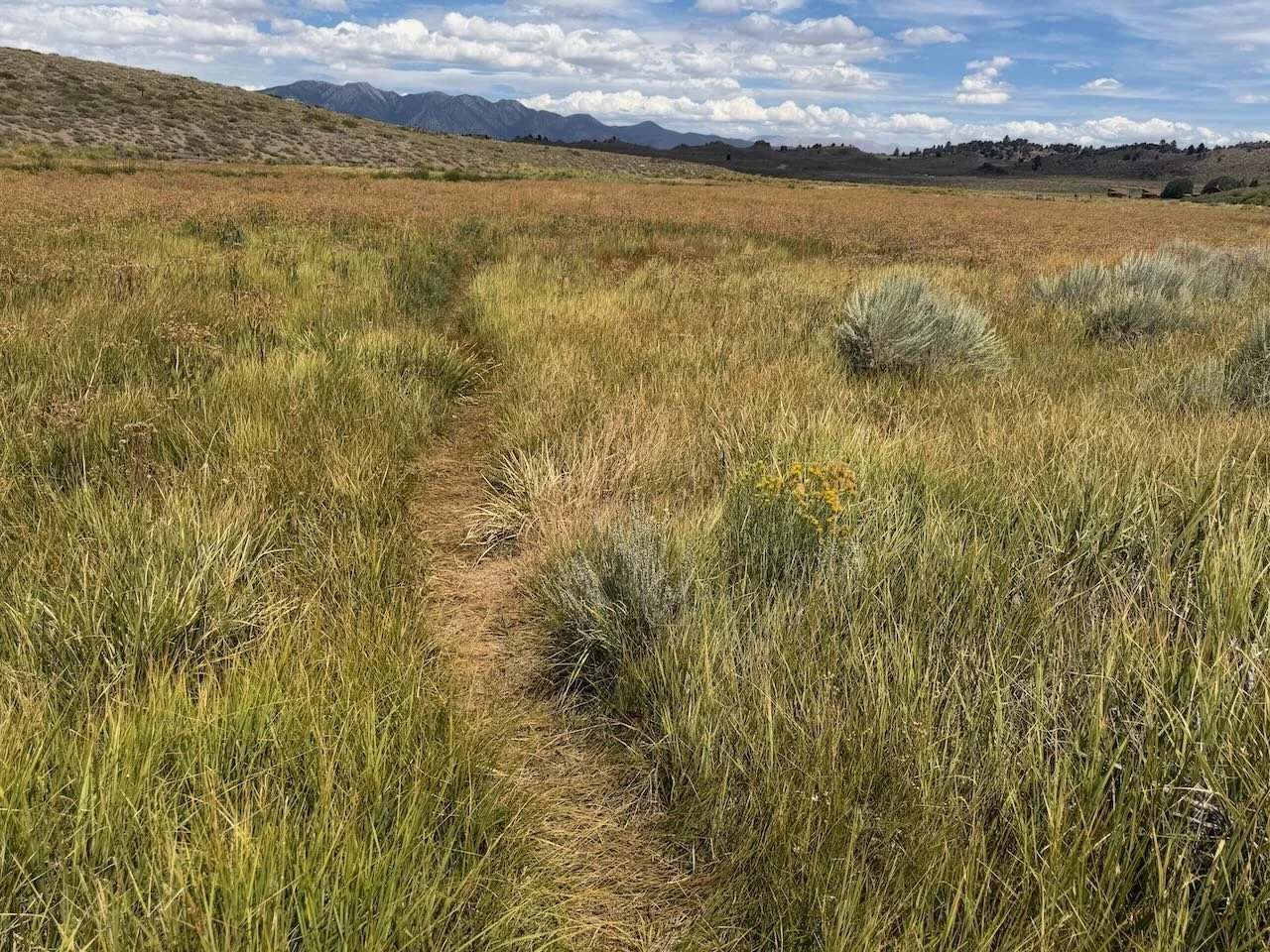
A day on Hot Creek Interpretive Site starts with a walk on the trail through the grasses leading to the pools on Hot Creek.
Hot Creek
Canyon Section:
Weed beds are still at full growth and making it hard for fly fishers to get a good drag free drift. The key to success in the canyon section is to get your dry flies to float through the tiny channels between the weeds. Fish with size 22 trico spinners and size 22 female trico dun parachutes to imitate the trico mayflies. Afternoons are usually slow in the canyon, but when the wind comes up and there are grass hoppers around it’s a good time to gently cast a size 12 parachute caddis, size 12 Dave’s hopper and size 12 tan stimulators.
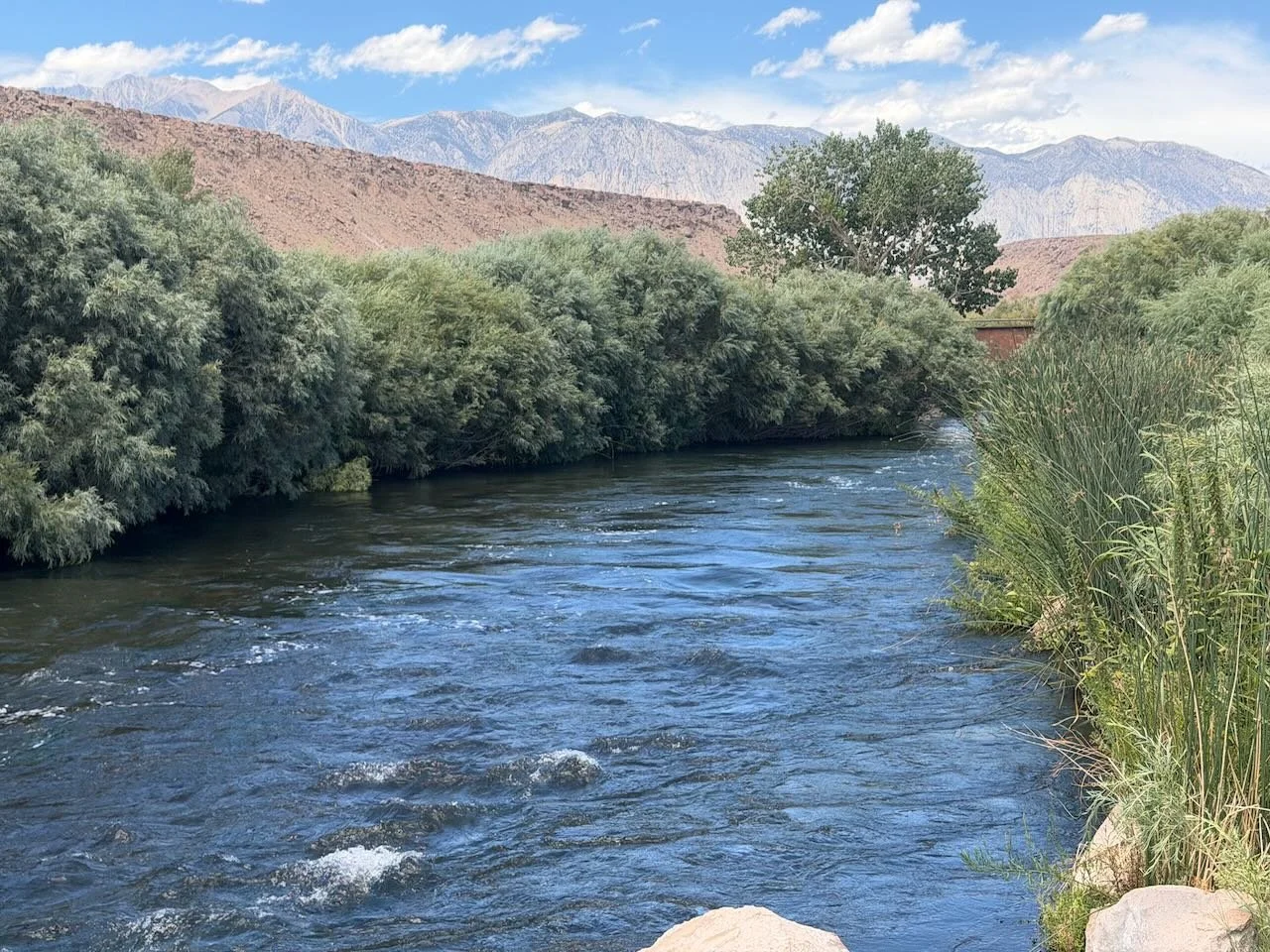
At flows of 500 CFS fly fishers need to find places to fish from the banks to present dry flies and streamers to the brown trout of the lower Owens River.
Lower Owens River
Wild Trout Section:
With temperatures expected to be in the high 80’s to low 90’s it will be time to fly fish the lower Owens River in the middle of the day. With the high flows and lots of sticks on the substrate to hang up on nymphing can be tough. An hour before sunrise and an hour before sunset is the perfect time to be on the river throwing streamers for trophy brown trout. For streamers use size 6 and 10 wooly buggers, slump busters, matukas and a size 6 sclupzilla articulated streamer. For dry flies use size 18 Adams parachutes, size 18 blue wing olives, size 18 elk hair caddis and size 18 EC caddis.
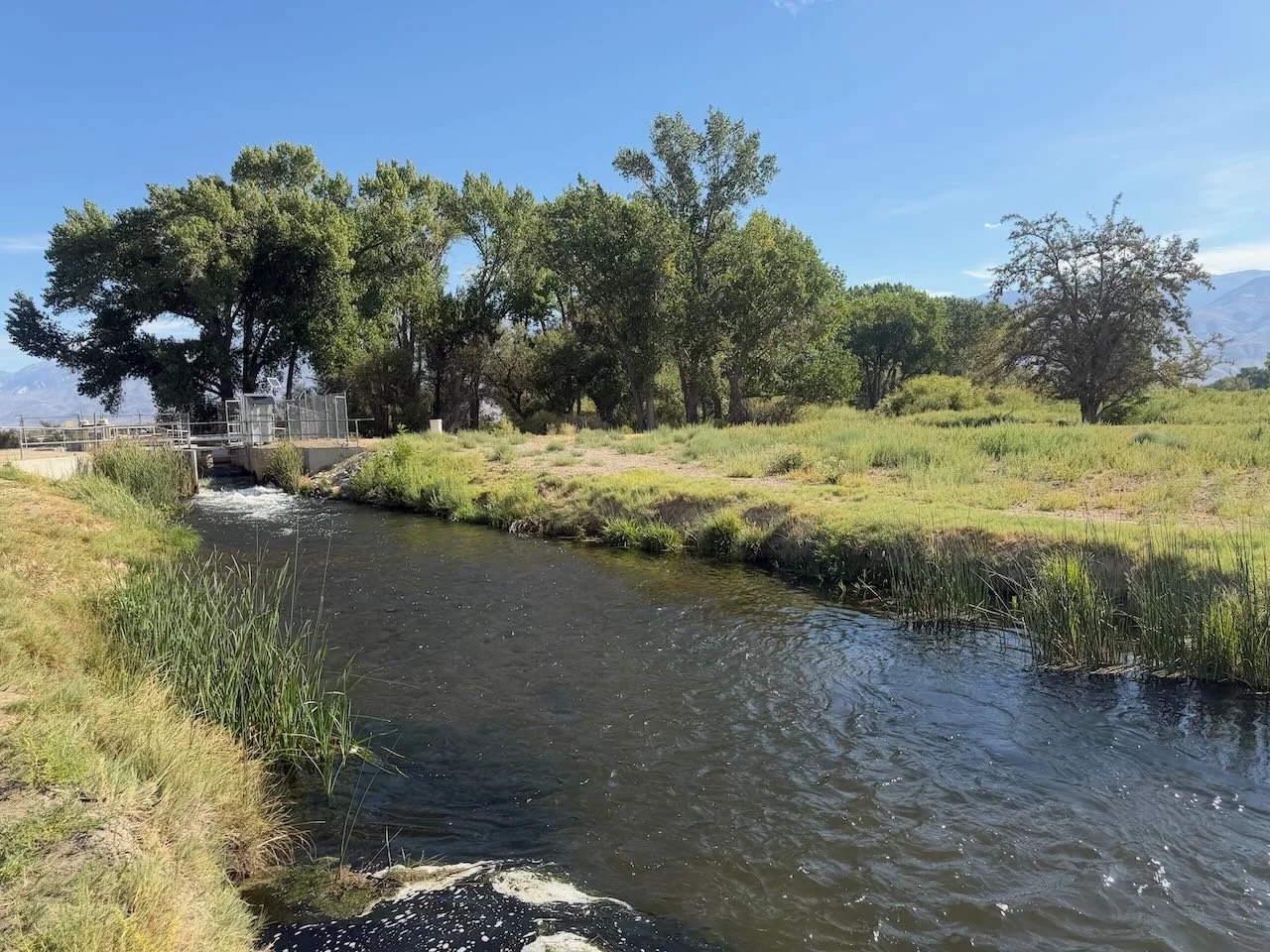
Bishop Creek Canal has been tough to fly fish as the water temperatures have been too high in the middle of the day when hoppers would be producing trout.
Bishop Creek Canal
Behind Bishop Veterinary Hospital:
A volunteer hoot owl regulation has been in effect for the afternoons. Be sure to check the water temperatures starting around noon and quit catch and release fly fishing when the temperatures are approaching the 70 degree mark. Grass hoppers have been very active in the afternoons, but the water temperatures have been too hot to catch and release fish. With cooler temperatures in the forecast afternoon hopper fly fishing should be good. Fish with size 12 Dave’s hopper, size 14 tan stimulator, size 12 chubby Chernobyl and tan size 12 parachute hopper. Fly fish in the mornings with size 20 trico spinners, size 20 female trico dun parachutes, size 20 blue wing olive mayflies and size 20 Adams parachutes.
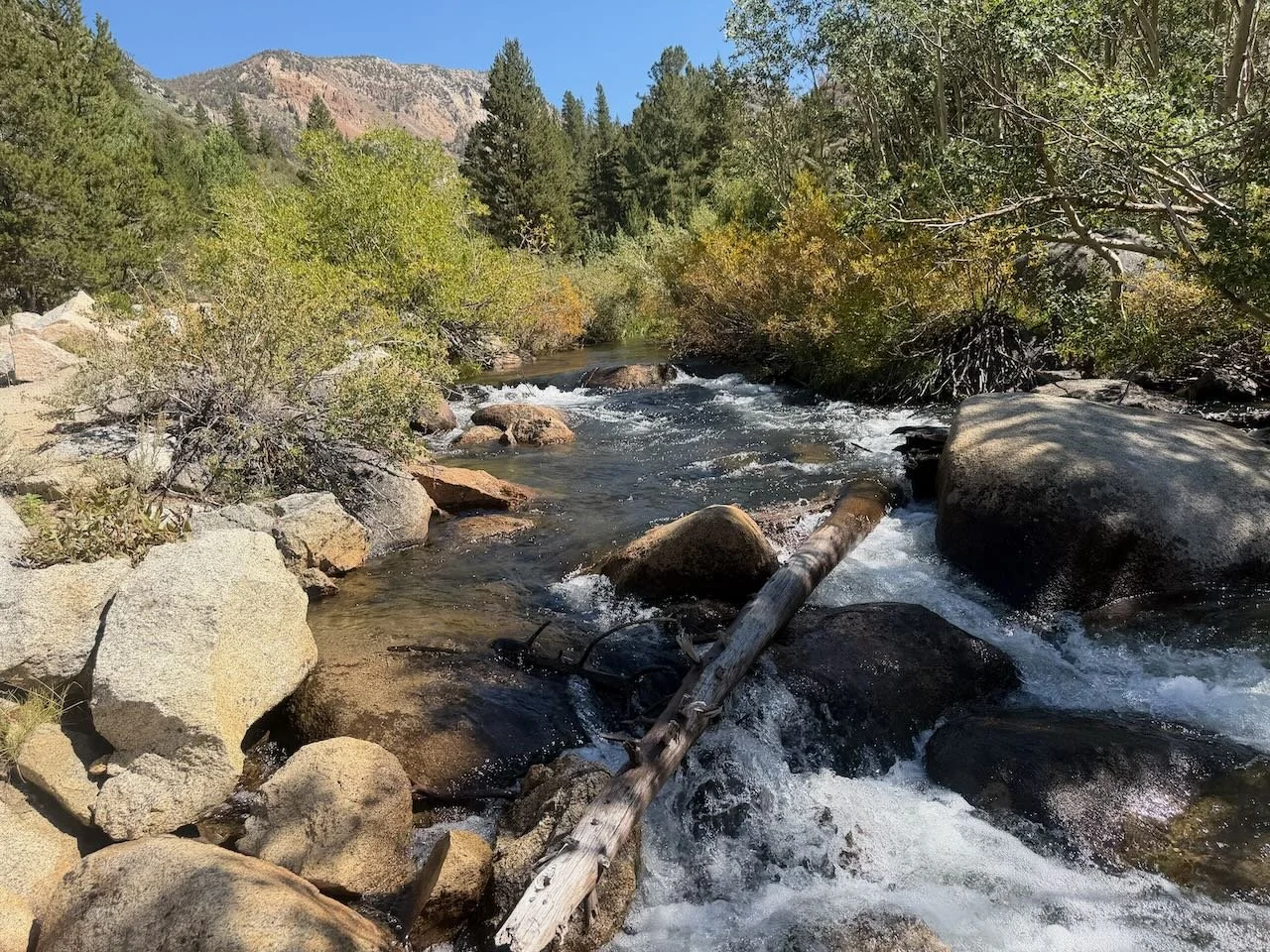
Bush whacking and finding the pools and pocket waters where the trout are living is where to fish a grass hopper pattern or a dry and dropper rig.
Bishop Creek Canyon
South fork:
Fall colors are still a few weeks off and the flows in the creek are perfect for fly fishing with dries and a dry dropper rig. Walking along the banks is kicking up grass hoppers. The trout are feeding on the hoppers and fly fishers should use a size 12 parachute hopper, size 14 tan stimulator and a size 12 Dave’s hopper. A dry and dropper rig is fooling lots of wild browns, rainbows and brook trout. For the dry fly use a size 14 stimulator, size 16 Adams Parachute, size 14 Royal Wulff and a size 16 elk hair caddis. For the nymphs use a size 16 bead head flash back gold ribbed hare’s ear, size 18 bead head flash back pheasant tail nymph, size 16 Prince nymph, size 16 green/gold brassies and size 16 midges in tiger and zebra coloration.