
It feels like winter is coming to the Eastern Sierra. Upper elevation waters got snow at the beginning of the week. Mammoth had their first R1 chain control in town. This is probably the end of backcountry fly fishing opportunities for the year. Summer heat has been replaced with winter time temperatures. Owens Valley has been cold, but not below freezing yet. I’m wearing my sweatshirt daily and my jacket is always close by. Hatches of mayflies, caddis and midges are feeding the trout on the substrate and on the surface.
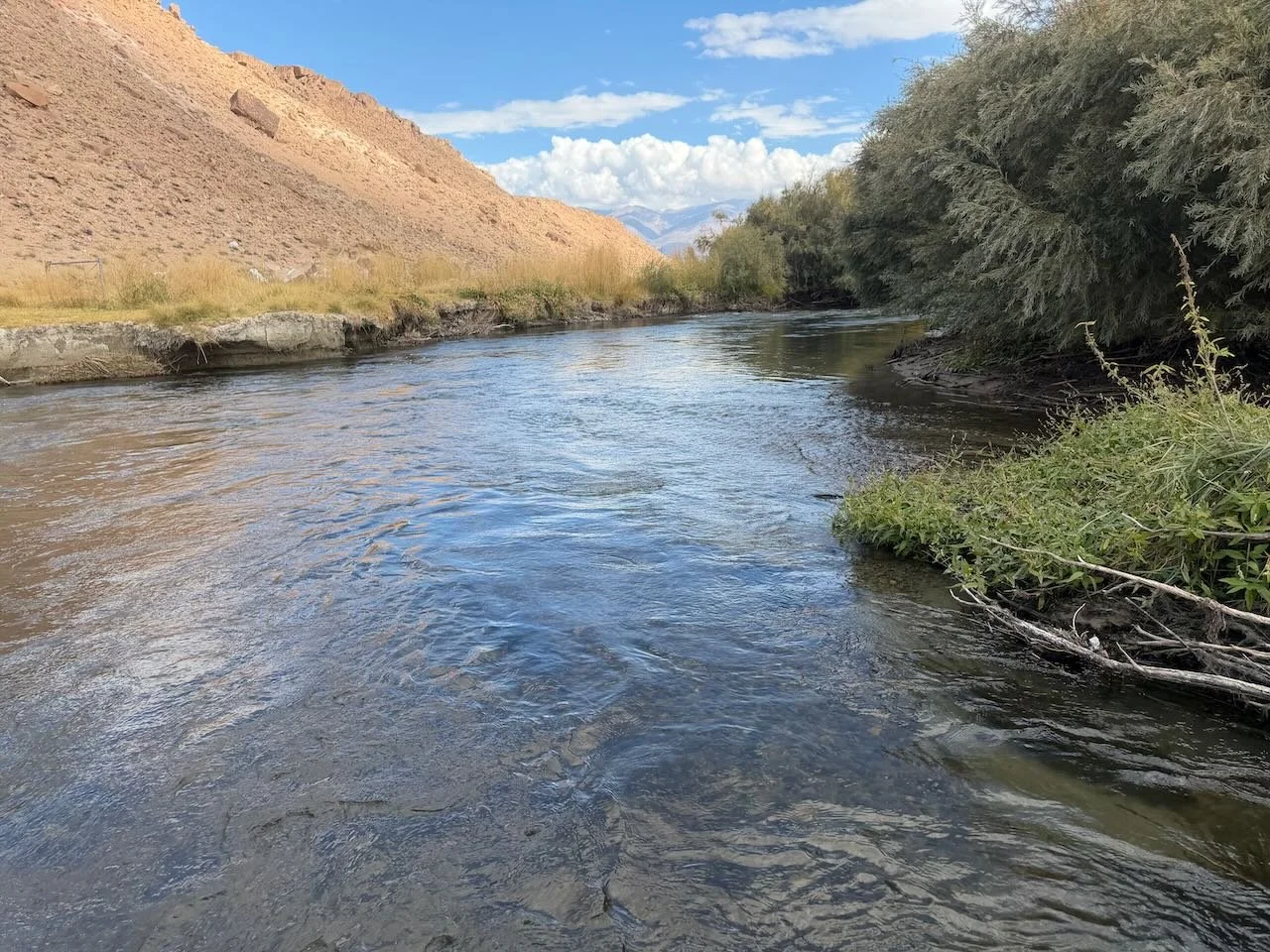
Fall is the perfect time to be fly fishing on the lower Owens River by wading into places unfishable from the banks of the river.
Upper Owens River
Above Benton Crossing Bridge:
Trophy trout are not in the river in a concentration of numbers. This means fly fishers have to work hard for one trophy trout per outing. The fly fisher who is fishing the deep holes, deep runs and cutbanks thoroughly and covering lots of river is being rewarded. Streamers the hour before sunrise and the hour after sunset is producing the best chance at a trophy trout. For streamers use size 6 and 10 matukas, wooly buggers and slumbusters. For articulated streamers use mini peanuts, sculpzilla and mini dungeons in size 6. Nymphing lots of deep holes, deep runs and cut banks with size 12 stoner nymphs, size 12 green/gold Prince nymphs, size 12 Richard’s variation of a gold ribbed hare’s ear, size 14 copper John and size 14 Duracell nymphs is producing a few fish with maybe one trophy trout for a full day’s worth of fly fishing. Juvenile trout middle of the day are taking size 18 blue wing olive parachutes, size 18 Adams parachutes, size 18 olive sparkle duns and size 16 elk hair caddis on the surface. On the substrate fish with size 18 gasolina, size 18 Frenchie and size 18 MSG emergers.
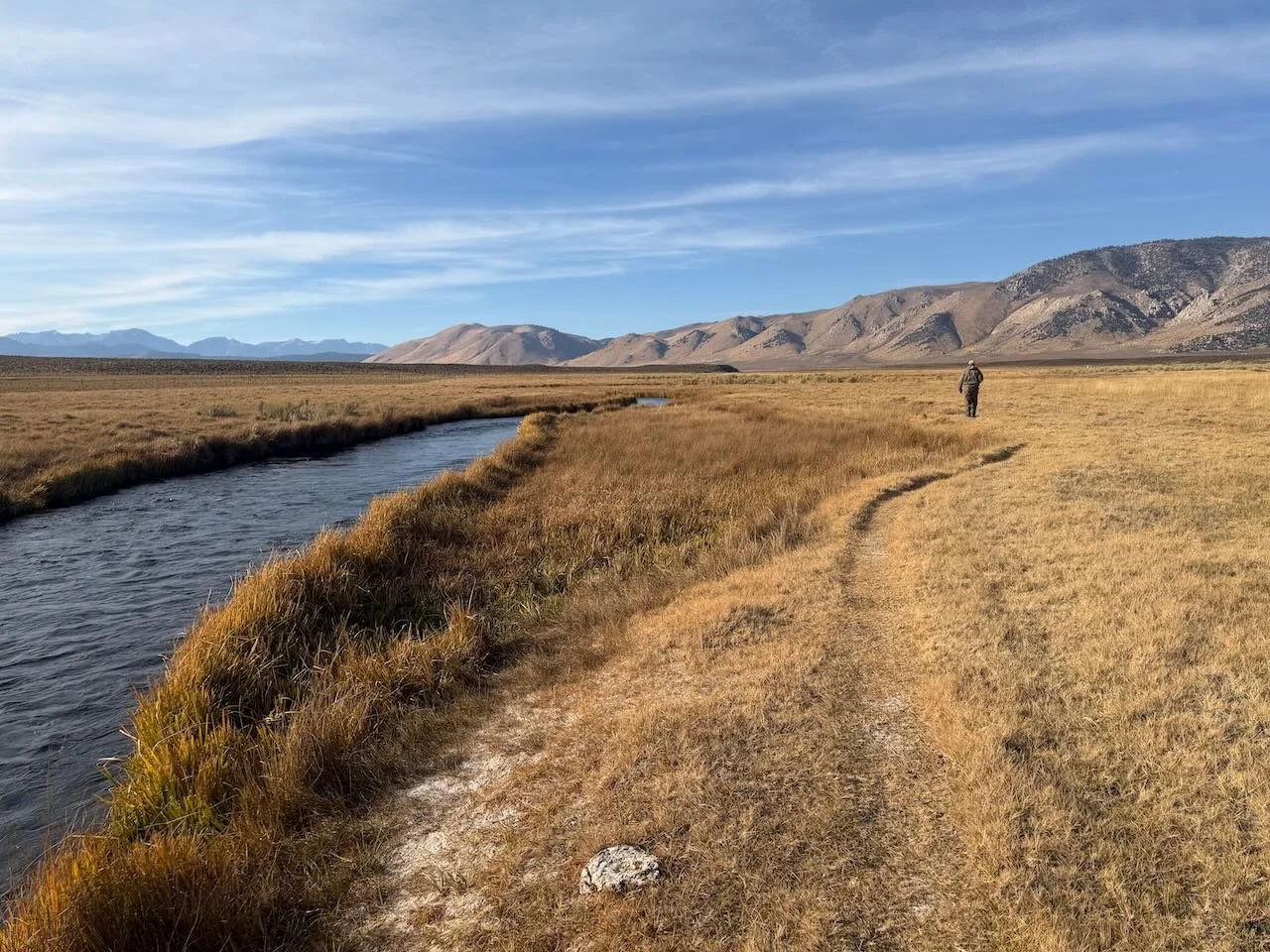
Key to success for fly fishing the upper Owens River for trophy trout is to cover lots of water looking for the few trophy trout hanging out in the deep holes, deep runs and cut banks.
Hot Creek
Interpretive Site:
Late morning hatches of blue wing olive mayflies are bringing the trout of Hot Creek interpretive site to the surface. Before the hatch dredge the bottoms of the holes with size 18 olive quilldigons, size 18 bead head flash back pheasant tail nymphs, size 18 Frenchie’s, size 18 diabeatis perdigons and size 18 MSG emerger. Once the trout are keyed in on the hatching blue wing olive duns fish with a size 20 blue wing olive parachute, size 20 Adams parachute and size 20 olive sparkle dun. The trout in the Interpretive site are spooky and fishing a dry and dry rig or a dry and dropper rig is the way to set up for dry fly fishing or nymphing.
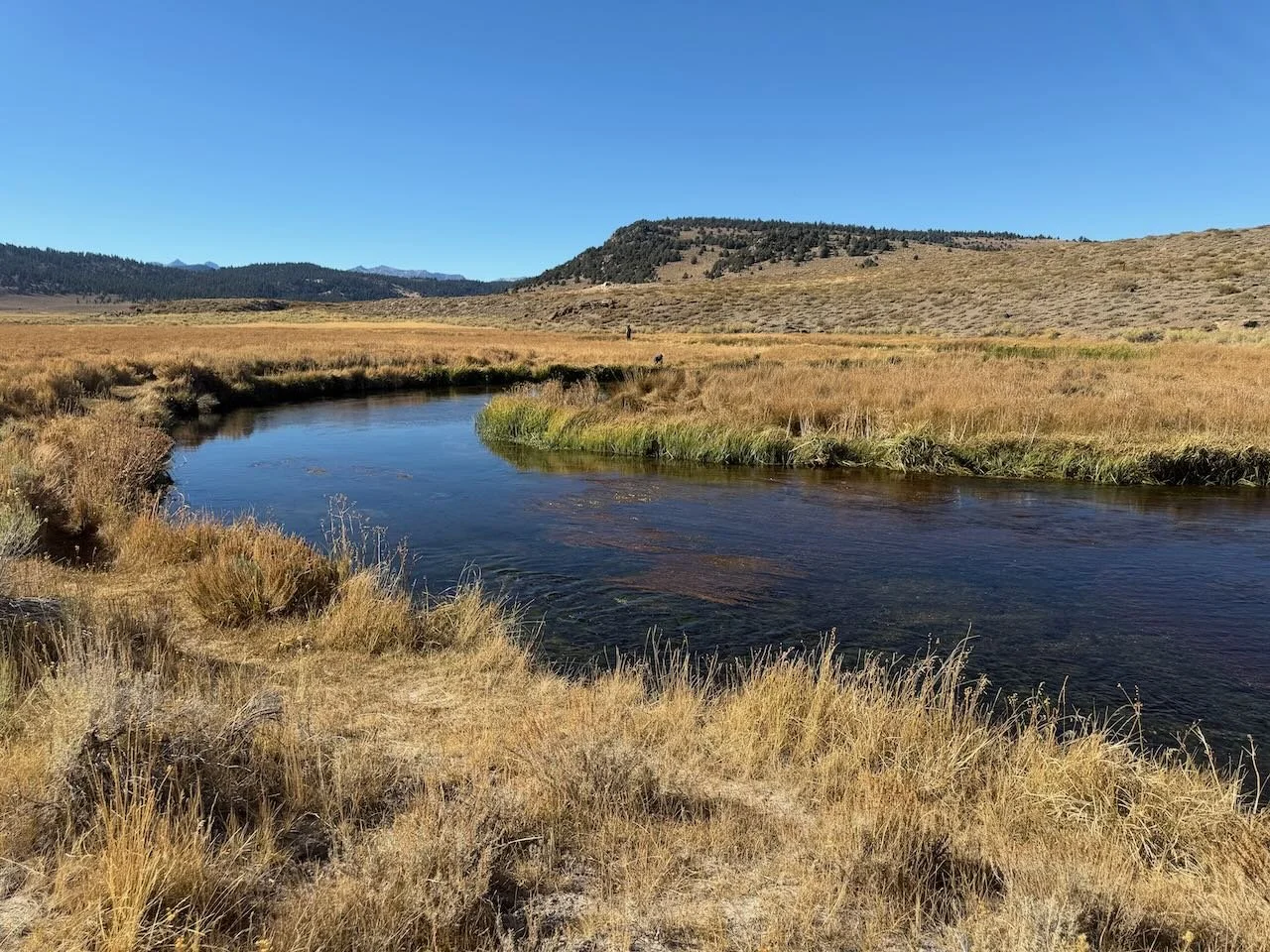
Fall on Hot Creek Interpretive site is fishing the mid-morning blue wing olive hatch.
Hot Creek
Canyon Section:
The reduction in day light and the cold weather are slowly breaking down the weed beds. Nymphing in the Canyon Section is still tough. Fishing with a dry and dry rig will allow the fly fisher to see the big fly and hopefully the little fly. Seeing the flies is important to getting a drag free drift which is the way to fool the weary trout in the creek. The dry and dry rig can be fished right next to the weed beds with less hang ups then when nymphing. Use size 20 blue wing olive parachute, size 20 Adams parachute and size 20 olive sparkle dun.
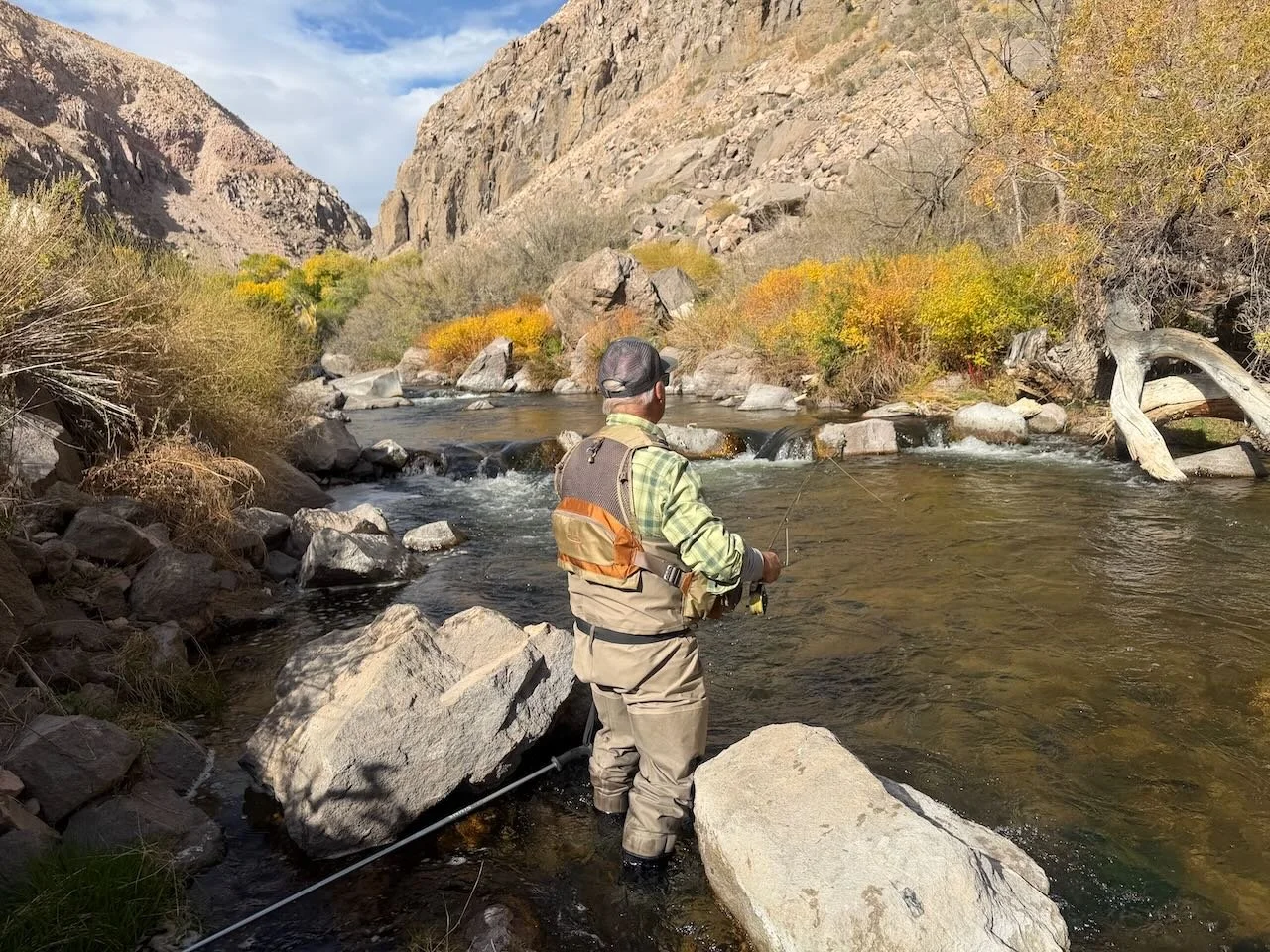
A dry and dropper rig fished in the Owens River Gorge is producing wild brown trout up to 12 inches.
Owens River Gorge:
The 20 minute hike into the gorge, stinging nettles, rose bush thickets and the possibility of seeing rattle snakes, less likely with the cooler weather, are worth the opportunities of catching six to 12 inch wild brown trout. The trout are taking blue wing olive mayflies middle of the day. On the surface fish with size 18 blue wing olive parachutes, size 18 Adams parachutes, size 16 Adams parachutes, size 14 stimulators and size 16 elk hair caddis. Nymph with size 18 olive quilldigons, size 18 gasolina’s, size 18 bead head flash back pheasant tail nymphs, size 16 bead head flash back gold ribbed hare’s ears and size 16 tiger and zebra midges. Key to success is wading upstream and getting drag free drifts with you flies. These fish are feeding opportunistically and well take your flies on the first few casts into the lies where you thing the trout are holding. Making your first cast count will help increase the catch rate.
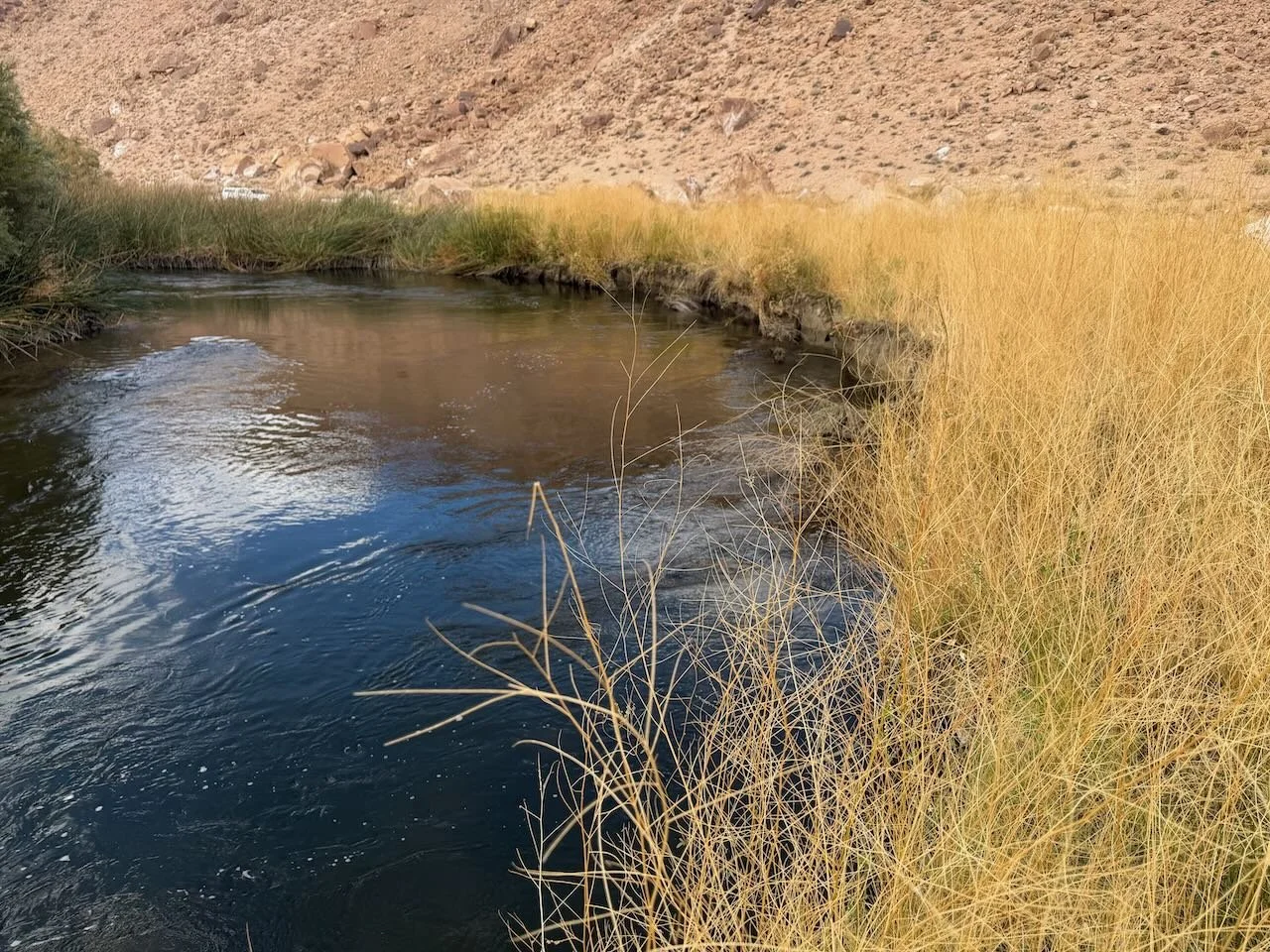
The riparian zone along the lower Owens River is thick with summer growth of plants making it hard to access the river.
Lower Owens River
Wild Trout Section:
It finally happened last week with flows in the lower Owens River finally under 200 CFS. This means fly fishers can wade sections of the river not fishable from the banks. Getting into the river and wading upstream casting your nymph rig into the riffle six to 12 inches above a pool and allowing the flies to be pulled onto the substrate by the hydraulics of the river is how you fish nymphs on the substrate in the lower Owens River. Having the proper amount of weight in the flies or on the tippet with split shot will allow your nymph patterns to gently bounce along the substrate just like a natural nymph. Fish baetis nymph patterns like size 18 gasolina, size 18 Frenchie, size 18 MSG emerger, size 18 olive quilldigons and size 18 bead head flash back pheasant tail nymphs under an indictor or with a Euro rig. Summer growth is at its fullest waiting for cows and fly fishers to trample the vegetation and create trails to the water. The river fishes well at 200 CFS or less. Check the flows at https://www.sierrabrightdot.com/water-flows-owens-river-east-walker-river.
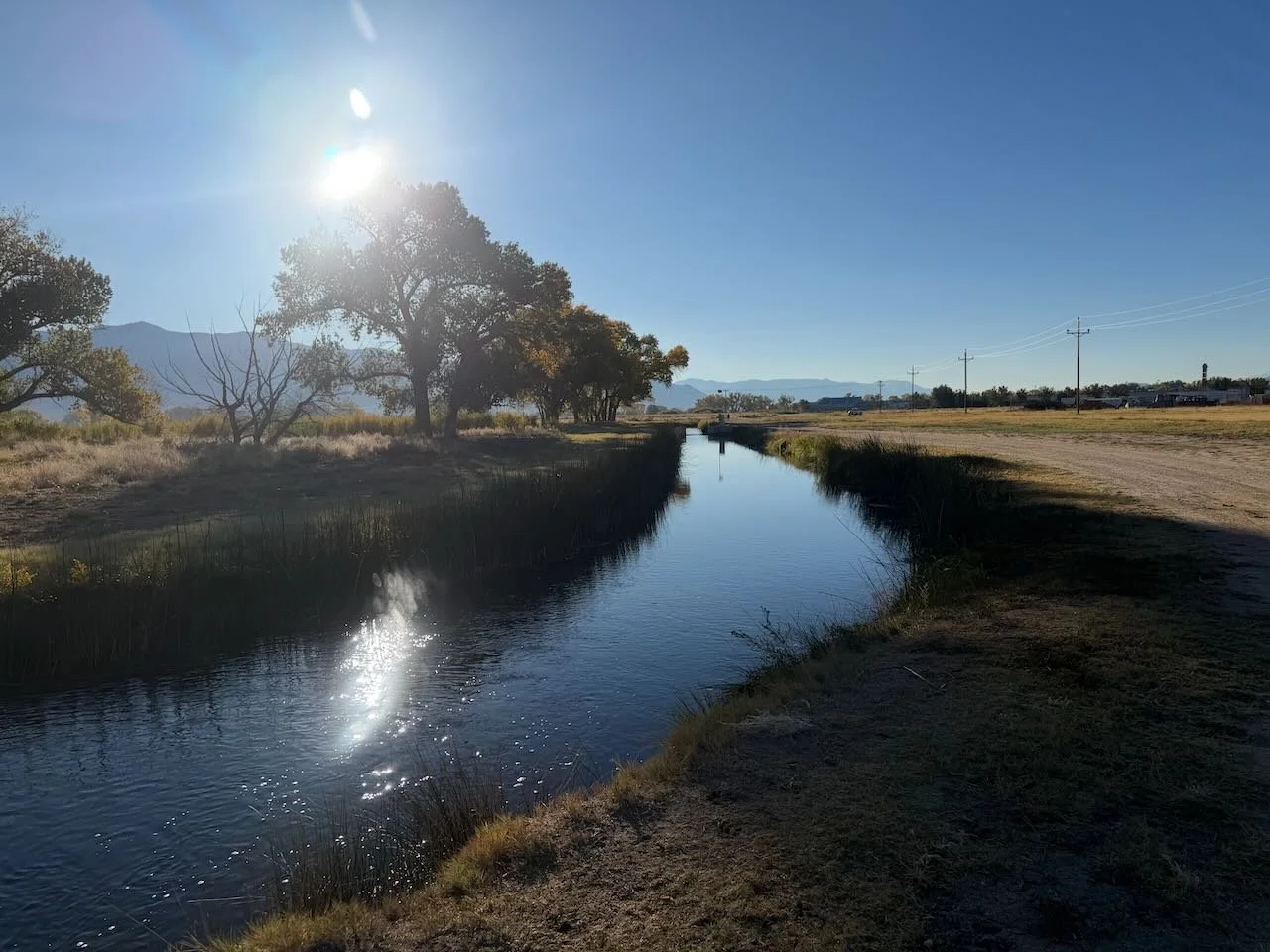
Blue wing olive mayflies are bringing the trout to the surface late morning to early afternoon.
Bishop Creek Canal
Behind Bishop Veterinary Hospital:
As we head into winter most insect activity is taking place between 10:00 A.M. and 2:00 P.M. This is when a blue wing olive mayfly is hatching on Bishop Creek Canal. Start off before the hatch fishing with size 18 olive quilldigons, size 18 bead head flash back pheasant tail nymphs, size 18 SOS nymphs. When you first see a few rising trout switch to emerger patterns like size 18 olive quill RS2’s, size 18 olive WD40’s and size 18 olive sparkle duns. When the hatch is in full swing start fishing with size 18 blue wing olive parachutes, size 18 Adams parachutes and size 18 olive sparkle duns. When the hatch is well under way start using blue wing olive spinner patterns to imitate the blue wing olive mayflies laying their eggs on the substrate by fishing with size 18 olive quill RS2’s, size 18 olive WD40’s and size 18 olive sparkle duns. I like targeting individual rising fish with a blue wing olive parachute. After catching my target fish I move onto another rising fish.