Sierra Bright Dot Fly Fishing Report 10-02-2025

We are in the middle of my favorite month, SeptOct. There are two weeks left to get up to the Eastern Sierra and enjoy the best month of the year in the Eastern Sierra. Nights are getting cold; quacking aspens are turning yellow and flows in the lower Owens River are at wadable levels. Trophy trout are running upstream from Eastern Sierra lakes. Reminder that several Eastern Sierra streams close to fishing on October 1st to protect spawners. Fall colors will peak this weekend at the 9,000 foot level. Trout are feeding on the nymphs and adults of mayflies, caddisflies and midges. Now is the time to strip streamers for trophy trout in the Eastern Sierra rivers.
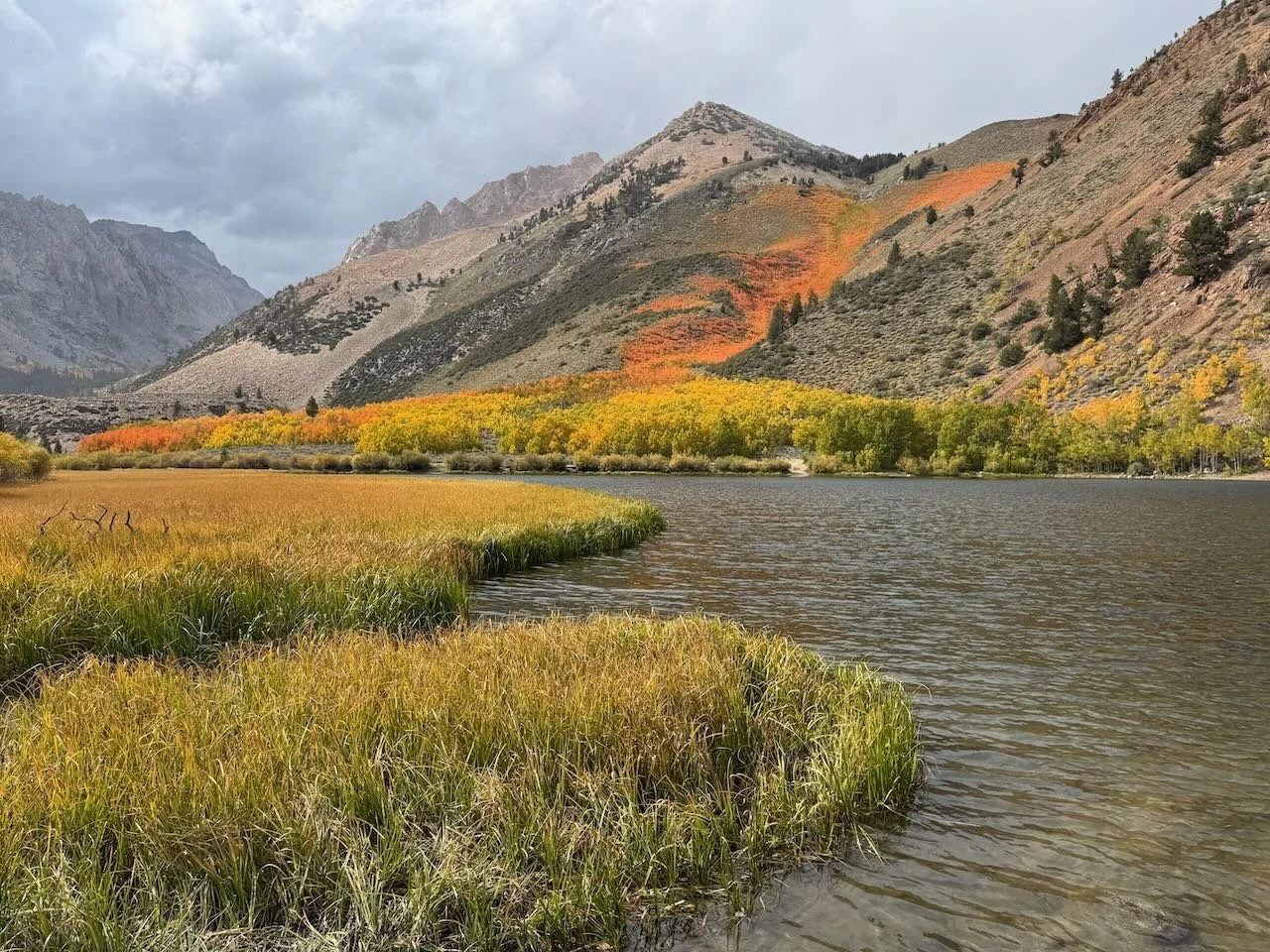
Fall colors are peaking at the 9,000 foot level this weekend and fishing in the freestone streams and upper elevation lakes are producing wild rainbow, brown and brook trout.

East Walker River:

Wading on the East Walker River is perfect right now as the flows are low enough to wade and high enough to offer lots of pockets and holes to fly fish. Euro nymphing with size 12 stoner nymphs, size 18 olive quilldigons, and size 16 Frenchie’s are producing rainbows and browns from six to 14 inches. Nymphing under an indicator with size 18 olive quilldigons, size 18 bead head flash back pheasant tail nymphs, size 16 bead head flash back gold ribbed hare’s ears and size 16 SOS nymphs are producing six to 14 inch trout for the fly fisher that sets every movement in the indicator. Covering lots of water with streamers for that one or two trophy trout grab is working right now. Fish with olive slumpbusters, black wooly buggers, marabou muddlers and brown bunny leeches in sizes 6 and 10. There are lots of crayfish in the water right now. Try nymphing or stripping a size 6 or 10 Clouser swimming nymph in crayfish brown.
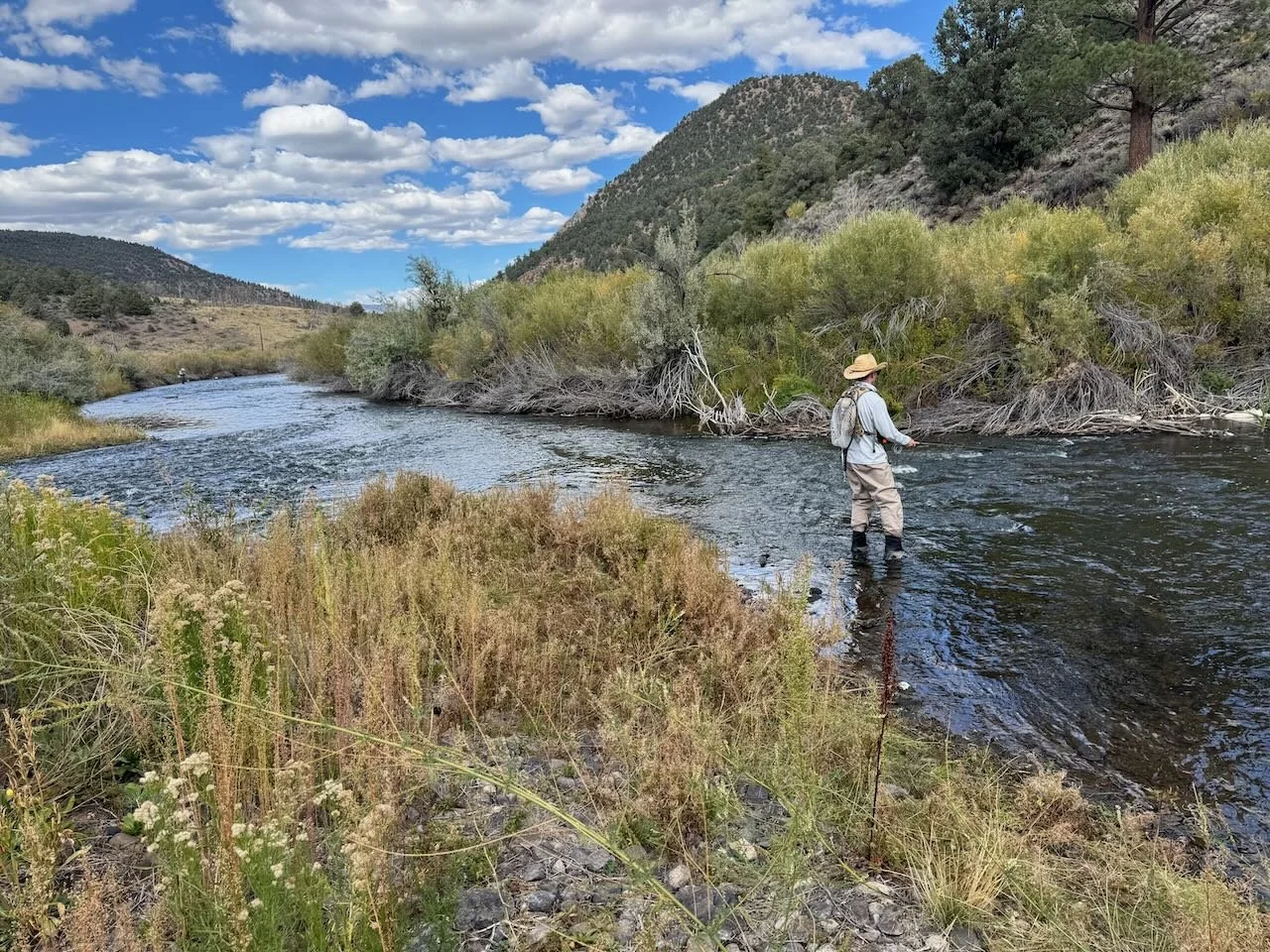
Stripping streamers under the cover of stream side vegetation, in the deep pools and holes is where the trophy trout live and will take your streamer as it swims by them.

Lower Owens Rive

Wild Trout Section:

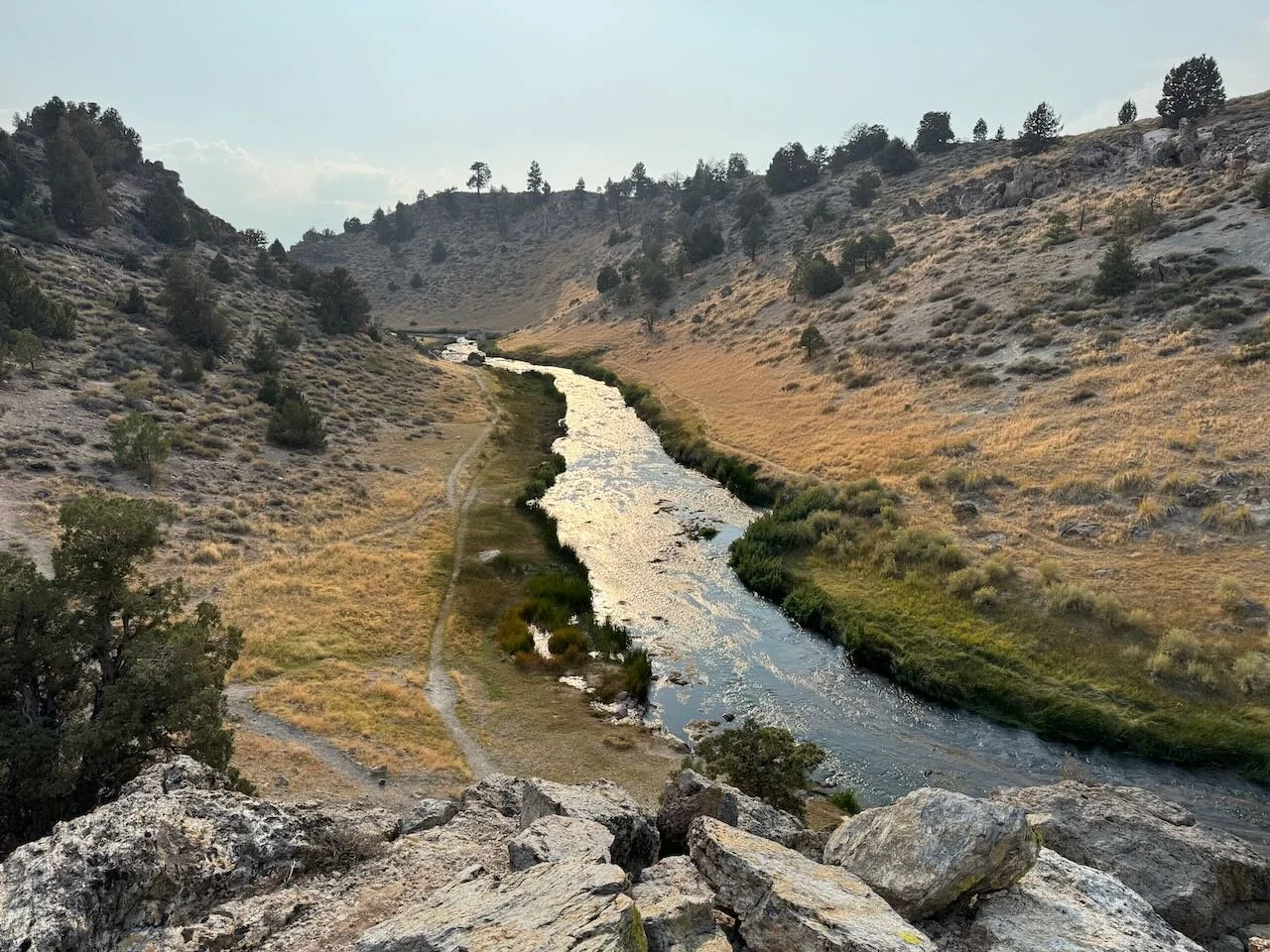
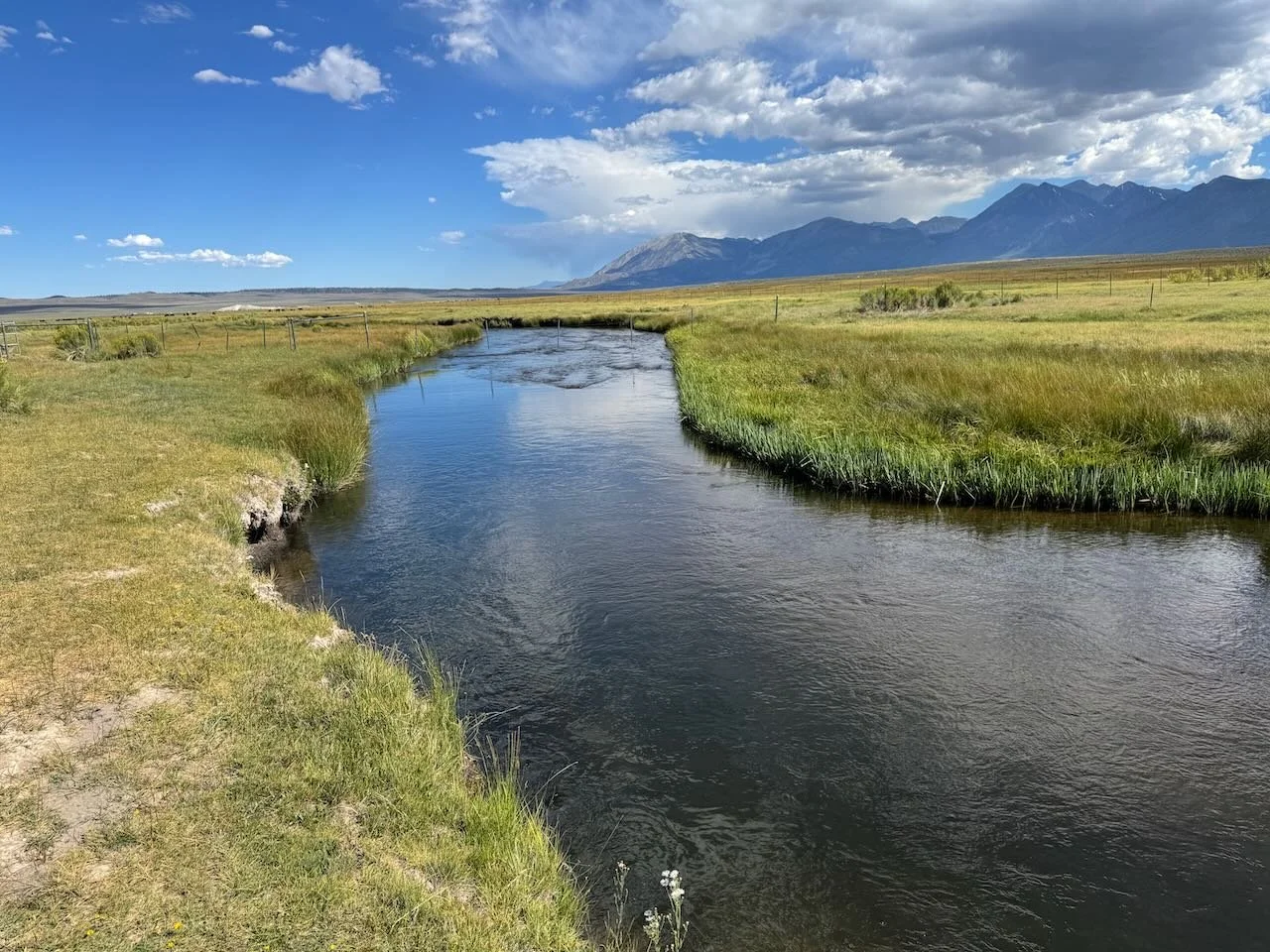
Lower Owens River flows are holding at 125 CFS for now. This is the perfect level to wade and fly fish. There is a mid-day mayfly hatch bringing a few trout to the surface. Indicator nymphing and Euro nymphing is the methods that are producing wild brown and rainbow trout from four inches to 12 inches. Nymph with size 18 olive quilldigons, size 18 bead head flash back pheasant tail nymphs, size 16 hot spot pheasant tail nymph, size 16 SOS nymphs, size 16 green/gold brassies and size 16 midges in tiger and zebra coloration. Afternoons have been hot and wet wading is more comfortable than wearing waders.
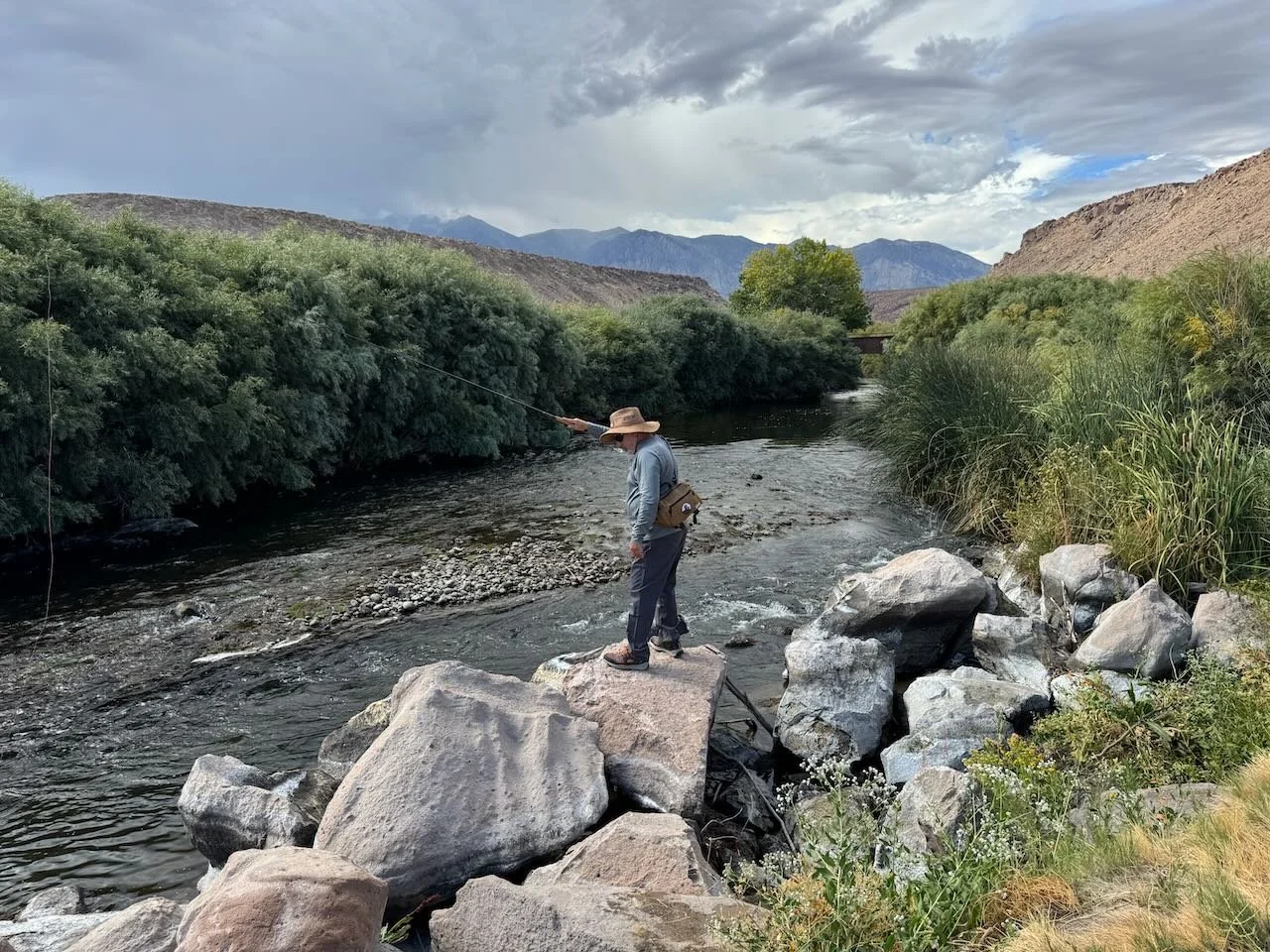
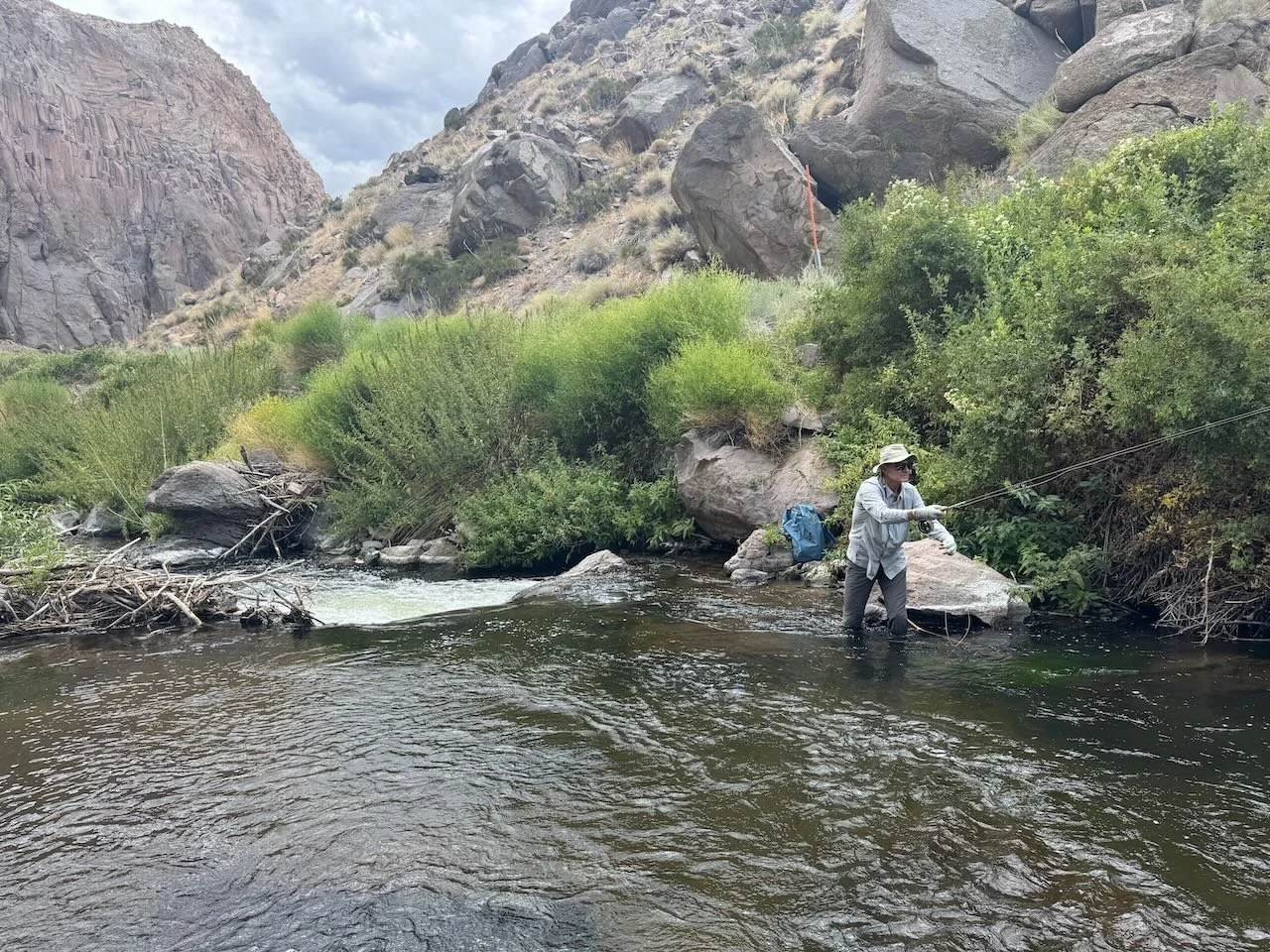
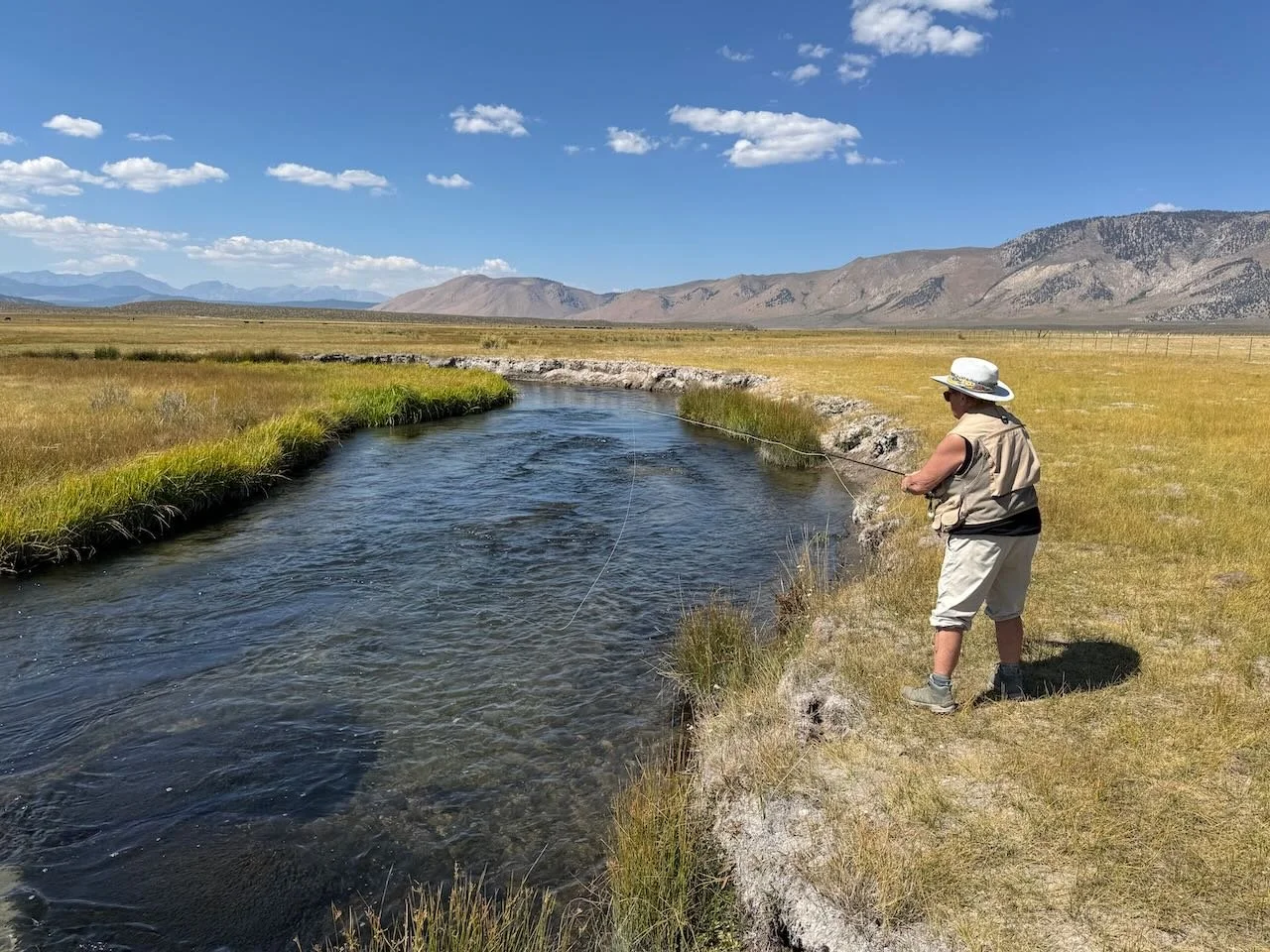
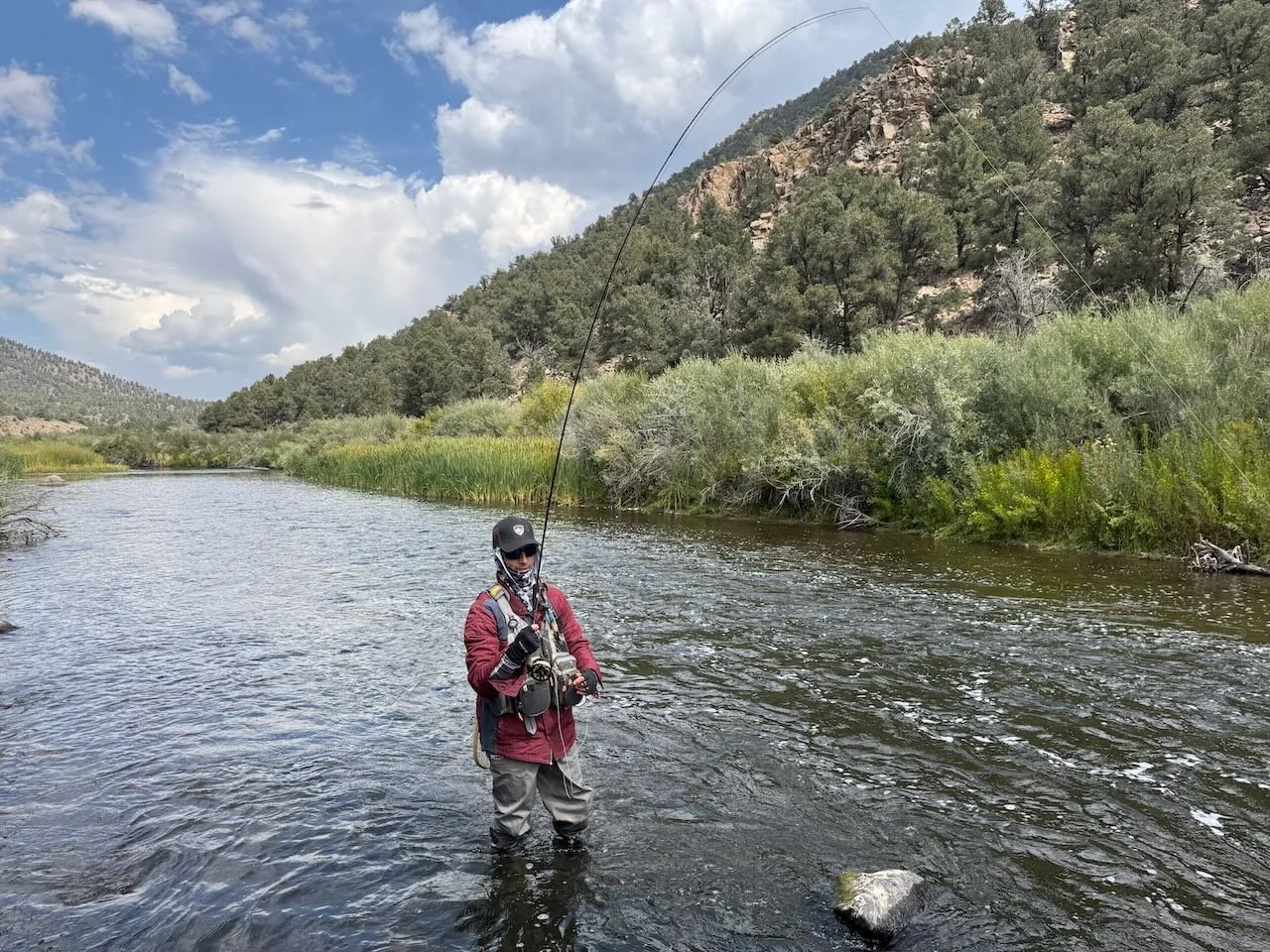
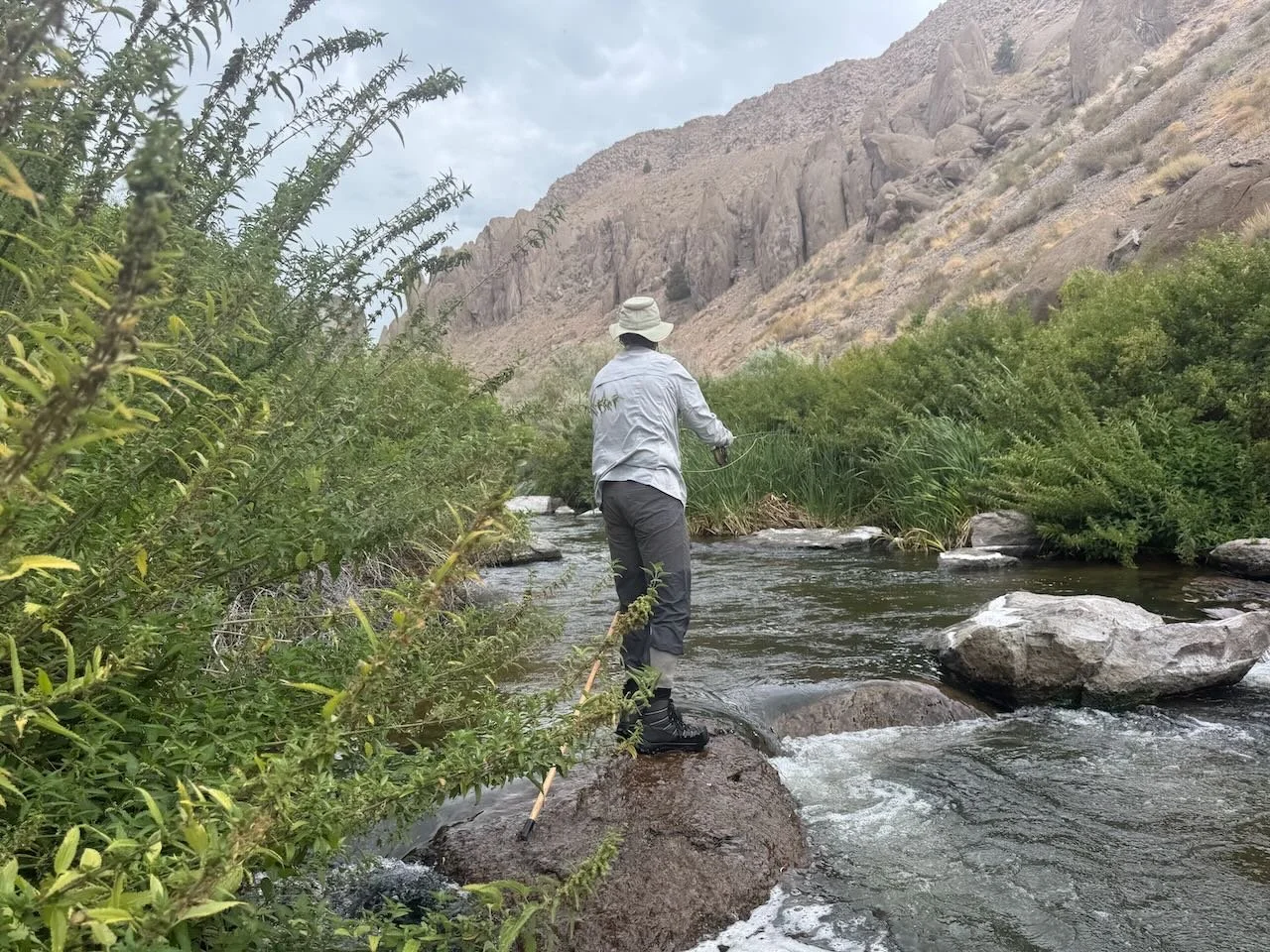
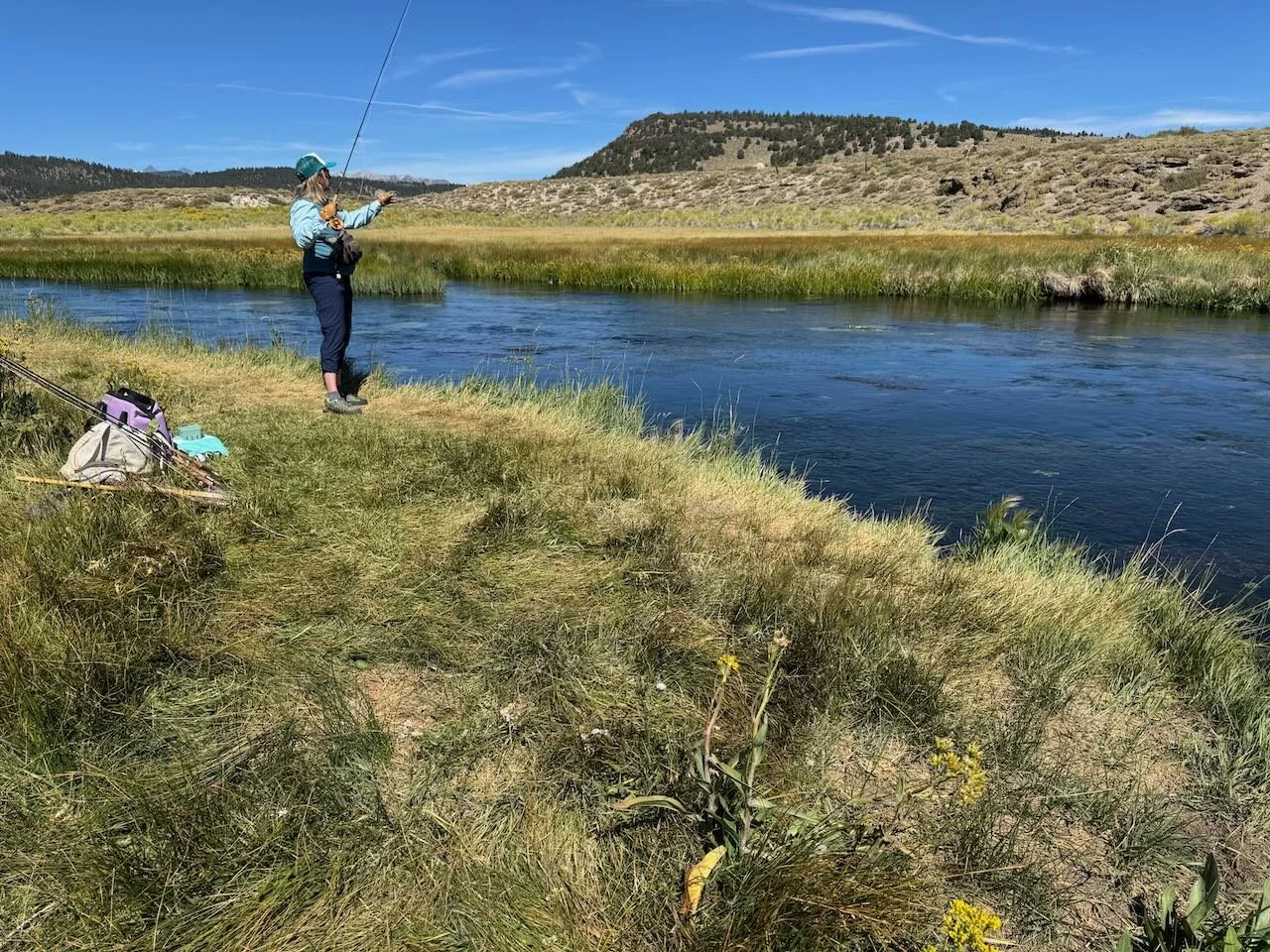
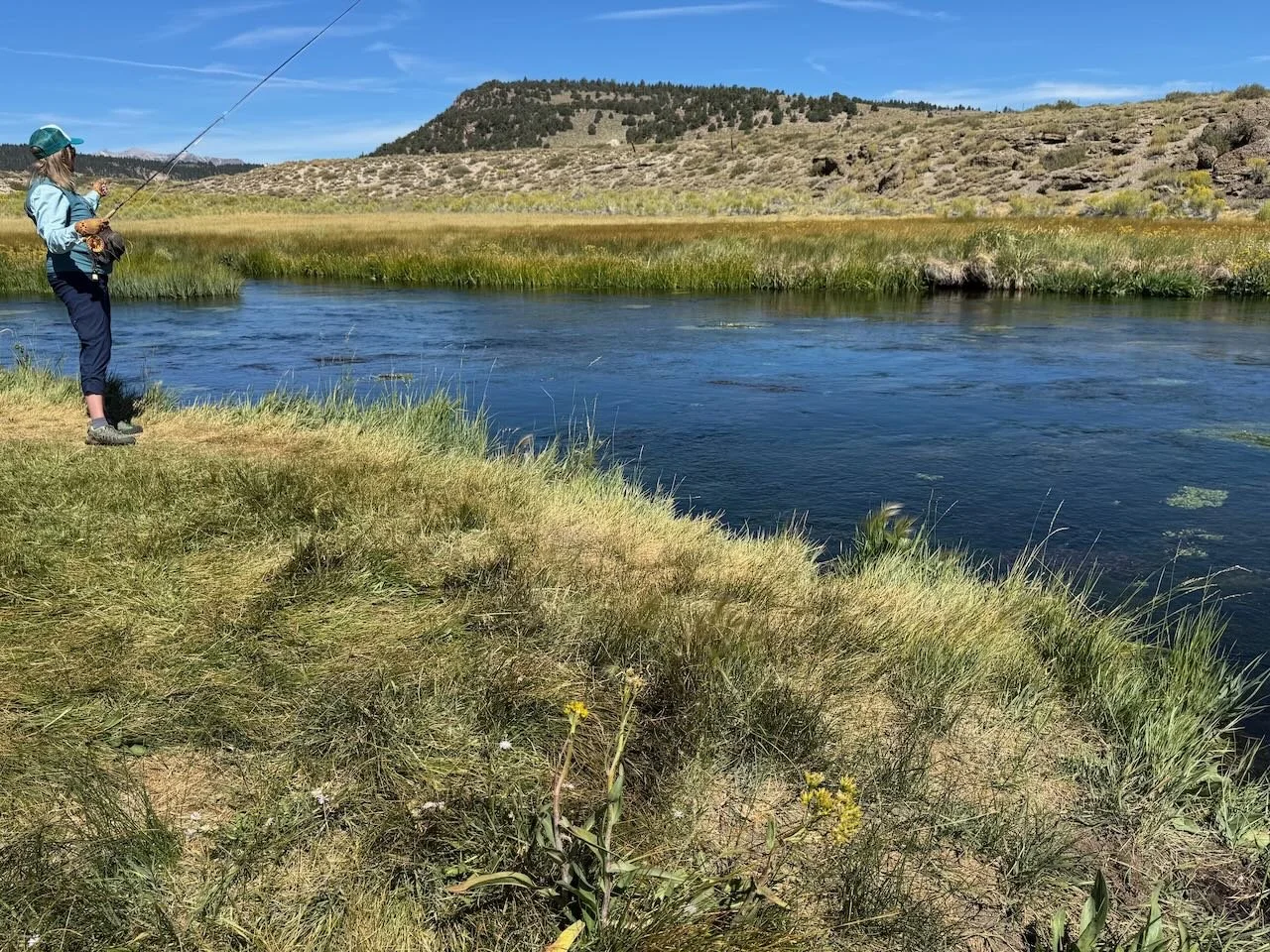
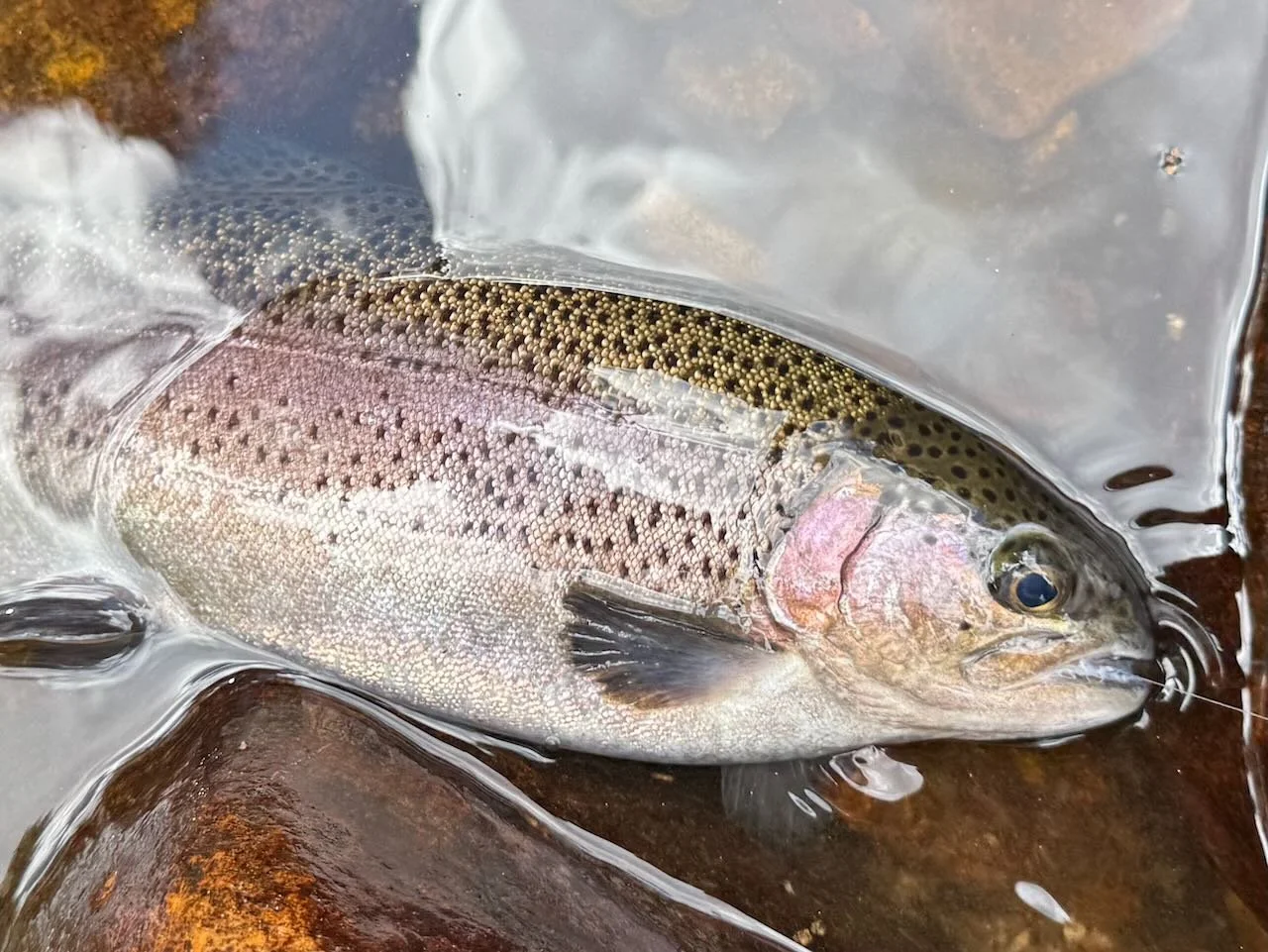
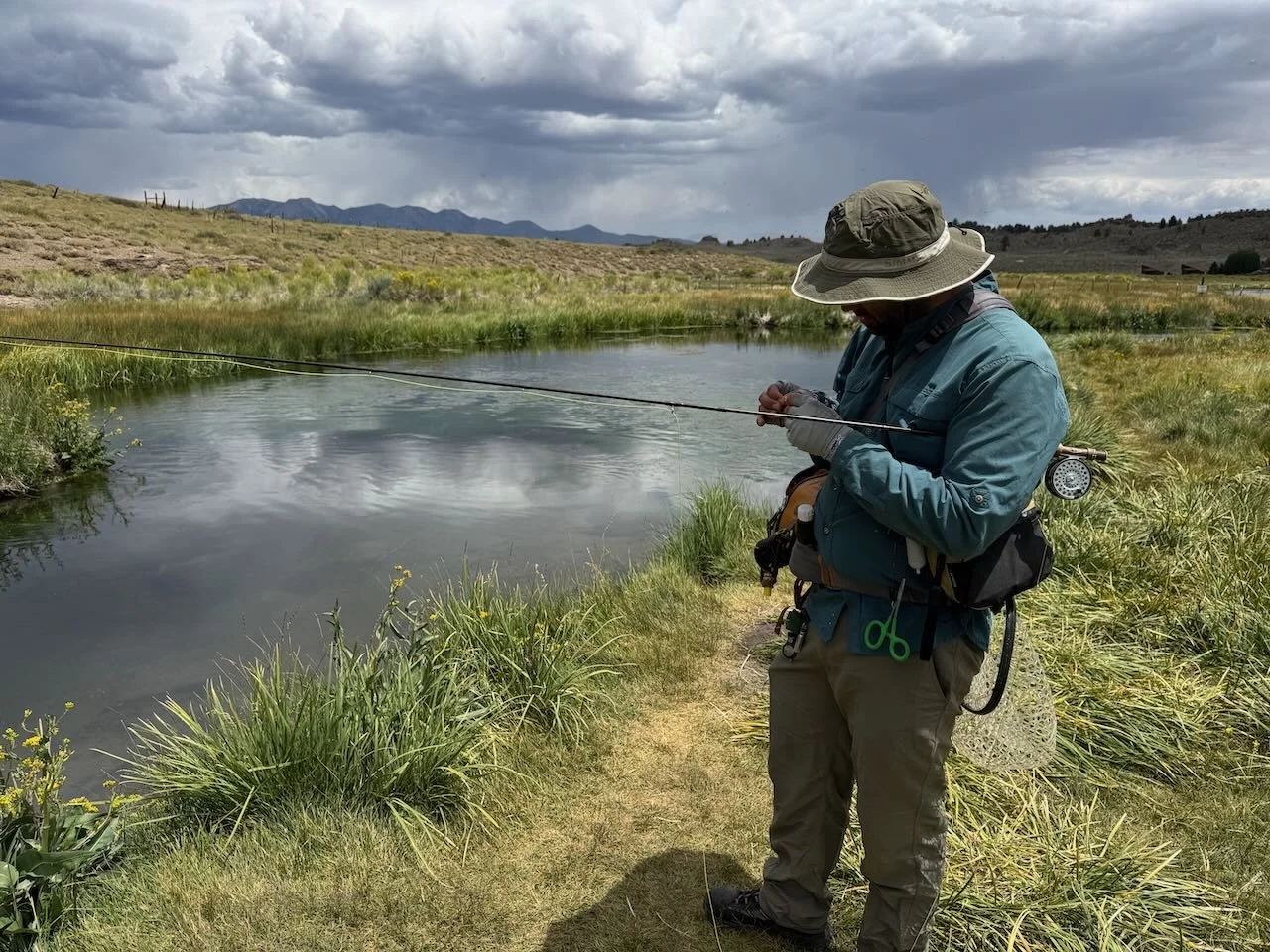
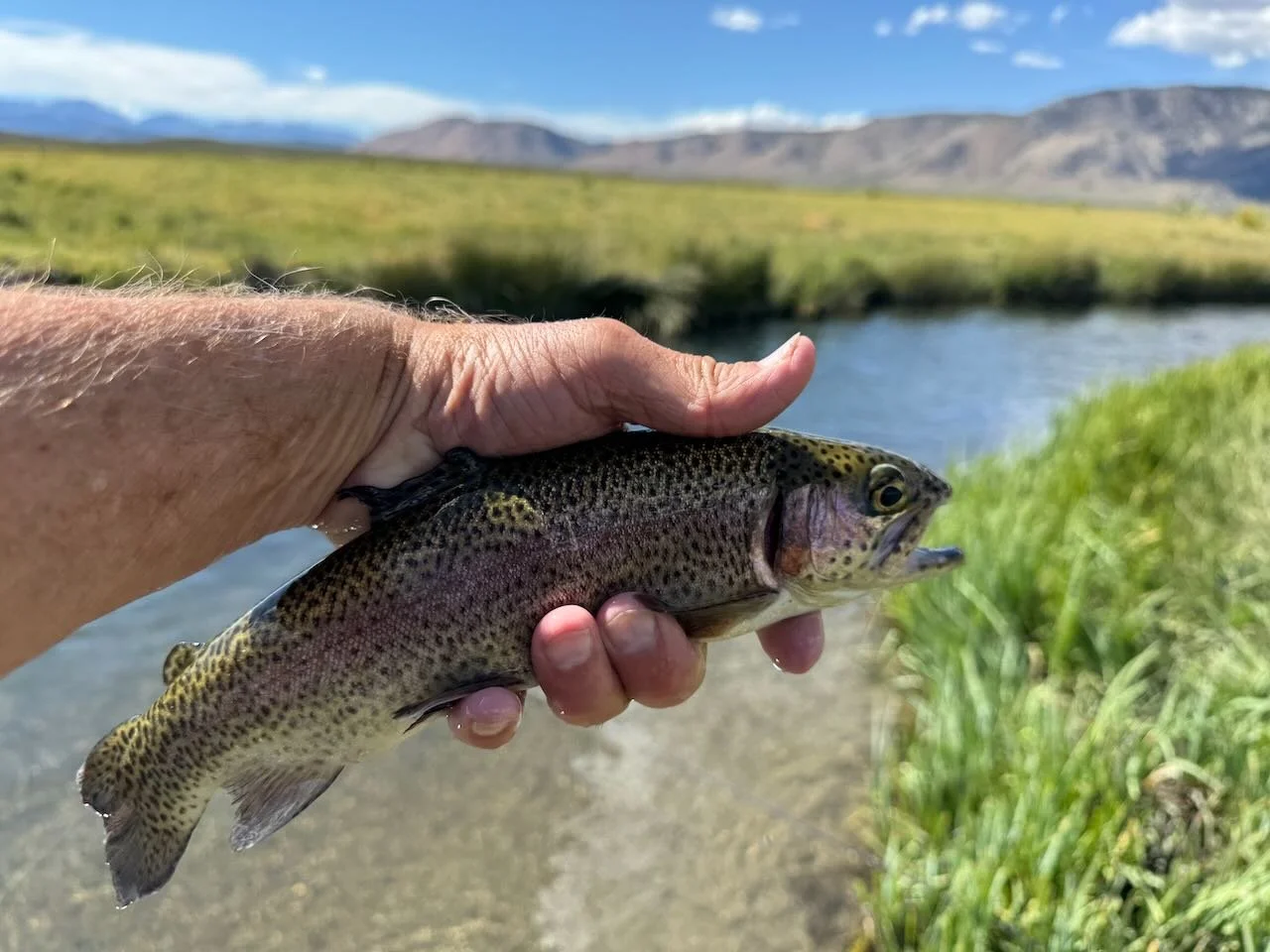
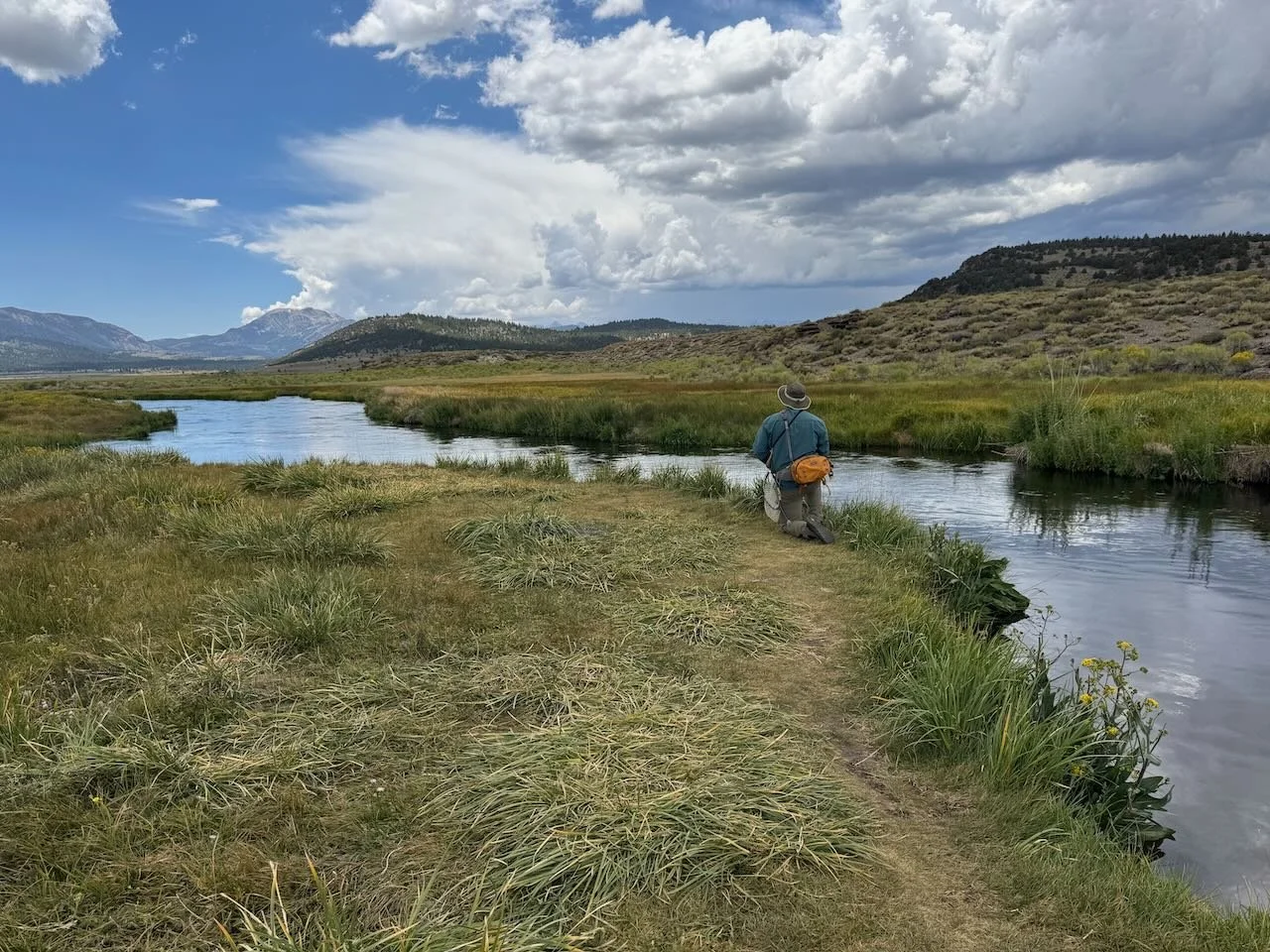
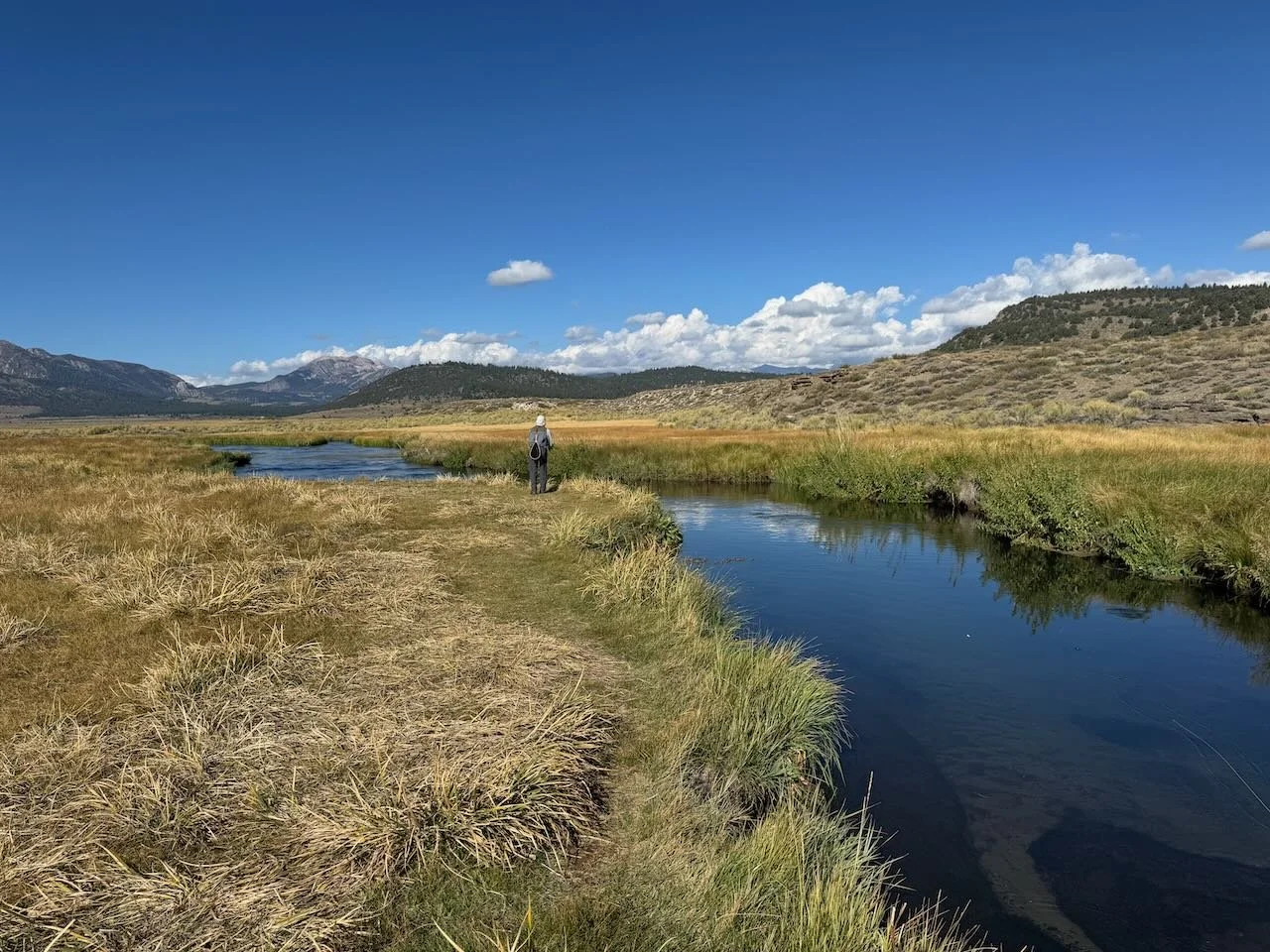
Don Sabatino from Riverside Euro nymphing on a Tenkara rod on the lower Owens River below Pleasant Valley Campground.

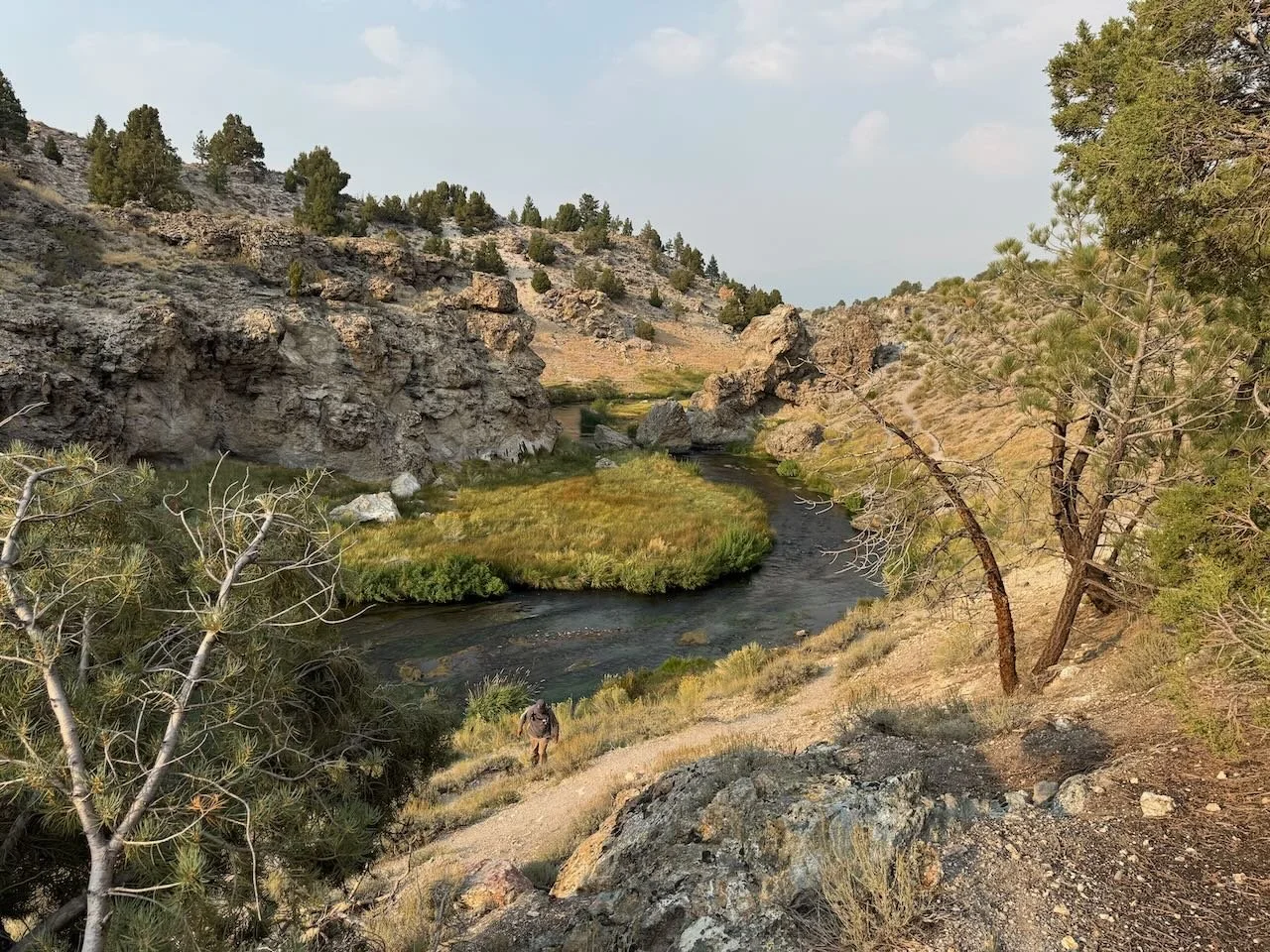
Hot Creek

Interpretive Site:

The tropical storms have been bringing precipitation to the Eastern Sierra and it has slowed down the trico hatch on some days. Most days start by fishing with a size 22 female trico parachute on a three foot 6X monofilament tippet. When the trout quit taking the parachute it’s time to switch to a size 22 trico spinner. On overcast days look for a blue wing olive hatch to start mid-morning and fish with a size 20 blue wing olive parachute. Most days fly fishing for the hatches on Hot Creek are over by noon.
The morning trico hatch has the wild brown and rainbow trout feeding on the surface for female tricos.

Hot Creek

Canyon Section:

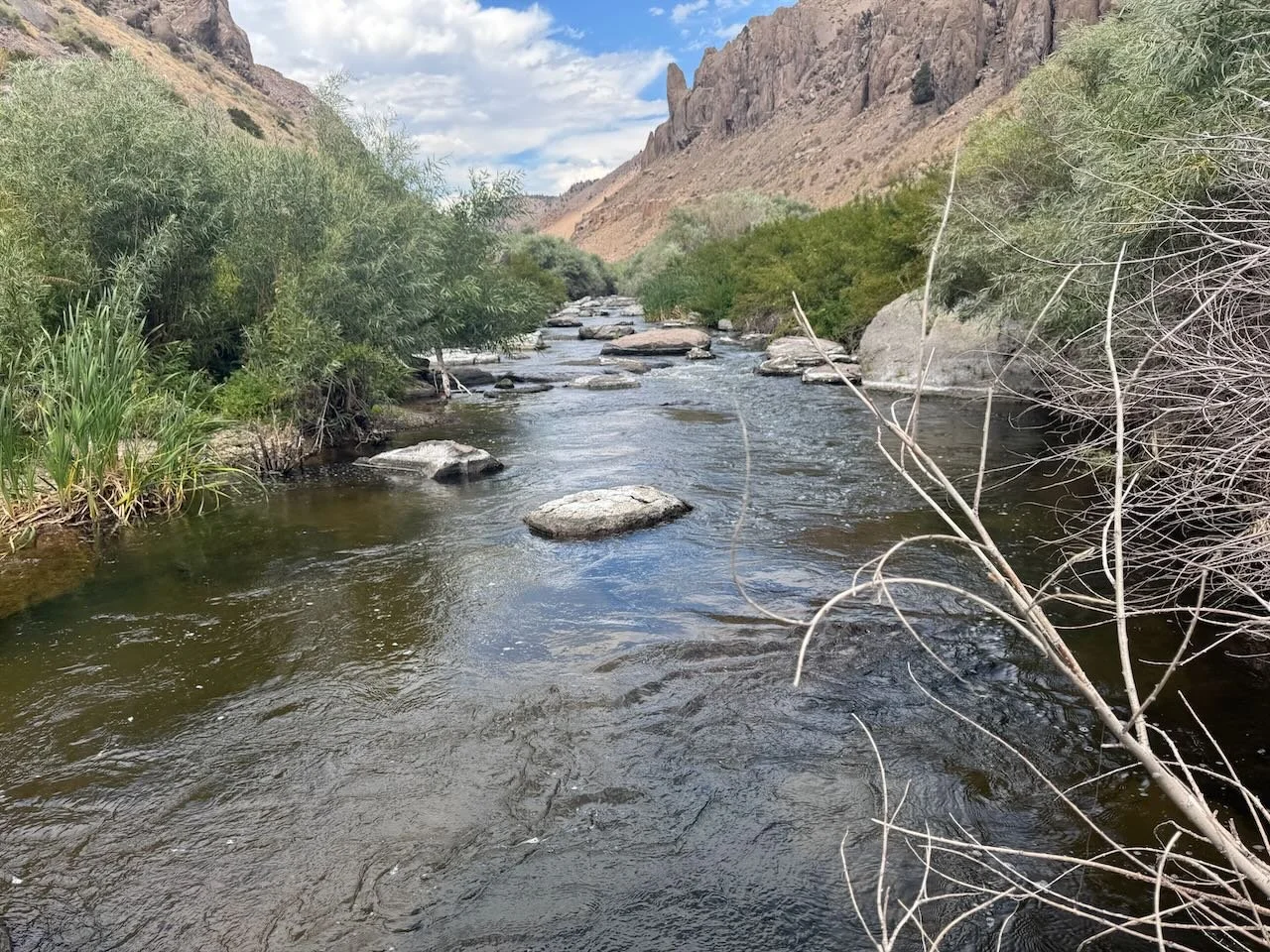
The canyon is my favorite spot to fish on Hot Creek. It requires good casting to make the drifts necessary to get the fish to take your nymphs and dries. Mornings start with the female trico hatch and fly fishers should be on the water fishing with a female trico parachute by 8:30 A.M. When the trout quit taking the parachute and are still feeding heavily on the surface switch to a size 22 trico spinner. When the hatch is over try fly fishing with nymphs between the weed beds and in the openings in the riffles and holes. Fish with size 18 olive quilldigons, size 18 bead head flash back pheasant tail nymphs, size 20 SOS nymphs and size 20 midges in tiger and zebra coloration.
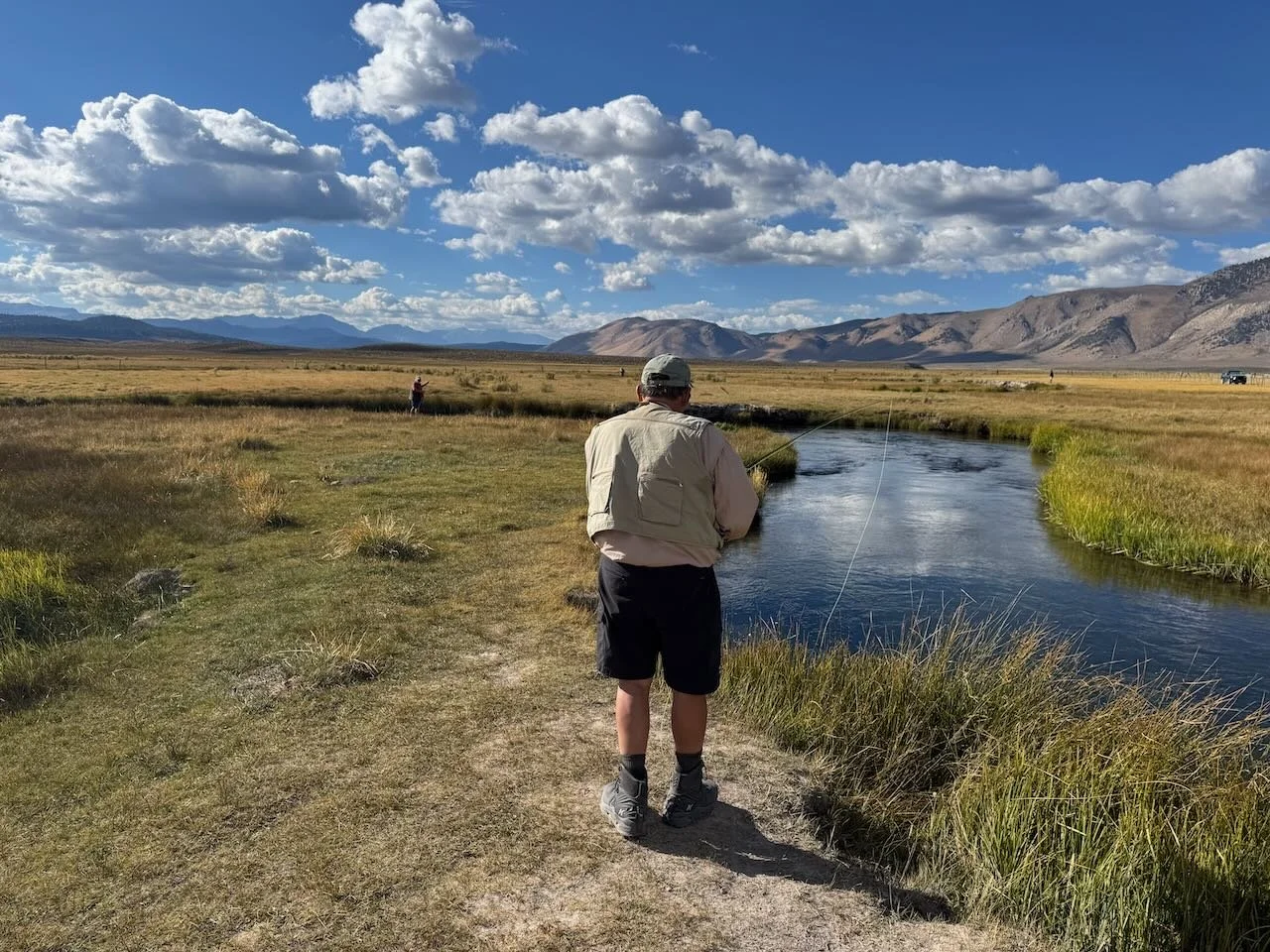
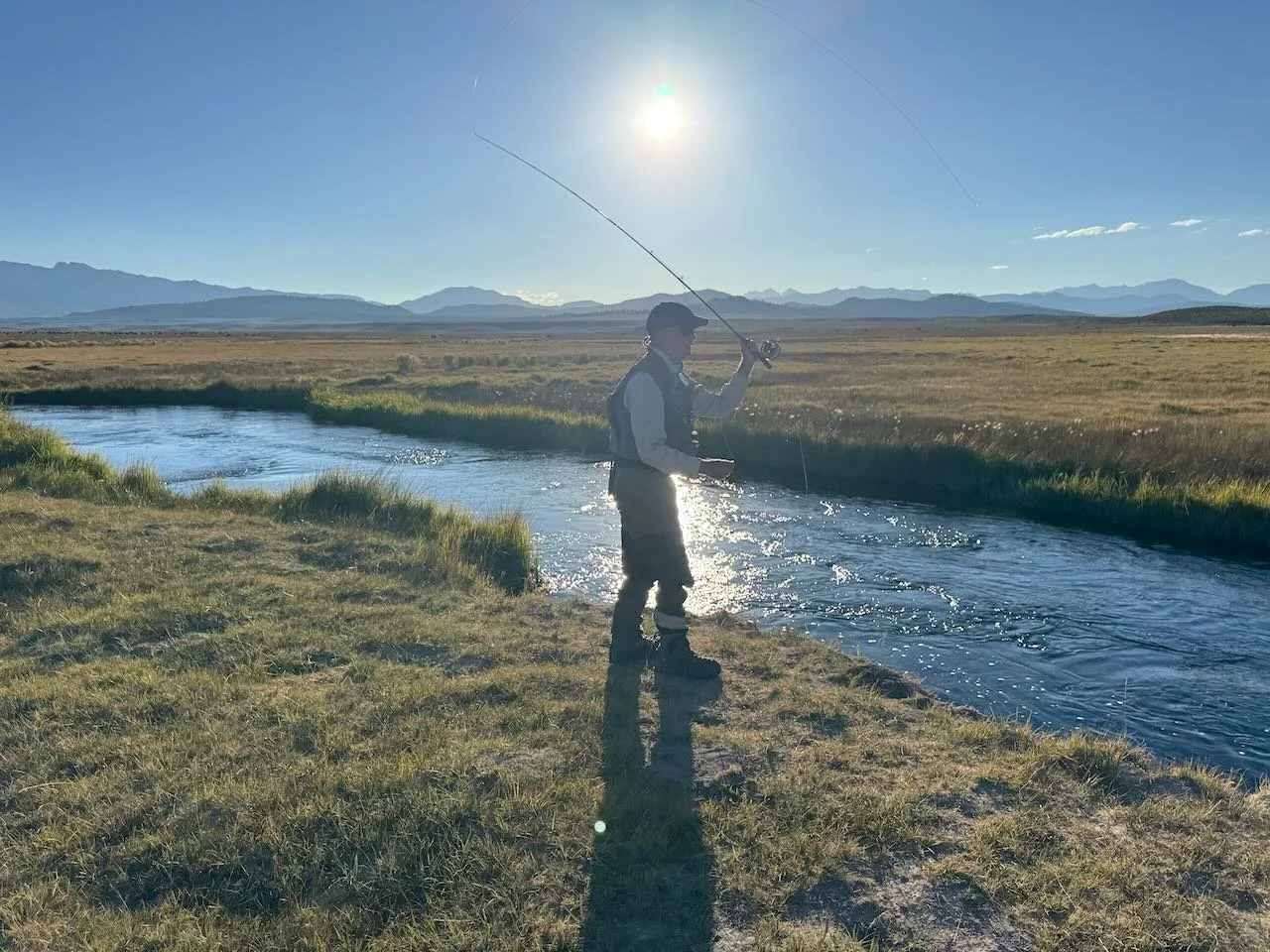
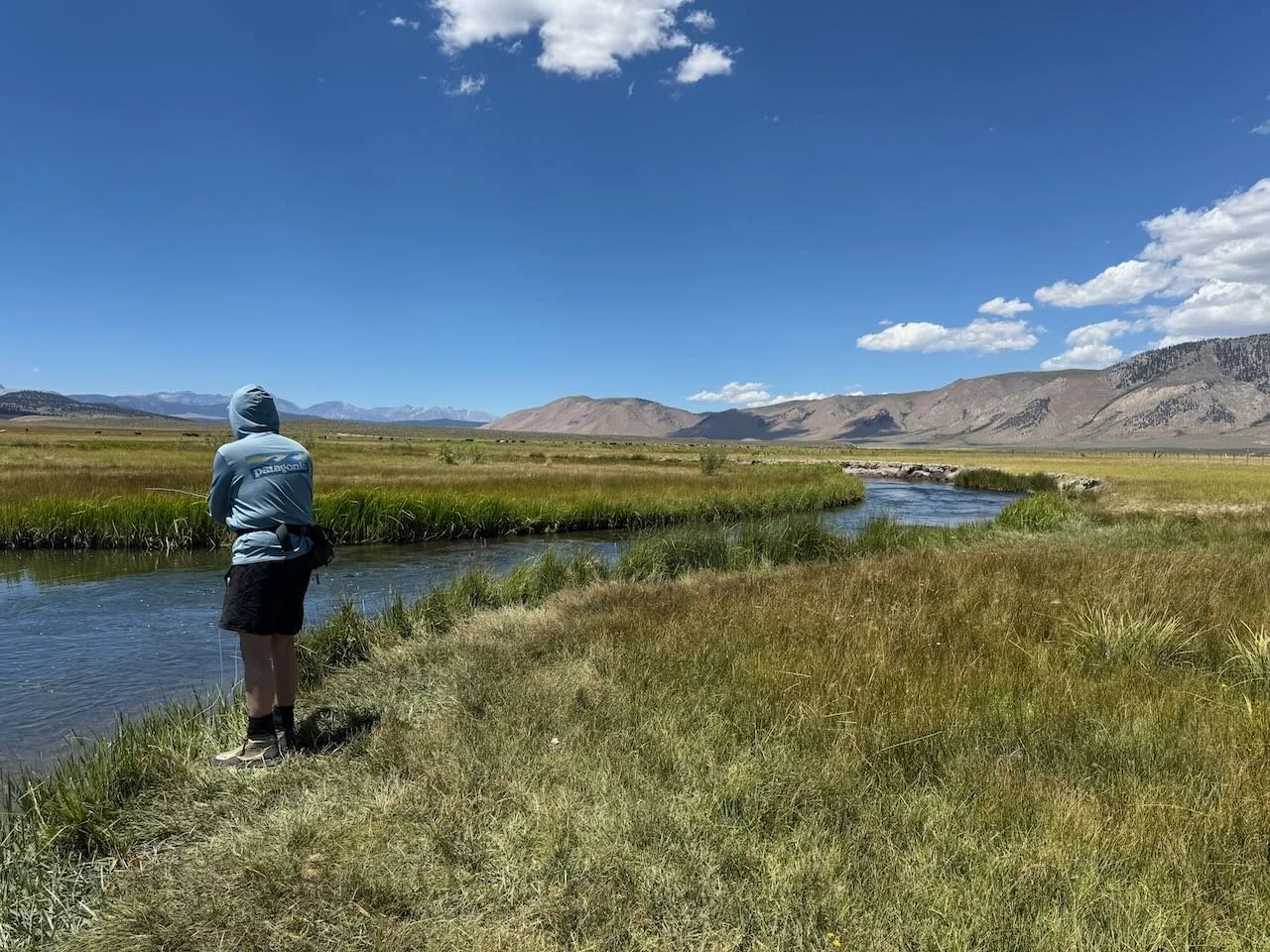
Darth Veynar indicator nymphing the upper Owens River with a stoner nymph and green/gold brassie working on hooking up with a trophy rainbow trout.

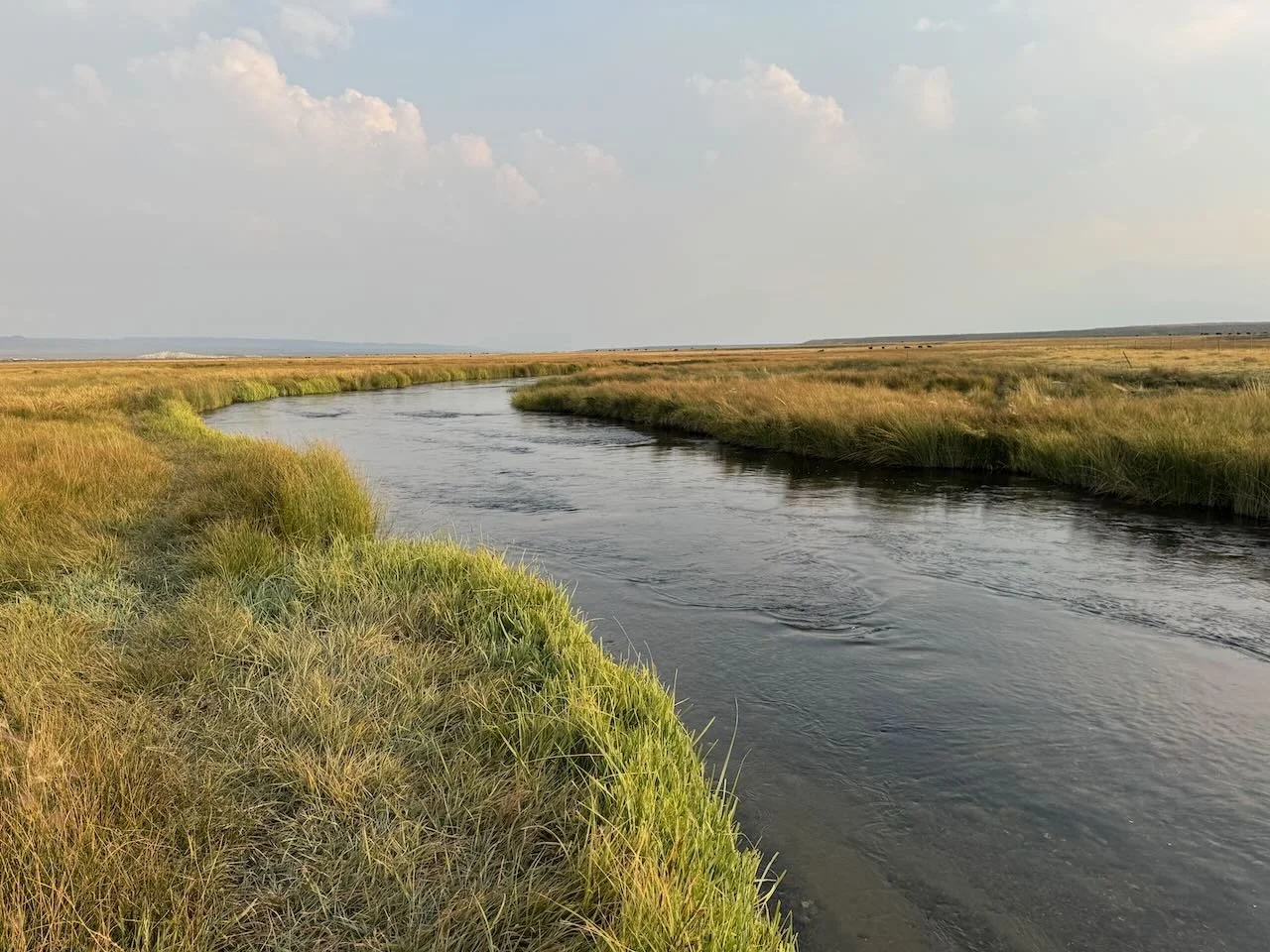
Upper Owens River

Above Benton Crossing Bridge:

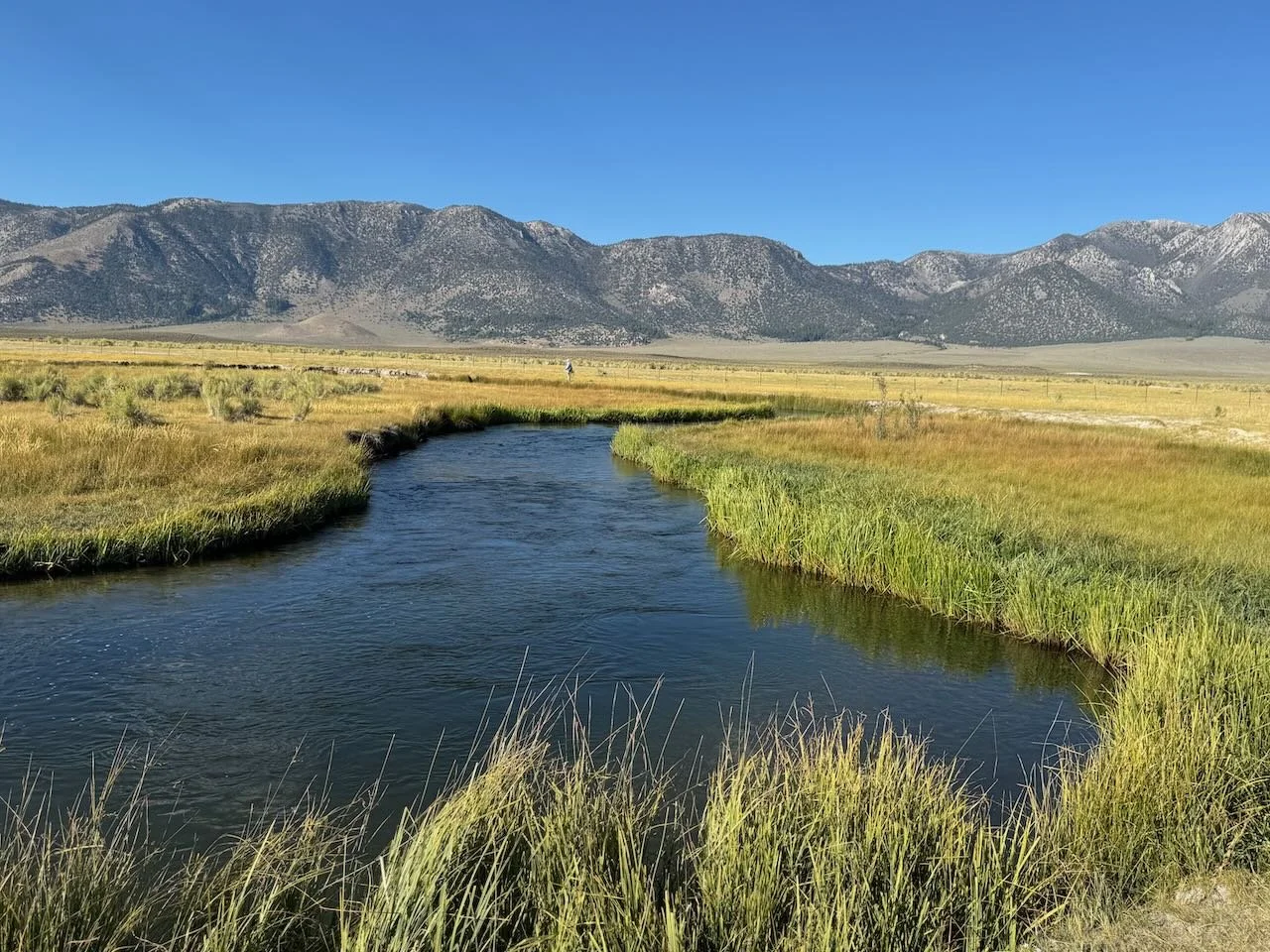
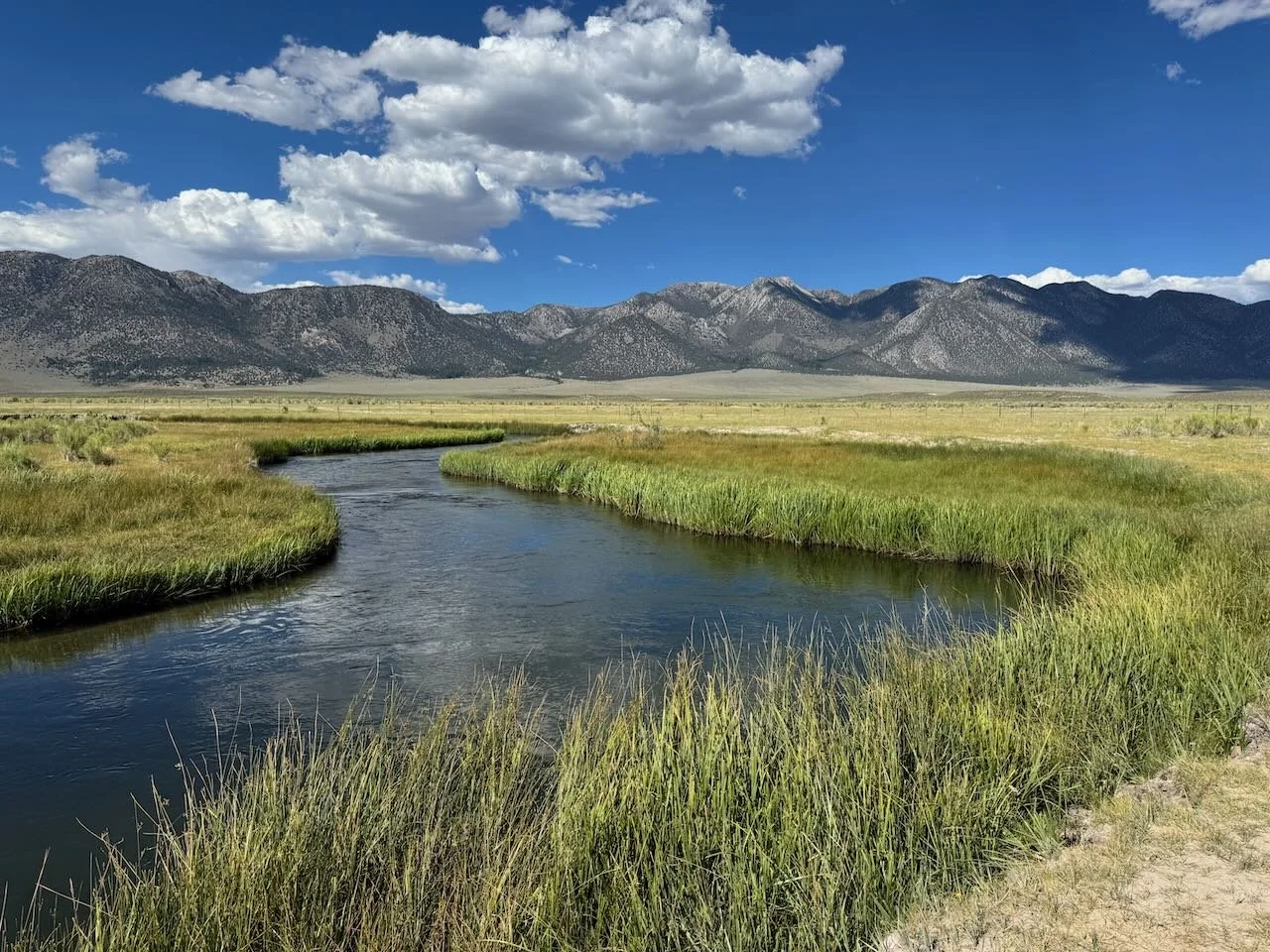
They’re here! Trophy rainbow and brown trout have moved into the Owens River above Benton Crossing Bridge. These trophy trout are taking size 12 stoner nymphs, size 12 green/gold Prince nymphs, size 12 gold ribbed hare’s ears variations and size 14 copper Johns fished in the deep holes, deep runs and cut banks. Stripping olive and white rabbit strip matukas, olive slumpbusters, olive wooly buggers and marabou muddlers in sizes six and 10 are being savagely hit by trophy trout. Key to success is to cover lots of water looking for that one or two trophy trout that wants to take your streamer. There is a good number of six to 10 inch wild browns and rainbows feeding on tricos in the morning and caddis in the afternoon. Use size 20 trico female parachutes in the mornings and switch over to a size 18 elk hair caddis for mid-day dry fly fishing. Nymphing with size 16 midges in zebra and tiger coloration, size 18 olive quilldigons and size 18 bead head flash back pheasant tail nymphs are fooling the resident young of the year trout.
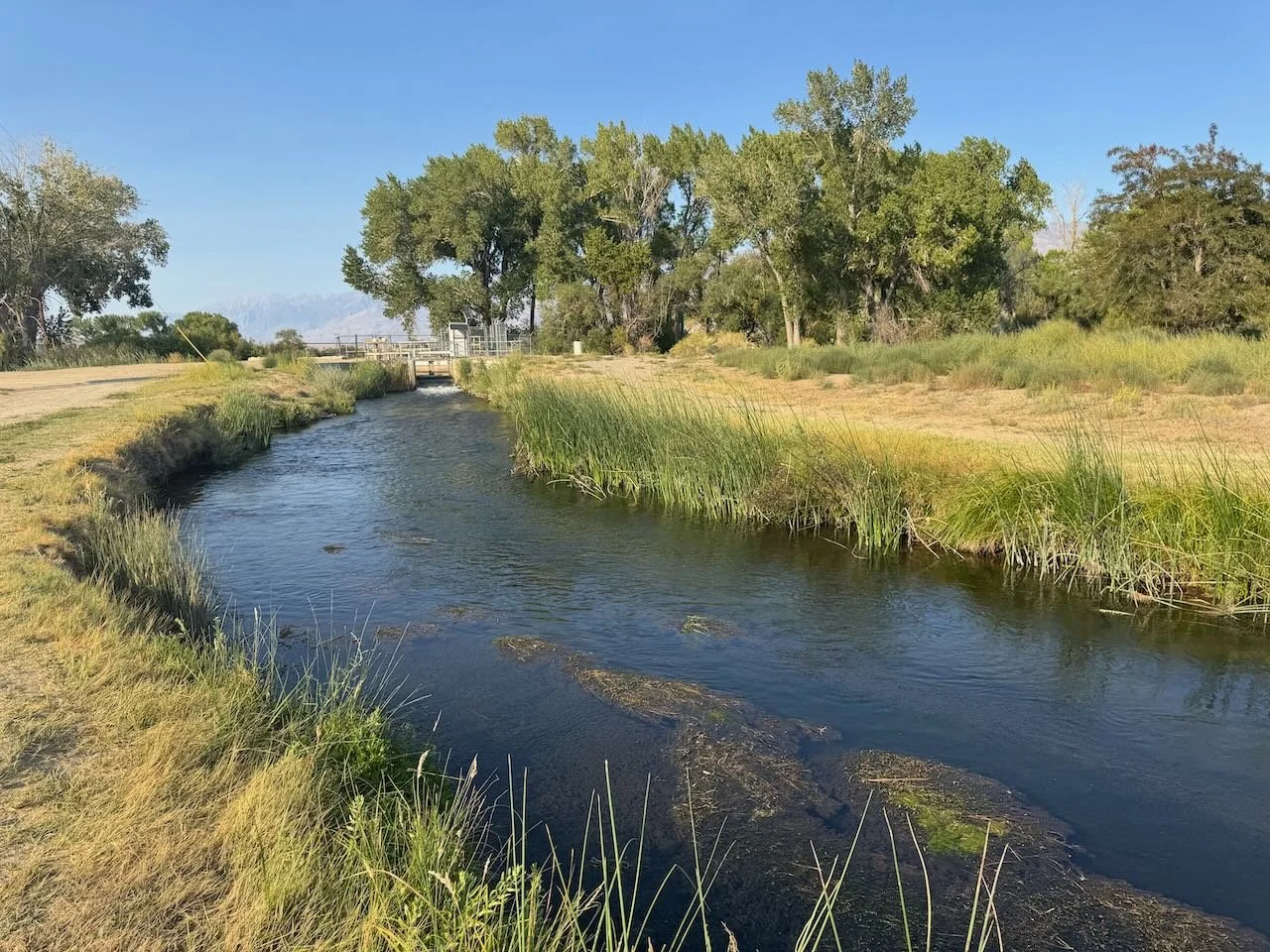
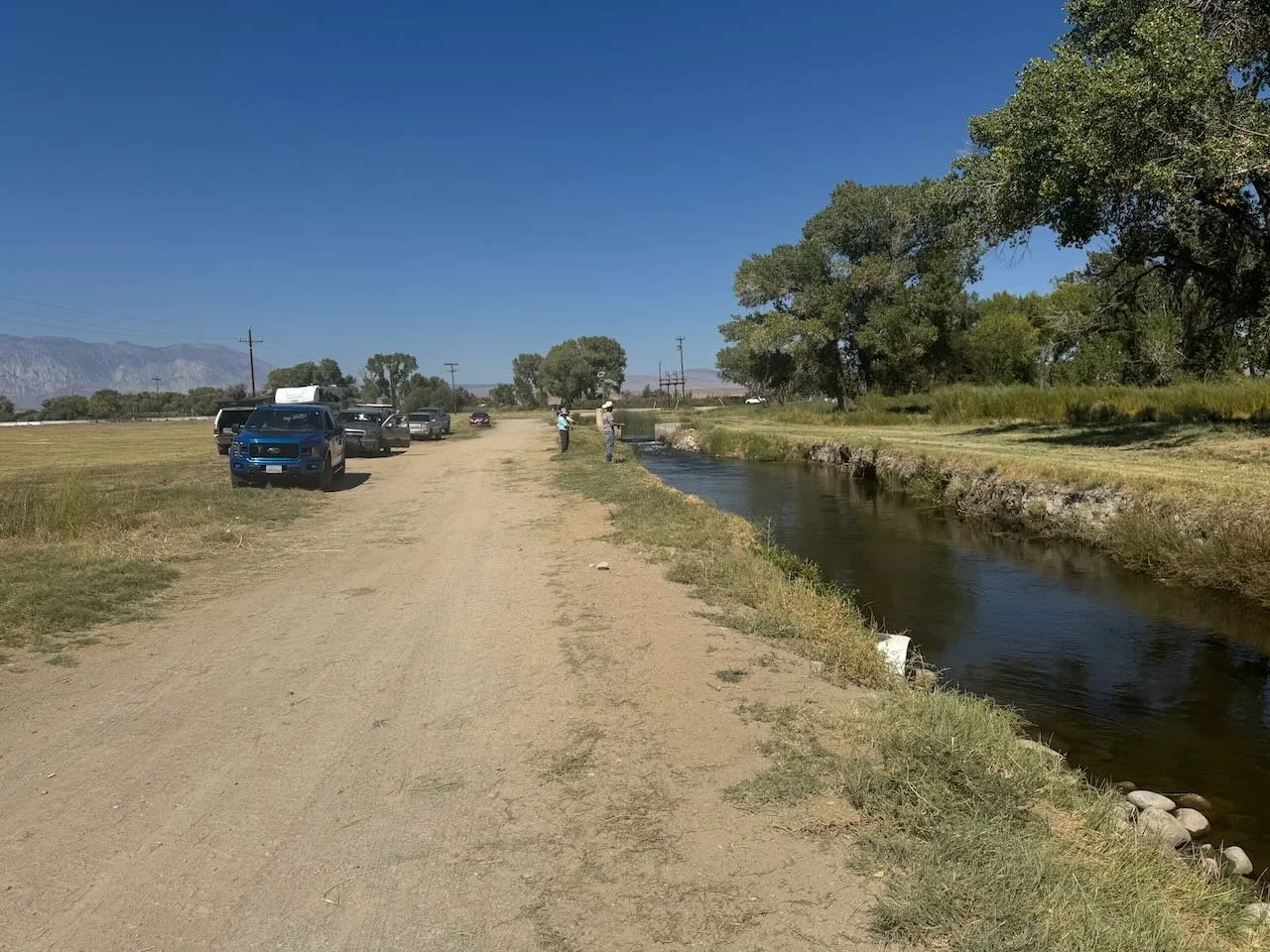
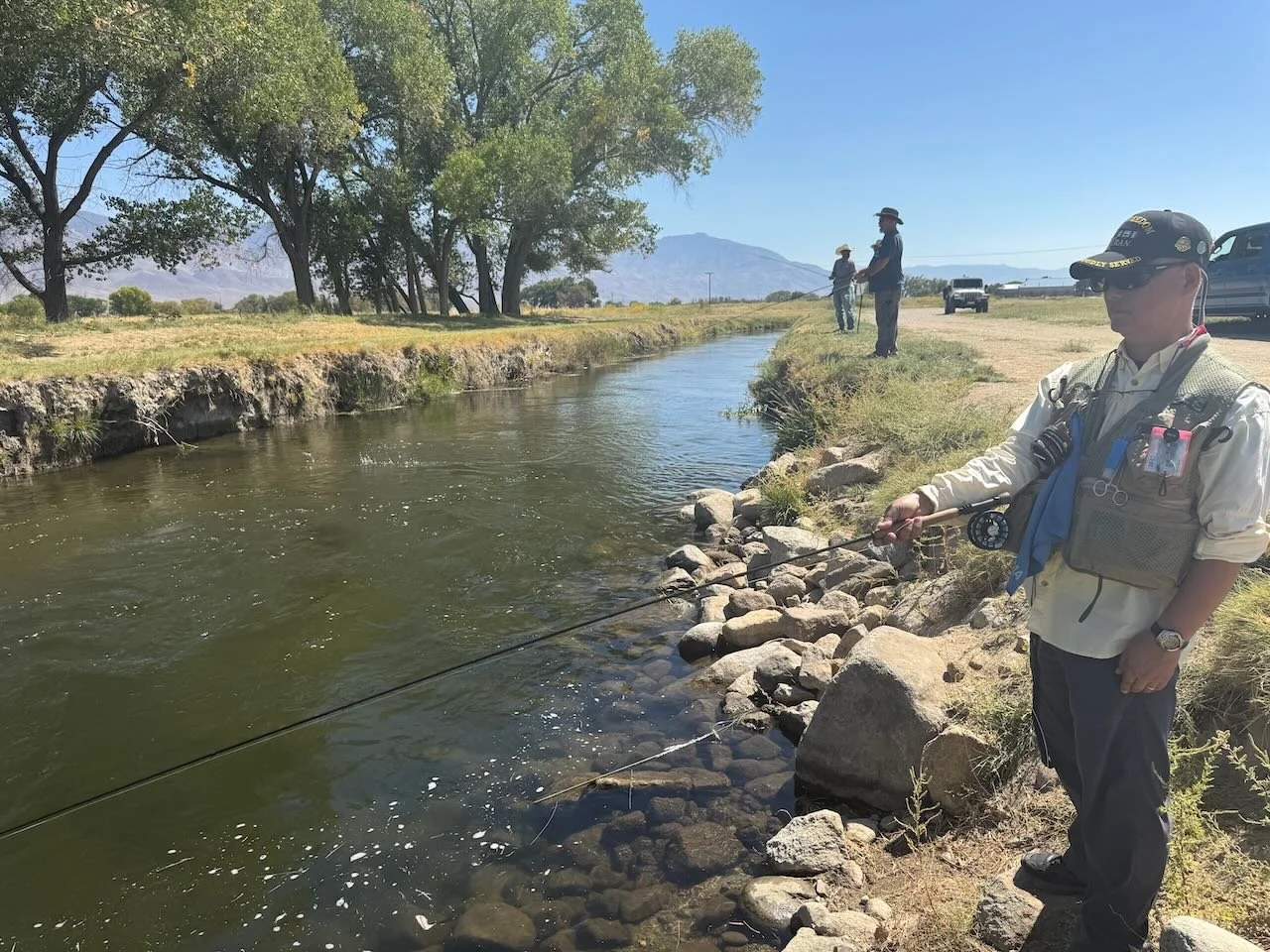
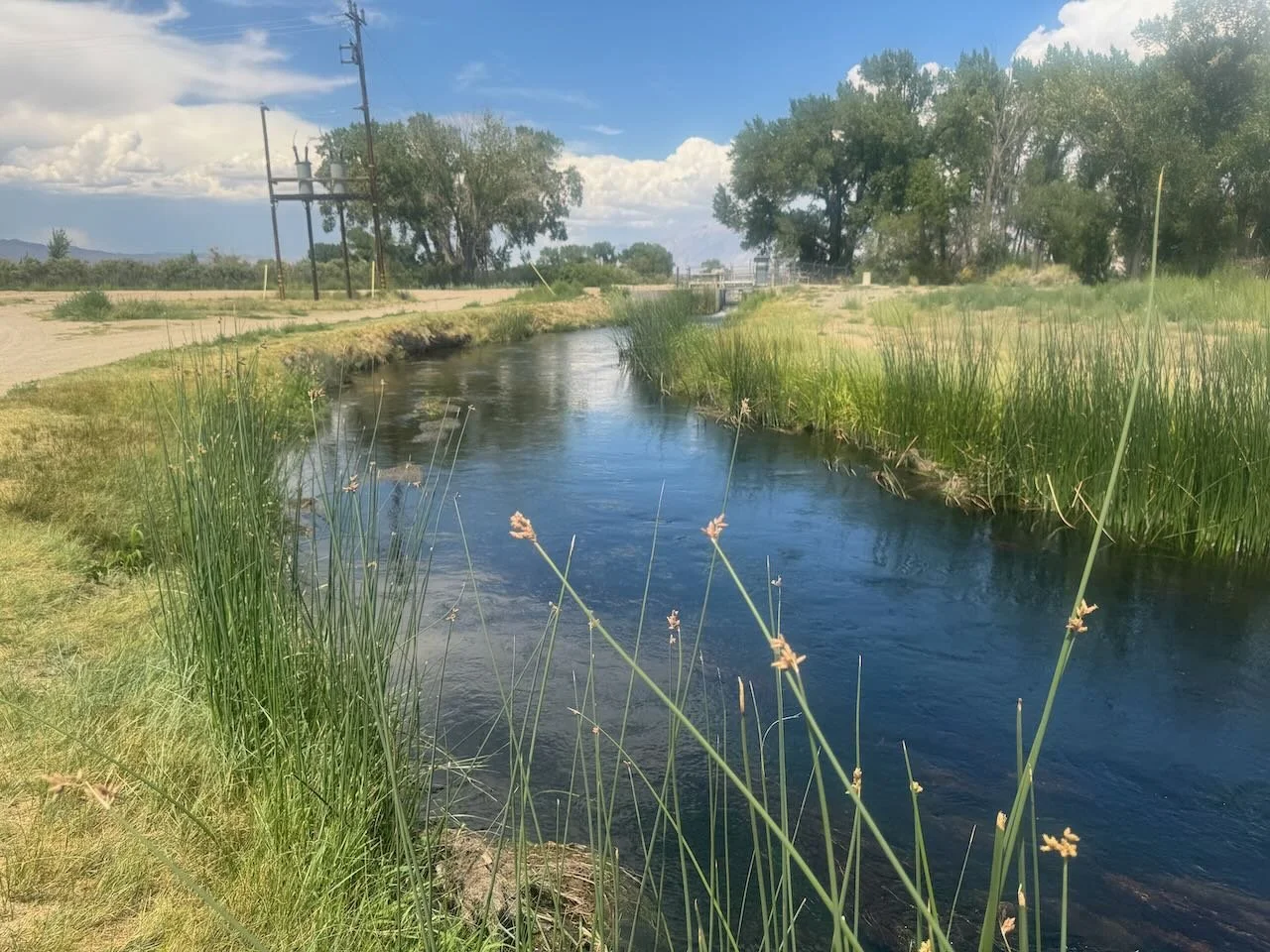
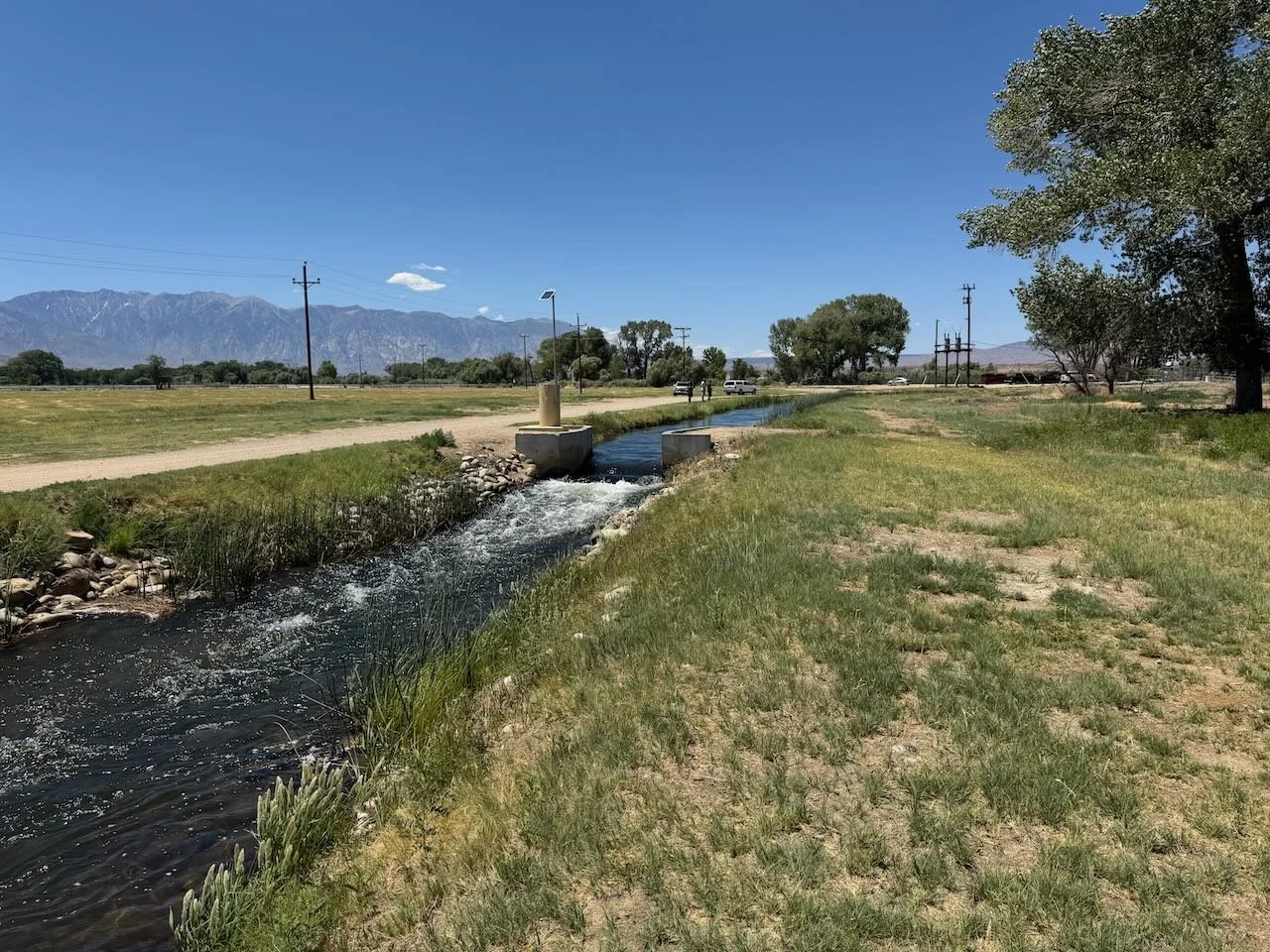
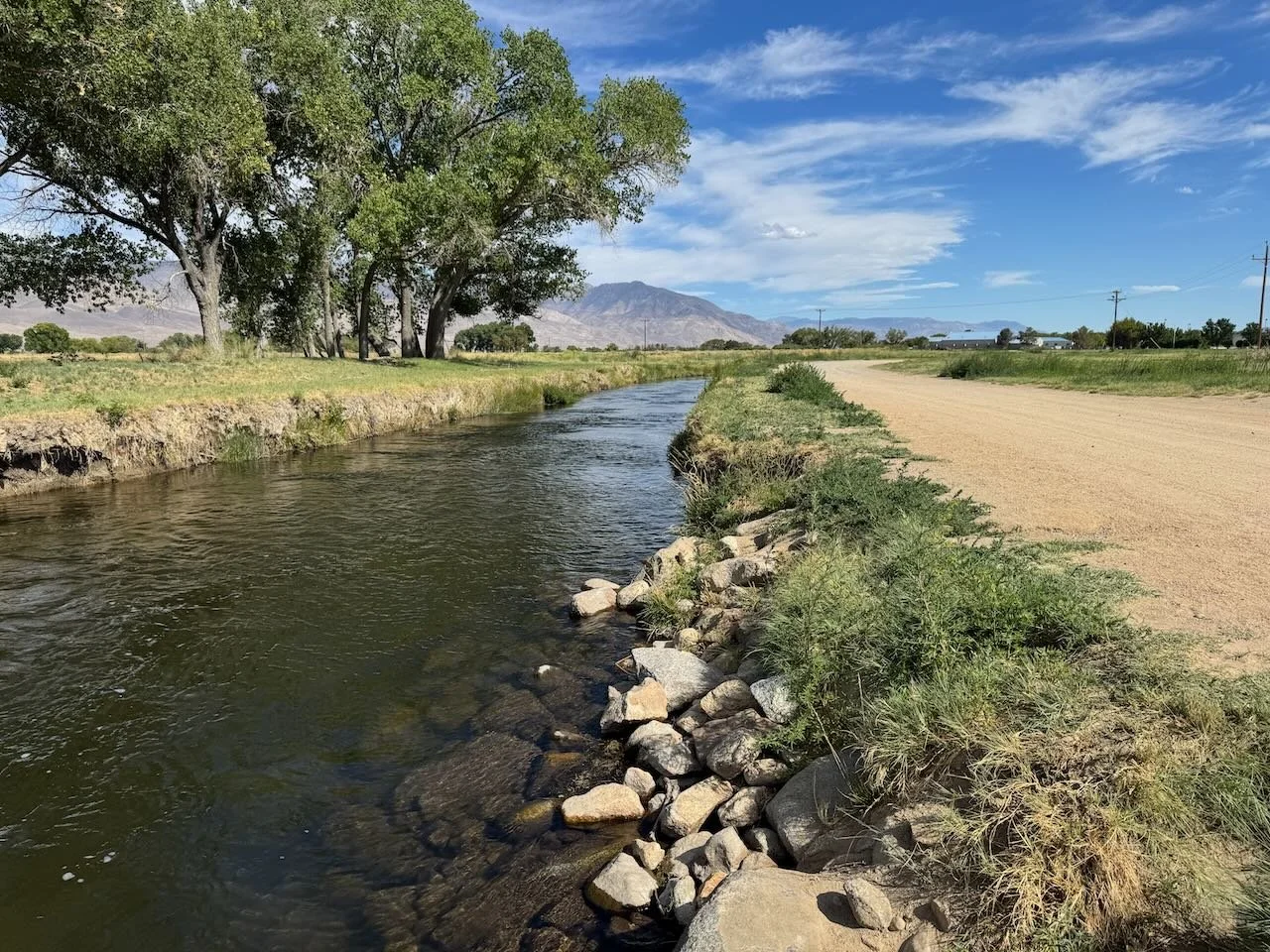
Tenkara Tunki rods held their annual Bishop Tenkara Boot Camp and the participants were able to catch trout out of the canal on nymphs.

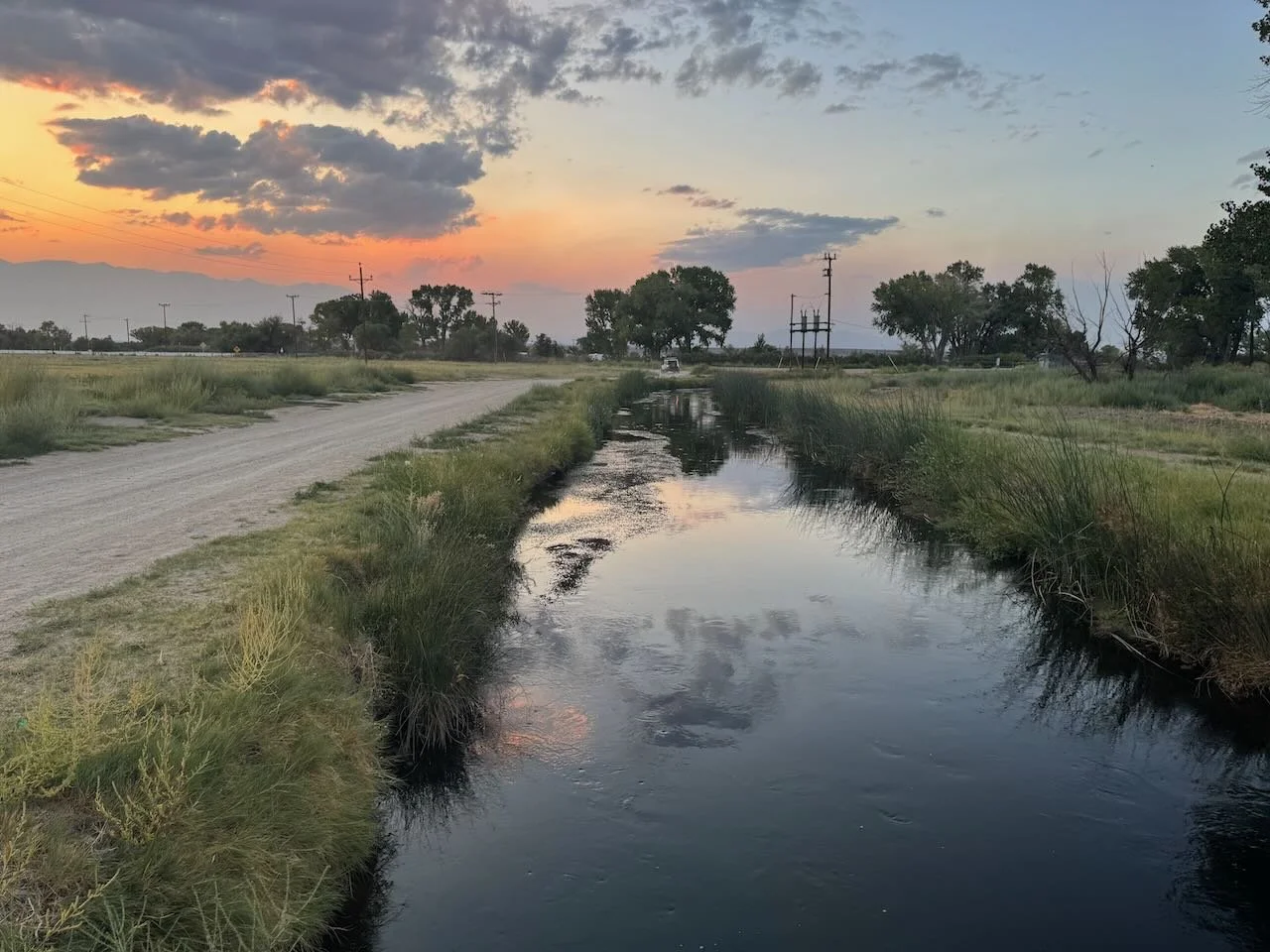
Bishop Creek Canal

Behind Bishop Veterinary Hospital:

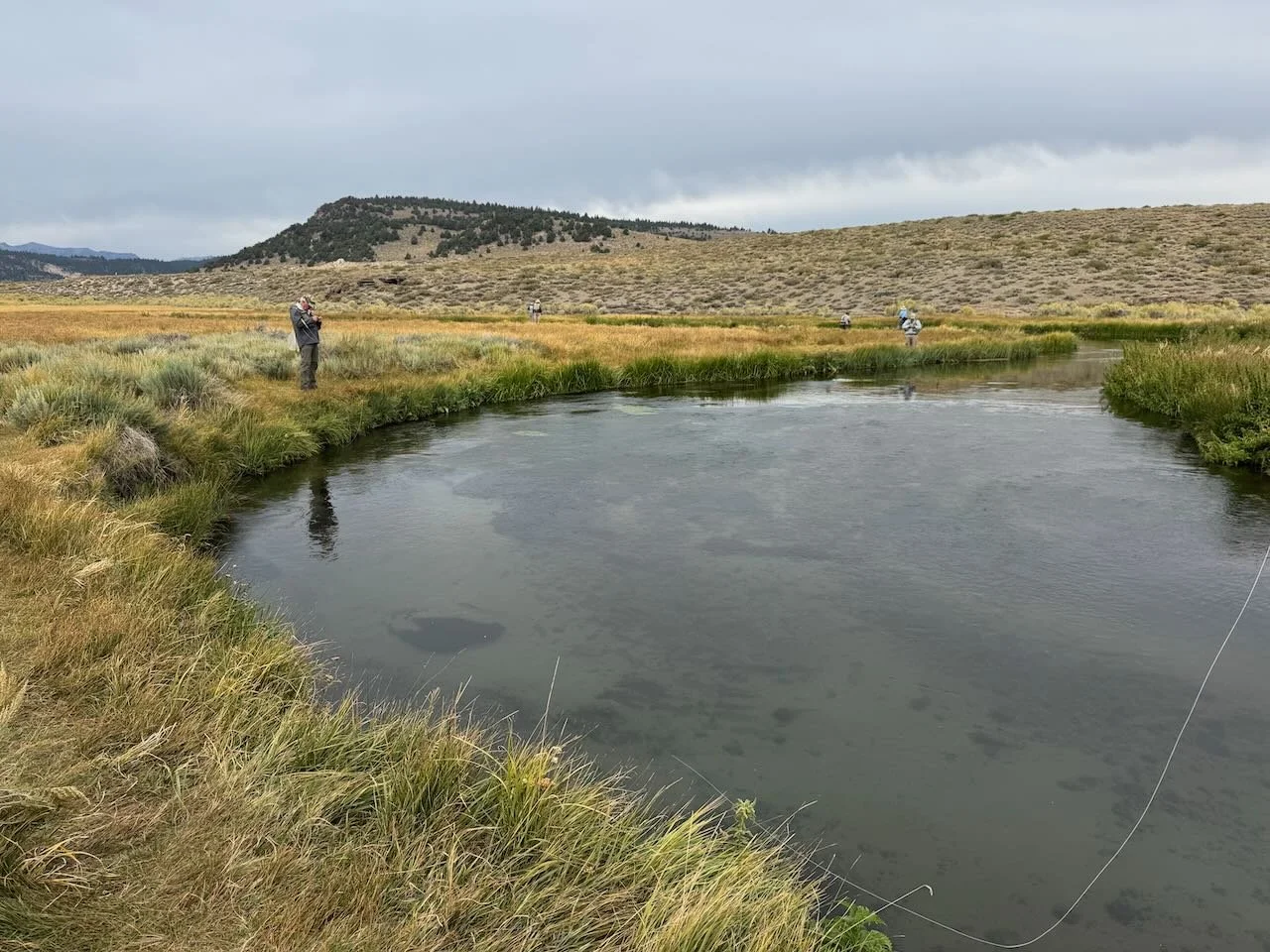
For the fly fisher thoroughly covering the sandy lanes between the weed beds there are wild browns and stocked rainbows to be caught. Nymphing with size 18 olive quilldigons, size 18 bead head flash back pheasant tail nymphs, size 16 bead head flash back gold ribbed hare’s ears, size 16 green/gold brassies and size 16 midges in zebra and tiger coloration. A big group of Tenkara Boot Camp participants fished Bishop Creek Canal Sunday morning and several tenkara anglers caught trout on nymphs.
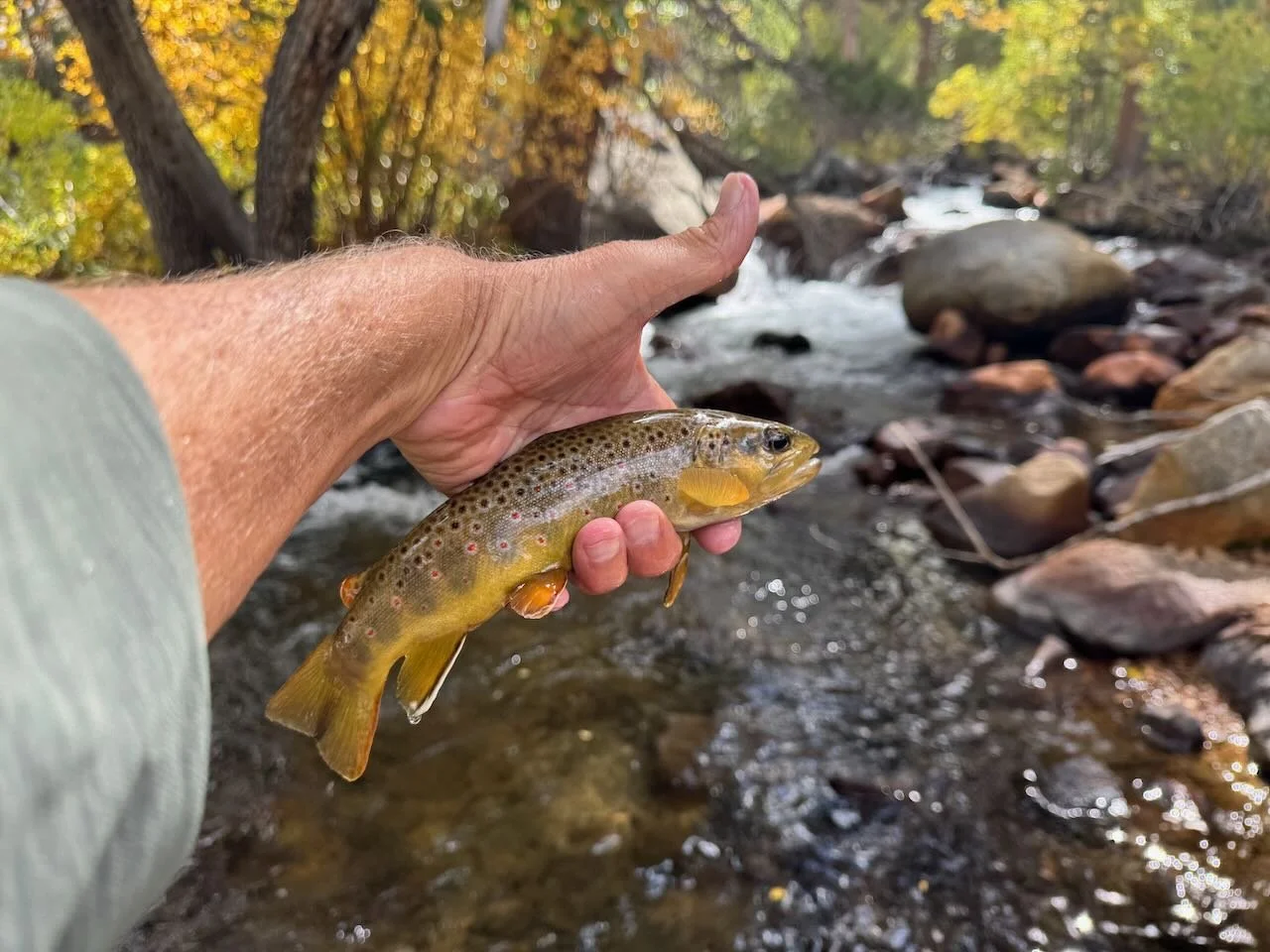
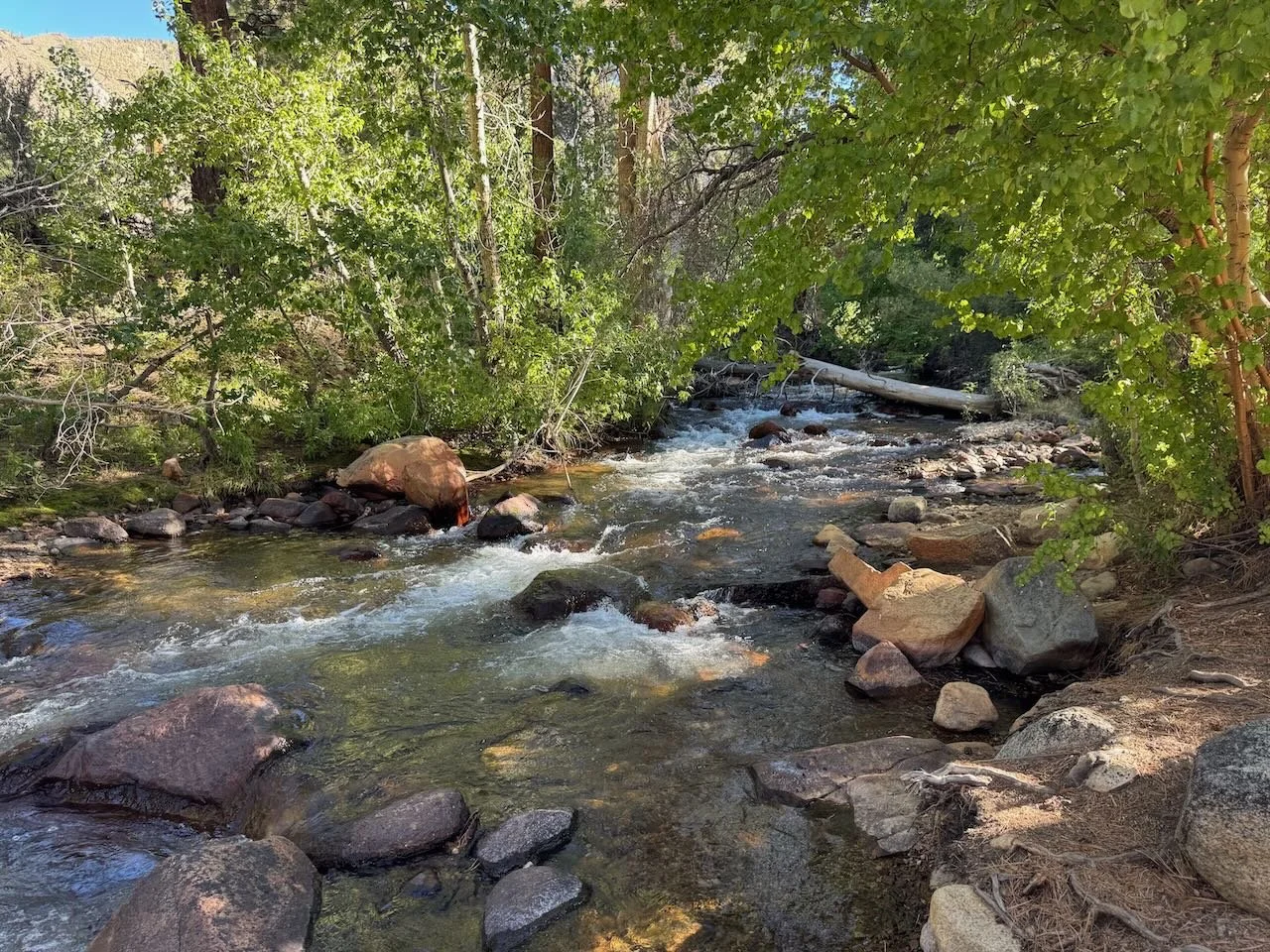
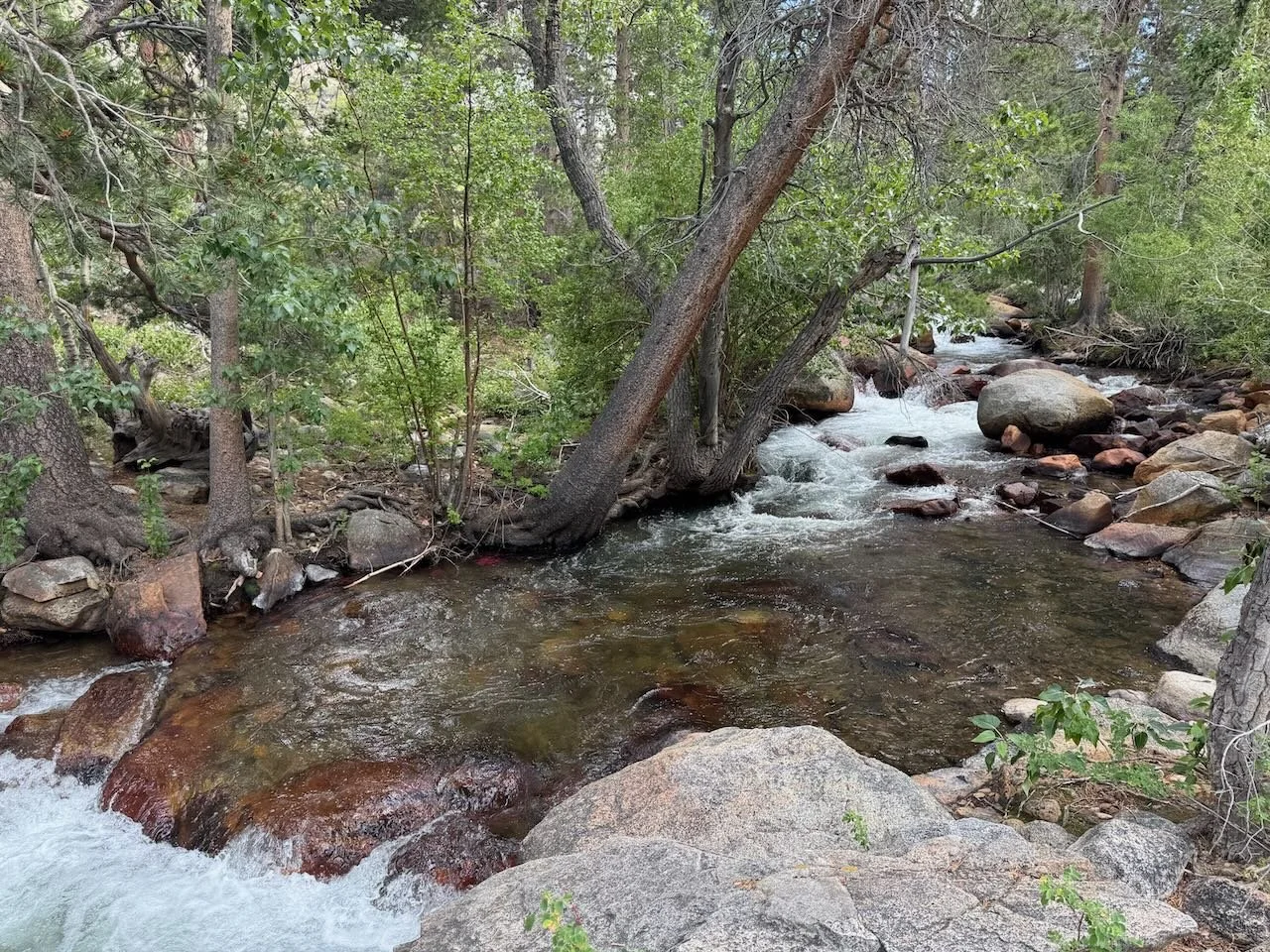
Fall colors, wild brown trout, bush whacking Bishop Creek and getting rained on is a perfect fall day on Bishop Creek.

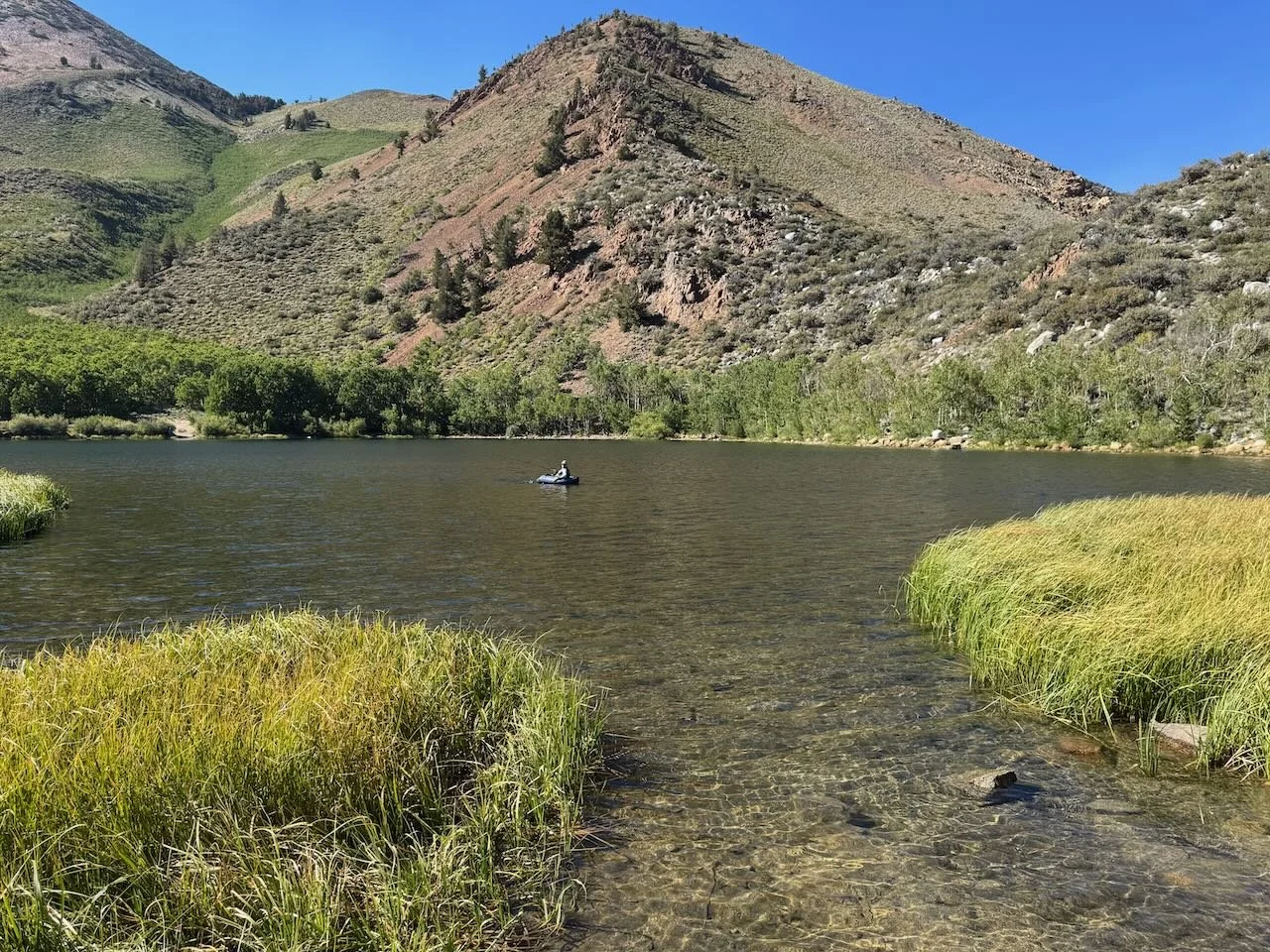
Bishop Creek Canyon

Middle Fork:

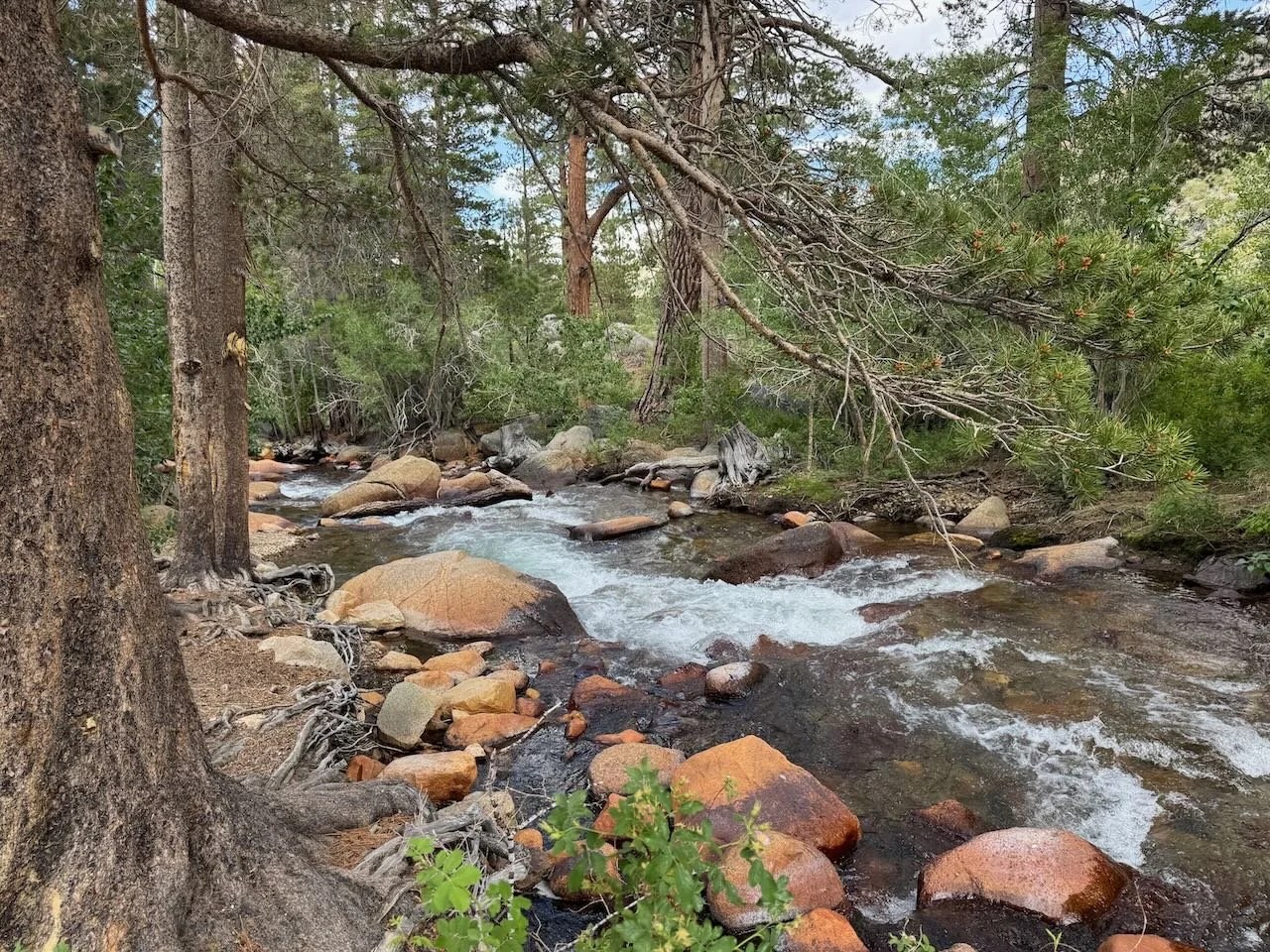
North Lake, middle fork of Bishop Creek and Weir pond all have great fall colors and should peak by the weekend or early next week. Fly fishing in Bishop Creek has been a blast for stocked rainbows, wild brown and wild brook trout. Fishing a size 16 stimulator and a size 16 tiger midge in the pockets and pools of the creek has been the effective method of fooling the trout. Best dry fly to fish with is your favorite dry fly as you will fish it with the most confidence. High visible and high floating flies like stimulators, Adams parachutes, elk hair caddis and Royal Wulff’s are great dry flies for Bishop Creek. For the nymphs fish with size 16 bead head flash back gold ribbed Hare’s ears, size 18 bead head flash back pheasant tail nymphs, size 16 Prince nymphs, size 16 green/gold brassies and size 16 midges in zebra and tiger coloration. The fun part of fishing the creek is walking along the brush lined banks looking for that pool or pocket to drift your flies through. Then watching the dry fly move and setting the hook on a nymph eating trout or watching a trout rise to the surface to take your dry fly. Bush whacking the creeks that drain the Eastern side of the Sierra is one of my favorite ways to fly fish.
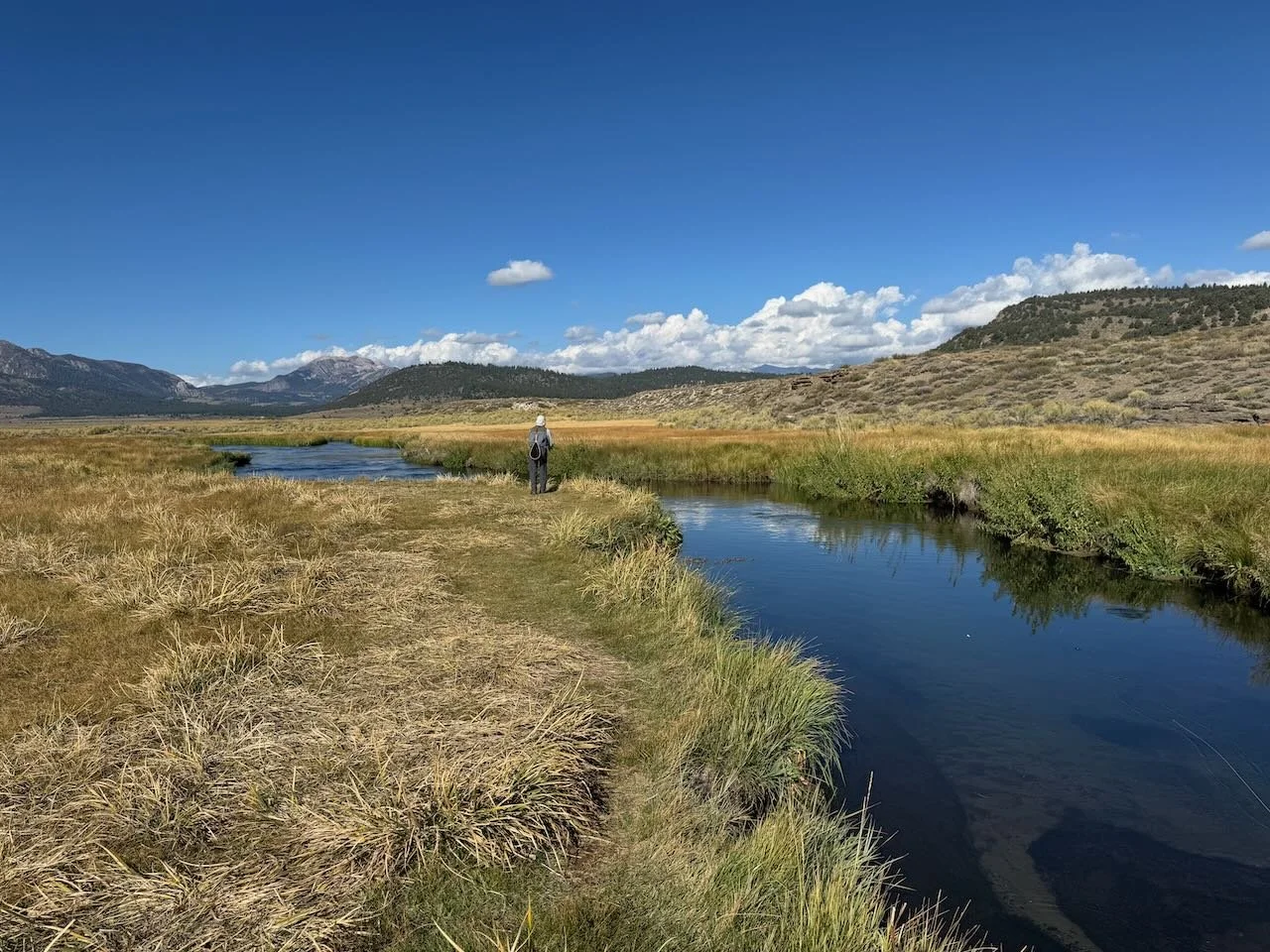
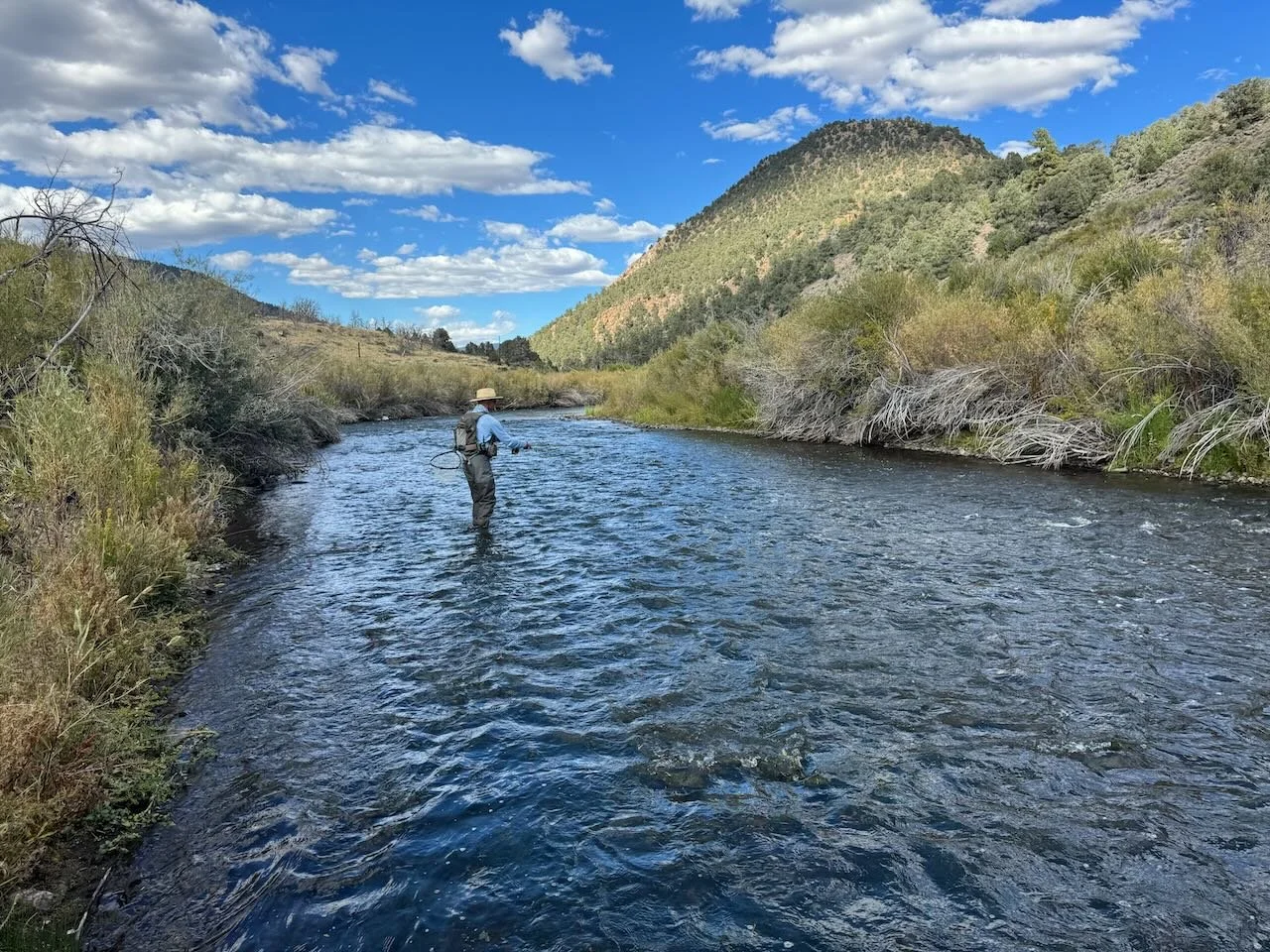
Sierra Bright Dot Fly Fishing Report 09-25-2025

It’s that time of the year when I drive out in the morning to the fly fishing water for a day of guiding and I turn the heater on in the truck. Then when I drive home middle of the day I turn on the air conditioner. When I drive home after a full day on the water I have the air conditioner on if I’m hot and I have the heater on if I’m cold and wet. Fall is here! Quaking aspens are turning yellow, brown and brook trout are spawning and the trophy trout are beginning their migrations out of the lakes and into the streams. Streamers are producing trophy trout. Mayflies, midges and caddisflies are being fed on by trout on the surface and on the substrate. The Garnet Fire is nearly contained and the Eastern Sierra has been smoke free all week.

East Walker River:

Flows on the East Walker River are perfect for wading and presenting dry flies, nymphs and streamers to the trout. Nymphing with an indicator requires diligence in observing movement in the indicator notifying the fly fisher a fish has taken the nymph. Setting the hook on any movement will produce trout. Euro nymphing is the productive way of working nymphs on the substrate of the river and is producing good numbers of six to 12 inch trout. Fish with size 18 olive quilldigons, size 16 bead head flash back gold ribbed hare’s ears, size 18 bead head flash  back pheasant tail nymphs, size 18 Frenchies, size 16 SOS nymphs, size 12 stoner nymphs and size 16 midges in blood, tiger and zebra colorations. Wooly buggers and zonkers in black and olive in sizes six and 10 are producing brown trout to 20 inches.

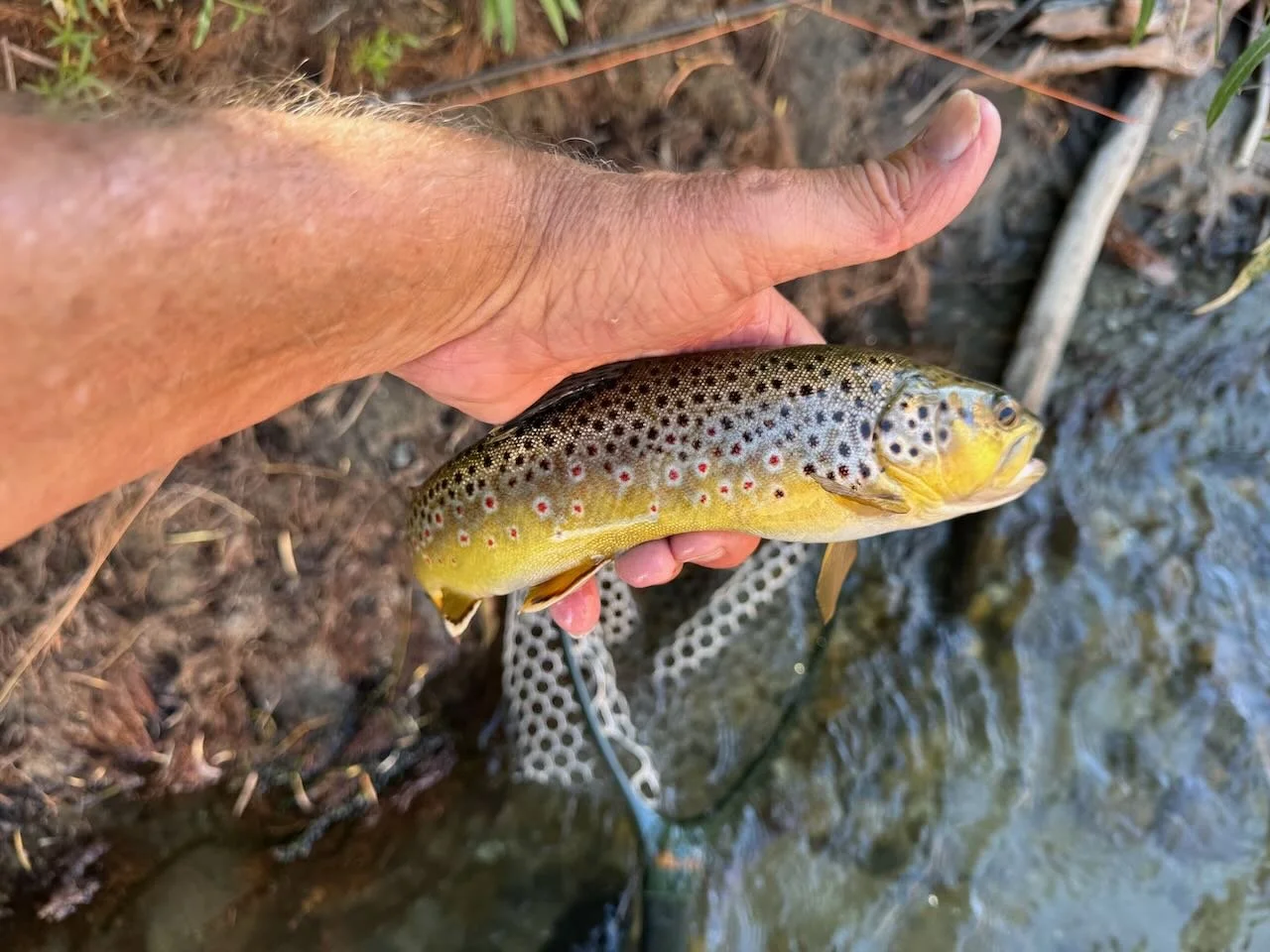
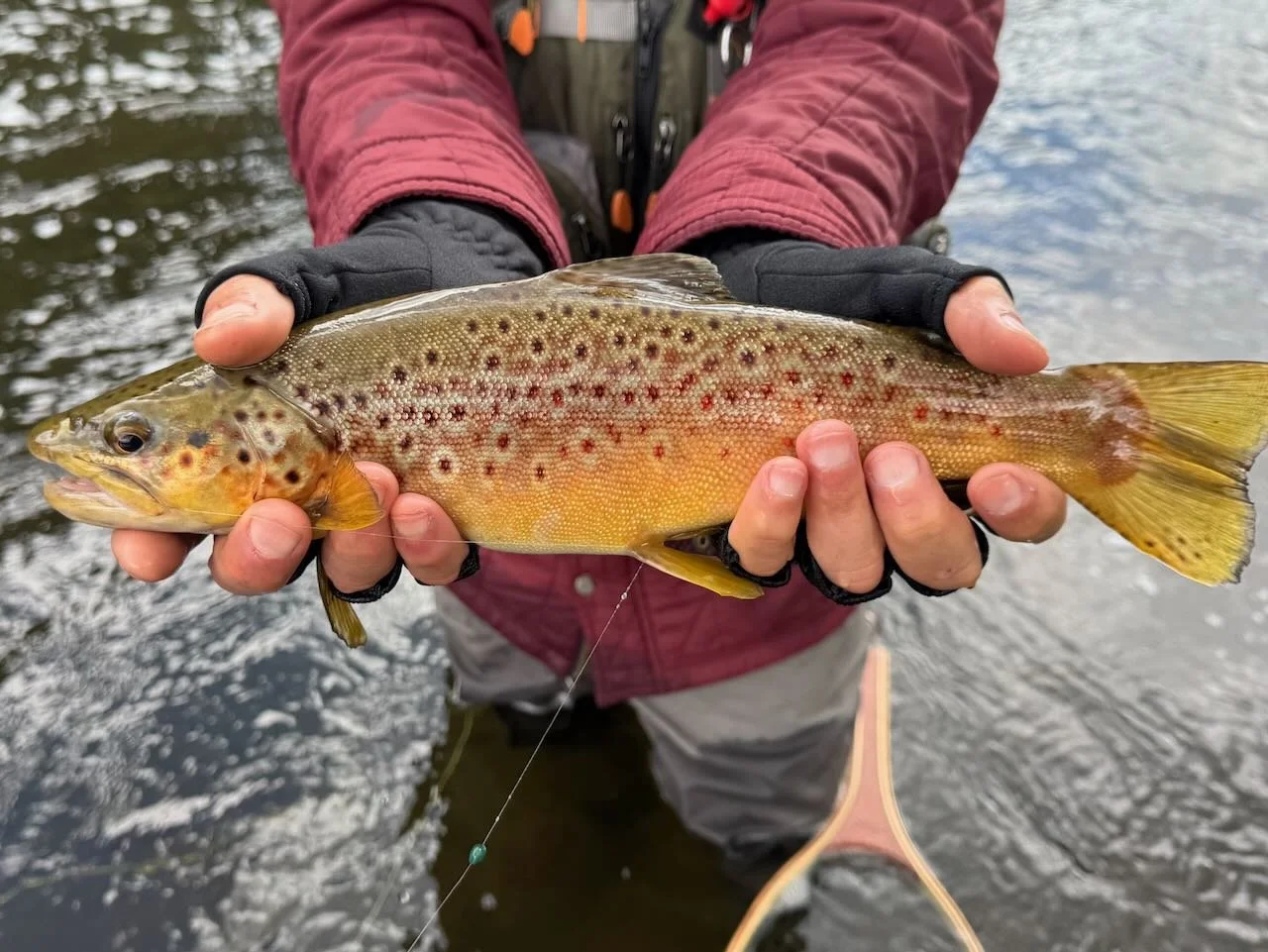
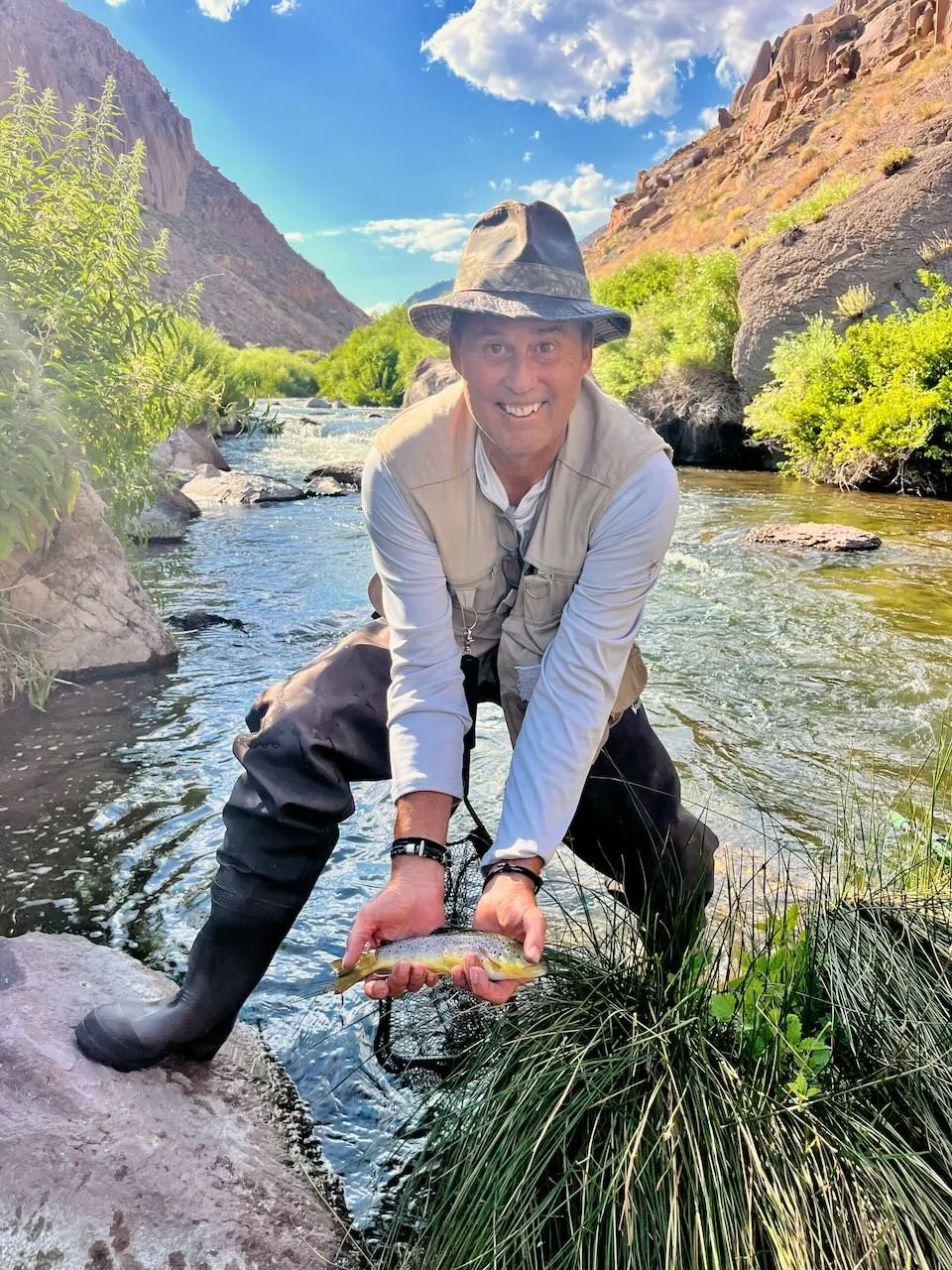
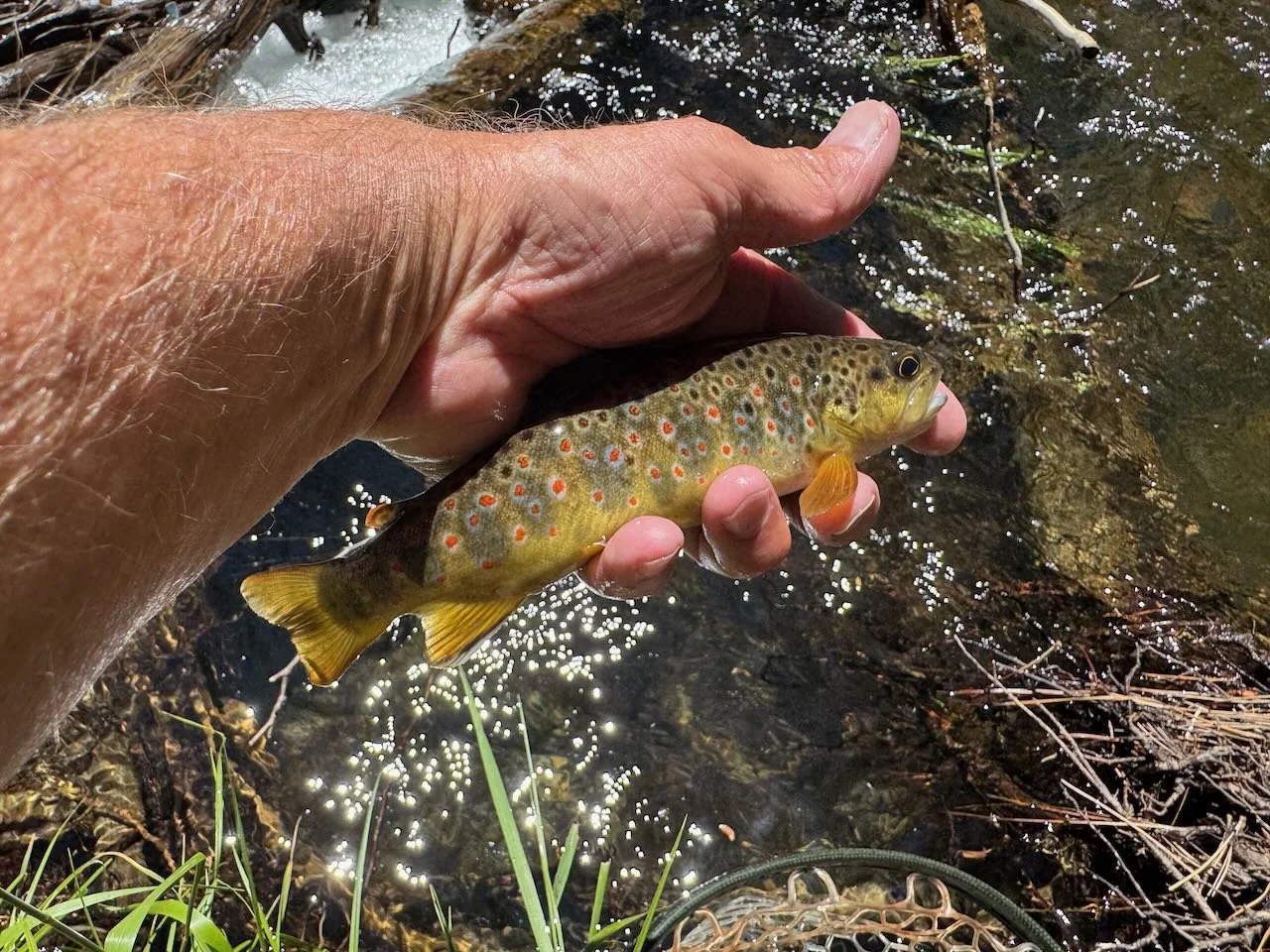
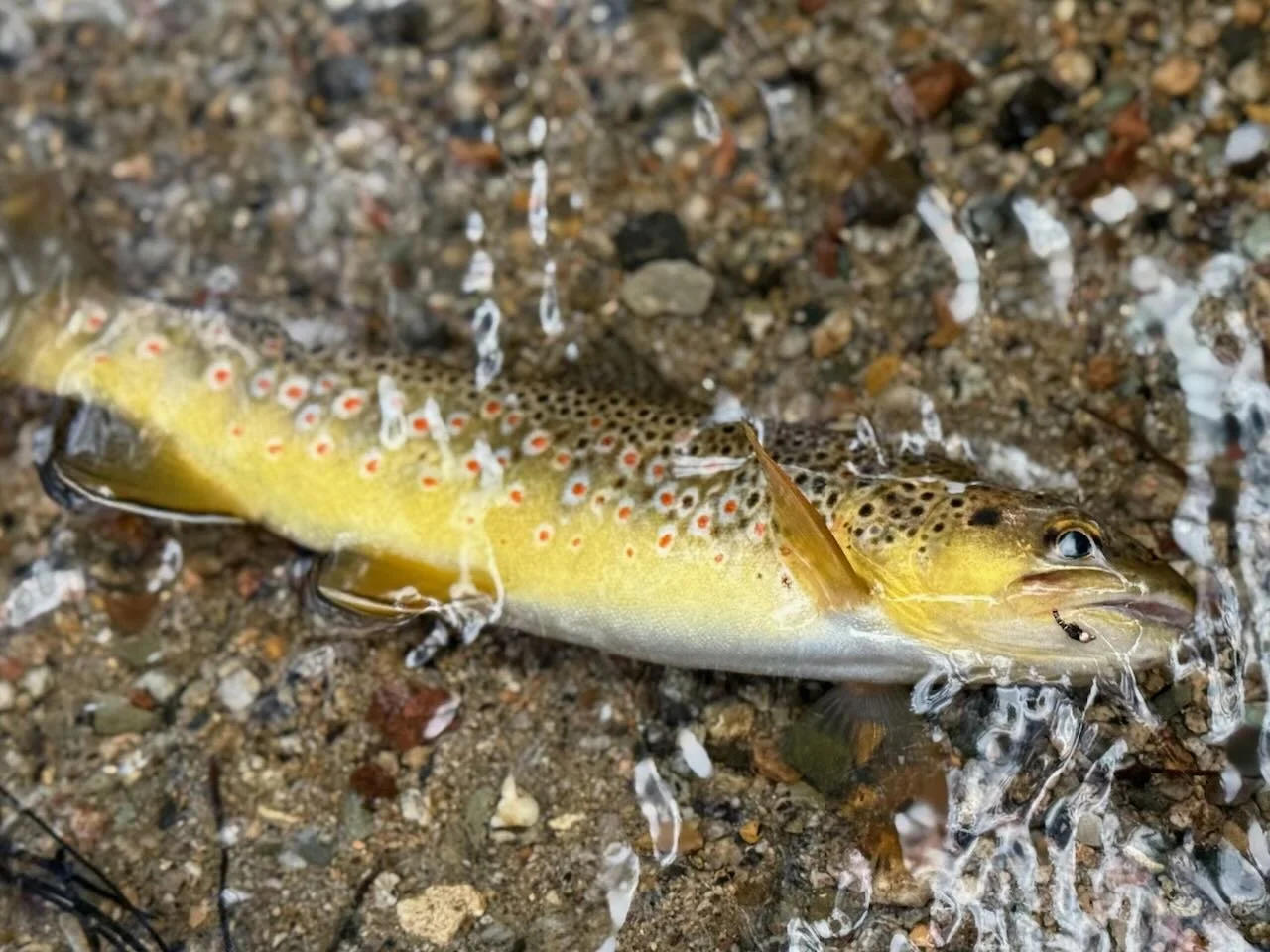
A typical lower Owens River brown trout that took a size 16 green/gold brassie fished on a three fly Euro rig.

Lower Owens Rive

Wild Trout Section:

Flows on the lower Owens River are down to 125 CFS and expected to bottom out at 80 CFS. Fly fishers can safely wade the river at these flows. The trout have seen very little fly fishing pressure and will readily take a nymph fished on a Euro rig or under and indicator. Fish with size 18 olive quilldigons, size 16 SOS nymphs, size 16 green/gold brassies, size 12 olive burlap caddis and size 12 stoner nymphs. Afternoons have been hot.

A typical lower Owens River brown trout that took a size 16 green/gold brassie fished on a three fly Euro rig.

Owens River Gorge

Upper Gorge Powerplant:

Afternoon showers from tropical storms have been making the hike out of the gorge quite pleasant. The trick is to get back to the vehicles before the rains become intense. Fishing a dry and dropper rig is producing lots of wild brown trout. Size 16 Adams parachutes, size 16 elk hair caddis, size 16 Royal Wulff’s and size 16 stimulators are good highly visible high floating dry flies. For the nymphs fish with size 16 bead head flash back gold ribbed hare’s ears, size 18 bead head flash back pheasant tail nymphs, size 16 Prince nymphs and size 16 brassies in tiger, zebra and green/gold wire colorations.

Wading the Owens River Gorge and casting a dry and dropper rig with a stimulator and tiger midge is producing lots of wild brown trout.

Hot Creek

Interpretive Site:

Fly fishing here is consistent with the trico hatch starting by 9:00 A.M. Fish with a double dry rig of a size 16 Adams parachute and size 22 female trico parachute. When the trout quit taking the parachute it signals the time to fish with a trico spinner pattern in size 22. On overcast days if the blue wing olives are hatching it will extend the dry fly fishing by an hour or two. The dry fly fishing is over by noon at the latest.

Fishing a double dry rig with a size 16 Adams parachute and a size 22 female trico parachute is fooling the rising fish feeding on the hatching female tricos.

Hot Creek

Canyon Section:

With the weed beds at full growth and few open spots between the weed beds the canyon is not getting as much fly fishing pressure as the Interpretive Site. Look for the trico hatch to start by 9:00 A.M. Start fishing with a size 22 female trico parachute to imitate the hatching female dun tricos. There will be a point where the trico spinner fall will have the trout switching from the trico duns which will fly off to the trico spinners which are floating dead on the creeks surface. When the hatch is over try nymphing with size 18 olive quilldigons, size 18 bead head flash back pheasant tail nymphs and size 18 Frenchies.

An evening of dry fly fishing with an elk hair caddis produced rainbow and brown trout to 12 inches.

Upper Owens River

Above Benton Crossing Bridge:

Trophy trout are just starting to show up in the river. Most of these fish have been rainbows with a few brown trout sprinkled in. Fish the deep holes, deep runs and cut banks for the resting and feeding trophy trout with size 12 stoner nymphs, size 14 copper John’s, size 12 green/gold wire Prince nymphs and size 12 gold ribbed hare’s ears variations. This is a great time to be stripping wooly buggers, slumpbusters and olive muddlers in sizes 6 and 10. There is a morning trico hatch that the resident six to 12 inch rainbow and brown trout are feeding on. Fish with a size 20 female trico parachute. Mid-morning to early afternoon switch to a size 18 elk hair caddis, size 18 X-caddis and size 18 Adams parachute.


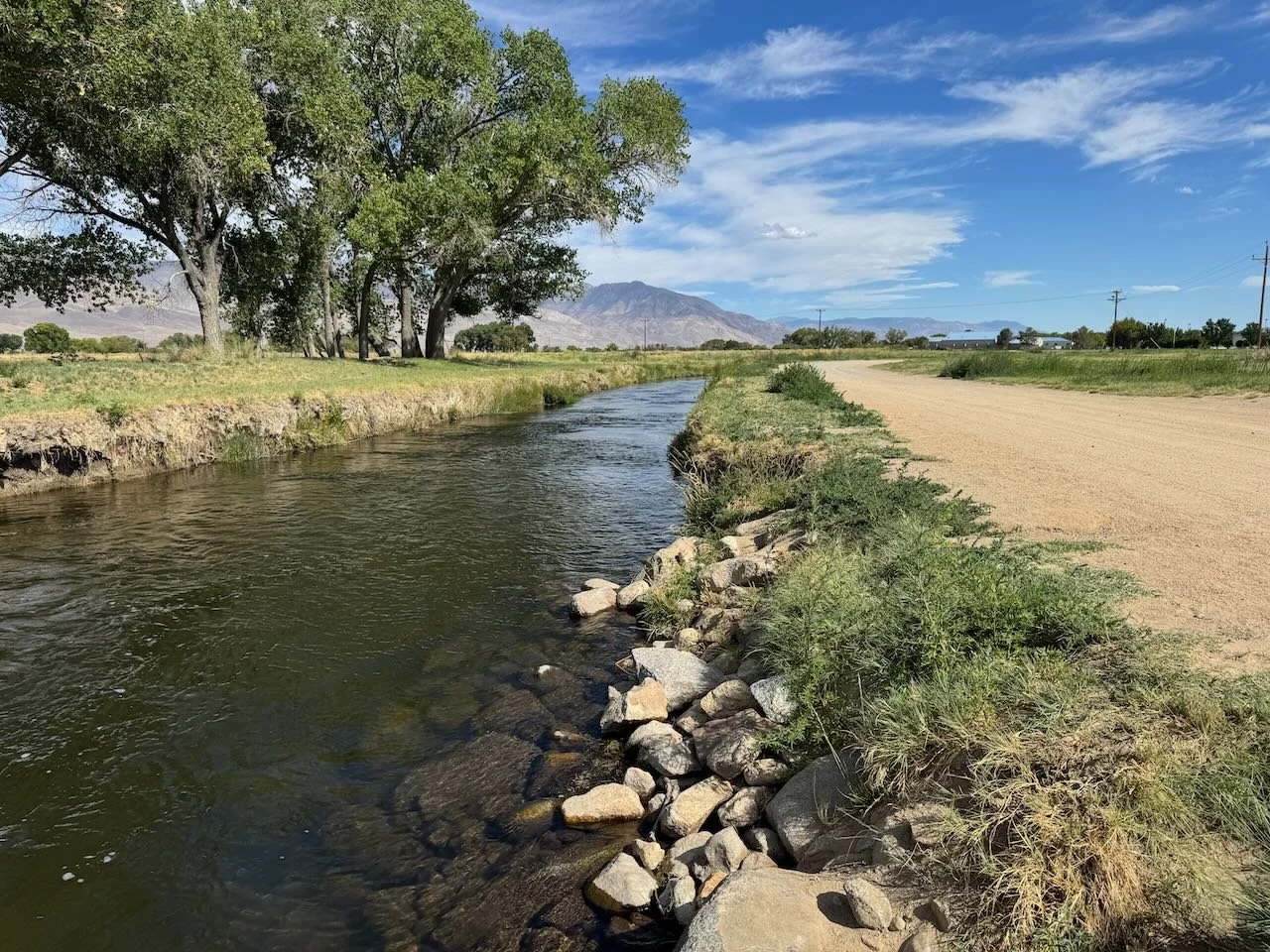
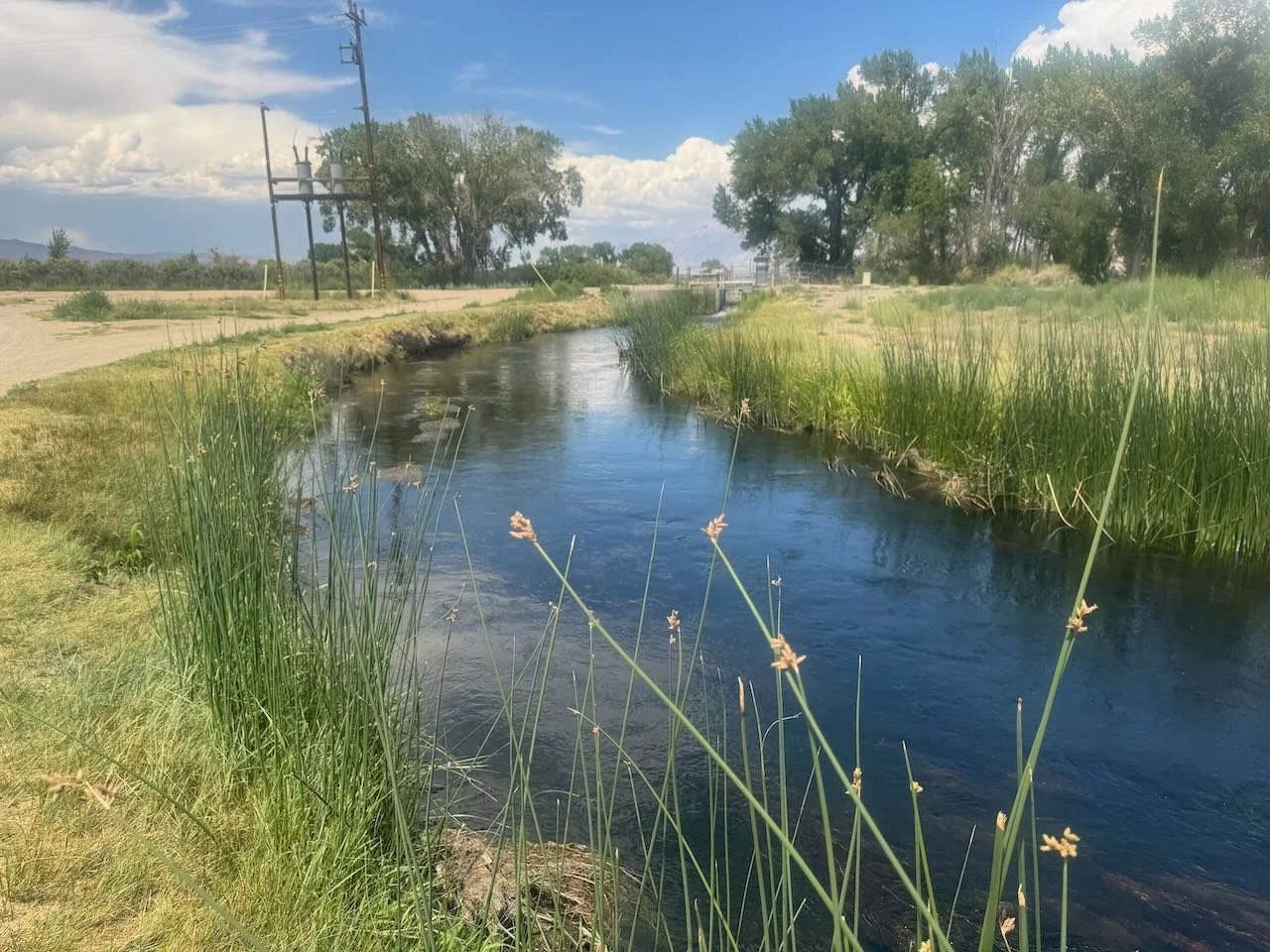
Bishop Creek Canal with its easy access for fly fishers and unobstructed casting makes it a great water to learn how to fly fish.
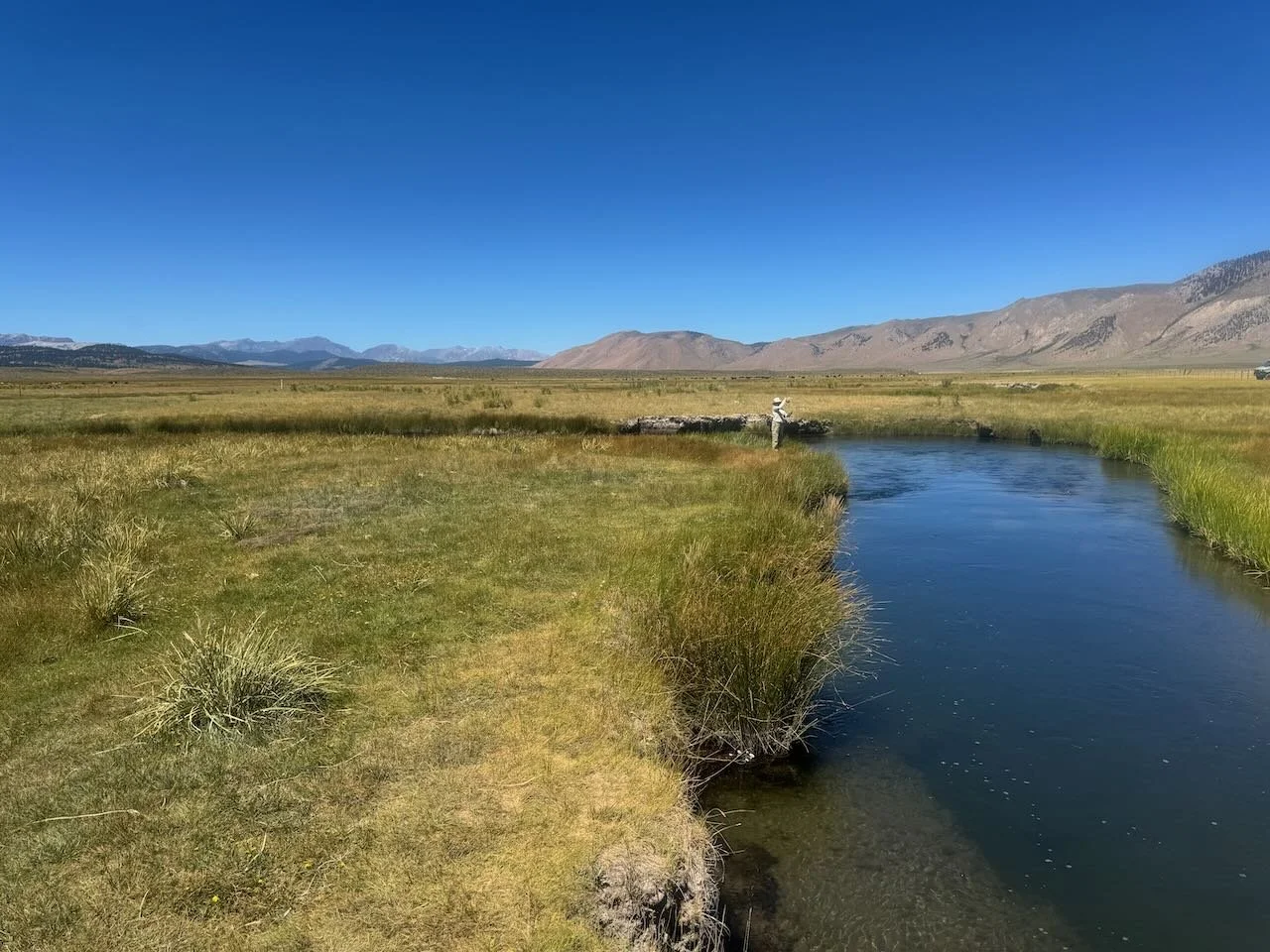
Bishop Creek Canal

Behind Bishop Veterinary Hospital:

Cool afternoons have made fly fishing the canal pleasant. The canal has seen lots of fishing pressure this summer and fly fishers working the canal thoroughly are finding a few wild brown trout and stocked rainbows willing to take nymphs and dries. Fish with size 16 tiger and zebra midges, size 18 olive quilldigons, size 18 bead head flash back pheasant tail nymphs and size 16 bead head flash back gold ribbed hare’s ears.

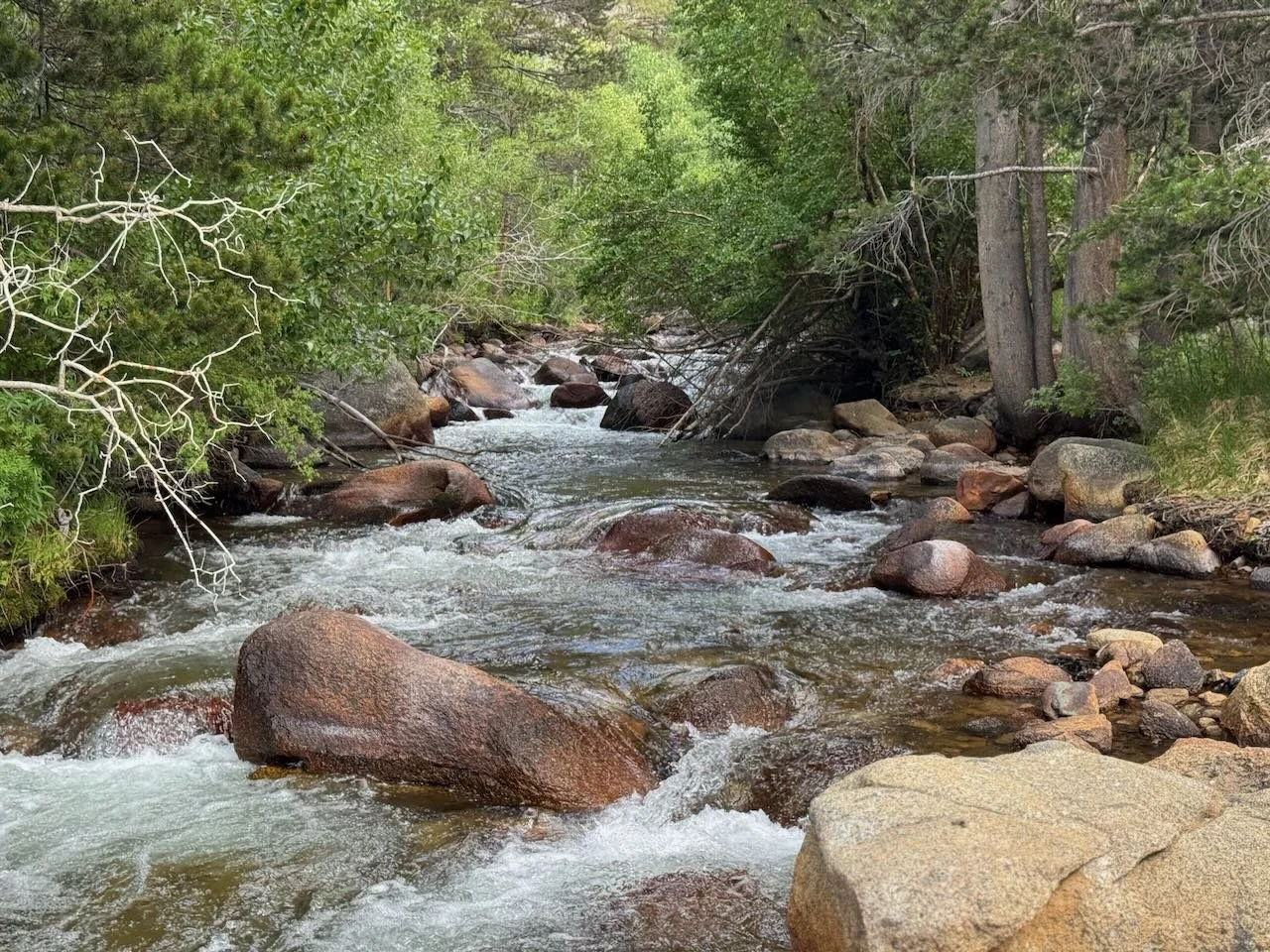
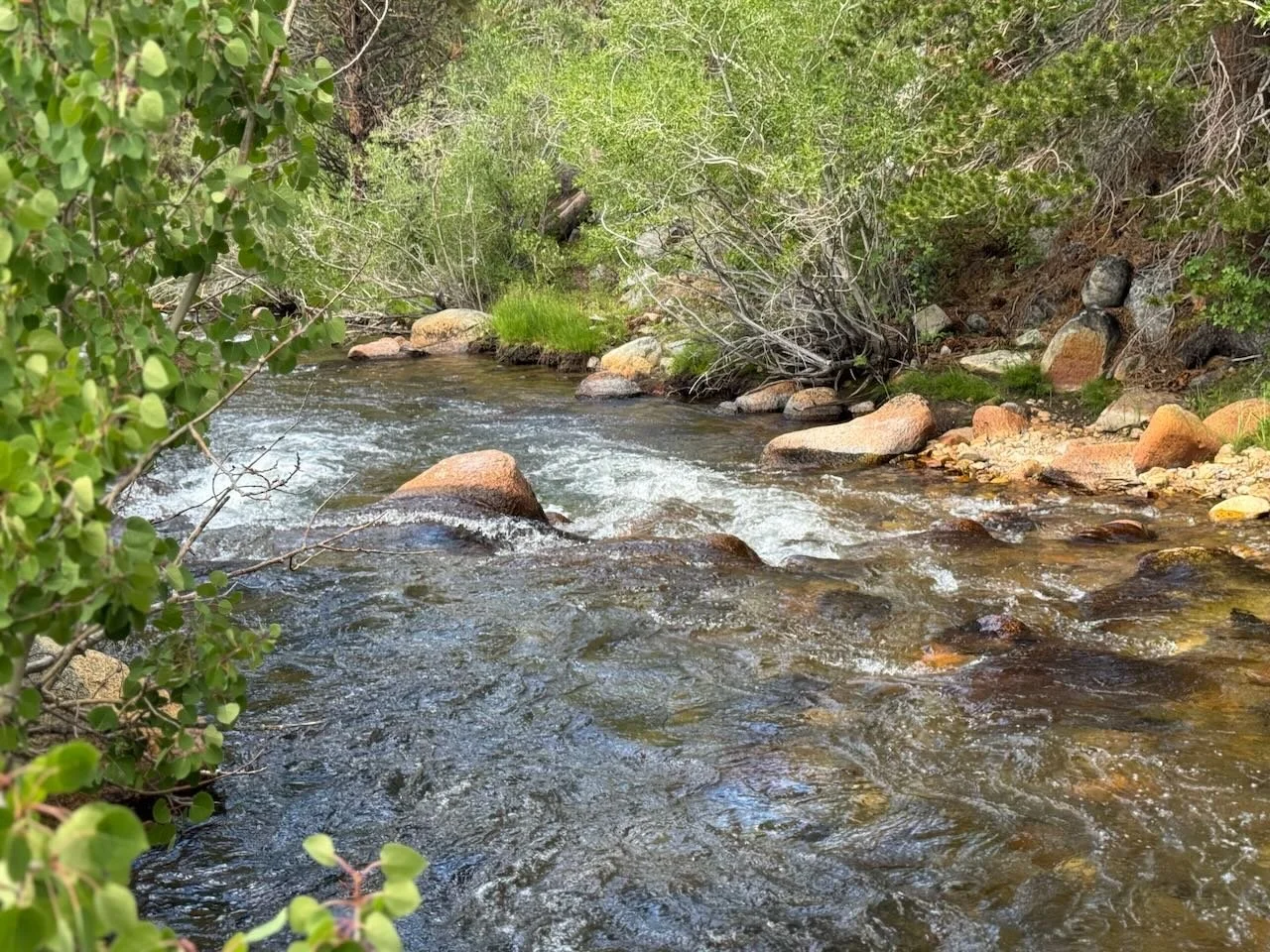
Working a dry and dropper in the pockets of Bishop Creek is producing wild brown trout, brook trout and stocked rainbows.

Bishop Creek Canyon

Middle Fork:

Bishop Creek is home to wild brown trout and brook trout eagerly willing to take a dry fly or nymph fished separately or as a dry and dropper rig. Walking the creeks banks looking for spots to cast your flies to is like an easter egg hunt. You never know what will take your flies until you float them in the pools and pockets where the trout are hanging out. For dry flies fish with your favorite dry fly in a size 14 or 16. Dry flies that work well are stimulators, Adams parachutes, elk hair caddis and Royal Wulff’s. For the nymphs fish with brassie in size 16 in green/gold, tiger and zebra coloration, size 16 bead head flash back gold ribbed hare’s ears, size 18 bead head flash back pheasant tail nymphs and size 16 Prince nymphs.

Sierra Bright Dot Fly Fishing Report 09-18-2025

It’s the start of my favorite month, SeptOct. That is the 15th of September to the 15th of October. This is the time of year that the quaking aspens are turning the mountain sides yellow, the brown and brook trout are starting to spawn and it’s time to get in that last fly fishing trip before the Eastern Sierra is in the grips of winter. If you’re looking for a trophy trout this is the time to be fishing with streamers and big nymphs. The trout are feeding on midges, caddisflies and mayflies on the substrate and on the surface. Smoke from the Garnet fire is still flowing into the Eastern Sierra, but not as thickly as it was last week. I had a couple of blue bird non smoke days on Eastern Sierra waters last week.

On the right days and the right water, like the upper Owens River, there is no or little smoke from the Garnet Fire..

East Walker River:

Fly fishers working nymphs, dries and streamers below the bridge are finding wild rainbows and browns willing to take their flies. The miracle mile section of the East Walker is still recovering from last year’s fish die off and fly fishers are not fishing the miracle mile section. Working nymphs under an indicator and on a Euro rig is producing browns up to 18 inches. Nymph with size 16 bead head flash back gold ribbed hare’s ears, size 18 bead head flash back pheasant tail nymphs, size 16 SOS nymphs, size 16 Frenchie’s, size 12 stoner nymphs and size 16 midges in zebra, tiger and blood coloration. Water levels are perfect for wading up stream and covering the pools and pockets that are holding the trout.

This brown trout took a Frenchie under an indicator fished in a deep run on the far side of the East Walker River.

Owens River Gorge

Upper Gorge Powerplant:

Nights are cooling off and the river is only going to be wet wadable for a couple of more weeks. Nettles, roses and willows on the river banks limit shore fishing opportunities. Best way to fish the Owens River Gorge is to get in the river and wade up stream placing your dry and dropper rig in the pools, pockets and runs. Fish with a size 16 stimulator, Adams parachute, elk hair caddis and Royal Wulff on the surface and nymph with size 16 tiger, zebra and green/gold midge nymphs, size 18 olive quilldigons, size 18 bead head flash back pheasant tail nymphs and size 16 bead head flash back gold ribbed hare’s ears. Afternoon thunder storms makes the hike out of the gorge pleasurable.

Fishing the Owens River Gorge with Sierra Bright Dot fly fishing guide Richard Lancaster means catching brown trout on a dry and dropper rig.

Hot Creek

Interpretive Site:

Smoke is different every day from the Garnet Fire. On the days when the skies are relatively clear it’s worth fishing Hot Creek Interpretive site in the mornings for the trico hatch. Start the morning off with a size 22 trico female parachute. When the trout quit taking the parachute switch to a size 22 trico spinner pattern. When the trout quit taking the trico spinner the trico hatch is over. If you want to extend your fly fishing on the creek try fly fishing with a beetle, ant or hopper pattern. Stripping a streamer through the creek can produce a few trophy trout after the hatch.

Smoke from the Garnet Fire is effecting access into Hot Creek Canyon on days when the smoke is thick.

Hot Creek

Canyon Section:

When the smoke is light hiking into Hot Creek Canyon in the mornings is a way to get away from the crowds of the Interpretive Site. Start the morning off by being on the water between 8:00 and 9:00 A.M. and start fly fishing with a size 22 female trico parachute. When the trout quit taking the parachute it’s time to switch to a size 22 trico spinner pattern. After the hatch try nymphing with a size 18 olive quilldigon, size 18 bead head flash back pheasant tail nymph, and size 18 midge nymphs in tiger and zebra coloration. Pulling a size 6 olive wooly bugger through the stream working it around the obstacles in the stream like rock and weed beds will produce a few grabs by bigger brown trout.

An afternoon on the upper Owens River without the smoke from the Garnet Fire and no wind found the resident rainbows and browns coming to the surface to feed on caddis.

                                                                                                                                                                                                                               Upper Owens River

Above Benton Crossing Bridge:

Afternoons without the wind is the perfect time to fish with an elk hair caddis in size 18 for the six to 12 inch rainbows and browns that are feeding on the caddis. The trout are feeding on emerging caddis and caddis adults that are crashing onto the surface of the stream after hatching. Working upstream covering the pockets, runs and pools with rising trout is where you want to fish you caddis imitation. In the mornings there have been some tricos hatching that the trout are coming to the surface to feed on the hatching female duns. Fish with a size 20 trico parachute pattern. Trophy trout are few and spread throughout the upper Owens River. Cover lots of water concentrating on the pools, deep runs and cut banks with size 12 stoner nymphs, size 12 green/gold Prince nymphs and size 14 copper John’s and size 12 hare’s ear variations.

Members of the American Veterans Fly Fishing club fished with Tuesday Talk regulars on Bishop Creek Canal learning how to get a drag free drift when fishing under an indicator.

Bishop Creek Canal

Behind Bishop Veterinary Hospital:

Working nymphs in Bishop Creek Canal is producing a few fish for those fly fishers who thoroughly cover the pools and runs between the weed beds. Key to success is getting the nymphs down on the substrate and covering the water thoroughly before moving 10 feet upstream and covering the water thoroughly again. Size 16 tiger and zebra midges, size 18 olive quilldigons, size 18 bead head flash back pheasant tail nymphs and size 16 bead head flash back gold ribbed hare’s ears are fooling the stocked rainbows and wild brown trout.

Casting a dry and dropper rig in the pockets and pools of the middle fork of Bishop Creek are producing wild brown trout to 12 inches.

Bishop Creek Canyon

Middle Fork:

Finding spots to cast a size 16 stimulator with a tiger midge on a three foot 5X fluorocarbon tippet is how to fish the middle fork of Bishop Creek. Cast your rig into the pools, runs and pockets behind the rocks to catch wild brown trout, brook trout and stocked rainbows. If you don’t catch a fish keep working upstream casting your dry and dropper rig into the pools, pockets and runs. There are a lot of wild trout looking for food and ready to take your flies.

Sierra Bright Dot Fly Fishing Report 09-11-2025

The 50,000 acre Garnet fire north east of Fresno is filling the Eastern Sierra with smoke. Mammoth Lakes and the Owens Valley is filled with lots of smoke to the point that it’s been unsafe to be outside. Certain high altitude waters have been saved from the smoke and is an escape from the smoke for fly fishers. Where the smoke is lingering is changing daily. The smoke has been coming over Mammoth Pass and Mammoth has the greatest concentration of smoke. Hopefully by the weekend the smoke will have moved out of the Eastern Sierra. Time will tell what is instore for Eastern Sierra waters and the smoke from the Garnet fire. Trout are feeding on nymphs, emergers and adults of mayflies, caddisflies and midges. Fall colors are just starting to happen at upper elevation waters. Trophy trout show up in the fall, but are not in Eastern Sierra tributaries yet.

Smoke from the Garnet Fire is pouring into the Eastern Sierra through Mammoth Pass and makes for a beautiful back drop for the lower Owens River whose flows are starting to drop.

East Walker River:

The East Walker River below the miracle mile section is offering good fishing during the day with nymphs, dries and streamers. Nymphing under an indicator or with a Euro nymphing outfit is producing wild brown trout and rainbows up to 20 inches. Fish with size 16 Frenchie’s, size 12 stoner nymphs, size 16 SOS nymphs, size 16 gold ribbed hare’s ears and midges in zebra, tiger and blood coloration in size 16 when nymphing. The miracle mile section has not fully recovered from last years devasting fish kill. Best fishing is from the bridge to the Nevada border. Water level are perfect for wading right now. Rocks in the river are slimy and wading can be slippery.

Tim Andre from Trabuco Cyn hooked up on the East Walker fishing a Frenchie under an indicator.

Owens River Gorge

Upper Gorge Powerplant:

The Owens River Gorge is a tail water fishery that fishes like a freestone creek. A dry and dropper rig is the perfect way to fish in the gorge. Normally in a freestone creek the trout are looking up and taking the dry fly. In the gorge the trout are keying in on the nymph. For the dry fly use a size 16 Adams parachute, elk hair caddis, Royal Wulff and stimulators. For the nymphs midges in tiger, zebra, and green/gold wire brassies in size 16 and olive quilldigons in size 18 have been producing lots of wild brown trout to 12 inches. With the smoke I would not risk your health walking in and out of the gorge.

Fishing the pockets and pools of the Owens River Gorge with a stimulator and green/gold brassie while wading upstream is producing lots of wild brown trout to 12 inches.

Hot Creek

Interpretive Site:

If you can handle the smoke that is filling Long Valley the Interpretive Site offers less stress on your body than walking in and out of Hot Creek Canyon. The trico hatch is bringing trout to the surface in the mornings. Start with a size 22 female trico parachute. When the trout quit hitting the parachute switch to a size 22 trico spinner. With the smoke I would head home when the trico hatch is over. If you’re willing to stay and fish after the trico hatch try fishing with an ant, beetle or hopper pattern.

The skies above Hot Creek Canyon are filled with the smoke of the Garnet Fire.

Hot Creek

Canyon Section:

I would not recommend fishing in the canyon as long as the thick smoke continues to hang in the Long Valley area. If there is a break in the smoke try fishing with a size 22 trico female parachute in the morning starting sometime after 8:00 A.M. Once the trout quit feeding on the parachute switch to a size 22 trico spinner. If you have trouble seeing the tiny flies on the water fish a dry and dry rig. Use a size 16 stimulator, size 16 Adams parachutes and size 16 elk hair caddis for the bigger dry. Any movement in the bigger fly set the hook. The bigger fly allows the fly fisher to see where on the water the trico is. The fly fisher should set the hook on any rise within the distance from the big fly to the trico pattern.

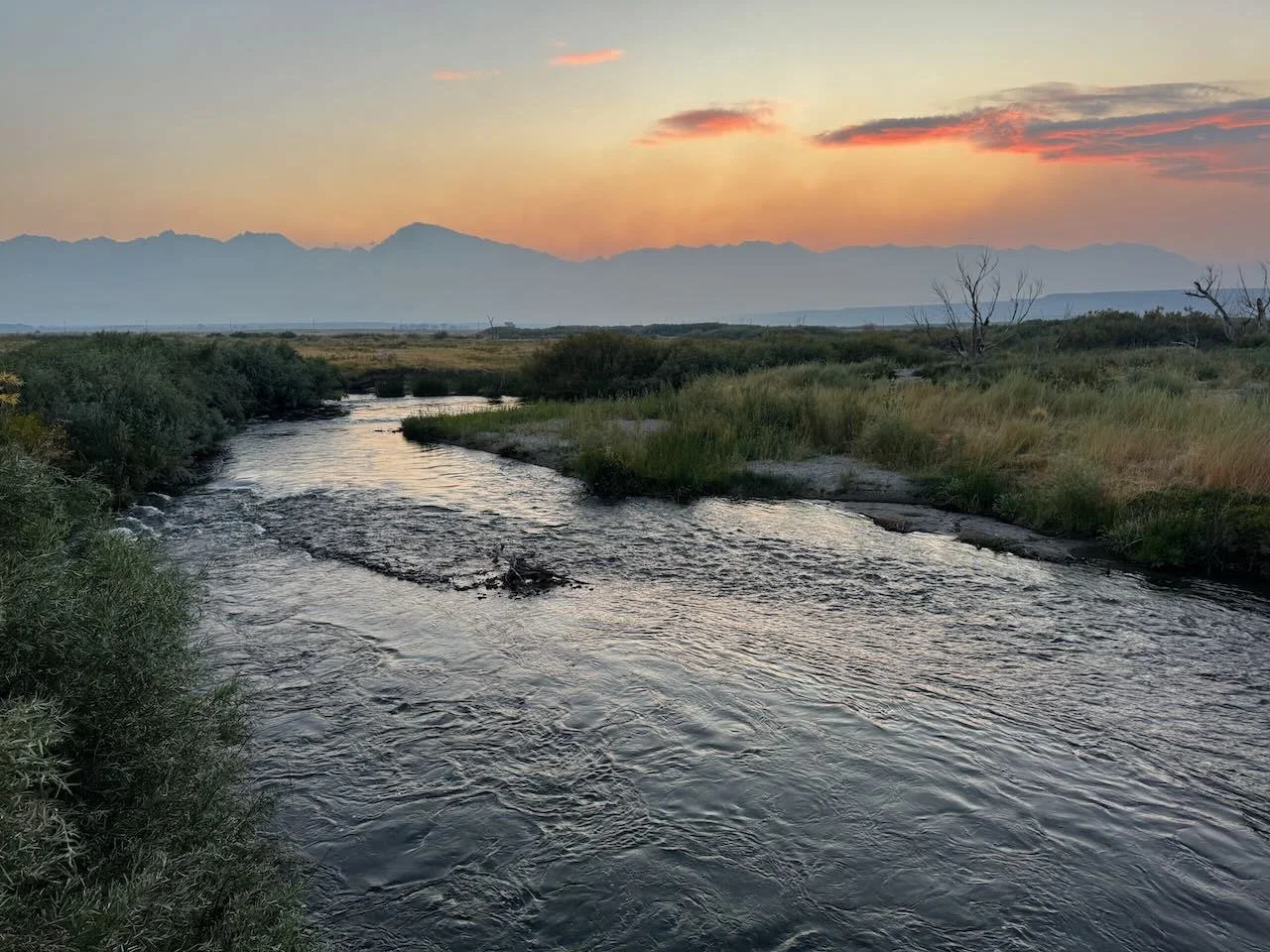
Smoke from the Garnet Fire is hiding the Eastern Sierra mountain back drop normally visible when fly fishing the upper Owens River.

 Upper Owens River

Above Benton Crossing Bridge:

The smoke has been thick in the Long Valley area including the upper Owens River. Avoid this area until the smoke has lightened up. As we head into fall it’s time to start looking for trophy brown trout. The brown trout do not show up in large quantities like the rainbows and cutthroats do. The browns trickle in to the upper Owens River starting in mid to late September. It’s time to start fishing with bigger nymphs like size 12 stoner nymphs, size 12 green/gold Prince nymphs, size 14 copper John’s and size 12 gold ribbed hare’s ears variations. Fall is a great time to be pulling streamer for the trophy brown trout. For the resident eight to 12 inch wild browns and rainbows fish with trico’s in the morning and elk hair caddis in the afternoons.

The setting sun over Bishp Creek Canal is high lighting the smoke from the Garnet Fire

Bishop Creek Canal

Behind Bishop Veterinary Hospital:

Smoke has been bad in the Owens Valley making it tough to be outside fly fishing. If you can put up with the smoke or the smoke breaks try nymphing unless you see the trout feeding on the morning trico spinner fall. The trico hatch has been minimal at best. Nymphing with gold ribbed hare’s ears in size 16, bead head flash back pheasant tail nymphs in size 18, olive quilldigons in size 18 and midges in zebra and tiger coloration in size 18 are fooling wild brown trout and stocked rainbow trout.


Bishop Canyon

North Lake:

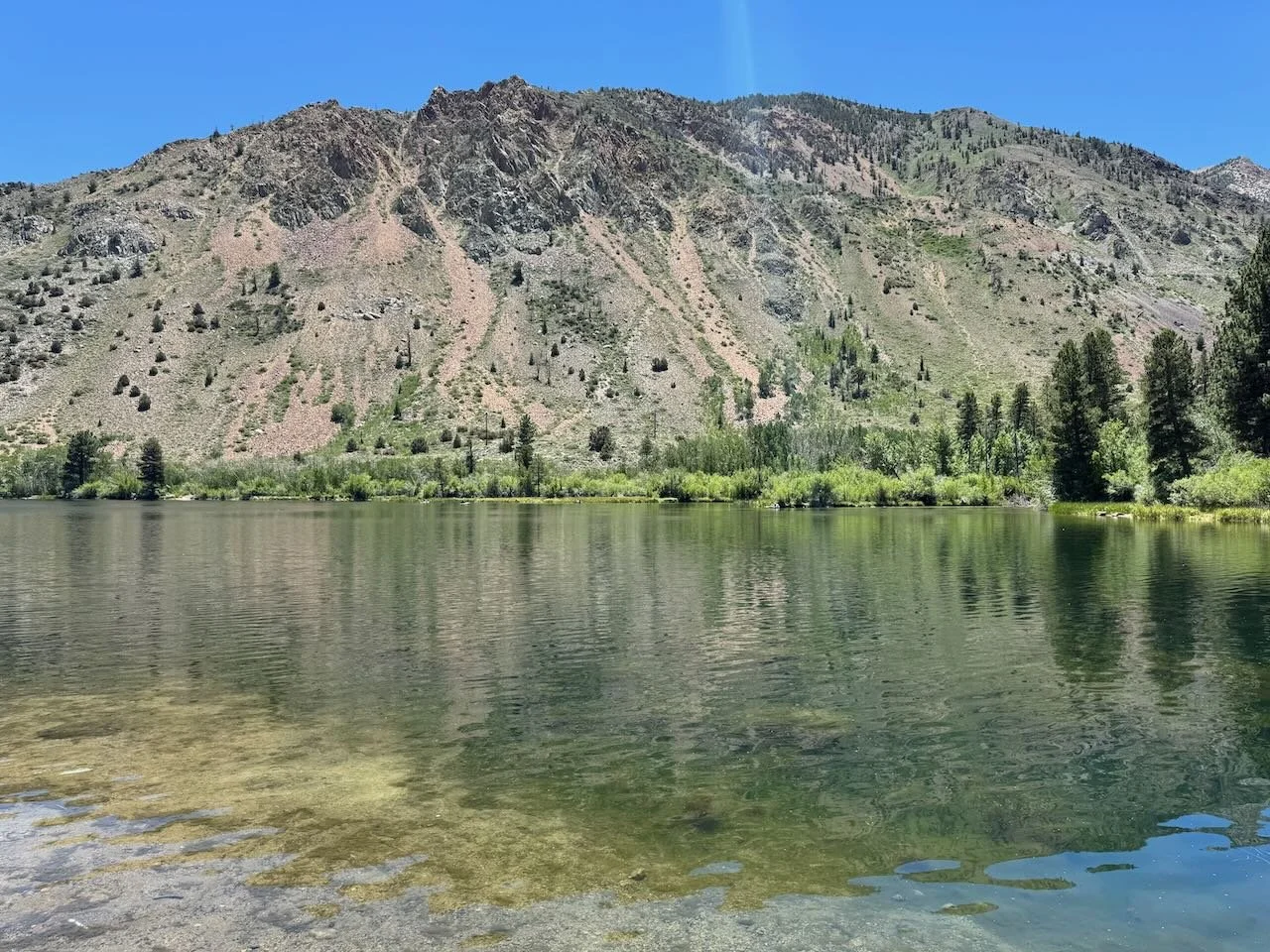
Trolling small olive wooly buggers in the fall on a sinking line behind a float tube is a great way to spend a fall day fly fishing in the Eastern Sierra catching brook trout, rainbows and brown trout.


North Lake is a great water to float tube on. It gives you access to the southern shore where few if any anglers fish. Trolling streamers behind the float tube on a full sink line will produce trout after trout after trout. Twenty to forty fish days are very doable. For streamers try size 12 olive wooly buggers, olive slumpbusters and olive matukas. Fishing the margins of the lake just outside the aquatic sedges that surround the lake with a dry and dropper rig will produce lots of wild brown trout, brook trout and hatchery rainbows. For the dry fly use a stimulator, Chernobyl ant and a hopper. You want your dry fly to ride on the water surface and be very visible to the fly fisher sitting in the float tube. For the nymphs use size 18 bead head flash back pheasant tail nymphs, size 16 midges in tiger or zebra coloration and size 16 bead head flash back gold ribbed hare’s ears attached to a three foot tippet of 5X fluorocarbon. Fall colors are just starting to pop on the quacking aspens that surround the lake. Fall colors should peak in the next 10 days.
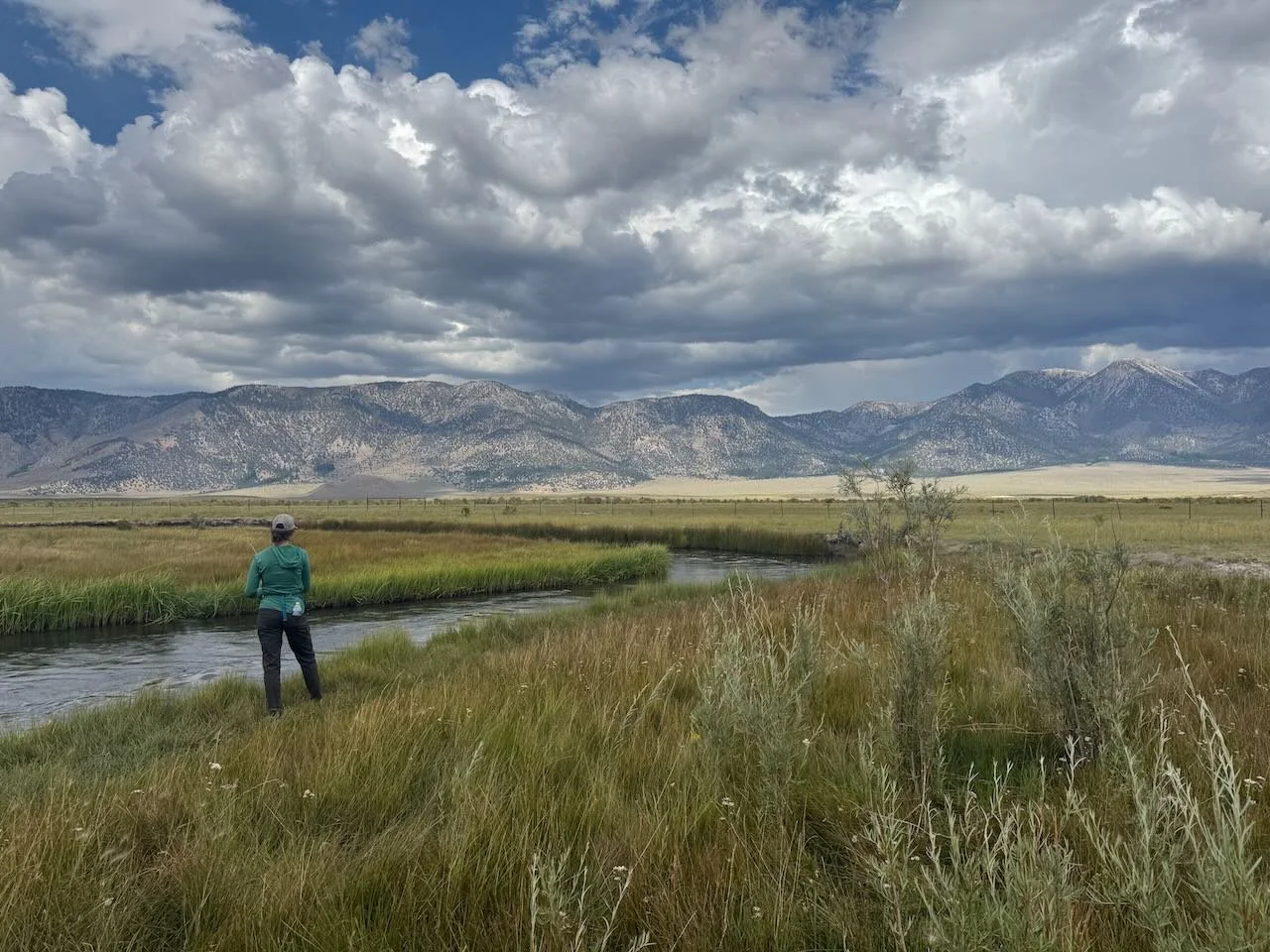
Wild brown trout to 12 inches are feeding on midge nymphs fished under a dry fly.

Bishop Creek Canyon

Middle Fork:

Bishop Creek fly fishing is bush whacking. That is walking the banks of the creek looking for spots where you can access the stream and cast your dry and dropper rig. The pockets and pools is where the trout are hanging out. Using a size 16 stimulator and size 16 tiger midge have been producing wild brown trout and stocked rainbow trout. The tiger midge has been producing the bulk of the trout. Watching the dry fly for any movement and setting the hook is how you catch the midge feeding trout of Bishop Creek. The smoke has been minimal in Bishop Creek Canyon.

Sierra Bright Dot Fly Fishing Report 09-04-2025

Looks like another round of thunder storms particularly at upper elevation waters with a chance of clearing up and seasonal temperatures for the weekend. The overcast skies sure are nice for cooling of fly fishers out on the water. The winds associated with these storms can make for tough afternoon fly casting. Be on the water early and get off when you’ve had enough of trying to punch your flies through the wind. Time to be casting that five weight rod. Midges, caddisflies and mayflies are providing the catalyst for the trout to feed on nymphs and dries. This is the time of year to be out on the water early looking for the trico hatches on several Eastern Sierra waters.

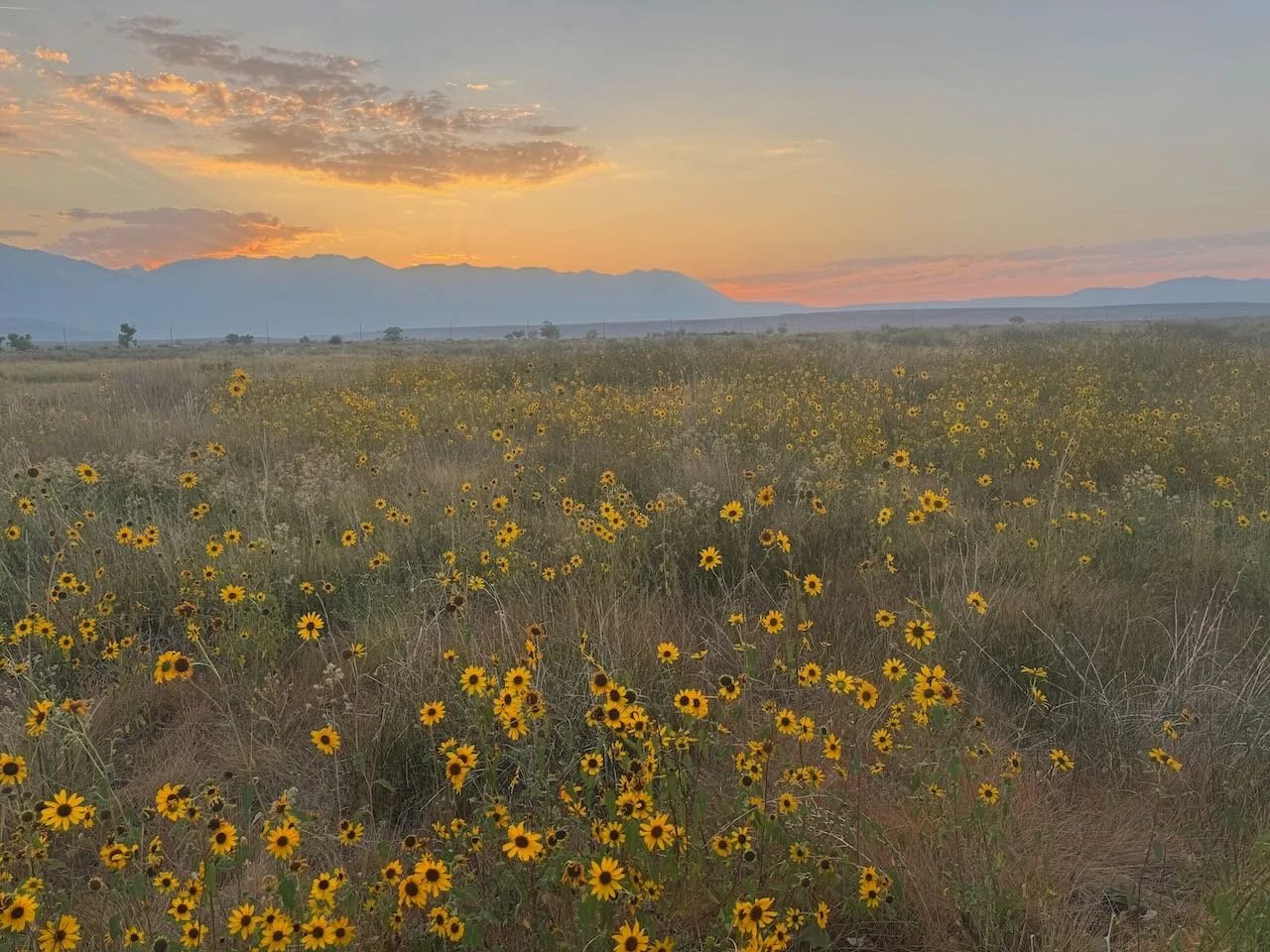
Fall colors will soon be visible in upper elevation waters as the sunflowers in the Owens Valley disappear and the brown trout and brook trout start to spawn.

Owens River Gorge

Upper Gorge Powerplant:

Like most canyon fishing the hike in is easy, but the hike out takes some effort. On the hot days make sure you have lots of water to drink. With the afternoon thunder storms moving through the Eastern Sierra it makes the hike out of the gorge enjoyable. The gorge is a great place to fish a dry and dropper rig on a nine foot five weight or with a Tenkara rod. For the dry fly use a size 16 Adams parachute and a size 16 stimulator. For the nymphs fish with size 16 bead head flash back pheasant tail nymphs, size 18 olive quilldigons, size 18 bead head flash back pheasant tail nymphs, size 16 two tone brassies in green/gold, tiger and zebra colorations. Using the nymph as an anchor allows the fly fisher to bounce the dry fly off the surface initiating the trout to take the dry fly.

Wet wading fishing upstream with a dry and dropper rig in the pools and pockets is producing lots of wild brown trout in the Owens River Gorge.

Hot Creek

Interpretive Site:

The consistency of the morning trico hatch is producing wild brown and rainbow trout on the surface. Start the morning with a size 22 trico female parachute. The male trico’s hatch the night before at sunset or the morning of at sunrise. When the trout quit feeding on your parachute pattern it’s time to switch to a size 22 trico spinner pattern. Mayflies go through two stages as the adult. The nymph hatches into the dun. The dun then becomes the sexually mature spinner through a post emergence molt. The females mate with the males and then lay their eggs on the water. The amount of energy required during ovipositing wipes out the spinners and they fall dead on the water. The trout feed on the dead spinners as an easy meal since the spinners cannot fly away. The hatch is over by 11:00 A.M. and so is the fishing. Throwing beetles, ants and hoppers will extend the time on the water by proving a few fish that will come to the surface looking for more calories.

Afternoon thunderstorms are making fly fishers wet and casting into the wind is no fun.

Hot Creek

Canyon Section:

Hot Creek Canyon is the easiest to fly fish hard water in the Eastern Sierra. Succes comes from having the right fly, a drag free drift, being able to see your small, size 20 to 24, dry fly on the surface and being able to set the hook when the trout rises to the surface to take your imitation. In the canyon with all the weed beds it is the ability to get a drag free drift that is the hardest thing to accomplish. Getting your fly to drift in a two to four inch lane between the weed beds is how you are going to fool the trout into taking your fly. Precession casting is a must to get the fly to land in such a tight target area on the water. A trick to see your dry fly on the water is to use a bigger fly, size 16, as an indicator. This bigger fly will help you locate your tiny imitation on the water and any movement in the bigger dry requires the fly fisher to set the hook. Start the morning fishing with a size 22 female trico parachute. When the trout quit taking you parachute pattern it’s time to switch to a size 22 trico spinner pattern. After the hatch nymphing the open shallows and deeper pools with a size 18 tiger or zebra midge pattern, size 18 olive quilldigon and size 18 bead head flash back pheasant tail nymph will produce a few more fish and extend the fly fishers time on the water.

Six to 12 inch trout are feeding in the mornings on the hatching female trico mayflies.

Upper Owens River

Above Benton Crossing Bridge:

The upper Owens River has a good morning hatch of tricos. This hatch is short lived and over by 10:00 A.M. Start the morning with a size 20 female trico pattern. When the trout quit feeding on the parachute it’s time to switch to a size 20 trico spinner pattern. After the trico hatch the trout are feeding on caddis. Fish with a size 16 or 18 elk hair caddis, X-caddis and parachute caddis drifted with a drag free drift. Trophy brown trout are not in the upper Owens River yet. Fishing with a size 12 stoner nymph and size 12 green/gold Prince nymph will produce trophy brown trout when they’re in the system. Now these flies are producing a few trophy rainbow trout.

The early morning trico hatch on Bishop Creek Canal is just starting and the hatch is done by 10:00 A.M at the latest.

Bishop Creek Canal

Behind Bishop Veterinary Hospital:

Now is the time to fish the trico hatch on Bishop Creek Canal. This hatch is short lived starting by 8:30 A.M. and finished by 10:00 A.M. at the very latest. The canal trout don’t seem to be interested in the hatching duns, but wait for the spinner fall to start feeding on the surface. Observing the water and looking for rising trout is how you want to fish this hatch on the canal. Once the fish start rising cast a size 20 trico spinner pattern above the trout on a 5X tippet and let it float down to the rising trout with a drag free drift. In the heat of the hatch fly fishers will have to match the timing of rising trout. If your spinner pattern drifts to the trout to soon they will not rise for your spinner pattern. If your spinner pattern drifts to the trout to late they will have already taken a natural off the surface. It can take up to 10 drifts to get the timing down to hook a canal trout feeding on trico spinners. After the trico hatch fish with zebra and tiger colored midges in size 18, bead head flash back pheasant tail nymphs, size 18 olive quilldigons and size 16 bead head flash back gold ribbed hare’s ears. Fishing a size 18 elk hair caddis, size 18 parachute caddis and size 18 X-caddis will produce a few surface feeding trout in the afternoons.

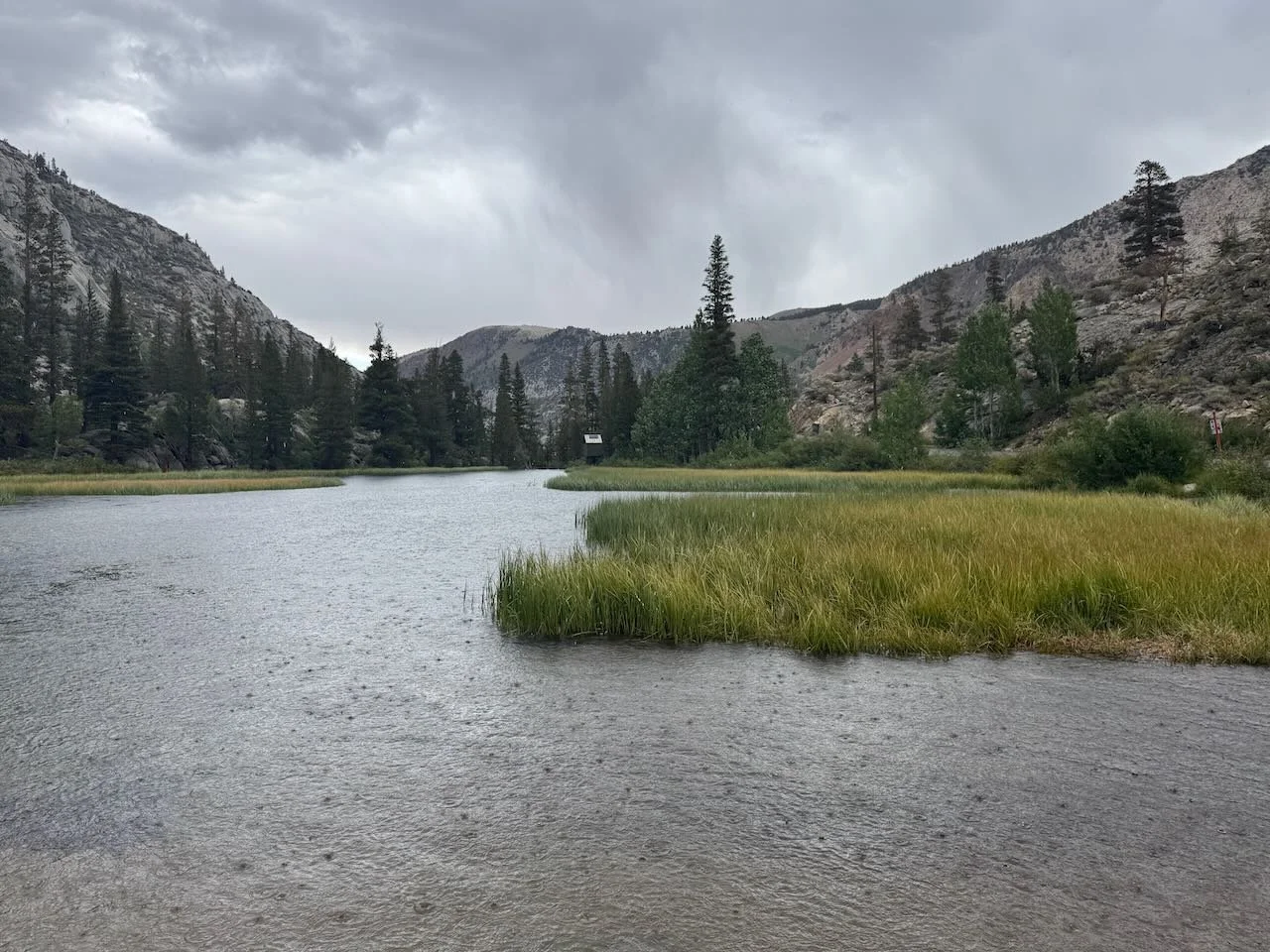
Working upstream of Weir Pond after covering the inlet into the pond is a fun way to extend the fly fishing to pools and pockets looking for wild brown trout and brook trout

Bishop Creek Canyon

Weir Pond:

Brown trout and brook trout are willing to take dry flies and nymphs where south fork of Bishop Creek flows into Weir Pond. Using a dry and dropper is a great way to fish in Weir Pond with both a dry fly and nymph. For dry flies fish with size 16 stimulators, Adams parachutes, elk hair caddis and Royal Wulff’s. For nymphs fish with size 16 tiger and zebra midges, size 18 bead head flash back pheasant tail nymphs, size 16 bead head flash back gold ribbed hare’s ears and size 16 Prince nymphs. Be sure to apply descant or flotant to your dry fly to keep them floating high on the surface of the water. Most of the trout will be taking your dry fly. Rember that movement in the dry fly means a trout is taking your nymph. When you see movement in the dry fly be sure to set the hook.

Sierra Bright Dot Fly Fishing Report 08-28-2025

Afternoon showers have been drenching the Eastern Sierra every afternoon. It’s a nice break from the hot afternoons of summer. As we head into fall the heat will be coming back and the rain will disappear. As fall progresses it will be time to be looking for spawning brown trout and brook trout particularly at upper elevations. Fall colors will be showing up by the middle of September starting at upper elevations and making their way down to the Owens valley. Hatches of midges, caddisflies and mayflies are feeding the trout on the surface and on the substrate. Trico mayflies are bringing the trout to the surface of several Eastern Sierra waters.

Afternoon showers are cooling off the waters of the Eastern Sierra and terrestrial insects are being washed into the creeks and lakes where the trout are feeding on the extra food.

Intake Two:

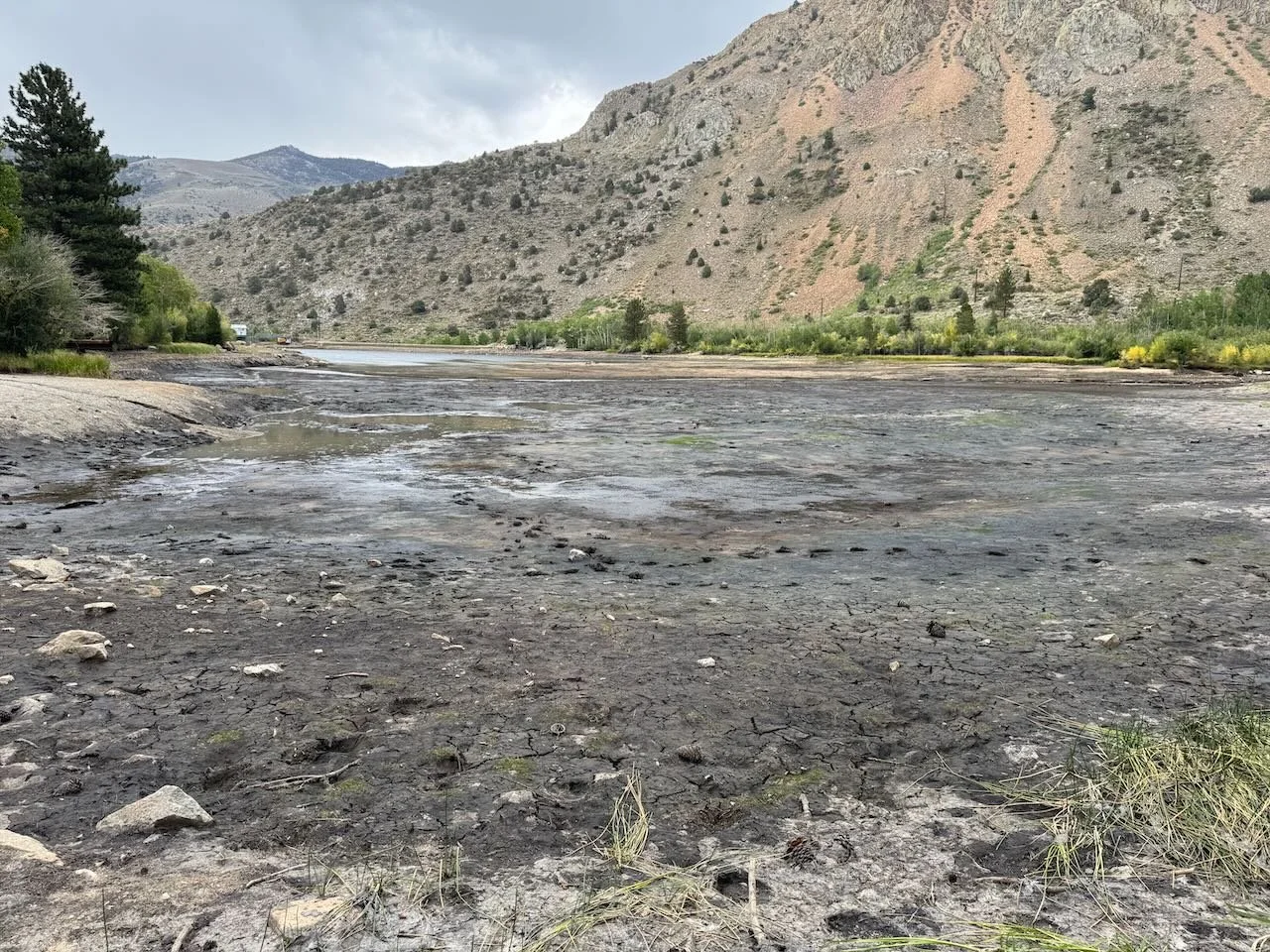
Intake Two before it was drained for repair work on the dam embankment.

Southern California Edison has dewatered Intake Two due to repair work on the spill way embankment. This is a great time to observe the Lake and see the topography of the lake without water on the substrate. Take photos so when Intake Two has water again you will know where to fly fish and what the substrate looks like.

SCE has drained Intake Two to do repair work on the spill way embankment.

Hot Creek

Interpretive Site:

The trico hatch in the morning is bringing the trout to the surface of the creek. Start the morning early, by 8:30, with a size 22 trico female parachute. When the trout quit taking the parachute it’s time to switch to a size 22 trico spinner pattern. When the trout quit feeding on the spinner pattern it’s time to go home. Throwing ants, beetles and hopper patterns will bring a few trout to the surface and extend your fly fishing time on the creek. Throwing a streamer will produce an extra trout or two and usually the biggest of the day.

Hot Creek Canyon is offering less crowded fly fishing opportunities for fly fishers that can drift their flies through the narrow lanes between the weed beds.

Hot Creek

Canyon Section:

The morning trico hatch starts early with the trico female dun hatching. Start fishing with a size 22 trico female parachute. When the trout quit taking the parachute they have switched to feeding on the easier to eat trico spinners. Time to switch to a size 22 trico spinner pattern. Nymphing during the hatch with a size 20 bead head flash back pheasant tail nymph, size 18 olive quilldigon and size 20 olive SOS nymph will produce wild brown and rainbow trout. Working streamers around the rocks and holes will produce bigger trout. Fish with size 6 and 10 olive slumbusters, olive wooly buggers and olive matukas.

Fishing caddis in the afternoons is producing rainbow and brown trout to 10 inches.

Upper Owens River

Above Benton Crossing Bridge:

Afternoon rains and winds are pushing most fly fishers off the river. In the morning there is a trico hatch that is bringing trout to the surface. Fish with a size 20 female trico parachutes. When the trout quit taking the parachute trico it means they have switched to the trico spinner. The spinners die on the water and offer an easy meal to the trout. By late morning when the trout quit feeding on your trico spinner pattern it’s time to switch to a caddis pattern like X-caddis, elk hair caddis and parachute caddis in size 16 or 18. Looking for a trophy trout use nymphs and streamers in the deep hole, deep runs and cut banks. Fish with size 12 stoner nymphs, size 12 green/gold Prince nymphs, size 18 bead head flash back pheasant tail nymphs, size 18 olive quilldigons, size 18 zebra and tiger midges, size 10 olive wooly bugger, size 10 olive slumpbuster and size 10 Hornbergs.

Trout are feeding on hatching trico females in the morning and trico spinners.

Bishop Creek Canal

Behind Bishop Veterinary Hospital:

Early mornings on the canal will produce surface feeding trout as they take female trico parachutes in size 20. When the trout quit taking the parachutes it’s time to switch to a size 20 trico spinner. Afternoon clouds are keeping the sun from heating up fly fishers. Nymphing with size 18 tiger and zebra midges, size 18 olive quilldigons, size 18 bead head flash back pheasant tail nymphs and size 16 bead head flash back gold ribbed hare’s ears is producing trout to 12 inches.

Fishing the inlet of Bishop Creek into Weir Pond with a dry and dropper is producing wild brown and brook trout.

Bishop Creek Canyon

Weir Pond:

The water in the pond is cold if you are wet wading. Waders makes it much more enjoyable to fish in Weir Pond and the south fork of Bishop Creek. Wild brook trout and brown trout are looking for calories. Fishing with your favorite dry fly will produce lots of fish on the surface. For dry flies use size 16 stimulators, size 16 Adams parachutes, size 16 elk hair caddis and size 16 Royal Wulff’s. For nymphs use size 16 bead head flash back gold ribbed hare’s ear, size 18 bead head flash back pheasant tail nymphs, size 16 Prince nymphs and size 16 zebra and tiger midges.

Sierra Bright Dot Fly Fishing Report 08-21-2025

Afternoon showers in the Eastern Sierra are always a relieve to the hot days of summer. This weekend could see summer showers in the higher elevation waters. If you’re day packing or backpacking make sure you have rain gear with you. Seeing a few grasshoppers here and there but not enough concentration to bring the trout to the surface. The trout are feeding on the hatching mayflies, caddisflies and midges. Trico mayflies are showing up and offering early morning dry fly opportunities. Now is the perfect time to fish the freestone creeks draining the canyons of the Eastern Sierra.

Sam Resse is more concerned with figuring out a fly that will produce trout than the afternoon rain in the glass mountains.

Hot Creek

Interpretive Site:

The early morning female trico hatch is bringing the trout to the surface and fly fishers to the Interpretive Site. Get to the river early to get your favorite spot on the creek. Start the morning with a size 22 female trico parachute. When the trout quit taking your parachute it’s time to switch to a size 22 trico spinner pattern. The hatch is offer by late morning and if you want to catch trout on the surface try fishing with a beetle, ant or grasshopper pattern. The trout in Hot Creek spook easily so make sure to land your hoppers on the water softly. Key to successfully fishing the trico hatch is the have the stage of the trico the trout are feeding on and presenting it to the trout with a drag free drift.

Checking the fly for vegetation is a constant battle on Hot Creek in late summer.

Hot Creek

Canyon Section:

Hot Creek Canyon means fly fishers have to deal with the weed beds. Those anglers that can get their flies to drift in the tiny channels between the weed beds will be rewarded with wild brown and rainbow trout and little competition from other fly fishers. Start the morning off with a dry and dropper rig. Use a size 16 Adams parachute on top and size 18 olive quilldigon on three feet of 5X fluorocarbon tippet. When the trout are consistently feeding on the surface switch to a three foot 6X monofilament tippet with a size 22 female trico parachute. When the trout quit taking your parachute it’s time to switch to a size 22 trico spinner pattern. Any movement in the Adams parachute or any rise within three feet of the Adams set the hook. When the hatch is over put your fluorocarbon tippet with the olive quilldigon back on. Fishing terrestrials like ants, beetles and hoopers in the afternoons is a way to get a few more trout to rise to the surface.

Looking for trout in a deep hole in the Owens River on a summer day.

Upper Owens River

Above Benton Crossing Bridge:

Be on the river in the morning for the trico hatch. The resident and juvenile rainbows and browns are feeding heavily in the morning on the hatching female tricos. Start the morning with a size 22 female trico parachute. When the trout quit taking your parachute it’s time to switch to a size 22 trico spinner pattern. Nymphing in the deeper holes and runs is producing a few trophy trout to 18 inches on stoner nymphs in size 12, copper Johns in size 14, bead head flash back gold ribbed hare’s ear nymphs in size 16, bead head flash back pheasant tail nymphs in size 18 and zebra and tiger midges in size 16. Olive slumpbusters in size 10, olive wooly buggers in size 10 and size 10 Hornberg’s stripped through the deeper holes and deep runs is producing wild rainbows and browns.

End of summer is when stream side vegetation is at full growth on Bishop Creek Canal.

Bishop Creek Canal

Behind Bishop Veterinary Hospital:

Early mornings is a good time to be on the creek. Look for the trico hatch starting around 8:00 A.M. and finishing up by 9:30. This hatch is finicky so if it does not come off nymph with size 18 olive quilldigons, size 18 bead head flash back pheasant tail nymphs, size 16 bead head flash back gold ribbed hare’s ears and size 16 zebra and tiger midges. Afternoon clouds keeps fly fishers out of the sun and nymphing is producing wild browns and stocked rainbows.

Finding places to cast through the stream side vegetation of Bishop Creek is classic bush whacking fly fishing.

Bishop Creek Canyon

Middle Fork of Bishop Creek:

Late summer is the perfect time to be fishing a dry and dropper rig in the forks of Bishop Creek. Work your dry and dropper rig in the pools and pockets. Use a size 16 Adams parachute, size 16 elk hair caddis, size 16 Royal Wulff and size 16 stimulator on the surface. For the nymphs use a size 16 bead head flash back gold ribbed hare’s ear, size 16 bead head flash back pheasant tail nymph and size 16 zebra and tiger midges.

Sierra Bright Dot F;y Fishing Report 08-14-2025

The heat of summer is here and missing is grasshoppers. There are a few waters that are producing fish for fly fishers throwing grasshopper patterns in the late afternoon winds. Mayflies, caddis and midges are the insects that fly fishers should be imitating as these are the insects the trout are feeding on. While fly fishers are concentrating on the classic fly fishing waters don’t forget about the opportunities that exist on all of the freestone creeks that drain the canyons of the Eastern Sierra.

Freestone creeks are a perfect getaway from the heat of the Owens Valley and fishing with a stimulator and tiger midge produce wild brown and brook trout.

Hot Creek

Interpretive Site:

The morning hatch is from trico mayflies. Late the night before or at first light on the morning of, the male trico’s hatch. In the morning around 8:30 the female trico’s hatch and this is the hatch that fly fishers want to be on the water for. Be on the water by 8:30 rigged with a size 22 female trico dun parachute or size 22 sparkle trico dun. Cast your fly upstream of rising fish by two or three feet. A drag free drift on 6X tippet is what is needed to fool the finicky wild trout of Hot Creek. At some point in your morning fly fishing the trout will stop taking your parachute. It’s time to switch to a size 22 trico spinner pattern. The trico spinners are dead on the water and the trout know that. The trout can slurp up the dead spinners without them flying off. By late morning the hatch of trico’s is over and so it the dry fly fishing. If you want to keep fishing try using an ant, beetle or hopper pattern. It takes lots of drifts to get a fish to come to the surface for a terrestrial. Present your terrestrial patterns gently on the water as to not spook trout.

Julie Faber from Bishop enjoying the morning trico hatch on the Interpretive site of Hot Creek fishing with a trico spinner pattern.

Hot Creek

Canyon Section:

It’s interesting to observe the changes in fly fishing behavior of Hot Creek over the years. It the 1980’s and 1990’s few fly fishers fished the Interpretive Site of Hot Creek because it was too hard to get the fish to take dry flies. Now adays it’s the Hot Creek Canyon that fly fishers are avoiding because it’s too hard to fly fish in between the weed beds. Hot Creek is a technical spring creek that is rated as the easiest to fly fish hard water in the Eastern Sierra. This area requires pinpoint accurate casts to get short drifts in the tiny lanes between the weed beds. Drifting the dry fly that represents the stage of the insect the trout are feeding on is what will produce trout in the canyon. Start the morning early in the canyon with a size 22 female trico parachute and size 22 sparkle duns. Once the trout quit taking your female trico parachute switch to a size 22 trico spinner pattern. Once the hatch is over try nymphing the deeper holes, pockets and waters without weeds with size 22 olive quilldigons, size 20 pheasant tail nymphs, size 22 tiger and zebra midges. Hot Creek Canyon has a few hoppers flying around and fly fishing a hopper pattern in the afternoon wind will produce a few trout.

Nymphing in the mornings in the pockets and pools of the upper Owens River with pheasant tail nymphs and gold ribbed hare’s ears is producing eight to 18 inch wild browns and rainbow trout..

Upper Owens River

Above Benton Crossing Bridge:

Afternoon winds and hot temperatures is making it hard to fly fish the upper Owens River in the afternoons. Fly fishers need to be on the river early to take advantage of the trout feeding on nymphs in the pockets and deep holes. Nymphing with an indicator or Euro rod with size 16 bead head flash back gold ribbed hare’s ears, size 18 bead head flash back pheasant tail nymphs, size 18 olive quildigons and size 12 stoner nymphs are producing eight to 18 inch wild rainbows and browns. Mid-afternoon winds makes dry fly fishing tough. With few to no grasshoppers around fishing with size 16 elk hair caddis, size 18 Adams parachutes and size 16 stimulators is brining a few six to 12 inch trout to the surface. Throwing olive slumpbusters in size 10, olive wooly buggers in size 10 and size 10 Hornberg’s is producing a few fish in the morning for those fly fishers pulling streamers.

Afternoon clouds are cooling off the fly fisher making nymphing in the afternoons productive for wild brown trout and stocked rainbow trout.

Bishop Creek Canal

Behind Bishop Veterinary Hospital:

Afternoon clouds have been cooling off fly fishers and nymphing or drifting dry flies is producing a few wild brown trout and stocked rainbow trout. Fly fishers getting on the canal early are finding wild trout willing to take size 18 bead head flash back pheasant tail nymphs, size 16 bead head flash back gold ribbed hare’s ears, size 14 tan scuds with dark olive backs and size 18 zebra and tiger midges. On the surface use a size 16 Adams parachute, size 16 elk hair caddis and size 16 stimulator.

Walking the banks of Bishop Creek through the vegetation and seeing a pool that allows an overhead cast with a dry and dropper rig is the essence of fishing the creek.

Bishop Creek Canyon

Middle Fork of Bishop Creek:

Now is the perfect time to be fly fishing in Bishop Creel Canyon. Being able to bush whack along the trails of the creek looking for those spots to cast a fly to without getting tangled is a great way to fly fish free stone creeks. Pocket water and pools are where the wild brown and brook trout are hanging out looking for a meal to float by. The stream does not produce enough calories for the trout so they are constantly looking up on the surface for a meal. This is the perfect situation to fish a dry and dropper rig. For dry flies fish your favorite dry fly as you will fish it with more confidence. For confidence dry flies try fishing with size 16 stimulators, size 16 Adams parachutes, size 16 elk hair caddis and size 16 Royal Wulff’s. For the nymphs fish with size 18 zebra and tiger midges, size 16 bead head flash back pheasant tail nymphs, size 16 bead head flash back gold ribbed hare’s ears and size 16 Prince nymphs. For the dry and dropper rig fish the nymph on a tippet of 5X fluorocarbon equal to 1.5 to 2 times the average depth of water tied to the bend of the dry fly. Four feet is the maximum length tippet to fish the dropper with as it tangles up too easy if it’s long. Fishing on Bishop Creek in the afternoon is a great way to beat the heat in the Owens Valley.


Sierra Bright Dot Fly Fishing Report 08-07-2025

Summer is about to turn to fall. Now is the time to get in that last fly fishing trip of summer. With a cool period behind us the Eastern Sierra is heating up again. Fly fishing in the mornings avoids the heat of day and the ever present afternoon winds. Mayflies, caddis flies and midges are the insects the trout are feeding on. If you are on the right water in the afternoon winds there are grasshoppers being blown onto the water offering Eastern Sierra trout a large meal.

Grasshoppers are showing up on some waters, but not all waters in the Eastern Sierra. Mosquitoes have not been bad this year so far.

A dry and dropper rig like a stimulator and tiger midge is the perfect way to fish the freestone streams draining the Eastern Sierra from Lone Pine to Bridgeport.

Hot Creek

Interpretive Site:

Early morning dry fly activity is what you will find at Hot Creek Interpretive Site. The day starts off with the hatching of the female trico dun. Imitate the female trico dun with a parachute female trico dun in size 22. As the trico mayflies reproduce they will die on the water and the trout will begin to feed on the trico spinners. Use a size 22 trico spinner an hour plus into the hatch or when the trout quit feeding on your trico parachute patterns. Overlapping or right after the trico hatch look for the caddis migration. The caddis are bad fliers and crash onto the water frequently. Use a size 20 gray elk hair caddis or size 20 gray parachute caddis. Fly fishing slows down once the trico hatch is over. After 11:00 A.M. try throwing a hopper pattern, beetle pattern or an ant pattern.

Sam Reese from Complete changing flies tell he finds the pattern that represents the stage of the insects the trout are feeding on.

Hot Creek

Canyon Section:

While the weed beds of the canyon are intimating to some fly fishers it offers good dry fly and fair nymphing opportunities right now. The key to success it to get a drift in the tiny lanes between the weeds. For fishing a dry fly learning to cast a light long tippet, up to six feet of 6X monofilament, and pile it in the lane between the weeds. This allows the fly to drift without any drag for three to six feet. This technique takes lots of practice. Nymphing in the morning with size 18 olive quilldigons, size 18 bead head flash back pheasant tail nymphs and size 16 bead head flash back gold  ribbed hare’s ears is producing wild browns and rainbows. For dry flies use size 22 female trico parachutes, size 22 trico spinners, size 20 gray parachute caddis and size 20 blue wing olive parachutes. Try fishing size 12 parachute hoopers and size 12 Dave’s hoppers by landing them softly on the water so as not to spook the trout in the afternoon winds.

Working nymphs on the substrate of the upper Owens River is producing trout before the afternoon winds show up.

Upper Owens River

Above Benton Crossing Bridge:

Afternoon winds have been blowing off the few pale morning duns that have been hatching middle of the day. Nymphing with size 16 bead head flash back gold ribbed hare’s ears, size 16 bead head flash back pheasant tail nymphs and size 18 olive quilldigons in the morning is producing eight to 14 inch wild brown and rainbow trout. There are not enough hoppers around or being blown into the water to get the trout to come to the surface for a hopper pattern fished in the windy afternoons. Fishing with a size 16 Adams parachutes, size 16 elk hair caddis and size 16 stimulators will bring a few of the resident rainbows and browns to the surface. Key to success is to cover lots of water, get a drag free drift and don’t stand on top of the fish you are trying to catch.

With the temperatures in the Owens Valley heating up the best time to fish Bishop Creek Canal is in the mornings.

Bishop Creek Canal

Behind Bishop Veterinary Hospital:

Mornings before 10:00 A.M. are offering fly fishers nymphing the best opportunities to catch wild brown trout and stocked rainbow trout. Use a size 14 tan scud with a dark olive back, a size 18 tiger or zebra midge, size 18 olive quilldigon and size 18 bead head flash back pheasant tail nymph. Fishing a hopper and dropper is a great way to fish the nymphs and get a few trout to come to the surface for the hopper.

Middle fork of Bishop Creek is offering good fly fishing with a dry and dropper rig cast to the pockets and pools in the creek.

Bishop Creek Canyon

Middle Fork of Bishop Creek:

Clear water and perfect flows makes fly fishing in Bishop Creek a great spot to fish particularly in the afternoons when the Owens Valley heats up. This is classic bush whacking fly fishing. Work the trails along the creek looking for the spots that you can sneak up on and dabble a fly or make an over head cast. A dry and dropper is a great rig to fish in the creek. Use a size 16 Adams parachute, size 16 elk hair caddis, size 16 royal Wulff and size 16 stimulator for the dry fly. These are all high visible flies that are easy for the fly fisher to see. Use size 18 bead head flash back pheasant tail nymph, size 16 bead head flash back gold ribbed hare’s ear and size 16 tiger and zebra midges on three feet of 5X fluorocarbon tipper attached to the bend of the dry fly.

Sierra Bright Dot Fly Fishing Report 07-31-2025

It’s hard to believe summer will be over in a month. Kids go back to school starting around August 14th depending on the school district. So now is the time to get in that last minute fly fishing trip to the Eastern Sierra. What started off with a heat wave as given way to nice summer days particularly at upper elevation waters. While early and late in the day is the best time to be on the water fly fishing, mid-day has been producing fish in the right waters particularly at upper elevations. Mayflies, caddis flies and midges are the hatching insects the trout are feeding on. Grasshoppers are showing up on some waters, but not all waters in the Eastern Sierra. Mosquitoes have not been bad this year so far.

With summer coming to an end real quick, especially for those with school aged kids, it’s time to get in one last summer fly fishing trip on the waters of the Eastern Sierra like the upper Owens River.

Hot Creek

Interpretive Site:

Hot Creek Interpretive Site is offering the best dry fly opportunities in the Eastern Sierra right now. Mornings start off with the hatching female tricos. Followed by the trico spinner fall. Migrating caddis are offering sporadic opportunities for trout feeding on the caddis that crash on the surface of the creek. Pale morning dun mayflies and blue wing olive mayflies round out the morning hatches on the creek. Fish with size 22 trico female parachutes, size 22 trico spinners, size 18 pale morning dun parachutes, size 20 blue wing olive parachutes and size 20 parachute caddis in gray. Succes on Hot Creeks comes from delivering the fly gently on the water. Getting a drag free drift and fishing the fly pattern that represents the stage of the insect that the trout are feeding on.

Sneaking up on the trout in Hot Creek Interpretive site and making a gentle presentation is how you fool the finicky trout of Hot Creek Interpretive Site.

Hot Creek

Canyon Section:

In the middle of summer is when the weed beds are at full growth making it hard for fly fishers to get a drag free drift with their dry flies and nymphs. Learning to drift in the narrow lanes between the weed beds is how successful fly fishers fish Hot Creek in the summer. Concentrate on the open areas in an around the weed beds for easier spots to fish. A dry and dropper rig is perfect for mid-summer fly fishing in Hot Creek Canyon. For the nymphs fish with size 16 and 18 bead head flash back pheasant tail nymphs, size 18 olive quilldigons, size 16 hot spot pheasant tail nymphs and size 16 bead head flash back gold ribbed hare’s ears. For the dry fly use size 16 stimulators, size 16 Adams parachutes and size 12 chubby Chernobyl’s. There are decent numbers of hoppers moving around stream side. Use size 12 parachute hoppers, size 12 Fat Alberts and size 12 Dave’s hopper. Do not splat your hopper imitation on the water as the Hot Creek trout spook easy. Proper presentation of a hopper on Hot Creek is to land it gently on the water.
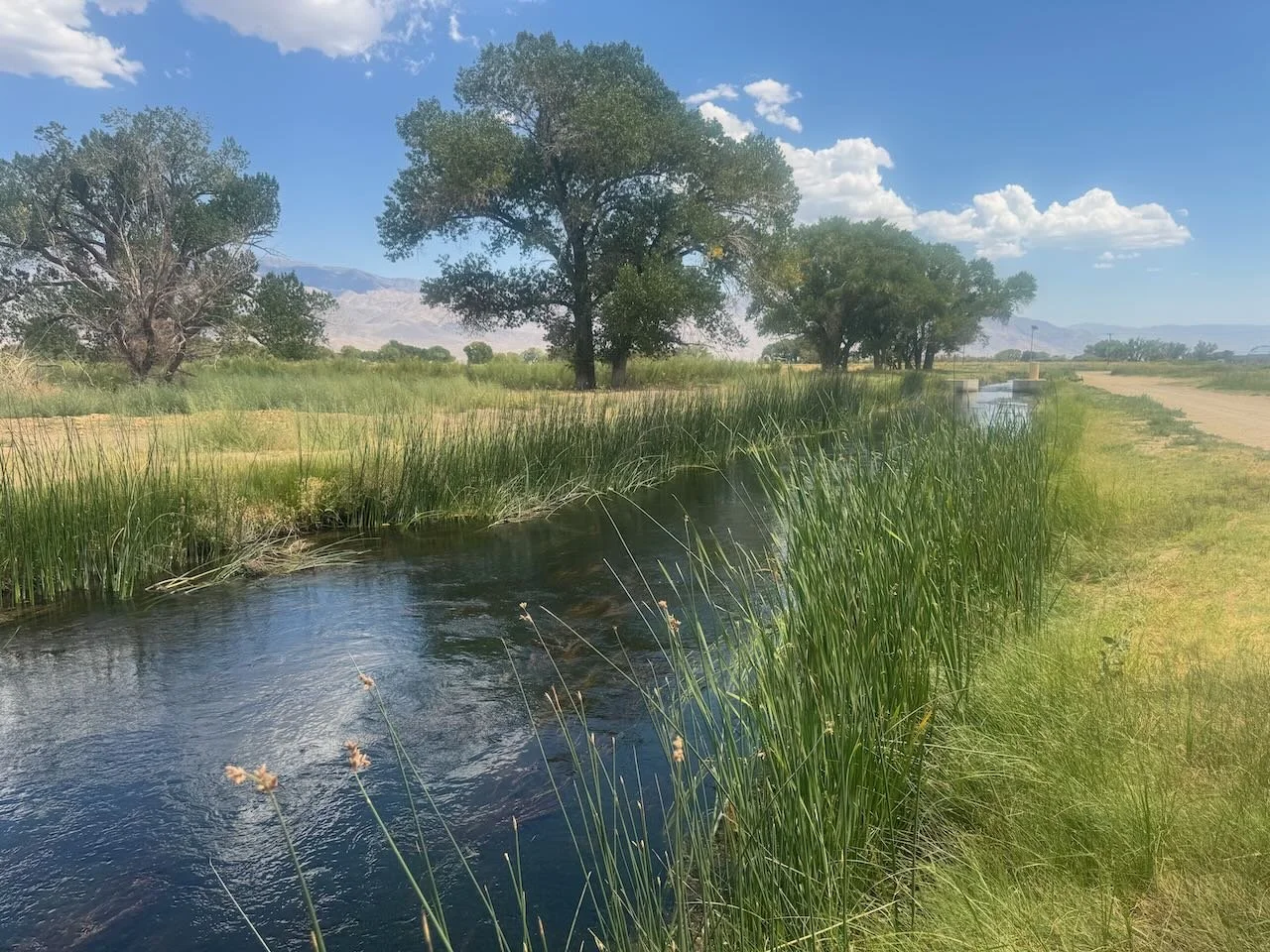
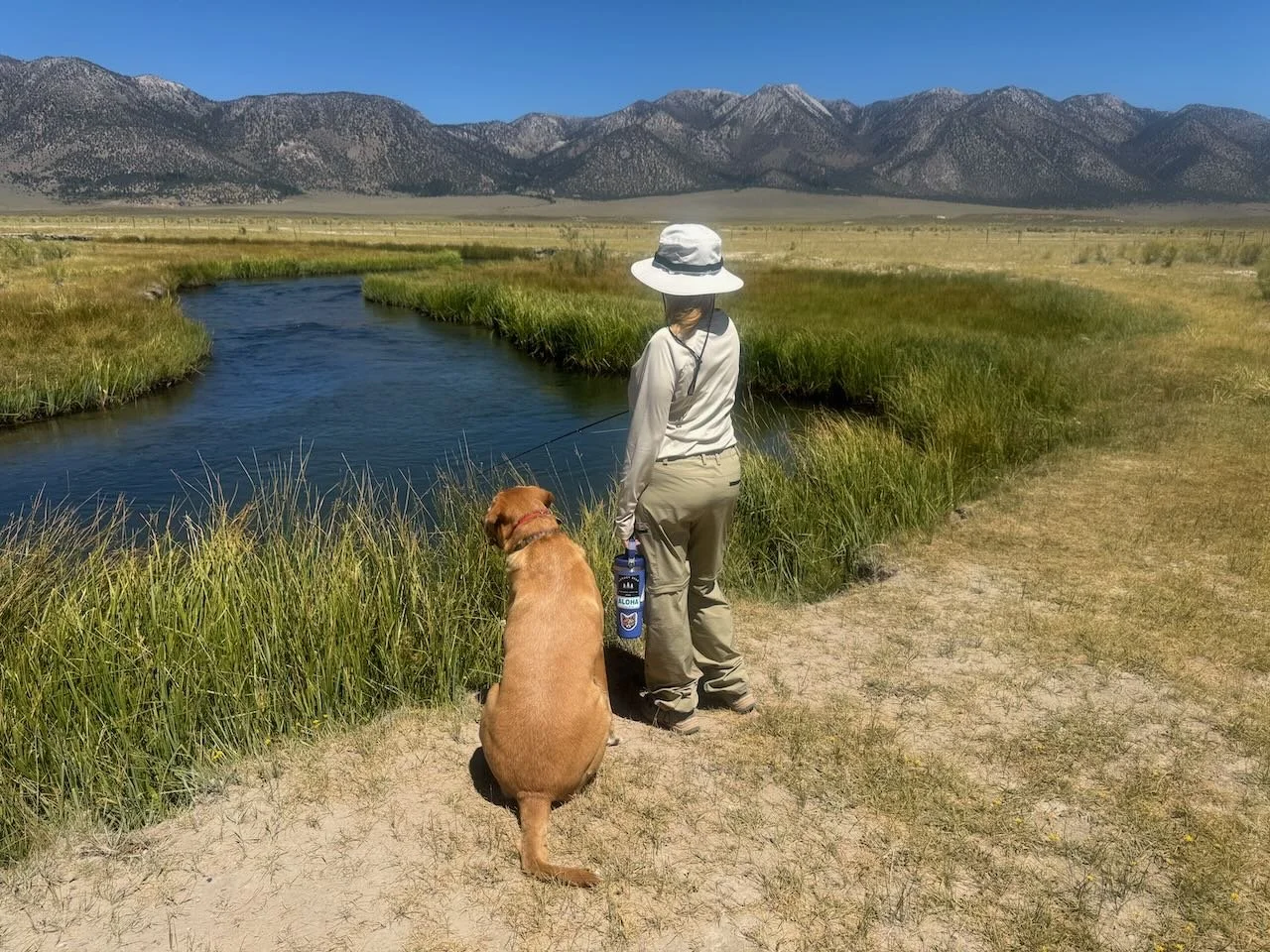
Afternoons on the upper Owens should be hopper season, but the hoppers just are not showing up in numbers to get the fish feeding on hoppers in the afternoon.

Upper Owens River

Above Benton Crossing Bridge:

Flows on the upper Owens River have subsided and cleared up. There are not enough hoppers in the meadow around the upper Owens River to get the trout to come to the surface to feed on hopper imitations. An Adams parachute in size 16, a size 16 pale morning dun parachute, size 16 stimulator and a size 18 elk hair caddis will produce more surface action in the afternoon winds. Nymphing with size 18 olive quilldigons, size 16 bead head flash back pheasant tail nymphs, size 16 bead head flash back gold ribbed hare’s ears and size 18 tiger and zebra midges is producing trout all day. The key to nymphing in the upper Owens River is to work your flies right on the substrate. To do this you need to have the right combination of weighted flies or add weight to your tippets. Mosquitoes are around particularly when the clouds cover the sun in late afternoon.

Afternoon winds are pushing a few hoppers into the canal and the trout are keying in on the struggling hoppers.

Bishop Creek Canal

Behind Bishop Veterinary Hospital:

Early mornings and late afternoons are the most productive time to be on Bishop Creek Canal fly fishing. Late afternoon is a good time to try a hopper pattern like a size 12 parachute hopper, size 12 Dave’s hopper and size 14 stimulator. Dropping a nymph of the hopper on three feet of 3X fluorocarbon with a size 18 olive quilldigon, size 18 bead head flash back pheasant tail nymph, size 16 bead head flash back gold ribbed hare’s ear, size 18 tiger midge and size 14 scud will pick up the nymph eating trout.